
Chapter 0 Why Study Statistics Chapter 1 An

- Slides: 21
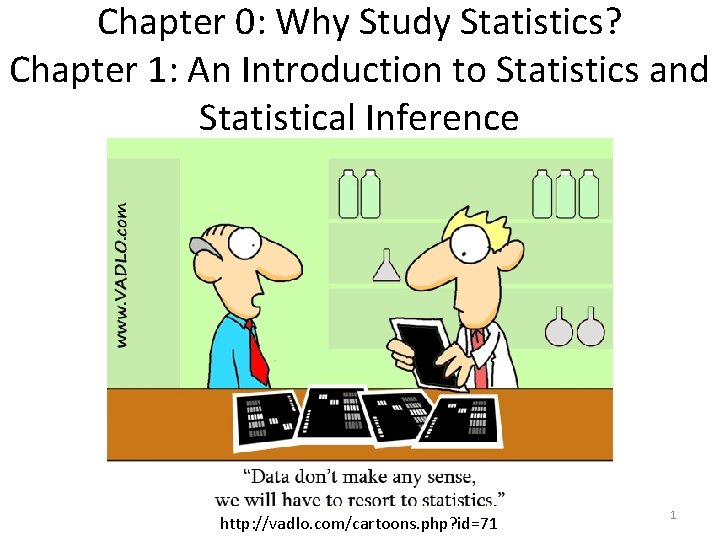
Chapter 0: Why Study Statistics? Chapter 1: An Introduction to Statistics and Statistical Inference http: //vadlo. com/cartoons. php? id=71 1
0, 1: Introduction: Goals • Create your own definition of statistics. • State some applications of Statistics for your field. • State the branches of statistics and briefly describe each one. • Define: Population, sample, variable • Differentiate between probability and statistics. • Be able to solve word problems in statistics. 2
What is Statistics • Components – Collection – Organization – Analysis – Interpretation 3
Branches of Statistics • Collection of data • Descriptive Statistics – Graphical and numerical methods used to describe, organize, and summarize data. • Inferential Statistics – Techniques and methods used to analyze a small, specific set of data in order to draw a conclusion about a large, more general collection of data. 4
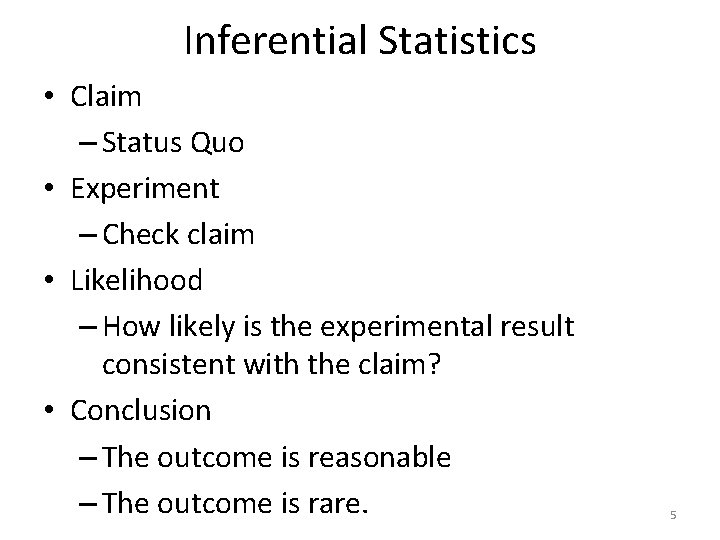
Inferential Statistics • Claim – Status Quo • Experiment – Check claim • Likelihood – How likely is the experimental result consistent with the claim? • Conclusion – The outcome is reasonable – The outcome is rare. 5
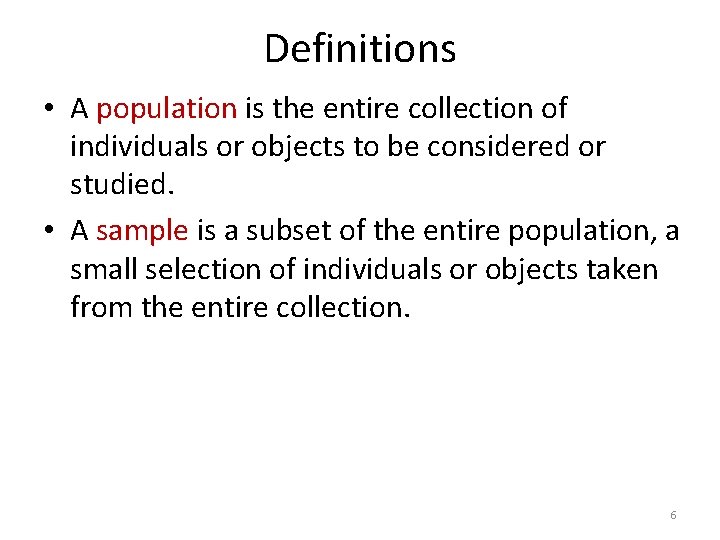
Definitions • A population is the entire collection of individuals or objects to be considered or studied. • A sample is a subset of the entire population, a small selection of individuals or objects taken from the entire collection. 6
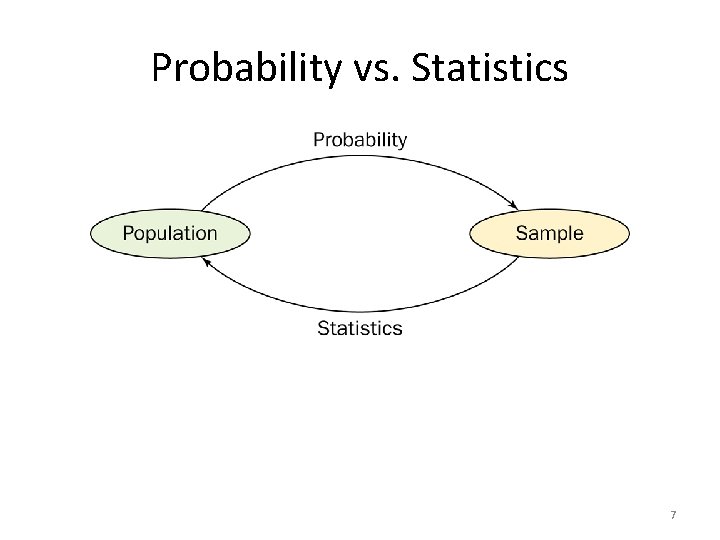
Probability vs. Statistics 7
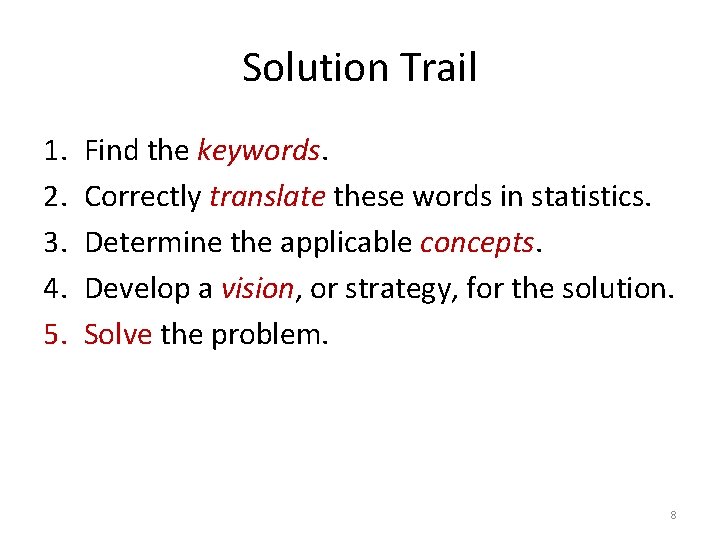
Solution Trail 1. 2. 3. 4. 5. Find the keywords. Correctly translate these words in statistics. Determine the applicable concepts. Develop a vision, or strategy, for the solution. Solve the problem. 8
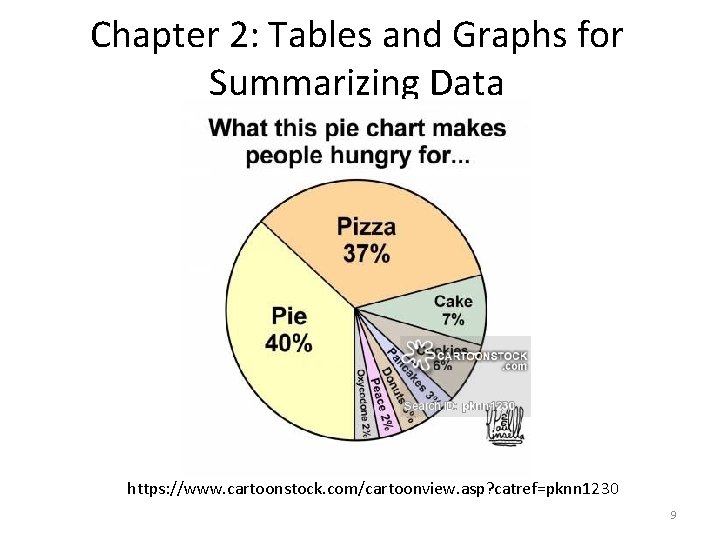
Chapter 2: Tables and Graphs for Summarizing Data https: //www. cartoonstock. com/cartoonview. asp? catref=pknn 1230 9
Types of Data, Graphing: Goals • Section 2. 1 Classify variables as – Number of characteristics – Categorical or numerical • Section 2. 2 (very brief) Analyze the distribution of categorical variable: – Bar Graphs – Pie Charts • Section 2. 3: Skip • Section 2. 4 Analyze the distribution of quantitative variable: – Histogram – Identify the shape, center, and spread 10 – Identify and describe any outliers
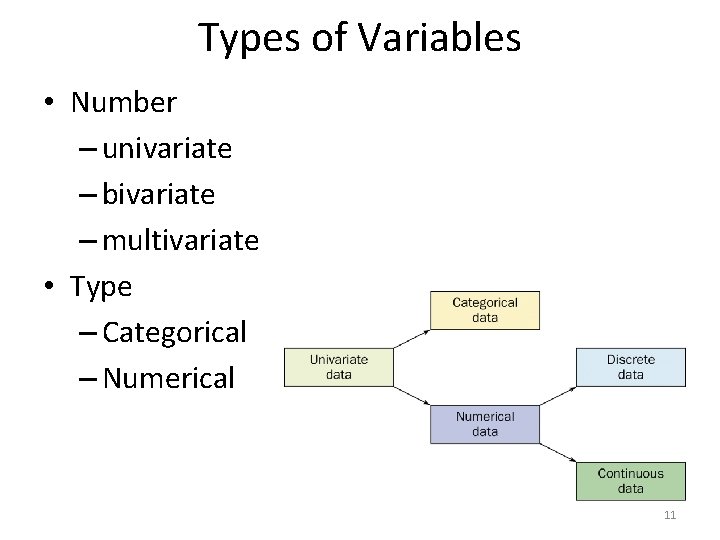
Types of Variables • Number – univariate – bivariate – multivariate • Type – Categorical – Numerical 11
To better understand a data set, ask: • Who? • What cases do the data describe? • How many cases? • What? • How many variables? • What is the exact definition of each variable? • What is the unit of measurement for each variable? • Why? • What is the purpose of the data? • What questions are being asked? • Are the variables suitable? 12
Graphs • Categorical Variables – Pie charts – Bar graphs • Quantitative Variables – Histograms 13
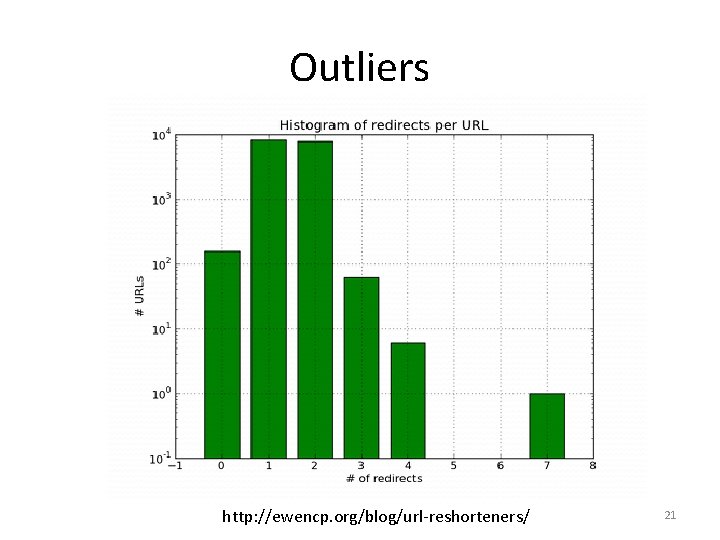
Examining Distributions In any graph of data, look for the overall pattern and for striking deviations from that pattern. • You can describe the overall pattern by its shape, center, and spread. • For the shape, look at the number of peaks and the symmetry. • An important kind of deviation is an outlier, an individual that falls outside the overall pattern. 14
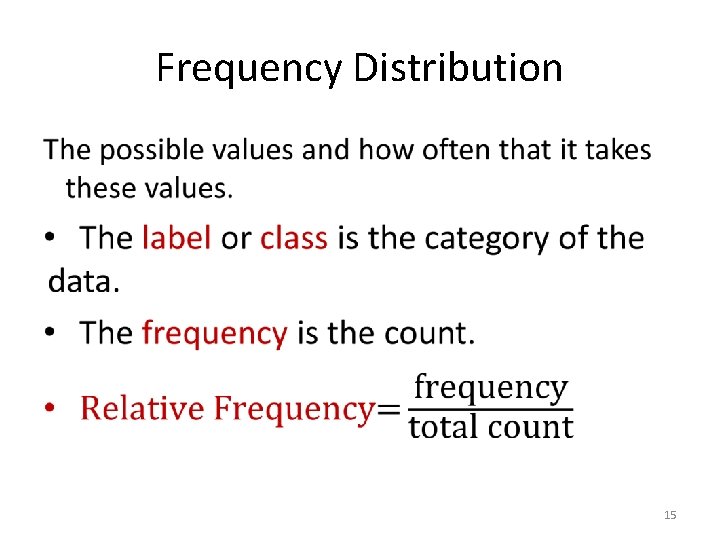
Frequency Distribution • 15
Categorical Variables - Display The distribution of a categorical variable lists the categories and gives the count or percent or frequency of individuals who fall into each category. • Pie charts show the distribution of a categorical variable as a “pie” whose slices are sized by the counts or percents for the categories. • Bar graphs represent categories as bars whose heights show the category counts or percents. 16
Quantitative Variable: Histograms show the distribution of a quantitative variable by using bars. Remember to always include the summary table. Procedure – discrete (small number of values) 1. Calculate the frequency distribution and/or relative frequency of each x value. 2. Mark the possible x values on the x-axis. 3. Above each value, draw a rectangle whose height is the frequency (or relative frequency) of that value. 17
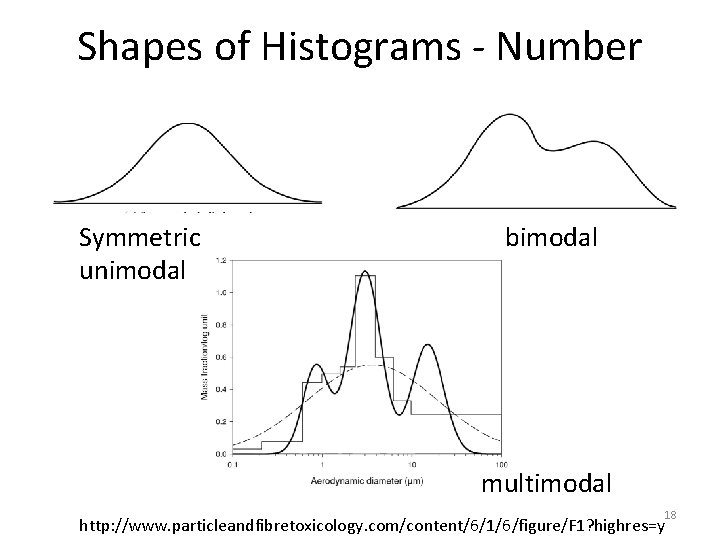
Shapes of Histograms - Number Symmetric unimodal bimodal multimodal 18 http: //www. particleandfibretoxicology. com/content/6/1/6/figure/F 1? highres=y
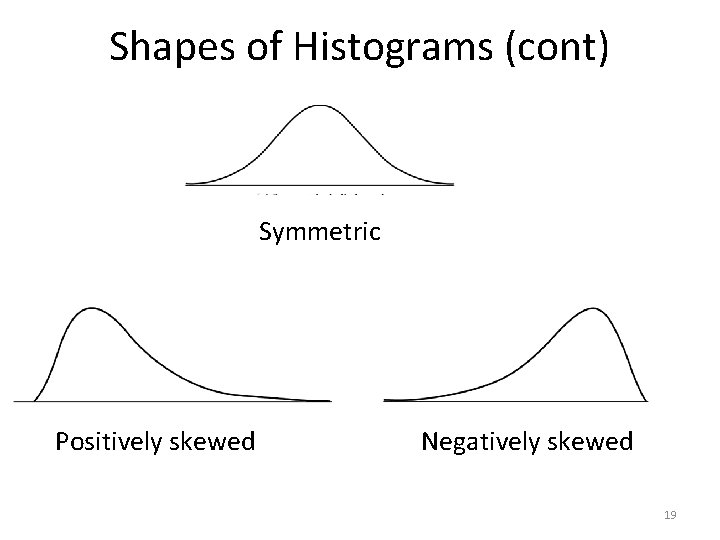
Shapes of Histograms (cont) Symmetric Positively skewed Negatively skewed 19
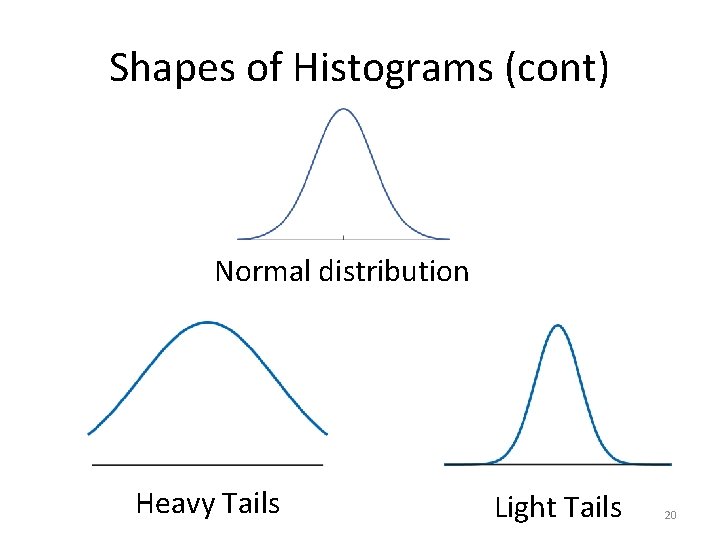
Shapes of Histograms (cont) Normal distribution Heavy Tails Light Tails 20
Outliers http: //ewencp. org/blog/url-reshorteners/ 21