
Chaptalization vs Must concentration Comparing both technology and
Chaptalization vs Must concentration Comparing both technology and within techniques YOSHIYUKI OKUMURA
2 How do you think about Enrichment?
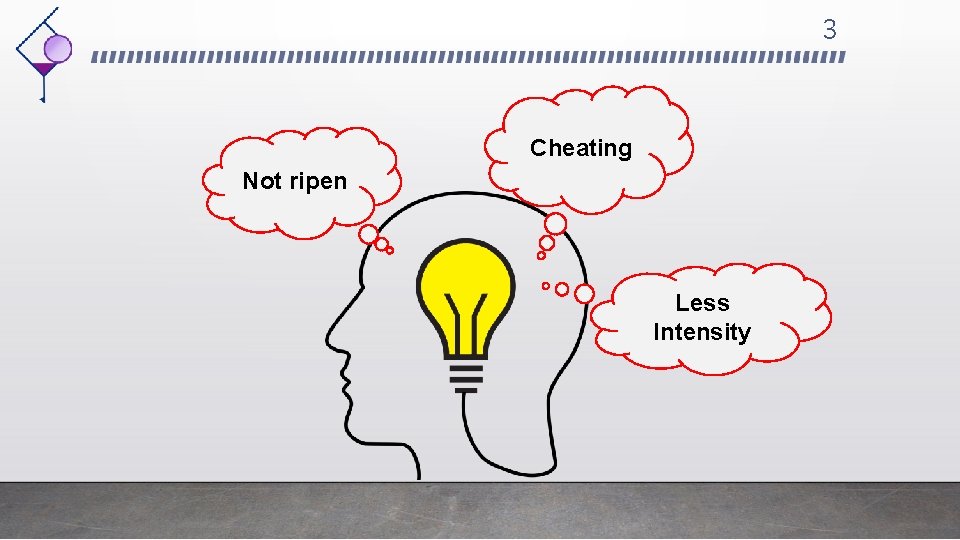
3 Cheating Not ripen Less Intensity
4 Enrichment doesn’t mean lower quality.
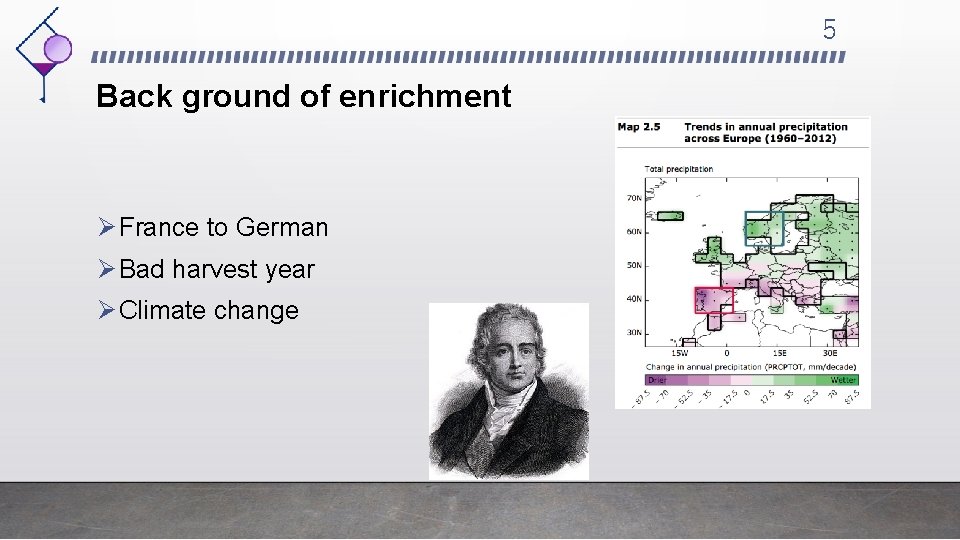
5 Back ground of enrichment Ø France to German Ø Bad harvest year Ø Climate change
6 What is Chaptalization?
7 What is Chaptalization? What? Adding sugar before fermentation or during fermentation. Why? Increasing alcohol level and improving taste. Where? France, Germany, Chile , US and more(Sure in Japan)
8 What is must concentration?
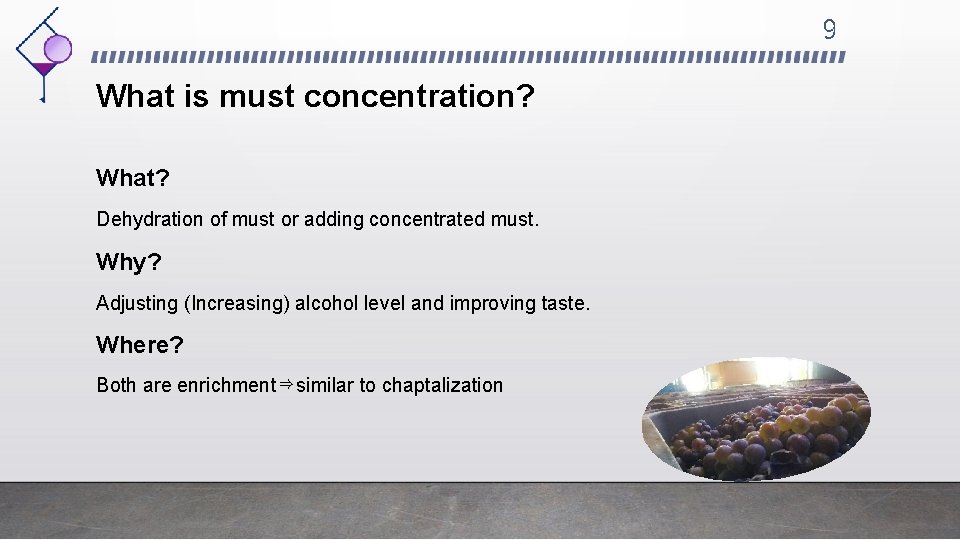
9 What is must concentration? What? Dehydration of must or adding concentrated must. Why? Adjusting (Increasing) alcohol level and improving taste. Where? Both are enrichment⇒similar to chaptalization
10 Method of the enrichment ØChaptalization ØFiltration(Reverse osmosis, Nano-filtration) ØCryoconcentration ØRCM (Rectified concentrated grape must)
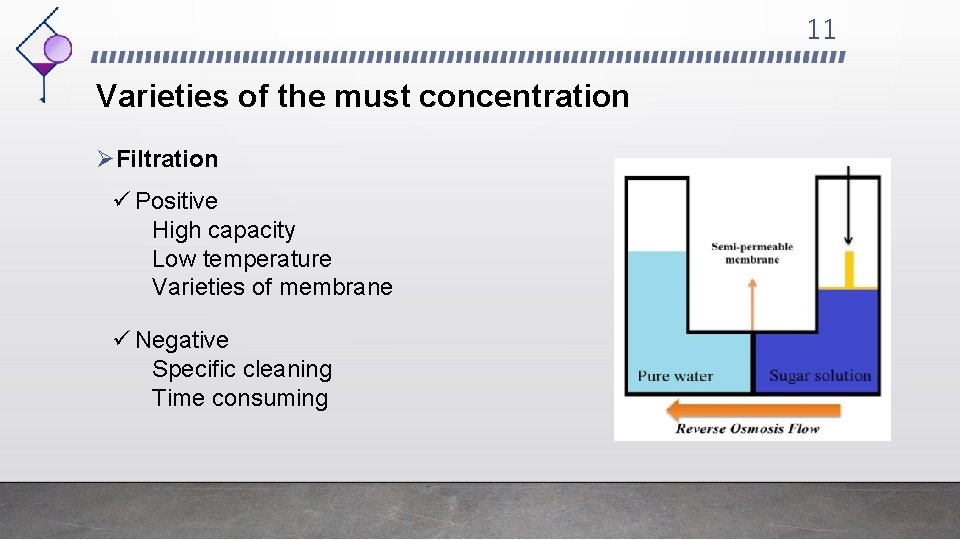
11 Varieties of the must concentration ØFiltration ü Positive High capacity Low temperature Varieties of membrane ü Negative Specific cleaning Time consuming
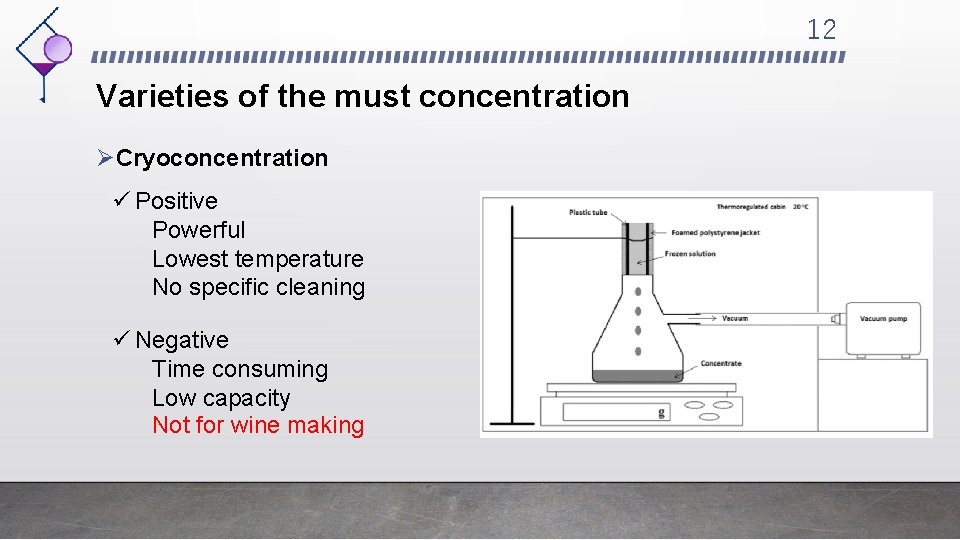
12 Varieties of the must concentration ØCryoconcentration ü Positive Powerful Lowest temperature No specific cleaning ü Negative Time consuming Low capacity Not for wine making
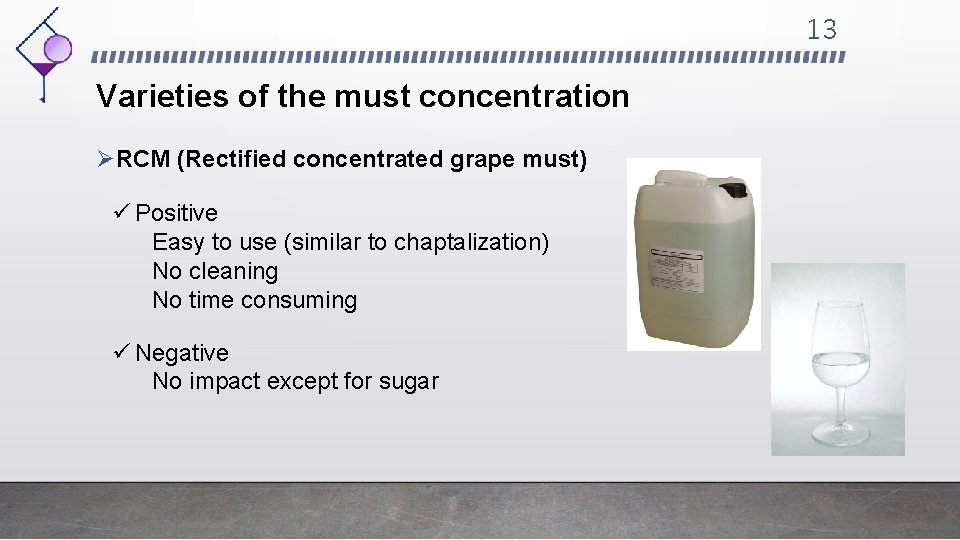
13 Varieties of the must concentration ØRCM (Rectified concentrated grape must) ü Positive Easy to use (similar to chaptalization) No cleaning No time consuming ü Negative No impact except for sugar
14 Influences of chaptalization Experiment ØSB in Marlborough Ø 3 sugar level 20, 22, 23. 5 Brix ØAdjust alcohol level
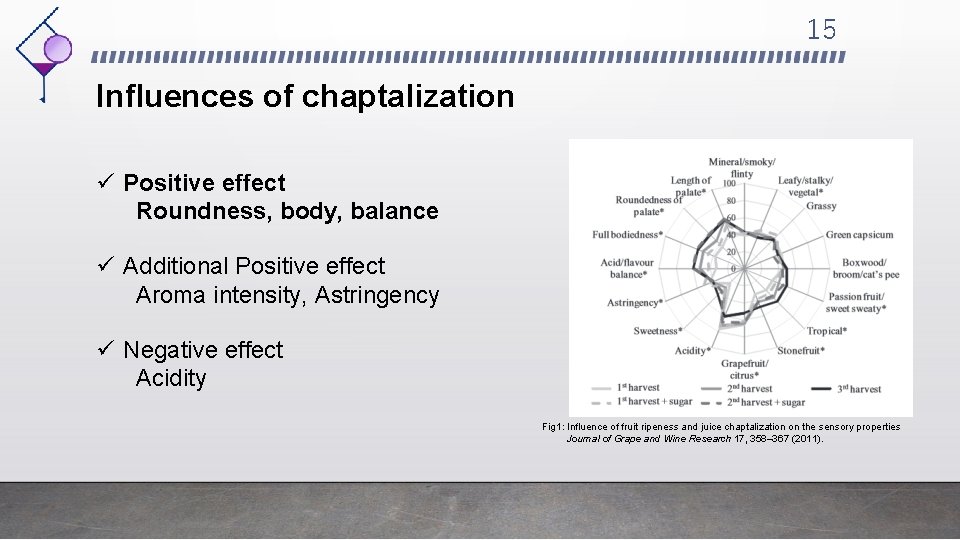
15 Influences of chaptalization ü Positive effect Roundness, body, balance ü Additional Positive effect Aroma intensity, Astringency ü Negative effect Acidity Fig 1: Influence of fruit ripeness and juice chaptalization on the sensory properties Journal of Grape and Wine Research 17, 358– 367 (2011).
16 Influences of chaptalization Experiment ØMerlot in Washington Ø 3 sugar level 20, 24, 28 Brix ØAdjust alcohol level
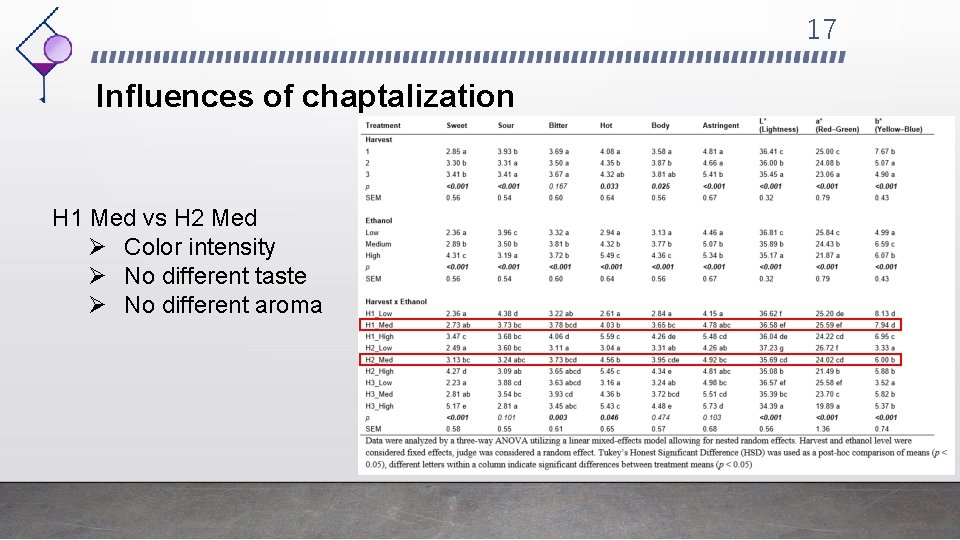
17 Influences of chaptalization H 1 Med vs H 2 Med Ø Color intensity Ø No different taste Ø No different aroma
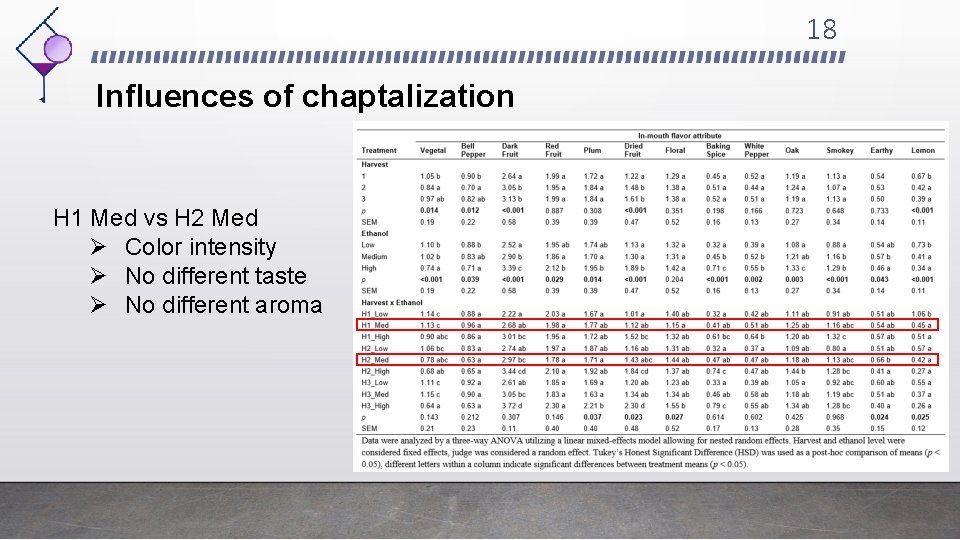
18 Influences of chaptalization H 1 Med vs H 2 Med Ø Color intensity Ø No different taste Ø No different aroma
19 Chaptalized wine≒Ripen grape wine
20 Influences of must concentration (Filtration) Experiment ØControl, RCM, Filtration ØReverse osmosis and Nano-filtration ØBoth white and red
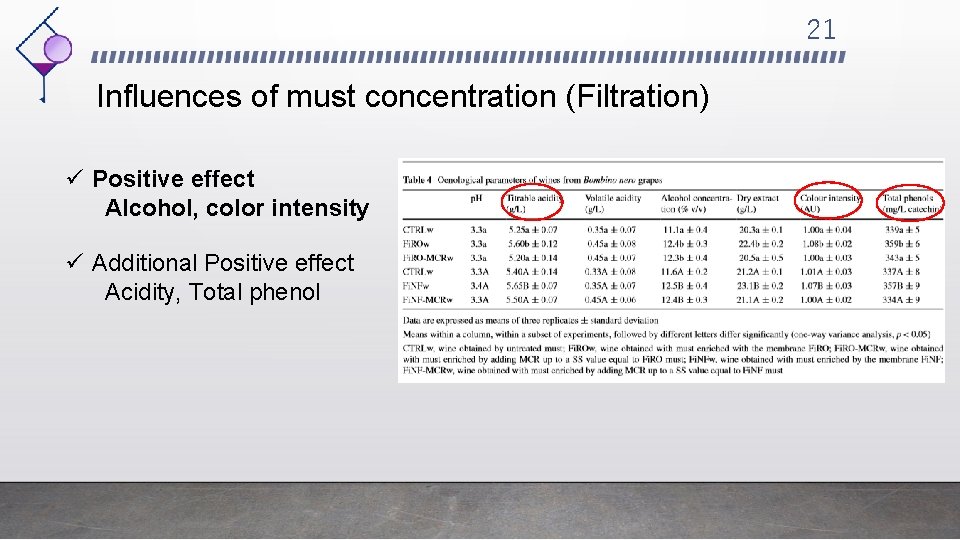
21 Influences of must concentration (Filtration) ü Positive effect Alcohol, color intensity ü Additional Positive effect Acidity, Total phenol
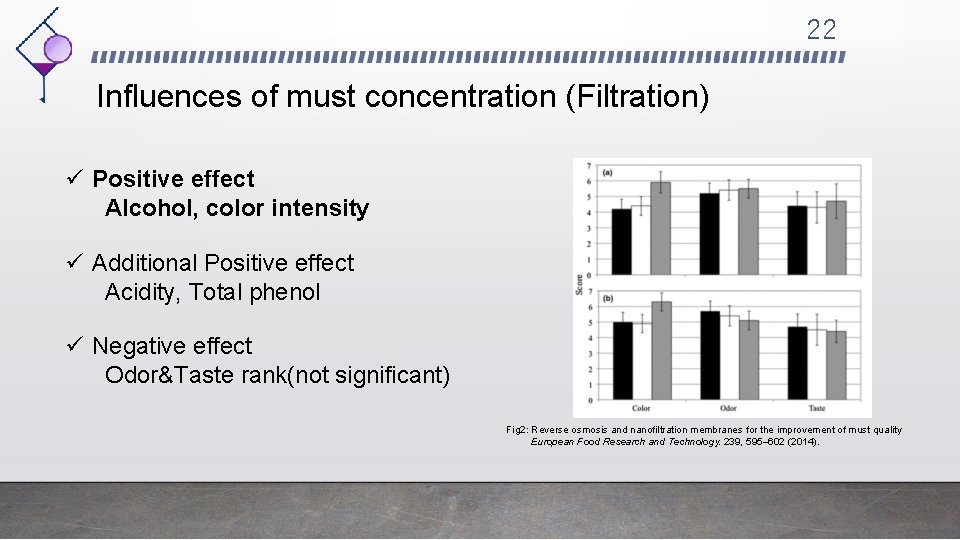
22 Influences of must concentration (Filtration) ü Positive effect Alcohol, color intensity ü Additional Positive effect Acidity, Total phenol ü Negative effect Odor&Taste rank(not significant) Fig 2: Reverse osmosis and nanofiltration membranes for the improvement of must quality European Food Research and Technology. 239, 595– 602 (2014).
23 Influences of must concentration (Filtration) Experiment ØComparing Reverse osmosis and chaptalization wine ØFiltration under 15℃, < 85. 105 PA ØWashing filter by hot water every 5 h
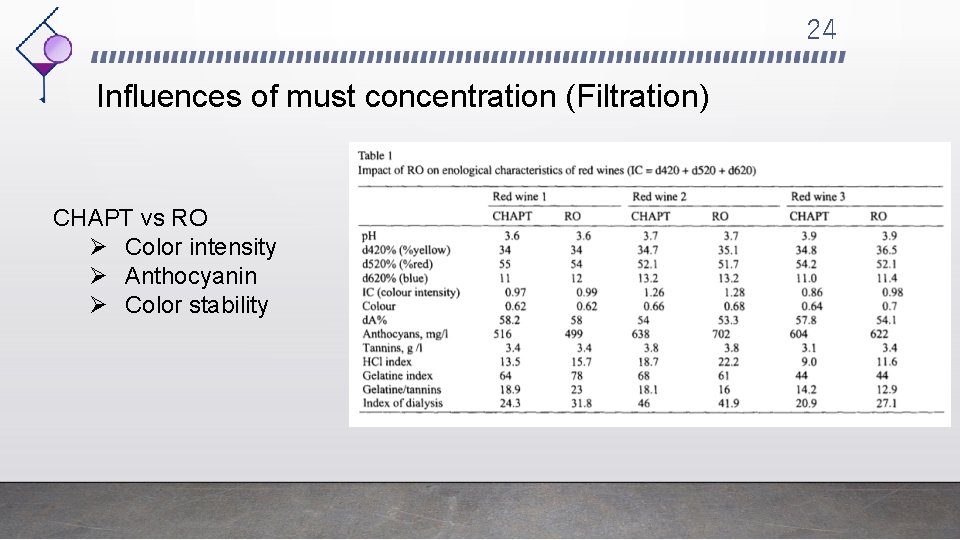
24 Influences of must concentration (Filtration) CHAPT vs RO Ø Color intensity Ø Anthocyanin Ø Color stability
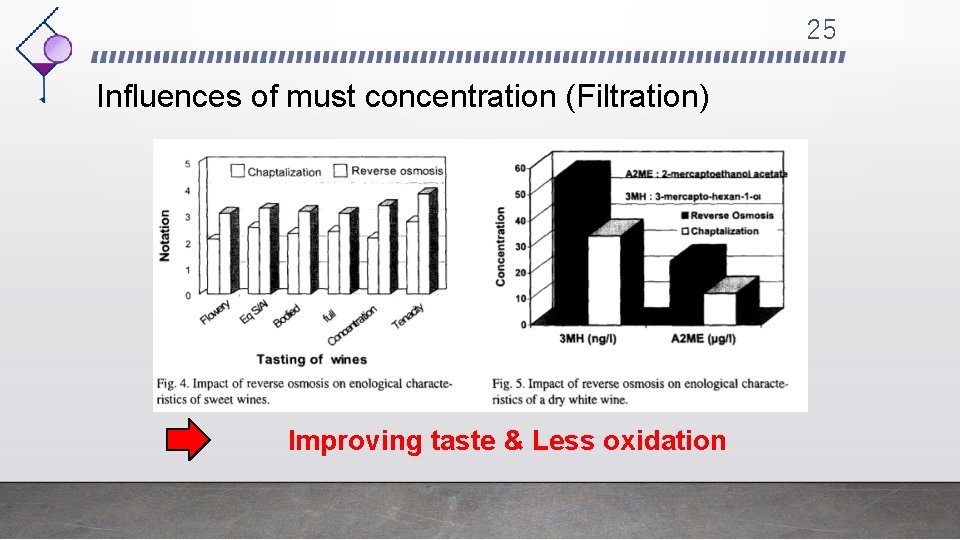
25 Influences of must concentration (Filtration) Improving taste & Less oxidation
26 Must concentrated wine≒Chaptalized wine?
27 Chaptalization VS Must concentration Chaptalization V S
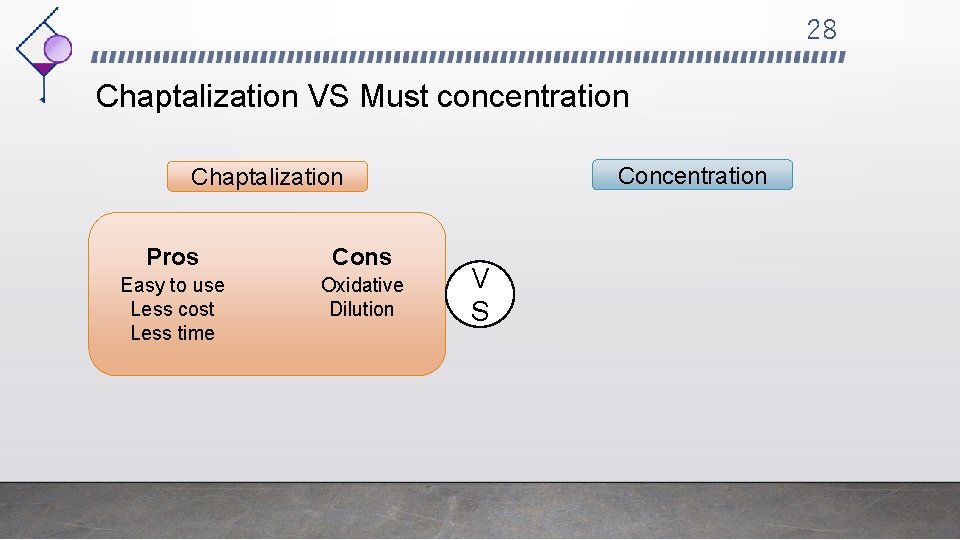
28 Chaptalization VS Must concentration Chaptalization Pros Cons Easy to use Less cost Less time Oxidative Dilution V S

29 Chaptalization VS Must concentration Chaptalization Pros Cons Easy to use Less cost Less time Oxidative Dilution V S Pros Cons More color Modify taste Stability of color Cleaning Time Installing cost
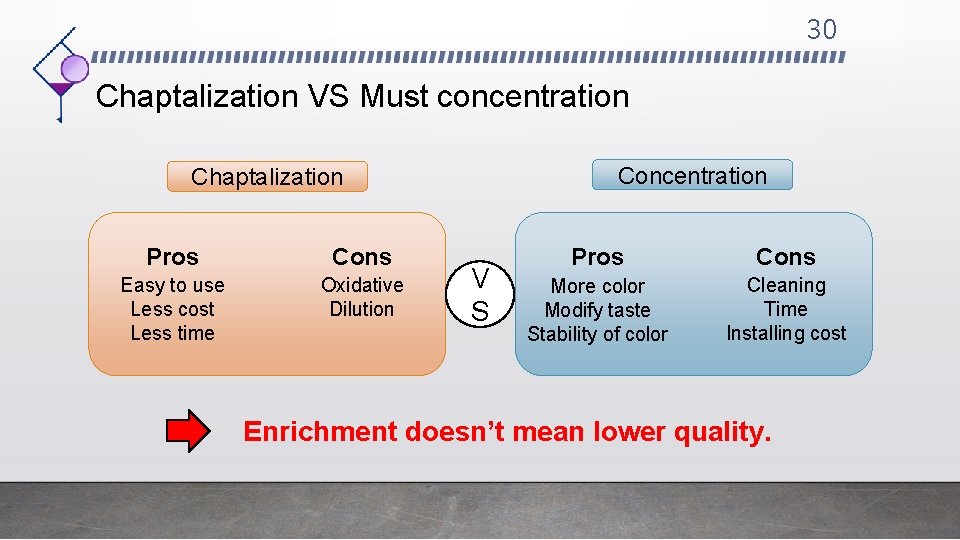
30 Chaptalization VS Must concentration Chaptalization Pros Cons Easy to use Less cost Less time Oxidative Dilution V S Pros Cons More color Modify taste Stability of color Cleaning Time Installing cost Enrichment doesn’t mean lower quality.

THANK YOU FOR YOUR ATTENTION!
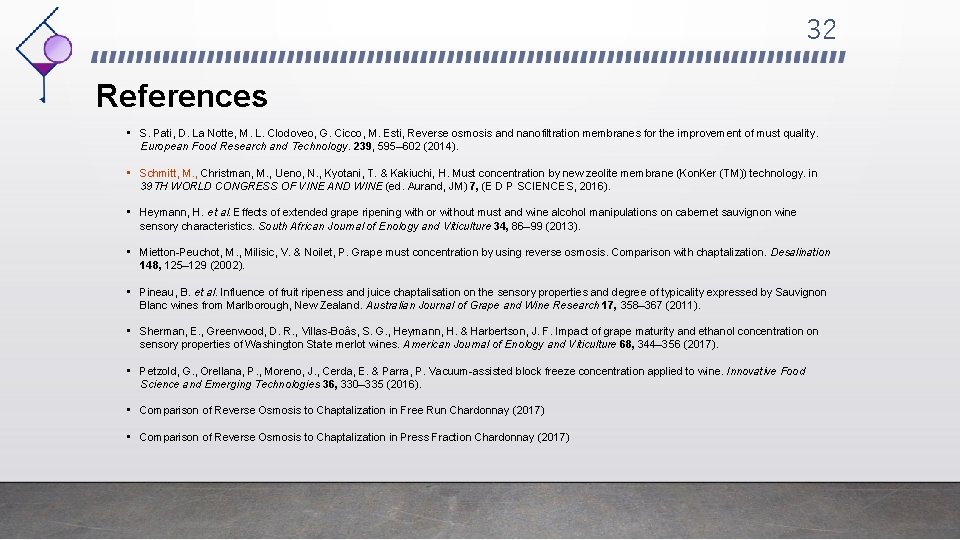
32 References • S. Pati, D. La Notte, M. L. Clodoveo, G. Cicco, M. Esti, Reverse osmosis and nanofiltration membranes for the improvement of must quality. European Food Research and Technology. 239, 595– 602 (2014). • Schmitt, M. , Christman, M. , Ueno, N. , Kyotani, T. & Kakiuchi, H. Must concentration by new zeolite membrane (Kon. Ker (TM)) technology. in 39 TH WORLD CONGRESS OF VINE AND WINE (ed. Aurand, JM) 7, (E D P SCIENCES, 2016). • Heymann, H. et al. Effects of extended grape ripening with or without must and wine alcohol manipulations on cabernet sauvignon wine sensory characteristics. South African Journal of Enology and Viticulture 34, 86– 99 (2013). • Mietton-Peuchot, M. , Milisic, V. & Noilet, P. Grape must concentration by using reverse osmosis. Comparison with chaptalization. Desalination 148, 125– 129 (2002). • Pineau, B. et al. Influence of fruit ripeness and juice chaptalisation on the sensory properties and degree of typicality expressed by Sauvignon Blanc wines from Marlborough, New Zealand. Australian Journal of Grape and Wine Research 17, 358– 367 (2011). • Sherman, E. , Greenwood, D. R. , Villas-Boâs, S. G. , Heymann, H. & Harbertson, J. F. Impact of grape maturity and ethanol concentration on sensory properties of Washington State merlot wines. American Journal of Enology and Viticulture 68, 344– 356 (2017). • Petzold, G. , Orellana, P. , Moreno, J. , Cerda, E. & Parra, P. Vacuum-assisted block freeze concentration applied to wine. Innovative Food Science and Emerging Technologies 36, 330– 335 (2016). • Comparison of Reverse Osmosis to Chaptalization in Free Run Chardonnay (2017) • Comparison of Reverse Osmosis to Chaptalization in Press Fraction Chardonnay (2017)
- Slides: 32