
CHAPERONE TRAINING PACK Safeguarding Children In Performances A



- Slides: 62
CHAPERONE TRAINING PACK
Safeguarding Children In Performances A Brief Introduction For Chaperones Zadie Broad Child Employment Officer
Duty to safeguard children Role of the chaperone What the Local Authority expects from you. What to do if you have concerns? Information sharing & confidentiality Contents
Please note • You may find some of the issues in this • • session upsetting or distressing. If the issues distress you, talk to me afterwards, or seek advice from NSPCC 24 hour Helpline 0808 800 5000
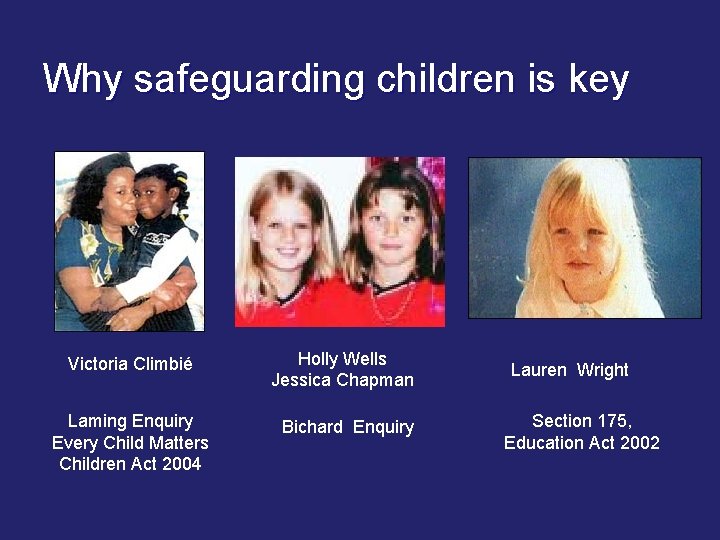
Why safeguarding children is key Victoria Climbié Holly Wells Jessica Chapman Laming Enquiry Every Child Matters Children Act 2004 Bichard Enquiry Lauren Wright Section 175, Education Act 2002
The UN Convention • UN Convention On The Rights of The Child was adopted by the UN General Assembly in 1989 • Gives children absolute rights to: – Survival and Development – Participation – Protection – Education, housing, healthcare & all forms of mental & physical well-being
Legal Framework • Children & Young Persons Acts 1933 and 1963 • – Children and Young Persons (Performance and Activities) (England) Regulations 2014 – Wokingham Child Employment Bye-Laws Children Act 1989 – Working Together To Safeguard Children • Education Act 2002 – Section 175 & 157 • Children Act 2004 • Safeguarding Vulnerable Groups Act 2006
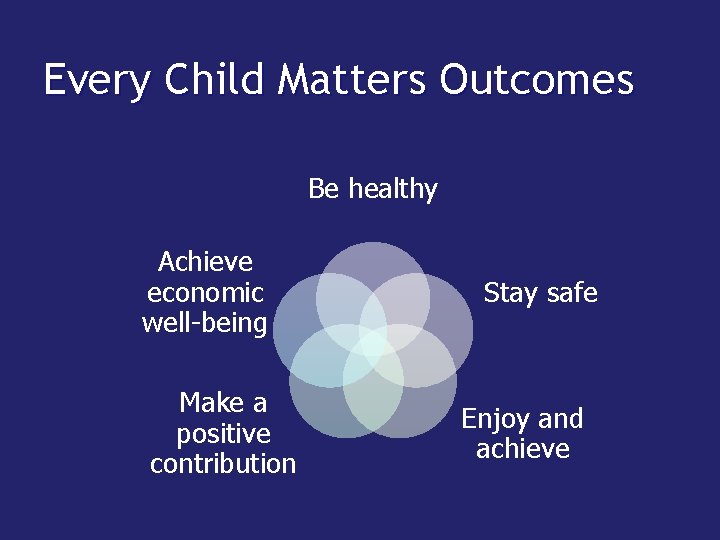
Every Child Matters Outcomes Be healthy Achieve economic well-being Make a positive contribution Stay safe Enjoy and achieve
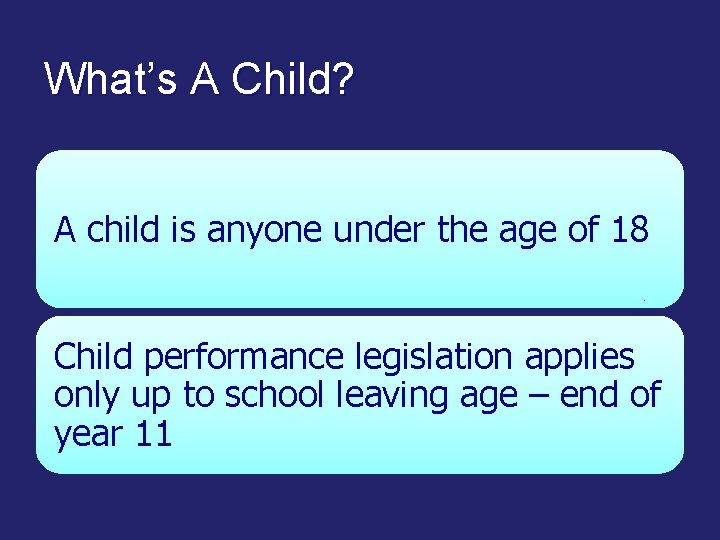
What’s A Child? A child is anyone under the age of 18 Child performance legislation applies only up to school leaving age – end of year 11
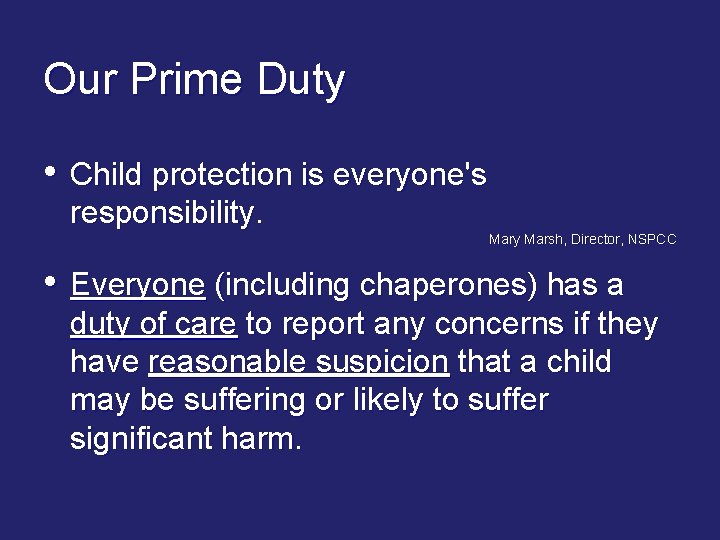
Our Prime Duty • Child protection is everyone's responsibility. Mary Marsh, Director, NSPCC • Everyone (including chaperones) has a duty of care to report any concerns if they have reasonable suspicion that a child may be suffering or likely to suffer significant harm.
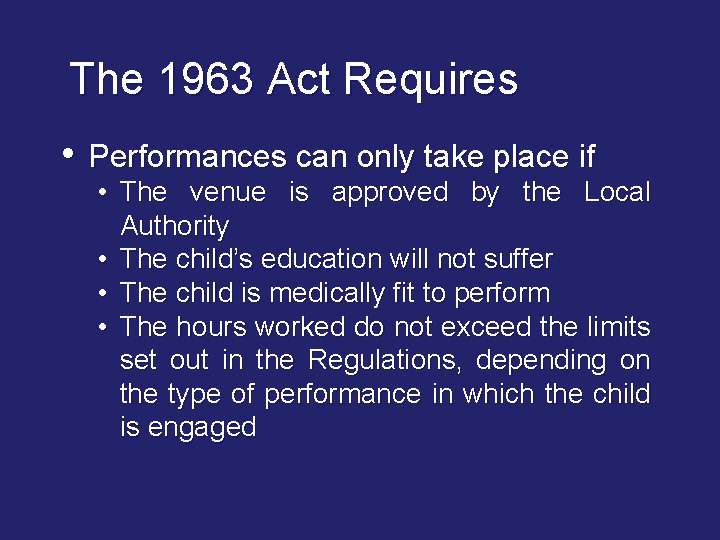
The 1963 Act Requires • Performances can only take place if • The venue is approved by the Local Authority • The child’s education will not suffer • The child is medically fit to perform • The hours worked do not exceed the limits set out in the Regulations, depending on the type of performance in which the child is engaged
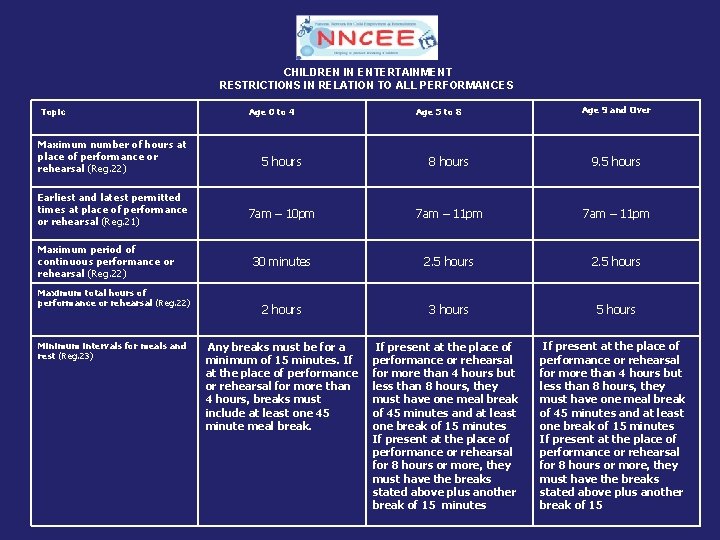
CHILDREN IN ENTERTAINMENT RESTRICTIONS IN RELATION TO ALL PERFORMANCES Topic Age 0 to 4 Age 5 to 8 Age 9 and Over Maximum number of hours at place of performance or rehearsal (Reg. 22) 5 hours 8 hours 9. 5 hours Earliest and latest permitted times at place of performance or rehearsal (Reg. 21) 7 am – 10 pm 7 am – 11 pm 2. 5 hours 3 hours 5 hours Maximum period of continuous performance or rehearsal (Reg. 22) Maximum total hours of performance or rehearsal (Reg. 22) Minimum intervals for meals and rest (Reg. 23) 30 minutes 2 hours Any breaks must be for a minimum of 15 minutes. If at the place of performance or rehearsal for more than 4 hours, breaks must include at least one 45 minute meal break. If present at the place of performance or rehearsal for more than 4 hours but less than 8 hours, they must have one meal break of 45 minutes and at least one break of 15 minutes If present at the place of performance or rehearsal for 8 hours or more, they must have the breaks stated above plus another break of 15 minutes If present at the place of performance or rehearsal for more than 4 hours but less than 8 hours, they must have one meal break of 45 minutes and at least one break of 15 minutes If present at the place of performance or rehearsal for 8 hours or more, they must have the breaks stated above plus another break of 15
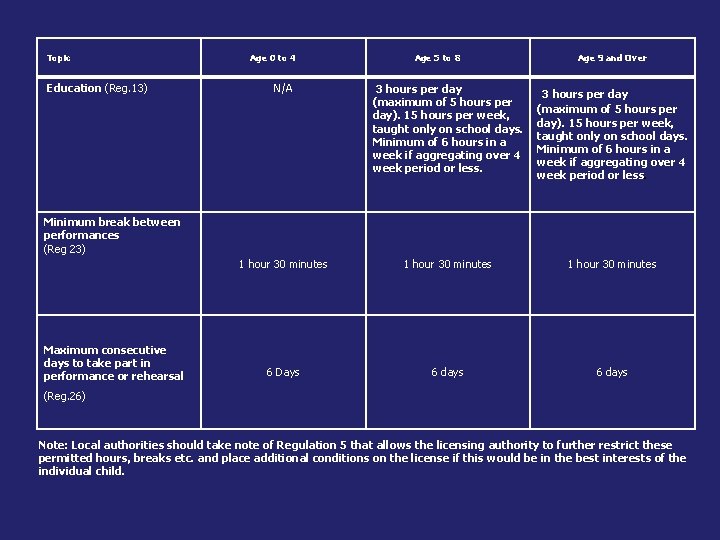
Topic Age 0 to 4 Education (Reg. 13) N/A Age 5 to 8 3 hours per day (maximum of 5 hours per day). 15 hours per week, taught only on school days. Minimum of 6 hours in a week if aggregating over 4 week period or less. Minimum break between performances (Reg 23) Maximum consecutive days to take part in performance or rehearsal 1 hour 30 minutes 6 Days Age 9 and Over 3 hours per day (maximum of 5 hours per day). 15 hours per week, taught only on school days. Minimum of 6 hours in a week if aggregating over 4 week period or less. 1 hour 30 minutes 6 days (Reg. 26) Note: Local authorities should take note of Regulation 5 that allows the licensing authority to further restrict these permitted hours, breaks etc. and place additional conditions on the license if this would be in the best interests of the individual child.
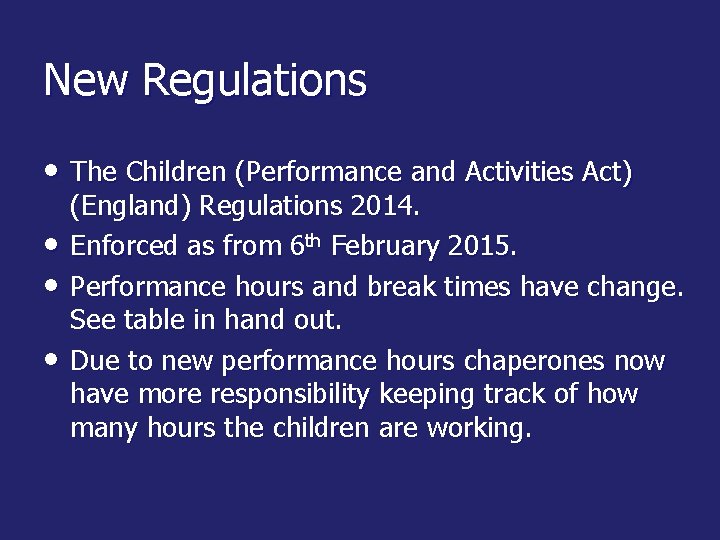
New Regulations • The Children (Performance and Activities Act) • • • (England) Regulations 2014. th February 2015. Enforced as from 6 Performance hours and break times have change. See table in hand out. Due to new performance hours chaperones now have more responsibility keeping track of how many hours the children are working.
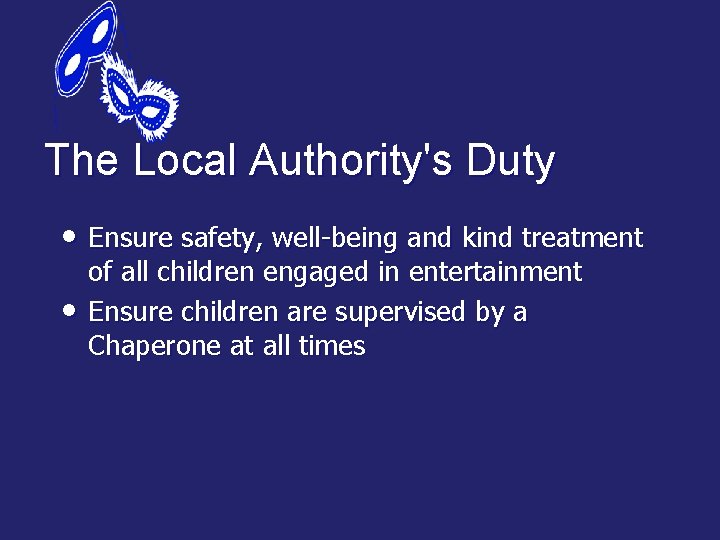
The Local Authority's Duty • Ensure safety, well-being and kind treatment • of all children engaged in entertainment Ensure children are supervised by a Chaperone at all times
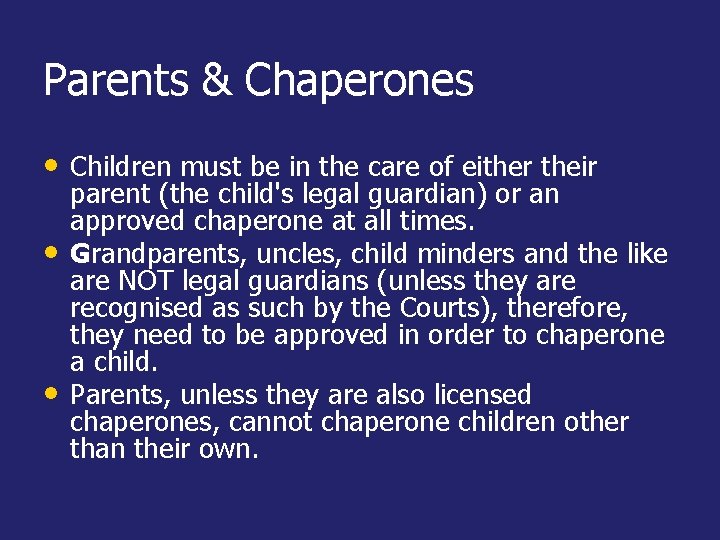
Parents & Chaperones • Children must be in the care of either their • • parent (the child's legal guardian) or an approved chaperone at all times. Grandparents, uncles, child minders and the like are NOT legal guardians (unless they are recognised as such by the Courts), therefore, they need to be approved in order to chaperone a child. Parents, unless they are also licensed chaperones, cannot chaperone children other than their own.
EDUCATION • We cannot issue a licence to a child if we believe the education of that child will suffer if authorised to perform: – Private tutor – lengthy engagements – Suitable course of study – No more than six children to each tutor – Room approved by LA – Taught for 3 hours each school day
Are you Safe? • Chaperone approval is exempt from the Rehabilitation of • • • Offenders Act (ROA) 1974; you must disclose details of any spent or unspent cautions or convictions. You would only be issued approval when we obtain a satisfactory enhanced DBS disclosure. You will also be required to provide details of any serious illness or infirmity – and we may seek advice from a doctor or other medical professional regarding the information you provide. Any references need to establish that you are suitable to look after children.
Your Duty Too? You are the representative of the Local Authority Your sole concern must be to protect the health, safety, moral welfare and education, whilst ensuring the kind treatment, of each and every child in your care.
Safeguarding & Chaperones • The Local Authority has a duty to ensure that • • Chaperones are “suitable”, and can exercise proper care and control of the child(ren), including their health, comfort, kind treatment and moral welfare. We carry out checks on anyone applying to become a chaperones as if they were an employee including References and enhanced DBS. Group Exercise
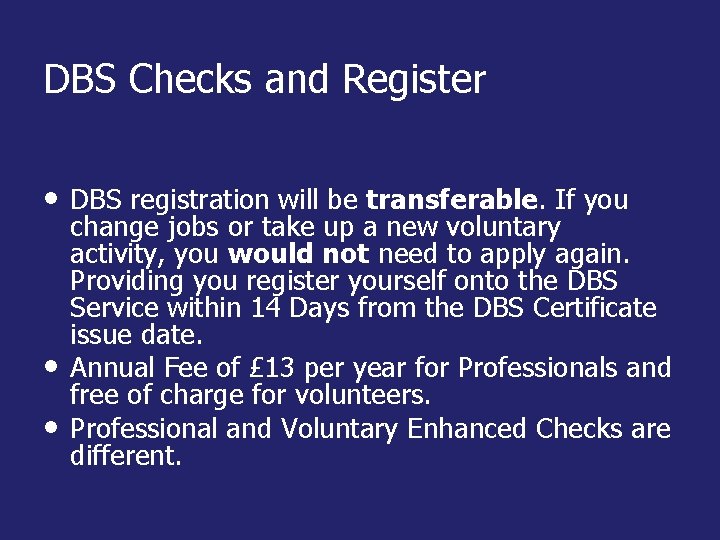
DBS Checks and Register • DBS registration will be transferable. If you • • change jobs or take up a new voluntary not need to apply again. activity, you would Providing you register yourself onto the DBS Service within 14 Days from the DBS Certificate issue date. Annual Fee of £ 13 per year for Professionals and free of charge for volunteers. Professional and Voluntary Enhanced Checks are different.
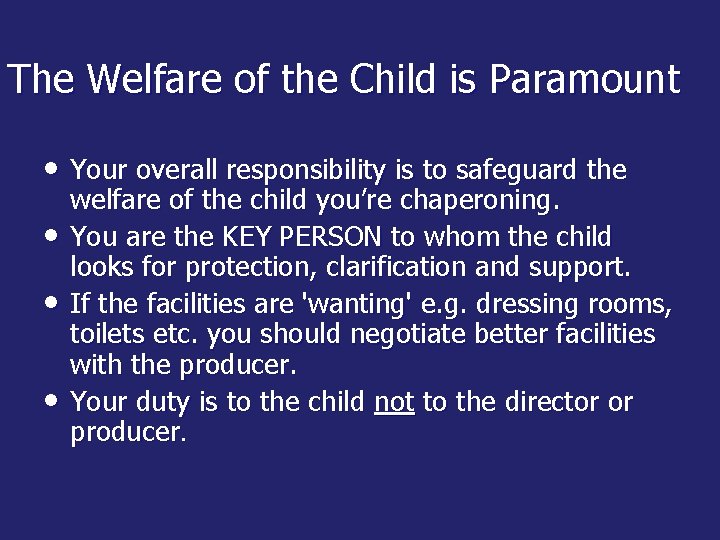
The Welfare of the Child is Paramount • Your overall responsibility is to safeguard the • • • welfare of the child you’re chaperoning. You are the KEY PERSON to whom the child looks for protection, clarification and support. If the facilities are 'wanting' e. g. dressing rooms, toilets etc. you should negotiate better facilities with the producer. Your duty is to the child not to the director or producer.
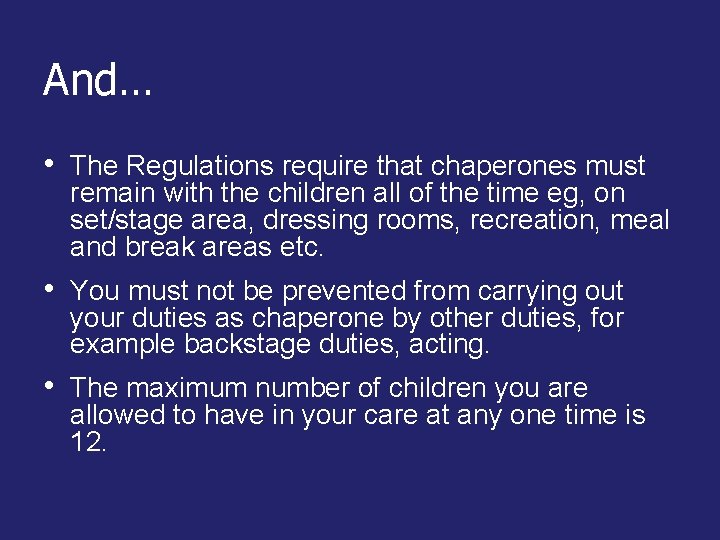
And… • The Regulations require that chaperones must remain with the children all of the time eg, on set/stage area, dressing rooms, recreation, meal and break areas etc. • You must not be prevented from carrying out your duties as chaperone by other duties, for example backstage duties, acting. • The maximum number of children you are allowed to have in your care at any one time is 12.
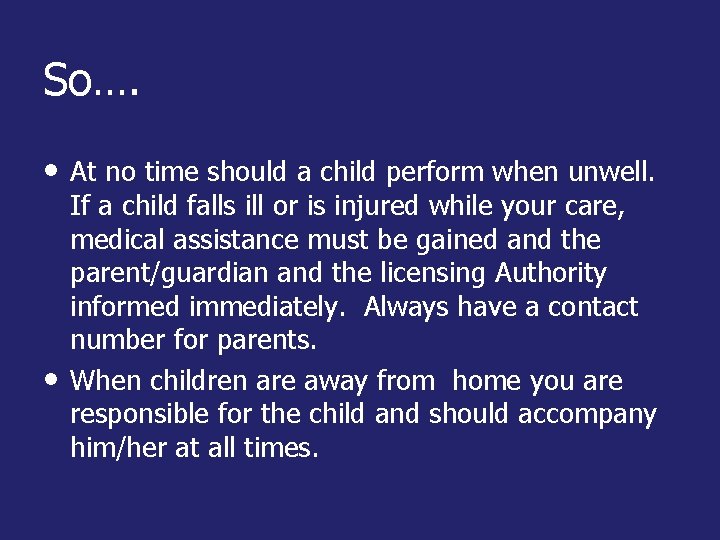
So…. • At no time should a child perform when unwell. • If a child falls ill or is injured while your care, medical assistance must be gained and the parent/guardian and the licensing Authority informed immediately. Always have a contact number for parents. When children are away from home you are responsible for the child and should accompany him/her at all times.
And… • This responsibility includes – seeing that his/her lodgings are satisfactory in every way; – that she/he is properly occupied during his/her spare time – that there are suitable arrangements for meals -food should normally be provided at the lodgings. • The chaperone must arrange to sleep in the accommodation in which the children sleep near to the rooms occupied by the children.
On Set • Adults with an untoward interest in children may • • seek employment where children are known to be. Some people on set may be bullies, or take a cavalier attitude to health and safety We need to be sure that everything possible is done to protect the children in our care from suffering harm.
Venue Requirements • DRESSING ROOMS – Children of five years and older must not use a ‘mixed’ dressing room. • TOILETS – There must be proper toilets and washing facilities. • REST ROOMS – And a place to eat • SUPERVISION – At all times! Stage Door
DANGEROUS PERFORMANCES • No child under school leaving age school age is • • • permitted to take part in a performance or rehearsal that may endanger life or limb This could include, for example heavy lifting or parts i. e. swimming if they don’t know how to swim. Chaperones should stop the producer using children this way Inform the LA and/or Health and Safety
And… • The Act and Regulations are designed to – safeguard the child’s welfare at all times – prevent a child being exploited by working too many hours that could harm the child’s general well-being or education.
CHILD PROTECTION • Identify potential Child Protection issues • Know what initial steps should be taken • Know how to inform us of any concerns about Child Protection
Warning • In many places it is illegal not to report if you • have reason to suspect a child is at risk of harm – eg Section 72, Child and Family Services Act, Ontario - penalty of $1000 In England, you will be in breach of your duty of care. – The individual could be culpable of misconduct. – This could lead to them being dismissed and/or placed on List 99.
What is child abuse? • Definitions of child abuse vary across time, • • culture and geography Although child rearing practices may vary, all children are protected by the law of this country against abuse. Child abuse is the range of ways in which people harm children significantly.
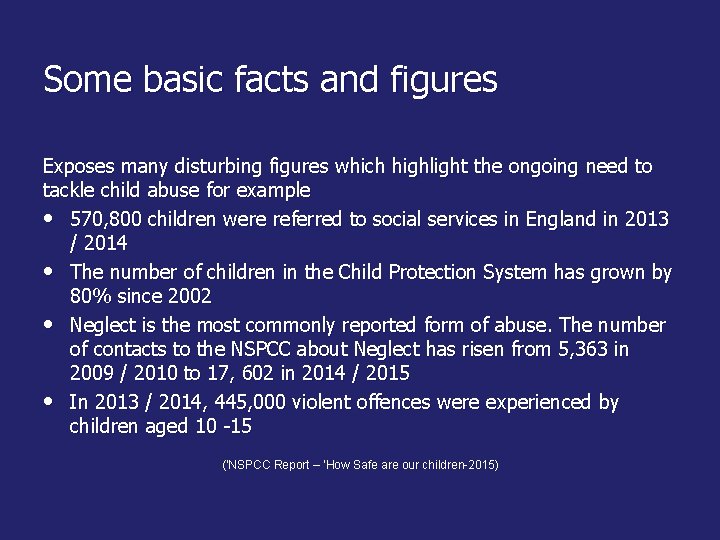
Some basic facts and figures Exposes many disturbing figures which highlight the ongoing need to tackle child abuse for example • 570, 800 children were referred to social services in England in 2013 / 2014 • The number of children in the Child Protection System has grown by 80% since 2002 • Neglect is the most commonly reported form of abuse. The number of contacts to the NSPCC about Neglect has risen from 5, 363 in 2009 / 2010 to 17, 602 in 2014 / 2015 • In 2013 / 2014, 445, 000 violent offences were experienced by children aged 10 -15 (‘NSPCC Report – ‘How Safe are our children-2015)
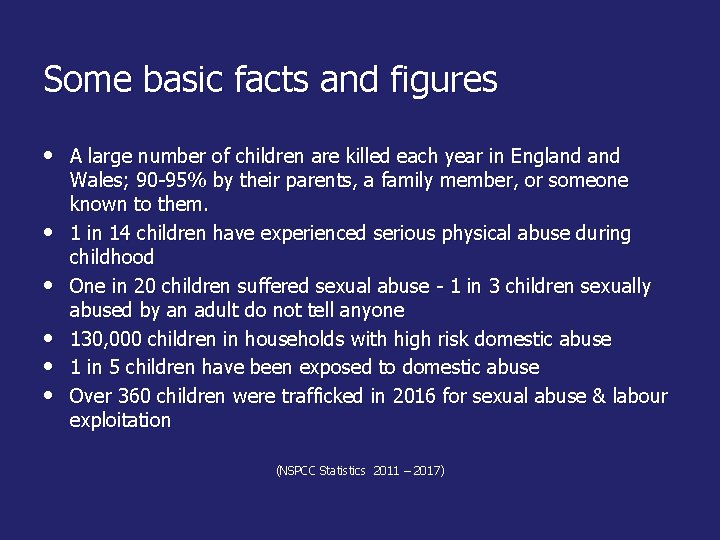
Some basic facts and figures • A large number of children are killed each year in England • • • Wales; 90 -95% by their parents, a family member, or someone known to them. 1 in 14 children have experienced serious physical abuse during childhood One in 20 children suffered sexual abuse - 1 in 3 children sexually abused by an adult do not tell anyone 130, 000 children in households with high risk domestic abuse 1 in 5 children have been exposed to domestic abuse Over 360 children were trafficked in 2016 for sexual abuse & labour exploitation (NSPCC Statistics 2011 – 2017)
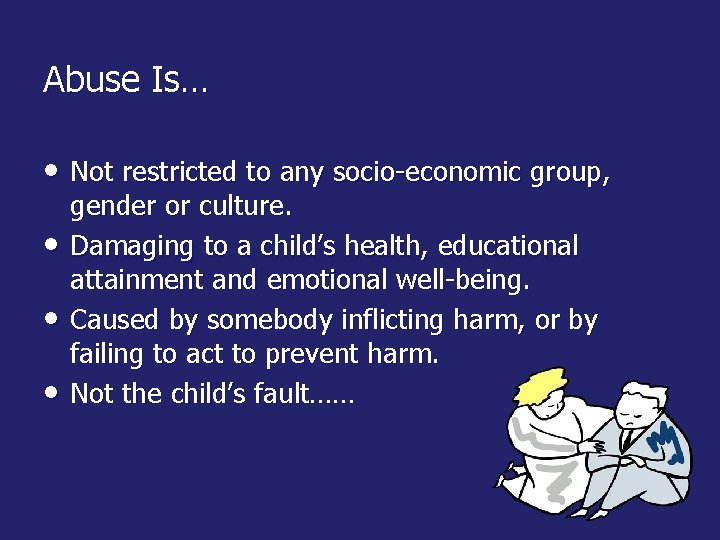
Abuse Is… • Not restricted to any socio-economic group, • • • gender or culture. Damaging to a child’s health, educational attainment and emotional well-being. Caused by somebody inflicting harm, or by failing to act to prevent harm. Not the child’s fault……
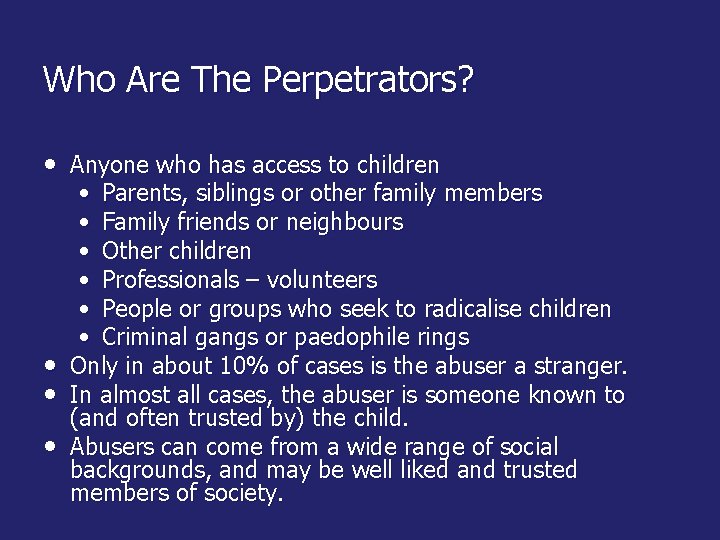
Who Are The Perpetrators? • Anyone who has access to children • Parents, siblings or other family members • Family friends or neighbours • Other children • Professionals – volunteers • People or groups who seek to radicalise children • Criminal gangs or paedophile rings Only in about 10% of cases is the abuser a stranger. In almost all cases, the abuser is someone known to (and often trusted by) the child. Abusers can come from a wide range of social backgrounds, and may be well liked and trusted members of society. • • •
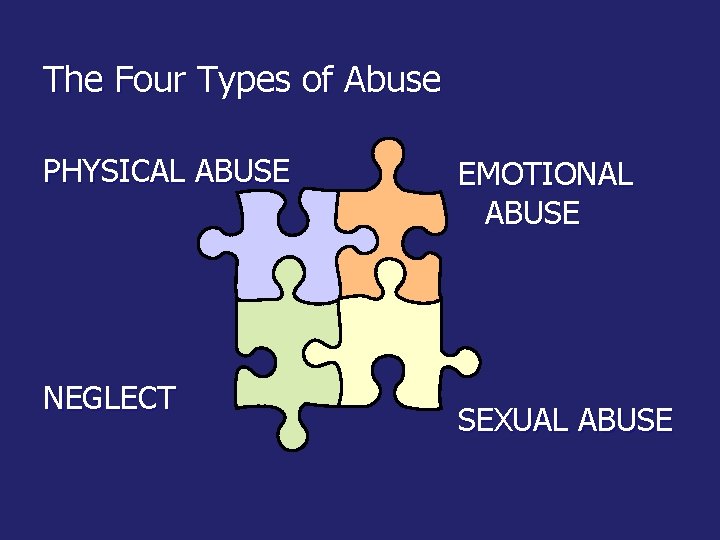
The Four Types of Abuse PHYSICAL ABUSE EMOTIONAL ABUSE NEGLECT SEXUAL ABUSE
RECORD IT REPORT IT What To Do If You’re Worried A Child Is Being Abused
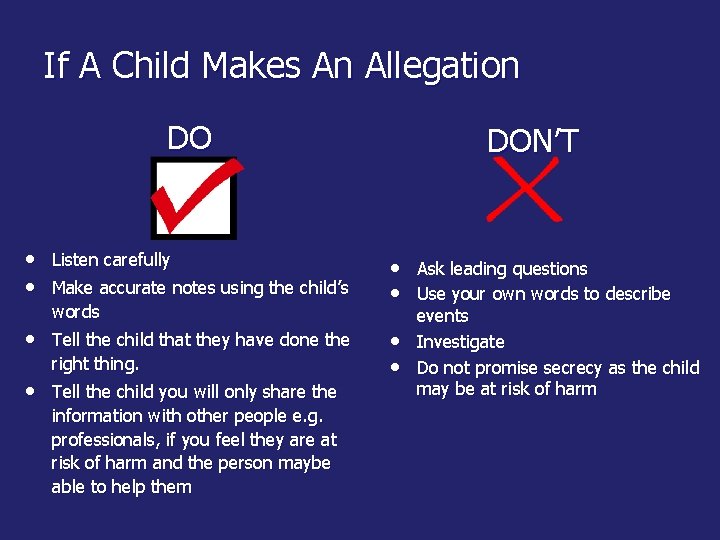
If A Child Makes An Allegation DO DON’T • Listen carefully • Make accurate notes using the child’s words • Tell the child that they have done the right thing. • Tell the child you will only share the information with other people e. g. professionals, if you feel they are at risk of harm and the person maybe able to help them • Ask leading questions • Use your own words to describe • • events Investigate Do not promise secrecy as the child may be at risk of harm
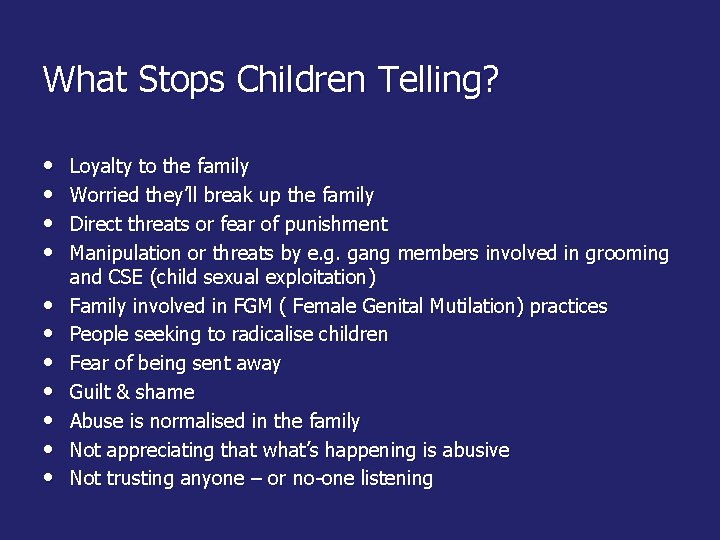
What Stops Children Telling? • • • Loyalty to the family Worried they’ll break up the family Direct threats or fear of punishment Manipulation or threats by e. g. gang members involved in grooming and CSE (child sexual exploitation) Family involved in FGM ( Female Genital Mutilation) practices People seeking to radicalise children Fear of being sent away Guilt & shame Abuse is normalised in the family Not appreciating that what’s happening is abusive Not trusting anyone – or no-one listening
Information Sharing • The Data Protection Act allows you to share information with us without consent in order to safeguard the welfare of the child. • Giving information for the protection of a child who may have been, or has been abused, is not a breach of confidentiality.
Confidentiality • No member of staff should give an undertaking • • • to anyone keep abuse a secret – but confidentiality is not secrecy. Only those that need to know should be told of a suspicion/allegation/disclosure of abuse. The test is whether or not the person has any legitimate involvement or role in dealing with the issue. Child protection concerns must never become backstage or greenroom gossip.
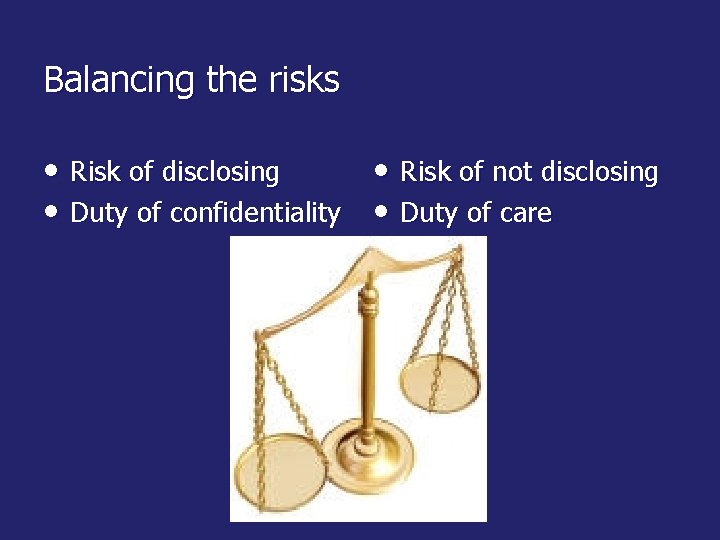
Balancing the risks • Risk of disclosing • Risk of not disclosing • Duty of confidentiality • Duty of care
Involving Parents • Parents of any child deemed to be at risk should be treated with respect. • Generally, you should always inform parents that you are about to or just have made a referral to Children’s Services • However, the referral should not be delayed because parents cannot be contacted.
Don’t Talk To The Family If • It could place the child or other persons at risk, • • or jeopardise further action in respect of child protection. The parent is the suspected perpetrator You suspect organised or multiple abuse is suspected Informing the parent could lead to evidence being ‘lost’ or destroyed Fabricated illness is suspected
What Next? • When a child makes a disclosure, it is not your duty to investigate further, or to make enquiries of parents. Delay is likely to prejudice the welfare of the • Delay is likely to prejudice the welfare of the child - you must record and report this right away. • The Local Authority’s duty is to investigate any reasonable suspicion that a child is suffering or likely to suffer, significant harm
Who Do I Report It To? • Local Authority Children’s Services • Police (Child Abuse Investigation) • NSPCC
Workforce Allegations • We need to investigate any allegation complaint or concern however, and by whoever, raised that might indicate that a person has – harmed a child or put a child at risk of harm; or – displayed behaviour involving or related to a child that might constitute a criminal offence; – behaved in a way that raises concern about his/her suitability to work with children
Allegations Against Staff • The basic principles remain the same. • The initial Point of contact is the Local Authority • • Designated Officer – or the Police in urgent matters. If a criminal matter is referred to us, a joint investigation with the Police will take place If the allegation is malicious or unfounded, careful thought needs to be given to dealing with the aftermath.
Protecting Yourselves • Safe Practice • Avoid possibility of actions being misconstrued. • Special relationships & favouritism • No unsupervised contact • Crushes • Refer to guidance handbook
Safeguarding For Staff - Basics • Ensure that your relationships with children in your care • are appropriate to the age and gender of the child. As a general principle, we advise you to avoid: • gratuitous physical contact with children in your charge • inappropriate disclosures about your private lives or personal details, • Meeting children outside your role as a chaperone. • Condoning or promoting inappropriate behaviour;
Resources • • • Childline: www. childline. org. uk Kidscape: www. kidscape. org. uk NSPCC: www. nspcc. org. uk The Hideout: www. thehideout. org. uk NNCEE: www. bucksinfo. net/nncee BBC Child Protection Policy: www. bbc. co. uk/info/policies/pdf/child_protection_policy. pdf Working together to Safeguard children 2015 document • https: //www. gov. uk/government/publications/working-together-to-safeguardchildren--2 The Children (Performances and Activities) (England) Regulations 2014 • http: //www. nncee. org. uk/attachments/article/222/3309%206. 2. 15%20 The%20 Children%20%28 Performance%20 and%20 Activities%29%28 England%29%20 R egulations%202014. pdf
. • If you come across obscene material involving children you can report the sites to the Internet Watch Foundation (IWF) at www. iwf, org. uk. • If a child receives abusive email or phone calls, or is asked to do something sexual online, report it to the Child Exploitation and Online Protection Centre at www. ceop. gov. uk
Contact Numbers • Duty Triage and Assessments Team • • • – 0118 908 8002 Emergency Duty Team (outside office hours) – 01344 786543 Thames Valley Police • 101 NSPCC • 0808 800 5000
Contact Numbers & Email • Zadie Broad – Child Employment Officer – 0118 974 6206 or zadie. broad@wokingham. gov. uk • Alison Pennicott – Administrator - Education Welfare – 0118 974 6193 or Alison. Pennicott@wokingham. gov. uk
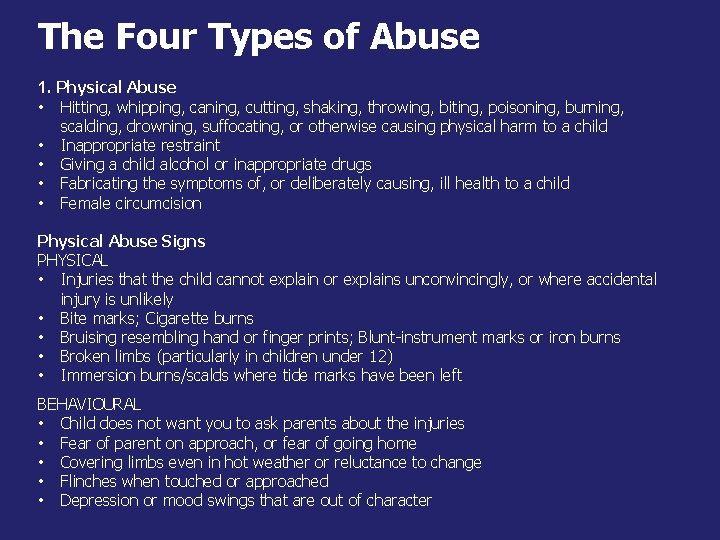
The Four Types of Abuse 1. Physical Abuse • Hitting, whipping, caning, cutting, shaking, throwing, biting, poisoning, burning, scalding, drowning, suffocating, or otherwise causing physical harm to a child • Inappropriate restraint • Giving a child alcohol or inappropriate drugs • Fabricating the symptoms of, or deliberately causing, ill health to a child • Female circumcision Physical Abuse Signs PHYSICAL • Injuries that the child cannot explain or explains unconvincingly, or where accidental injury is unlikely • Bite marks; Cigarette burns • Bruising resembling hand or finger prints; Blunt-instrument marks or iron burns • Broken limbs (particularly in children under 12) • Immersion burns/scalds where tide marks have been left BEHAVIOURAL • Child does not want you to ask parents about the injuries • Fear of parent on approach, or fear of going home • Covering limbs even in hot weather or reluctance to change • Flinches when touched or approached • Depression or mood swings that are out of character
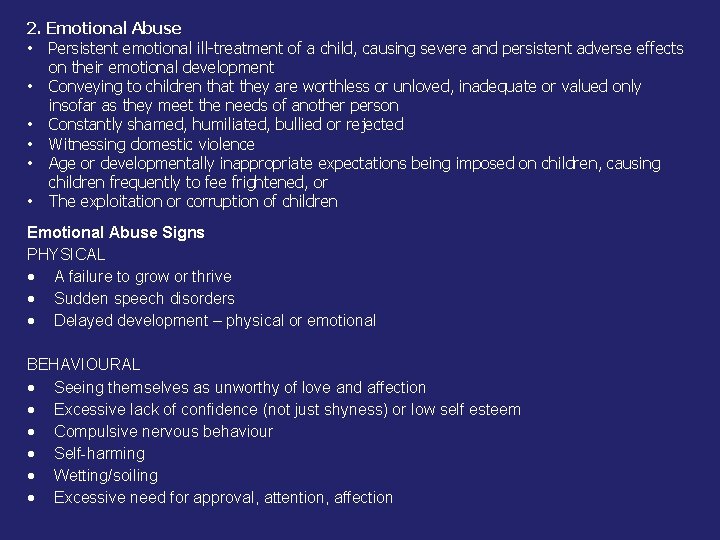
2. Emotional Abuse • Persistent emotional ill-treatment of a child, causing severe and persistent adverse effects on their emotional development • Conveying to children that they are worthless or unloved, inadequate or valued only insofar as they meet the needs of another person • Constantly shamed, humiliated, bullied or rejected • Witnessing domestic violence • Age or developmentally inappropriate expectations being imposed on children, causing children frequently to fee frightened, or • The exploitation or corruption of children Emotional Abuse Signs PHYSICAL A failure to grow or thrive Sudden speech disorders Delayed development – physical or emotional BEHAVIOURAL Seeing themselves as unworthy of love and affection Excessive lack of confidence (not just shyness) or low self esteem Compulsive nervous behaviour Self-harming Wetting/soiling Excessive need for approval, attention, affection
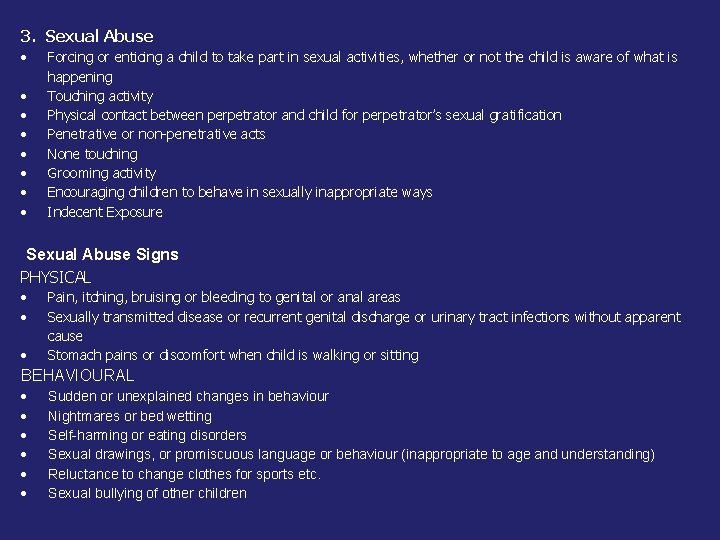
3. Sexual Abuse Forcing or enticing a child to take part in sexual activities, whether or not the child is aware of what is happening Touching activity Physical contact between perpetrator and child for perpetrator’s sexual gratification Penetrative or non-penetrative acts None touching Grooming activity Encouraging children to behave in sexually inappropriate ways Indecent Exposure Sexual Abuse Signs PHYSICAL Pain, itching, bruising or bleeding to genital or anal areas Sexually transmitted disease or recurrent genital discharge or urinary tract infections without apparent cause Stomach pains or discomfort when child is walking or sitting BEHAVIOURAL Sudden or unexplained changes in behaviour Nightmares or bed wetting Self-harming or eating disorders Sexual drawings, or promiscuous language or behaviour (inappropriate to age and understanding) Reluctance to change clothes for sports etc. Sexual bullying of other children
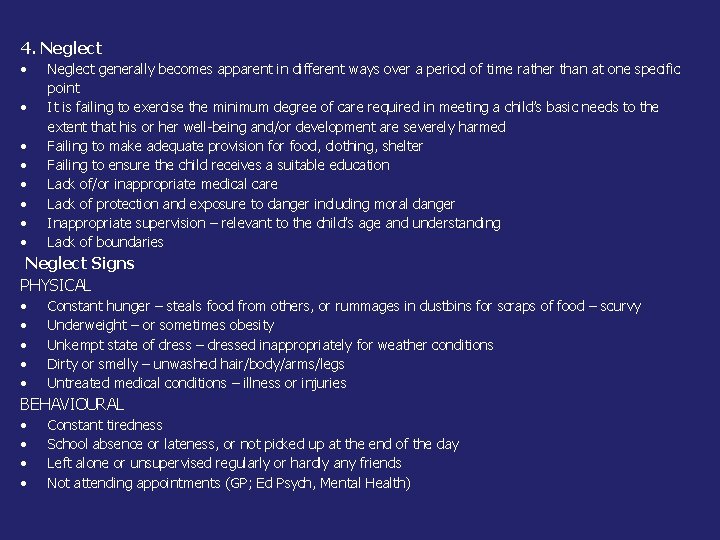
4. Neglect generally becomes apparent in different ways over a period of time rather than at one specific point It is failing to exercise the minimum degree of care required in meeting a child’s basic needs to the extent that his or her well-being and/or development are severely harmed Failing to make adequate provision for food, clothing, shelter Failing to ensure the child receives a suitable education Lack of/or inappropriate medical care Lack of protection and exposure to danger including moral danger Inappropriate supervision – relevant to the child’s age and understanding Lack of boundaries Neglect Signs PHYSICAL Constant hunger – steals food from others, or rummages in dustbins for scraps of food – scurvy Underweight – or sometimes obesity Unkempt state of dress – dressed inappropriately for weather conditions Dirty or smelly – unwashed hair/body/arms/legs Untreated medical conditions – illness or injuries BEHAVIOURAL Constant tiredness School absence or lateness, or not picked up at the end of the day Left alone or unsupervised regularly or hardly any friends Not attending appointments (GP; Ed Psych, Mental Health)
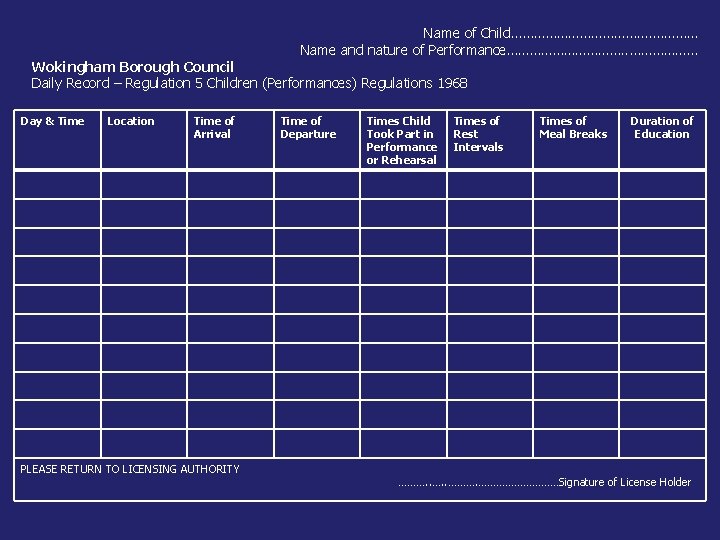
Name of Child……………… Name and nature of Performance……………. . ……………… Wokingham Borough Council Daily Record – Regulation 5 Children (Performances) Regulations 1968 Day & Time Location Time of Arrival Time of Departure Times Child Took Part in Performance or Rehearsal Times of Rest Intervals Times of Meal Breaks Duration of Education PLEASE RETURN TO LICENSING AUTHORITY ……………Signature of License Holder