
Chap 26 Fundamentals of Genetics I Mendel II
- Slides: 15
Chap 26 : Fundamentals of Genetics I. Mendel II. -- Gregor Mendel – “Father of Genetics” – worked with pea plants. Discovered inheritance (passing of traits from parents to offspring)
A. Terminology 1. Pure or Strain – trait that’s always passed to offspring. 2. P 1 generation – parents 3. F 1 generation – 1 st filial generation – offspring of P 1 4. F 2 generation – offspring of F 1
B. 3 Principles of inheritance 1. Principle of Dominance and Recessiveness – says that traits that mask other traits are called dominant traits (R) and those that don’t are recessive traits (r). 2. Principle of Segregation – each trait is expressed by 2 factors – one from each parent Ex. RR x rr = Rr (mom) (dad) (offspring)
3. Principle of Independent Assortment – says traits are independent from each other. Ex. Eye color and hair color are independent of each other. C. Chromosomes and Genes gene chromosome gene – piece of DNA calling for a specific trait – like eye color allele – that form of a gene. Ex. Blue, brown, or green
II. Genetic Crosses A. 1. Genotype – genetic makeup of an organism. Expressed with letters. (Rr) 2. Phenotype – physical appearance of an organism (ex. Blue eyes) 3. Homozygous – when both alleles of a pair are the same. (RR or rr) 4. Heterozygous – when the alleles of a pair are not the same. (Rr)
Ex. B- black b - blonde Bb (dad) x bb (mom) Geneotype: Bb bb Phenotype: black blonde heterozygous homo. Rec. Homozygous dominant – BB Homozygous recessive – bb 5. Multiple alleles – when 3 or more alleles control 1 trait. ex. Blood type : A, B, O
6. Probability – the likelihood of something occurring. #of 1 kind of event / # of events Ex. 50 tosses of coin 18 heads, 32 tails. What is the probability of tossing a head ? 18/50 = 36 % B. Monohybrid crosses – cross between 1 trait
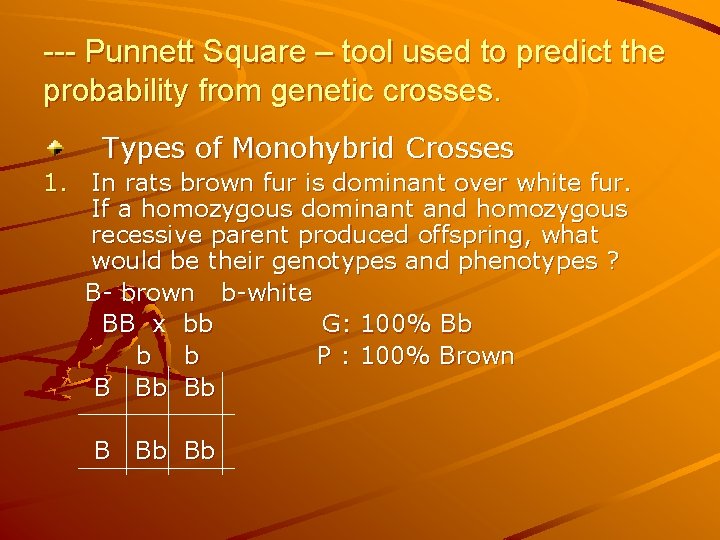
--- Punnett Square – tool used to predict the probability from genetic crosses. Types of Monohybrid Crosses 1. In rats brown fur is dominant over white fur. If a homozygous dominant and homozygous recessive parent produced offspring, what would be their genotypes and phenotypes ? B- brown b-white BB x bb G: 100% Bb b b P : 100% Brown B Bb Bb
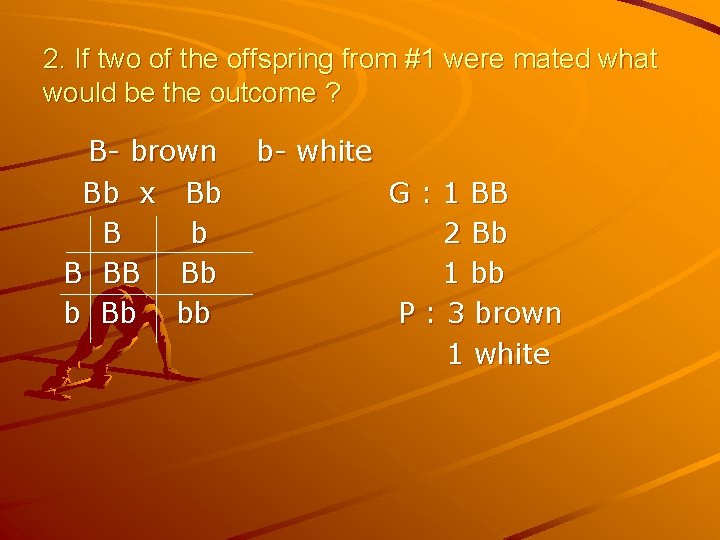
2. If two of the offspring from #1 were mated what would be the outcome ? B- brown Bb x Bb B BB Bb bb b- white G : 1 BB 2 Bb 1 bb P : 3 brown 1 white
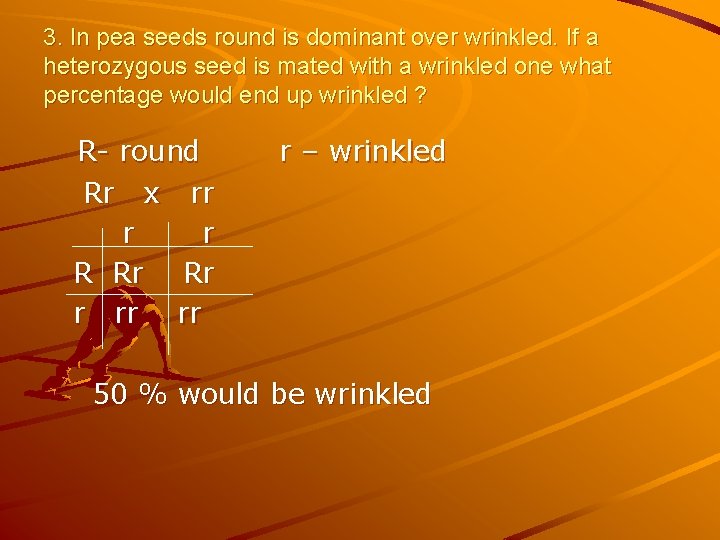
3. In pea seeds round is dominant over wrinkled. If a heterozygous seed is mated with a wrinkled one what percentage would end up wrinkled ? R- round Rr x rr r r R Rr Rr r rr rr r – wrinkled 50 % would be wrinkled
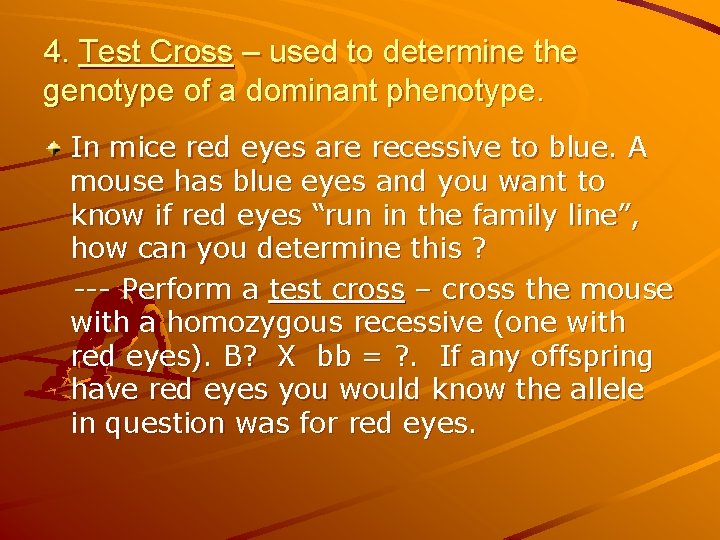
4. Test Cross – used to determine the genotype of a dominant phenotype. In mice red eyes are recessive to blue. A mouse has blue eyes and you want to know if red eyes “run in the family line”, how can you determine this ? --- Perform a test cross – cross the mouse with a homozygous recessive (one with red eyes). B? X bb = ? . If any offspring have red eyes you would know the allele in question was for red eyes.
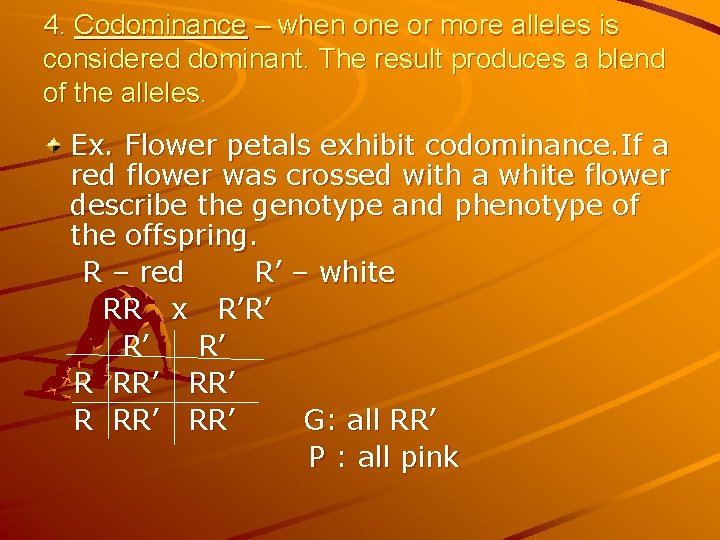
4. Codominance – when one or more alleles is considered dominant. The result produces a blend of the alleles. Ex. Flower petals exhibit codominance. If a red flower was crossed with a white flower describe the genotype and phenotype of the offspring. R – red R’ – white RR x R’R’ R’ R’ R RR’ RR’ G: all RR’ P : all pink
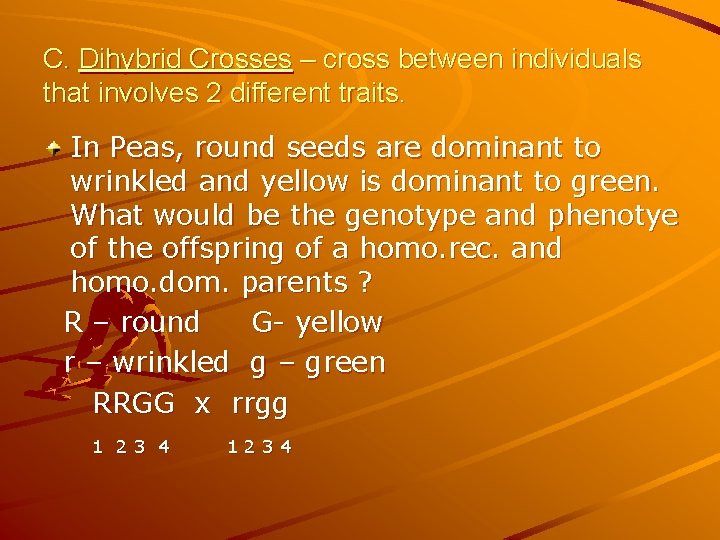
C. Dihybrid Crosses – cross between individuals that involves 2 different traits. In Peas, round seeds are dominant to wrinkled and yellow is dominant to green. What would be the genotype and phenotye of the offspring of a homo. rec. and homo. dom. parents ? R – round G- yellow r – wrinkled g – green RRGG x rrgg 1 23 4 1234
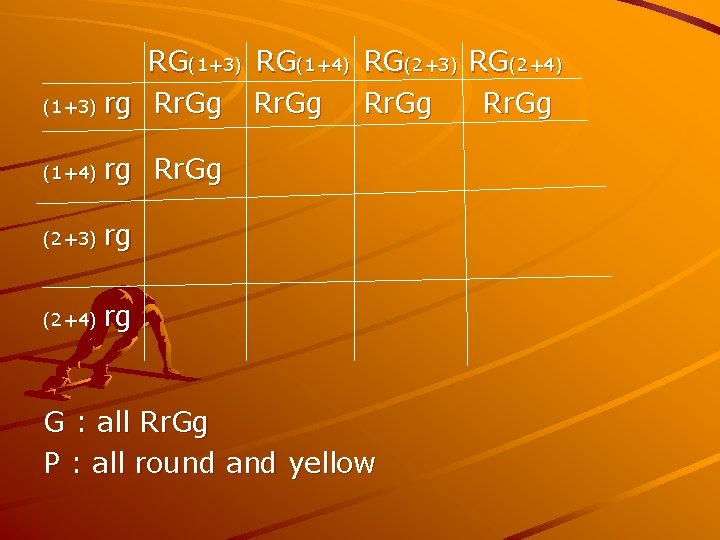
RG(1+3) RG(1+4) RG(2+3) RG(2+4) (1+3) rg Rr. Gg (1+4) rg Rr. Gg (2+3) rg (2+4) rg G : all Rr. Gg P : all round and yellow
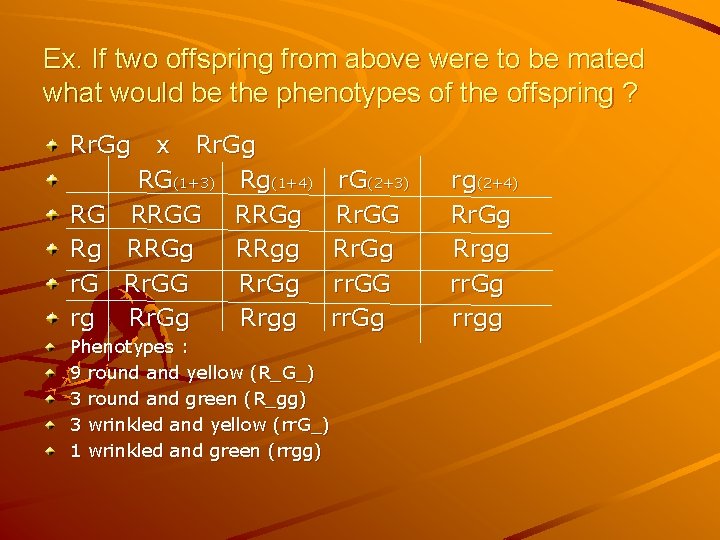
Ex. If two offspring from above were to be mated what would be the phenotypes of the offspring ? Rr. Gg x Rr. Gg RG(1+3) Rg(1+4) RG RRGg Rg RRGg RRgg r. G Rr. Gg rg Rr. Gg Rrgg r. G(2+3) Rr. GG Rr. Gg rr. GG rr. Gg Phenotypes : 9 round and yellow (R_G_) 3 round and green (R_gg) 3 wrinkled and yellow (rr. G_) 1 wrinkled and green (rrgg) rg(2+4) Rr. Gg Rrgg rr. Gg rrgg