
Chap 1Part 1 Introduction to Organic Compounds origin

- Slides: 38
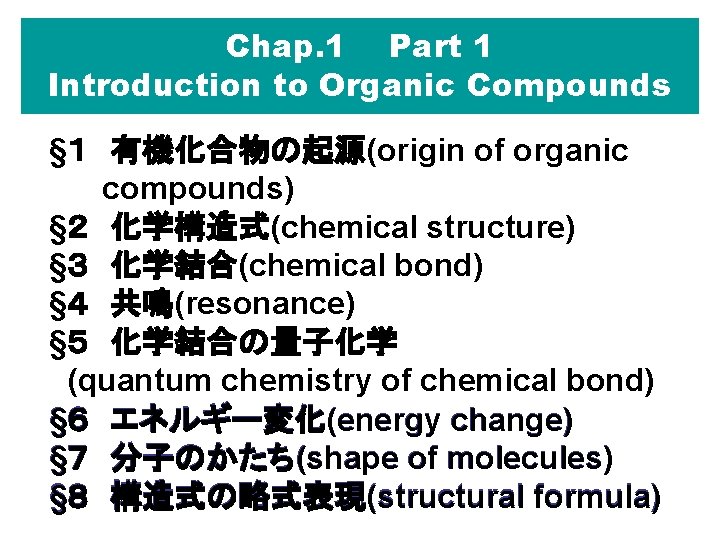
Chap. 1 Part 1 Introduction to Organic Compounds §1 有機化合物の起源(origin of organic compounds) §2 化学構造式(chemical structure) §3 化学結合(chemical bond) §4 共鳴(resonance) §5 化学結合の量子化学 (quantum chemistry of chemical bond) §6 エネルギー変化(energy change) §7 分子のかたち(shape of molecules) §8 構造式の略式表現(structural formula)
Power. Point Lecture Slides requires Microsoft Power. Point Viewer http: //bcs. wiley. com/he-bcs/Books? action=resource&bcs. Id= 1486&item. Id=0471417998&resource. Id=2444 Open. Office. org download (Japanese, Windows) Word, EXCEL, Power Point http: //download. openoffice. org/other. html#ja ACD/Chem. Sketch 11. 0 Freeware (化学構造式作画ソフト) http: //www. acdlabs. com/download/chemsk_download. html
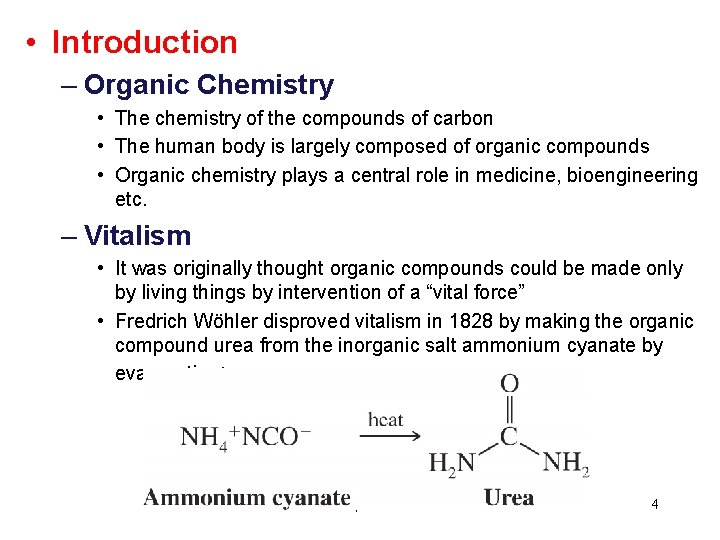
• Introduction – Organic Chemistry • The chemistry of the compounds of carbon • The human body is largely composed of organic compounds • Organic chemistry plays a central role in medicine, bioengineering etc. – Vitalism • It was originally thought organic compounds could be made only by living things by intervention of a “vital force” • Fredrich Wöhler disproved vitalism in 1828 by making the organic compound urea from the inorganic salt ammonium cyanate by evaporation: Chapter 1 4
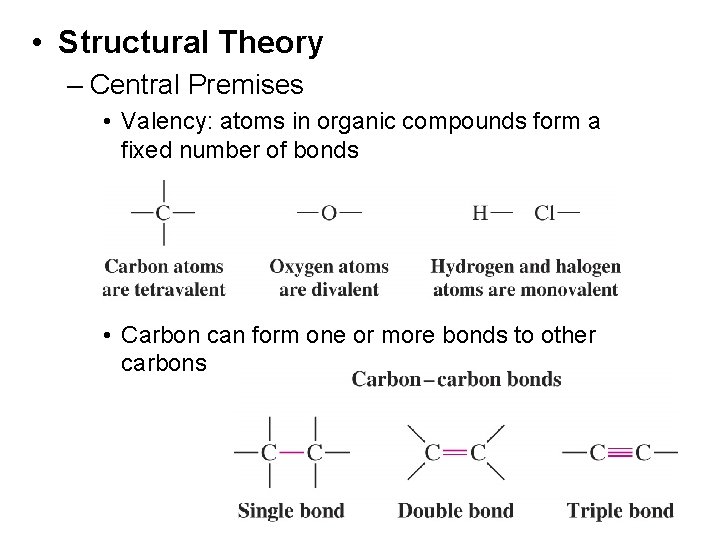
• Structural Theory – Central Premises • Valency: atoms in organic compounds form a fixed number of bonds • Carbon can form one or more bonds to other carbons Chapter 1 6
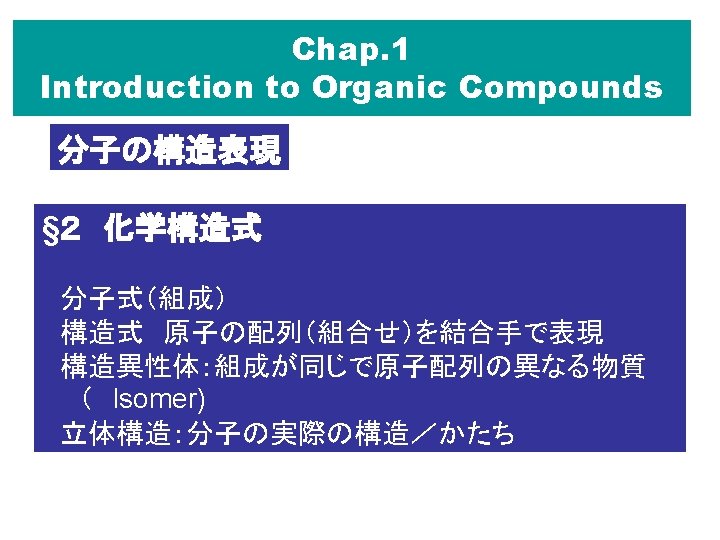
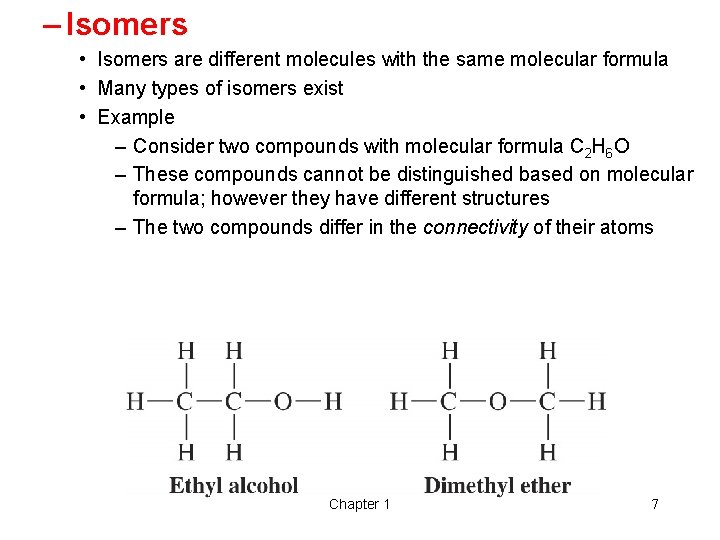
– Isomers • Isomers are different molecules with the same molecular formula • Many types of isomers exist • Example – Consider two compounds with molecular formula C 2 H 6 O – These compounds cannot be distinguished based on molecular formula; however they have different structures – The two compounds differ in the connectivity of their atoms Chapter 1 7
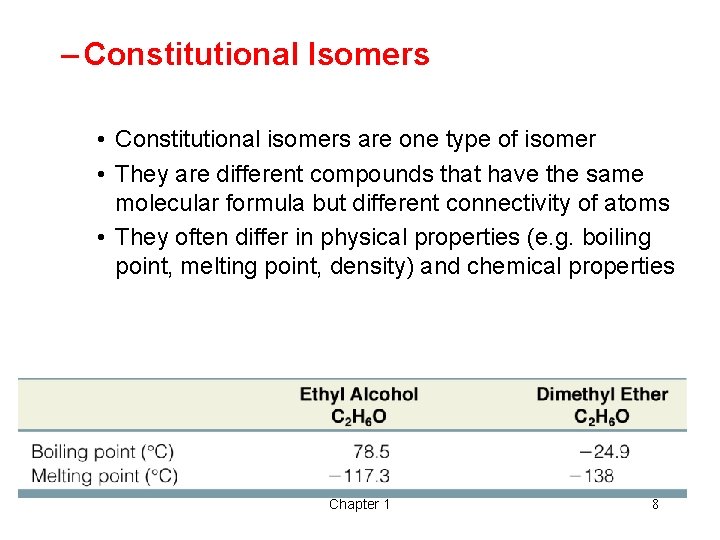
– Constitutional Isomers • Constitutional isomers are one type of isomer • They are different compounds that have the same molecular formula but different connectivity of atoms • They often differ in physical properties (e. g. boiling point, melting point, density) and chemical properties Chapter 1 8
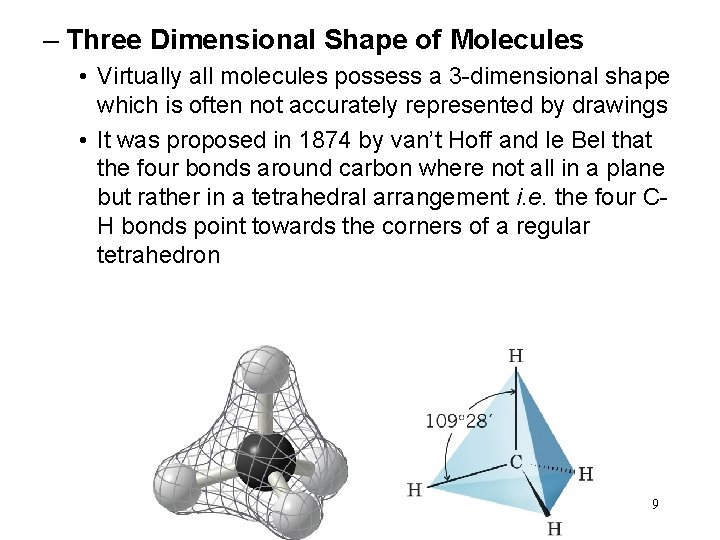
– Three Dimensional Shape of Molecules • Virtually all molecules possess a 3 -dimensional shape which is often not accurately represented by drawings • It was proposed in 1874 by van’t Hoff and le Bel that the four bonds around carbon where not all in a plane but rather in a tetrahedral arrangement i. e. the four CH bonds point towards the corners of a regular tetrahedron Chapter 1 9
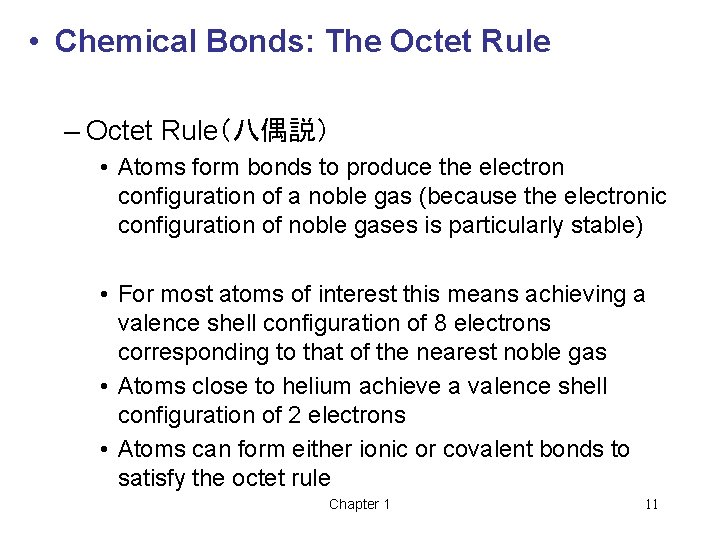
• Chemical Bonds: The Octet Rule – Octet Rule(八偶説) • Atoms form bonds to produce the electron configuration of a noble gas (because the electronic configuration of noble gases is particularly stable) • For most atoms of interest this means achieving a valence shell configuration of 8 electrons corresponding to that of the nearest noble gas • Atoms close to helium achieve a valence shell configuration of 2 electrons • Atoms can form either ionic or covalent bonds to satisfy the octet rule Chapter 1 11
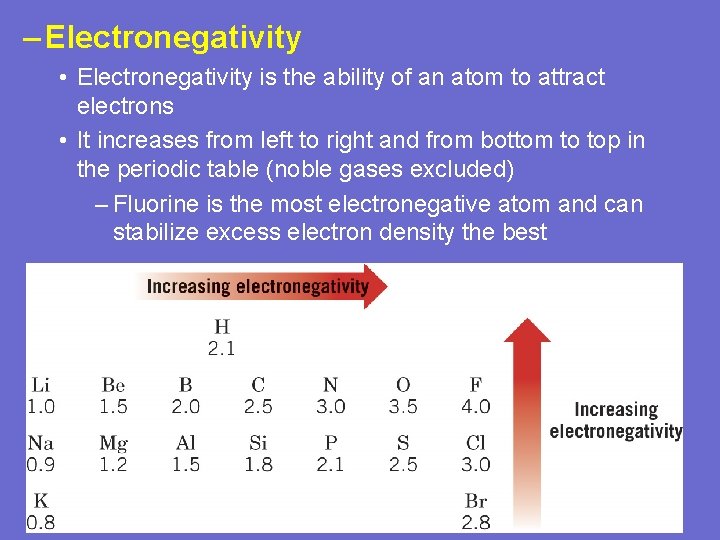
– Electronegativity • Electronegativity is the ability of an atom to attract electrons • It increases from left to right and from bottom to top in the periodic table (noble gases excluded) – Fluorine is the most electronegative atom and can stabilize excess electron density the best Chapter 1 12
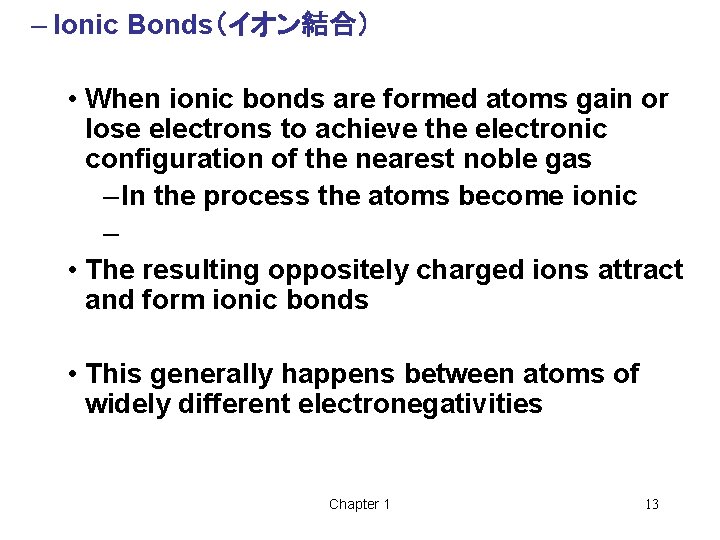
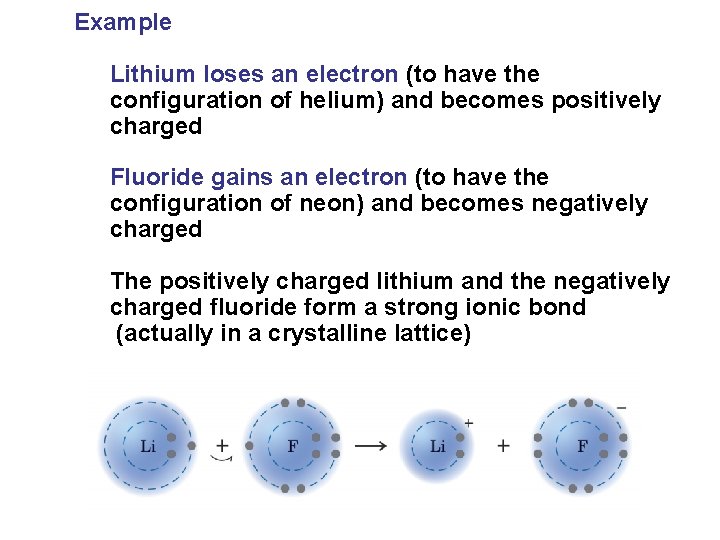
– Ionic Bonds(イオン結合) • When ionic bonds are formed atoms gain or lose electrons to achieve the electronic configuration of the nearest noble gas – In the process the atoms become ionic – • The resulting oppositely charged ions attract and form ionic bonds • This generally happens between atoms of widely different electronegativities Chapter 1 13
Example Lithium loses an electron (to have the configuration of helium) and becomes positively charged Fluoride gains an electron (to have the configuration of neon) and becomes negatively charged The positively charged lithium and the negatively charged fluoride form a strong ionic bond (actually in a crystalline lattice)
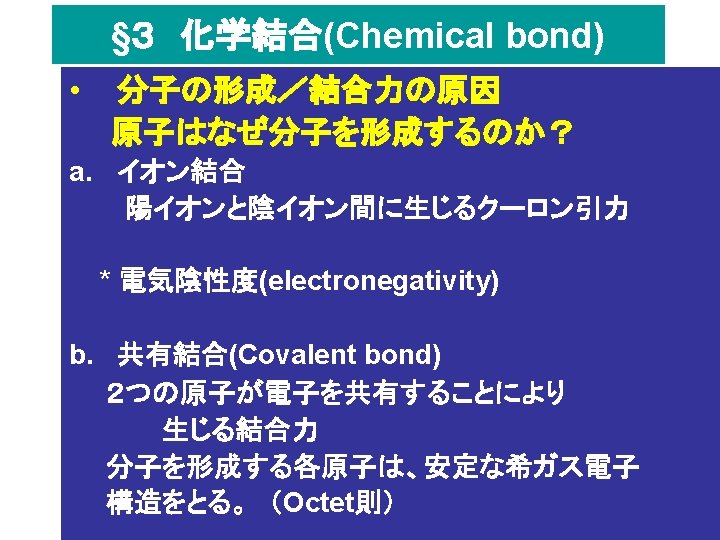
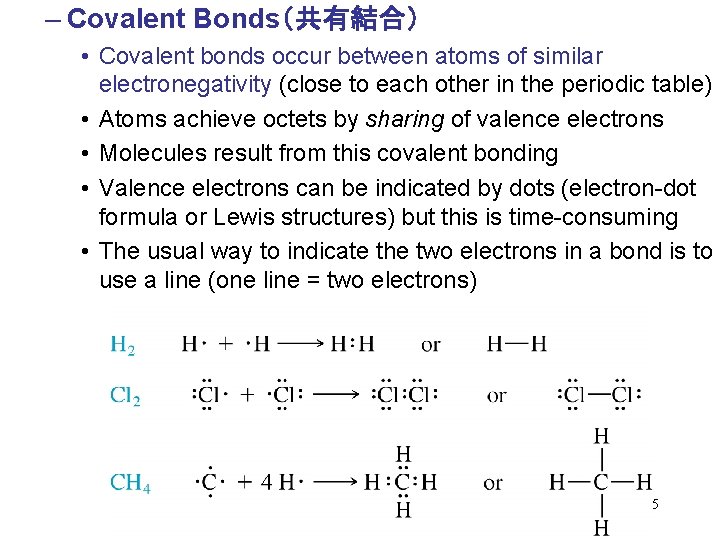
– Covalent Bonds(共有結合) • Covalent bonds occur between atoms of similar electronegativity (close to each other in the periodic table) • Atoms achieve octets by sharing of valence electrons • Molecules result from this covalent bonding • Valence electrons can be indicated by dots (electron-dot formula or Lewis structures) but this is time-consuming • The usual way to indicate the two electrons in a bond is to use a line (one line = two electrons) Chapter 1 15
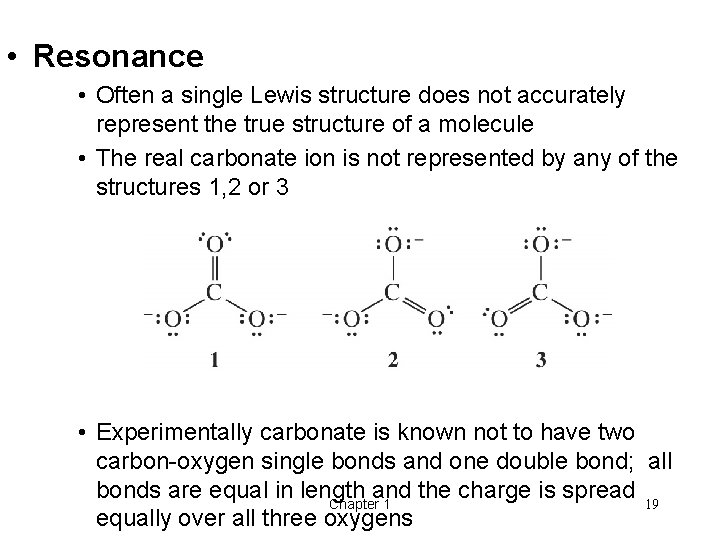
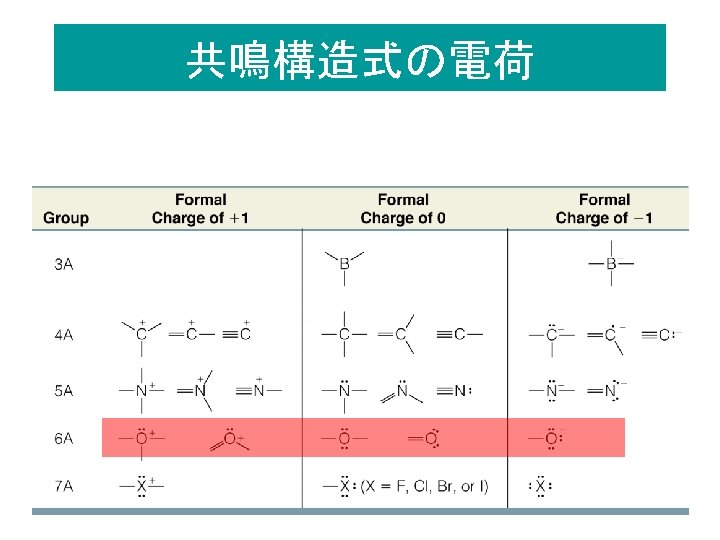
• Resonance • Often a single Lewis structure does not accurately represent the true structure of a molecule • The real carbonate ion is not represented by any of the structures 1, 2 or 3 • Experimentally carbonate is known not to have two carbon-oxygen single bonds and one double bond; all bonds are equal in length and the charge is spread 19 Chapter 1 equally over all three oxygens
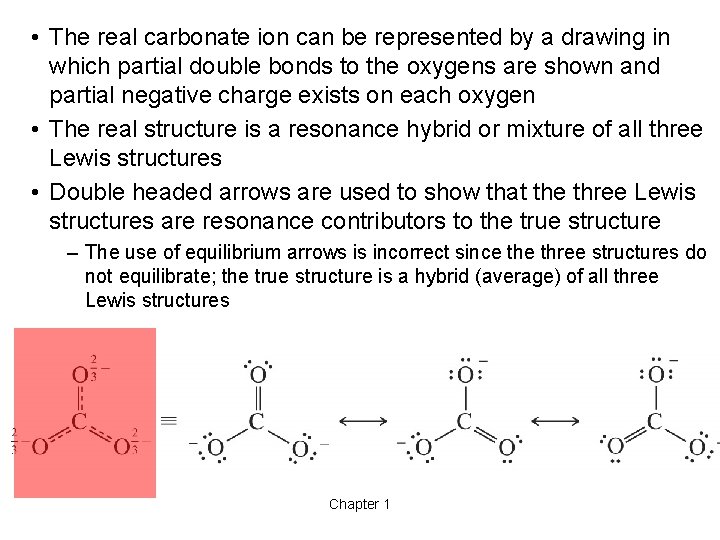
• The real carbonate ion can be represented by a drawing in which partial double bonds to the oxygens are shown and partial negative charge exists on each oxygen • The real structure is a resonance hybrid or mixture of all three Lewis structures • Double headed arrows are used to show that the three Lewis structures are resonance contributors to the true structure – The use of equilibrium arrows is incorrect since three structures do not equilibrate; the true structure is a hybrid (average) of all three Lewis structures Chapter 1
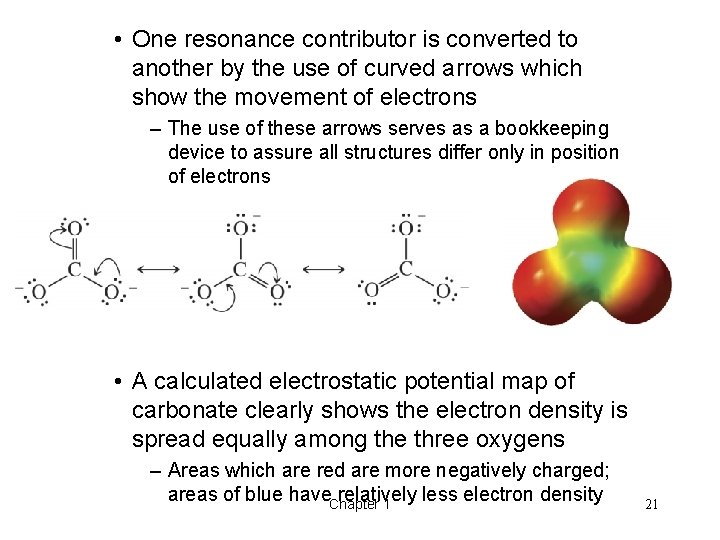
• One resonance contributor is converted to another by the use of curved arrows which show the movement of electrons – The use of these arrows serves as a bookkeeping device to assure all structures differ only in position of electrons • A calculated electrostatic potential map of carbonate clearly shows the electron density is spread equally among the three oxygens – Areas which are red are more negatively charged; areas of blue have. Chapter relatively less electron density 1 21
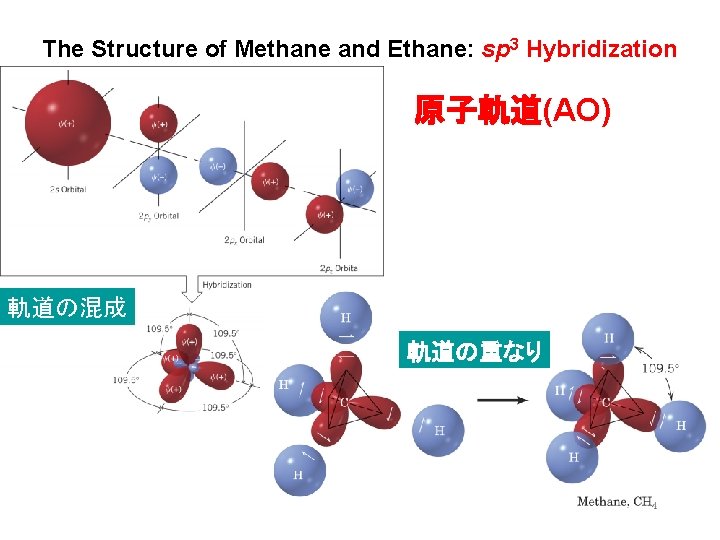
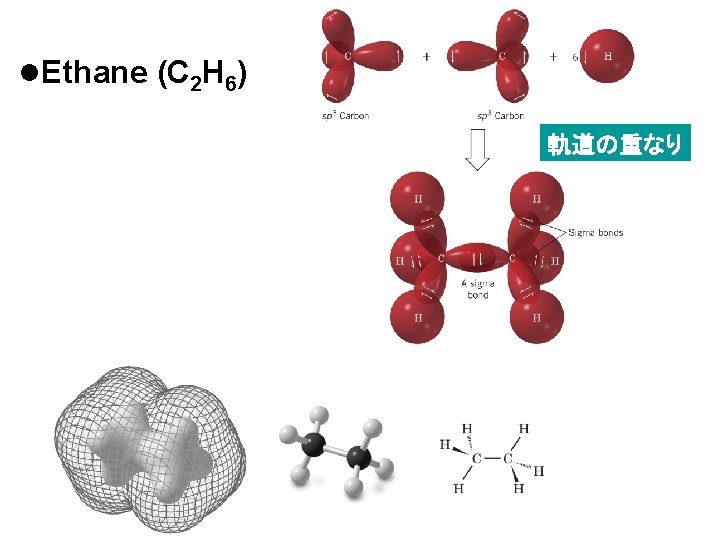
The Structure of Methane and Ethane: sp 3 Hybridization 原子軌道(AO) 軌道の混成 軌道の重なり
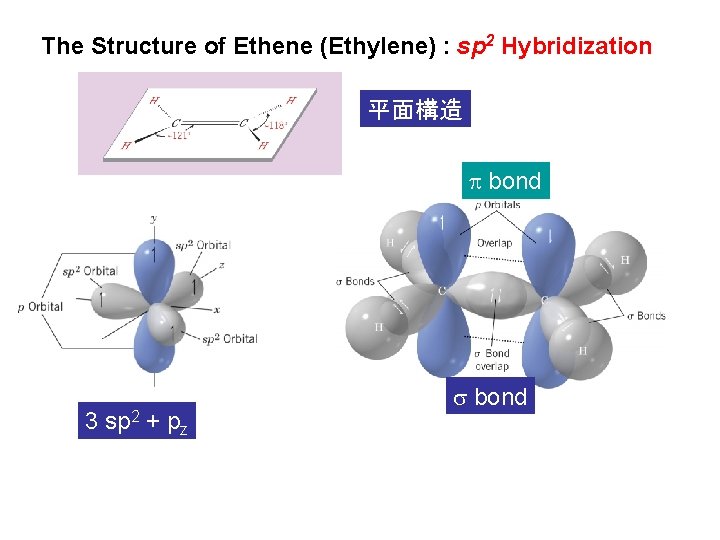
The Structure of Ethene (Ethylene) : sp 2 Hybridization 平面構造 bond 3 sp 2 + pz bond
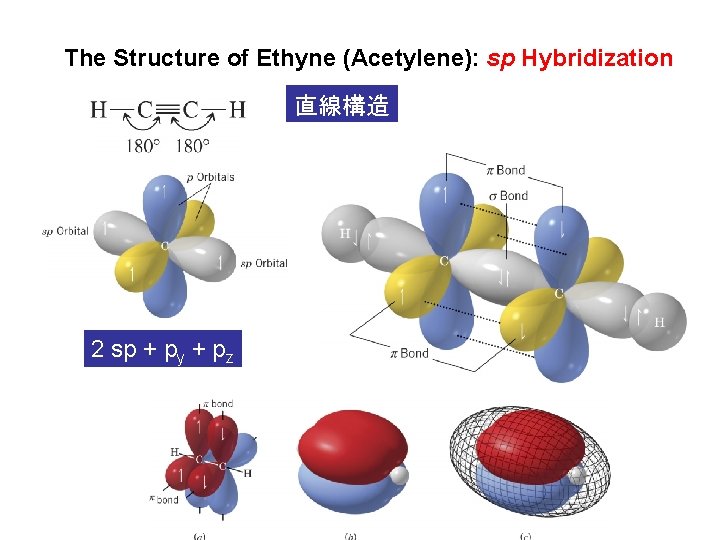
The Structure of Ethyne (Acetylene): sp Hybridization 直線構造 2 sp + py + pz
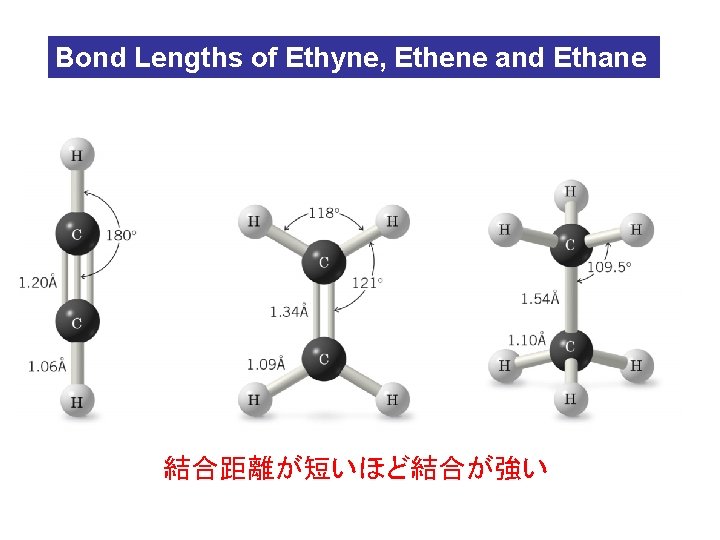
Bond Lengths of Ethyne, Ethene and Ethane 結合距離が短いほど結合が強い
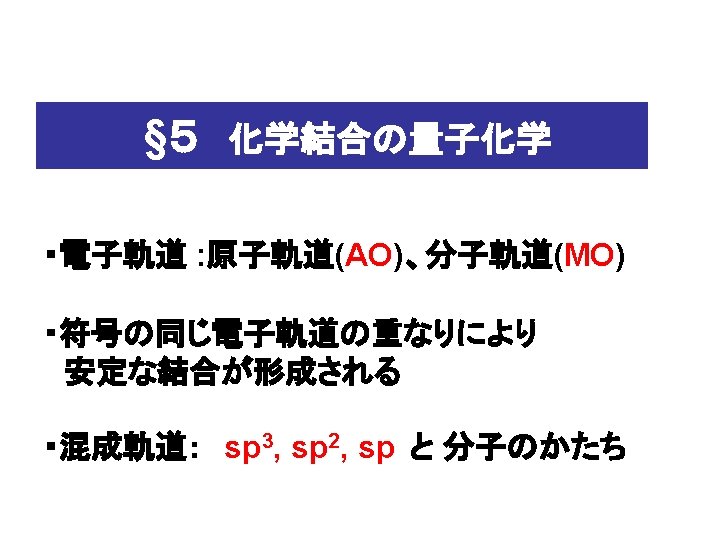
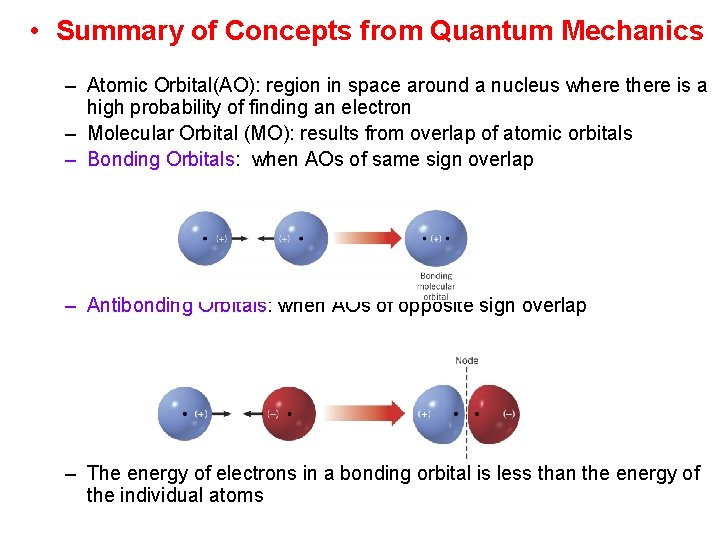
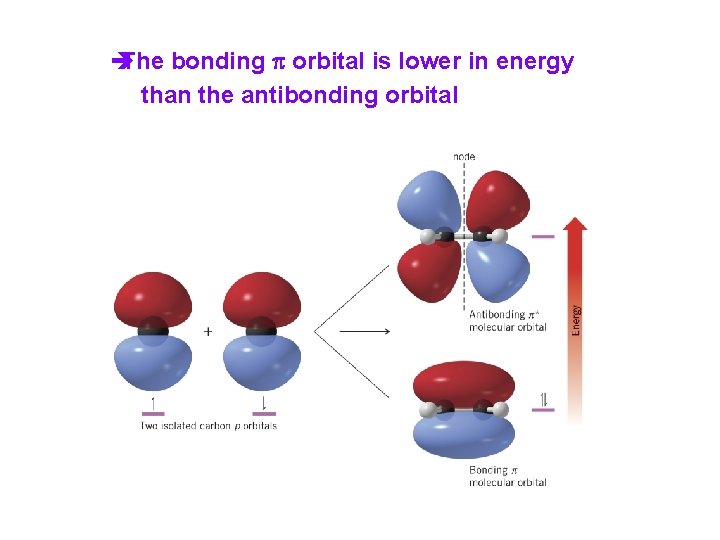
• Summary of Concepts from Quantum Mechanics – Atomic Orbital(AO): region in space around a nucleus where there is a high probability of finding an electron – Molecular Orbital (MO): results from overlap of atomic orbitals – Bonding Orbitals: when AOs of same sign overlap – Antibonding Orbitals: when AOs of opposite sign overlap – The energy of electrons in a bonding orbital is less than the energy of the individual atoms
è The bonding p orbital is lower in energy than the antibonding orbital
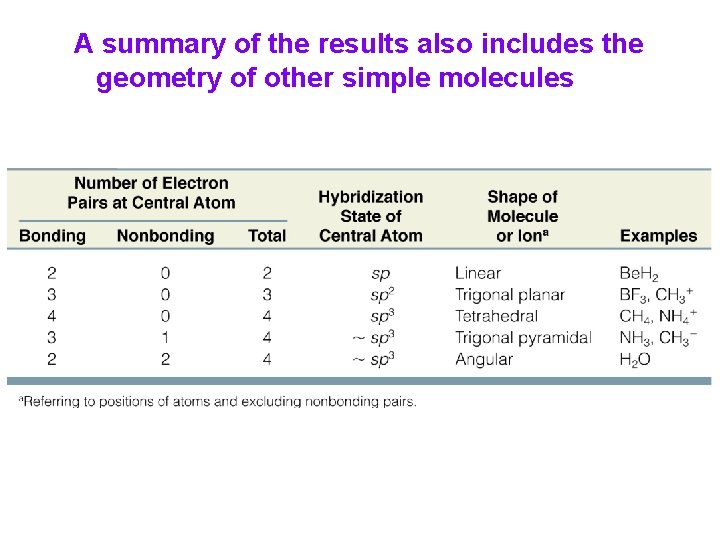
• Molecular Geometry: The Valence Shell Electron Pair Repulsion (VSEPR) Model • This is a simple theory to predict the geometry of molecules • All sets of valence electrons are considered including: – Bonding pairs involved in single or multiple bonds – Non-bonding pairs which are unshared • Electron pairs repel each other and tend to be as far apart as possible from each other • Non-bonding electron pairs tend to repel other electrons more than bonding pairs do (i. e. they are “larger”) • The geometry of the molecule is determined by the number of sets of electrons by using geometrical principles
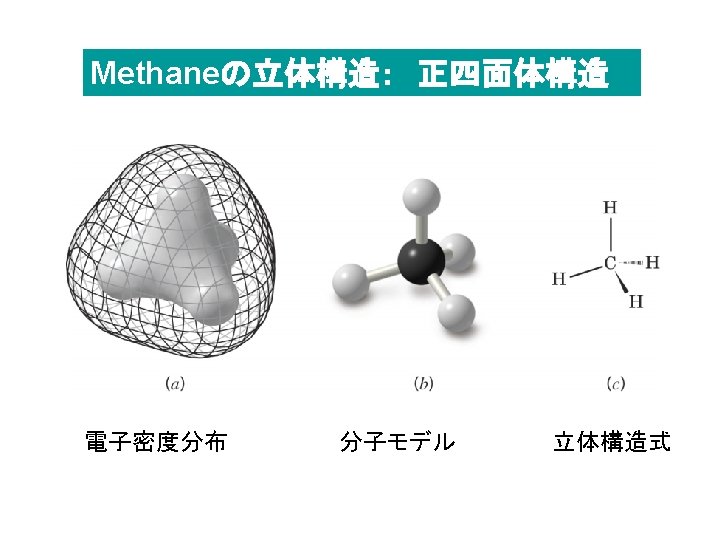
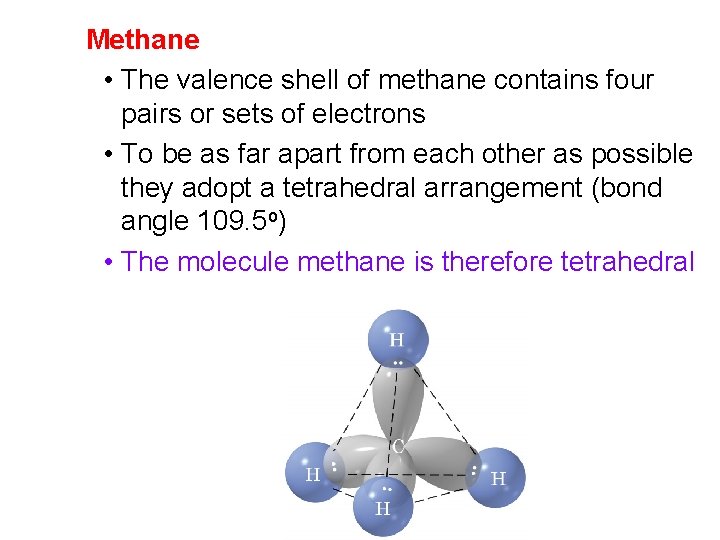
Methane • The valence shell of methane contains four pairs or sets of electrons • To be as far apart from each other as possible they adopt a tetrahedral arrangement (bond angle 109. 5 o) • The molecule methane is therefore tetrahedral
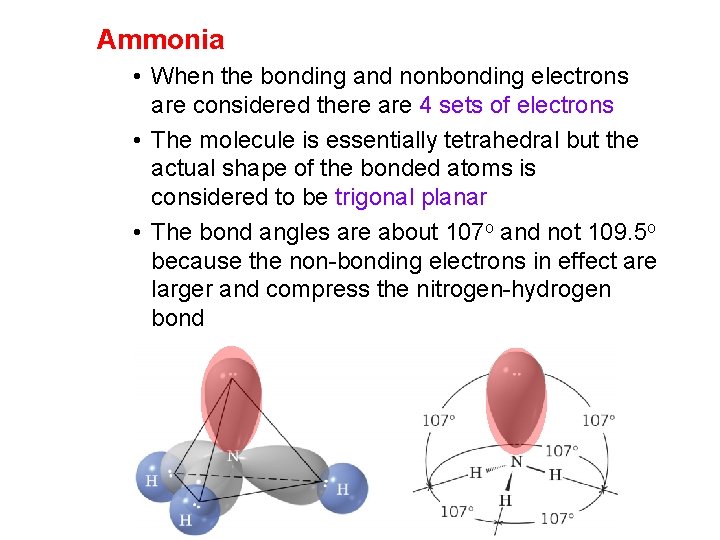
Ammonia • When the bonding and nonbonding electrons are considered there are 4 sets of electrons • The molecule is essentially tetrahedral but the actual shape of the bonded atoms is considered to be trigonal planar • The bond angles are about 107 o and not 109. 5 o because the non-bonding electrons in effect are larger and compress the nitrogen-hydrogen bond
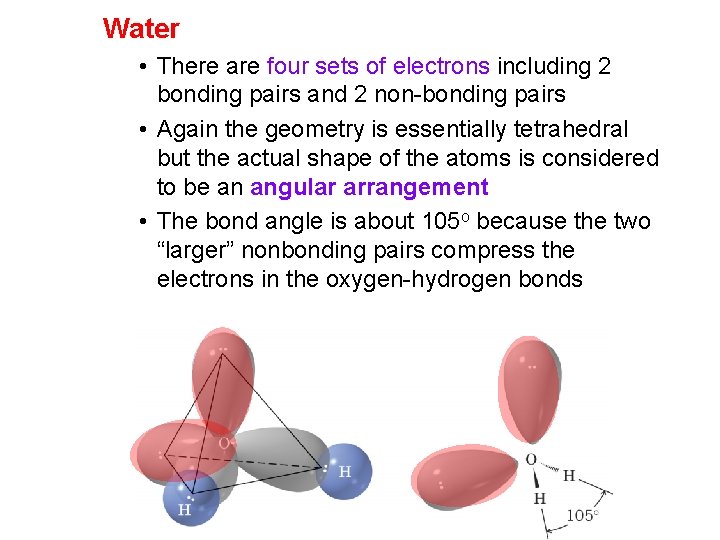
Water • There are four sets of electrons including 2 bonding pairs and 2 non-bonding pairs • Again the geometry is essentially tetrahedral but the actual shape of the atoms is considered to be an angular arrangement • The bond angle is about 105 o because the two “larger” nonbonding pairs compress the electrons in the oxygen-hydrogen bonds
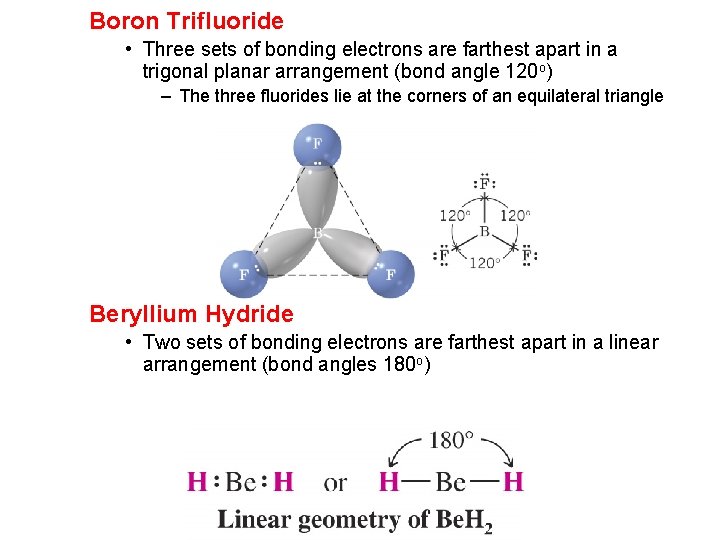
Boron Trifluoride • Three sets of bonding electrons are farthest apart in a trigonal planar arrangement (bond angle 120 o) – The three fluorides lie at the corners of an equilateral triangle Beryllium Hydride • Two sets of bonding electrons are farthest apart in a linear arrangement (bond angles 180 o)
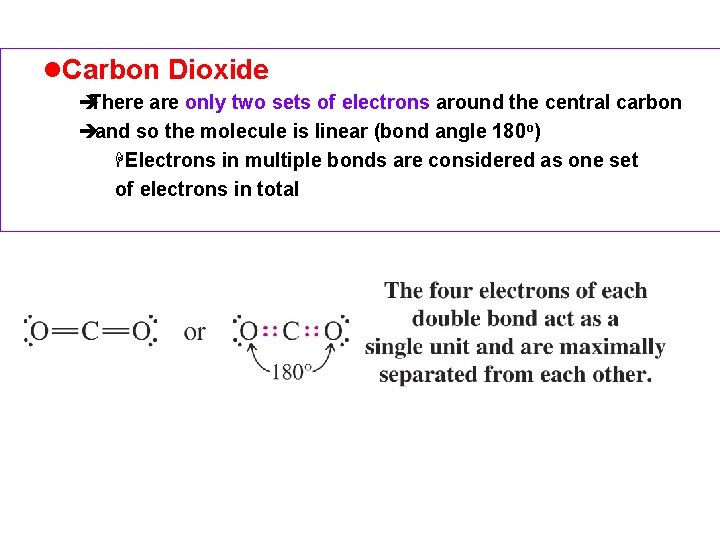
l. Carbon Dioxide è There are only two sets of electrons around the central carbon èand so the molecule is linear (bond angle 180 o) HElectrons in multiple bonds are considered as one set of electrons in total
A summary of the results also includes the geometry of other simple molecules