
Chap 14 Perceptual and linguistic phonetics 1 2
- Slides: 25
Chap 14 Perceptual and linguistic phonetics 1. 2. 3. 4. 5. Staging speech perception Lack of invariance Cues and cue trading Categorical perception Ease of articulation vs. perceptual distinctiveness W. Katz/ UT Dallas/ SPAU 3343 1
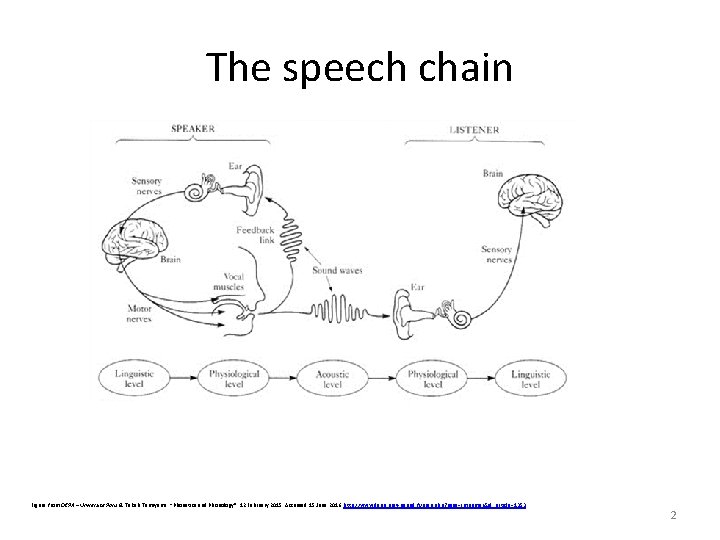
The speech chain Figure from DEPA – Université Paris 8. Takeki Tamiyama. “Phonetics and Phonology”. 12 February 2015. Accessed 15 June 2016. http: //www. depa. univ-paris 8. fr/spip. php? page=imprimer&id_article=1353 2
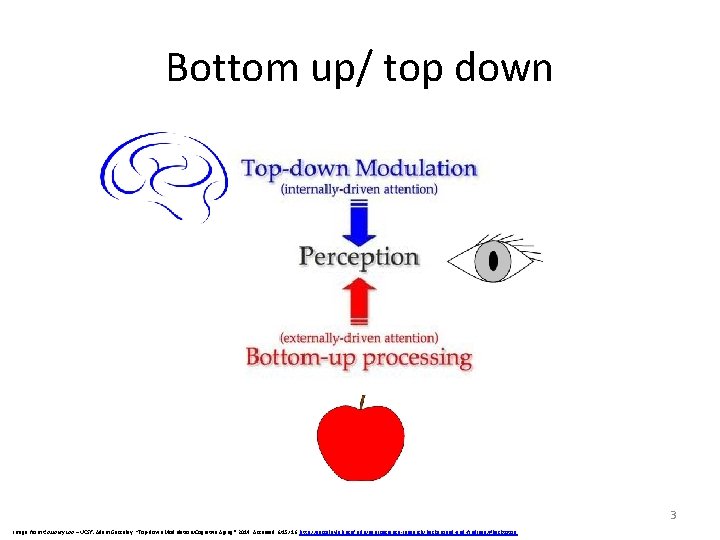
Bottom up/ top down 3 Image from Gazzaley Lab – UCSF. Adam Gazzaley. “Top-down Modulation/Cognitive Aging. ” 2014. Accessed 6/15/16. http: //gazzaleylab. ucsf. edu/neuroscience-research/background-and-findings/#backtotop
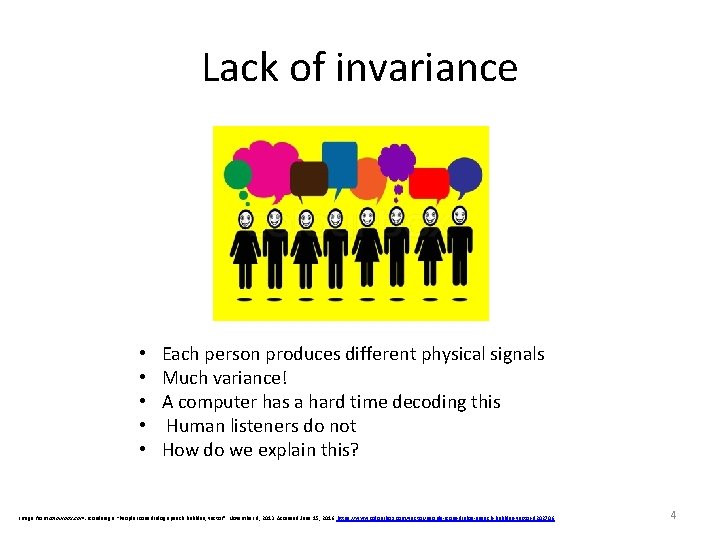
Lack of invariance • • • Each person produces different physical signals Much variance! A computer has a hard time decoding this Human listeners do not How do we explain this? Image from colourbox. com. icondesign. “People icons dialog speech bubbles, vector”. November 8, 2013. Accessed June 15, 2016. https: //www. colourbox. com/vector/people-icons-dialog-speech-bubbles-vector-8202706 4
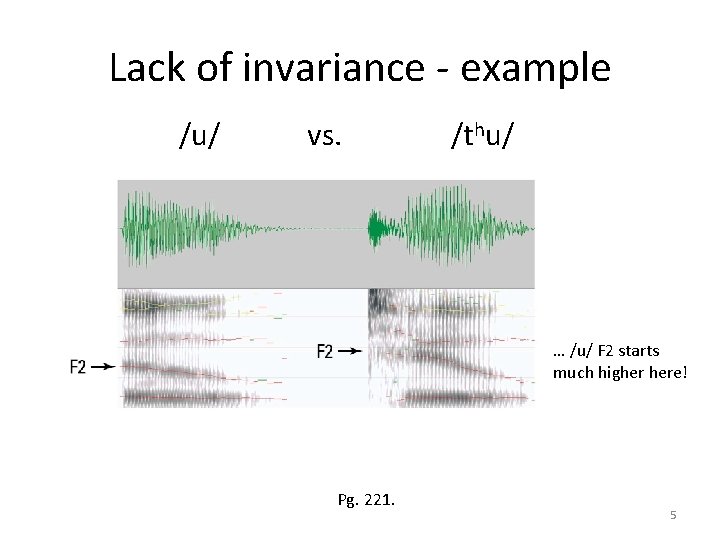
Lack of invariance - example /u/ vs. /thu/ … /u/ F 2 starts much higher here! Pg. 221. 5
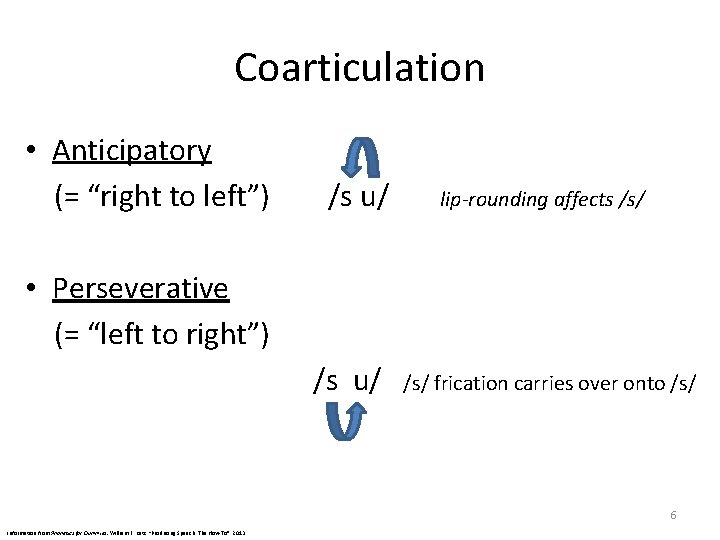
Coarticulation • Anticipatory (= “right to left”) /s u/ lip-rounding affects /s/ • Perseverative (= “left to right”) /s u/ /s/ frication carries over onto /s/ 6 Information from Phonetics for Dummies. William F. Katz. “Producing Speech: The How-To”. 2013.
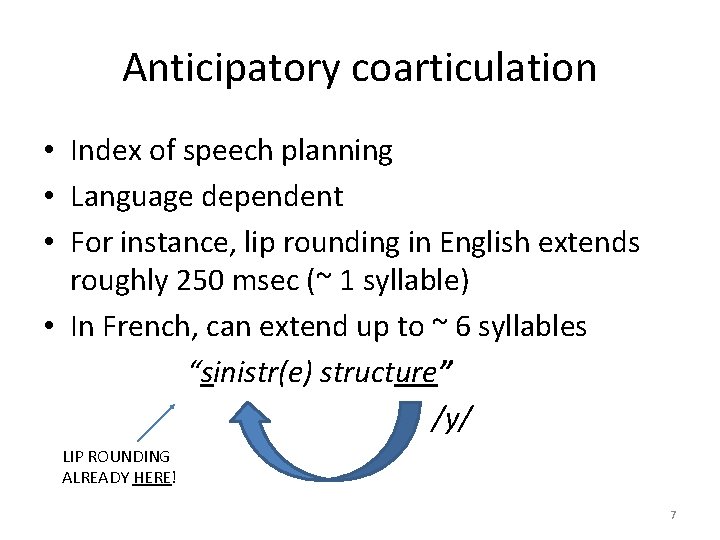
Anticipatory coarticulation • Index of speech planning • Language dependent • For instance, lip rounding in English extends roughly 250 msec (~ 1 syllable) • In French, can extend up to ~ 6 syllables “sinistr(e) structure” /y/ LIP ROUNDING ALREADY HERE! 7
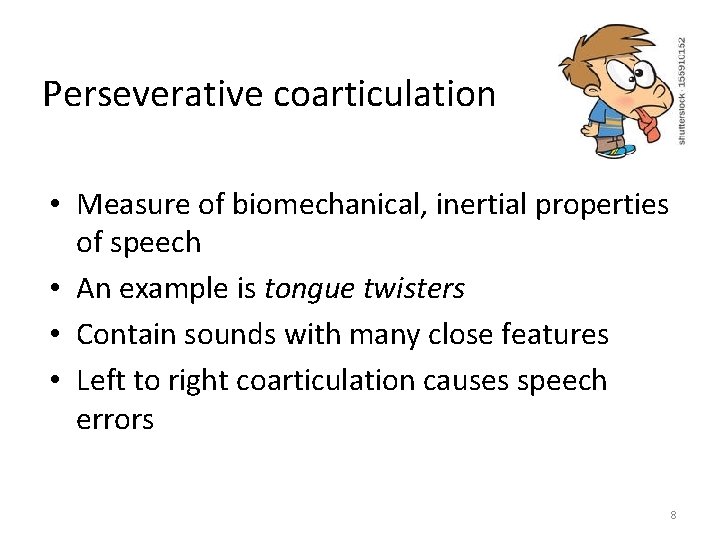
Perseverative coarticulation • Measure of biomechanical, inertial properties of speech • An example is tongue twisters • Contain sounds with many close features • Left to right coarticulation causes speech errors 8
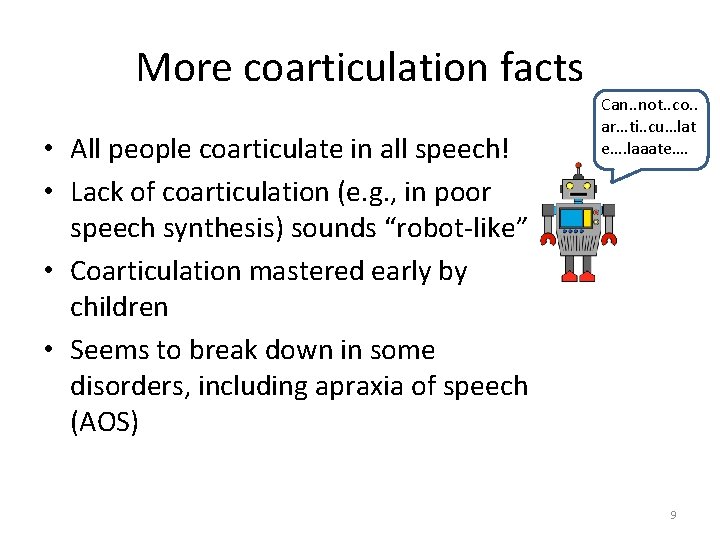
More coarticulation facts • All people coarticulate in all speech! • Lack of coarticulation (e. g. , in poor speech synthesis) sounds “robot-like” • Coarticulation mastered early by children • Seems to break down in some disorders, including apraxia of speech (AOS) Can. . not. . co. . ar…ti. . cu…lat e…. laaate…. 9
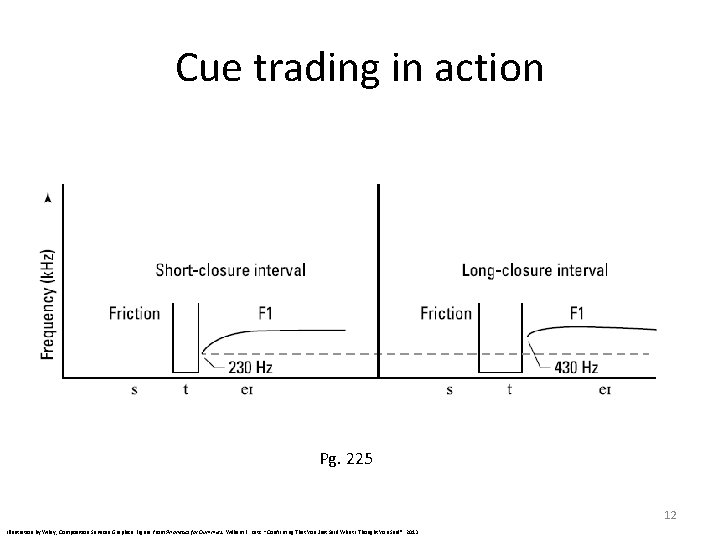
More than one way to signal a phonetic feature…. Example: • VOT and bursts can cue a stop consonant • Redundancy! • Cues can also trade off (see next slide) 10
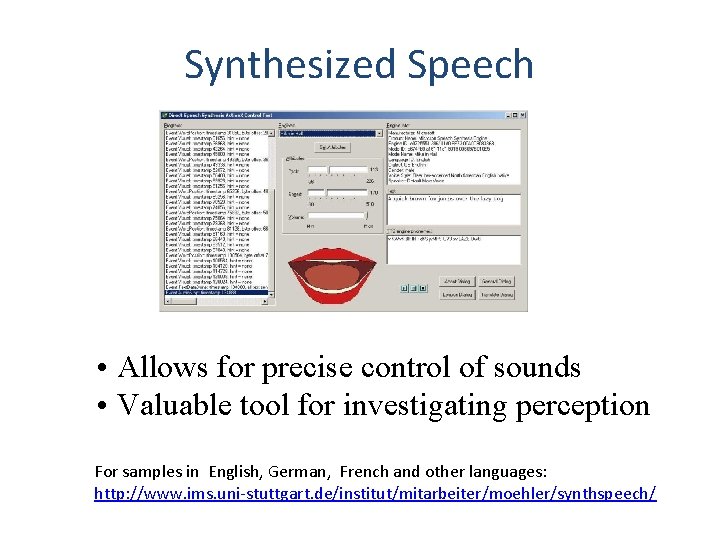
Synthesized Speech • Allows for precise control of sounds • Valuable tool for investigating perception For samples in English, German, French and other languages: http: //www. ims. uni-stuttgart. de/institut/mitarbeiter/moehler/synthspeech/
Cue trading in action Pg. 225 12 Illustration by Wiley, Composition Services Graphics. Figure from Phonetics for Dummies. William F. Katz. “Confirming That You Just Said What I Thought You Said”. 2013.
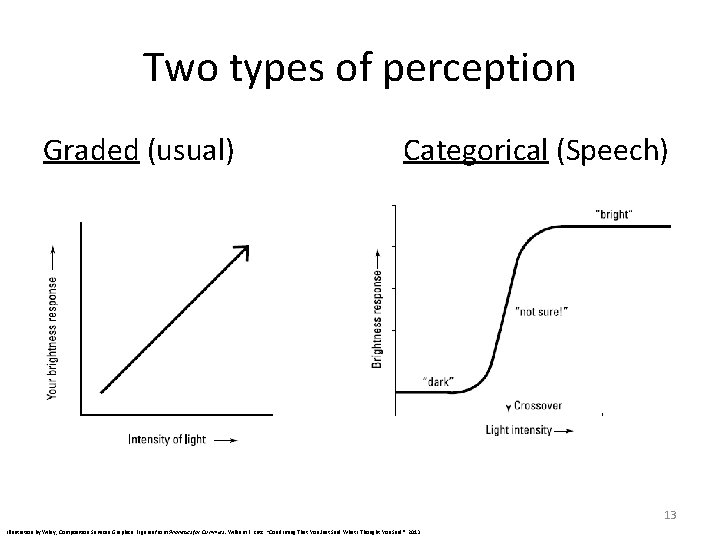
Two types of perception Graded (usual) Categorical (Speech) 13 Illustration by Wiley, Composition Services Graphics. Figures from Phonetics for Dummies. William F. Katz. “Confirming That You Just Said What I Thought You Said”. 2013.
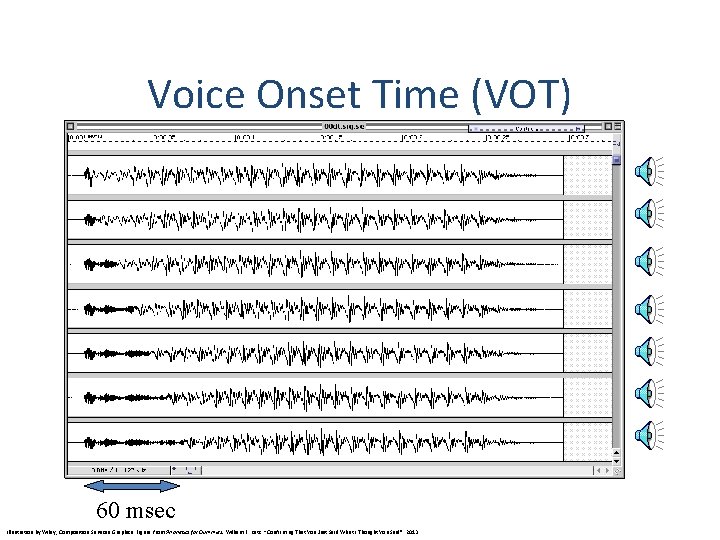
Voice Onset Time (VOT) 60 msec Illustration by Wiley, Composition Services Graphics. Figure from Phonetics for Dummies. William F. Katz. “Confirming That You Just Said What I Thought You Said”. 2013.
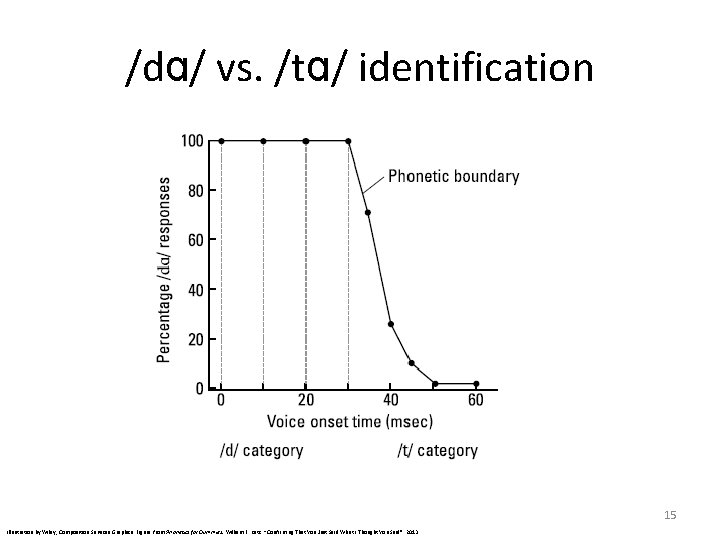
/dɑ/ vs. /tɑ/ identification 15 Illustration by Wiley, Composition Services Graphics. Figure from Phonetics for Dummies. William F. Katz. “Confirming That You Just Said What I Thought You Said”. 2013.
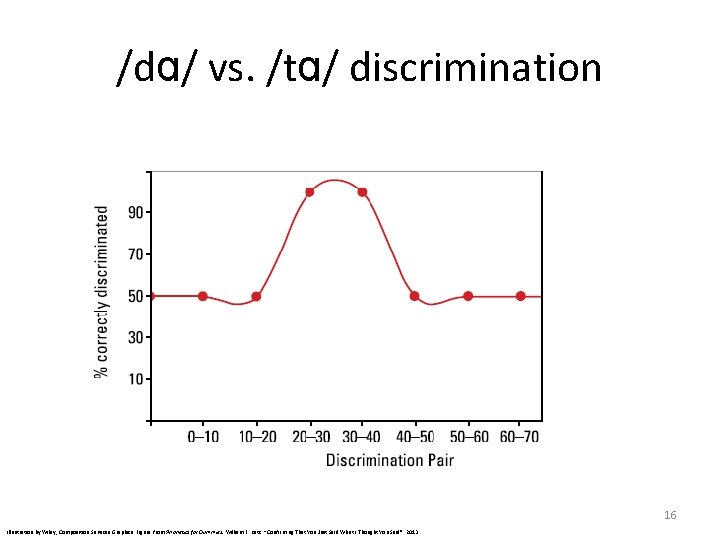
/dɑ/ vs. /tɑ/ discrimination 16 Illustration by Wiley, Composition Services Graphics. Figure from Phonetics for Dummies. William F. Katz. “Confirming That You Just Said What I Thought You Said”. 2013.
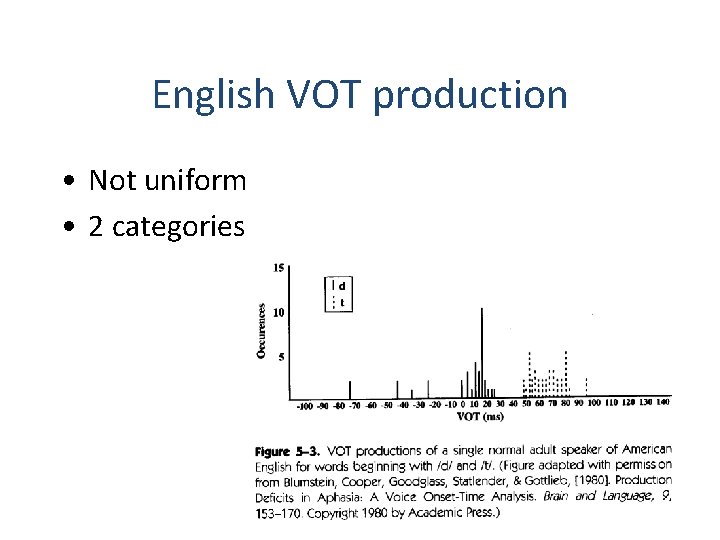
English VOT production • Not uniform • 2 categories
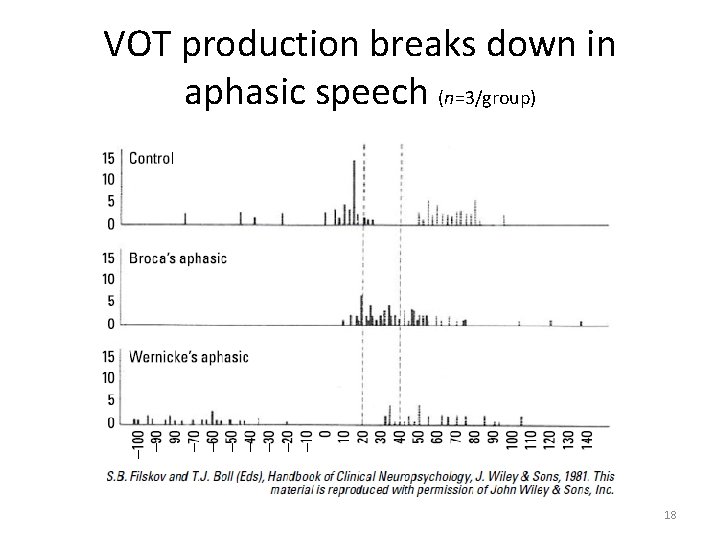
VOT production breaks down in aphasic speech (n=3/group) 18
Ease of articulation vs. Perceptual distinctiveness • Two properties which constrain language • Tend to balance each other in an opposing fashion…. 19
Ease of articulation • EXAMPLES • “soften” /t/ -> 0 (ellipsis) • “in” + “possible” = “impossible” (assimilation) 20
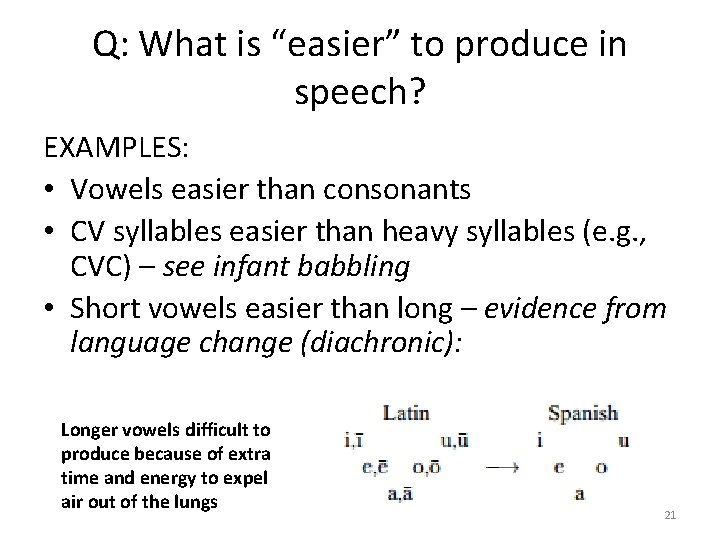
Q: What is “easier” to produce in speech? EXAMPLES: • Vowels easier than consonants • CV syllables easier than heavy syllables (e. g. , CVC) – see infant babbling • Short vowels easier than long – evidence from language change (diachronic): Longer vowels difficult to produce because of extra time and energy to expel air out of the lungs 21
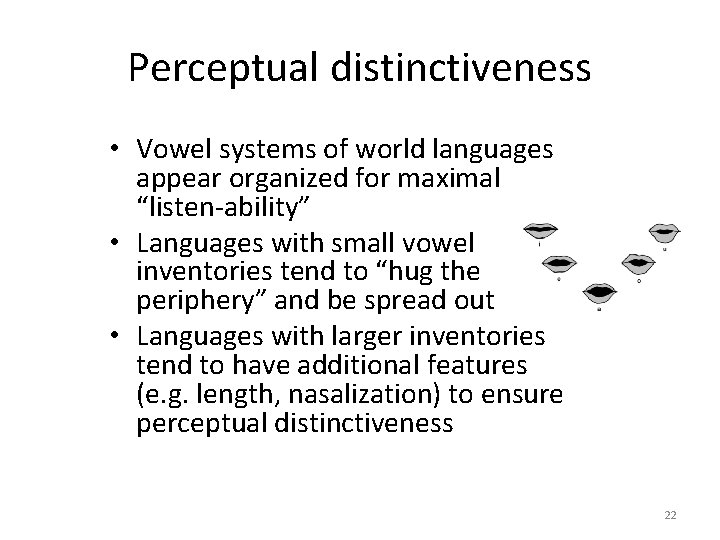
Perceptual distinctiveness • Vowel systems of world languages appear organized for maximal “listen-ability” • Languages with small vowel inventories tend to “hug the periphery” and be spread out • Languages with larger inventories tend to have additional features (e. g. length, nasalization) to ensure perceptual distinctiveness 22
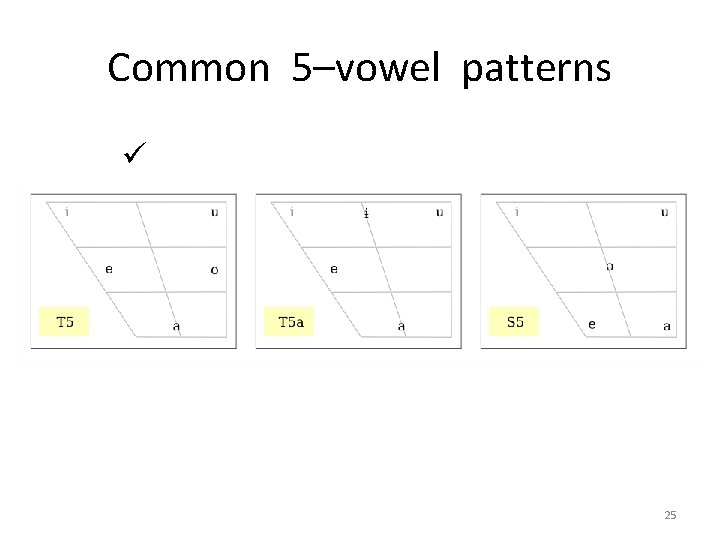
Examples • From UPSID (UCLA Phonetic Segmental Inventory Database) > 317 languages • Range of 3 -15 vowel phonemes in inventory / • Most common: 5 vowel system with /a i u e o/ • Tellingly, no as “ /i ɨ ɪ e ԑ/” or “/u ʊ ɔ o ɑ /” systems found…. 23
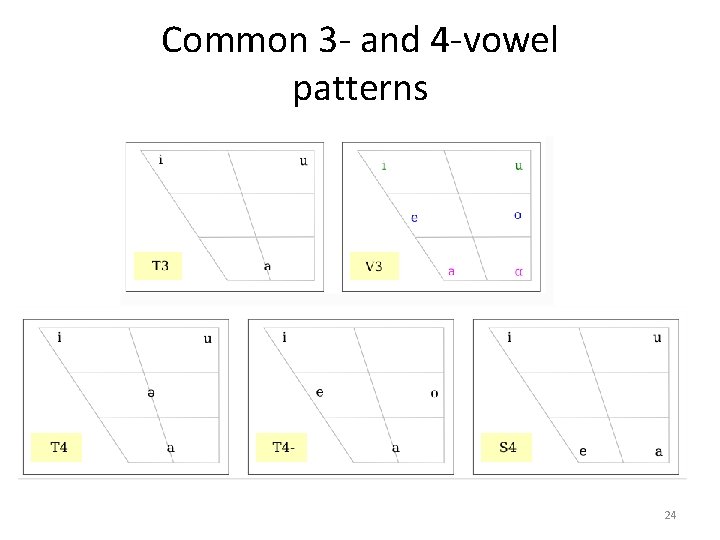
Common 3 - and 4 -vowel patterns 24
Common 5–vowel patterns 25