
Chap 13 Plant Nutrition 1 Plant Nutrients Macronutrients
- Slides: 32
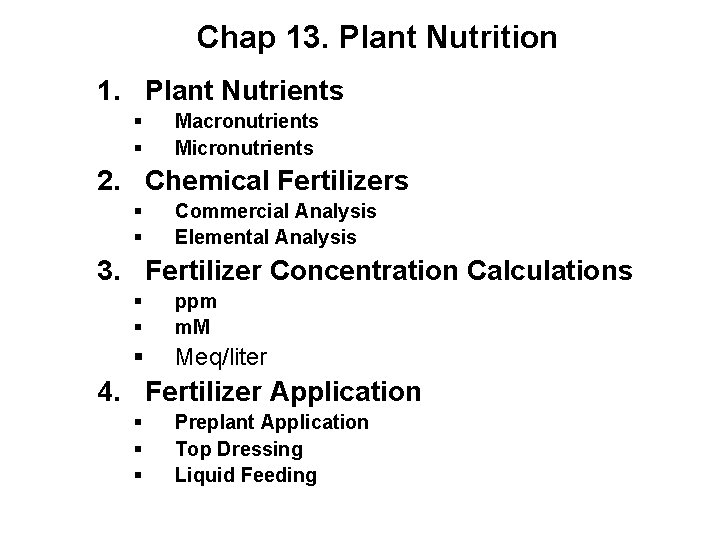
Chap 13. Plant Nutrition 1. Plant Nutrients § § Macronutrients Micronutrients 2. Chemical Fertilizers § § Commercial Analysis Elemental Analysis 3. Fertilizer Concentration Calculations § § ppm m. M § Meq/liter 4. Fertilizer Application § § § Preplant Application Top Dressing Liquid Feeding
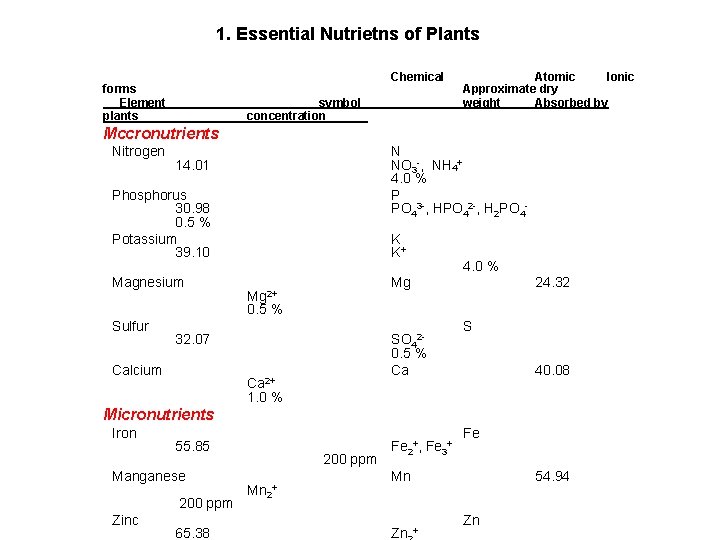
1. Essential Nutrietns of Plants forms Element plants ____ Chemical symbol concentration_____ Atomic Ionic Approximate dry weight Absorbed by Mccronutrients Nitrogen N NO 3 -, NH 4+ 4. 0 % P PO 43 -, HPO 42 -, H 2 PO 4 - 14. 01 Phosphorus 30. 98 0. 5 % Potassium 39. 10 Magnesium K K+ 4. 0 % Mg Mg 2+ 24. 32 0. 5 % Sulfur 32. 07 Calcium SO 42 - S 0. 5 % Ca Ca 2+ 40. 08 1. 0 % Micronutrients Iron 55. 85 Manganese 200 ppm Zinc 65. 38 200 ppm Mn 2+ Fe 2+, Fe 3+ Fe Mn Zn 54. 94 + Zn
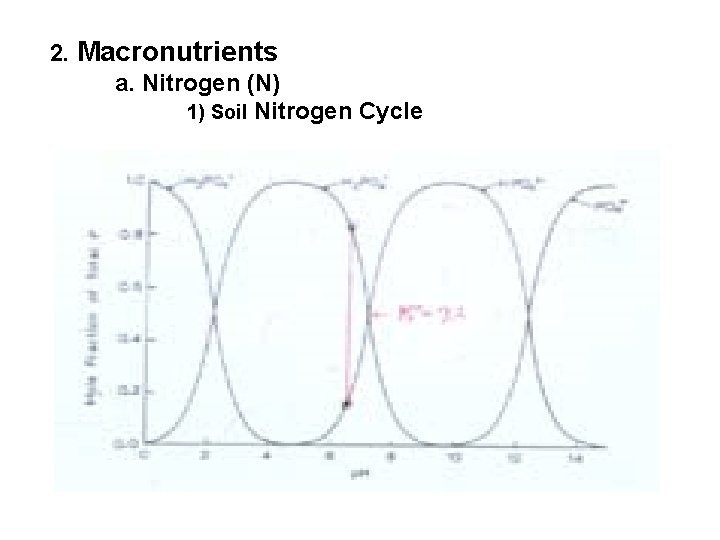
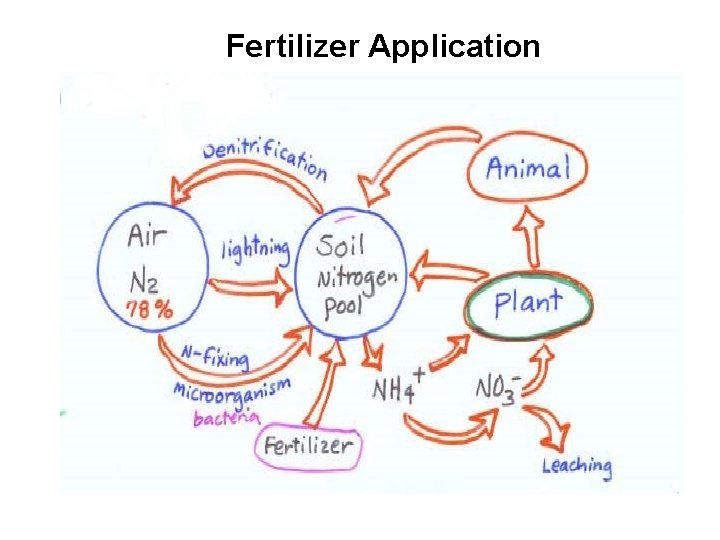
2. Macronutrients a. Nitrogen (N) 1) Soil Nitrogen Cycle
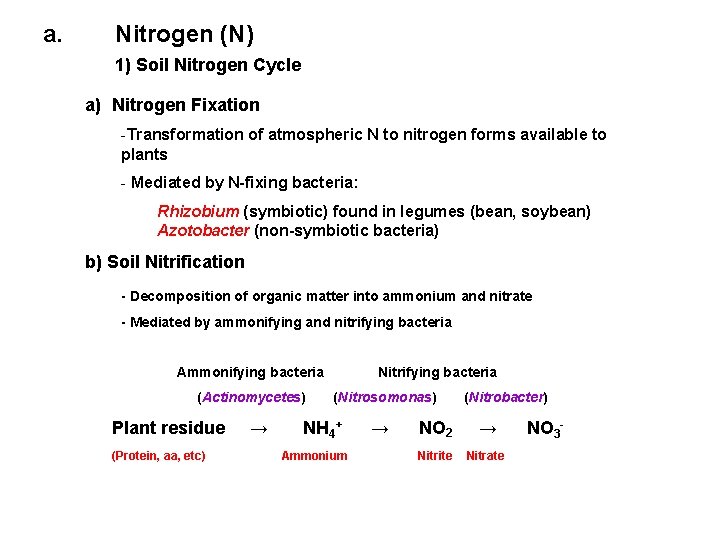
a. Nitrogen (N) 1) Soil Nitrogen Cycle a) Nitrogen Fixation -Transformation of atmospheric N to nitrogen forms available to plants - Mediated by N-fixing bacteria: Rhizobium (symbiotic) found in legumes (bean, soybean) Azotobacter (non-symbiotic bacteria) b) Soil Nitrification - Decomposition of organic matter into ammonium and nitrate - Mediated by ammonifying and nitrifying bacteria Ammonifying bacteria (Actinomycetes) Plant residue (Protein, aa, etc) → Nitrifying bacteria (Nitrosomonas) NH 4+ Ammonium → (Nitrobacter) NO 2 → Nitrite Nitrate NO 3 -
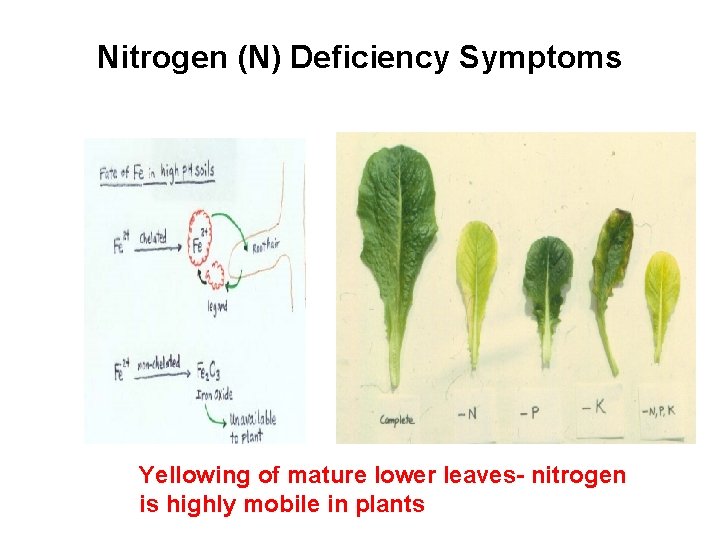
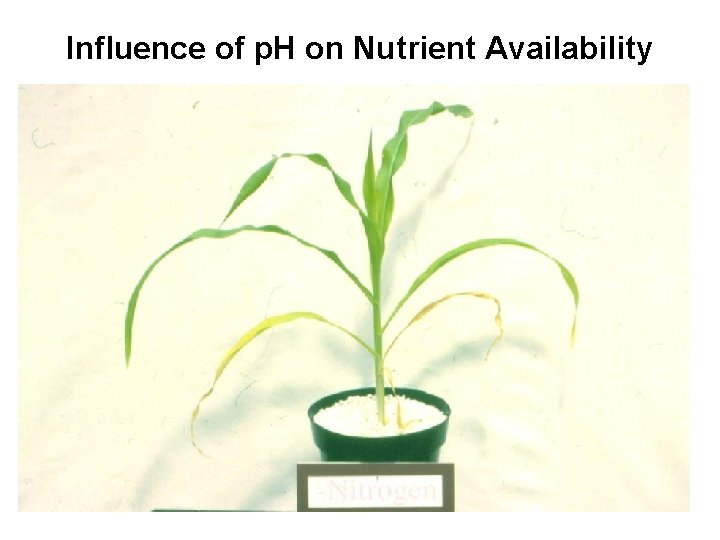
Nitrogen (N) Deficiency Symptoms Yellowing of mature lower leaves- nitrogen is highly mobile in plants
Macronutrient Deficiencies Beans
Macronutrients N, P, K Deficiencies Leaf Lettuce Control
Phosphorus (P) Availability
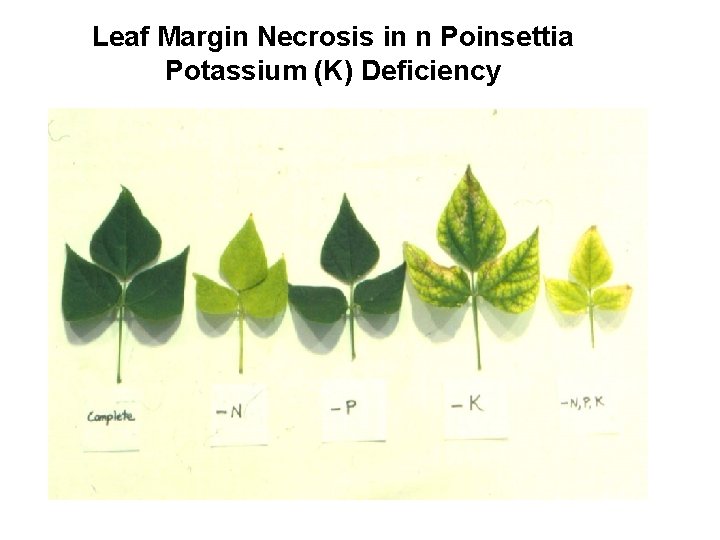
Leaf Margin Necrosis in n Poinsettia Potassium (K) Deficiency
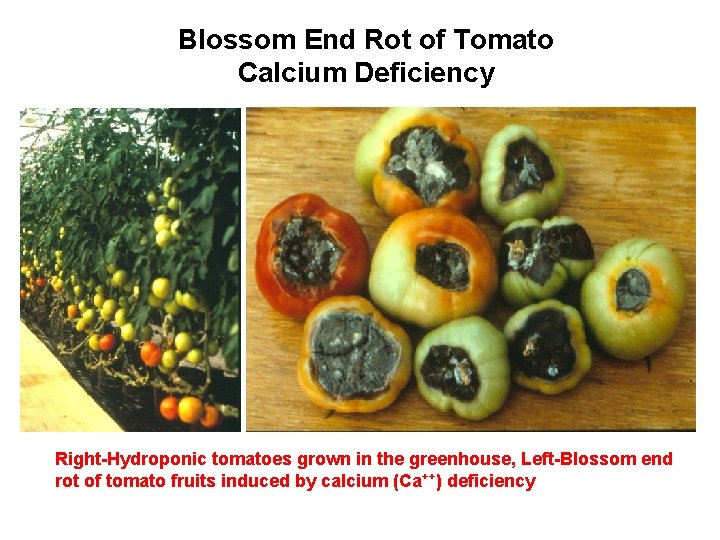
Blossom End Rot of Tomato Calcium Deficiency Right-Hydroponic tomatoes grown in the greenhouse, Left-Blossom end rot of tomato fruits induced by calcium (Ca++) deficiency
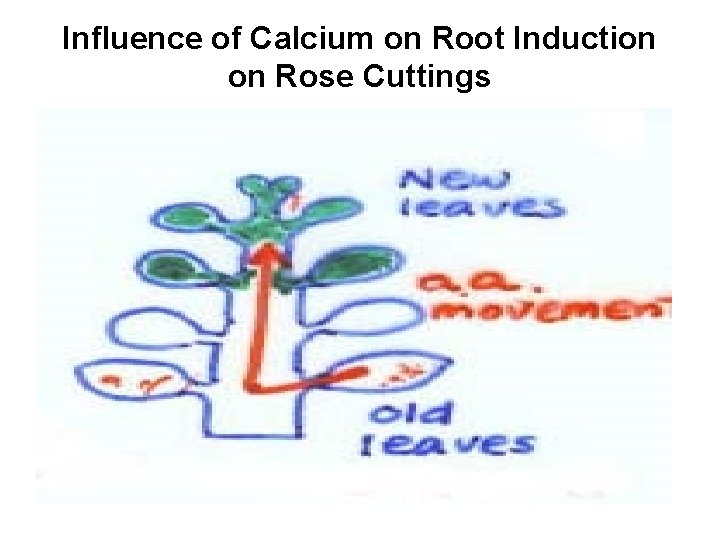
Influence of Calcium on Root Induction on Rose Cuttings
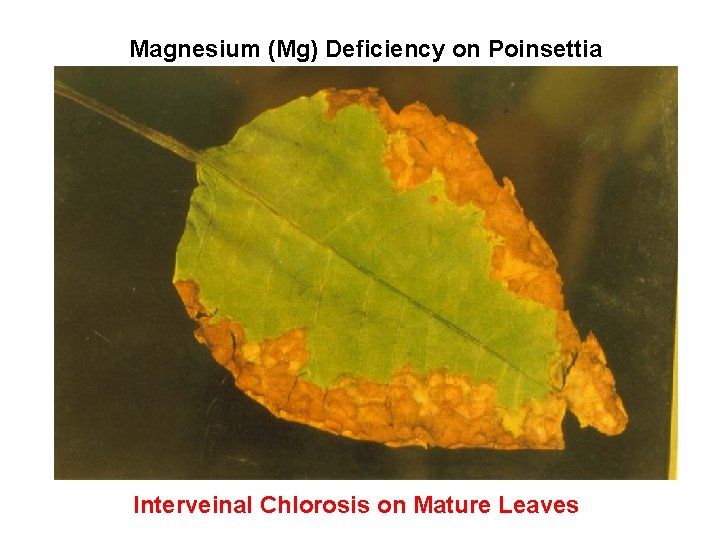
Magnesium (Mg) Deficiency on Poinsettia Interveinal Chlorosis on Mature Leaves
Micronutrients • Micronutrient elements – – – – Iron (Fe) Manganese (Mn) Boron (B) Zinc (Zn) Molybdenum (Mo) Zinc (Zn) Copper (Cu) Chloride (Cl) • Usually supplied by irrigation water and soil • Deficiency and toxicity occur at p. H extremes
Influence of p. H on Nutrient Availability
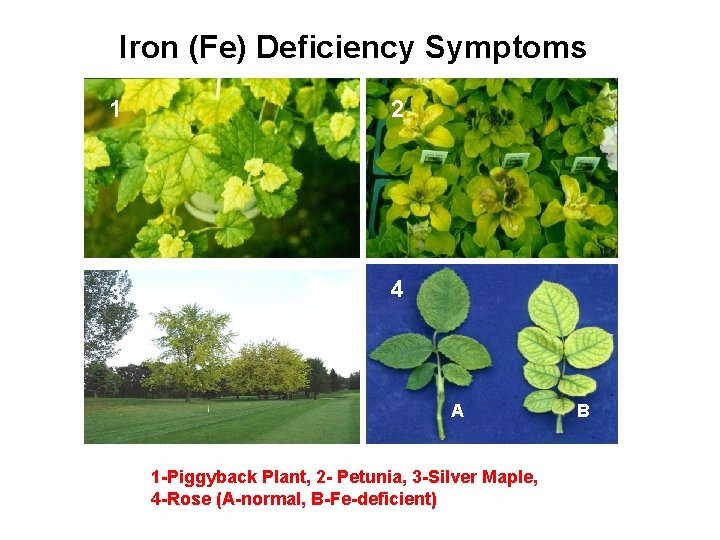
Iron (Fe) Deficiency Symptoms 1 2 3 4 A 1 -Piggyback Plant, 2 - Petunia, 3 -Silver Maple, 4 -Rose (A-normal, B-Fe-deficient) B
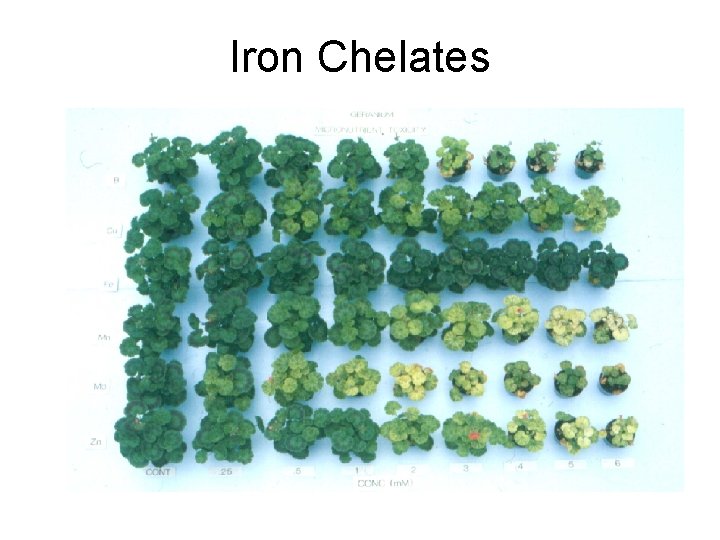
Iron Chelates
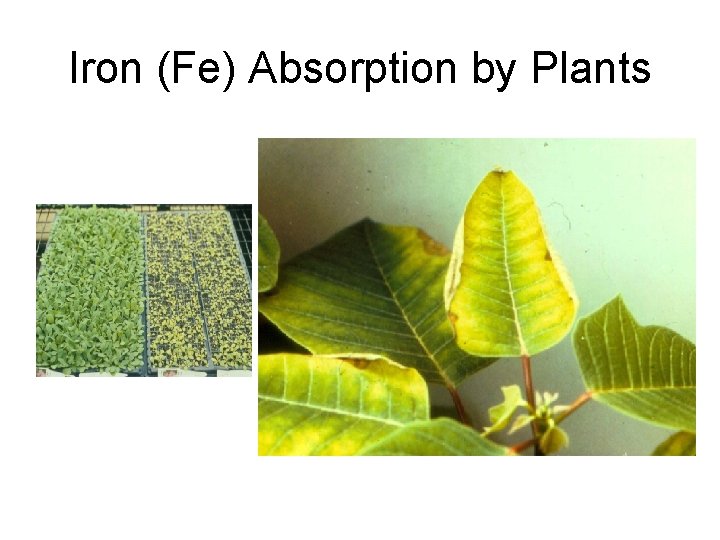
Iron (Fe) Absorption by Plants
Micronutrient Toxicity on Seed Geranium B Cu Fe Mn Mo Zn Cont 0. 25 0. 5 1 2 3 Concentration (m. M) 4 5 6
Molybdenum Deficiency on Poinsettia
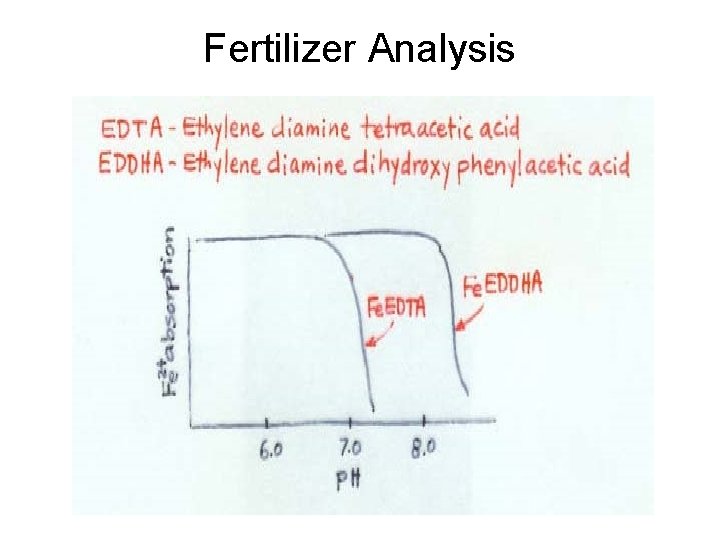
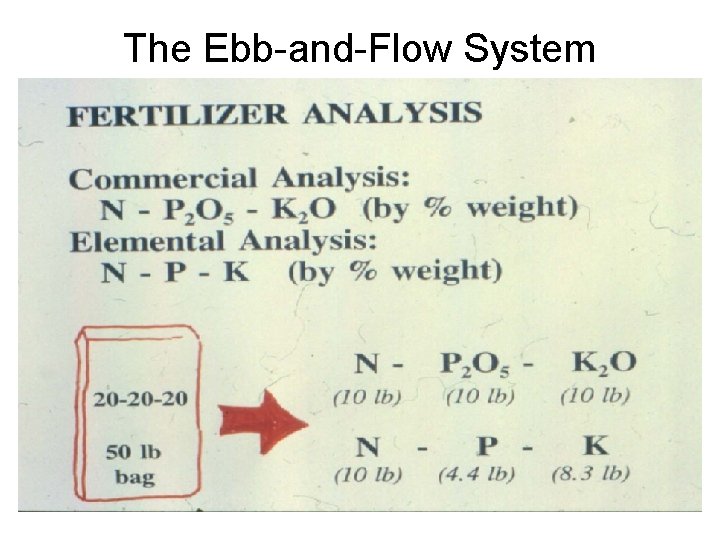
Fertilizer Analysis
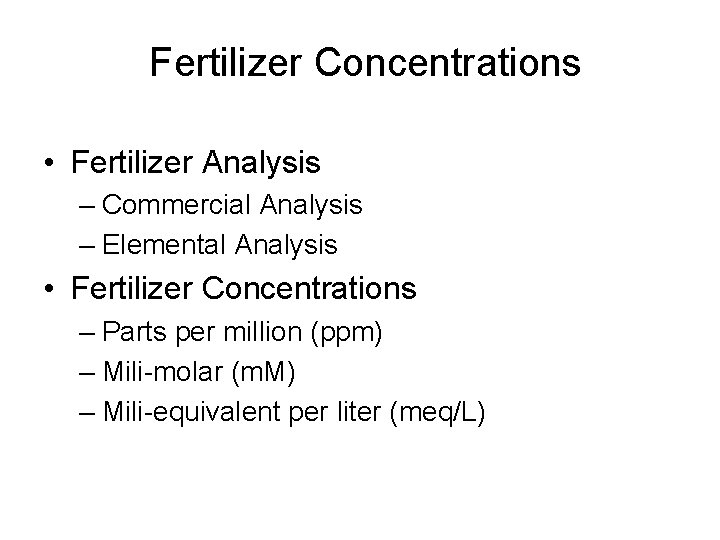
Fertilizer Concentrations • Fertilizer Analysis – Commercial Analysis – Elemental Analysis • Fertilizer Concentrations – Parts per million (ppm) – Mili-molar (m. M) – Mili-equivalent per liter (meq/L)
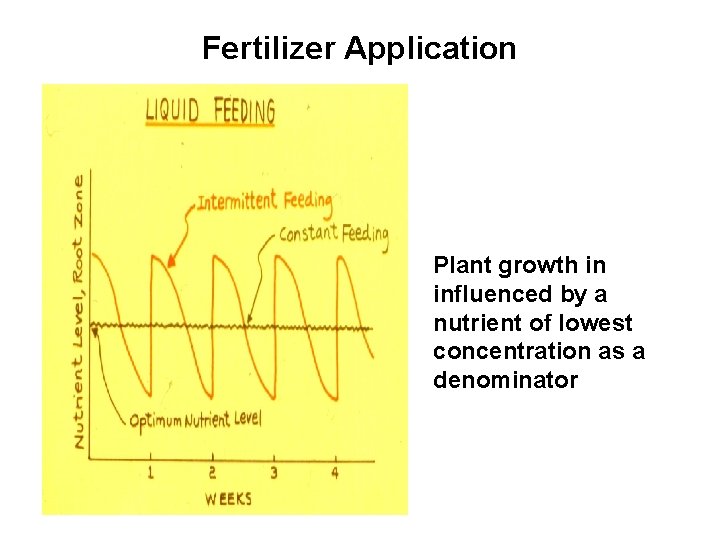
Fertilizer Application Plant growth in influenced by a nutrient of lowest concentration as a denominator
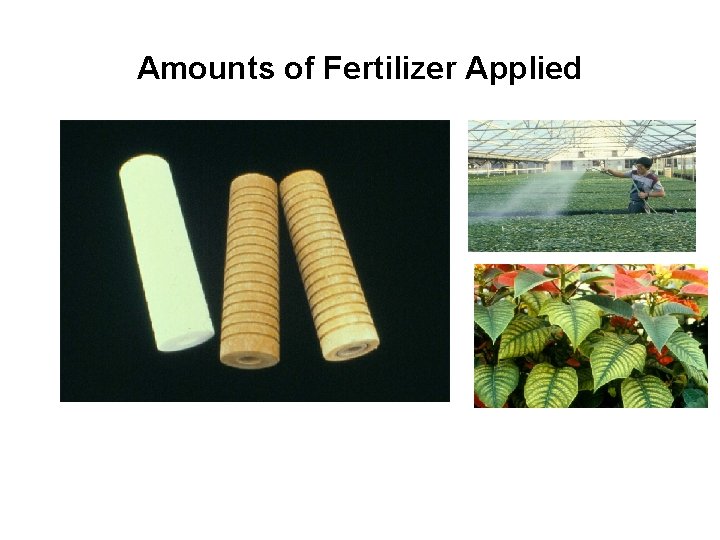
Amounts of Fertilizer Applied
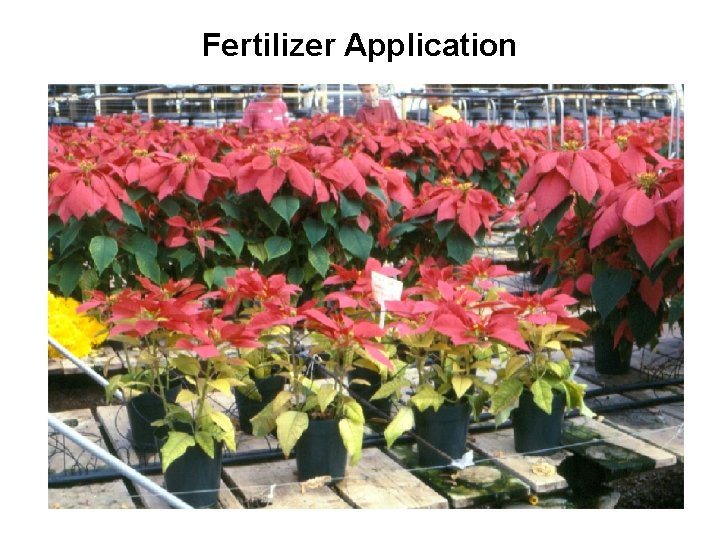
Fertilizer Application
Fertilizer Application
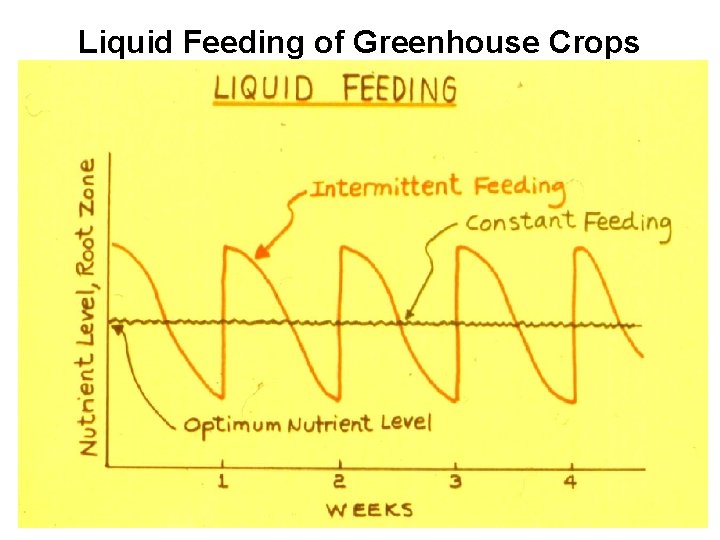
Liquid Feeding of Greenhouse Crops
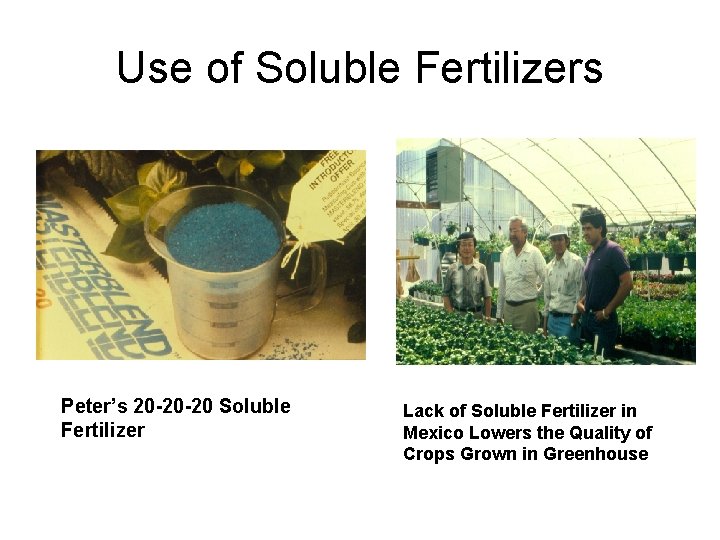
Use of Soluble Fertilizers Peter’s 20 -20 -20 Soluble Fertilizer Lack of Soluble Fertilizer in Mexico Lowers the Quality of Crops Grown in Greenhouse
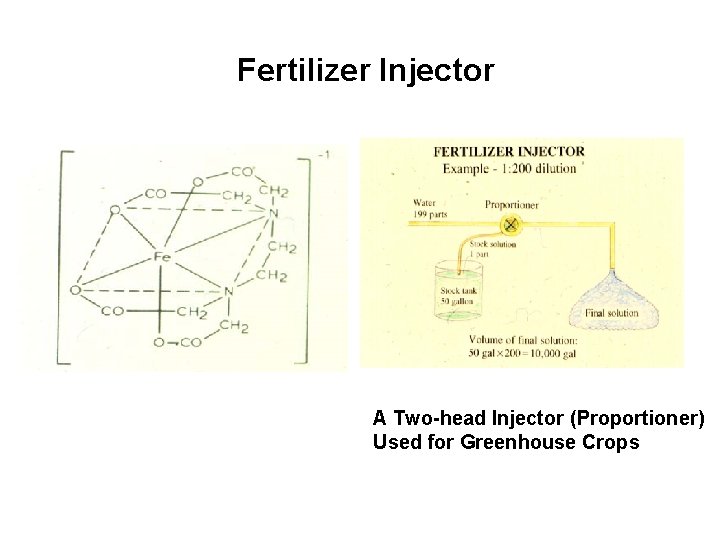
Fertilizer Injector A Two-head Injector (Proportioner) Used for Greenhouse Crops
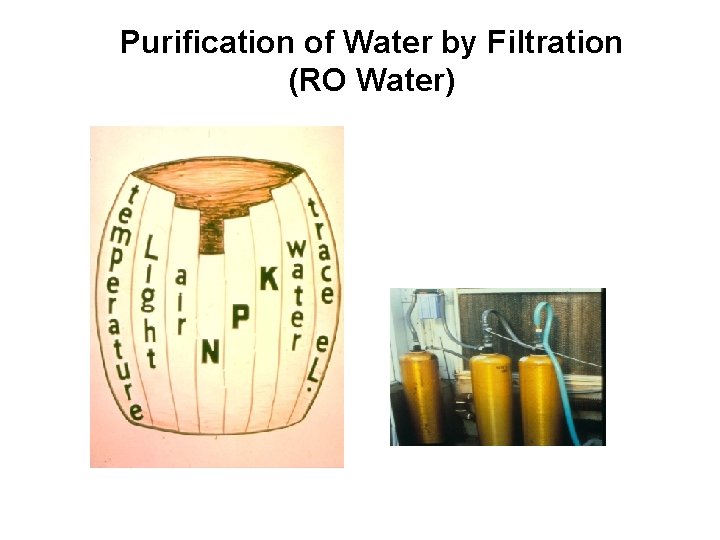
Purification of Water by Filtration (RO Water)
The Ebb-and-Flow System
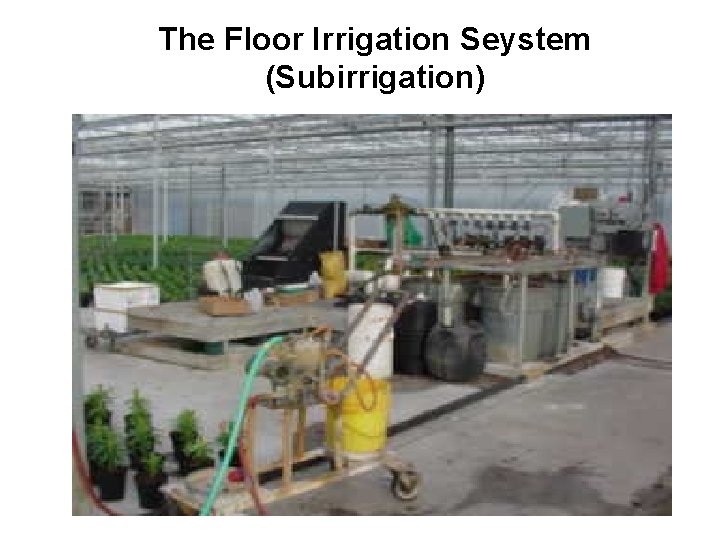
The Floor Irrigation Seystem (Subirrigation)
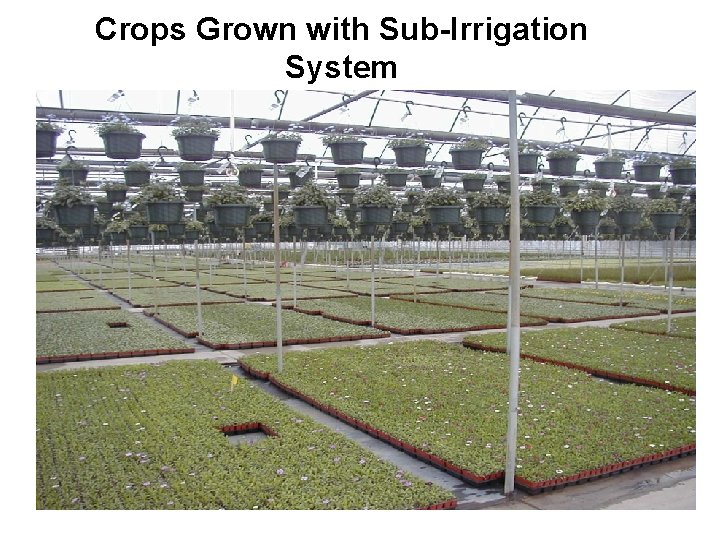
Crops Grown with Sub-Irrigation System