
Chap 13 Health Care System Structure Anita Sego




- Slides: 35
Chap 13: Health Care System: Structure • Anita Sego • Spring, 2005
Chap 13: Structure Chapter Objectives • Define the term health care system. • Trace the history of health care delivery in the United states from the midnineteenth century to the present. • Discuss and explain the concept of the spectrum of health care delivery. • List and describe the different levels of medical practice.
Chap 13: Structure Chapter Objectives • Distinguish between the different kinds of health care, including public health practice, medical practice, and long-term practice. • List and characterize the various groups of health care providers. • Explain the differences among allopathic, osteopathic, and nonallopathic providers. • Define complementary and alternative medicine.
Chap 13: Structure Chapter Objectives • Explain why there is a need for health care providers. • Prepare a list of the different types of facilities in which health care is delivered. • Explain the differences among private, public, and voluntary hospitals. • Explain the concept behind ambulatory care facilities.
Chap 13: Structure Chapter Objectives • Define home health care and explain the reason why this setting is being used more to deliver care. • Explain what the Joint Commission on Accreditation of Healthcare Organizations (JCAHO) does.
Chap 13: Structure Health Care System: Structure • American Delivery System – Variety of Providers – Variety of Settings • Concerns – Informal Cooperation of Providers – Disease Treatment vs Health Care – Conglomeration vs System
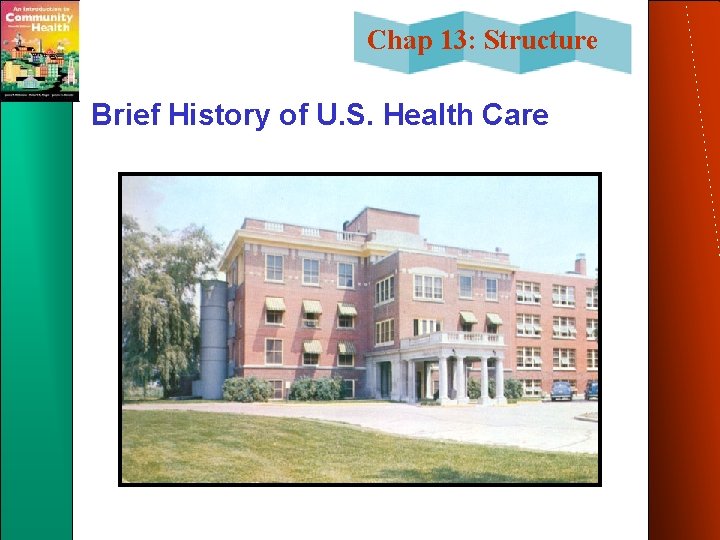
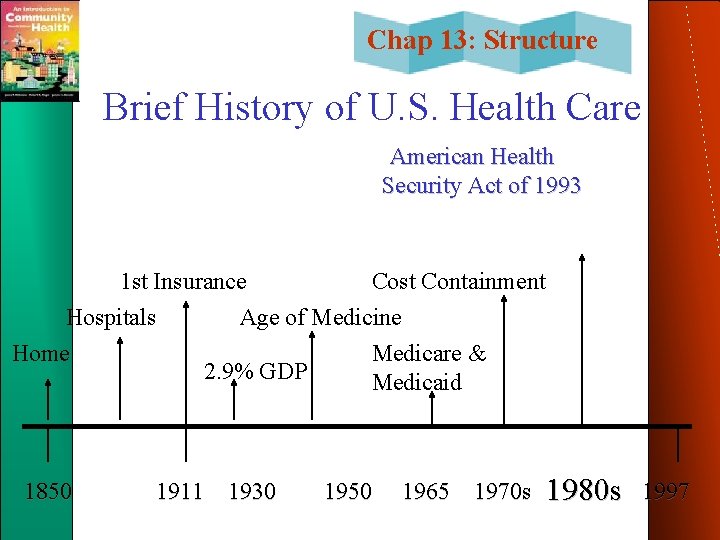
Chap 13: Structure Brief History of U. S. Health Care
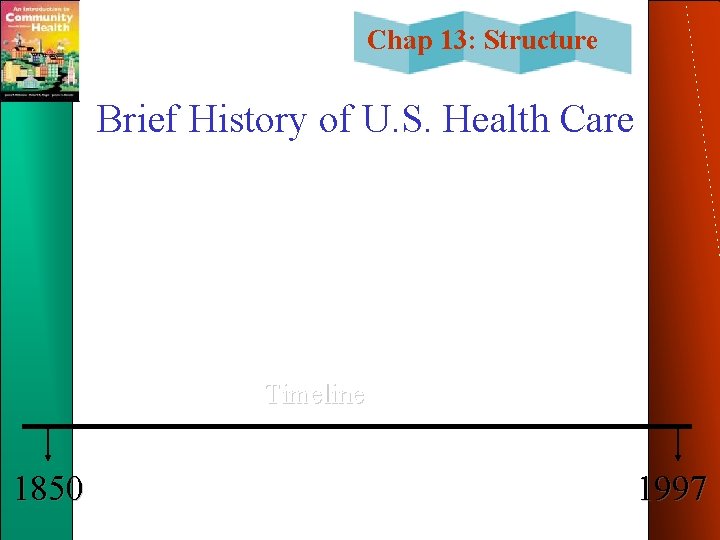
Chap 13: Structure Brief History of U. S. Health Care Timeline 1850 1997
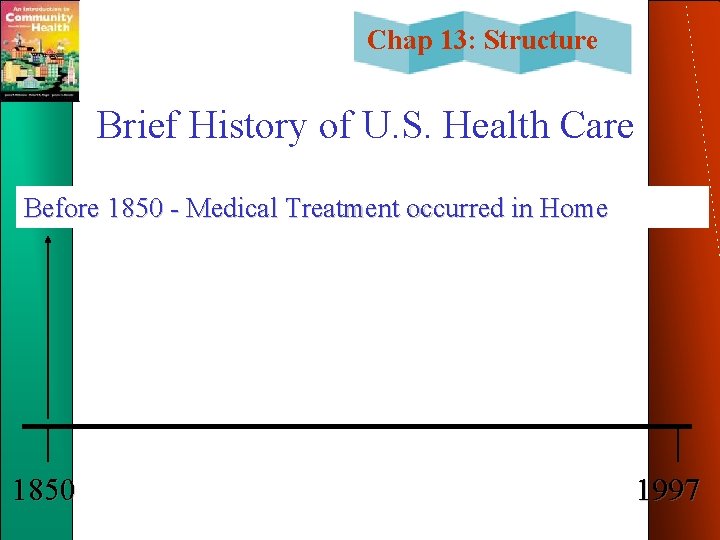
Chap 13: Structure Brief History of U. S. Health Care Before 1850 - Medical Treatment occurred in Home 1850 1997
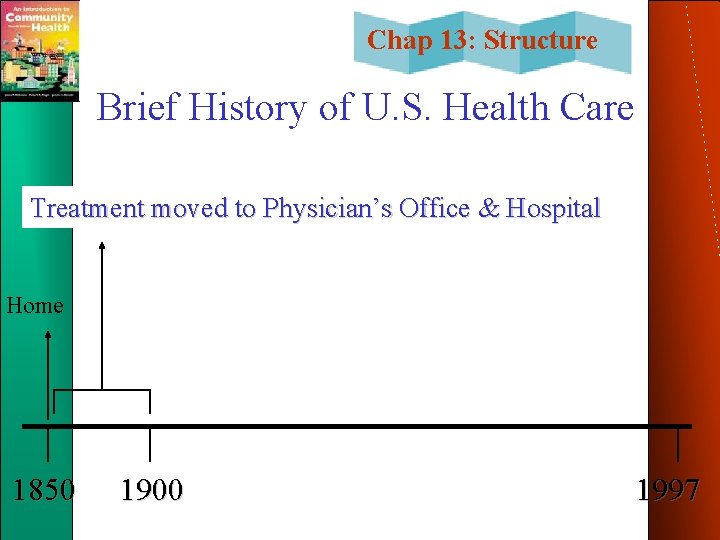
Chap 13: Structure Brief History of U. S. Health Care Treatment moved to Physician’s Office & Hospital Home 1850 1900 1997
Chap 13: Structure Brief History of U. S. Health Care 1 st Insurance Hospitals Home 1850 1911 1997
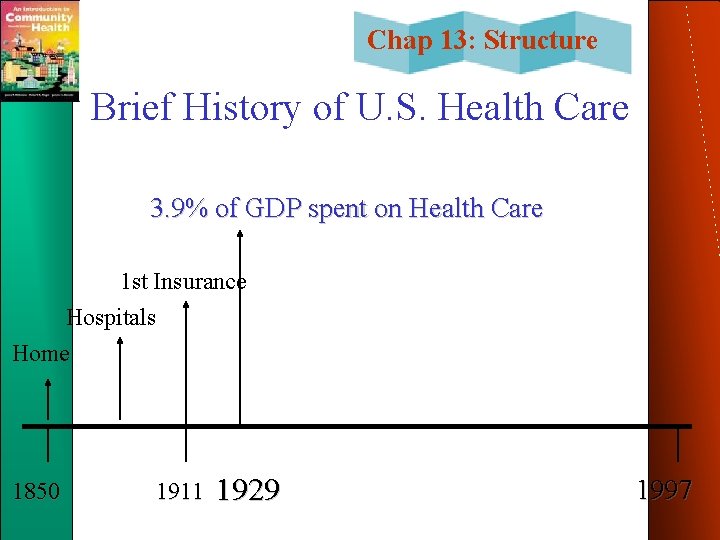
Chap 13: Structure Brief History of U. S. Health Care 3. 9% of GDP spent on Health Care 1 st Insurance Hospitals Home 1850 1911 1929 1997
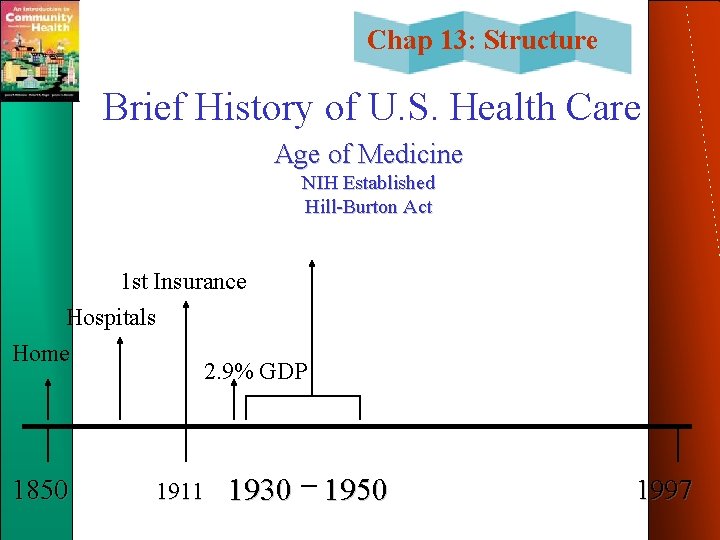
Chap 13: Structure Brief History of U. S. Health Care Age of Medicine NIH Established Hill-Burton Act 1 st Insurance Hospitals Home 2. 9% GDP 1850 1911 1930 1950 1997
Chap 13: Structure Brief History of U. S. Health Care Medicare & Medicaid 1 st Insurance Hospitals Age of Medicine Home 2. 9% GDP 1850 1911 1930 1950 1965 1997
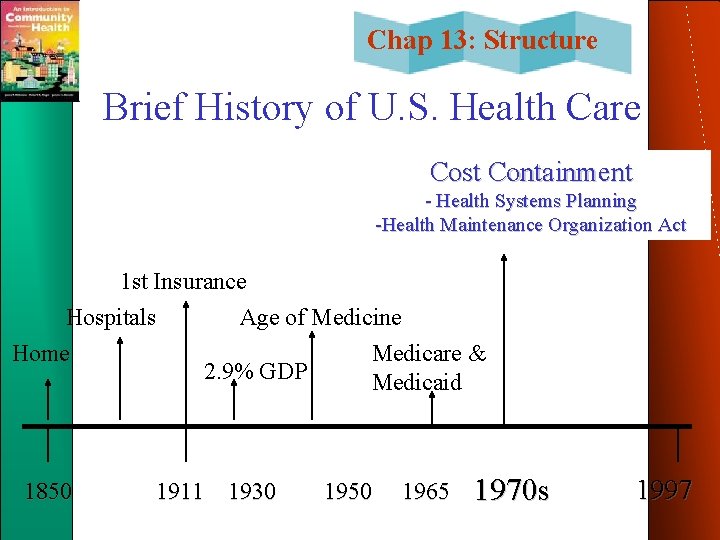
Chap 13: Structure Brief History of U. S. Health Care Cost Containment - Health Systems Planning -Health Maintenance Organization Act 1 st Insurance Hospitals Age of Medicine Home Medicare & 2. 9% GDP Medicaid 1850 1911 1930 1950 1965 1970 s 1997
Chap 13: Structure Brief History of U. S. Health Care American Health Security Act of 1993 1 st Insurance Cost Containment Hospitals Age of Medicine Home Medicare & 2. 9% GDP Medicaid 1850 1911 1930 1950 1965 1970 s 1980 s 1997
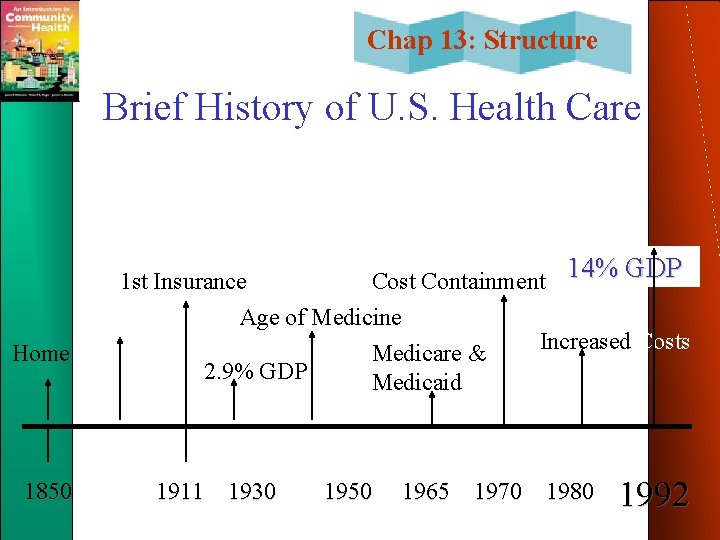
Chap 13: Structure Brief History of U. S. Health Care 14% GDP Home 1850 1 st Insurance Cost Containment 14% GDP Age of Medicine Increased Costs Medicare & 2. 9% GDP Medicaid 1911 1930 1950 1965 1970 1980 1992
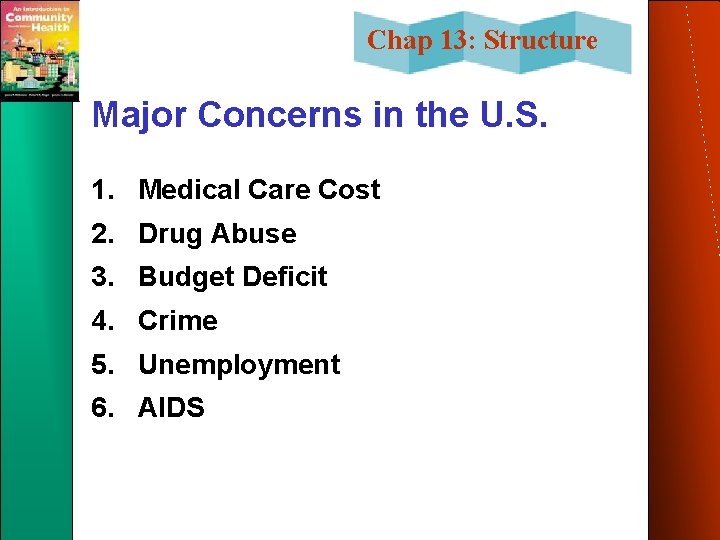
Chap 13: Structure Major Concerns in the U. S. 1. Medical Care Cost 2. Drug Abuse 3. Budget Deficit 4. Crime 5. Unemployment 6. AIDS
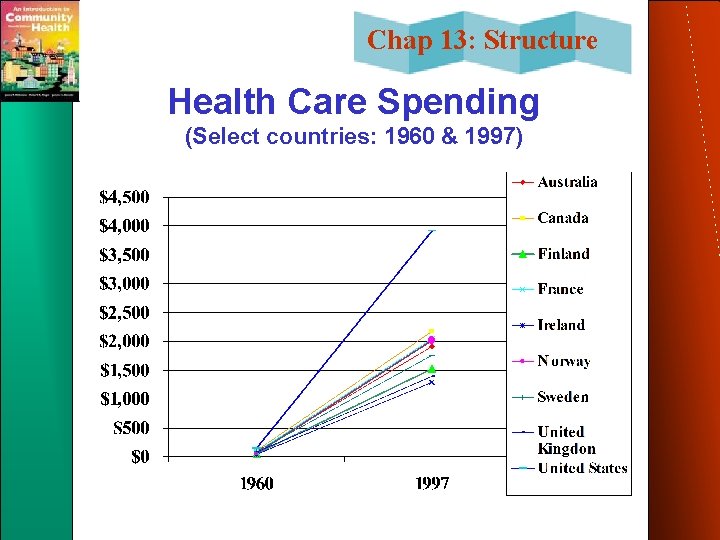
Chap 13: Structure Health Care Spending (Select countries: 1960 & 1997)
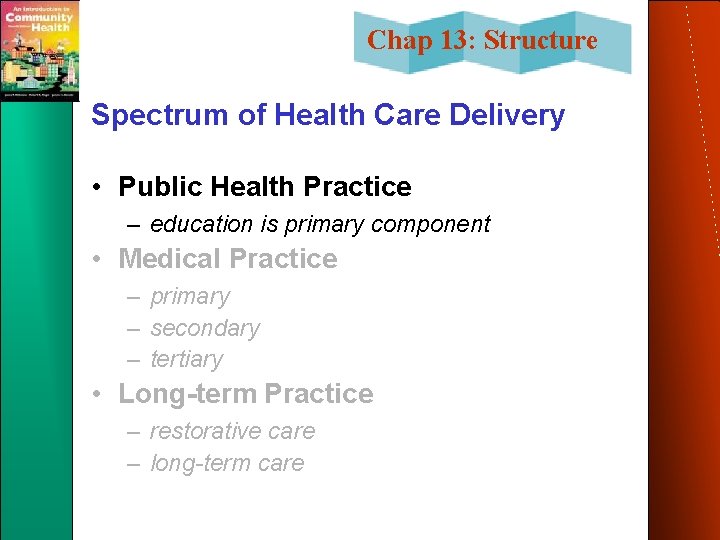
Chap 13: Structure Spectrum of Health Care Delivery • Public Health Practice – education is primary component • Medical Practice – primary – secondary – tertiary • Long-term Practice – restorative care – long-term care
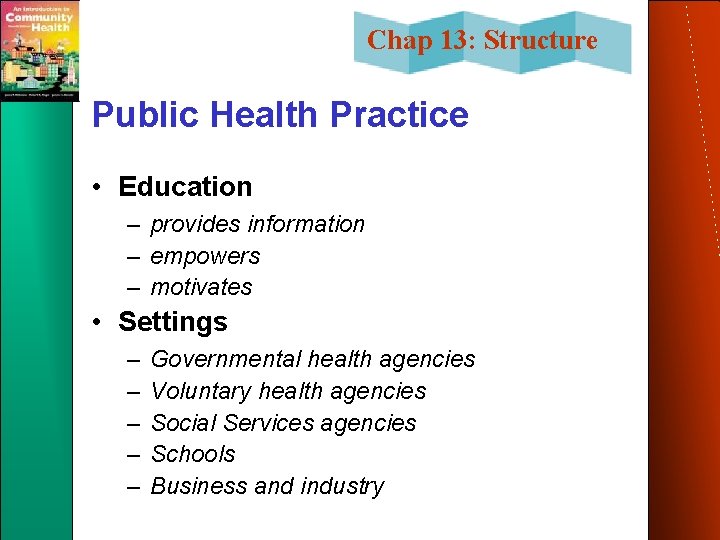
Chap 13: Structure Public Health Practice • Education – provides information – empowers – motivates • Settings – – – Governmental health agencies Voluntary health agencies Social Services agencies Schools Business and industry
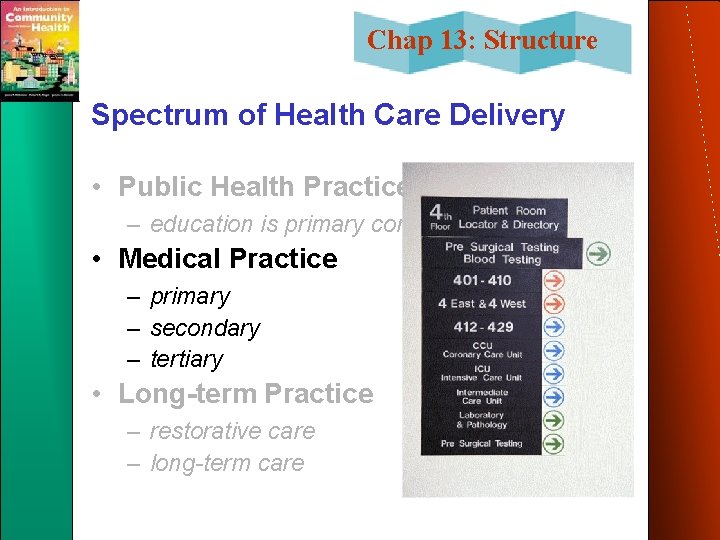
Chap 13: Structure Spectrum of Health Care Delivery • Public Health Practice – education is primary component • Medical Practice – primary – secondary – tertiary • Long-term Practice – restorative care – long-term care
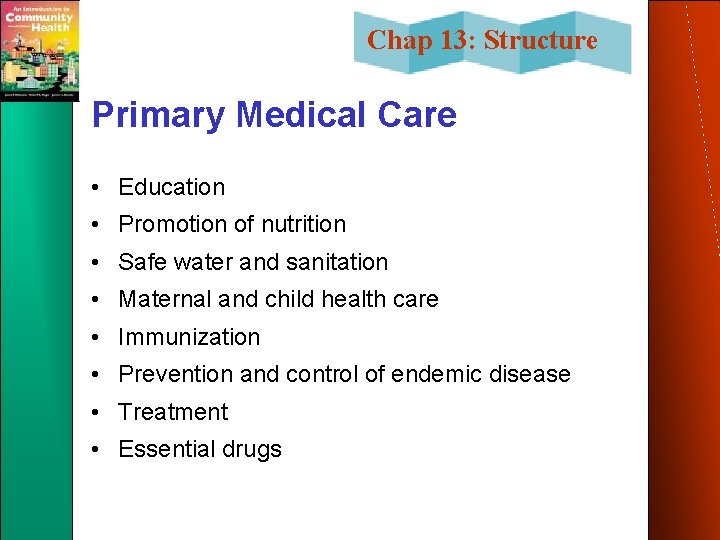
Chap 13: Structure Primary Medical Care • Education • Promotion of nutrition • Safe water and sanitation • Maternal and child health care • Immunization • Prevention and control of endemic disease • Treatment • Essential drugs
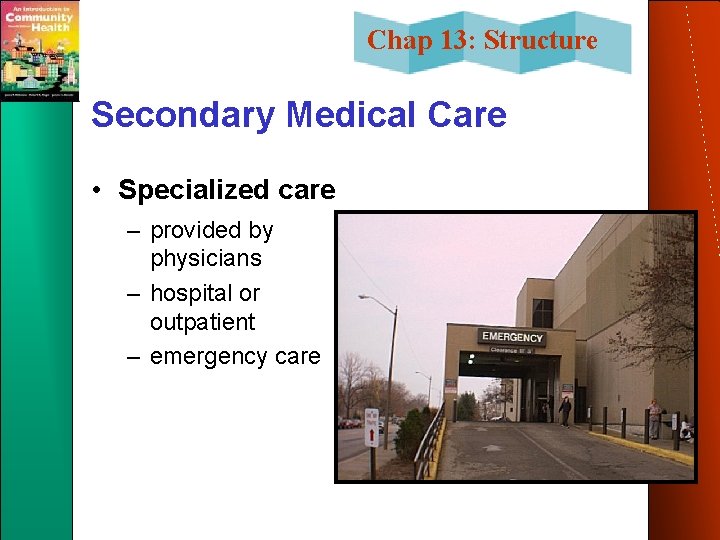
Chap 13: Structure Secondary Medical Care • Specialized care – provided by physicians – hospital or outpatient – emergency care
Chap 13: Structure Tertiary Medical Care • Highly specialized • For those with unusual or complex conditions • Specialized hospitals • Academic health centers
Chap 13: Structure Spectrum of Health Care Delivery • Public Health Practice – education is primary component • Medical Practice – primary – secondary – tertiary • Long-term Practice – restorative care – long-term care
Chap 13: Structure Long-term Practice • Restorative care • Long-term care
Chap 13: Structure Health Care Providers • Independent Providers – Allopathic – specific remedies include drugs or medication – Osteopathic – recognition of reciprocal interrelationship between the structure & function of the body – Nonallopathic – chiropractors, acupuncturists, naturopaths, homeopaths
Chap 13: Structure Health Care Providers • Limited Care – have advance training in a health specialty and are licensed to practice it • Examples – dentists, optometrists, podiatrists, & psychologists
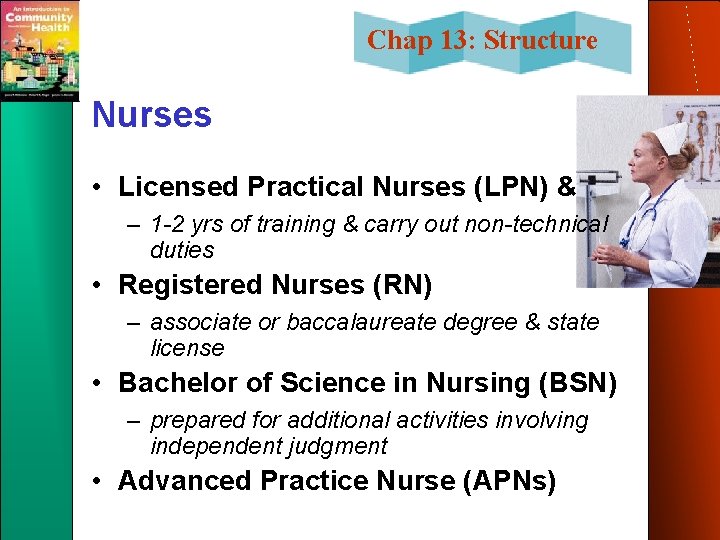
Chap 13: Structure Nurses • Licensed Practical Nurses (LPN) & – 1 -2 yrs of training & carry out non-technical duties • Registered Nurses (RN) – associate or baccalaureate degree & state license • Bachelor of Science in Nursing (BSN) – prepared for additional activities involving independent judgment • Advanced Practice Nurse (APNs)
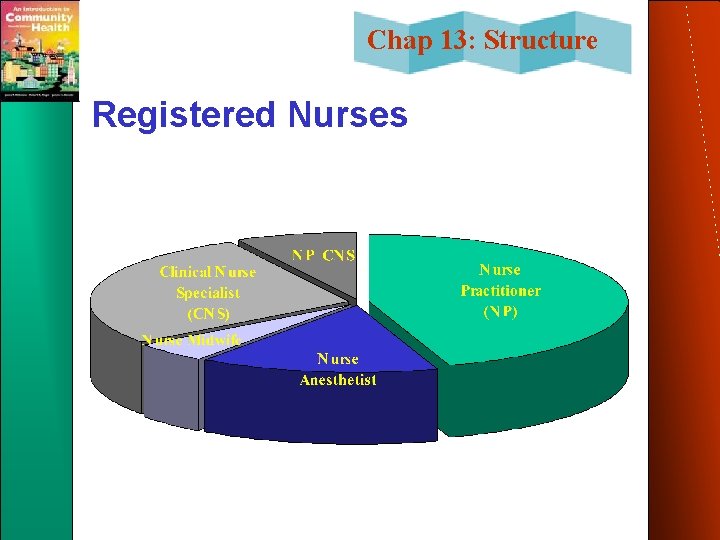
Chap 13: Structure Registered Nurses
Chap 13: Structure Allied & Professional Health Care Providers • Allied Health Care Professionals – provide services that assist, facilitate, & complement work of physicians – dietitians, physical therapists, medical technologists, EMTs, & speech therapists • Public Health Professionals – work in public health clinics & voluntary agencies – environmental health workers, administrators, epidemiologists, health educators, & biostatisticians
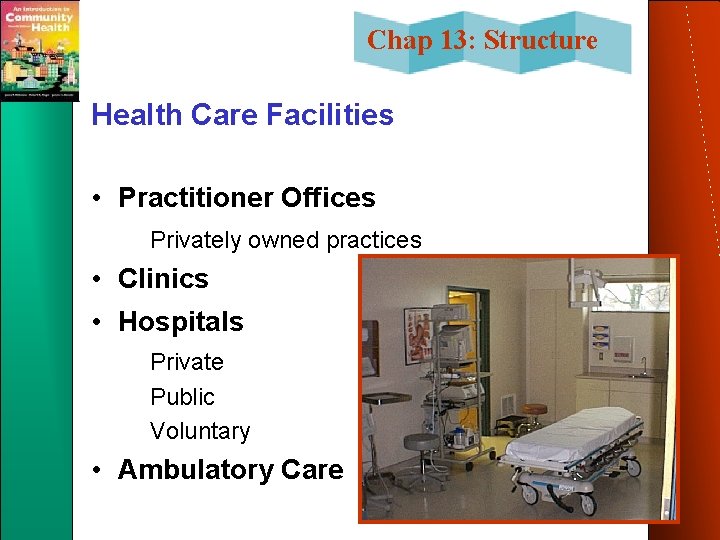
Chap 13: Structure Health Care Facilities • Practitioner Offices – Privately owned practices • Clinics • Hospitals – Private – Public – Voluntary • Ambulatory Care
Chap 13: Structure Health Care Facilities • Rehabilitation Centers – Long-term care options – Home health care • Continuing Care – chronic, respite, hospice, & home care • Accreditation
Chap 13: Structure Chapter 13 Health Care System: Structure