
Channelization and Turn Bays CE 453 Lecture 31
Channelization and Turn Bays CE 453 Lecture 31 1
Outline n Principles of Channelization n Turn Bay Design n Median Openings n Some Examples Around Ames 2
Principles of Channelization 3
Channelization purpose: n Facilitate safe and orderly movement n Separate or regulate conflicting movements n Define paths of travel n Use traffic islands or pavement markings n … for both vehicles and pedestrians 4
Types/functions n Directional – control, direct, guide n Divisional – divide and alert n Refuge – aid and protect pedestrians and bicyclists 5
Island Channelization n Flush or raised, paved or unpaved, always marked, sometimes delineated n If raised … use lighting n If raised rural … also delineate and slope curbs n Size: large enough to command attention n Must delineate a path that is natural and convenient for the driver 6
Island Channelization n Must have sufficient approach sight distance to islands n Right turn island size (75 square feet at least to command attention) n Minimum length of left turn bay 100’ n If used at series of rural intersections, keep geometry consistent 7
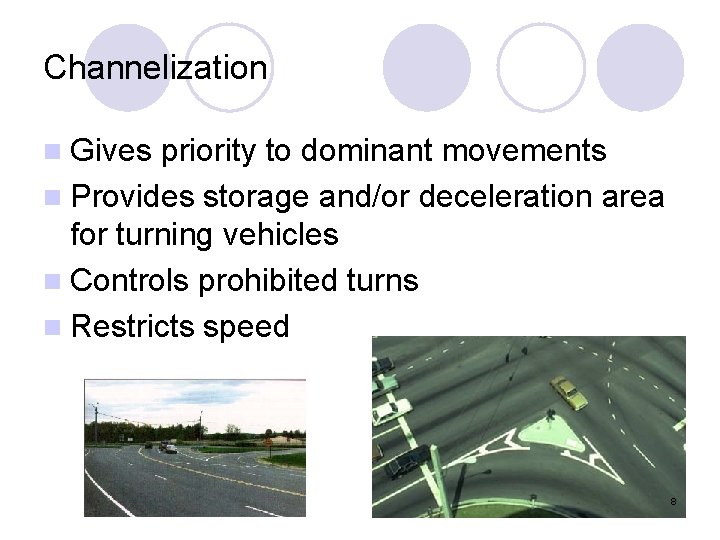
Channelization n Gives priority to dominant movements n Provides storage and/or deceleration area for turning vehicles n Controls prohibited turns n Restricts speed 8
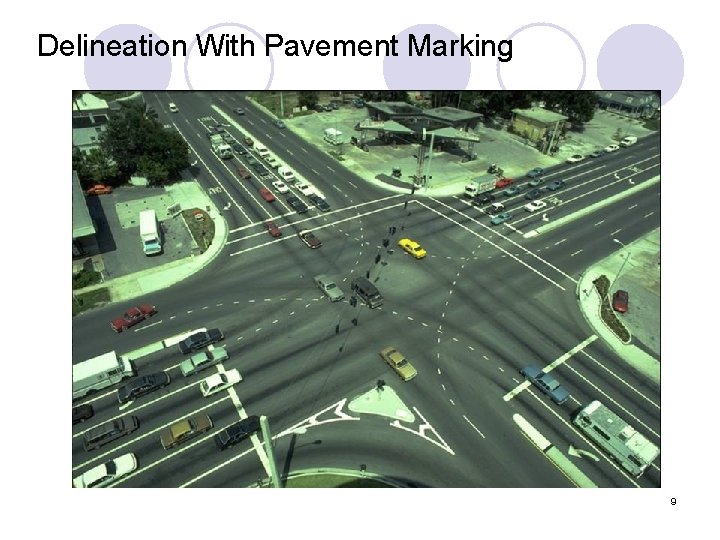
Delineation With Pavement Marking 9
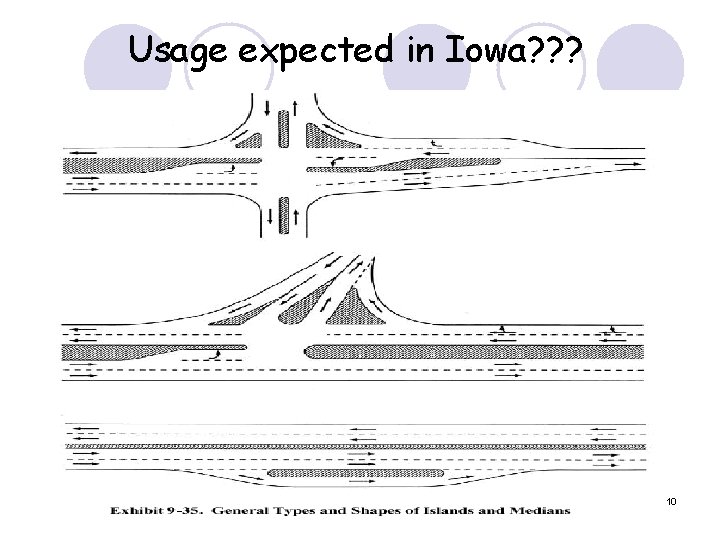
Usage expected in Iowa? ? ? 10
Functional Objectives Limit Conflict Points (i. e. , prohibit certain movements, non-overlap of opposing LTs), esp. in vicinity of intersection functional area (see figures) Limit Conflict Area Complexity (i. e. , eliminate legs, add turn lanes, islands) Limit Conflict Frequency (i. e. , add turn lanes, use right angles) Limit Conflict Severity (i. e. , small angles, adequate turn bay length/curb radii for speed differential issues) 11
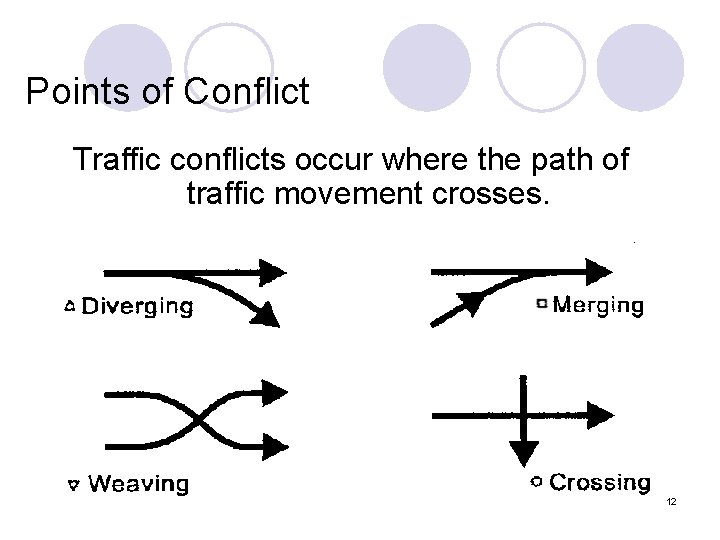
Points of Conflict Traffic conflicts occur where the path of traffic movement crosses. 12
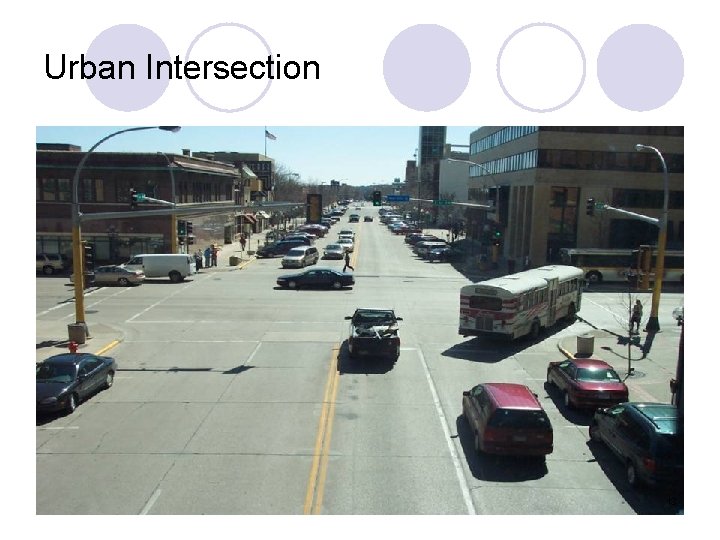
Urban Intersection 13
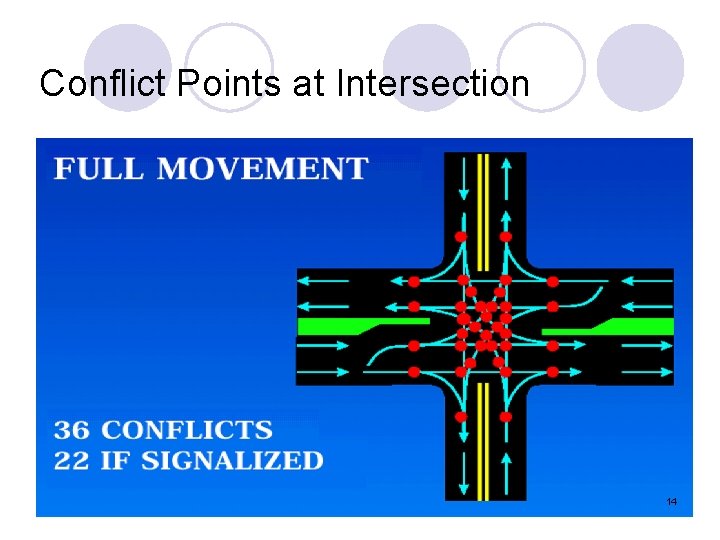
Conflict Points at Intersection 14
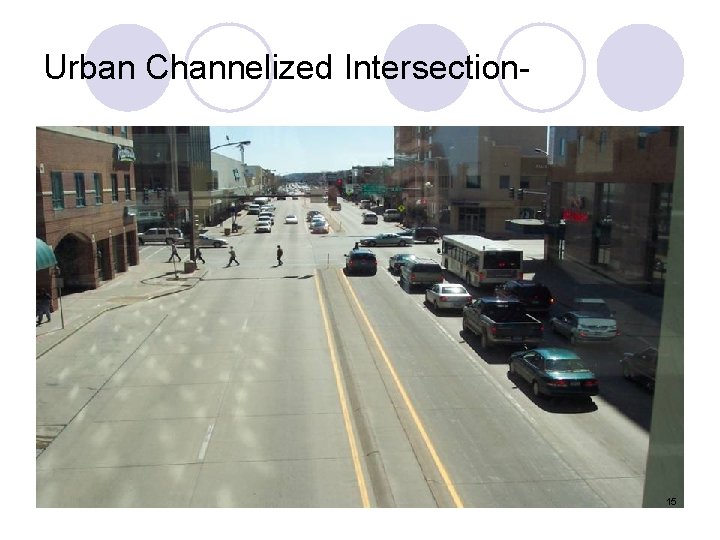
Urban Channelized Intersection- 15
Left & Right Turn Lanes 16
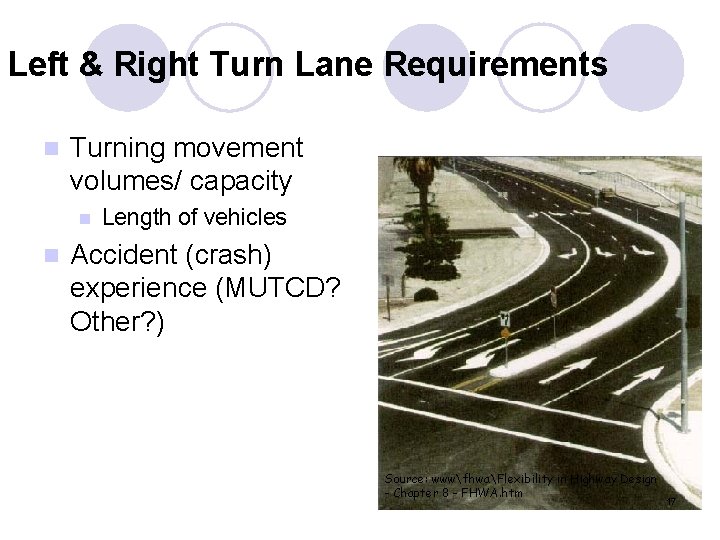
Left & Right Turn Lane Requirements n Turning movement volumes/ capacity n n Length of vehicles Accident (crash) experience (MUTCD? Other? ) Source: wwwfhwaFlexibility in Highway Design - Chapter 8 - FHWA. htm 17
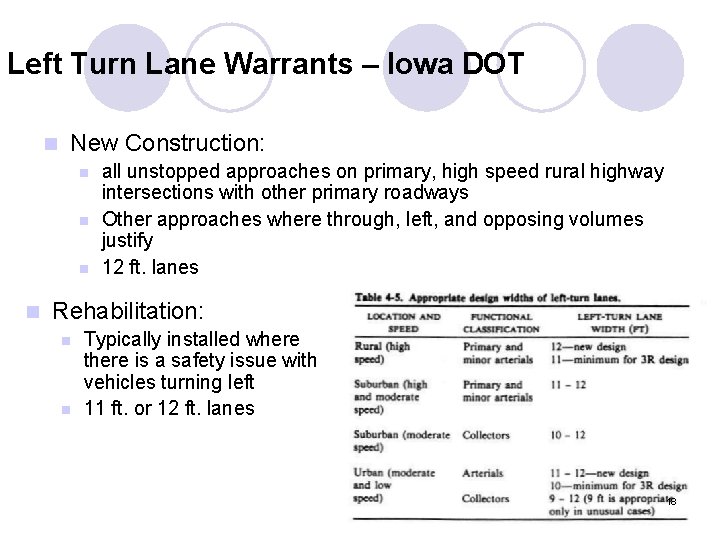
Left Turn Lane Warrants – Iowa DOT n New Construction: n n all unstopped approaches on primary, high speed rural highway intersections with other primary roadways Other approaches where through, left, and opposing volumes justify 12 ft. lanes Rehabilitation: n n Typically installed where there is a safety issue with vehicles turning left 11 ft. or 12 ft. lanes 18
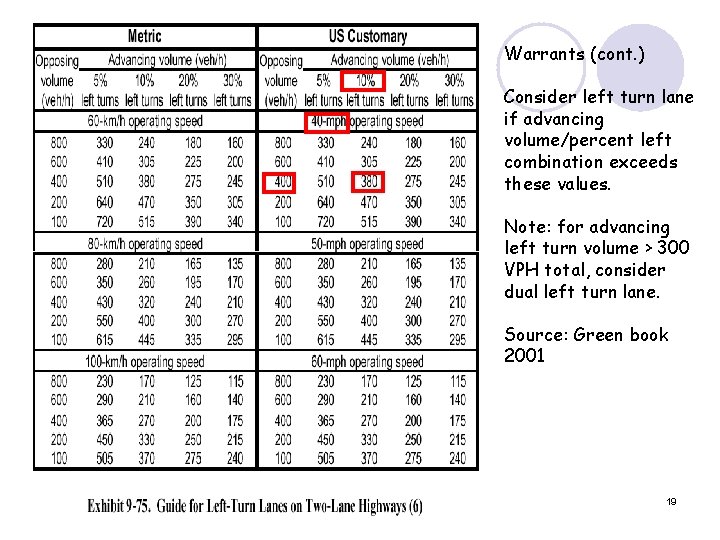
Warrants (cont. ) Consider left turn lane if advancing volume/percent left combination exceeds these values. Note: for advancing left turn volume > 300 VPH total, consider dual left turn lane. Source: Green book 2001 19
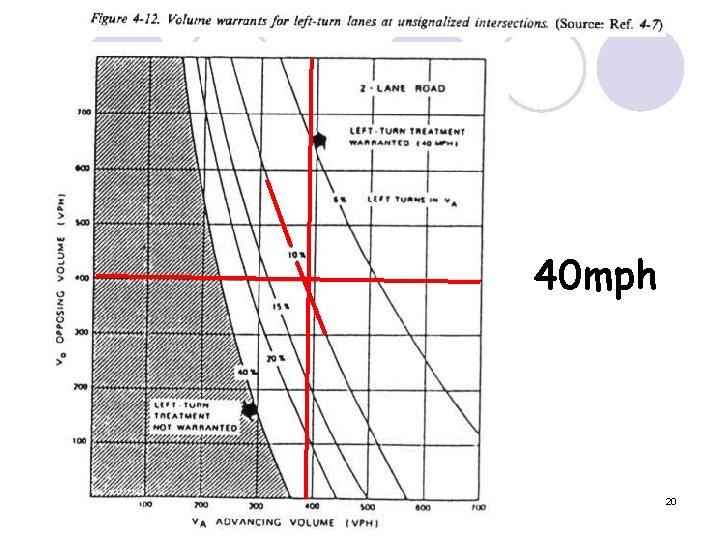
40 mph 20
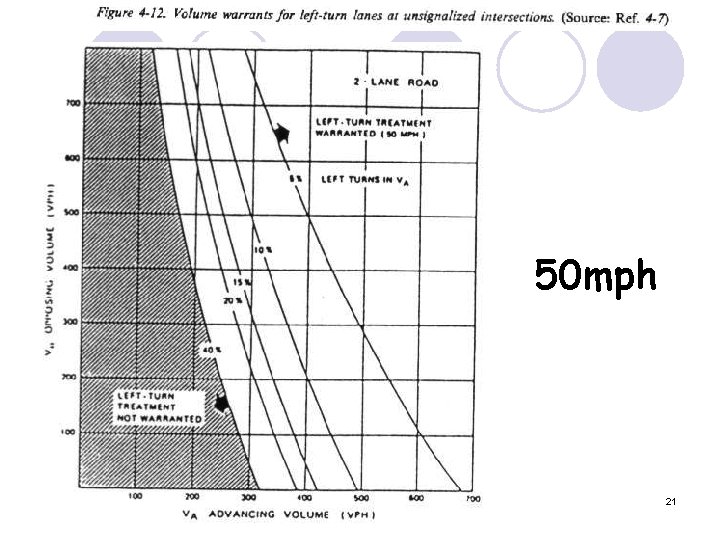
50 mph 21
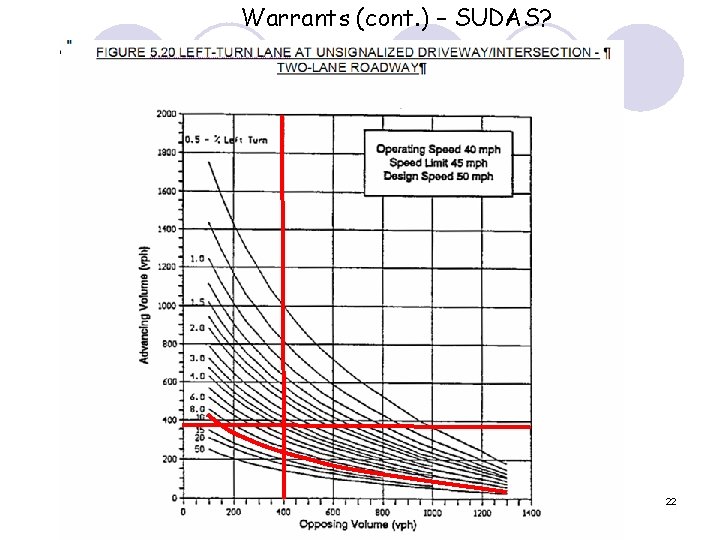
Warrants (cont. ) – SUDAS? 22
23
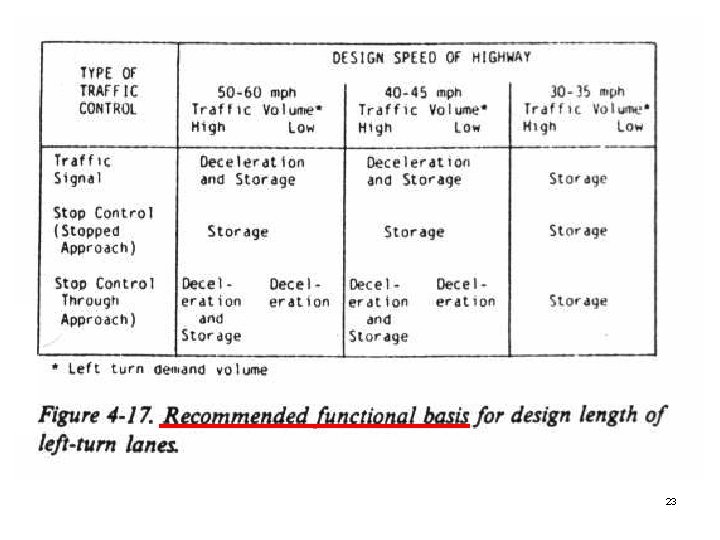
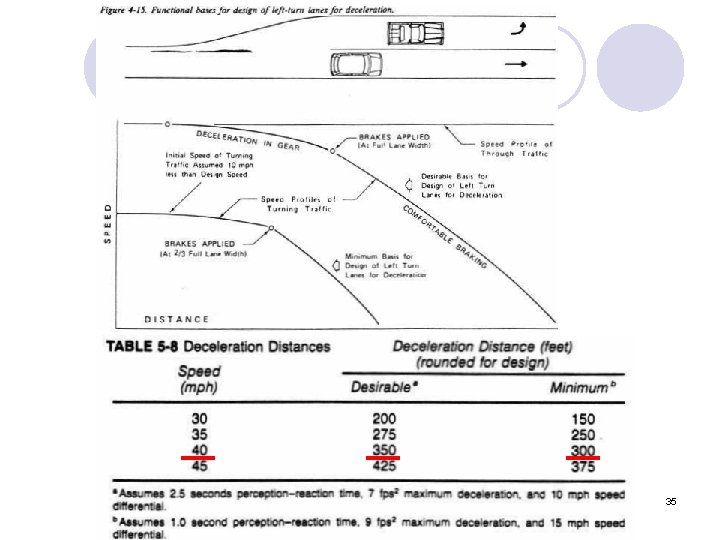
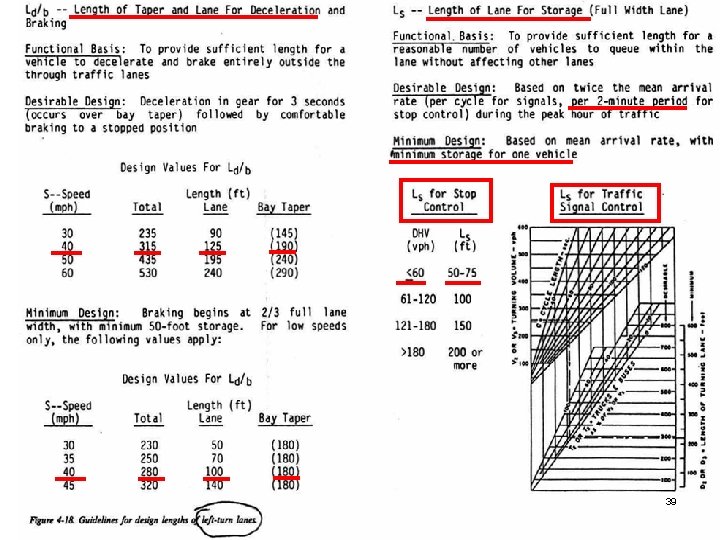
Lane Length n Deceleration n n Provide distance for turning vehicles to decelerate without interfering with through traffic Deceleration lane length depends on: n n n Speed number of queued vehicles vehicle length Minimum: accommodate deceleration from D. S. – 10 mph to stop (PRT & 10 MPH reduction occurs upstream of bay; more in congested, urban conditions) Storage n Unsignalized, accommodate 2 minutes of demand, at least 2 cars (or 1 car and 1 truck if truck% > 10) 24
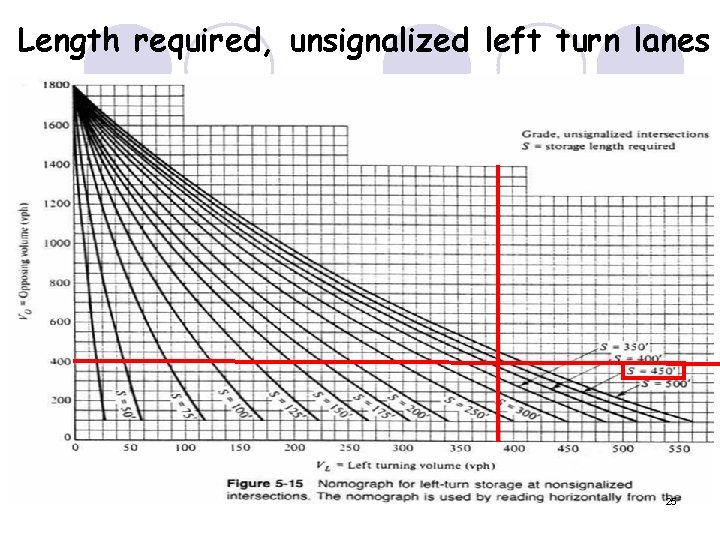
Length required, unsignalized left turn lanes 25
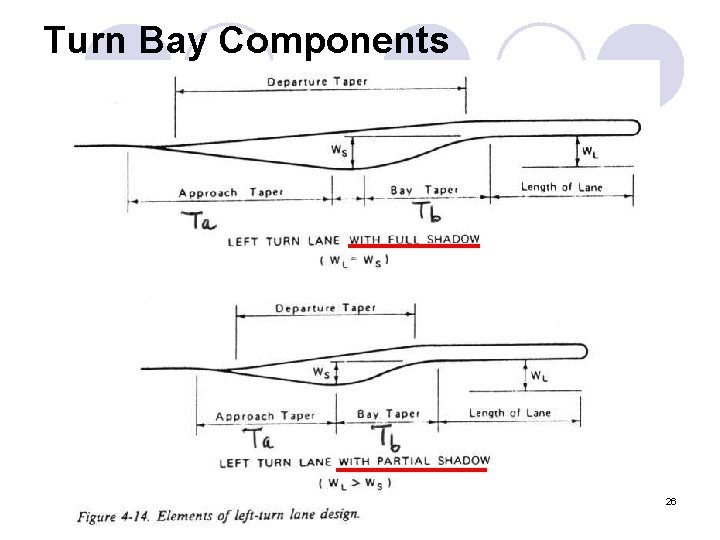
Turn Bay Components 26
27
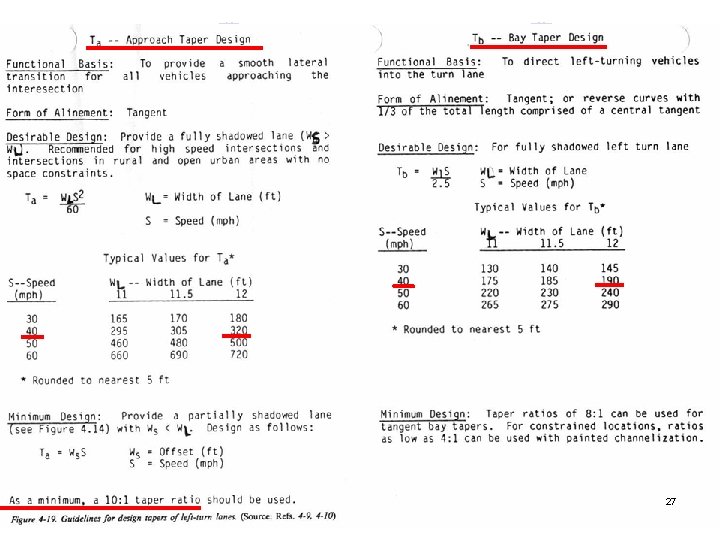
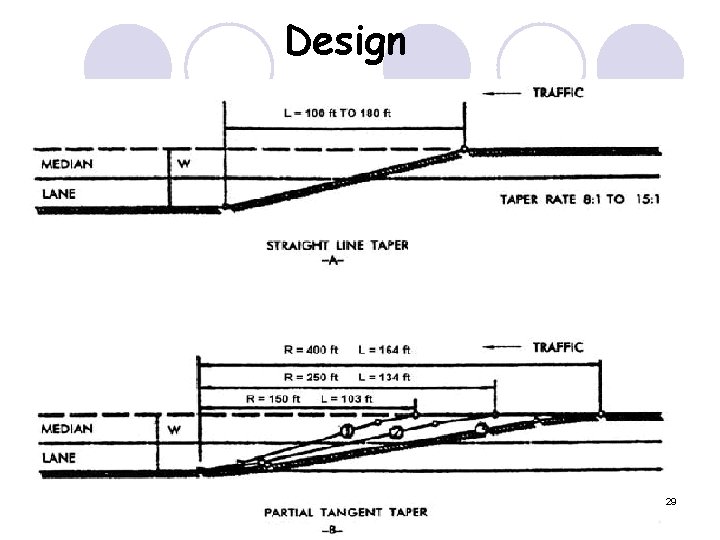
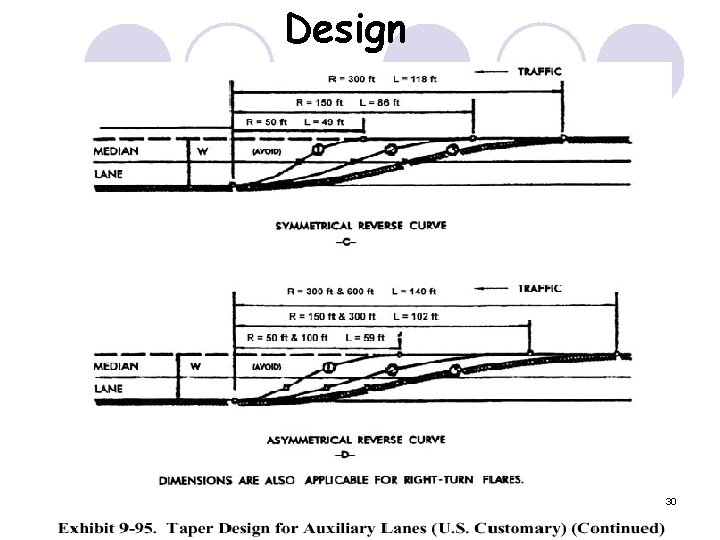
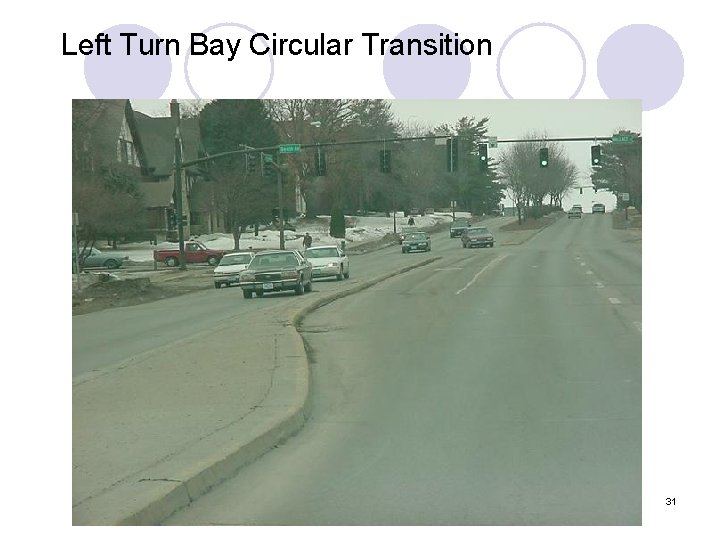
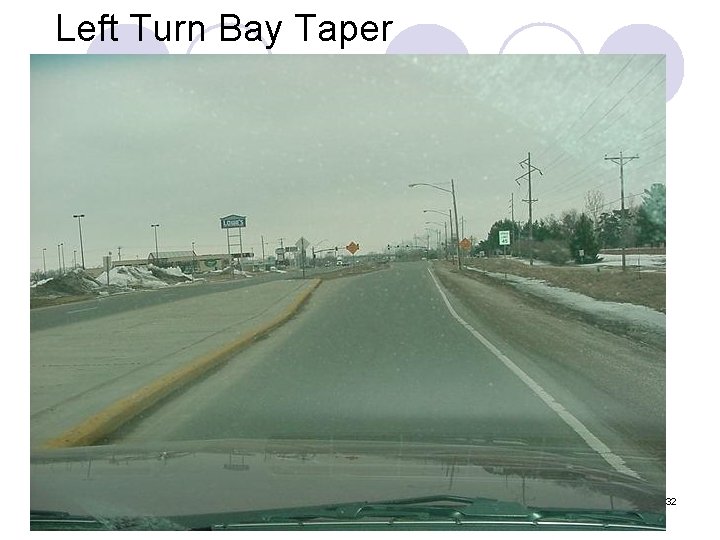
Some Turn Lane Details n Transitions are often symmetrical reverse curves or straight line n Curves at each end are desirable n Green Book: 8: 1 to 15: 1 tapers for high speed highways … urban use 100’ for single and 150’ for dual left turn lane 28
Design 29
Design 30
Left Turn Bay Circular Transition 31
Left Turn Bay Taper 32
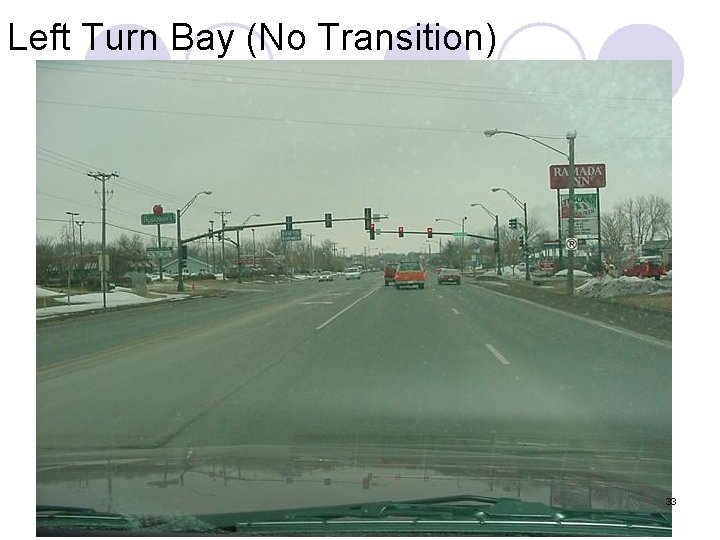
Left Turn Bay (No Transition) 33
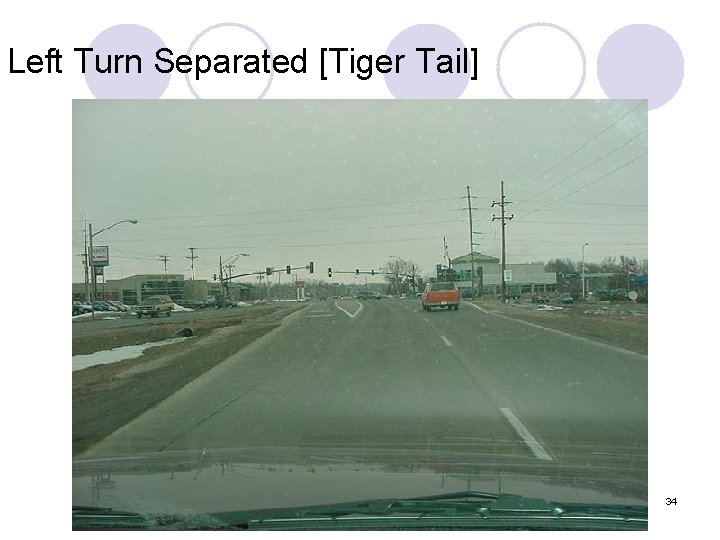
Left Turn Separated [Tiger Tail] 34
35
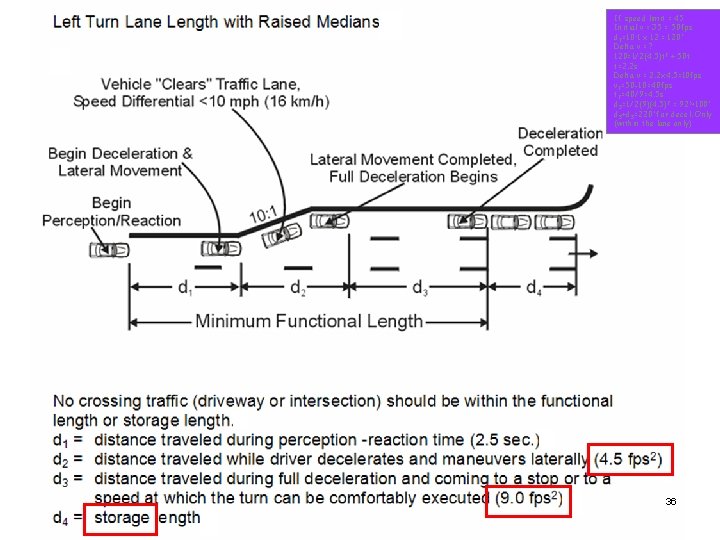
If speed limit = 45 Initial v = 35 = 50 fps d 2=10: 1 x 12 = 120’ Delta v = ? 120=1/2(4. 5)t 2 + 50 t t=2. 2 s Delta v = 2. 2 x 4. 5=10 fps v 2=50 -10=40 fps t 2=40/9=4. 5 s d 3=1/2(9)(4. 5)2 = 92’~100’ d 3+d 3=220’ for decel. Only (within the lane only) 36
With Signals … 37
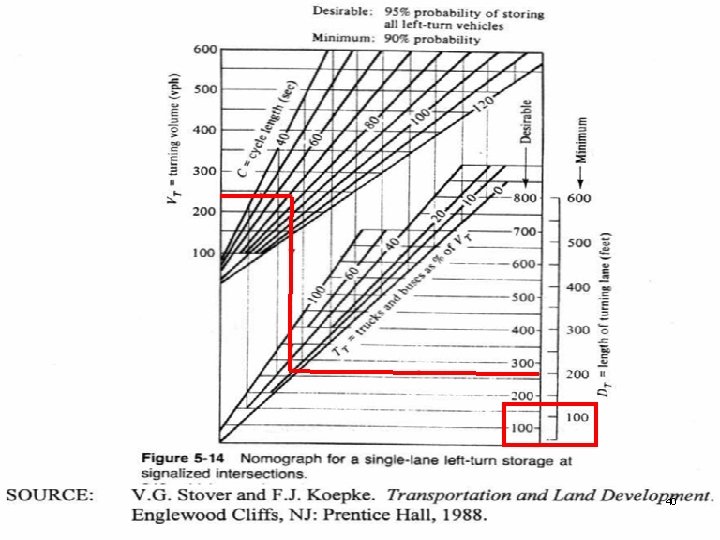
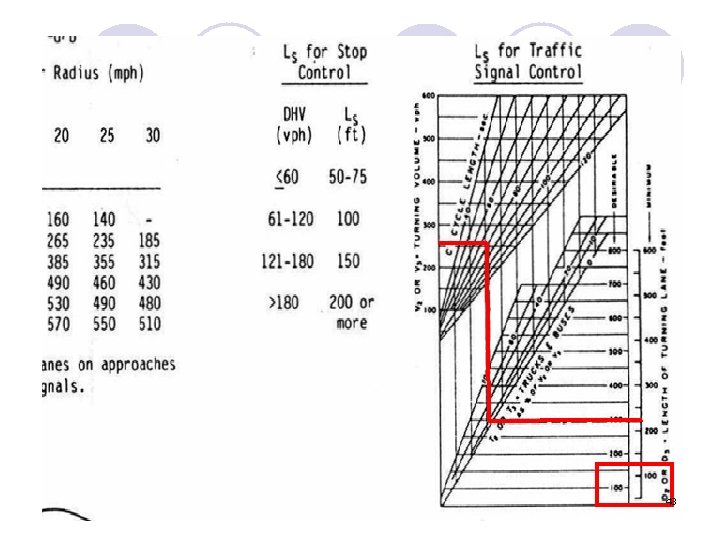
Signalized storage required: n Signalized, accommodate twice the expected average storage needed – depends on cycle and phasing 38
39
40
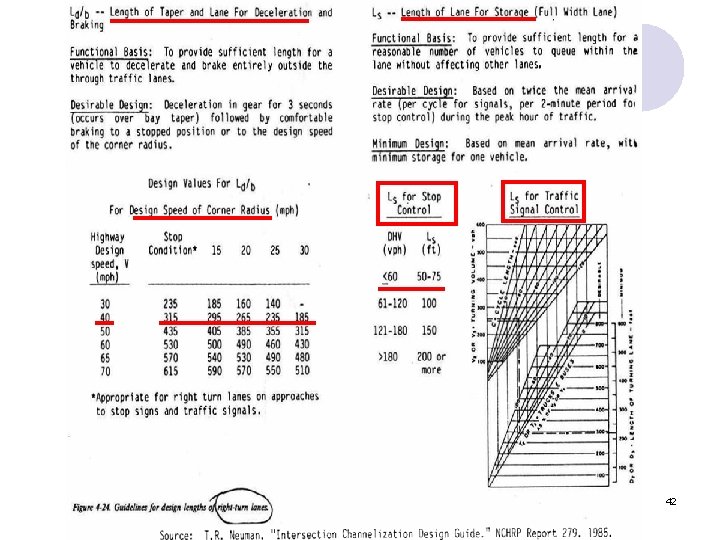
Right Turn Bays n Right turn bay length depends on corner radius (design speed) 41
42
43
Median Openings 44
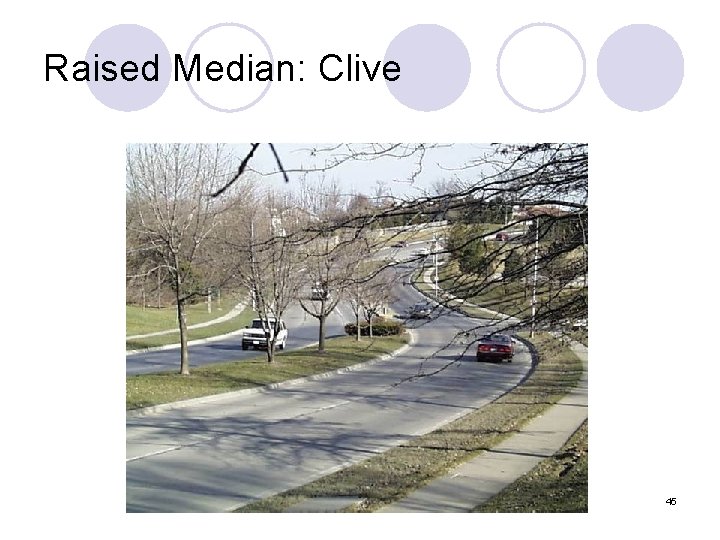
Raised Median: Clive 45
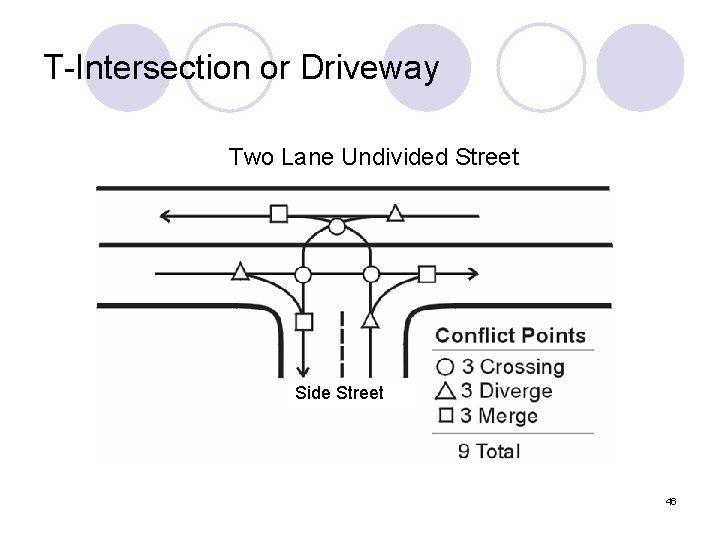
T-Intersection or Driveway Two Lane Undivided Street Side Street 46
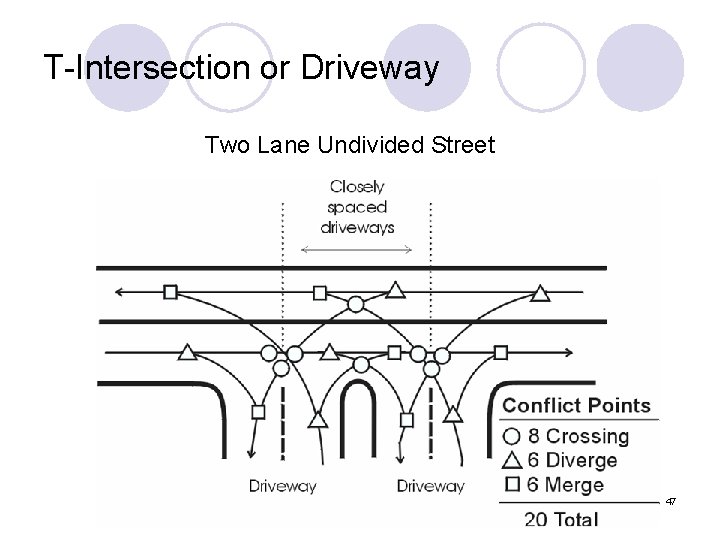
T-Intersection or Driveway Two Lane Undivided Street Side Street 47
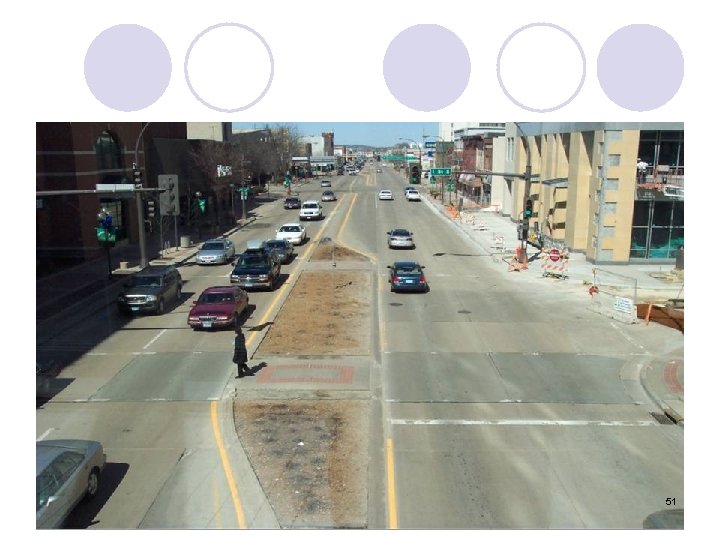
Median Closure § Application – Median openings should be considered for closure when: ü ü ü A safety or operational problem is evident and an appropriate retrofit cannot be made. Median width <11 ft. The left-turn bay of a nearby signalized intersection needs to be extended. Where a pattern of left-turn crashes is evident. Where heavy pedestrian use is predicted or accidents involving pedestrians have occurred at intersections. 48
Median Closure - Design ü ü The need for visual cues is especially critical during nighttime hours where a 4 -way intersection previously existed or there access drives directly opposite each other. Minimum 4 ft. width face-to-face of curbs is recommended. Select and locate landscaping materials to delineate the median. Landscaping must not obscure sight distances. 49
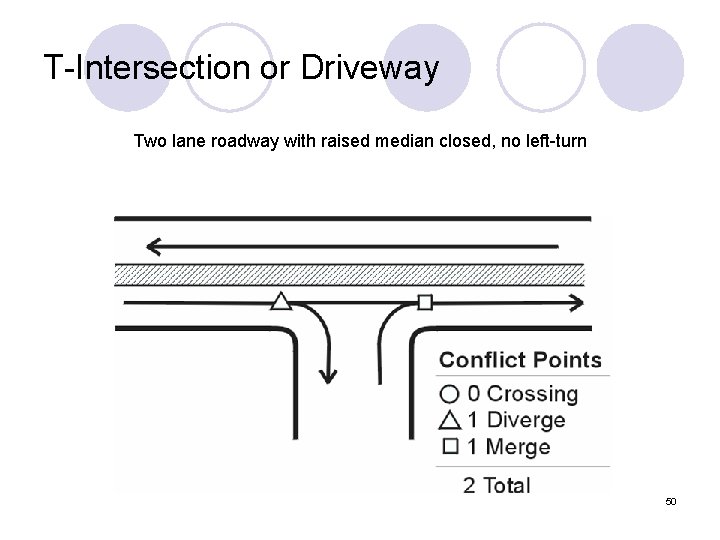
T-Intersection or Driveway Two lane roadway with raised median closed, no left-turn 50
51
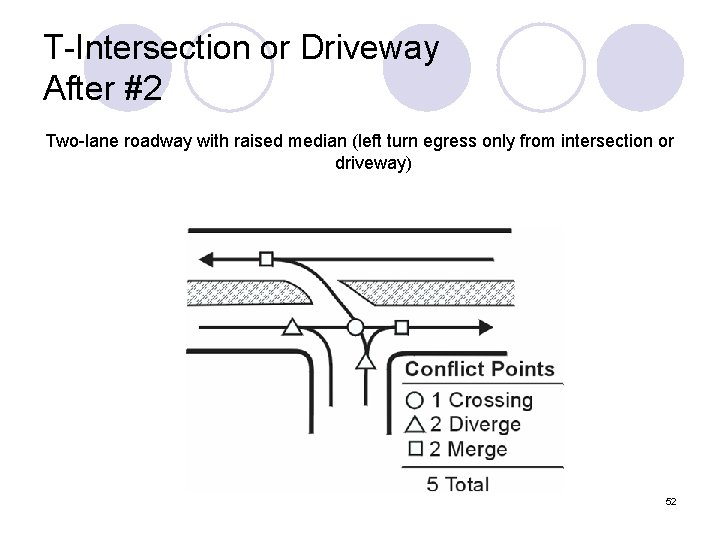
T-Intersection or Driveway After #2 Two-lane roadway with raised median (left turn egress only from intersection or driveway) 52
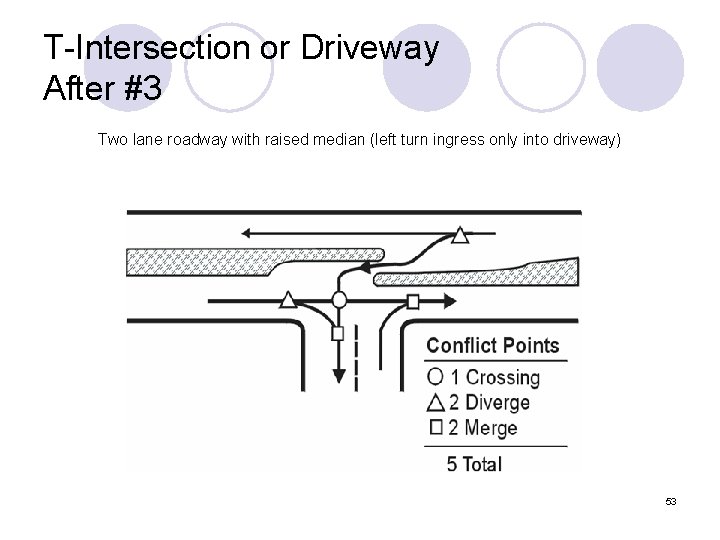
T-Intersection or Driveway After #3 Two lane roadway with raised median (left turn ingress only into driveway) 53
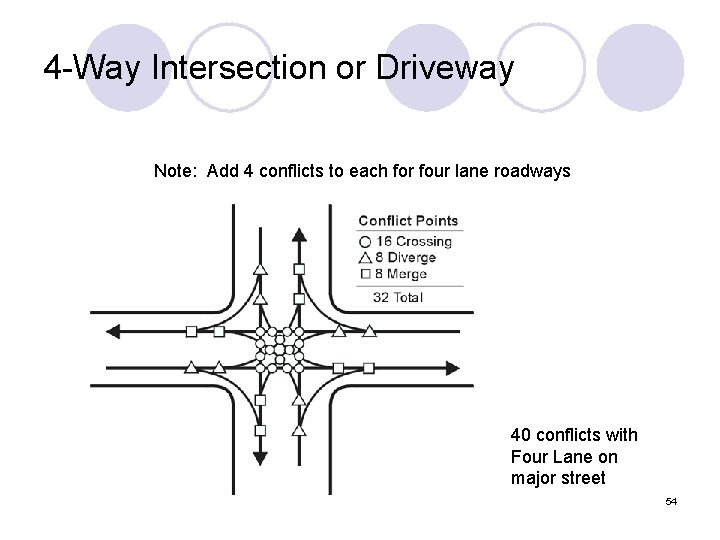
4 -Way Intersection or Driveway Note: Add 4 conflicts to each for four lane roadways 40 conflicts with Four Lane on major street 54
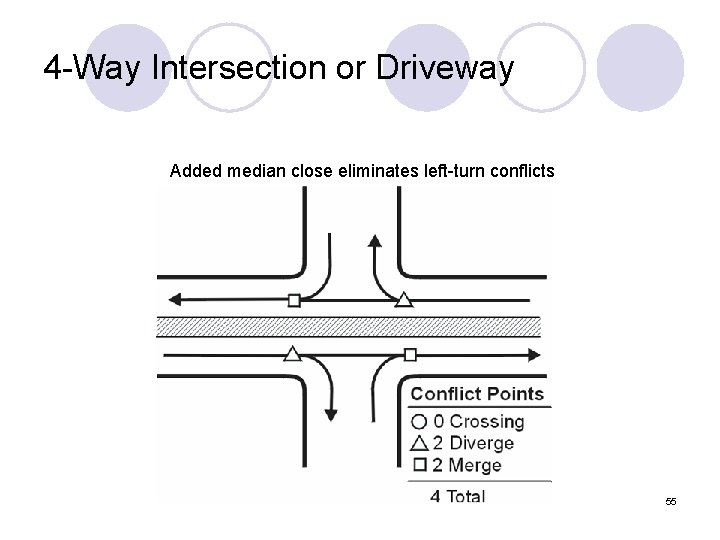
4 -Way Intersection or Driveway Added median close eliminates left-turn conflicts 55
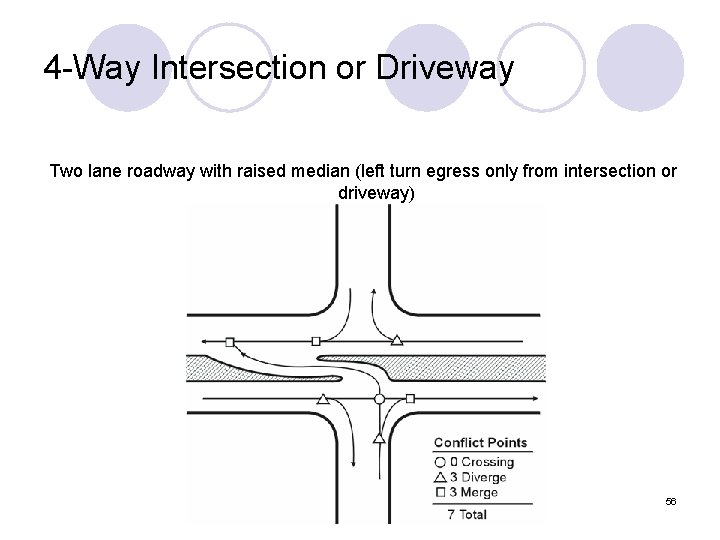
4 -Way Intersection or Driveway Two lane roadway with raised median (left turn egress only from intersection or driveway) 56
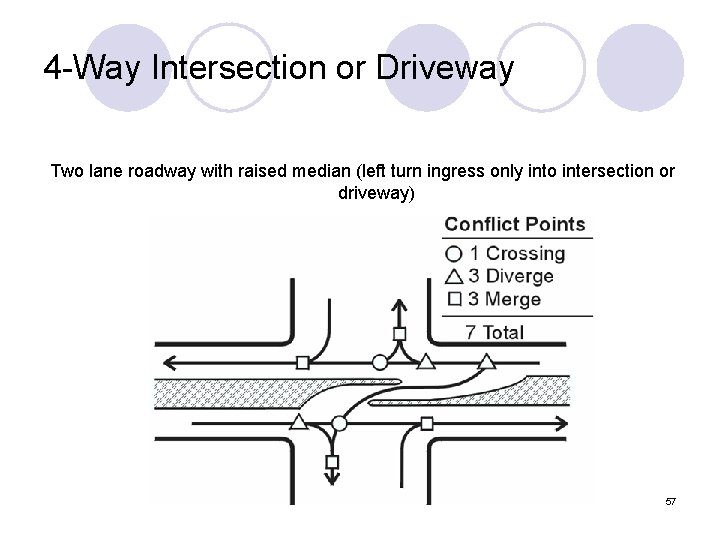
4 -Way Intersection or Driveway Two lane roadway with raised median (left turn ingress only into intersection or driveway) 57
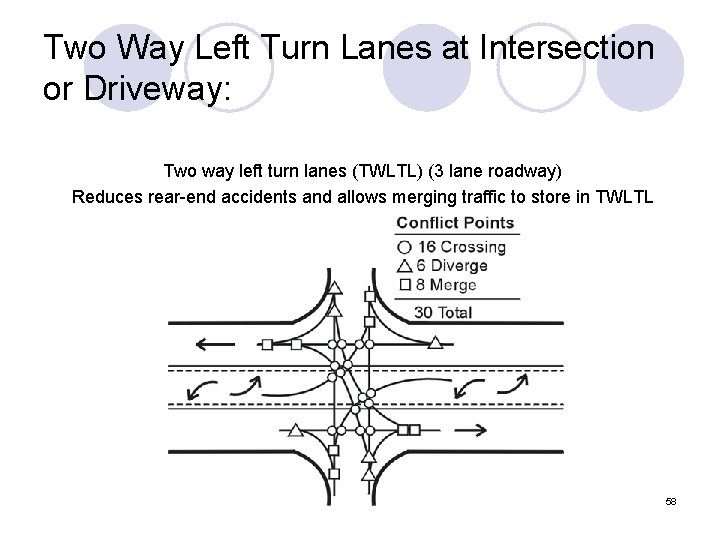
Two Way Left Turn Lanes at Intersection or Driveway: Two way left turn lanes (TWLTL) (3 lane roadway) Reduces rear-end accidents and allows merging traffic to store in TWLTL 58
Openings in the Raised Median § New median openings should not be permitted except to accommodate intersecting public roads or streets or large traffic-generating facilities such as shopping centers or industrial plants. § Median openings may be permitted in these instances if satisfactorily justified and in the public interest. 59
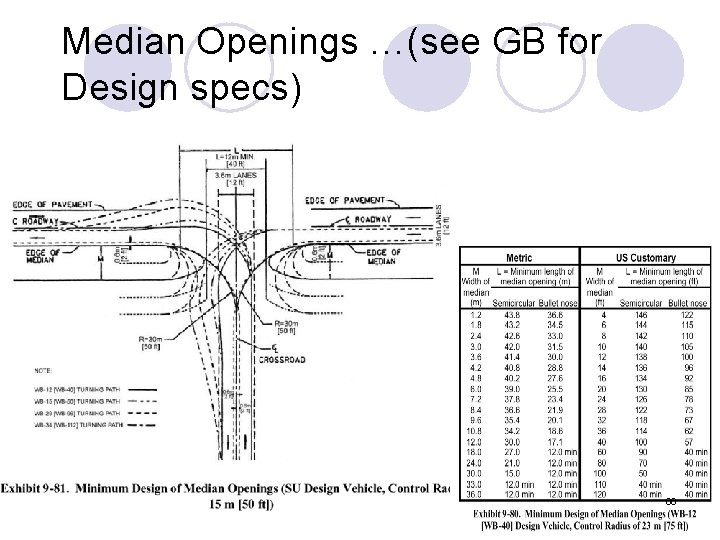
Median Openings …(see GB for Design specs) 60
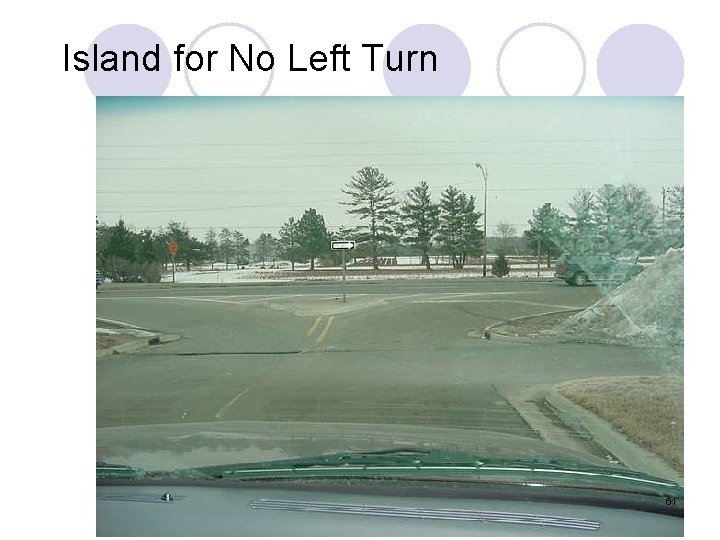
Island for No Left Turn 61
Some examples around Ames 62
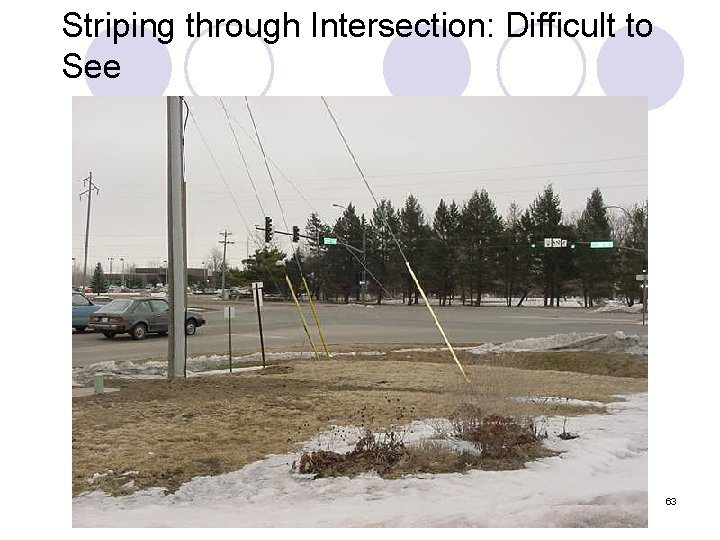
Striping through Intersection: Difficult to See 63
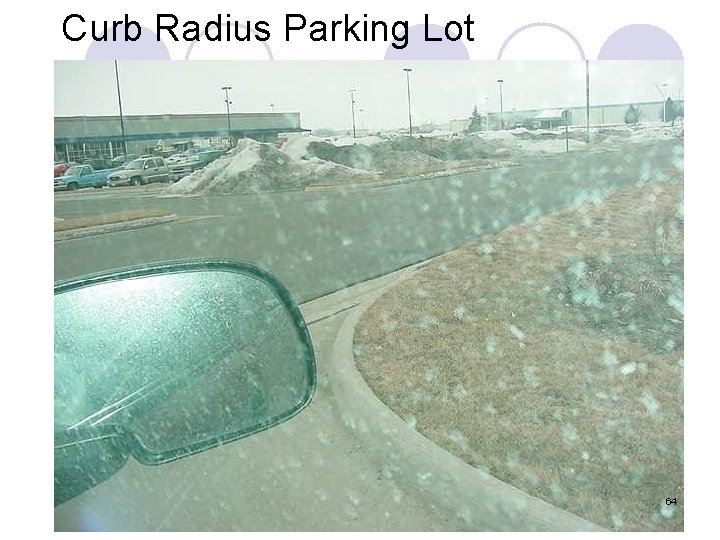
Curb Radius Parking Lot 64
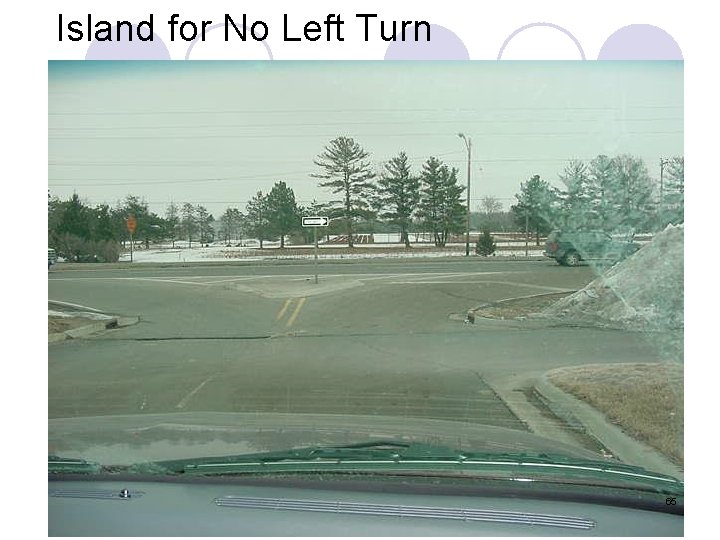
Island for No Left Turn 65
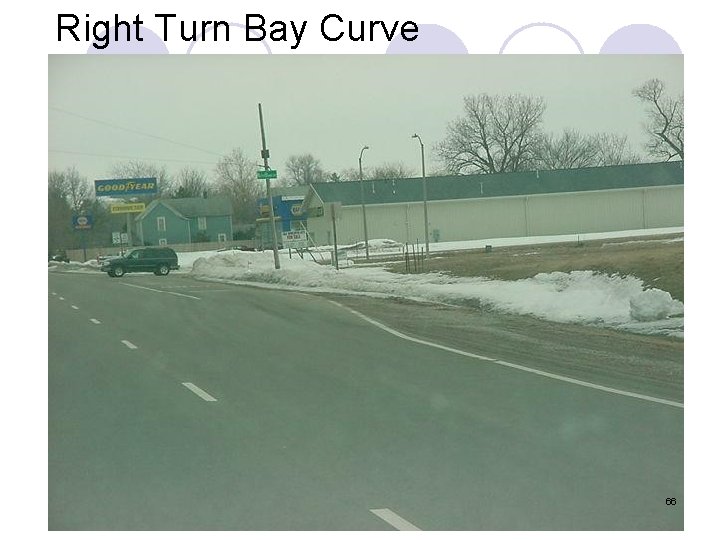
Right Turn Bay Curve 66
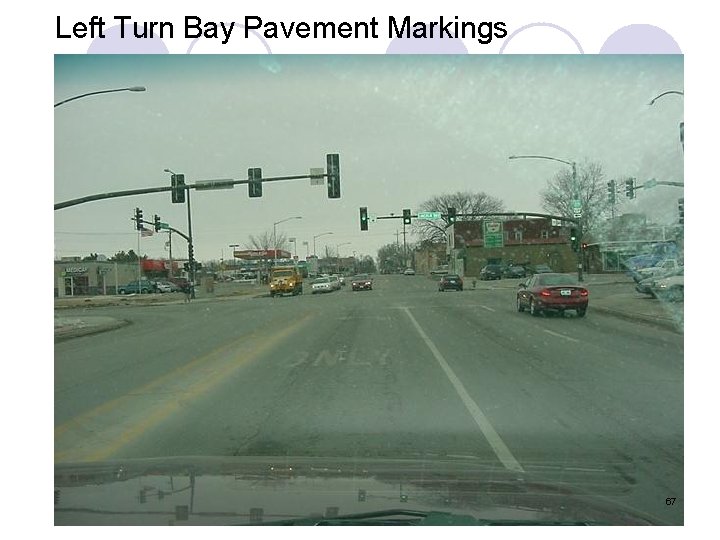
Left Turn Bay Pavement Markings 67
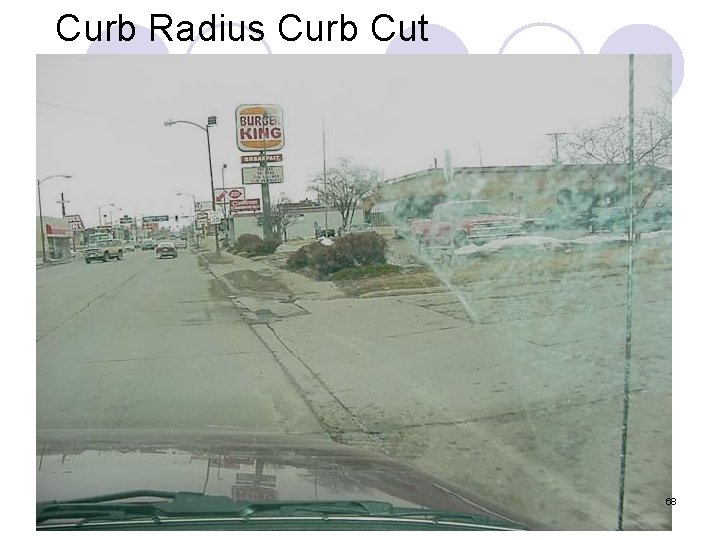
Curb Radius Curb Cut 68
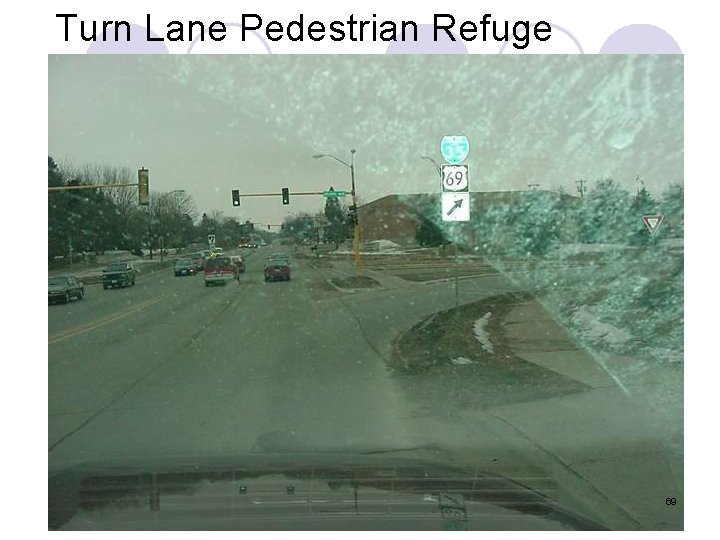
Turn Lane Pedestrian Refuge 69
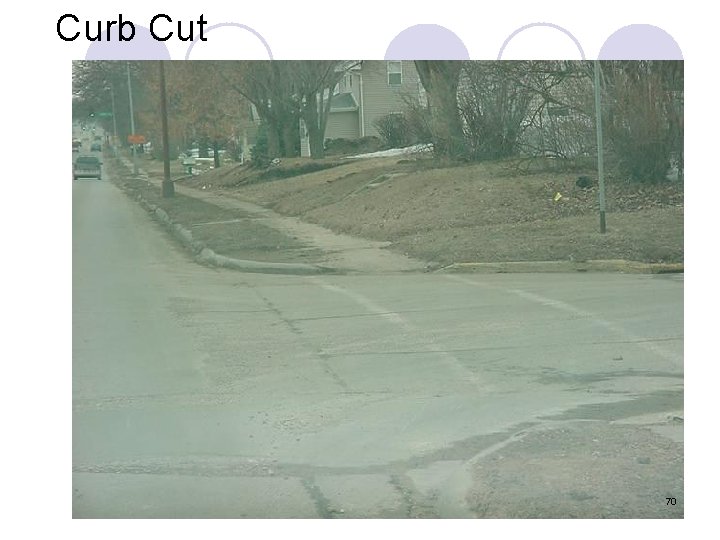
Curb Cut 70
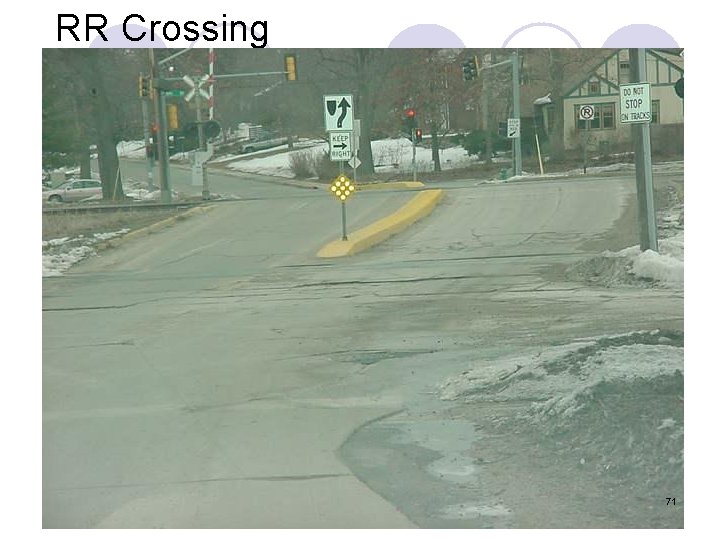
RR Crossing 71
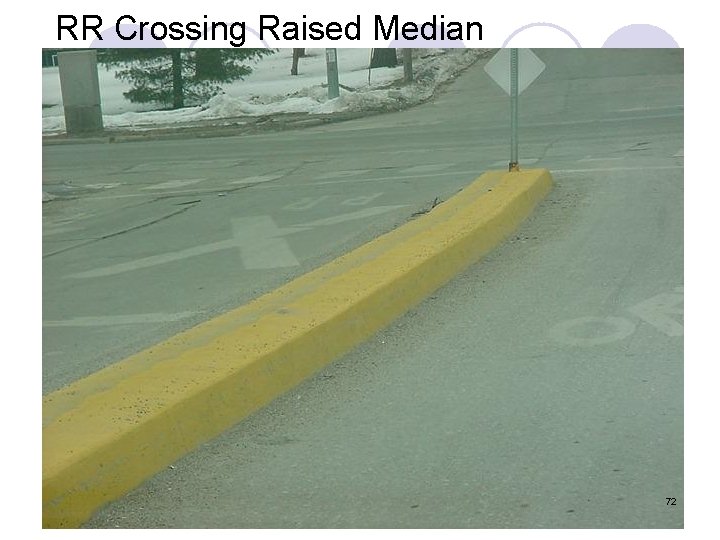
RR Crossing Raised Median 72
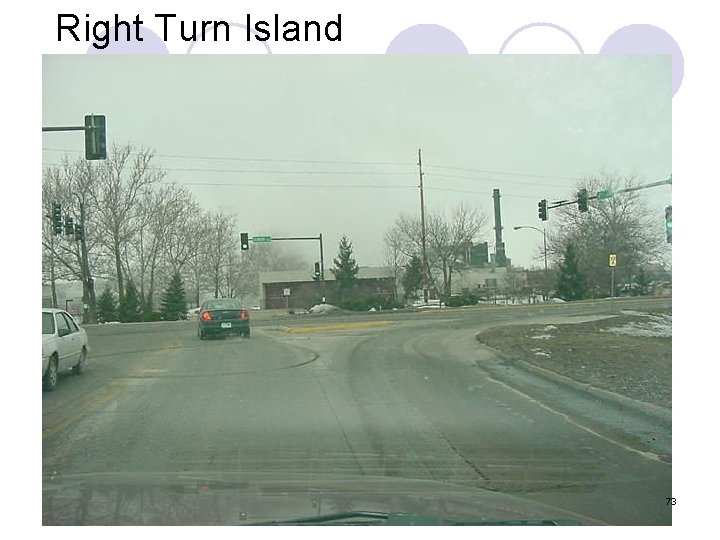
Right Turn Island 73
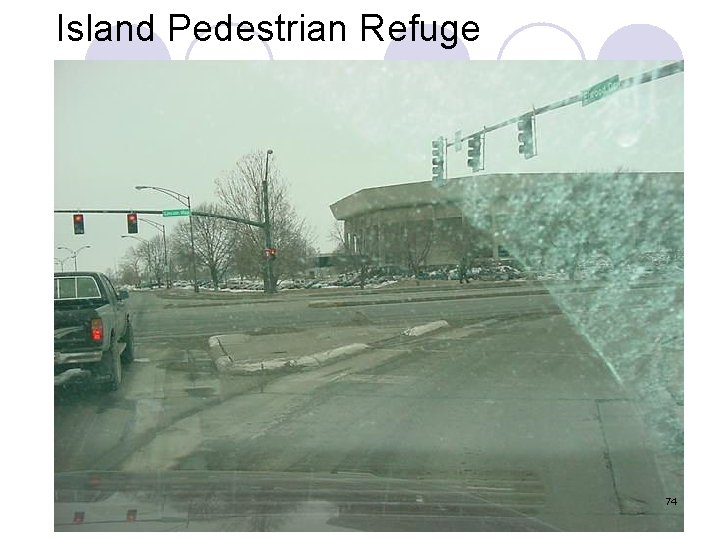
Island Pedestrian Refuge 74
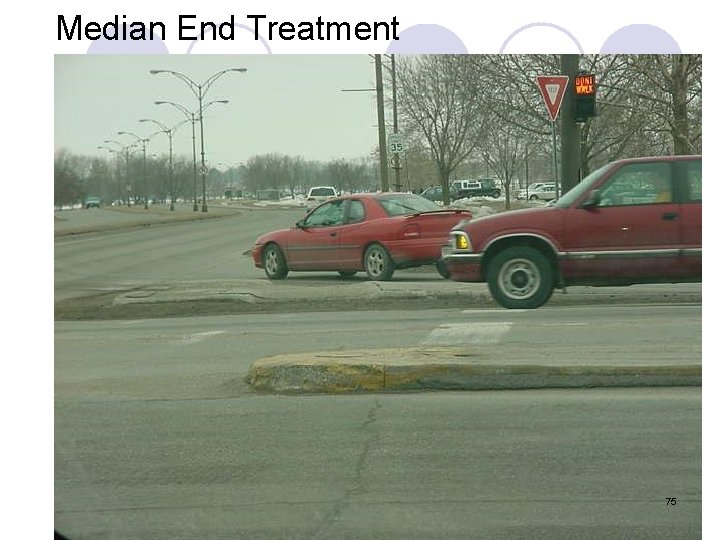
Median End Treatment 75
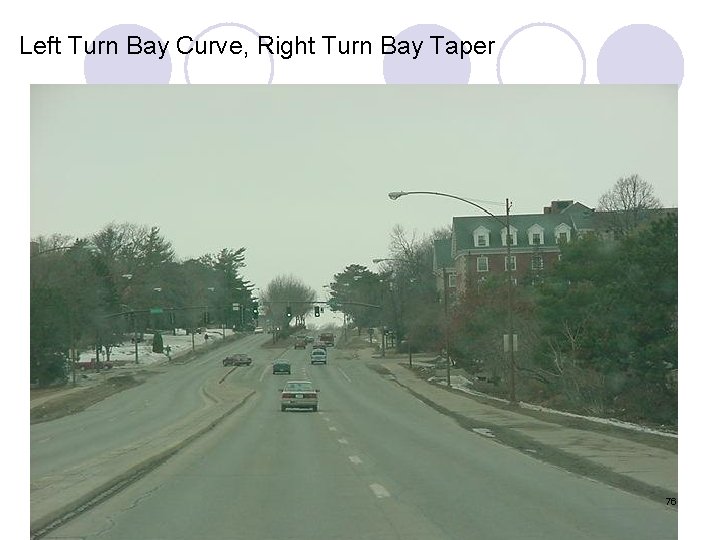
Left Turn Bay Curve, Right Turn Bay Taper 76
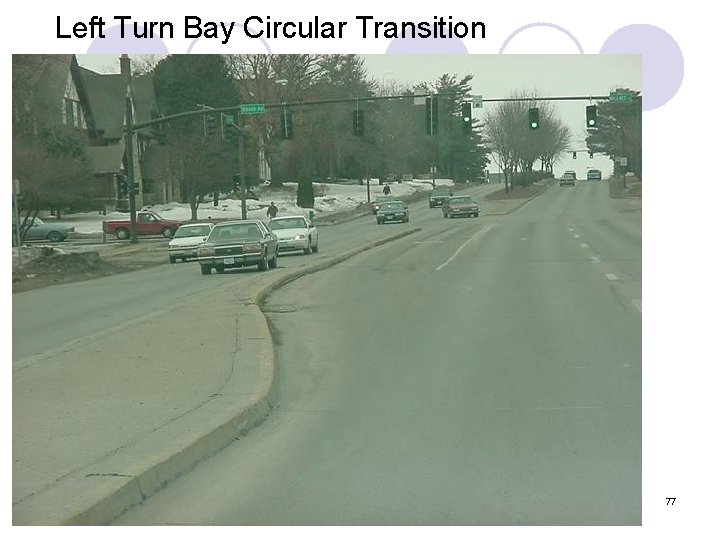
Left Turn Bay Circular Transition 77
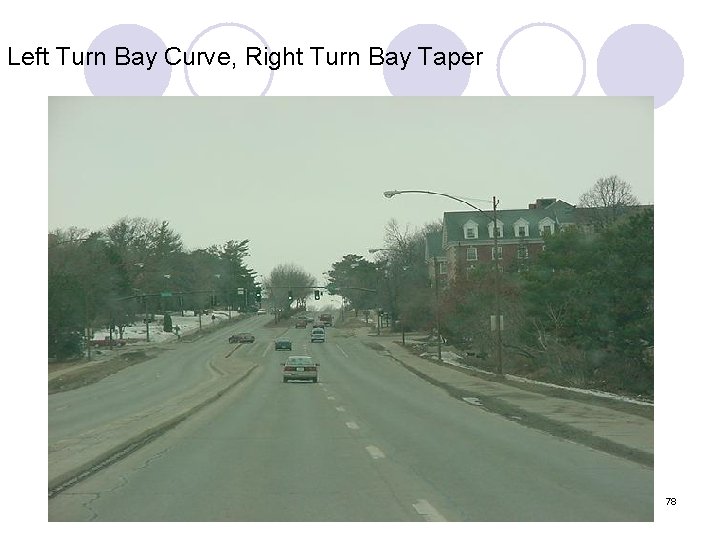
Left Turn Bay Curve, Right Turn Bay Taper 78
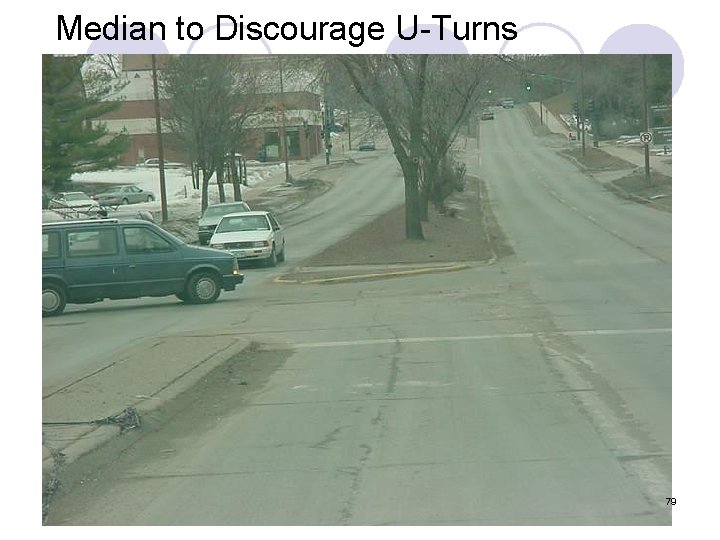
Median to Discourage U-Turns 79
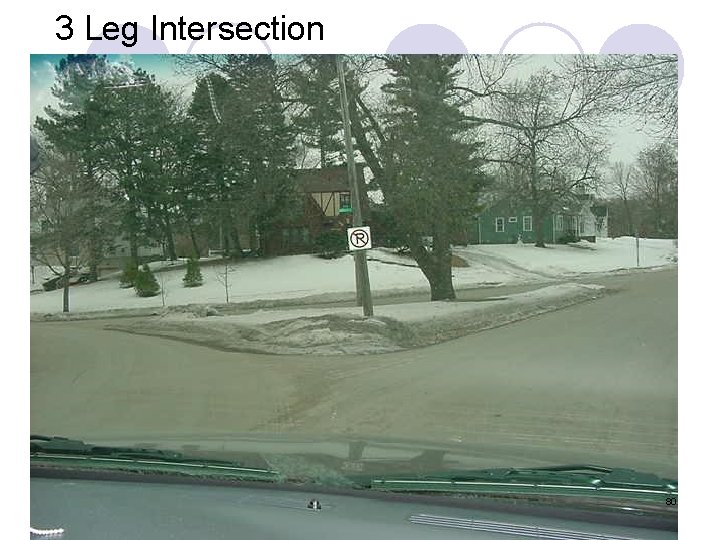
3 Leg Intersection 80
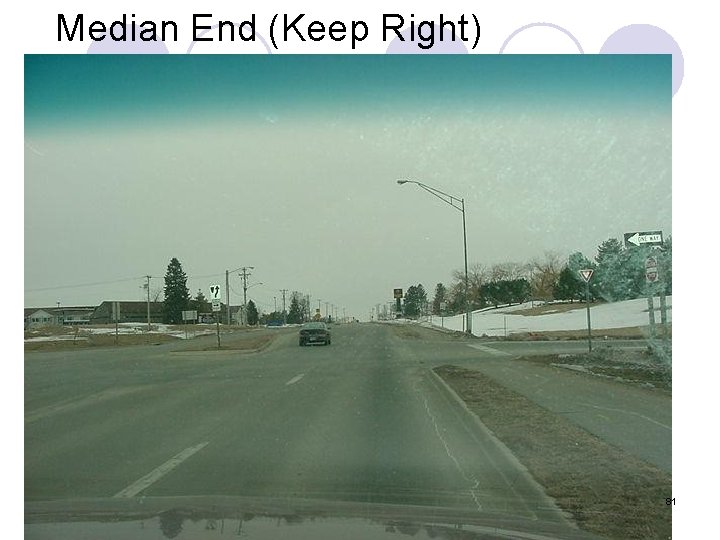
Median End (Keep Right) 81
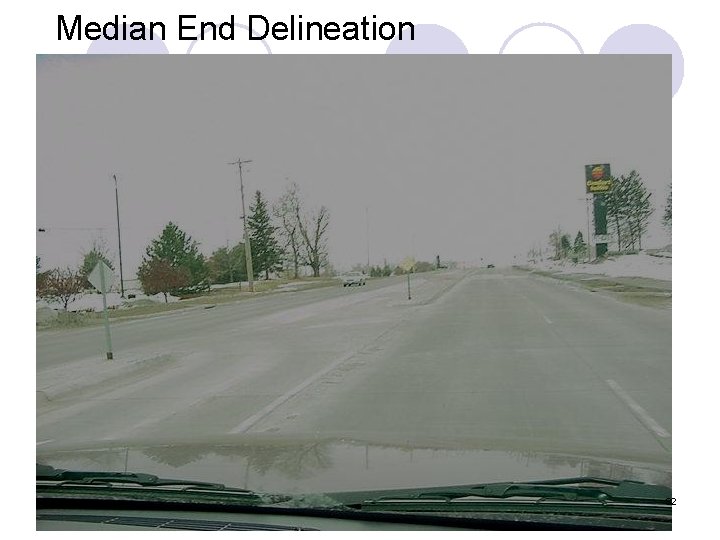
Median End Delineation 82
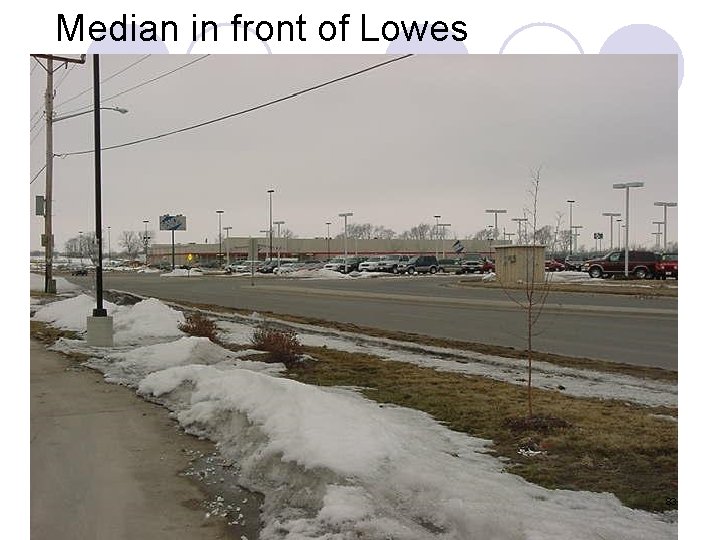
Median in front of Lowes 83
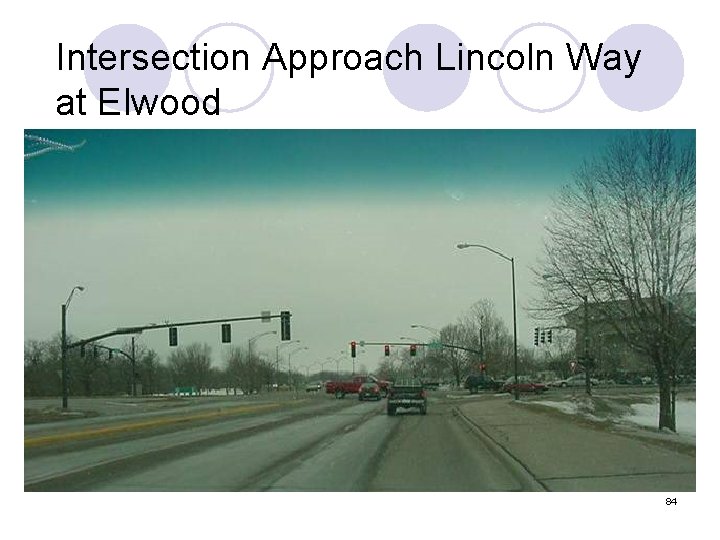
Intersection Approach Lincoln Way at Elwood 84
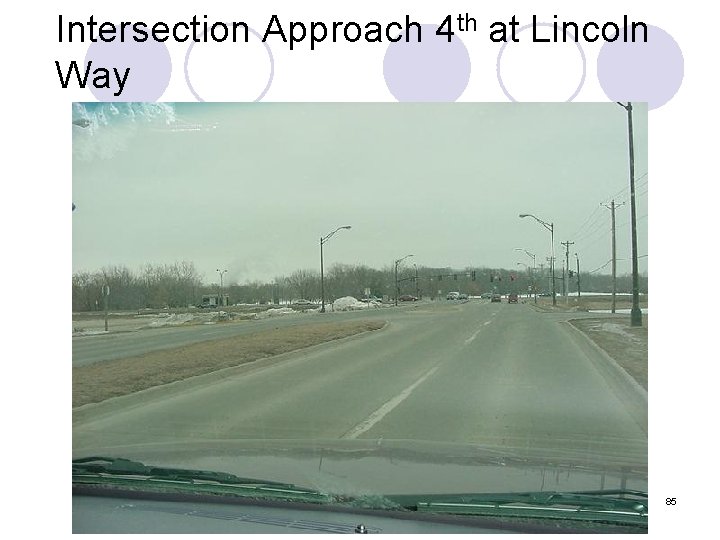
Intersection Approach 4 th at Lincoln Way 85
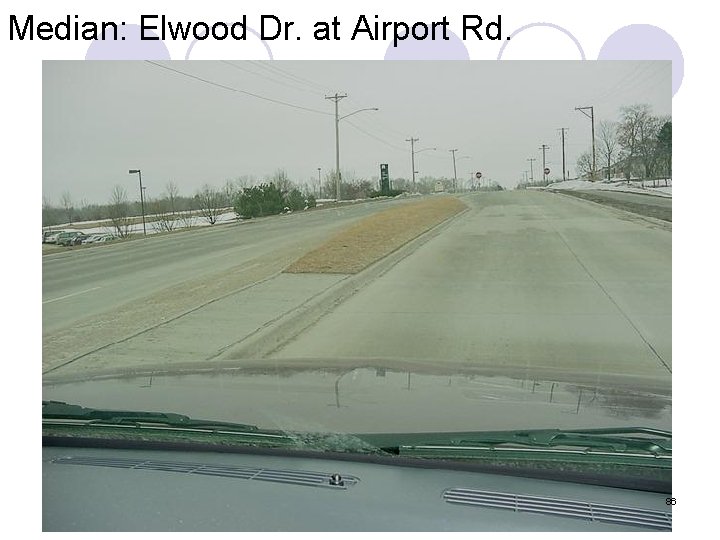
Median: Elwood Dr. at Airport Rd. 86
- Slides: 86