
CHANNELING EFFECT SIMULATION AND ITS POSSIBLE APPLICATIONS FOR

CHANNELING EFFECT SIMULATION AND ITS POSSIBLE APPLICATIONS FOR FUTURE HIGH ENERGY ACCELERATORS ALEXEI SYTOV Belarusian State University, Research Institute for Nuclear Problems
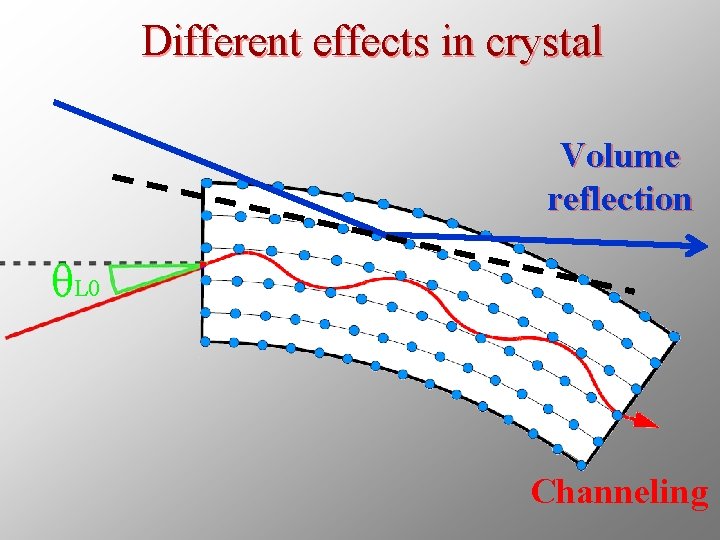
Different effects in crystal Volume reflection θL 0 Channeling
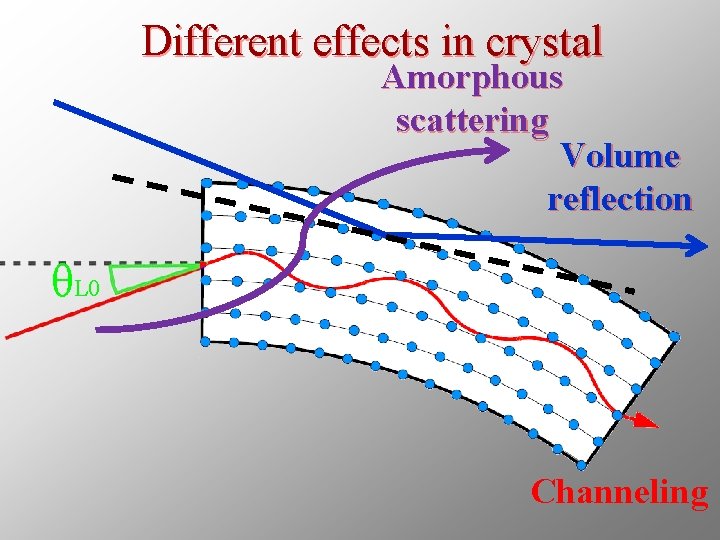
Different effects in crystal Amorphous scattering Volume reflection θL 0 Channeling
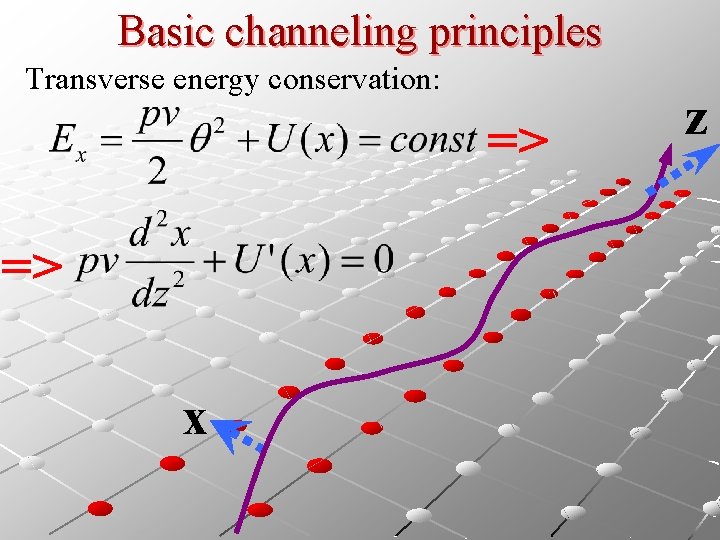
Basic channeling principles Transverse energy conservation: => => x z
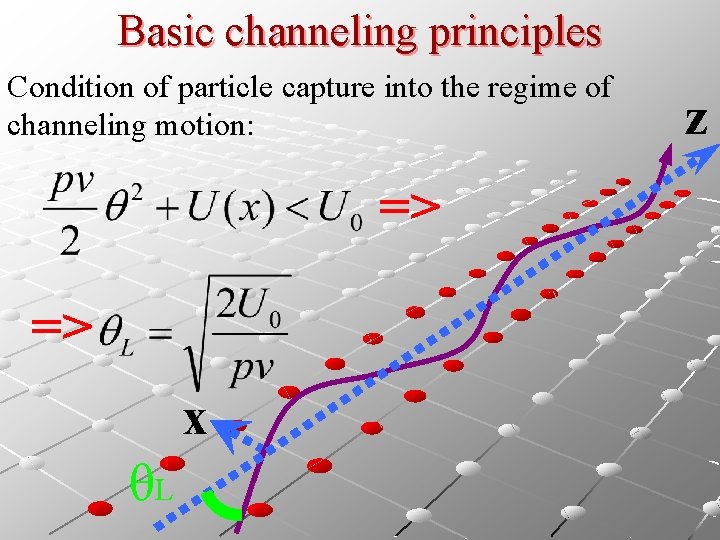
Basic channeling principles Condition of particle capture into the regime of channeling motion: => => x θL z
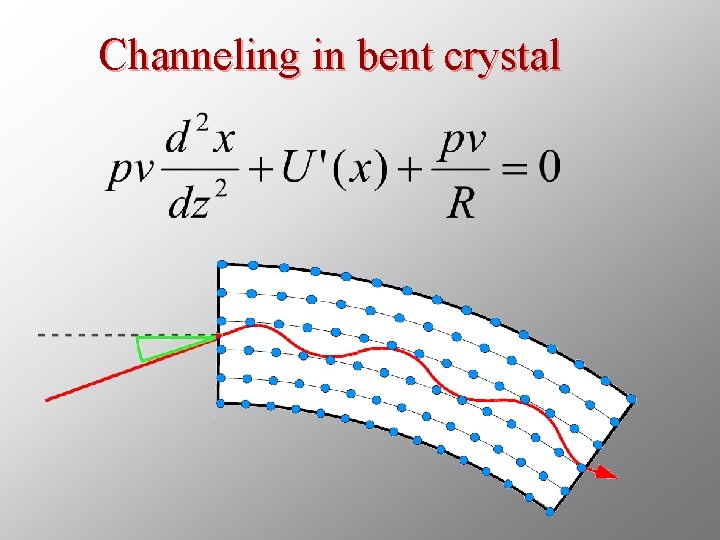
Channeling in bent crystal
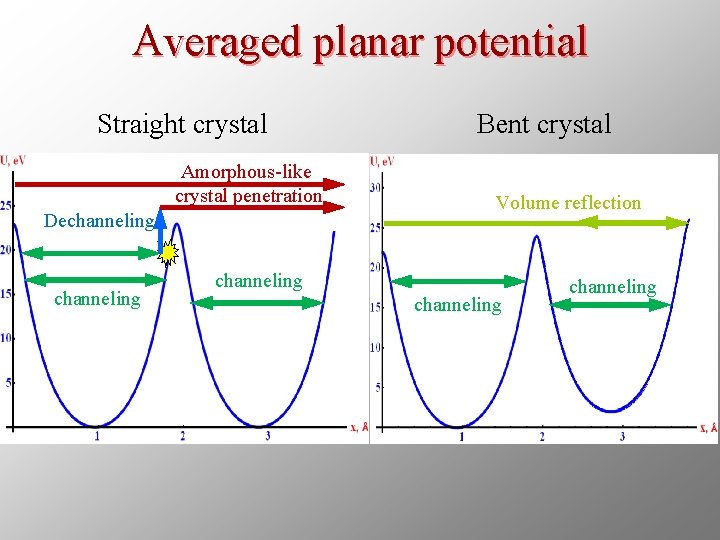
Averaged planar potential Straight crystal Amorphous-like crystal penetration Dechanneling Bent crystal Volume reflection channeling

Dechanneling causes
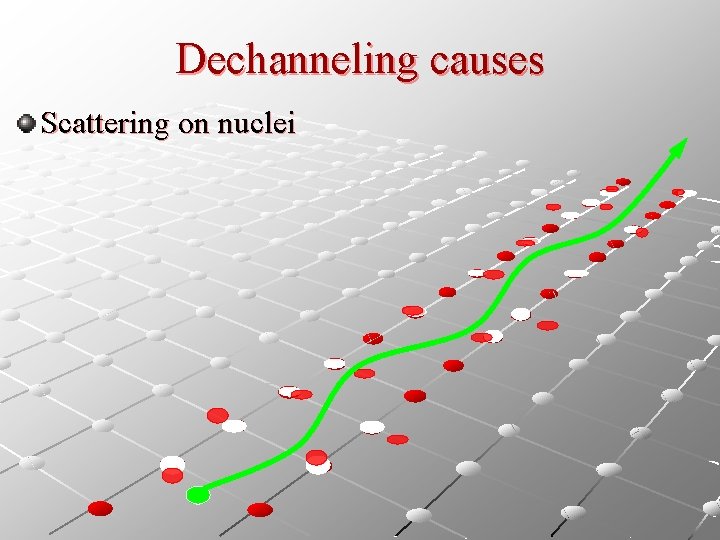
Dechanneling causes Scattering on nuclei
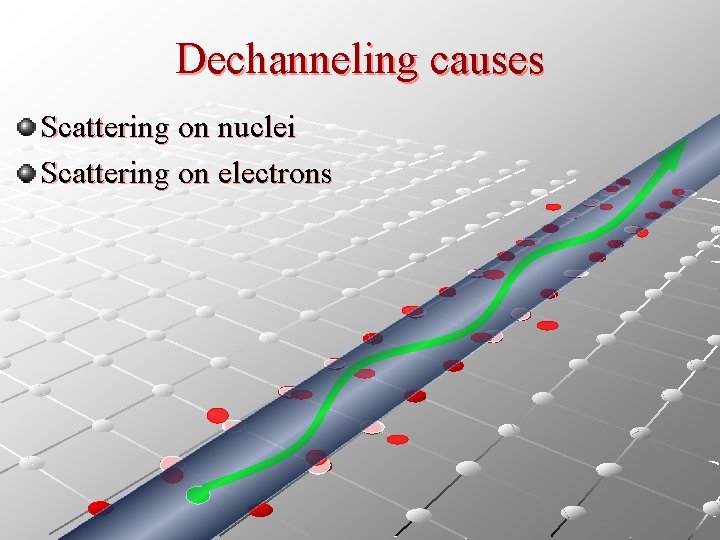
Dechanneling causes Scattering on nuclei Scattering on electrons
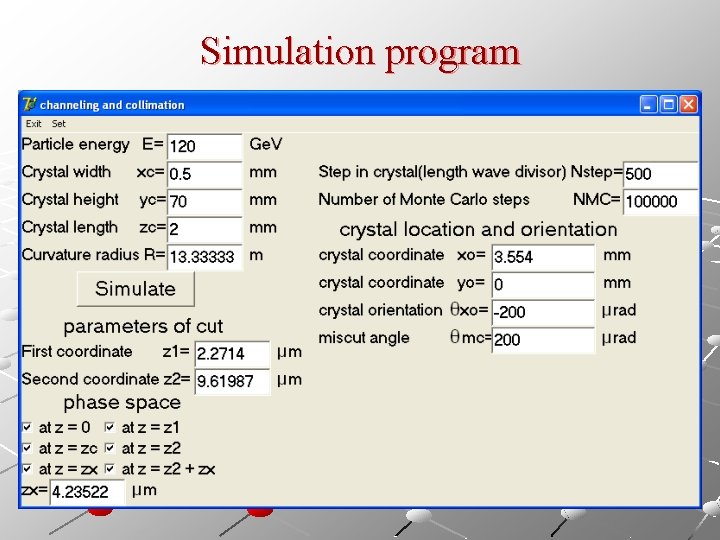
Simulation program
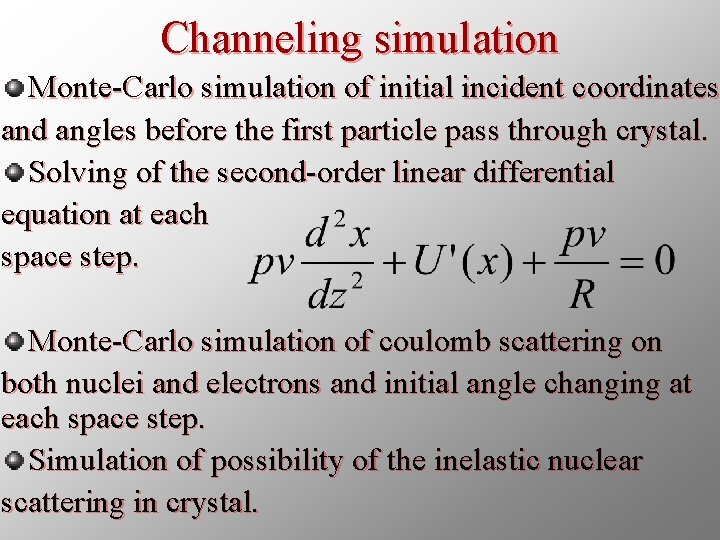
Channeling simulation Monte-Carlo simulation of initial incident coordinates and angles before the first particle pass through crystal. Solving of the second-order linear differential equation at each space step. Monte-Carlo simulation of coulomb scattering on both nuclei and electrons and initial angle changing at each space step. Simulation of possibility of the inelastic nuclear scattering in crystal.
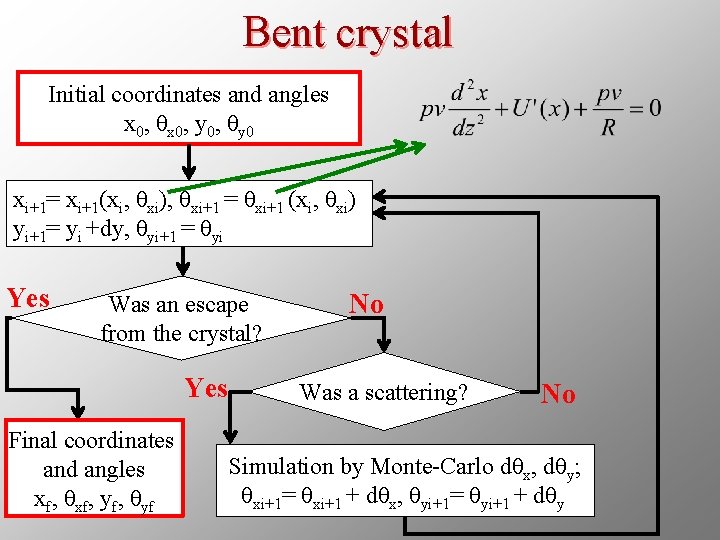
Bent crystal Initial coordinates and angles x 0, θx 0, y 0, θy 0 xi+1= xi+1(xi, θxi), θxi+1 = θxi+1 (xi, θxi) yi+1= yi +dy, θyi+1 = θyi Yes Was an escape from the crystal? Yes Final coordinates and angles xf, θxf, yf, θyf No Was a scattering? No Simulation by Monte-Carlo dθx, dθy; θxi+1= θxi+1 + dθx, θyi+1= θyi+1 + dθy
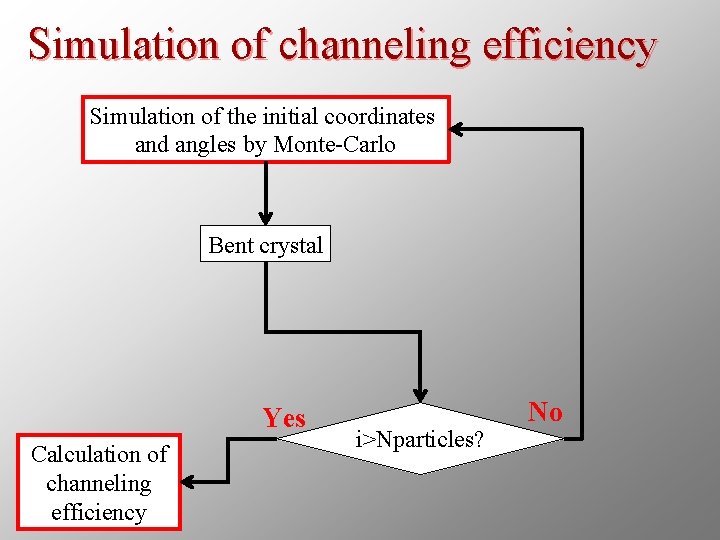
Simulation of channeling efficiency Simulation of the initial coordinates and angles by Monte-Carlo Bent crystal Yes Calculation of channeling efficiency i>Nparticles? No
Additional extension of the simulation tool
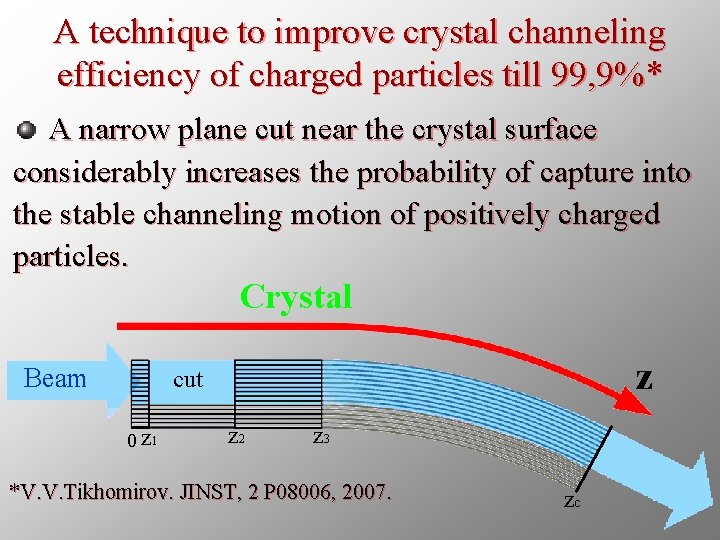
A technique to improve crystal channeling efficiency of charged particles till 99, 9%* A narrow plane cut near the crystal surface considerably increases the probability of capture into the stable channeling motion of positively charged particles. Crystal Beam z cut 0 z 1 z 2 z 3 *V. V. Tikhomirov. JINST, 2 P 08006, 2007. zc
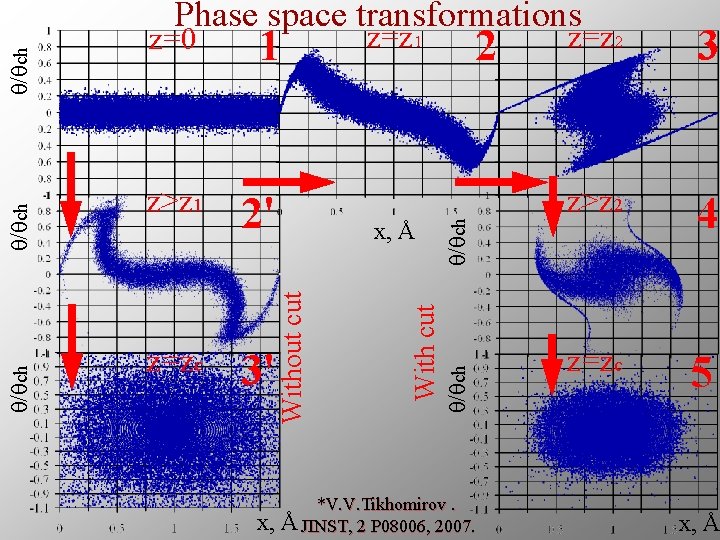
z=zc 2' 3' x, Å 2 θ/θch 1 θ/θch z>z 1 z=z 1 With cut z=0 Without cut θ/θch Phase space transformations *V. V. Tikhomirov. Å JINST, 2 P 08006, 2007. z=z 2 3 z>z 2 4 z=zc 5 x, Å
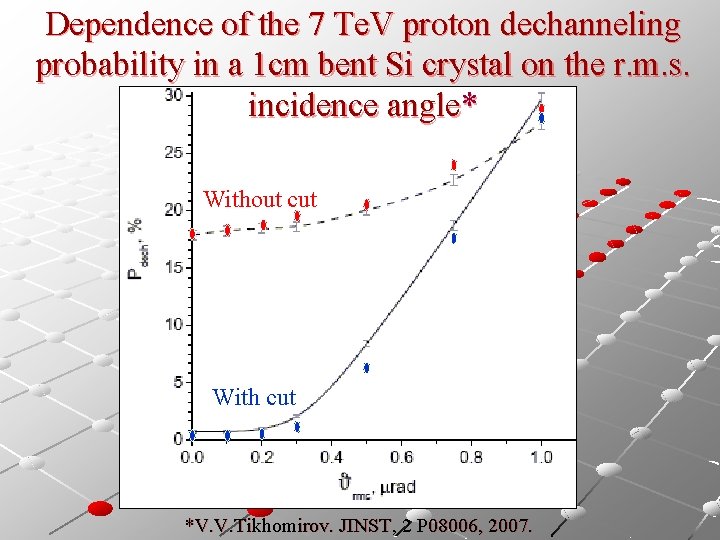
Dependence of the 7 Te. V proton dechanneling probability in a 1 cm bent Si crystal on the r. m. s. incidence angle* Without cut With cut *V. V. Tikhomirov. JINST, 2 P 08006, 2007.
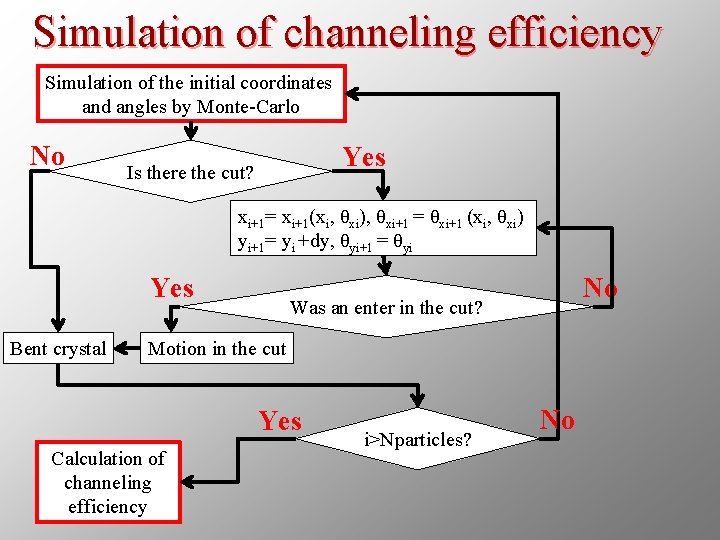
Simulation of channeling efficiency Simulation of the initial coordinates and angles by Monte-Carlo No Yes Is there the cut? xi+1= xi+1(xi, θxi), θxi+1 = θxi+1 (xi, θxi) yi+1= yi +dy, θyi+1 = θyi Yes Bent crystal No Was an enter in the cut? Motion in the cut Yes Calculation of channeling efficiency i>Nparticles? No
Problems of the channeling effect for the collimation
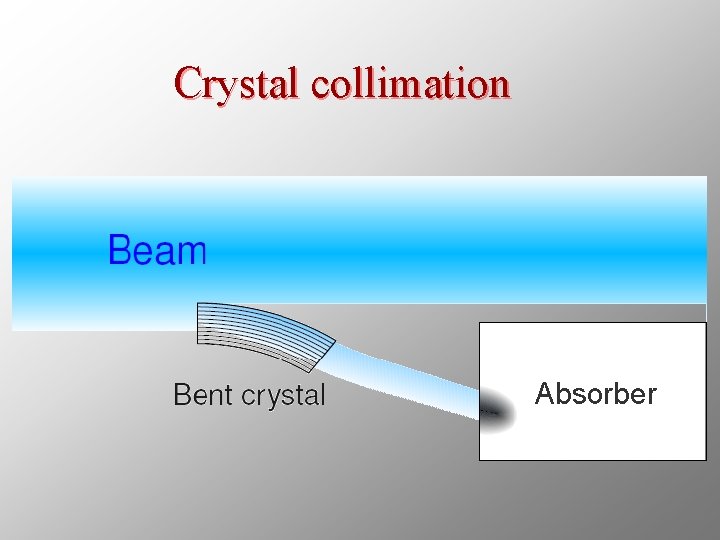
Crystal collimation Absorber
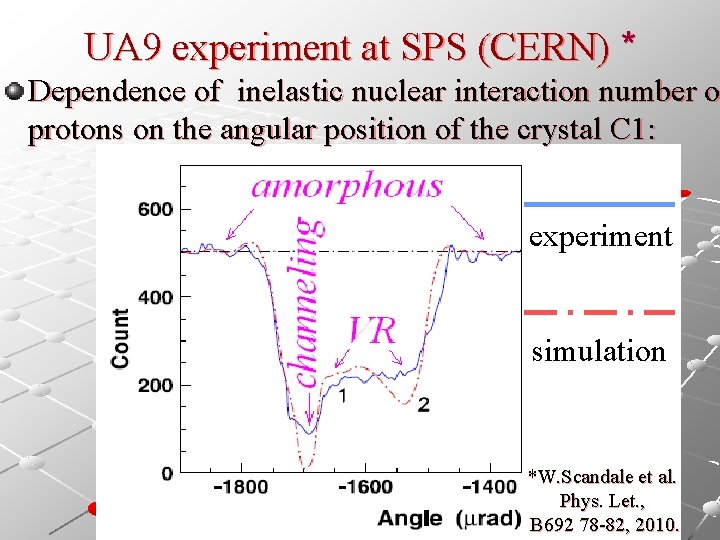
UA 9 experiment at SPS (CERN) * Dependence of inelastic nuclear interaction number o protons on the angular position of the crystal C 1: The UA 9 experimental layout: experiment simulation *W. Scandale et al. Phys. Let. , B 692 78 -82, 2010.
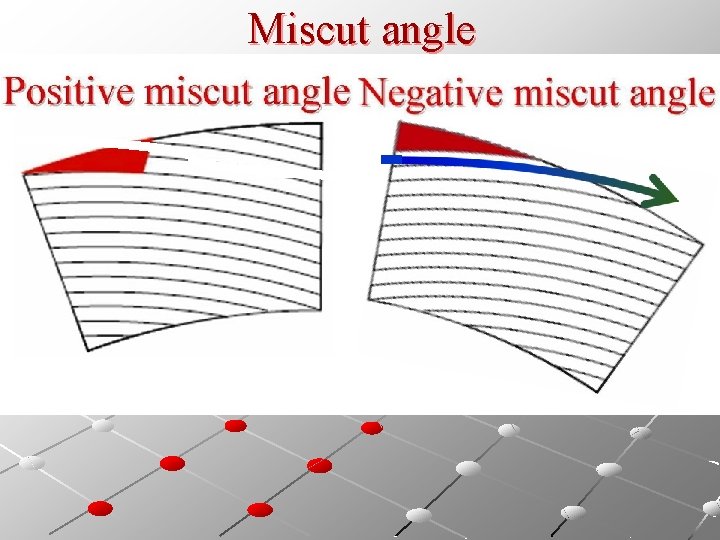
Miscut angle
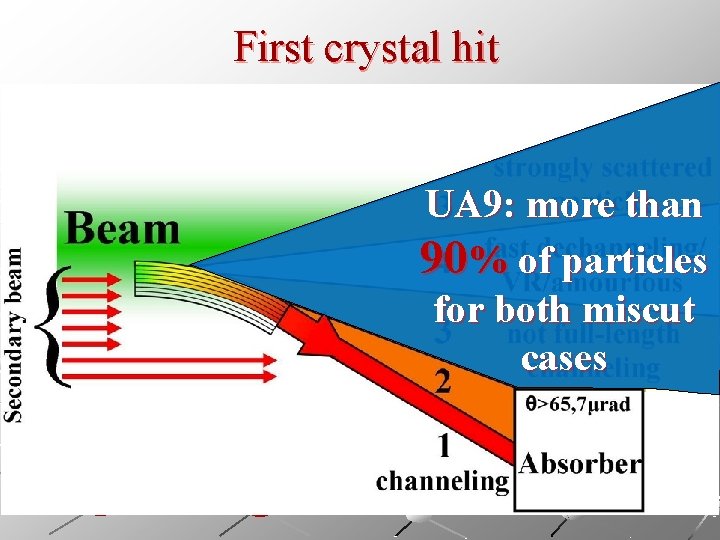
First crystal hit UA 9: more than 90% of particles for both miscut cases
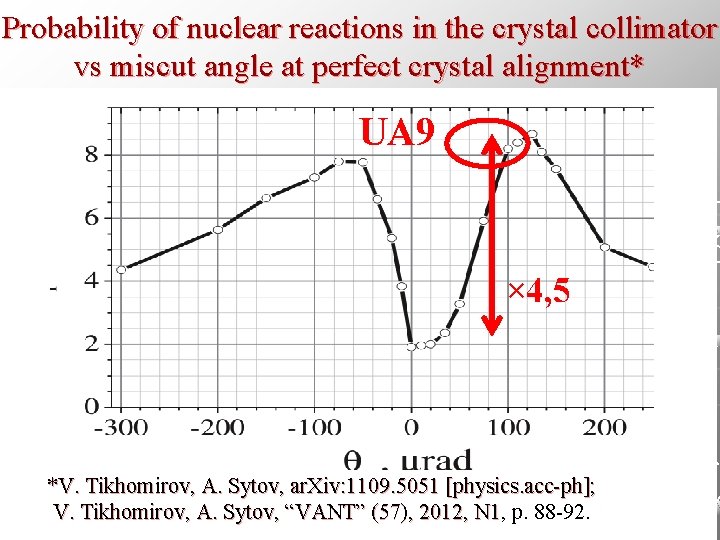
Probability of nuclear reactions in the crystal collimator vs miscut angle at perfect crystal alignment* UA 9 × 4, 5 *V. Tikhomirov, A. Sytov, ar. Xiv: 1109. 5051 [physics. acc-ph]; V. Tikhomirov, A. Sytov, “VANT” (57), 2012, N 1 p. 88 -92.
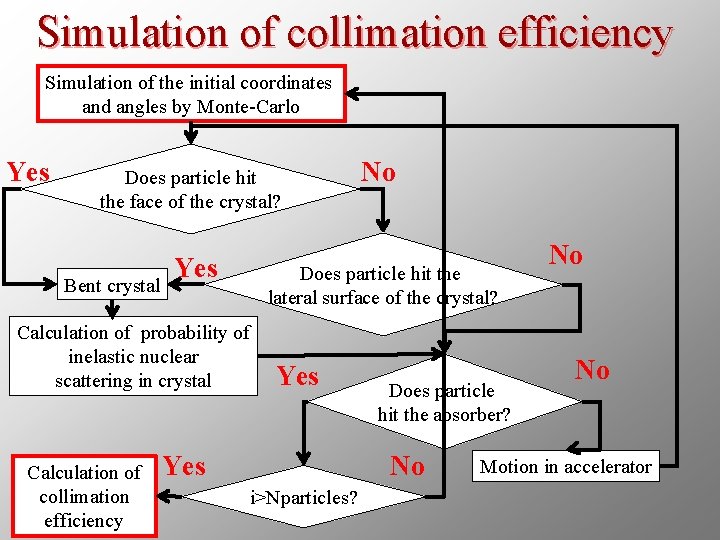
Simulation of collimation efficiency Simulation of the initial coordinates and angles by Monte-Carlo Yes Does particle hit the face of the crystal? Bent crystal Yes Does particle hit the lateral surface of the crystal? Calculation of probability of inelastic nuclear scattering in crystal Calculation of collimation efficiency No Yes Does particle hit the absorber? No i>Nparticles? No No Motion in accelerator

Future projects
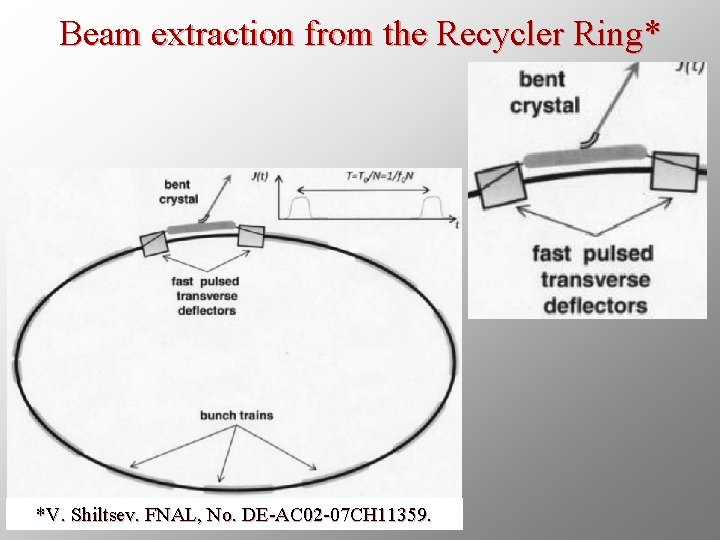
Beam extraction from the Recycler Ring* *V. Shiltsev. FNAL, No. DE-AC 02 -07 CH 11359.
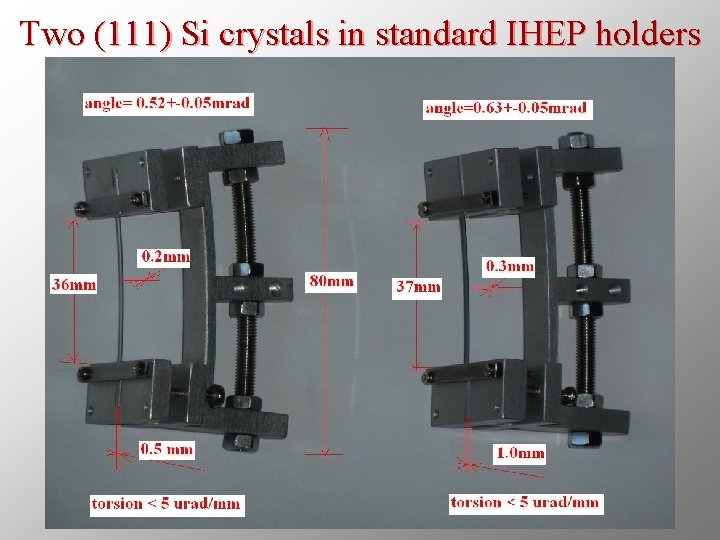
Two (111) Si crystals in standard IHEP holders
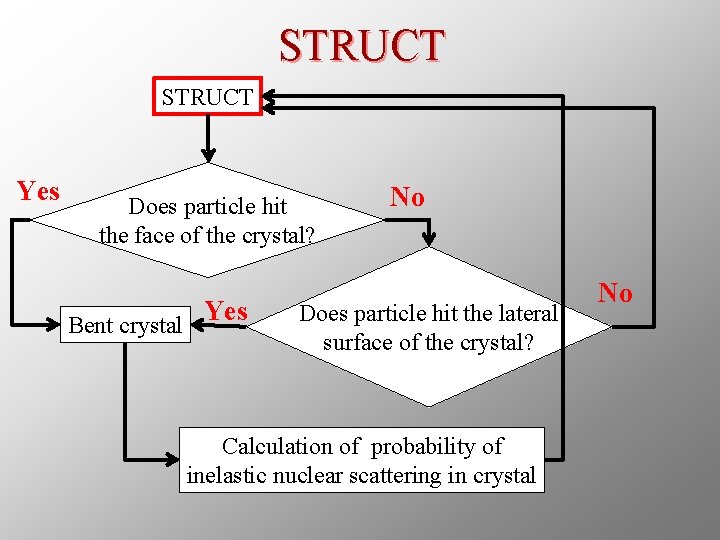
STRUCT Yes Does particle hit the face of the crystal? Yes Bent crystal No Does particle hit the lateral surface of the crystal? Calculation of probability of inelastic nuclear scattering in crystal No
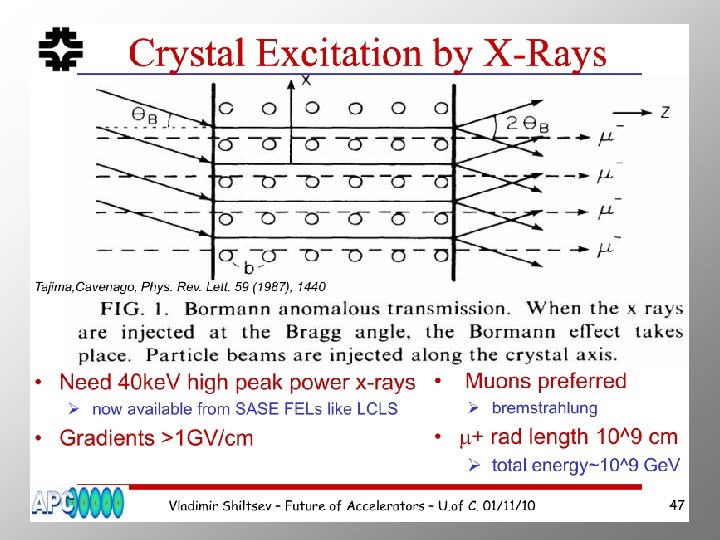
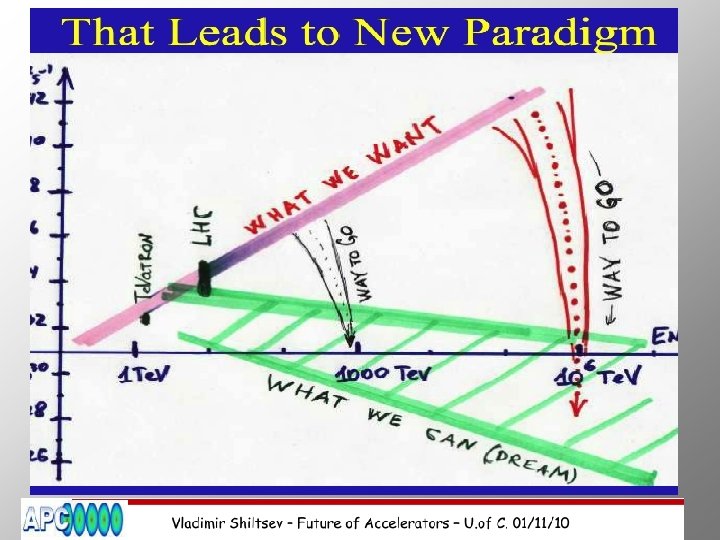
X-Ray accelerator
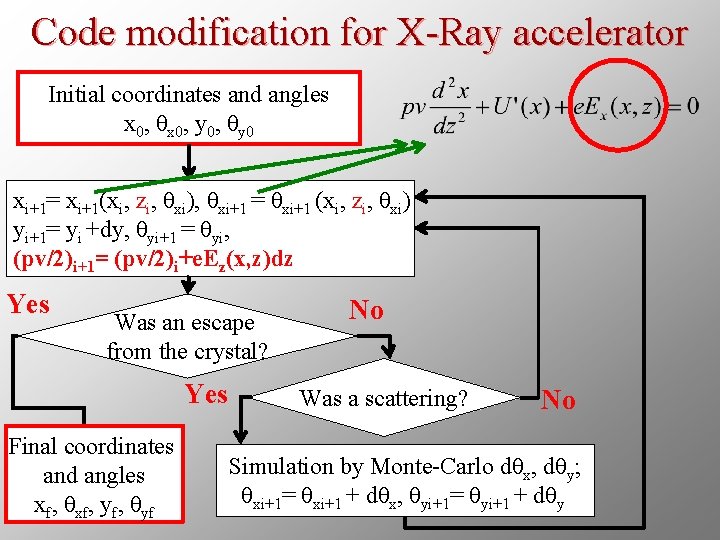
Code modification for X-Ray accelerator Initial coordinates and angles x 0, θx 0, y 0, θy 0 xi+1= xi+1(xi, zi, θxi), θxi+1 = θxi+1 (xi, zi, θxi) yi+1= yi +dy, θyi+1 = θyi, (pv/2)i+1= (pv/2)i+e. Ez(x, z)dz Yes Was an escape from the crystal? Yes Final coordinates and angles xf, θxf, yf, θyf No Was a scattering? No Simulation by Monte-Carlo dθx, dθy; θxi+1= θxi+1 + dθx, θyi+1= θyi+1 + dθy
Conclusions Numerical methods were developed and a program of channeling simulation was created. A technique of improving of crystal channeling efficiency with cut was studied. A drastic increase of the channeling efficiency due to this method was showed. The dependence of inelastic nuclear interaction number obtained at the Super Proton Synchrotron at CERN was simulated and explained. The usual miscut angle can increase the probability of nuclear reactions with a factor 4, 5 for the UA 9 case. The simulation code will be combined with STRUCT and will be used for the analysis for the experiment of the crystal extraction from the Recycler Ring. Some modifications of the simulation code will allow to simulate the project of X-Ray accelerator
- Slides: 35