
Changing Your Address What you need to know



- Slides: 19
Changing Your Address What you need to know if you move to a new address in the United States
Things to consider BEFORE you move: • Will my kid/s have to transfer schools? • Will they get a bus from the new school? • Can I still get to work from the new address? • Will I have to break my lease or lose my deposit? • Do I have any immigration applications pending?
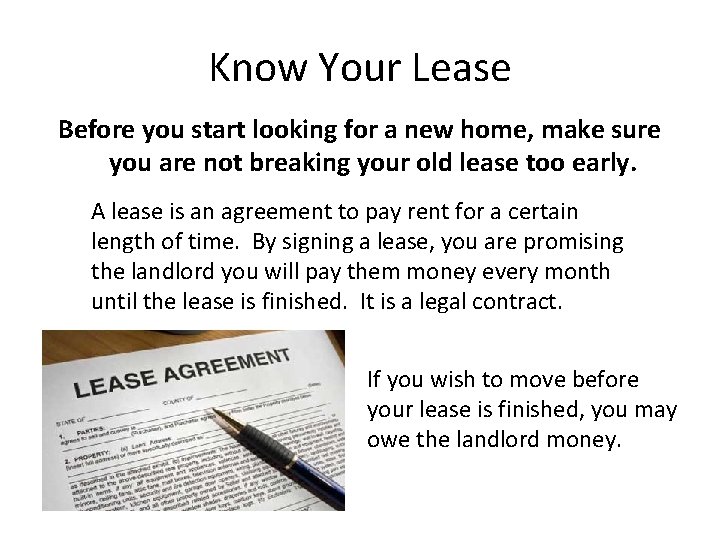
Know Your Lease Before you start looking for a new home, make sure you are not breaking your old lease too early. A lease is an agreement to pay rent for a certain length of time. By signing a lease, you are promising the landlord you will pay them money every month until the lease is finished. It is a legal contract. If you wish to move before your lease is finished, you may owe the landlord money.
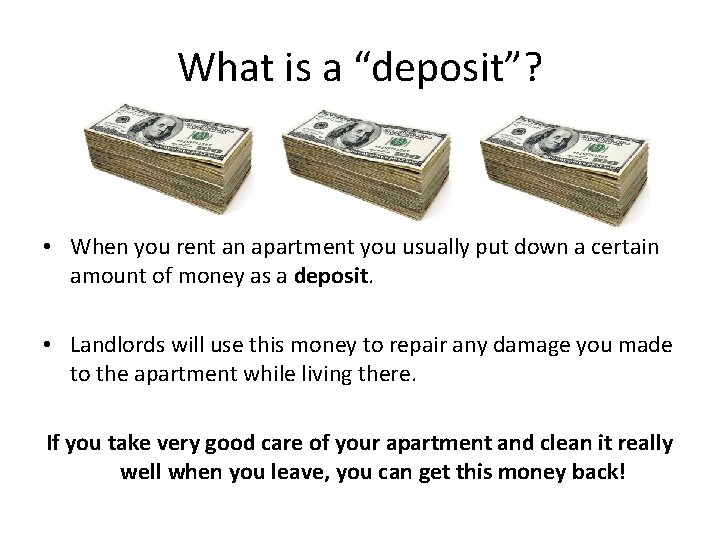
What is a “deposit”? • When you rent an apartment you usually put down a certain amount of money as a deposit. • Landlords will use this money to repair any damage you made to the apartment while living there. If you take very good care of your apartment and clean it really well when you leave, you can get this money back!
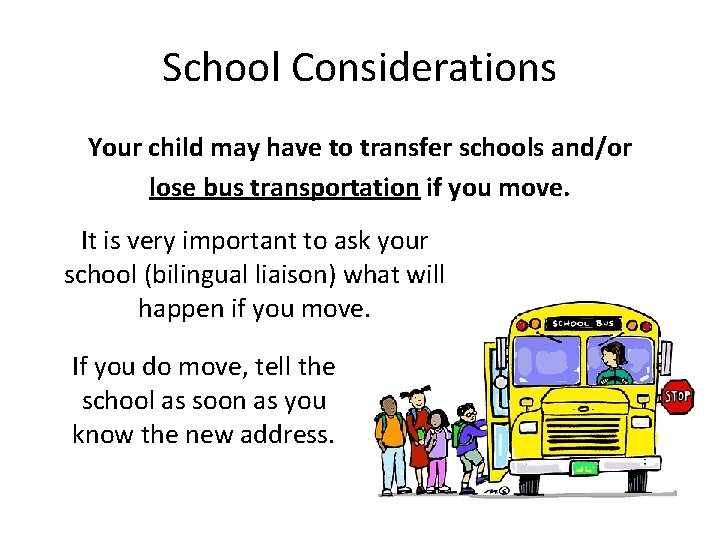
School Considerations Your child may have to transfer schools and/or lose bus transportation if you move. It is very important to ask your school (bilingual liaison) what will happen if you move. If you do move, tell the school as soon as you know the new address.
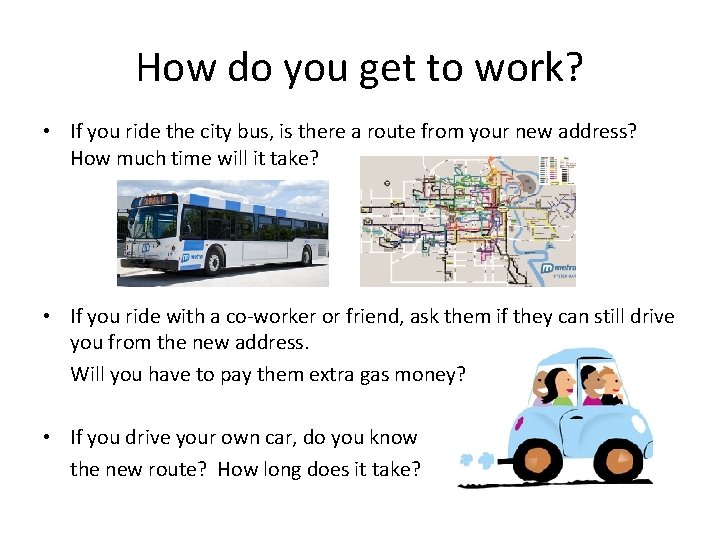
How do you get to work? • If you ride the city bus, is there a route from your new address? How much time will it take? • If you ride with a co-worker or friend, ask them if they can still drive you from the new address. Will you have to pay them extra gas money? • If you drive your own car, do you know the new route? How long does it take?
I’ve found my new home. Now what? Once you have decided to move and you have found a new apartment or house, there are many things to do: • Landlord issues • Utilities • Complete ‘change of address’ forms • Notify important people / agencies
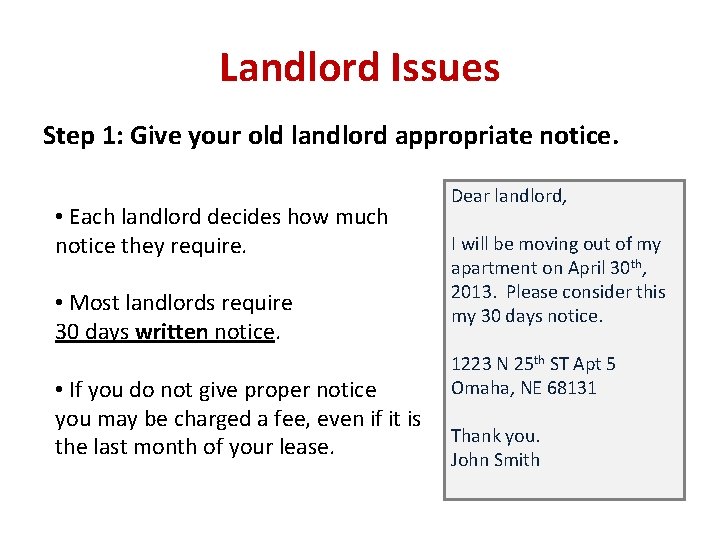
Landlord Issues Step 1: Give your old landlord appropriate notice. • Each landlord decides how much notice they require. • Most landlords require 30 days written notice. • If you do not give proper notice you may be charged a fee, even if it is the last month of your lease. Dear landlord, I will be moving out of my apartment on April 30 th, 2013. Please consider this my 30 days notice. 1223 N 25 th ST Apt 5 Omaha, NE 68131 Thank you. John Smith
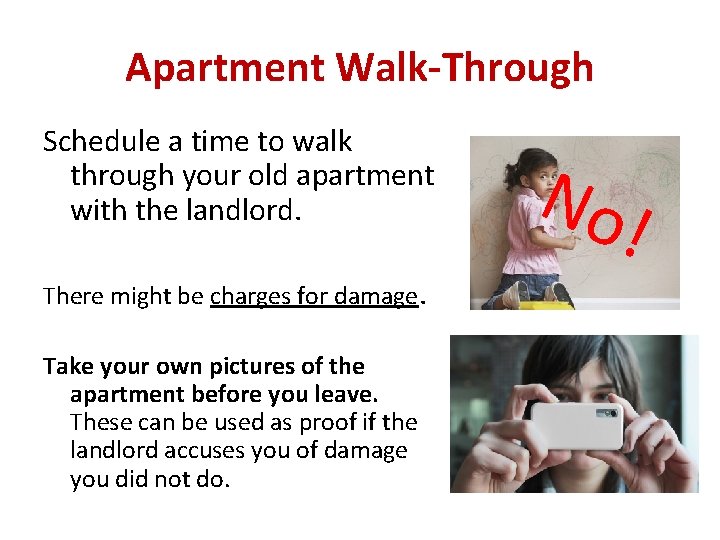
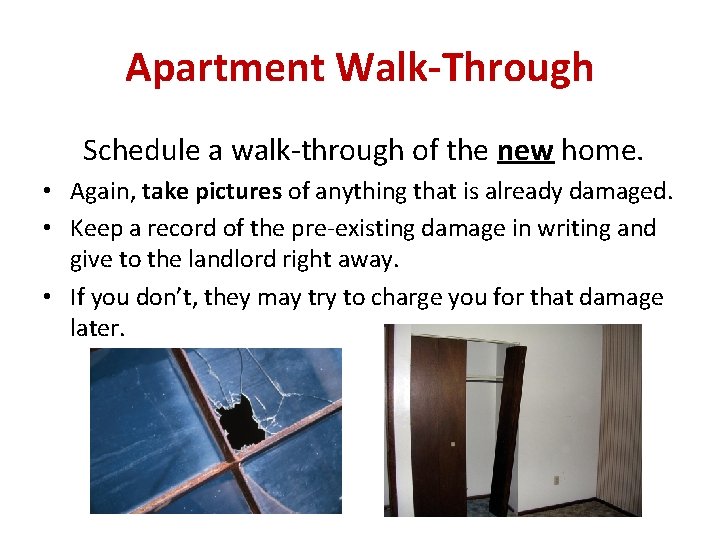
Apartment Walk-Through Schedule a time to walk through your old apartment with the landlord. There might be charges for damage. Take your own pictures of the apartment before you leave. These can be used as proof if the landlord accuses you of damage you did not do. No!
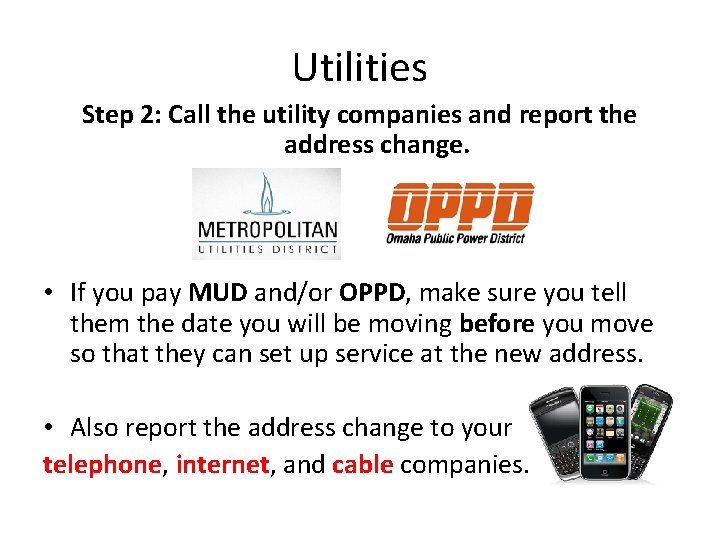
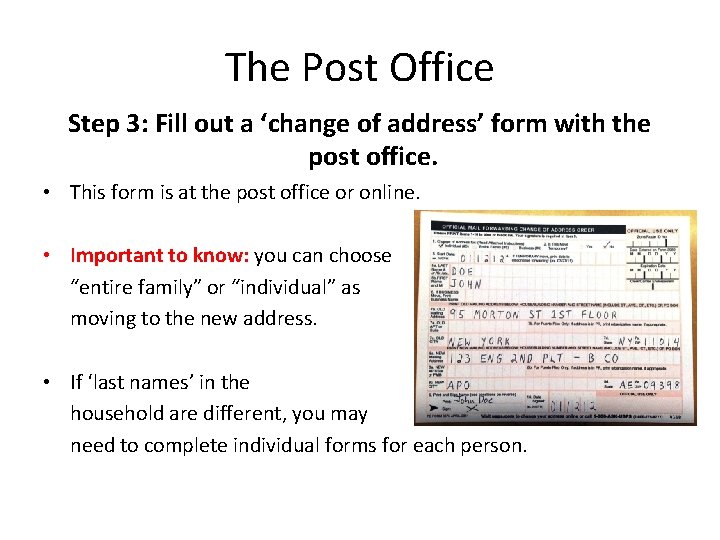
Apartment Walk-Through Schedule a walk-through of the new home. • Again, take pictures of anything that is already damaged. • Keep a record of the pre-existing damage in writing and give to the landlord right away. • If you don’t, they may try to charge you for that damage later.
Utilities Step 2: Call the utility companies and report the address change. • If you pay MUD and/or OPPD, make sure you tell them the date you will be moving before you move so that they can set up service at the new address. • Also report the address change to your telephone, internet, and cable companies.
The Post Office Step 3: Fill out a ‘change of address’ form with the post office. • This form is at the post office or online. • Important to know: you can choose “entire family” or “individual” as moving to the new address. • If ‘last names’ in the household are different, you may need to complete individual forms for each person.
Tell Your Caseworkers! Step 4: Report the address change to your resettlement agency, DHHS, SSI, and/or General Assistance. • It is very important to report changes to your caseworkers immediately. • You risk losing benefits if you do not tell them. • You will miss very important mail if they do not know where to find you. If you are moving to another state, you will need to close your DHHS case in Nebraska.
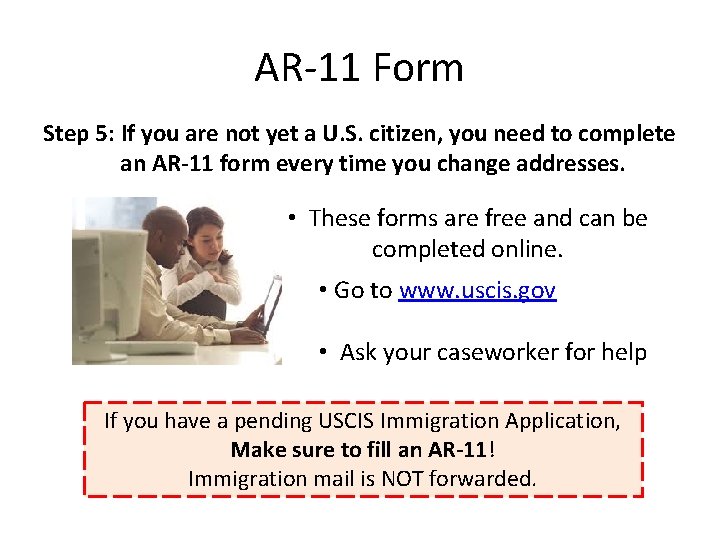
AR-11 Form Step 5: If you are not yet a U. S. citizen, you need to complete an AR-11 form every time you change addresses. • These forms are free and can be completed online. • Go to www. uscis. gov • Ask your caseworker for help If you have a pending USCIS Immigration Application, Make sure to fill an AR-11! Immigration mail is NOT forwarded.
Tell Your Employer Step 6: Give your new address to your supervisor. • Employers need to mail you the W-2 for taxes each January. Make sure they know your current address to avoid tax, benefits, or paycheck problems.
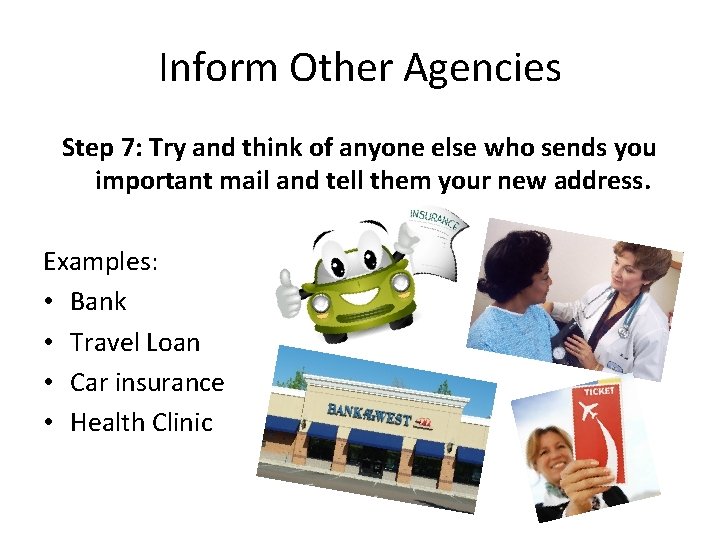
Inform Other Agencies Step 7: Try and think of anyone else who sends you important mail and tell them your new address. Examples: • Bank • Travel Loan • Car insurance • Health Clinic
Please Note: Make sure you are moving for good reasons. Important mail and belongings may be lost when you move, so you do not want to move too often. Good Reasons to Move: NOT Good Reasons to Move: • Save money on bills • Something is broken that the landlord can fix • Closer to work or family • You want more bedrooms, even though you can’t afford it • Safer neighborhood • You heard it’s easier to get a drivers license in another state
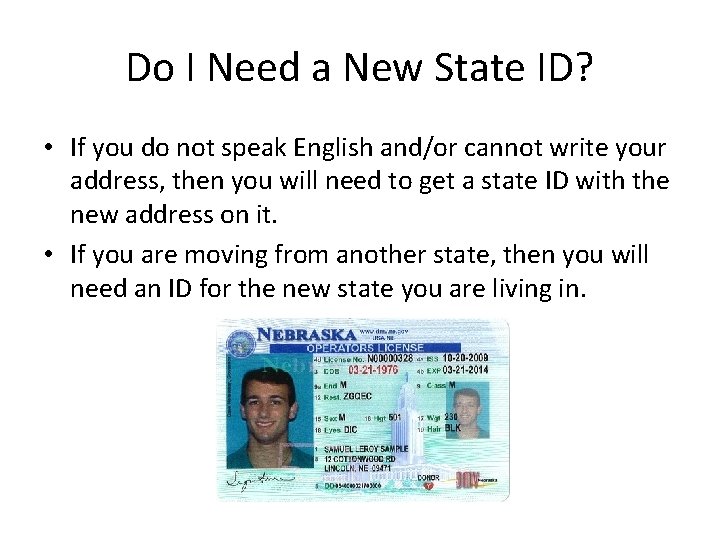
Do I Need a New State ID? • If you do not speak English and/or cannot write your address, then you will need to get a state ID with the new address on it. • If you are moving from another state, then you will need an ID for the new state you are living in.
Enjoy Your New Home!