
Changing the Classroom Structure to Enhance Student Success

- Slides: 19
Changing the Classroom Structure to Enhance Student Success Jennifer Tate, BCBA, LCSW Janice Gont, Diagnostic Teacher, M. Ed. ILCCBD Conference February 6, 2016
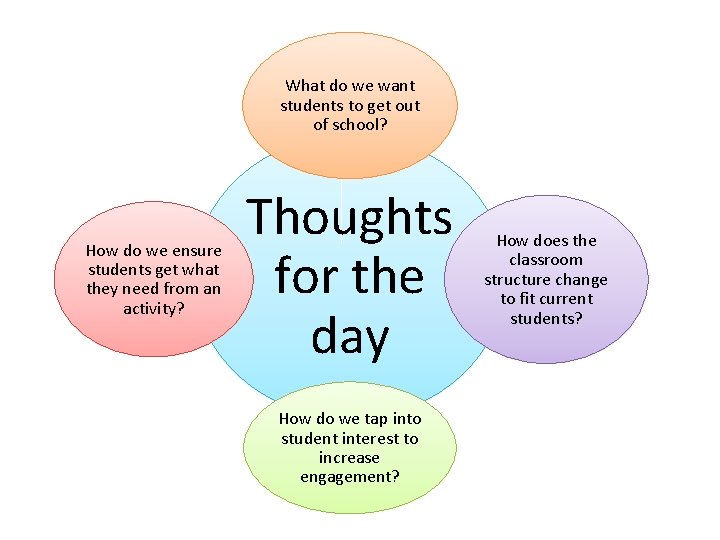
What do we want students to get out of school? How do we ensure students get what they need from an activity? Thoughts for the day How do we tap into student interest to increase engagement? How does the classroom structure change to fit current students?
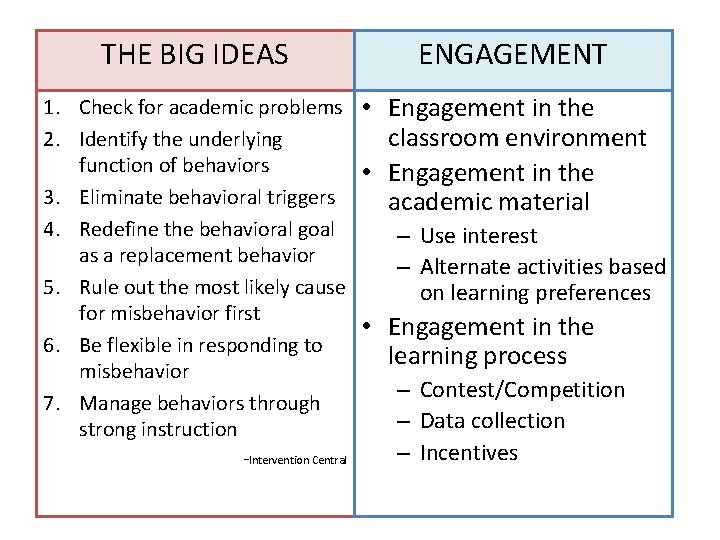
THE BIG IDEAS 1. Check for academic problems 2. Identify the underlying function of behaviors 3. Eliminate behavioral triggers 4. Redefine the behavioral goal as a replacement behavior 5. Rule out the most likely cause for misbehavior first 6. Be flexible in responding to misbehavior 7. Manage behaviors through strong instruction -Intervention Central ENGAGEMENT • Engagement in the classroom environment • Engagement in the academic material – Use interest – Alternate activities based on learning preferences • Engagement in the learning process – Contest/Competition – Data collection – Incentives
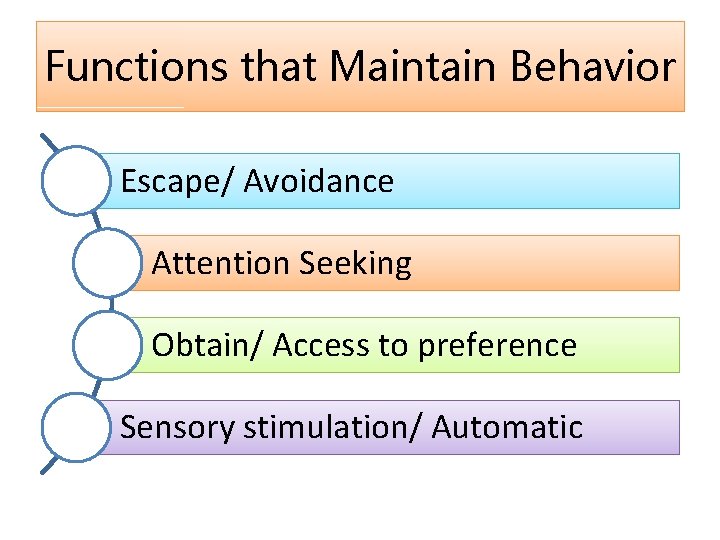
Functions that Maintain Behavior Escape/ Avoidance Attention Seeking Obtain/ Access to preference Sensory stimulation/ Automatic
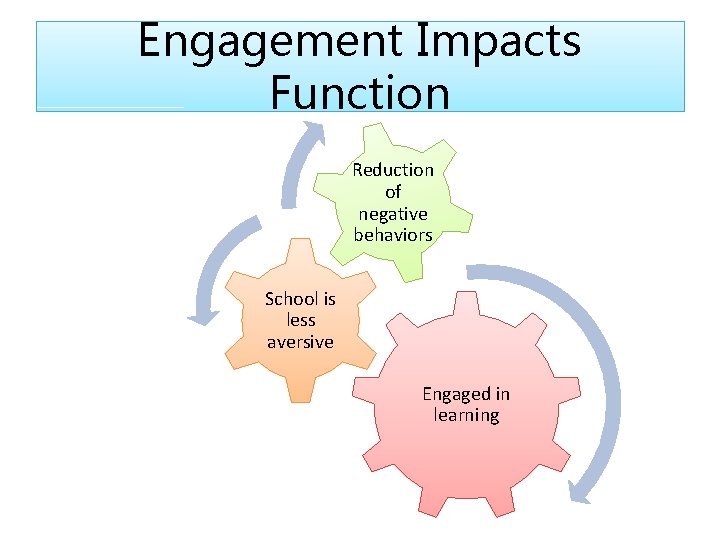
Engagement Impacts Function Reduction of negative behaviors School is less aversive Engaged in learning
Be flexible about what the class looks like Establish Rapport Extended Processing Time Use attention getters Preventative Strategies Proximity to Staff Support during less structured activities Preferential Seating Predictability
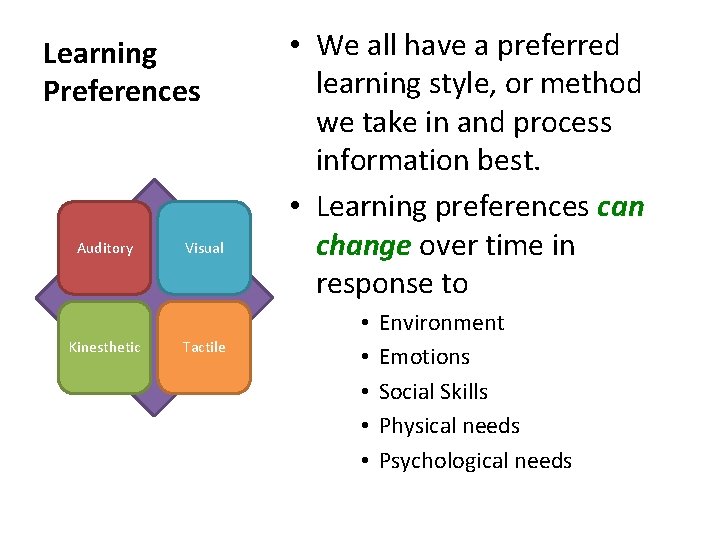
Learning Preferences Auditory Kinesthetic Visual Tactile • We all have a preferred learning style, or method we take in and process information best. • Learning preferences can change over time in response to • • • Environment Emotions Social Skills Physical needs Psychological needs
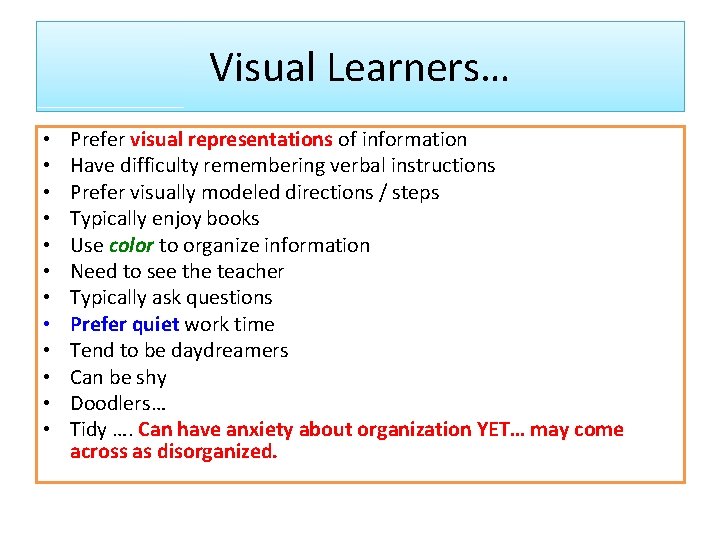
Visual Learners… • • • Prefer visual representations of information Have difficulty remembering verbal instructions Prefer visually modeled directions / steps Typically enjoy books Use color to organize information Need to see the teacher Typically ask questions Prefer quiet work time Tend to be daydreamers Can be shy Doodlers… Tidy …. Can have anxiety about organization YET… may come across as disorganized.
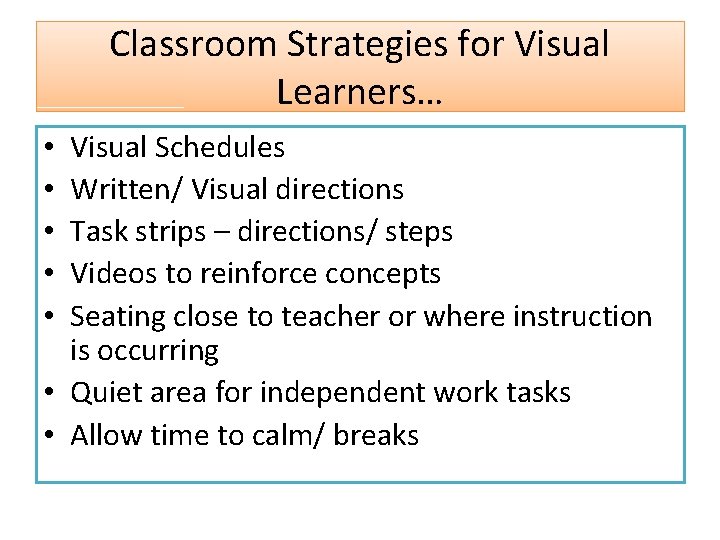
Classroom Strategies for Visual Learners… Visual Schedules Written/ Visual directions Task strips – directions/ steps Videos to reinforce concepts Seating close to teacher or where instruction is occurring • Quiet area for independent work tasks • Allow time to calm/ breaks • • •
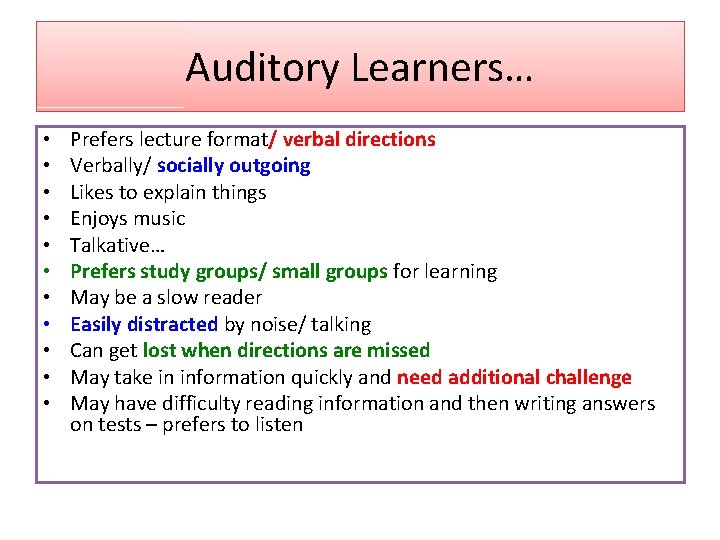
Auditory Learners… • • • Prefers lecture format/ verbal directions Verbally/ socially outgoing Likes to explain things Enjoys music Talkative… Prefers study groups/ small groups for learning May be a slow reader Easily distracted by noise/ talking Can get lost when directions are missed May take in information quickly and need additional challenge May have difficulty reading information and then writing answers on tests – prefers to listen
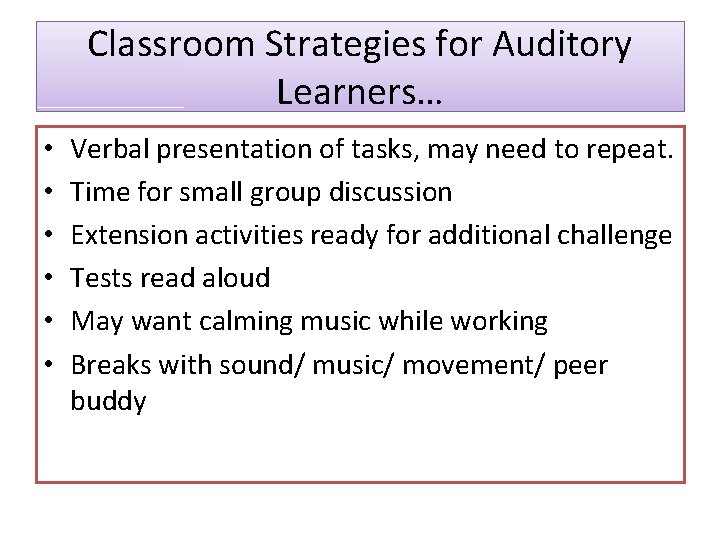
Classroom Strategies for Auditory Learners… • • • Verbal presentation of tasks, may need to repeat. Time for small group discussion Extension activities ready for additional challenge Tests read aloud May want calming music while working Breaks with sound/ music/ movement/ peer buddy
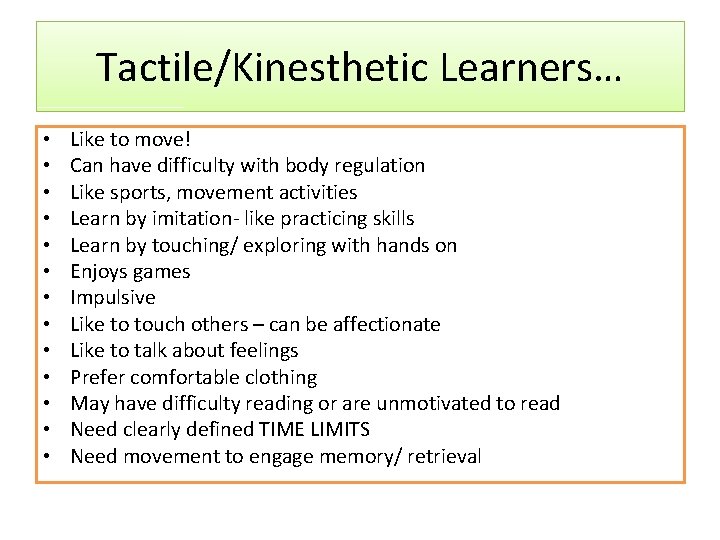
Tactile/Kinesthetic Learners… • • • • Like to move! Can have difficulty with body regulation Like sports, movement activities Learn by imitation- like practicing skills Learn by touching/ exploring with hands on Enjoys games Impulsive Like to touch others – can be affectionate Like to talk about feelings Prefer comfortable clothing May have difficulty reading or are unmotivated to read Need clearly defined TIME LIMITS Need movement to engage memory/ retrieval
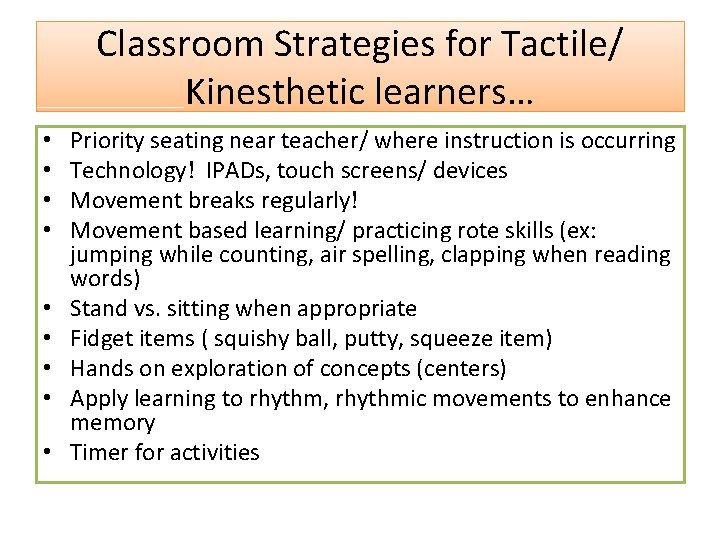
Classroom Strategies for Tactile/ Kinesthetic learners… • • • Priority seating near teacher/ where instruction is occurring Technology! IPADs, touch screens/ devices Movement breaks regularly! Movement based learning/ practicing rote skills (ex: jumping while counting, air spelling, clapping when reading words) Stand vs. sitting when appropriate Fidget items ( squishy ball, putty, squeeze item) Hands on exploration of concepts (centers) Apply learning to rhythm, rhythmic movements to enhance memory Timer for activities
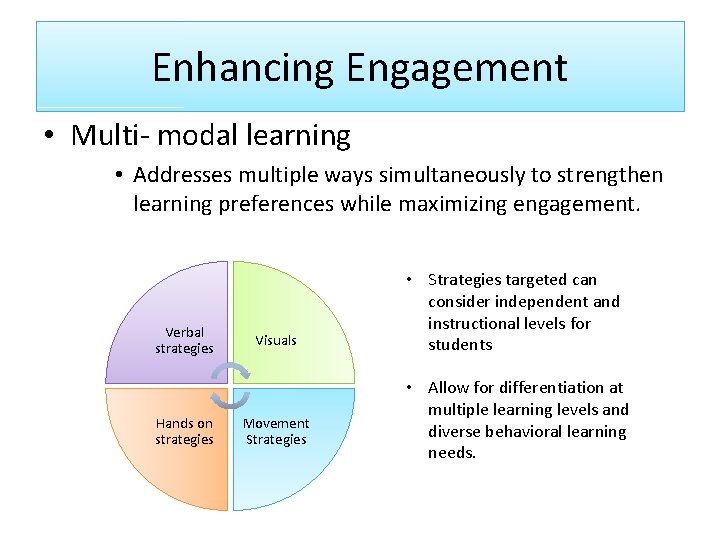
Enhancing Engagement • Multi- modal learning • Addresses multiple ways simultaneously to strengthen learning preferences while maximizing engagement. Verbal strategies Hands on strategies Visuals Movement Strategies • Strategies targeted can consider independent and instructional levels for students • Allow for differentiation at multiple learning levels and diverse behavioral learning needs.
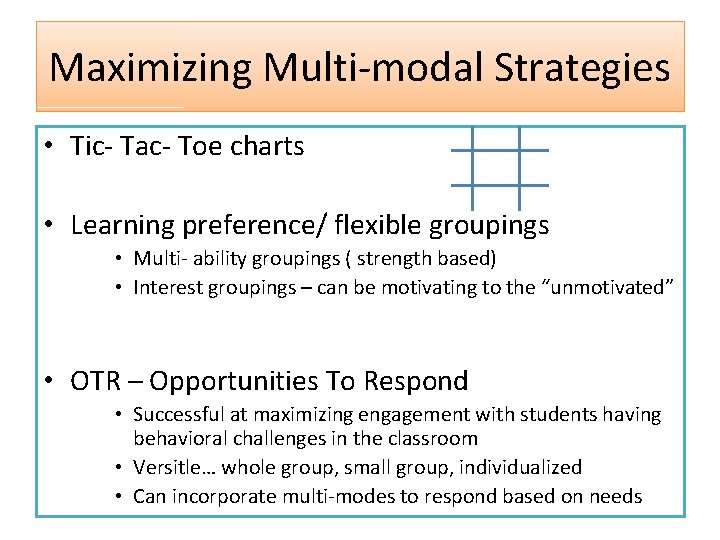
Maximizing Multi-modal Strategies • Tic- Tac- Toe charts • Learning preference/ flexible groupings • Multi- ability groupings ( strength based) • Interest groupings – can be motivating to the “unmotivated” • OTR – Opportunities To Respond • Successful at maximizing engagement with students having behavioral challenges in the classroom • Versitle… whole group, small group, individualized • Can incorporate multi-modes to respond based on needs
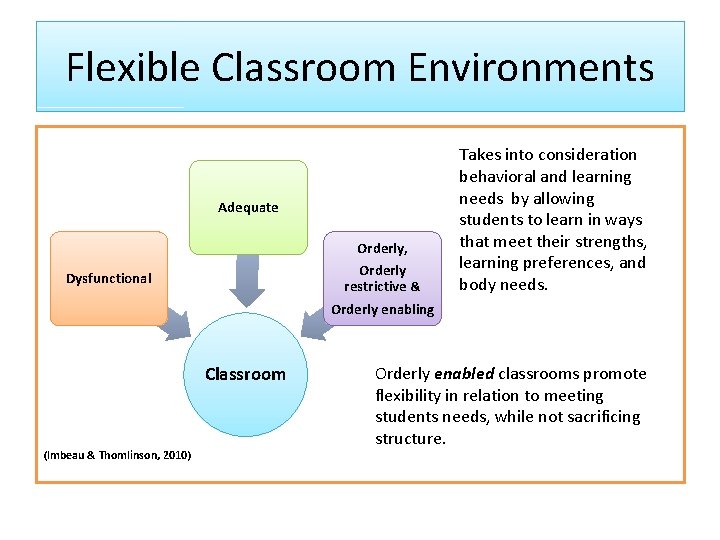
Flexible Classroom Environments Adequate Orderly, Orderly restrictive & Dysfunctional Takes into consideration behavioral and learning needs by allowing students to learn in ways that meet their strengths, learning preferences, and body needs. Orderly enabling Classroom (Imbeau & Thomlinson, 2010) Orderly enabled classrooms promote flexibility in relation to meeting students needs, while not sacrificing structure.
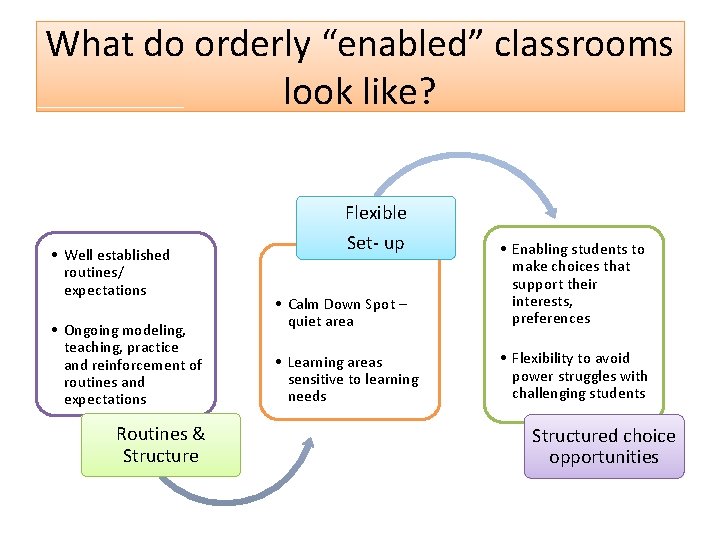
What do orderly “enabled” classrooms look like? • Well established routines/ expectations • Ongoing modeling, teaching, practice and reinforcement of routines and expectations Routines & Structure Flexible Set- up • Calm Down Spot – quiet area • Enabling students to make choices that support their interests, preferences • Learning areas sensitive to learning needs • Flexibility to avoid power struggles with challenging students Structured choice opportunities
Moving Forward…
Contact Information • Jan Gont – jgont@sd 308. org • Jen Tate – jtate 01@sd 308. org – allstarbehavior@gmail. com