
Changing Places a geographical introduction Peter Jackson Professor
- Slides: 30
Changing Places: a geographical introduction Peter Jackson Professor of Human Geography University of Sheffield p. a. jackson@sheffield. ac. uk
Thinking about place • Place as location (Sheffield as a point on a map, a bird’s eye view, impersonal) • Place as a social and historical construction (e. g. Sheffield as a ‘city of steel’) • Place as experienced (e. g. student vs longterm resident views of Sheffield) • Place is multiple, contested, dynamic – but often thought of as singular, bounded and unchanging.
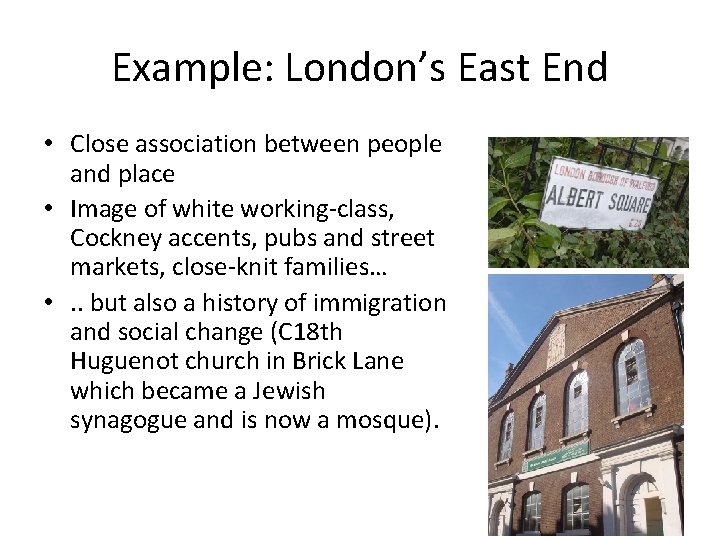
Example: London’s East End • Close association between people and place • Image of white working-class, Cockney accents, pubs and street markets, close-knit families… • . . but also a history of immigration and social change (C 18 th Huguenot church in Brick Lane which became a Jewish synagogue and is now a mosque).
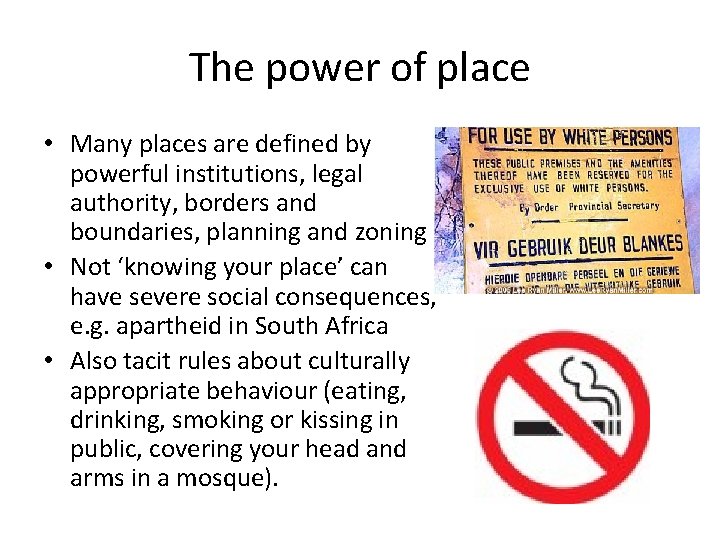
The power of place • Many places are defined by powerful institutions, legal authority, borders and boundaries, planning and zoning • Not ‘knowing your place’ can have severe social consequences, e. g. apartheid in South Africa • Also tacit rules about culturally appropriate behaviour (eating, drinking, smoking or kissing in public, covering your head and arms in a mosque).
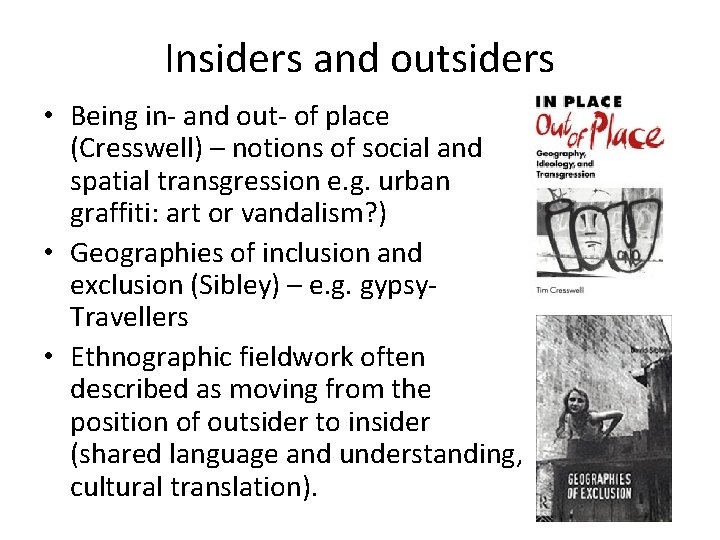
Insiders and outsiders • Being in- and out- of place (Cresswell) – notions of social and spatial transgression e. g. urban graffiti: art or vandalism? ) • Geographies of inclusion and exclusion (Sibley) – e. g. gypsy. Travellers • Ethnographic fieldwork often described as moving from the position of outsider to insider (shared language and understanding, cultural translation).
Sense of Place • The idea that some places evoke powerful feelings of attachment and belonging • A yearning for home among migrants, refugees and exiles • Related to the poetic notion of ‘spirit of place’ (genius loci).
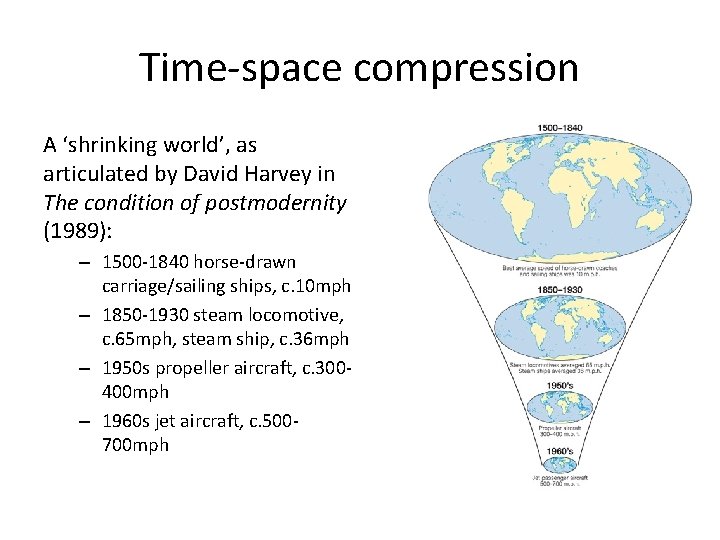
Time-space compression A ‘shrinking world’, as articulated by David Harvey in The condition of postmodernity (1989): – 1500 -1840 horse-drawn carriage/sailing ships, c. 10 mph – 1850 -1930 steam locomotive, c. 65 mph, steam ship, c. 36 mph – 1950 s propeller aircraft, c. 300400 mph – 1960 s jet aircraft, c. 500700 mph
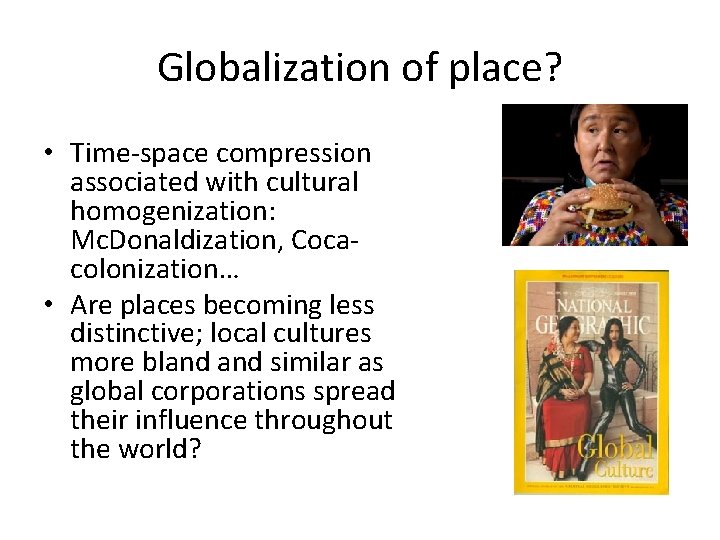
Globalization of place? • Time-space compression associated with cultural homogenization: Mc. Donaldization, Cocacolonization… • Are places becoming less distinctive; local cultures more bland similar as global corporations spread their influence throughout the world?
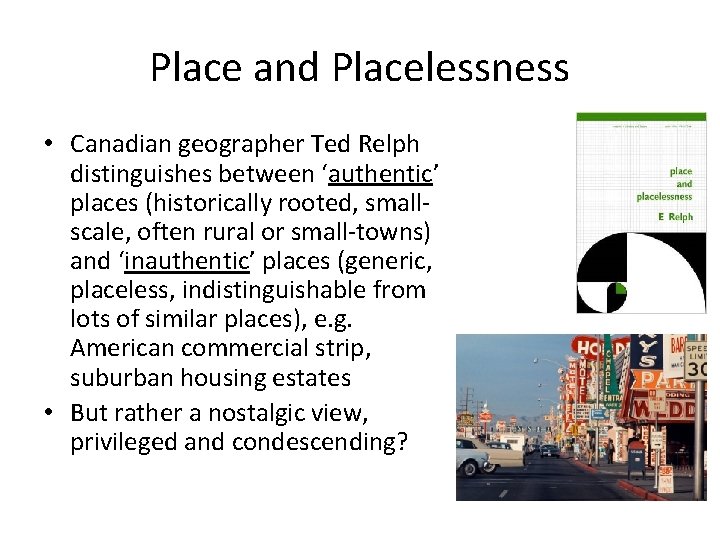
Place and Placelessness • Canadian geographer Ted Relph distinguishes between ‘authentic’ places (historically rooted, smallscale, often rural or small-towns) and ‘inauthentic’ places (generic, placeless, indistinguishable from lots of similar places), e. g. American commercial strip, suburban housing estates • But rather a nostalgic view, privileged and condescending?
Doreen Massey: a global sense of place Take, for instance, a walk down Kilburn High Road, my local shopping centre. It is a pretty ordinary place, north-west of the centre of London. Under the railway bridge the newspaper stand sells papers from every county of what my neighbours, many of whom come from there, still often call the Irish Free State. The post-boxes down the High Road, and many an empty space on a wall, are adorned with the letters IRA. Other available spaces are plastered this week with posters for a special meeting in remembrance: Ten Years after the Hunger Strike…In two shops I notice this week's lottery ticket winners: in one the name is Teresa Gleeson, in the other, Chouman Hassan.
Thread your way through the often almost stationary traffic diagonally across the road from the newsstand there's a shop which as long as I can remember has displayed saris in the window. Four life-sized models of Indian women, and reams of cloth… In another newsagents I chat with the man who keeps it, a Muslim unutterably depressed by events in the Gulf, silently chafing at having to sell the Sun. Overhead there is always at least one aeroplane - we seem to be on a flight-path to Heathrow and by the time they're over Kilburn you can see them clearly enough to tell the airline and wonder as you struggle with your shopping where they're coming from. Below, the reason the traffic is snarled up … is in part because this is one of the main entrances to and escape routes from London, the road to Staples Corner and the beginning of the M 1 to 'the North'.
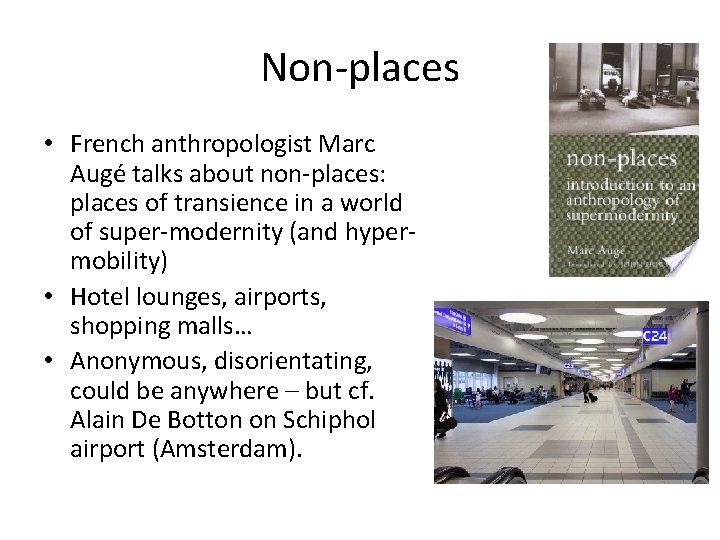
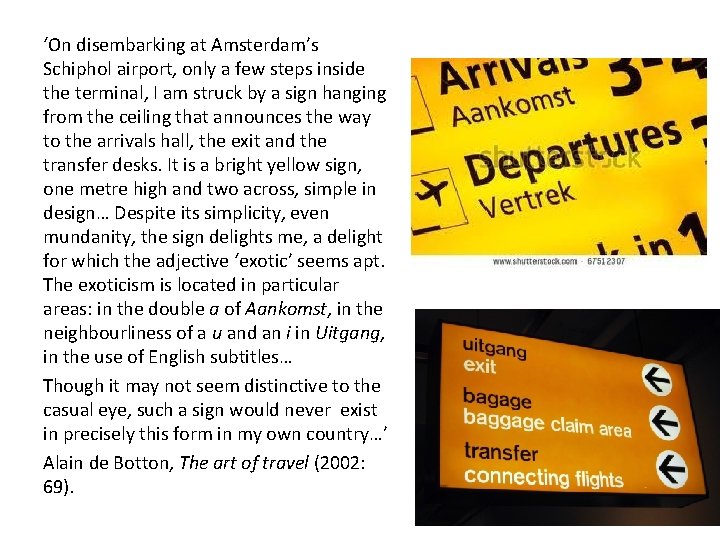
Non-places • French anthropologist Marc Augé talks about non-places: places of transience in a world of super-modernity (and hypermobility) • Hotel lounges, airports, shopping malls… • Anonymous, disorientating, could be anywhere – but cf. Alain De Botton on Schiphol airport (Amsterdam).
‘On disembarking at Amsterdam’s Schiphol airport, only a few steps inside the terminal, I am struck by a sign hanging from the ceiling that announces the way to the arrivals hall, the exit and the transfer desks. It is a bright yellow sign, one metre high and two across, simple in design… Despite its simplicity, even mundanity, the sign delights me, a delight for which the adjective ‘exotic’ seems apt. The exoticism is located in particular areas: in the double a of Aankomst, in the neighbourliness of a u and an i in Uitgang, in the use of English subtitles… Though it may not seem distinctive to the casual eye, such a sign would never exist in precisely this form in my own country…’ Alain de Botton, The art of travel (2002: 69).
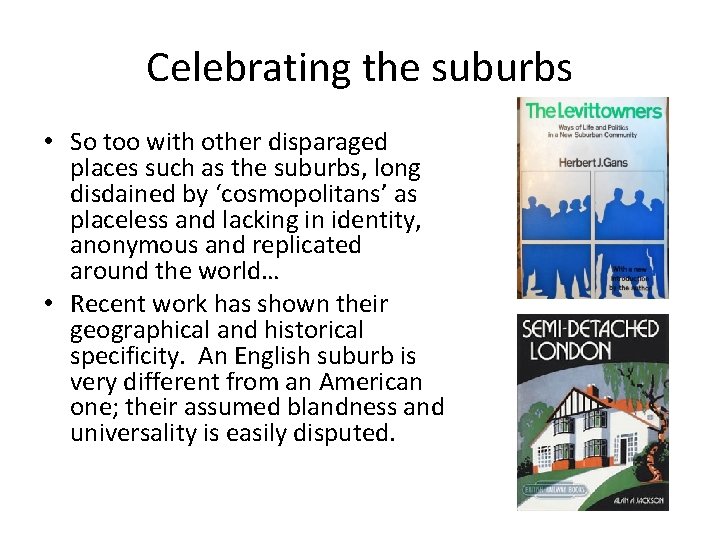
Celebrating the suburbs • So too with other disparaged places such as the suburbs, long disdained by ‘cosmopolitans’ as placeless and lacking in identity, anonymous and replicated around the world… • Recent work has shown their geographical and historical specificity. An English suburb is very different from an American one; their assumed blandness and universality is easily disputed.
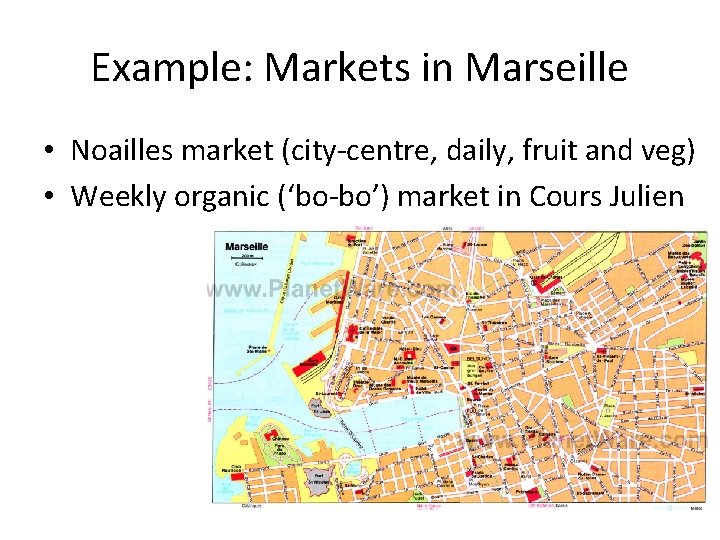
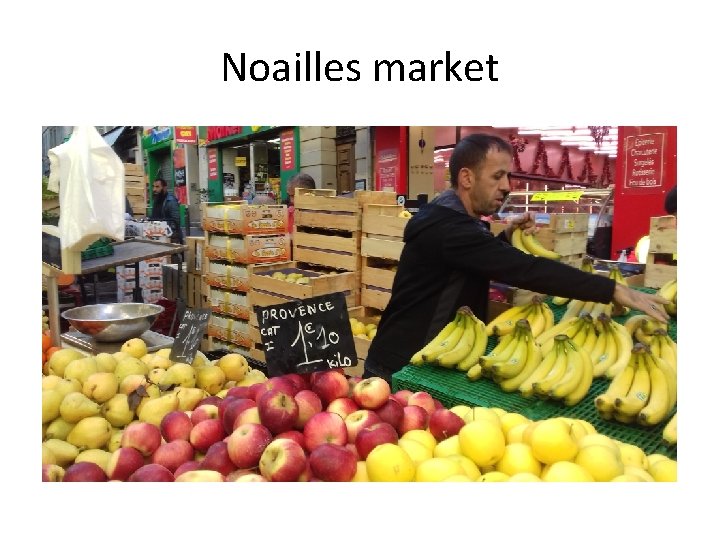
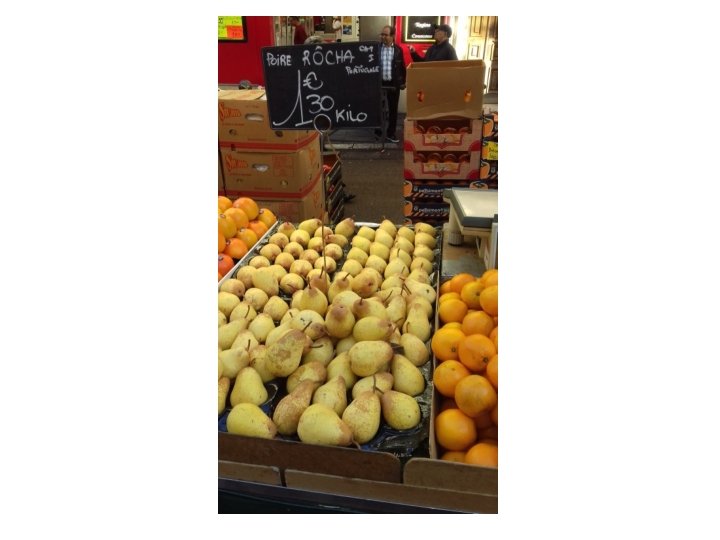
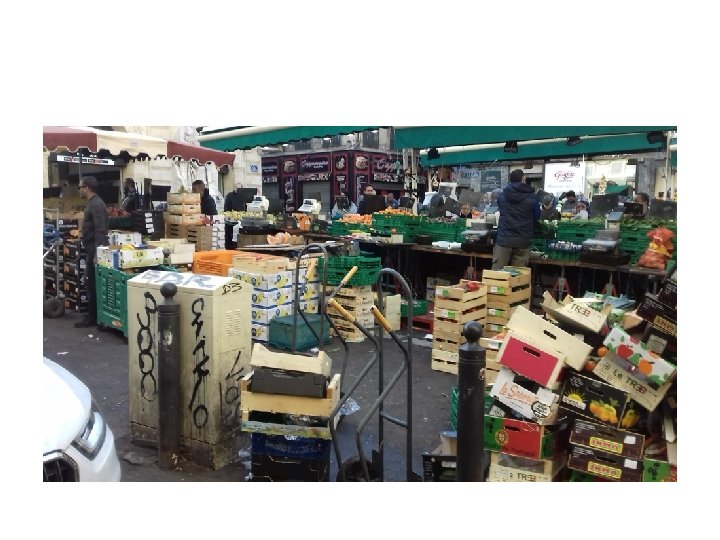
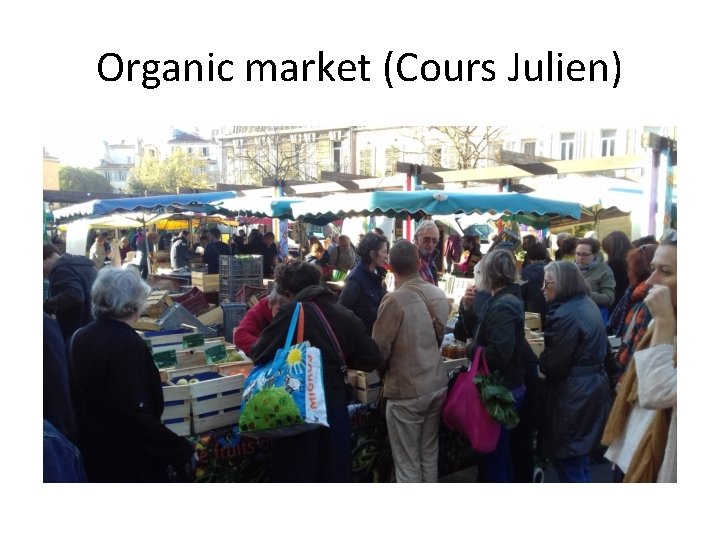
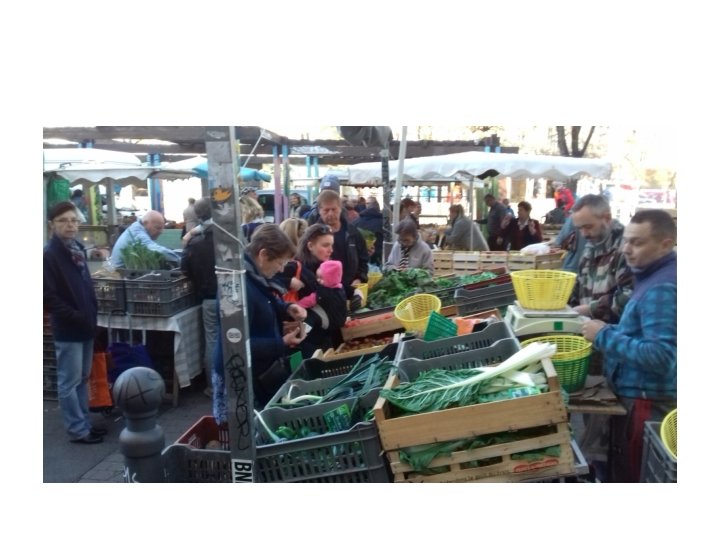
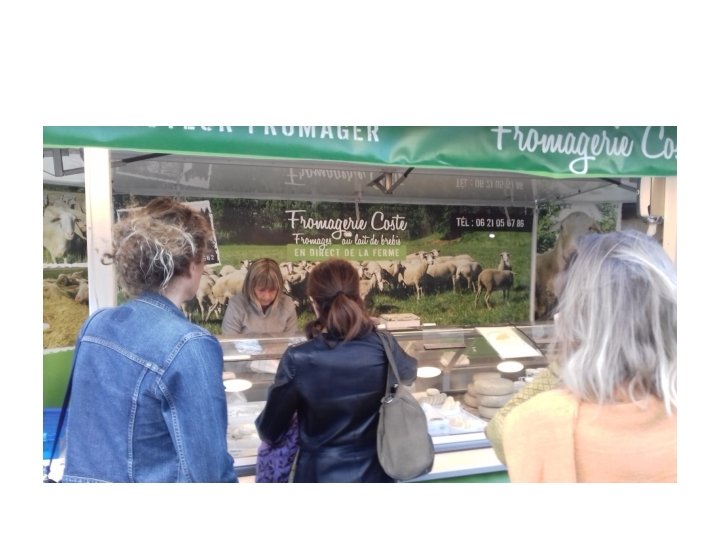
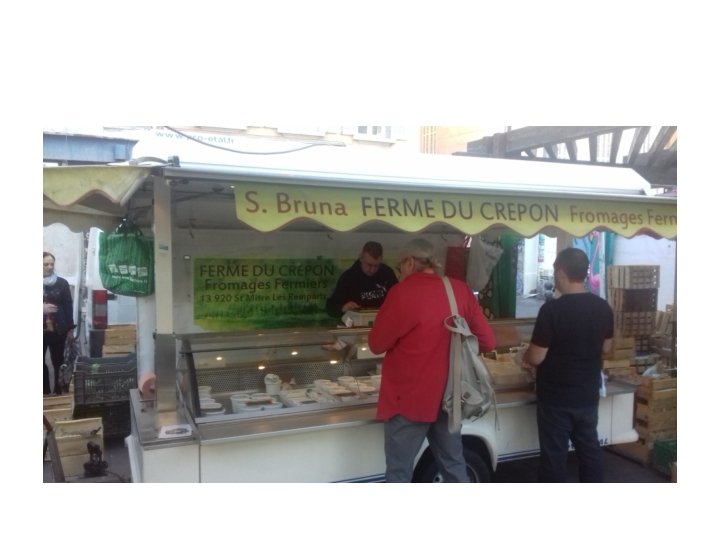
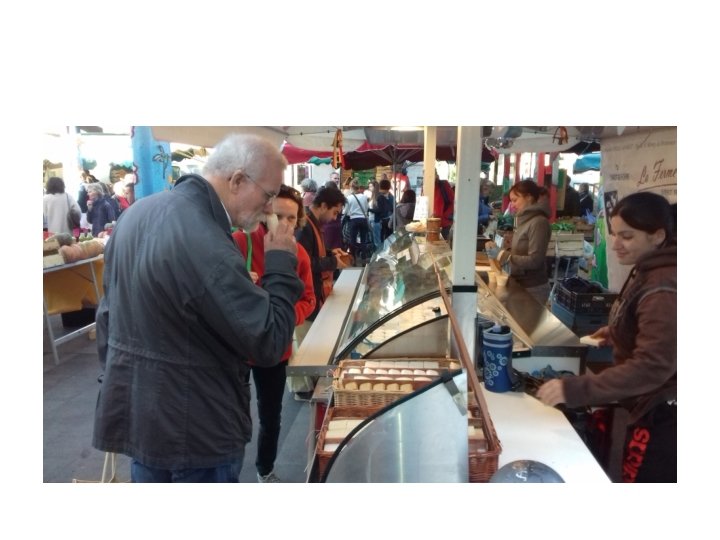
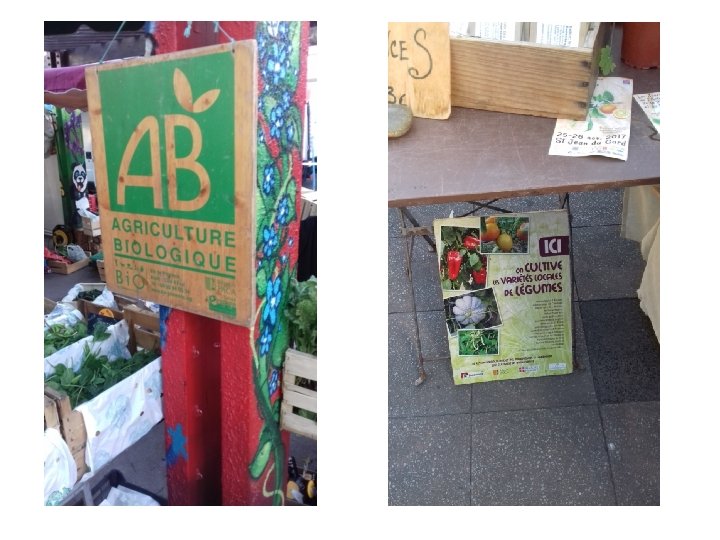
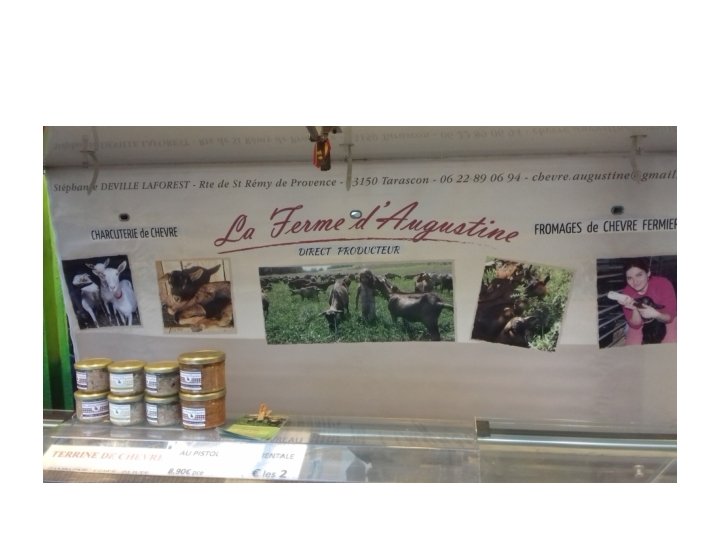
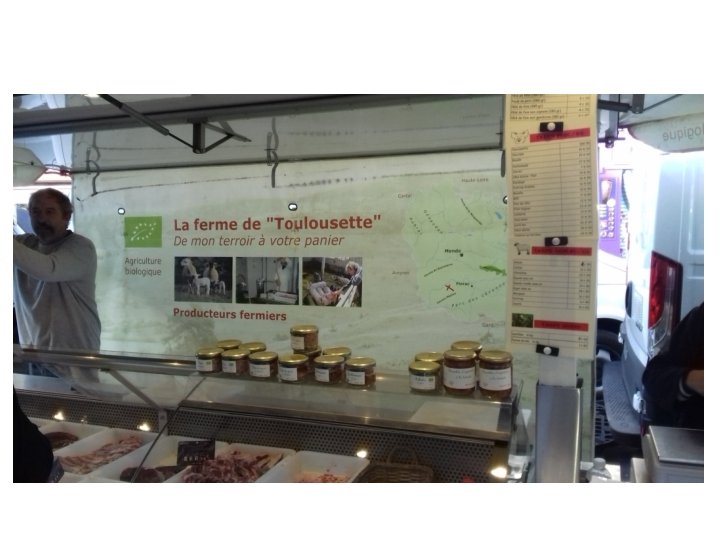
Example: Markets in Marseille • Noailles market (city-centre, daily, fruit and veg) • Weekly organic (‘bo-bo’) market in Cours Julien
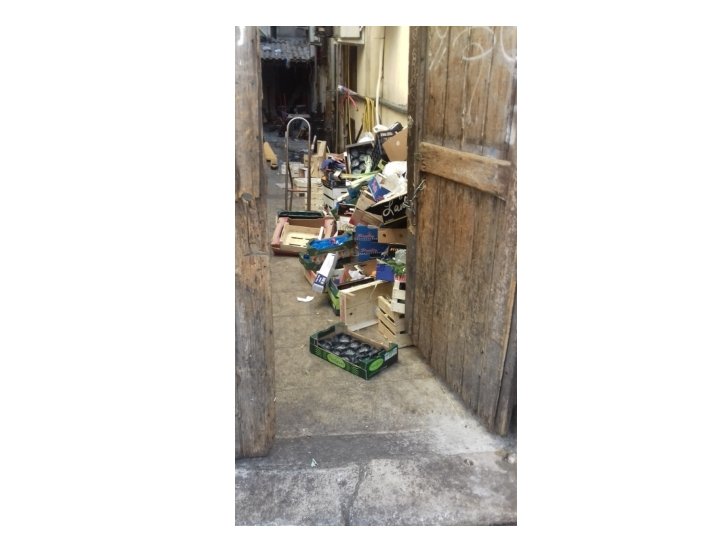
How to ‘read’ a market – How many stalls? – What are they selling? – Where does produce come from? – How are goods displayed (‘the flash’)? – How is produce labelled? – Best and worst location (‘pitch’)? – Who are the traders (gender, ethnicity, age)? – Who are the customers? – How do prices compare to neighbouring shops? – How do frontstage and backstage areas compare?
Noailles market
Organic market (Cours Julien)
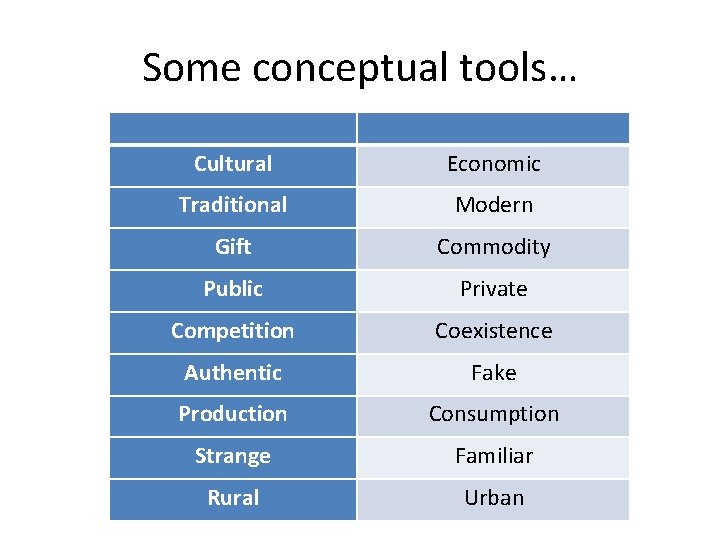
Some conceptual tools… Cultural Economic Traditional Modern Gift Commodity Public Private Competition Coexistence Authentic Fake Production Consumption Strange Familiar Rural Urban
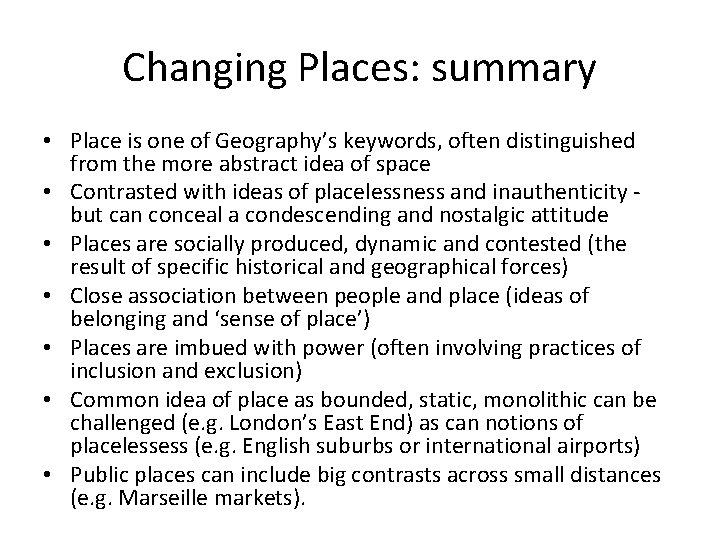
Changing Places: summary • Place is one of Geography’s keywords, often distinguished from the more abstract idea of space • Contrasted with ideas of placelessness and inauthenticity but can conceal a condescending and nostalgic attitude • Places are socially produced, dynamic and contested (the result of specific historical and geographical forces) • Close association between people and place (ideas of belonging and ‘sense of place’) • Places are imbued with power (often involving practices of inclusion and exclusion) • Common idea of place as bounded, static, monolithic can be challenged (e. g. London’s East End) as can notions of placelessess (e. g. English suburbs or international airports) • Public places can include big contrasts across small distances (e. g. Marseille markets).