
Changing healthcare professional behaviour the Behaviour Change Wheel

Changing healthcare professional behaviour: the Behaviour Change Wheel Robert West University College London March 2013 1
Aims • To provide a structured way of thinking about behaviour change to help develop an optimal intervention strategy • To prompt a discussion in how to apply this to promote appropriate prescribing of varenicline 2
Changing behaviour: the basics of designing an intervention strategy 1. Decide exactly what do you want your target group to do? 2. Perform a ‘behavioural diagnosis’ of ‘what it would take’ to achieve this in terms of improving capability, opportunity and motivation 3. Identify relevant ‘intervention functions’ and ‘behaviour change techniques’ 3
What should health professionals do? 1. Find out if their patients smoke 2. If they smoke, – advise on the best ways of stopping – offer help with stopping – act on the response 4
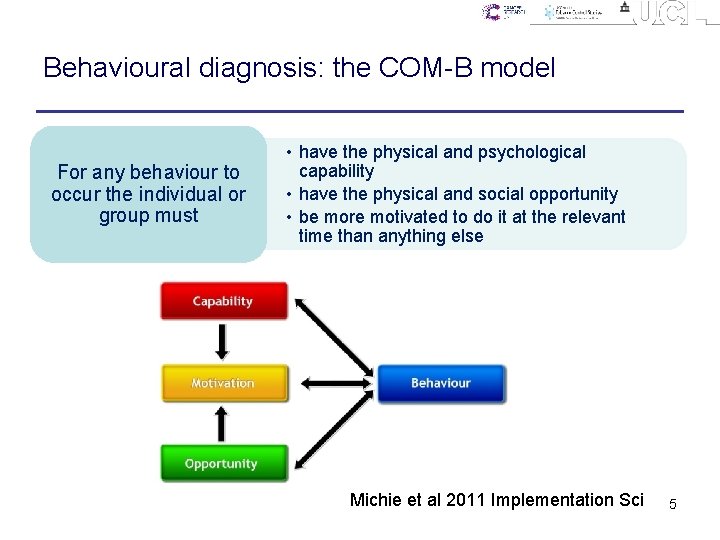
Behavioural diagnosis: the COM-B model For any behaviour to occur the individual or group must • have the physical and psychological capability • have the physical and social opportunity • be more motivated to do it at the relevant time than anything else Michie et al 2011 Implementation Sci 5
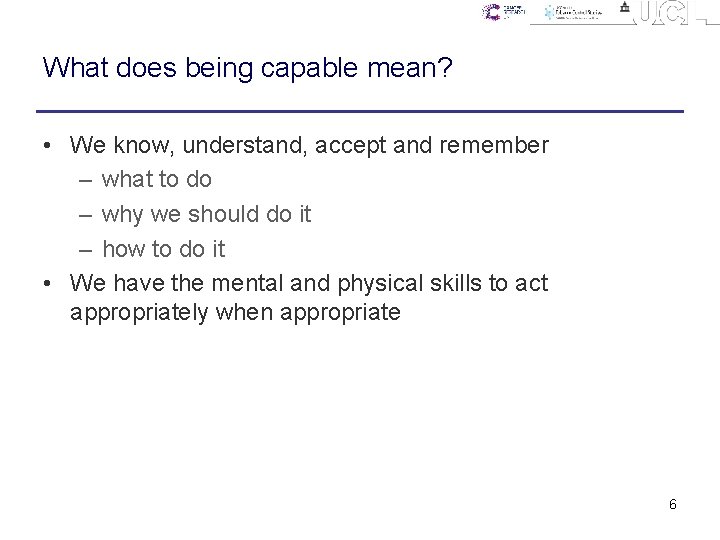
What does being capable mean? • We know, understand, accept and remember – what to do – why we should do it – how to do it • We have the mental and physical skills to act appropriately when appropriate 6
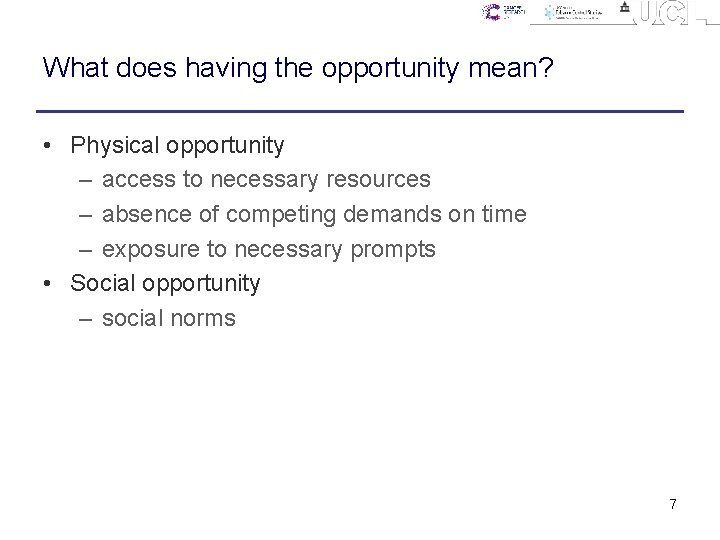
What does having the opportunity mean? • Physical opportunity – access to necessary resources – absence of competing demands on time – exposure to necessary prompts • Social opportunity – social norms 7
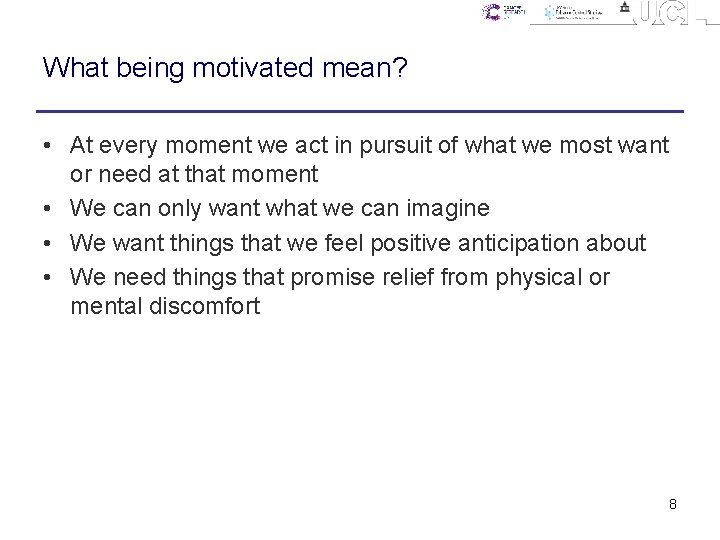
What being motivated mean? • At every moment we act in pursuit of what we most want or need at that moment • We can only want what we can imagine • We want things that we feel positive anticipation about • We need things that promise relief from physical or mental discomfort 8
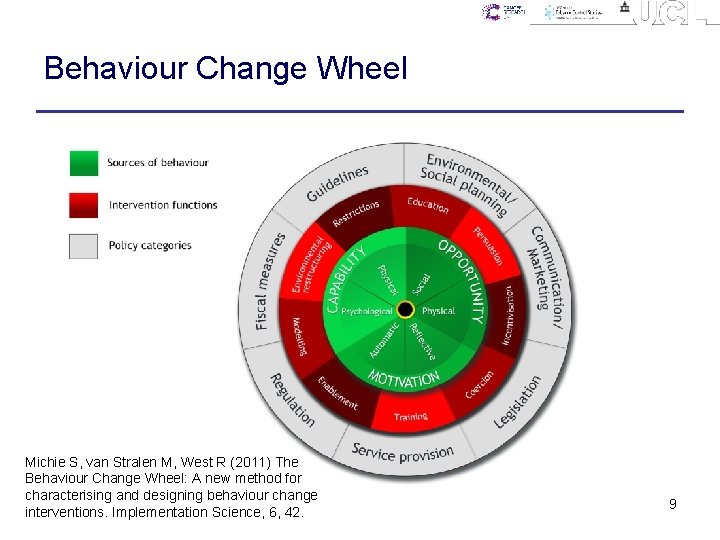
Behaviour Change Wheel Michie S, van Stralen M, West R (2011) The Behaviour Change Wheel: A new method for characterising and designing behaviour change interventions. Implementation Science, 6, 42. 9
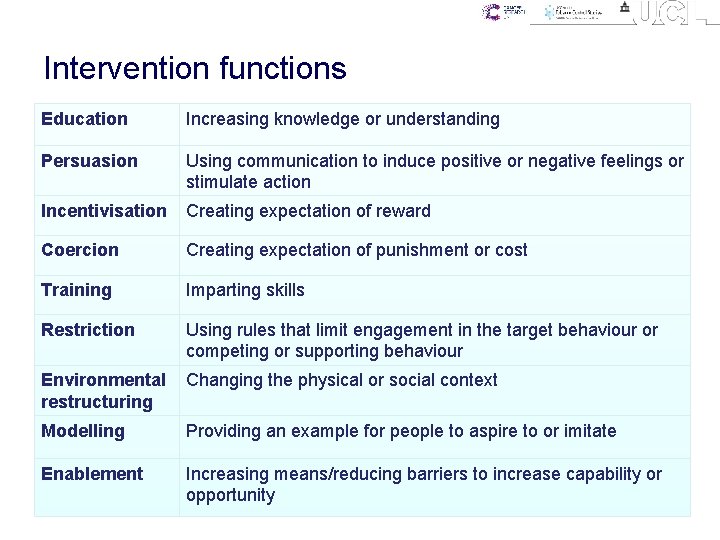
Intervention functions Education Increasing knowledge or understanding Persuasion Using communication to induce positive or negative feelings or stimulate action Incentivisation Creating expectation of reward Coercion Creating expectation of punishment or cost Training Imparting skills Restriction Using rules that limit engagement in the target behaviour or competing or supporting behaviour Environmental restructuring Changing the physical or social context Modelling Providing an example for people to aspire to or imitate Enablement Increasing means/reducing barriers to increase capability or opportunity 10
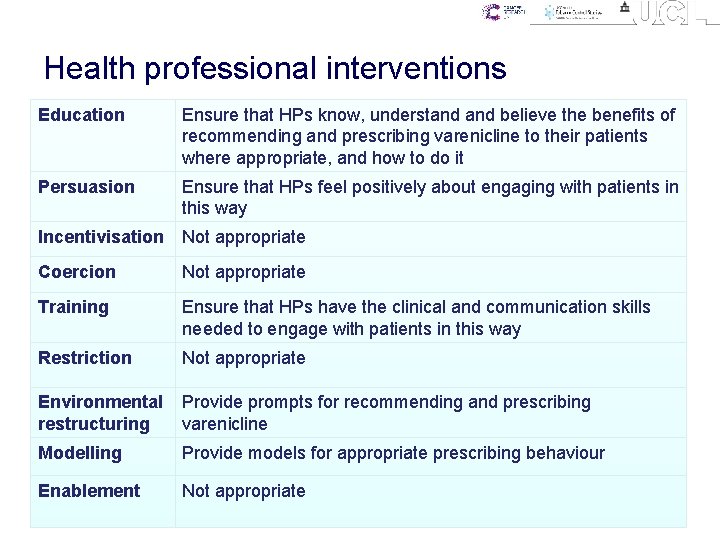
Health professional interventions Education Ensure that HPs know, understand believe the benefits of recommending and prescribing varenicline to their patients where appropriate, and how to do it Persuasion Ensure that HPs feel positively about engaging with patients in this way Incentivisation Not appropriate Coercion Not appropriate Training Ensure that HPs have the clinical and communication skills needed to engage with patients in this way Restriction Not appropriate Environmental restructuring Provide prompts for recommending and prescribing varenicline Modelling Provide models for appropriate prescribing behaviour Enablement Not appropriate 11
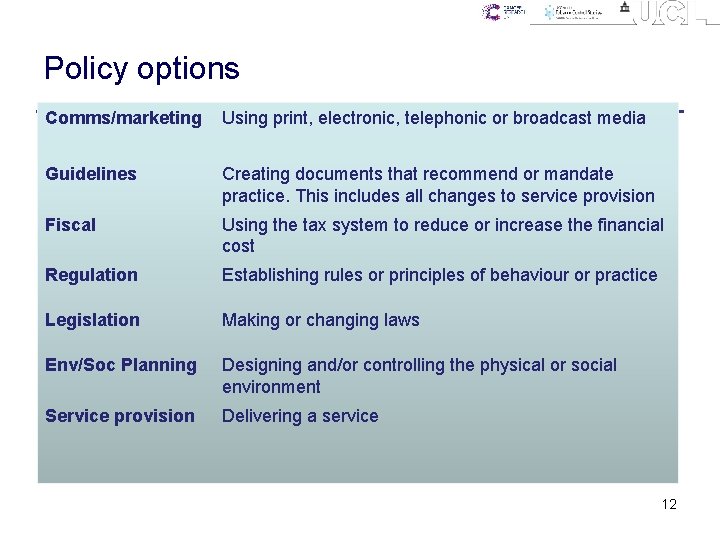
Policy options Comms/marketing Using print, electronic, telephonic or broadcast media Guidelines Creating documents that recommend or mandate practice. This includes all changes to service provision Fiscal Using the tax system to reduce or increase the financial cost Regulation Establishing rules or principles of behaviour or practice Legislation Making or changing laws Env/Soc Planning Designing and/or controlling the physical or social environment Service provision Delivering a service 12
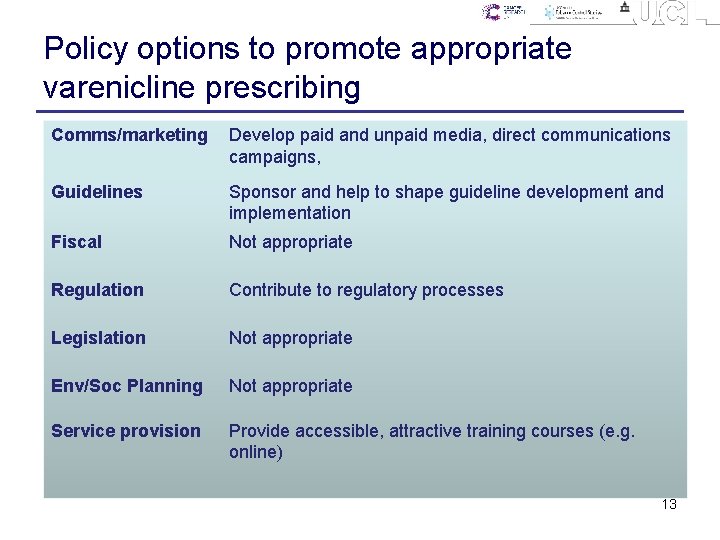
Policy options to promote appropriate varenicline prescribing Comms/marketing Develop paid and unpaid media, direct communications campaigns, Guidelines Sponsor and help to shape guideline development and implementation Fiscal Not appropriate Regulation Contribute to regulatory processes Legislation Not appropriate Env/Soc Planning Not appropriate Service provision Provide accessible, attractive training courses (e. g. online) 13
Discussion • What is the target behaviour? • What will it take? – Capability – Opportunity – Motivation • What intervention functions offer most promise? • How can these be implemented? 14
- Slides: 14