
Changing Ecosystems Year 11 Biology Unit 2 Outcome
Changing Ecosystems Year 11 Biology Unit 2 – Outcome 2
§ Changes in an ecosystem may be due to: – Regular events – Irregular events – One off events Tides and seasons Floods Oil spill § Changes in an ecosystem may be natural or be due to human intervention § The initial change may involve the living community or the non-living surroundings

§ Detecting changes in ecosystems requires long term study. § Instruments such as satellite mounted sensors give us a picture of how ecosystems are changing Dark blue patch is the arctic ozone hole
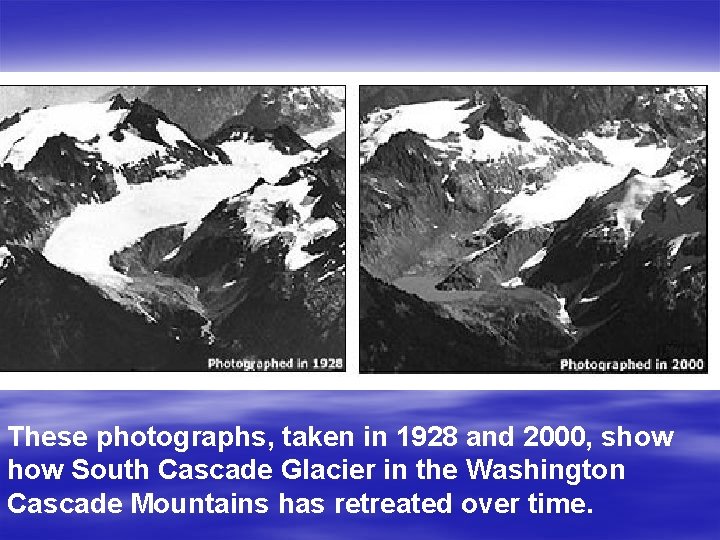
These photographs, taken in 1928 and 2000, show South Cascade Glacier in the Washington Cascade Mountains has retreated over time.
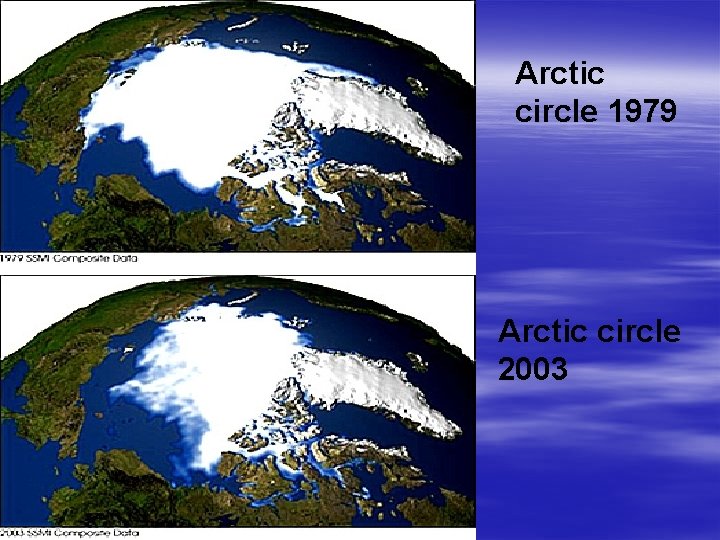
Arctic circle 1979 Arctic circle 2003
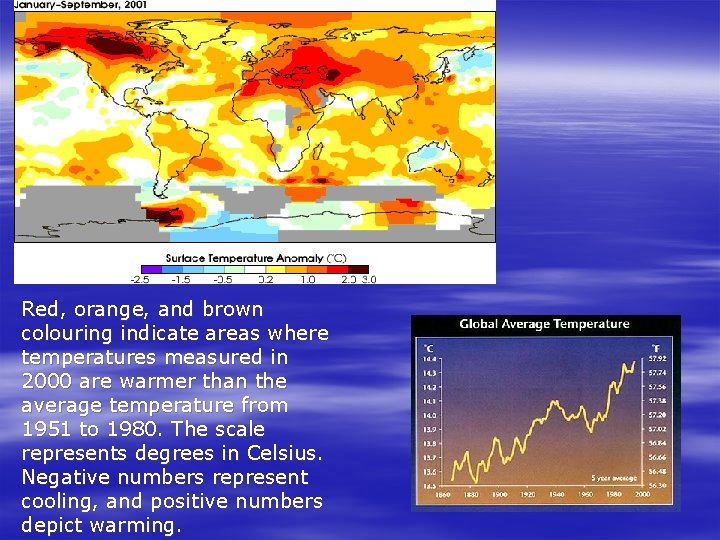
Red, orange, and brown colouring indicate areas where temperatures measured in 2000 are warmer than the average temperature from 1951 to 1980. The scale represents degrees in Celsius. Negative numbers represent cooling, and positive numbers depict warming.
Human Impacts on Ecosystems § § § Flood control (damming, levee banks) Fire prevention Agriculture (land clearing, irrigation, fertilisers) Mining Industry (generation of wastes) Urbanisation (power generation, waste disposal, water storage, transport) § Introduction of exotic species
Human Impacts on Ecosystems Introduction of exotic species § Exotic species are non-native § Impact includes – Exotic species are effective predators on native species – Introduction of new diseases – Competition for resources – Changes to the environment § Over all this causes displacement and loss of native species
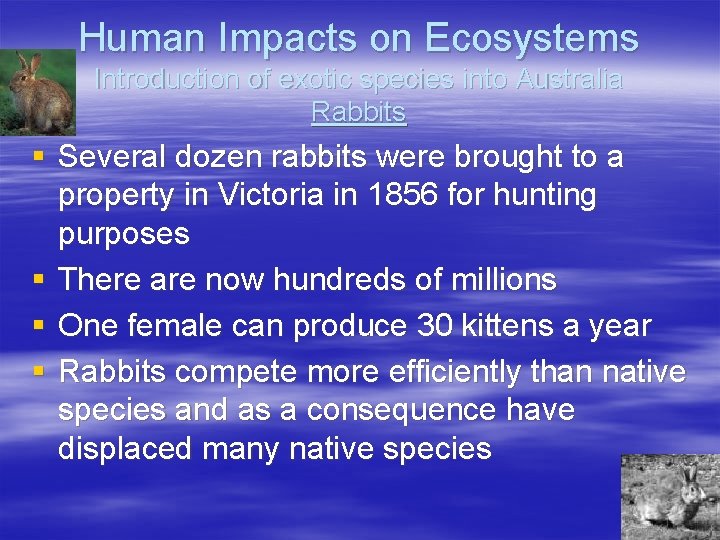
Human Impacts on Ecosystems Introduction of exotic species into Australia Rabbits § Several dozen rabbits were brought to a property in Victoria in 1856 for hunting purposes § There are now hundreds of millions § One female can produce 30 kittens a year § Rabbits compete more efficiently than native species and as a consequence have displaced many native species
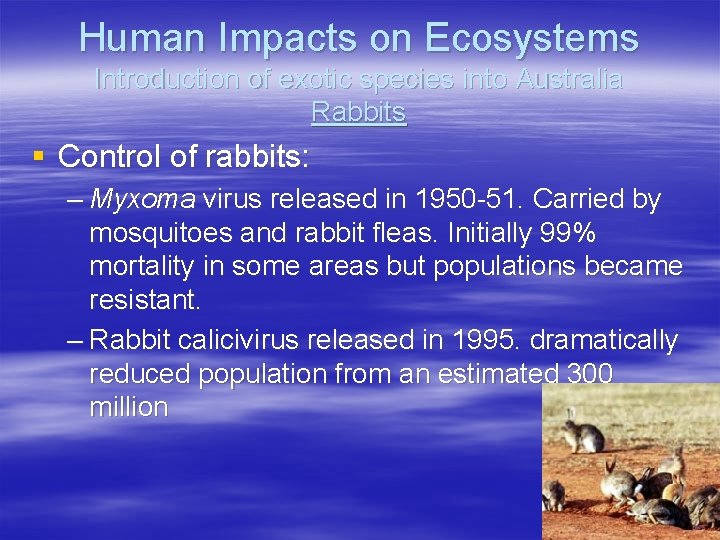
Human Impacts on Ecosystems Introduction of exotic species into Australia Rabbits § Control of rabbits: – Myxoma virus released in 1950 -51. Carried by mosquitoes and rabbit fleas. Initially 99% mortality in some areas but populations became resistant. – Rabbit calicivirus released in 1995. dramatically reduced population from an estimated 300 million
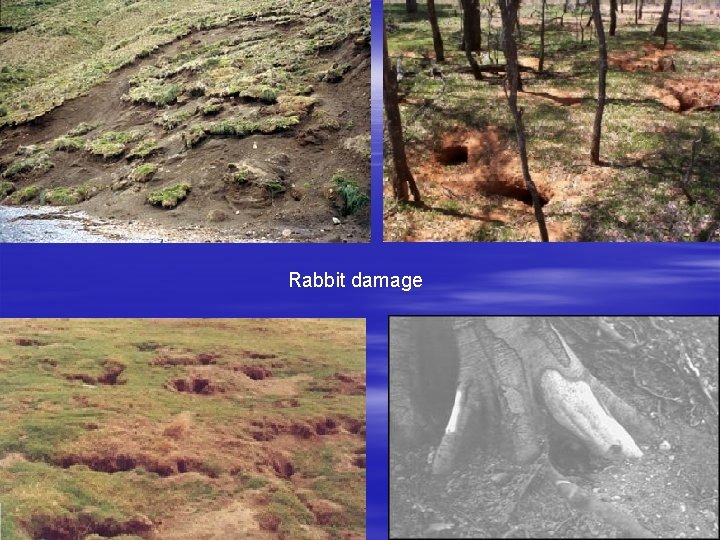
Rabbit damage
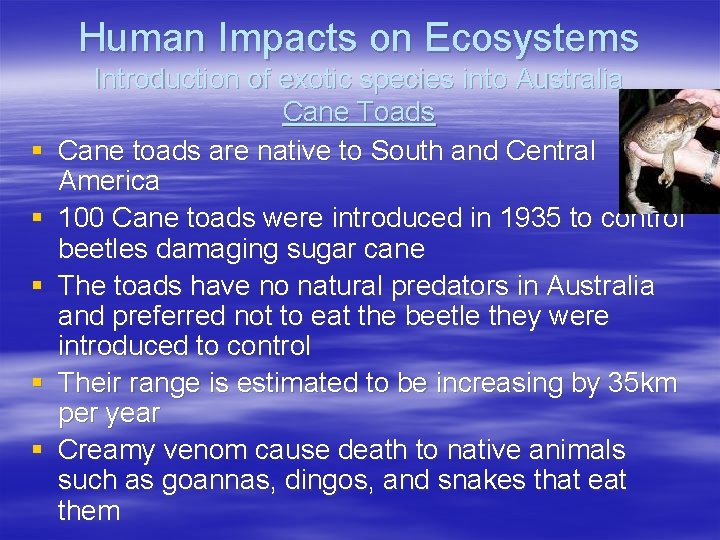
Human Impacts on Ecosystems § § § Introduction of exotic species into Australia Cane Toads Cane toads are native to South and Central America 100 Cane toads were introduced in 1935 to control beetles damaging sugar cane The toads have no natural predators in Australia and preferred not to eat the beetle they were introduced to control Their range is estimated to be increasing by 35 km per year Creamy venom cause death to native animals such as goannas, dingos, and snakes that eat them
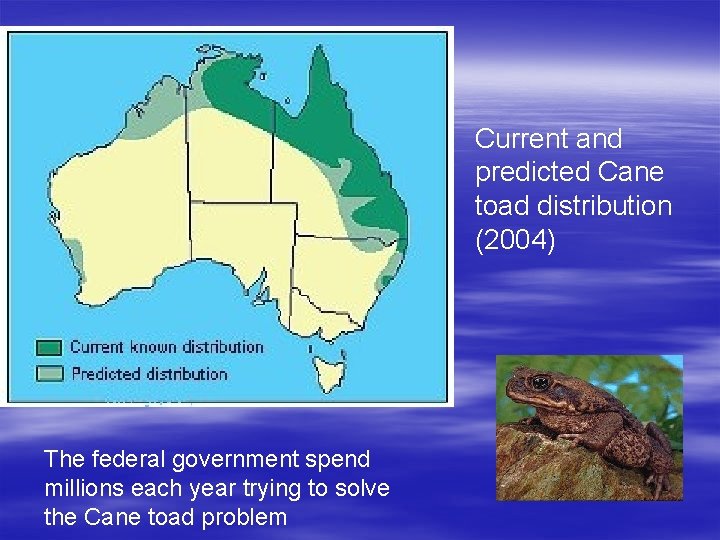
Current and predicted Cane toad distribution (2004) The federal government spend millions each year trying to solve the Cane toad problem
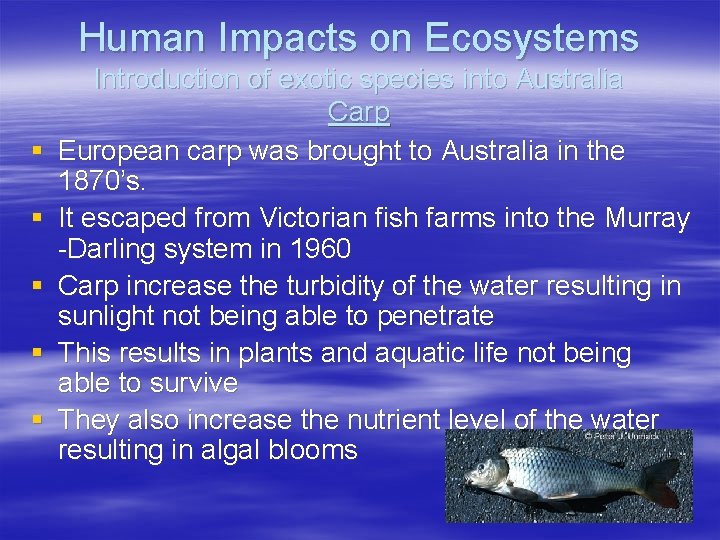
Human Impacts on Ecosystems § § § Introduction of exotic species into Australia Carp European carp was brought to Australia in the 1870’s. It escaped from Victorian fish farms into the Murray -Darling system in 1960 Carp increase the turbidity of the water resulting in sunlight not being able to penetrate This results in plants and aquatic life not being able to survive They also increase the nutrient level of the water resulting in algal blooms
Biological Control § Using natural enemies (predators, herbivores, parasites and disease causing organisms) 1. Classical biocontrol § § § Introducing an offshore natural enemy Success – Prickly pear numbers reduced by introduction of cactus moth Failure – Cane toads 2. Conservation biocontrol § Use of naturally occurring agents 3. Use of biopesticides § Use of naturally occurring agents such as bacteria and fungi
Biotechnology § Biotechnology generally refers to recombining DNA for a specific use § Example 1 – Blocking conception in rabbits § Example 2 – Single sex carp § Block a gene involved in female development
Human Impacts on Ecosystems Over harvesting § Over-harvesting is an unsustainable use of a biological resource § It is important to know where and when the species breeds, its rate of growth and time of sexual maturity § This will reduce risks of over-exploitation
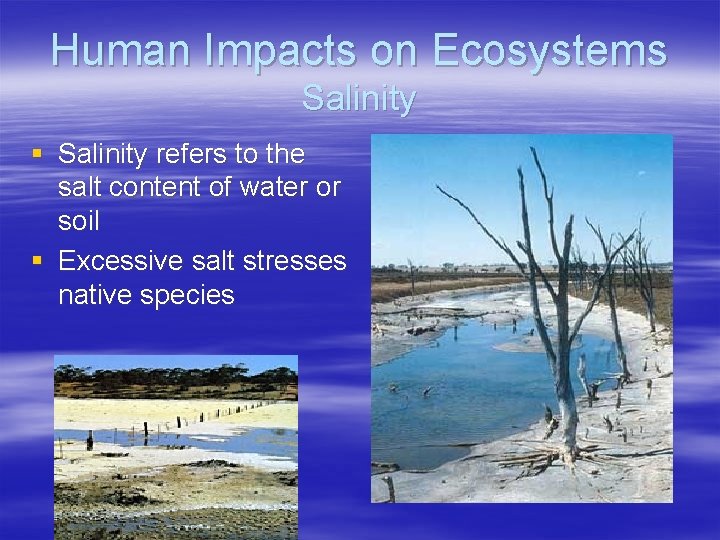
Human Impacts on Ecosystems Salinity § Salinity refers to the salt content of water or soil § Excessive salt stresses native species
Human Impacts on Ecosystems Salinity § Dryland salinity – Australia naturally has high salt levels in the soil – Native plant species have large root systems to absorb water – Little rain water reaches the ground water supply – European settlement resulted in native species being cleared and replaced with shallow rooted vegetation – More water reaches the ground water and the water table rises dissolving salt and bringing it to the surface.
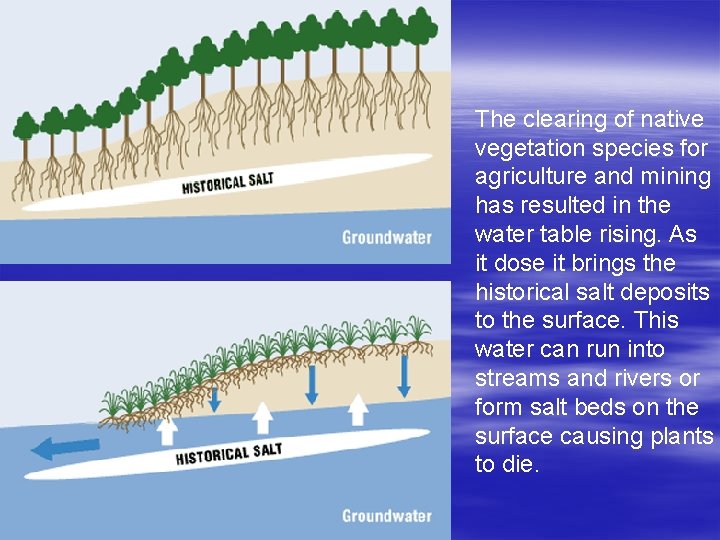
The clearing of native vegetation species for agriculture and mining has resulted in the water table rising. As it dose it brings the historical salt deposits to the surface. This water can run into streams and rivers or form salt beds on the surface causing plants to die.
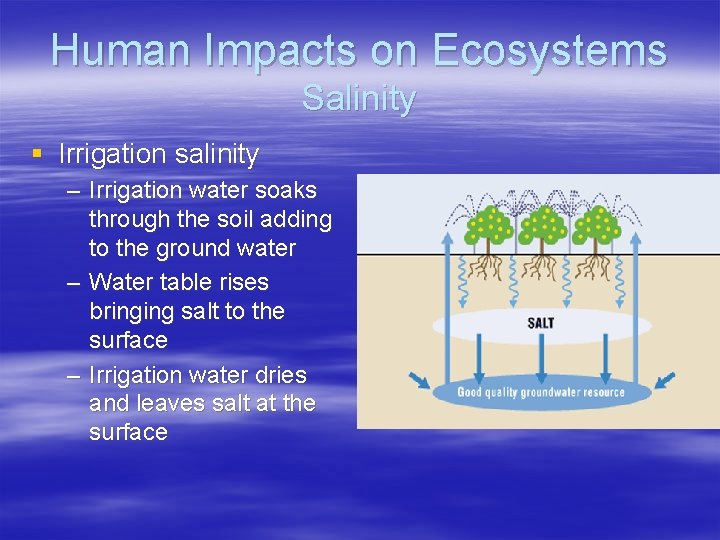
Human Impacts on Ecosystems Salinity § Irrigation salinity – Irrigation water soaks through the soil adding to the ground water – Water table rises bringing salt to the surface – Irrigation water dries and leaves salt at the surface
Human Impacts on Ecosystems Salinity § Cost of salinity in Australia – More than $130 million of agricultural production is lost annually from salinity – The area of salt affected land in Western Australia is increasing at a rate of one football field per hour – Increased salinity could cause the extinction of approximately 450 species of native flora and 250 species of invertebrate water fauna in the Western Australian wheat belt – If salinity is not effectively managed within 20 years, the salt content in Adelaide’s drinking water may exceed World Health Organisation standards Information from a government web site
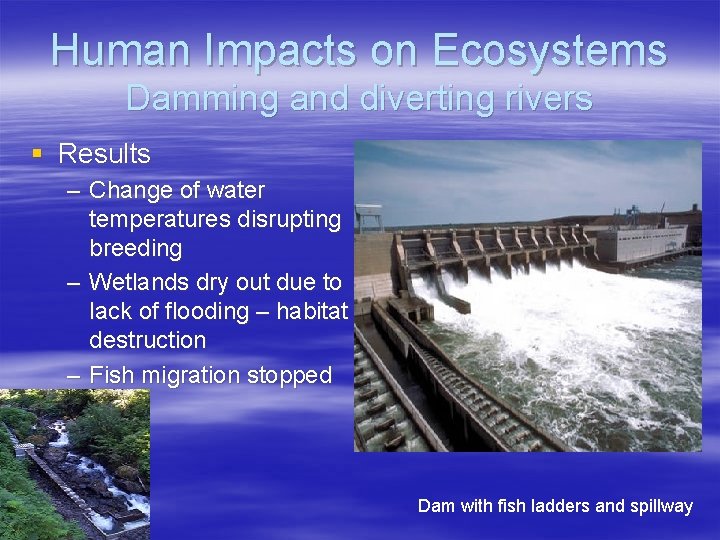
Human Impacts on Ecosystems Damming and diverting rivers § Results – Change of water temperatures disrupting breeding – Wetlands dry out due to lack of flooding – habitat destruction – Fish migration stopped Dam with fish ladders and spillway
Human Impacts on Ecosystems Damming and diverting rivers Snowy River Scheme § The Snowy Mountains Hydroelectric Scheme was established in 1967 § 99% of the natural flow of the river was diverted at the Jindabyne Dam § Habitats down stream were destroyed § A restoration process began in 2002. Over a 10 year period the flow will be increased to 21%
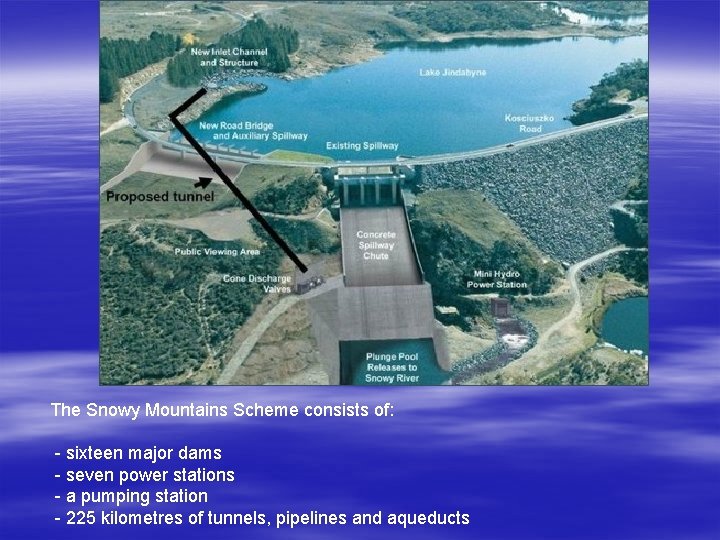
The Snowy Mountains Scheme consists of: - sixteen major dams - seven power stations - a pumping station - 225 kilometres of tunnels, pipelines and aqueducts
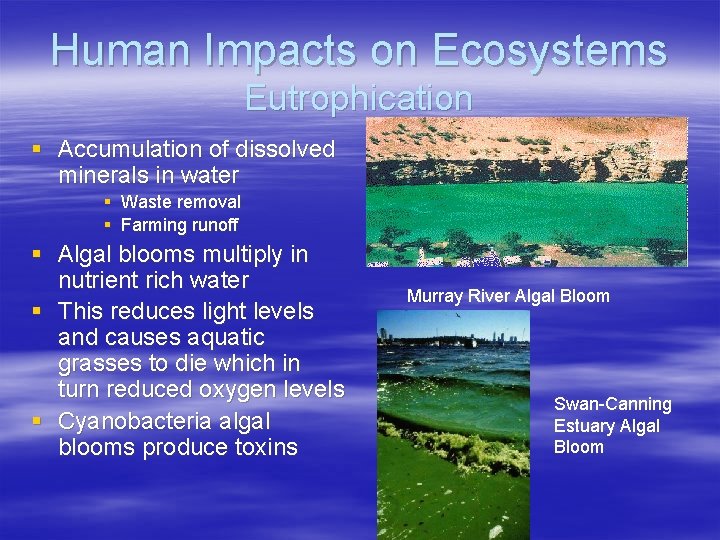
Human Impacts on Ecosystems Eutrophication § Accumulation of dissolved minerals in water § § Waste removal Farming runoff § Algal blooms multiply in nutrient rich water § This reduces light levels and causes aquatic grasses to die which in turn reduced oxygen levels § Cyanobacteria algal blooms produce toxins Murray River Algal Bloom Swan-Canning Estuary Algal Bloom
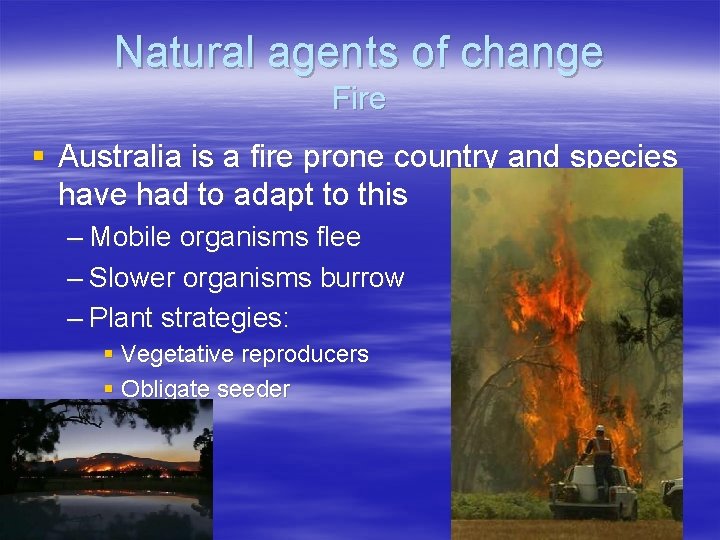
Natural agents of change Fire § Australia is a fire prone country and species have had to adapt to this – Mobile organisms flee – Slower organisms burrow – Plant strategies: § Vegetative reproducers § Obligate seeder
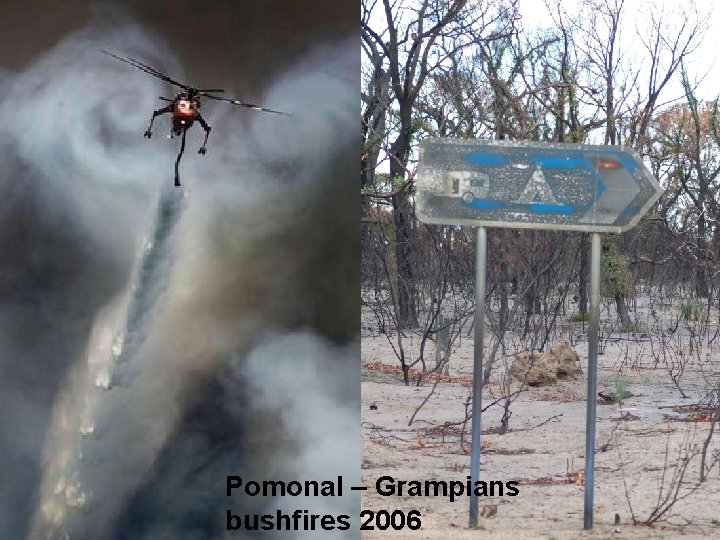
Pomonal – Grampians bushfires 2006
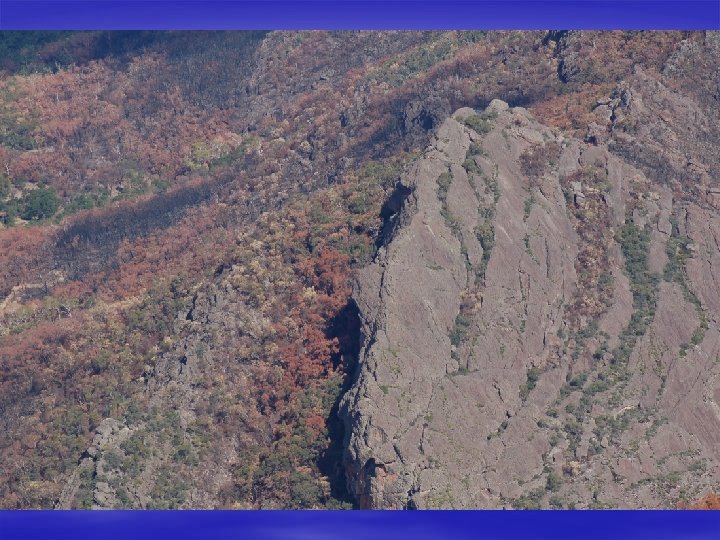
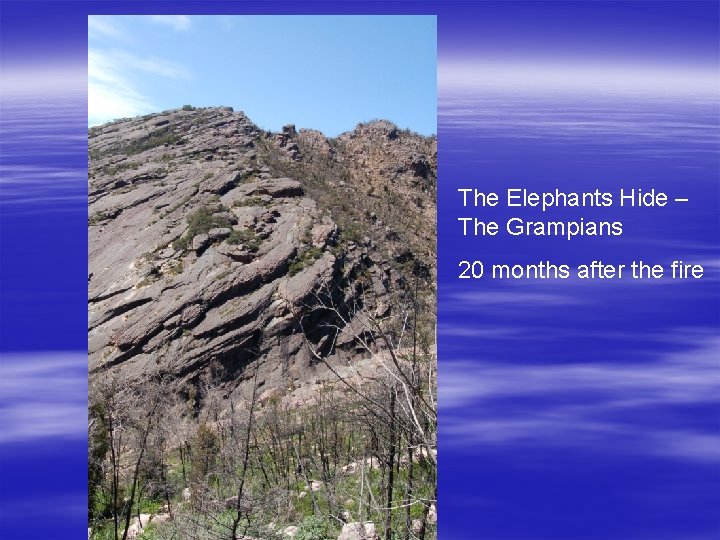
The Elephants Hide – The Grampians 20 months after the fire
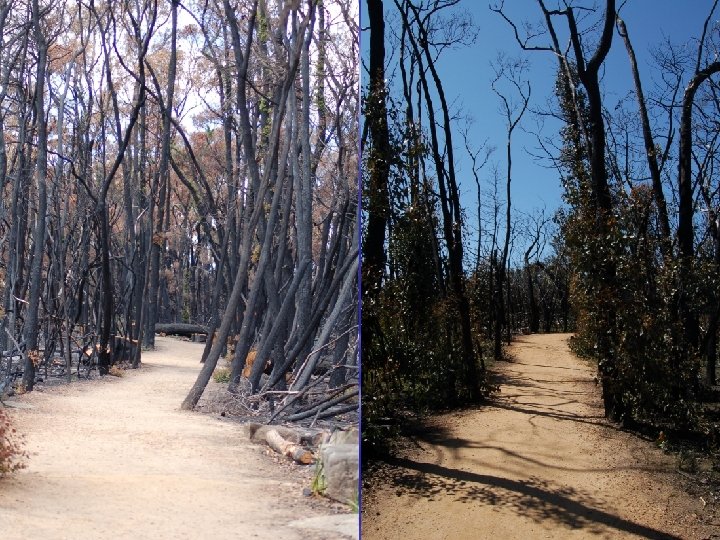
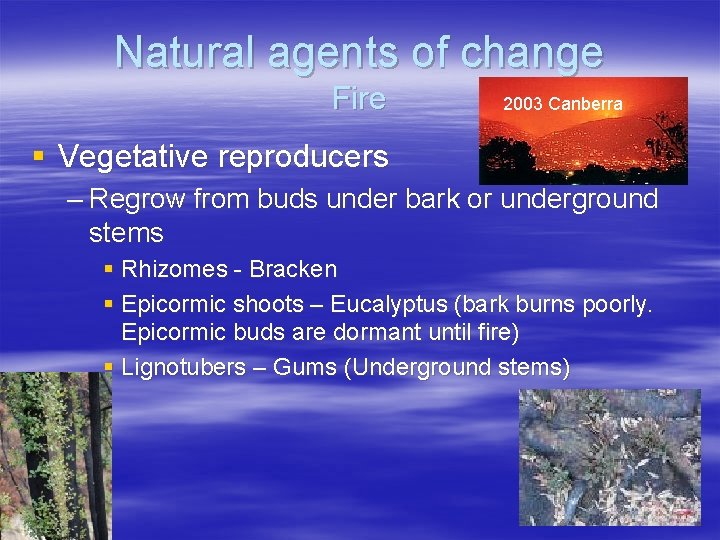
Natural agents of change Fire 2003 Canberra § Vegetative reproducers – Regrow from buds under bark or underground stems § Rhizomes - Bracken § Epicormic shoots – Eucalyptus (bark burns poorly. Epicormic buds are dormant until fire) § Lignotubers – Gums (Underground stems)
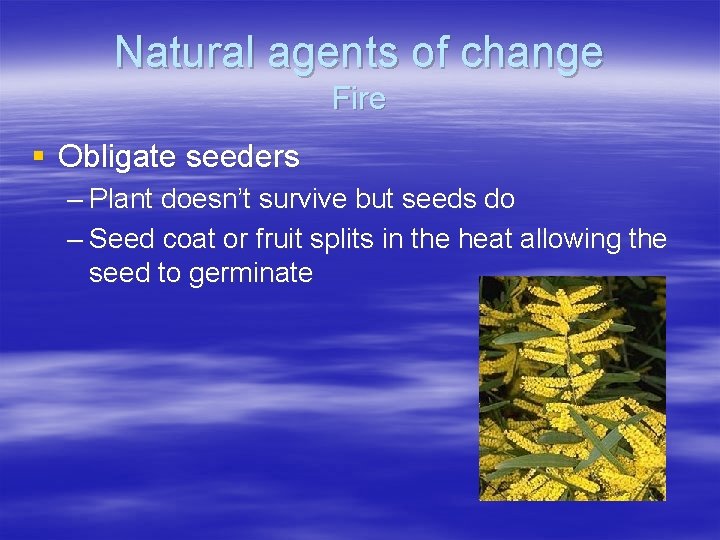
Natural agents of change Fire § Obligate seeders – Plant doesn’t survive but seeds do – Seed coat or fruit splits in the heat allowing the seed to germinate
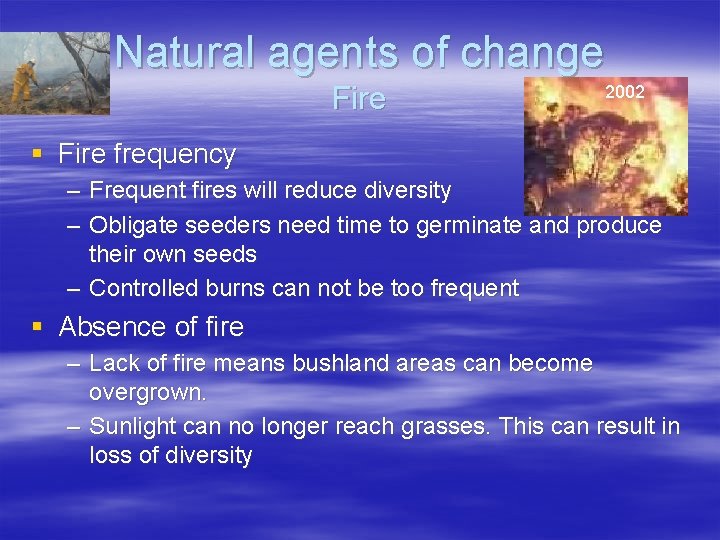
Natural agents of change Fire 2002 § Fire frequency – Frequent fires will reduce diversity – Obligate seeders need time to germinate and produce their own seeds – Controlled burns can not be too frequent § Absence of fire – Lack of fire means bushland areas can become overgrown. – Sunlight can no longer reach grasses. This can result in loss of diversity
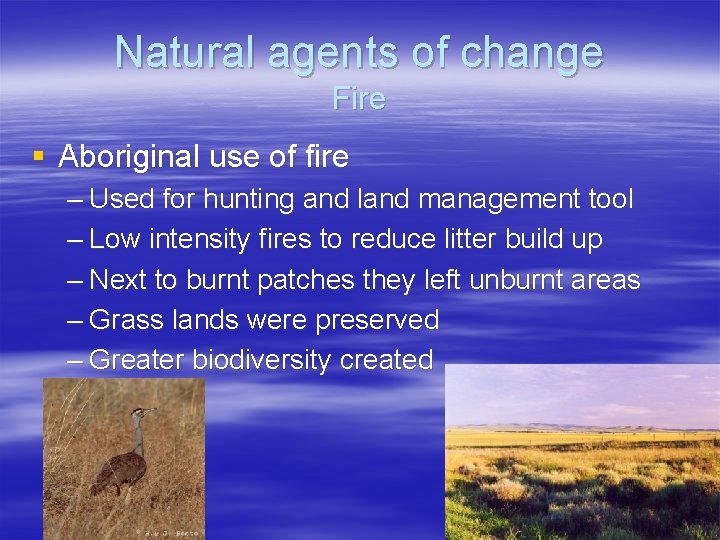
Natural agents of change Fire § Aboriginal use of fire – Used for hunting and land management tool – Low intensity fires to reduce litter build up – Next to burnt patches they left unburnt areas – Grass lands were preserved – Greater biodiversity created
Succession § Natural replacement of a community over time § Primary succession – A bare area is colonised by organisms for the first time – Eg: Colonisation of larval flows or coastal dunes § Secondary succession – Occurs in areas that have been disturbed – Eg: Abandoned paddock – Pioneer species § first species to become established § Survive under harsh conditions and reproduce rapidly (r-selection) § Succession stops when a stable community is established. – Known as the climax community
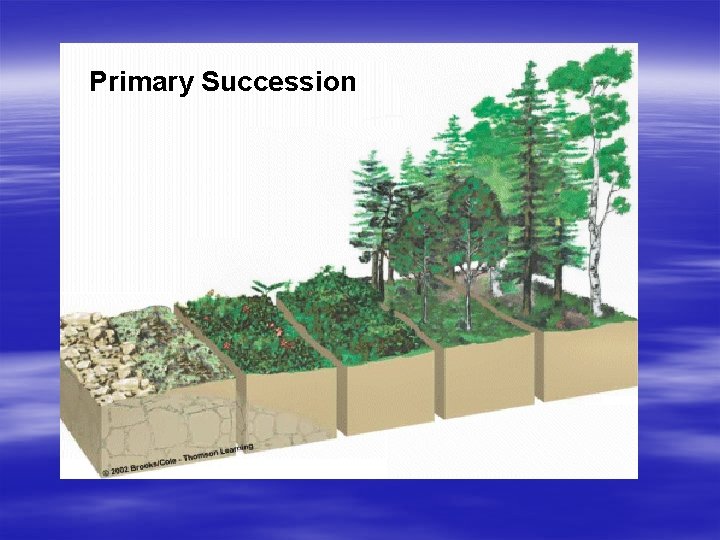
Primary Succession
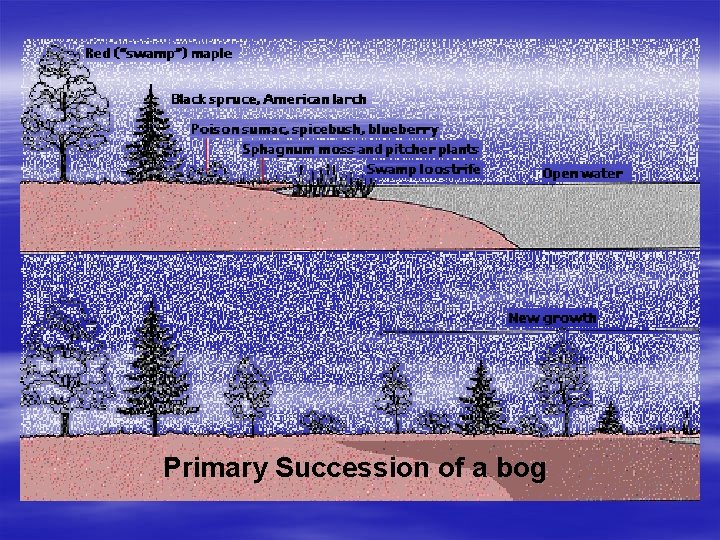
Primary Succession of a bog
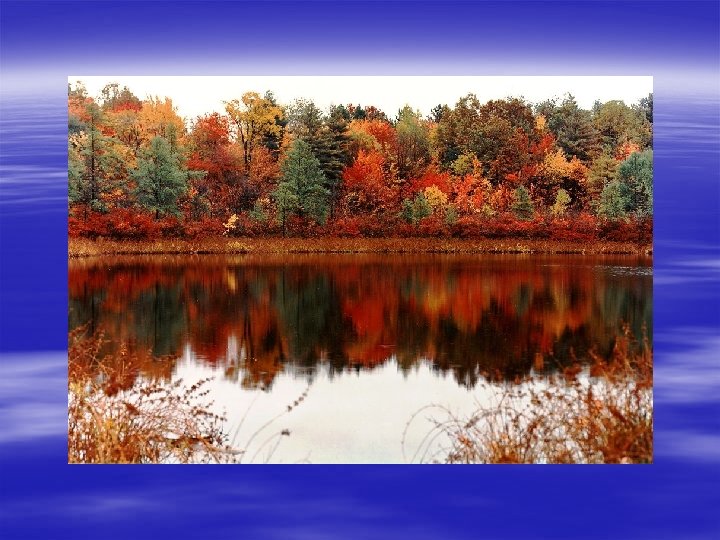
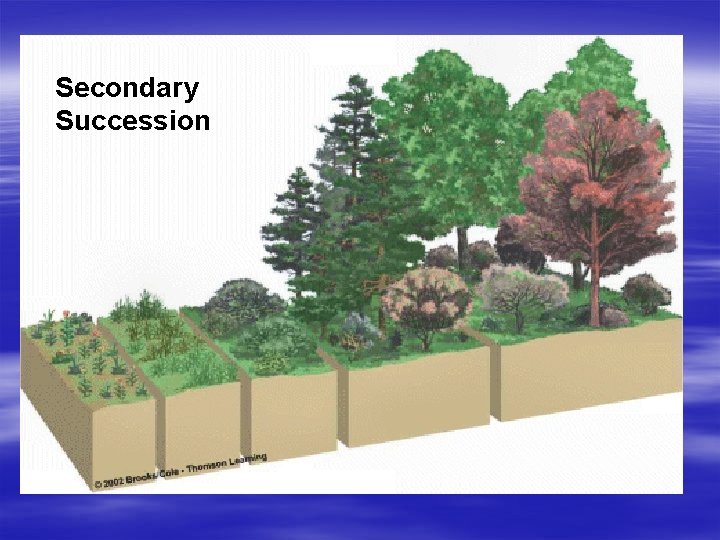
Secondary Succession
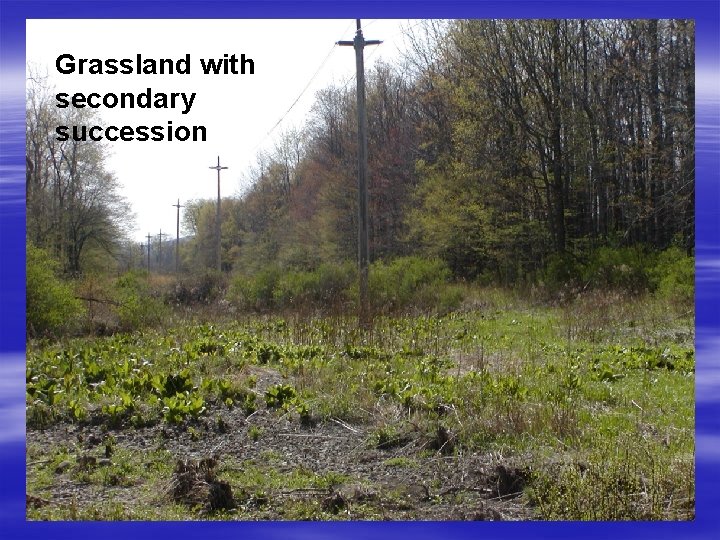
Grassland with secondary succession
Restoration § Personal level – Recycling – Composting – Thoughtful water use – Supporting conservation groups § Council level – Local clean ups – Providing recycling facilities
Restoration § State government level – Sewage treatment – Legislation to protect ecosystems § Federal government – Legislation – Quarantine – Funding – Liaising industry and environmental groups
- Slides: 44