
Changes of Spatial Behavior Patterns in Moscow Metropolitan
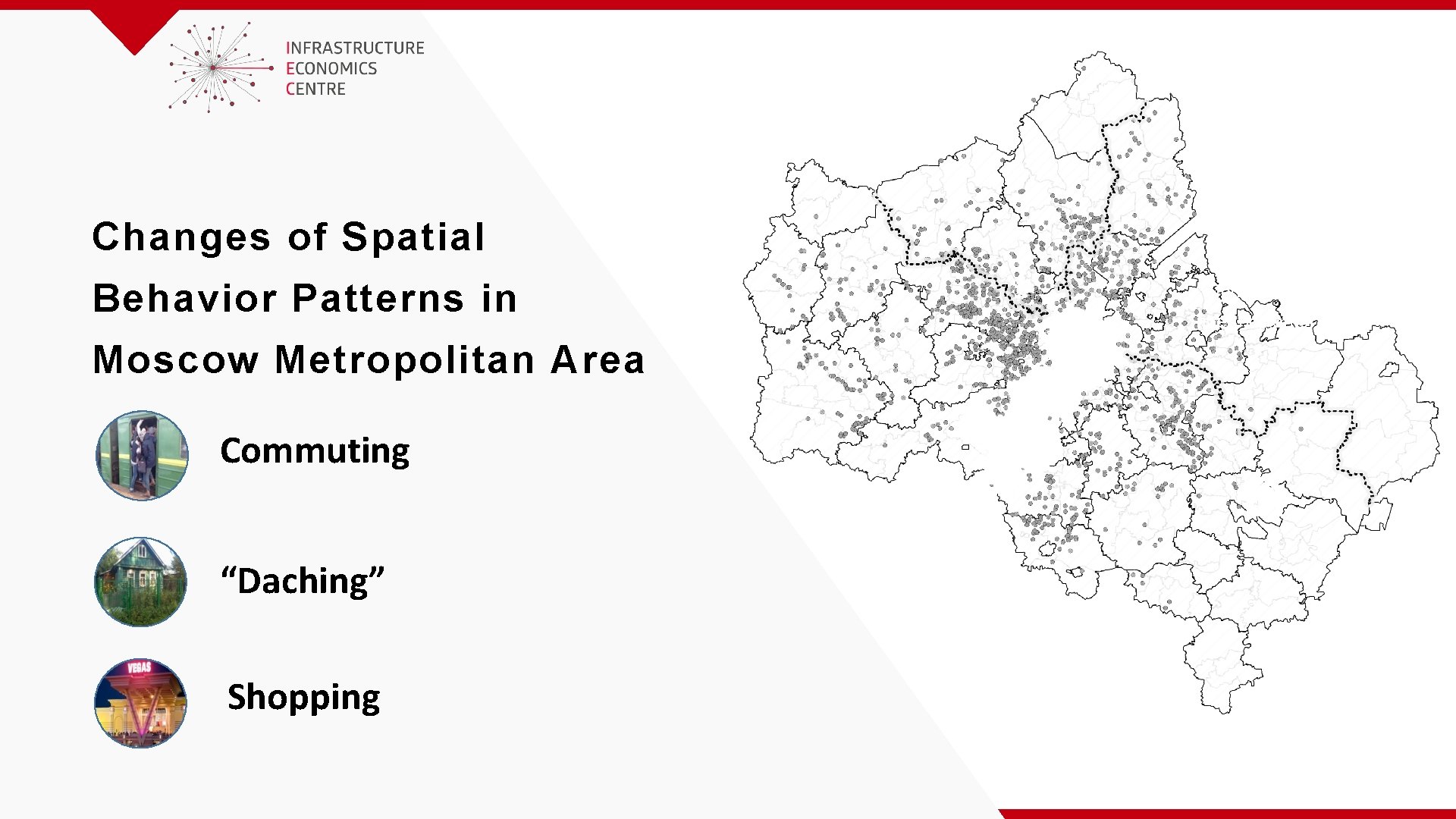
Диагностика Changes of Spatial Behavior Patterns in Moscow Metropolitan Area Commuting “Daching” Shopping Проектные предложения
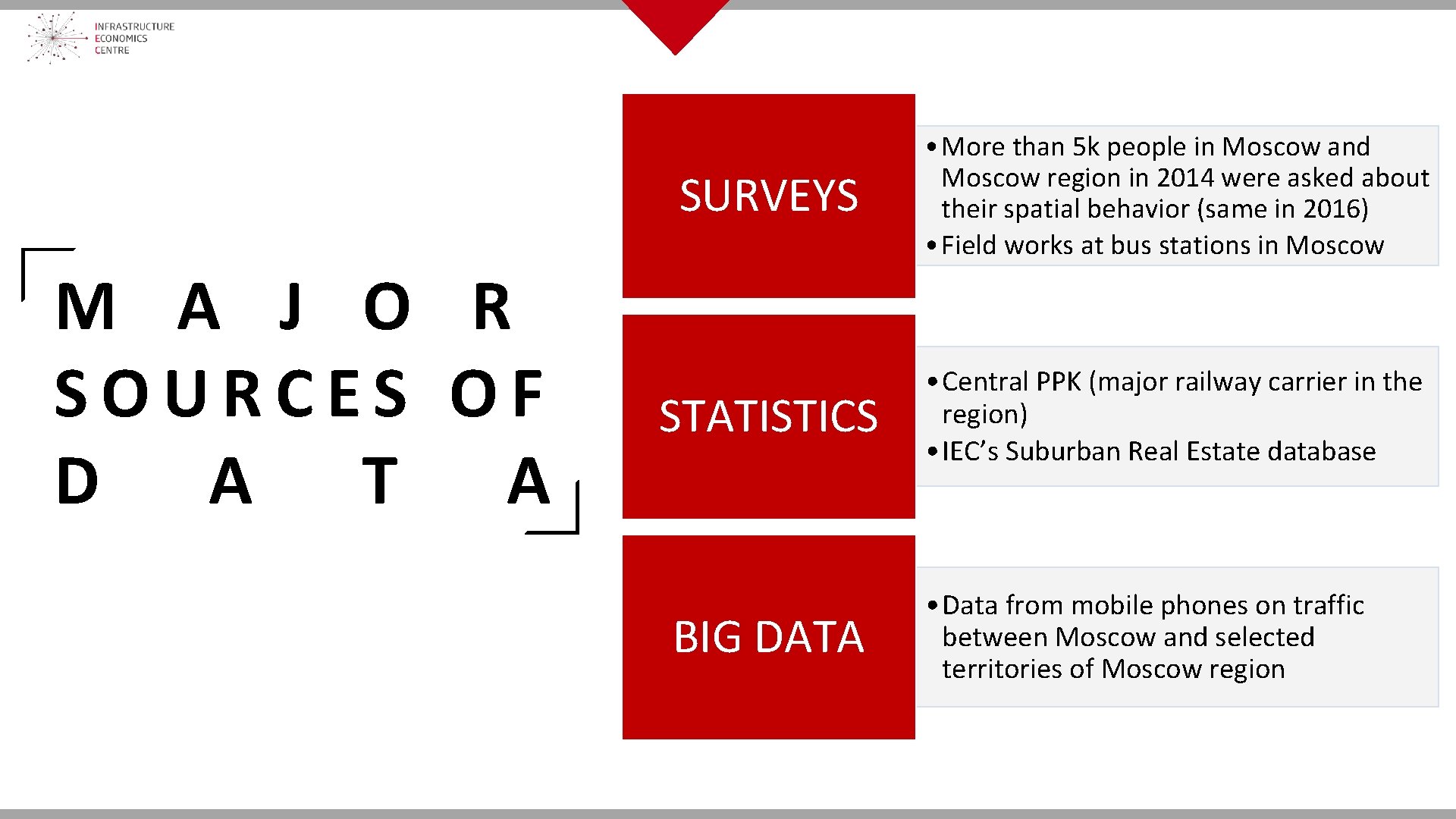
M A J O R SOURCES OF D A T A SURVEYS • More than 5 k people in Moscow and Moscow region in 2014 were asked about their spatial behavior (same in 2016) • Field works at bus stations in Moscow STATISTICS • Central PPK (major railway carrier in the region) • IEC’s Suburban Real Estate database BIG DATA • Data from mobile phones on traffic between Moscow and selected territories of Moscow region
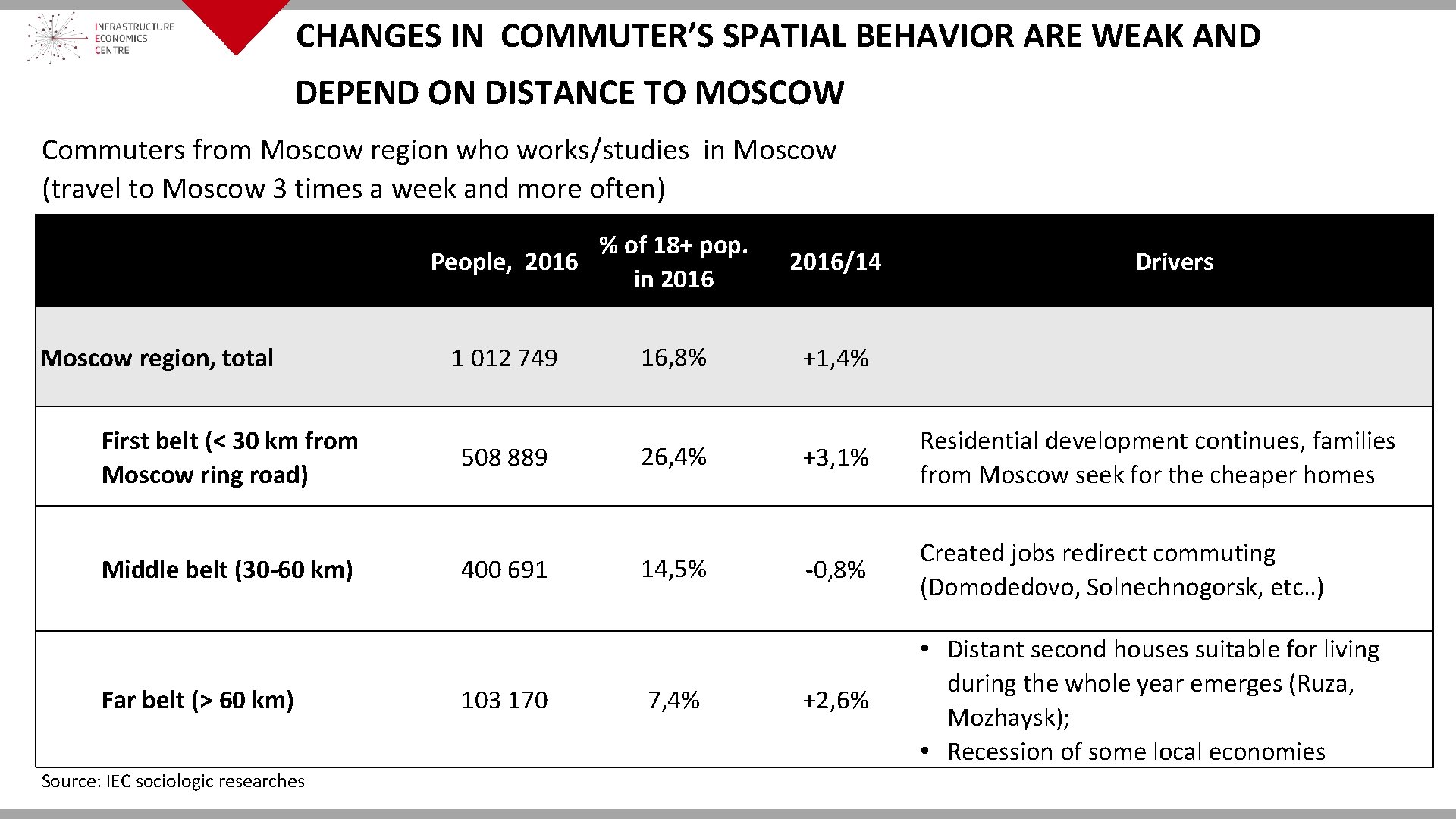
CHANGES IN COMMUTER’S SPATIAL BEHAVIOR ARE WEAK AND DEPEND ON DISTANCE TO MOSCOW Commuters from Moscow region who works/studies in Moscow (travel to Moscow 3 times a week and more often) % of 18+ pop. People, 2016 in 2016 Moscow region, total First belt (< 30 km from Moscow ring road) Middle belt (30 -60 km) Far belt (> 60 km) Source: IEC sociologic researches 1 012 749 508 889 400 691 103 170 16, 8% 26, 4% 14, 5% 7, 4% 2016/14 Drivers +1, 4% +3, 1% Residential development continues, families from Moscow seek for the cheaper homes -0, 8% Created jobs redirect commuting (Domodedovo, Solnechnogorsk, etc. . ) +2, 6% • Distant second houses suitable for living during the whole year emerges (Ruza, Mozhaysk); • Recession of some local economies
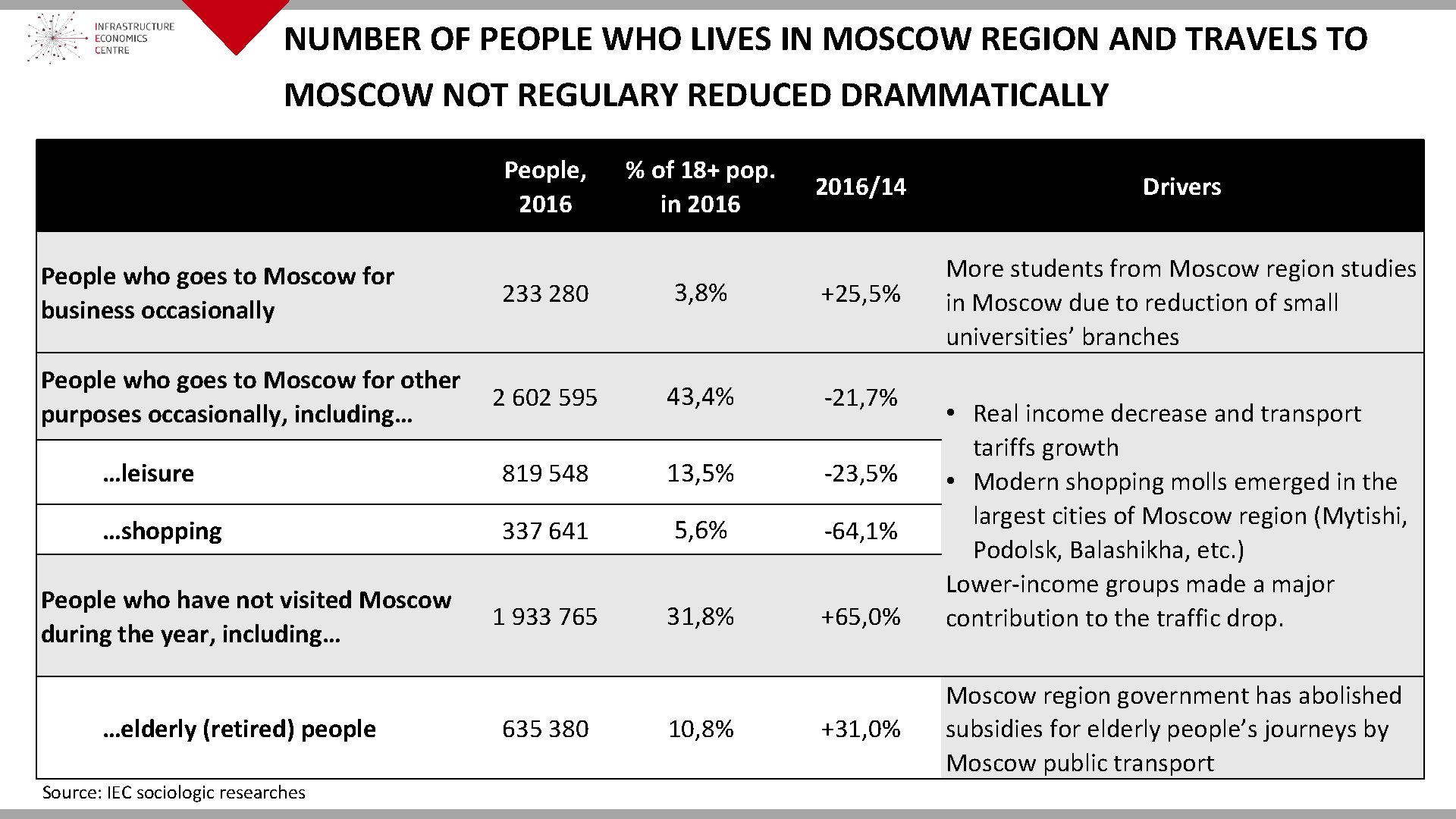
NUMBER OF PEOPLE WHO LIVES IN MOSCOW REGION AND TRAVELS TO MOSCOW NOT REGULARY REDUCED DRAMMATICALLY People, 2016 People who goes to Moscow for business occasionally % of 18+ pop. in 2016/14 Drivers More students from Moscow region studies in Moscow due to reduction of small universities’ branches 233 280 3, 8% +25, 5% 2 602 595 43, 4% -21, 7% …leisure 819 548 13, 5% -23, 5% …shopping 337 641 5, 6% -64, 1% 1 933 765 31, 8% +65, 0% People who goes to Moscow for other purposes occasionally, including… People who have not visited Moscow during the year, including… …elderly (retired) people Source: IEC sociologic researches 635 380 10, 8% +31, 0% • Real income decrease and transport tariffs growth • Modern shopping molls emerged in the largest cities of Moscow region (Mytishi, Podolsk, Balashikha, etc. ) Lower-income groups made a major contribution to the traffic drop. Moscow region government has abolished subsidies for elderly people’s journeys by Moscow public transport
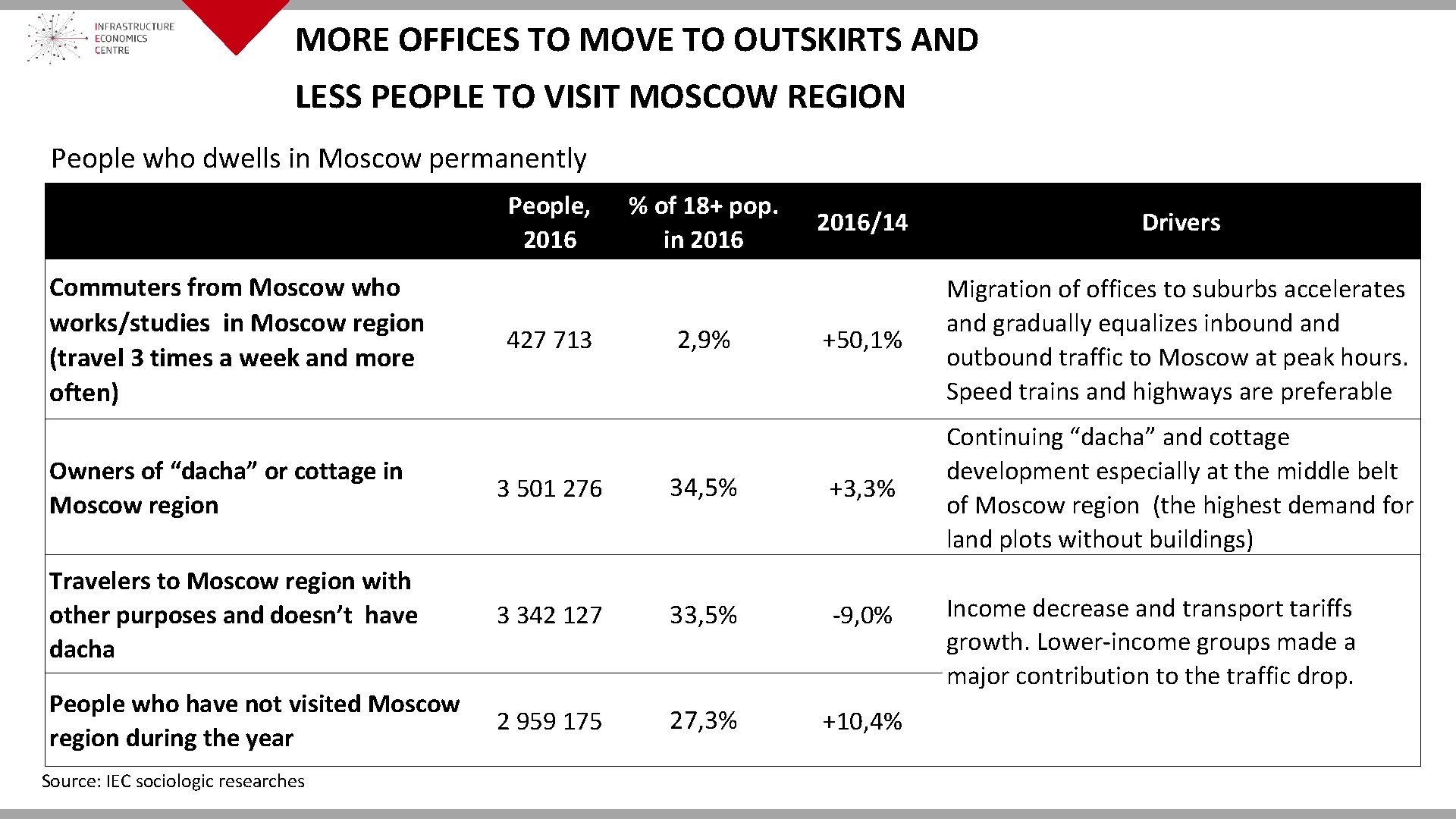
MORE OFFICES TO MOVE TO OUTSKIRTS AND LESS PEOPLE TO VISIT MOSCOW REGION People who dwells in Moscow permanently People, 2016 Commuters from Moscow who works/studies in Moscow region (travel 3 times a week and more often) 427 713 % of 18+ pop. in 2016 2, 9% 2016/14 Drivers +50, 1% Migration of offices to suburbs accelerates and gradually equalizes inbound and outbound traffic to Moscow at peak hours. Speed trains and highways are preferable Continuing “dacha” and cottage development especially at the middle belt of Moscow region (the highest demand for land plots without buildings) Owners of “dacha” or cottage in Moscow region 3 501 276 34, 5% +3, 3% Travelers to Moscow region with other purposes and doesn’t have dacha 3 342 127 33, 5% -9, 0% People who have not visited Moscow region during the year 2 959 175 27, 3% +10, 4% Source: IEC sociologic researches Income decrease and transport tariffs growth. Lower-income groups made a major contribution to the traffic drop.
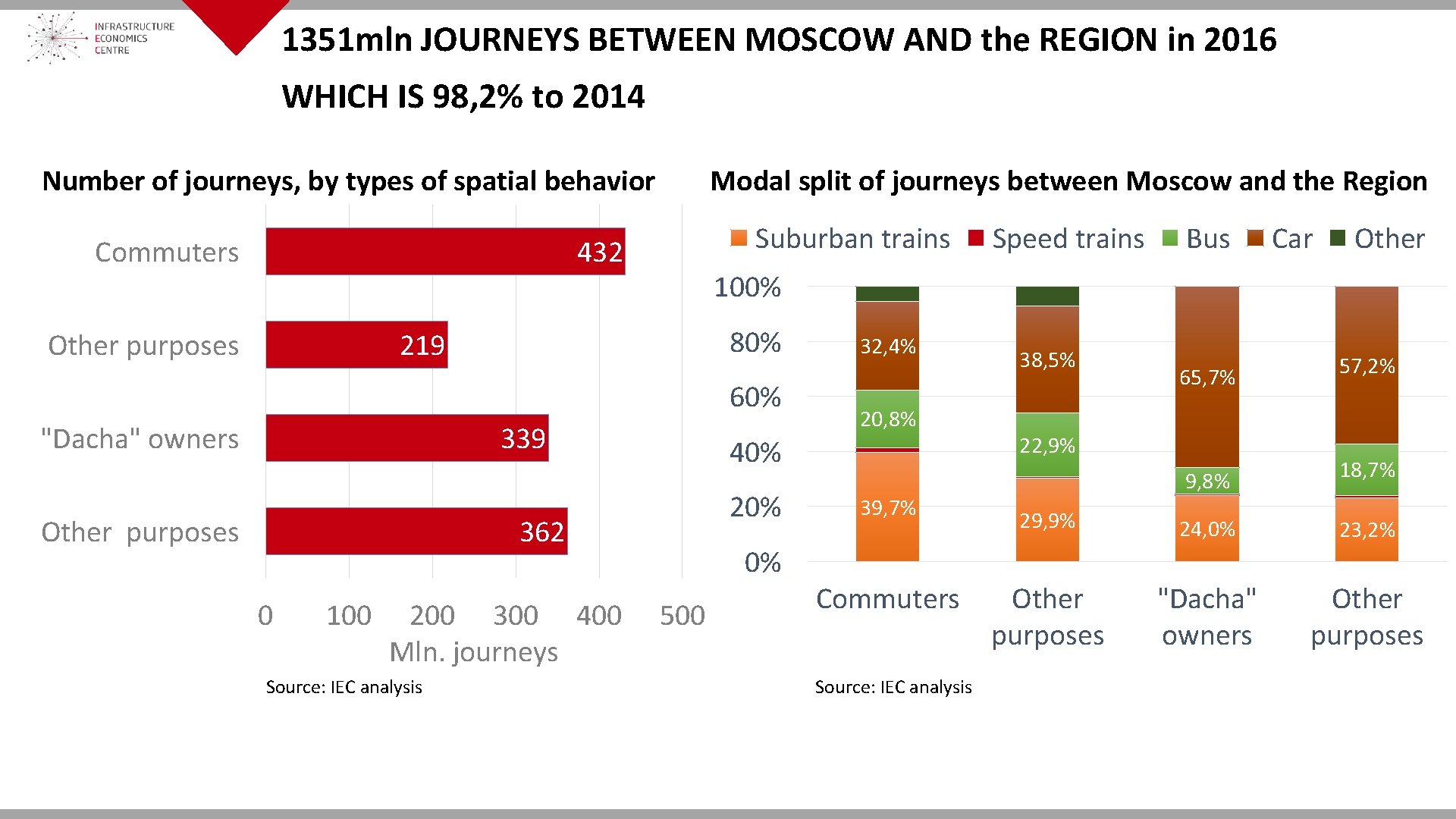
1351 mln JOURNEYS BETWEEN MOSCOW AND the REGION in 2016 WHICH IS 98, 2% to 2014 Modal split of journeys between Moscow and the Region Number of journeys, by types of spatial behavior Commuters Suburban trains 432 Other purposes 80% 60% 339 Other purposes 100 200 300 400 Mln. journeys Source: IEC analysis 32, 4% 20, 8% 40% 20% 362 0 Bus Car Other 100% 219 "Dacha" owners Speed trains 0% 500 39, 7% Commuters Source: IEC analysis 38, 5% 65, 7% 22, 9% 57, 2% 9, 8% 18, 7% 29, 9% 24, 0% 23, 2% Other purposes "Dacha" owners Other purposes
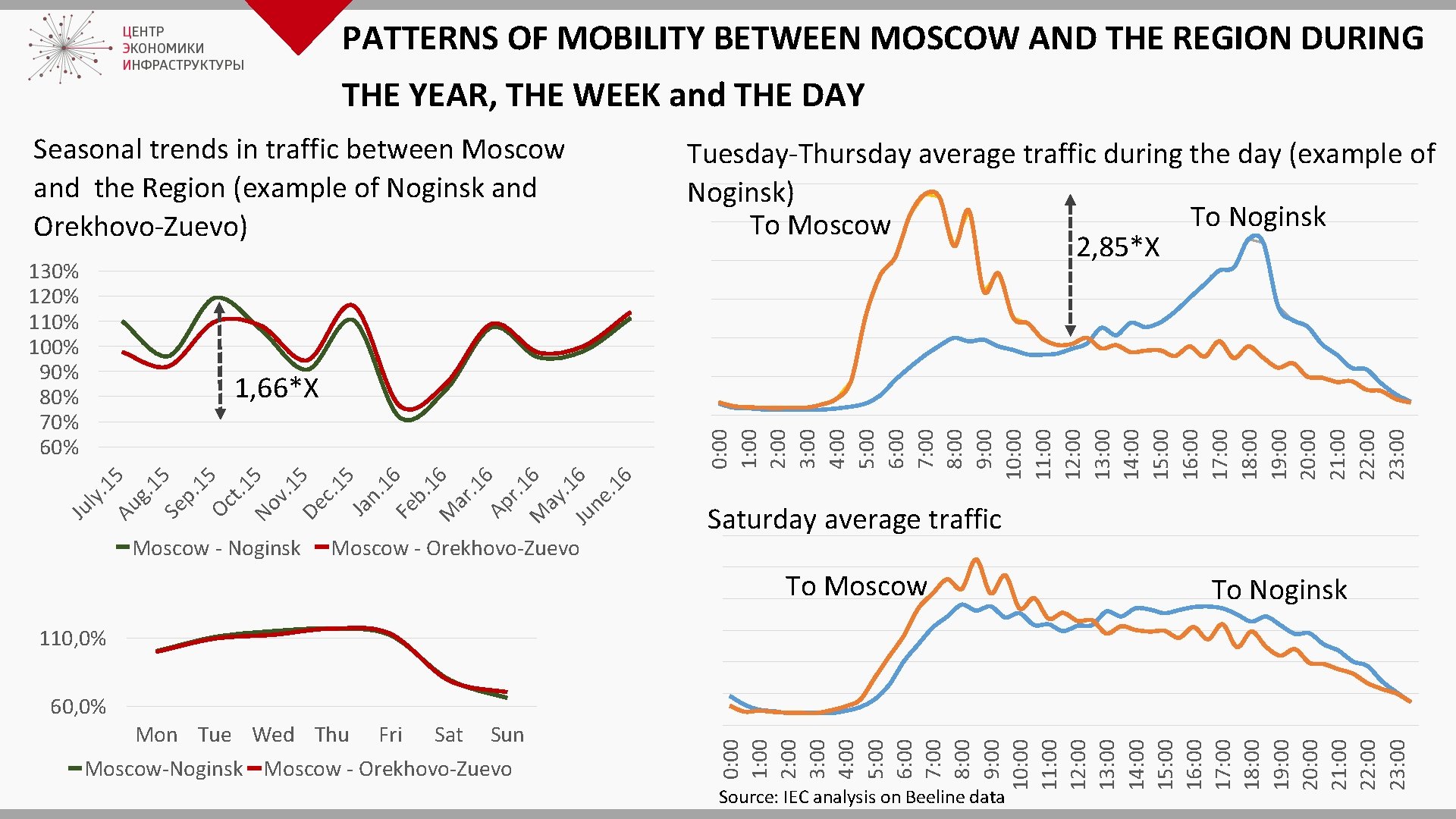
PATTERNS OF MOBILITY BETWEEN MOSCOW AND THE REGION DURING THE YEAR, THE WEEK and THE DAY Seasonal trends in traffic between Moscow and the Region (example of Noginsk and Orekhovo-Zuevo) 130% 120% 110% 100% 90% 80% 70% 60% Tuesday-Thursday average traffic during the day (example of Noginsk) To Noginsk To Moscow 2, 85*X Moscow - Noginsk Moscow - Orekhovo-Zuevo 0: 00 1: 00 2: 00 3: 00 4: 00 5: 00 6: 00 7: 00 8: 00 9: 00 10: 00 11: 00 12: 00 13: 00 14: 00 15: 00 16: 00 17: 00 18: 00 19: 00 20: 00 21: 00 22: 00 23: 00 Se p. 15 Oc t. 1 No 5 v. 1 De 5 c. 1 5 Ja n. 16 Fe b. 16 M ar. 1 Ap 6 r. 1 M 6 ay. 1 Ju 6 ne. 1 6 15 g. Au Ju ly. 15 1, 66*X Saturday average traffic To Moscow To Noginsk 110, 0% Mon Tue Wed Thu Fri Sat Sun Moscow-Noginsk Moscow - Orekhovo-Zuevo 0: 00 1: 00 2: 00 3: 00 4: 00 5: 00 6: 00 7: 00 8: 00 9: 00 10: 00 11: 00 12: 00 13: 00 14: 00 15: 00 16: 00 17: 00 18: 00 19: 00 20: 00 21: 00 22: 00 23: 00 60, 0% Source: IEC analysis on Beeline data
POLICY TO BALANCE MOBILITY AND LIFE Targeting peaks – flexible working hours and work from home – flexible tariff policy Reduce commuting – preferences for offices in Moscow Region – inhibiting of house construction in the first belt Switch to public transport – HSR development – LRT development

Please, don’t hesitate to contact me Pavel Chistyakov pachistyakov@infraeconomy. com +79164615151
- Slides: 9