
Changes in Agriculture and Population How technology transformed
- Slides: 11
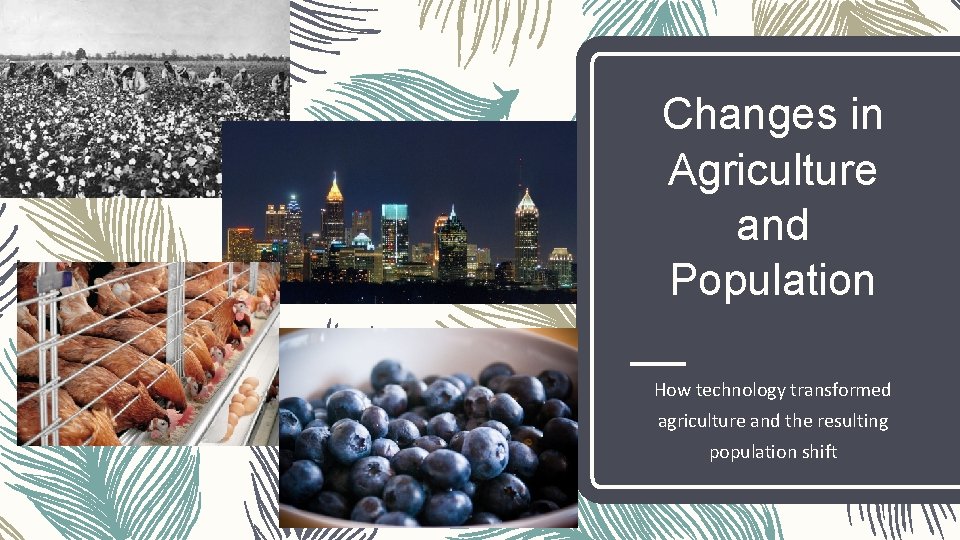
Changes in Agriculture and Population How technology transformed agriculture and the resulting population shift
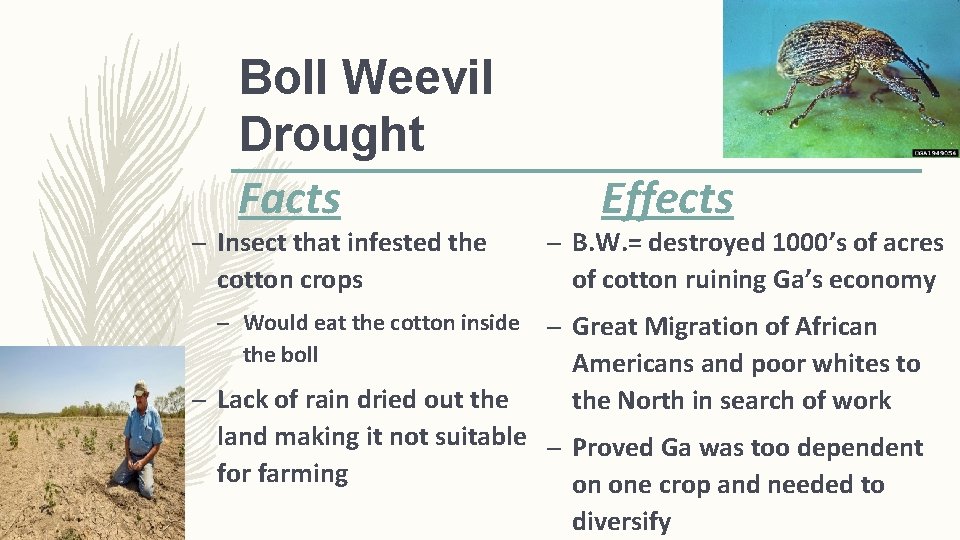
Boll Weevil Drought Facts – Insect that infested the cotton crops – Would eat the cotton inside the boll Effects – B. W. = destroyed 1000’s of acres of cotton ruining Ga’s economy – Great Migration of African Americans and poor whites to the North in search of work – Lack of rain dried out the land making it not suitable – Proved Ga was too dependent for farming on one crop and needed to diversify
AAA Facts – New Deal Program by FDR – Paid farmers not to plant certain crops Effects – Decreased need for sharecroppers and other farm workers – Caused African Americans to – Purpose was to balance leave rural areas supply and demand of agricultural products while – Allowed farmers to buy farm helping farmers maintain a machinery rather than pay profit laborers
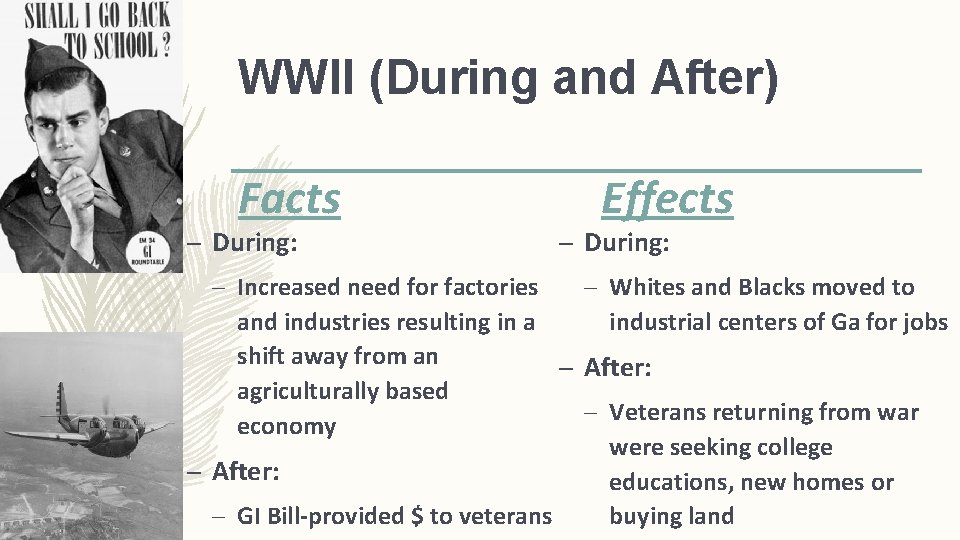
WWII (During and After) Facts – During: Effects – During: – Increased need for factories – Whites and Blacks moved to and industries resulting in a industrial centers of Ga for jobs shift away from an – After: agriculturally based – Veterans returning from war economy were seeking college – After: educations, new homes or – GI Bill-provided $ to veterans buying land
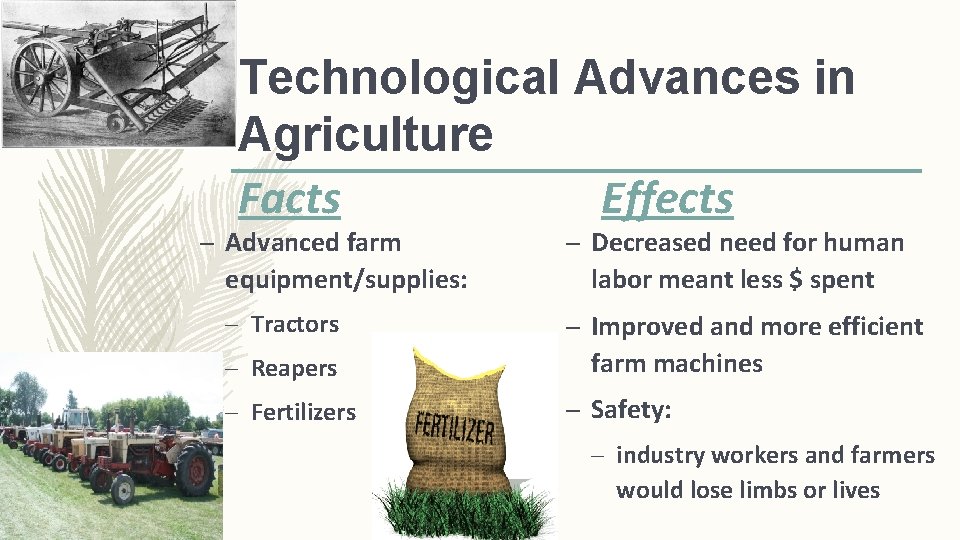
Technological Advances in Agriculture Facts Effects – Advanced farm equipment/supplies: – Tractors – Decreased need for human labor meant less $ spent – Reapers – Improved and more efficient farm machines – Fertilizers – Safety: – industry workers and farmers would lose limbs or lives
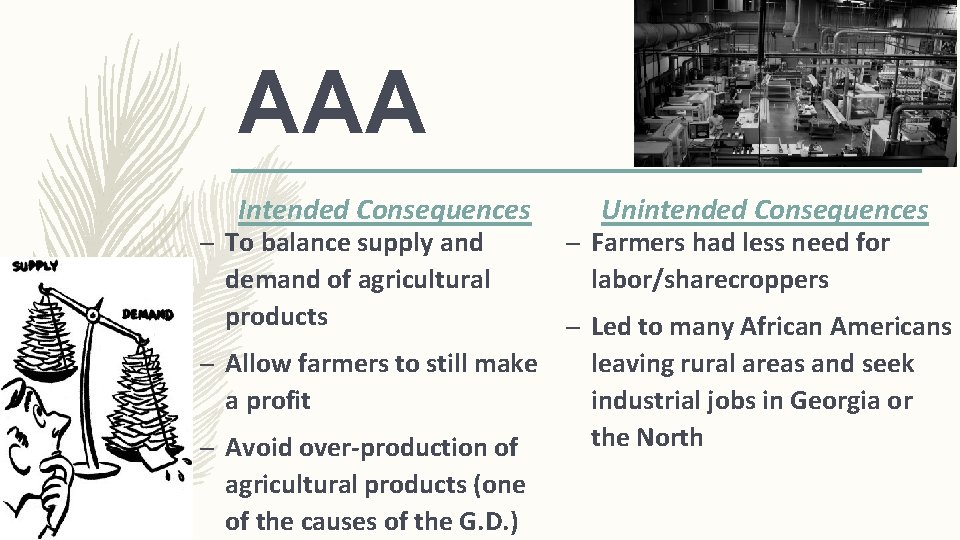
AAA Intended Consequences – To balance supply and demand of agricultural products Unintended Consequences – Farmers had less need for labor/sharecroppers – Led to many African Americans – Allow farmers to still make leaving rural areas and seek a profit industrial jobs in Georgia or the North – Avoid over-production of agricultural products (one of the causes of the G. D. )
Technology Innovation Intended Consequences Unintended Consequences – Less workers were needed and – Make it easier & more were then seeking industrial efficient to grow & process jobs in Ga. or the North crops with less man power – Increase productivity – Safety Issues: – Industry workers or farmers would lose limbs or lives
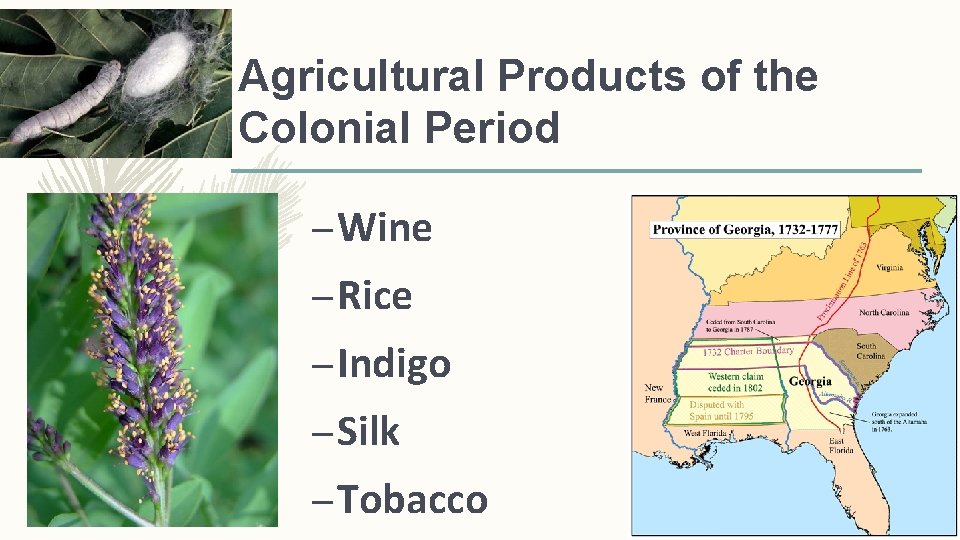
Agricultural Products of the Colonial Period – Wine – Rice – Indigo – Silk – Tobacco
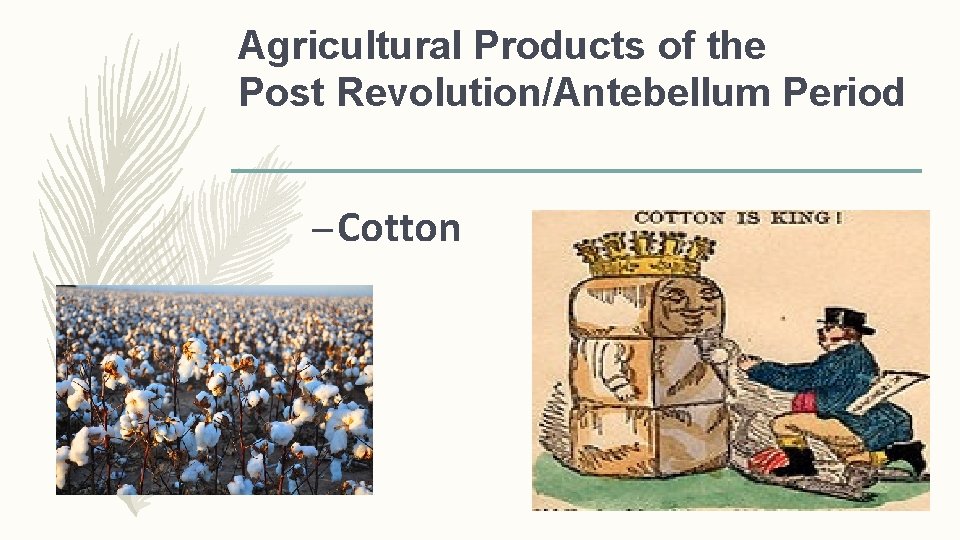
Agricultural Products of the Post Revolution/Antebellum Period – Cotton
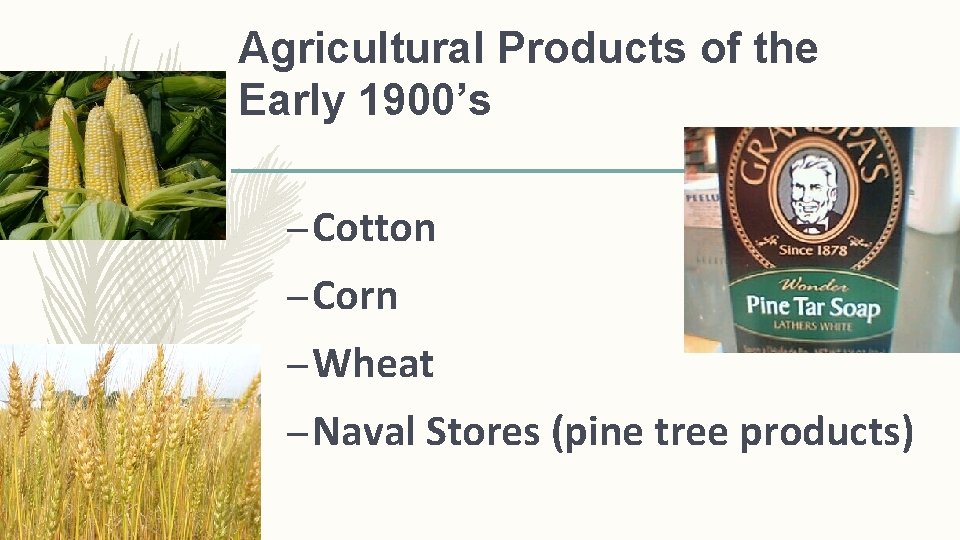
Agricultural Products of the Early 1900’s – Cotton – Corn – Wheat – Naval Stores (pine tree products)
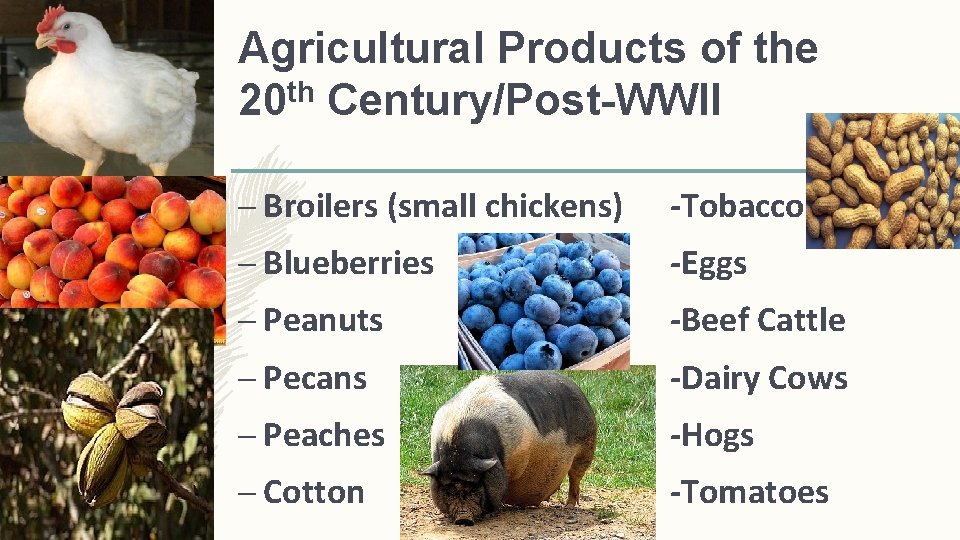
Agricultural Products of the 20 th Century/Post-WWII – Broilers (small chickens) -Tobacco – Blueberries -Eggs – Peanuts -Beef Cattle – Pecans -Dairy Cows – Peaches -Hogs – Cotton -Tomatoes