
CHANGE READINESS ASSESSMENT Measuring stakeholder engagement and attitude
- Slides: 16
CHANGE READINESS ASSESSMENT Measuring stakeholder engagement and attitude to change
Change and People Engagement • Research shows that over the last 40 years the failure rates for IS & IT based projects have been consistent at around 70%¹, • & the failure rates for major business change projects remain around 66%². ¹ Ward & Daniel (2006) ² Mc. Kinsey & Company (2008) 2
Many of the key reasons for failure are related to the level of engagement and people’s response to changes. 3
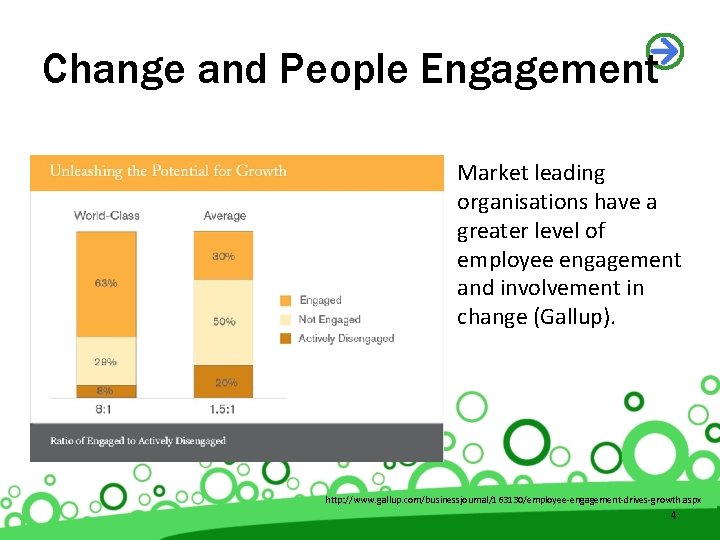
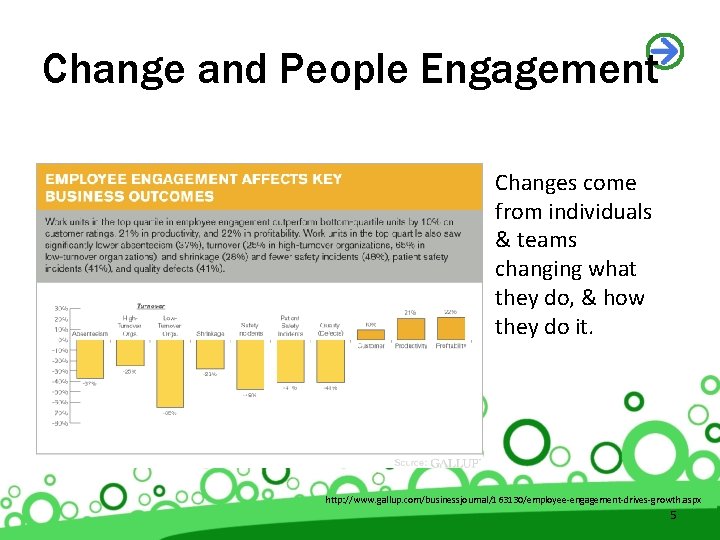
Change and People Engagement Market leading organisations have a greater level of employee engagement and involvement in change (Gallup). http: //www. gallup. com/businessjournal/163130/employee-engagement-drives-growth. aspx 4
Change and People Engagement Changes come from individuals & teams changing what they do, & how they do it. http: //www. gallup. com/businessjournal/163130/employee-engagement-drives-growth. aspx 5
ONE OF THE MOST COMMON WAYS TO MEASURE ATTITUDE TO CHANGE, IS USING A CHANGE READINESS ASSESSMENT (CRA). 6
A CRA will: ü Determine the readiness of the organisation to deliver change & sustain benefits. ü Provide analysis of the areas that are supportive/resistant, & to what degree. ü Inform the targeting of actions to optimise readiness & enable the achievement of sustained benefits. ü Enable readiness to be tracked, & monitor improvements to achieve change readiness. 7
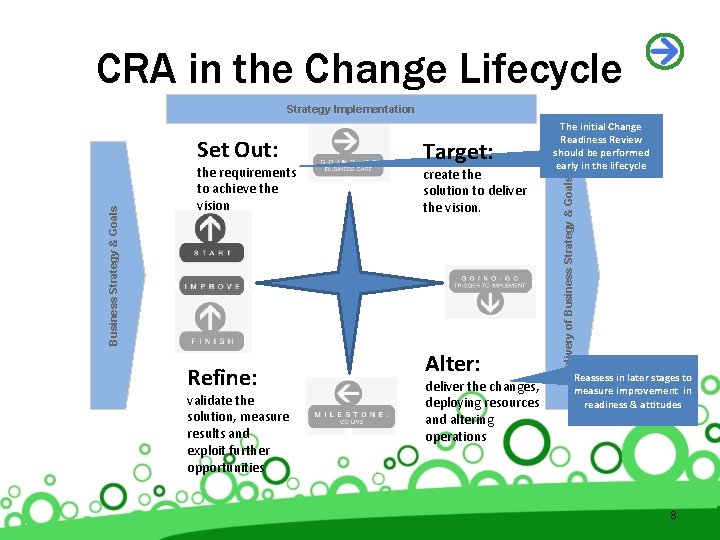
CRA in the Change Lifecycle Strategy Implementation the requirements to achieve the vision Refine: validate the solution, measure results and exploit further opportunities Target: create the solution to deliver the vision. Alter: deliver the changes, deploying resources and altering operations Delivery of Business Strategy & Goals Set Out: The initial Change Readiness Review should be performed early in the lifecycle Reassess in later stages to measure improvement in readiness & attitudes 8
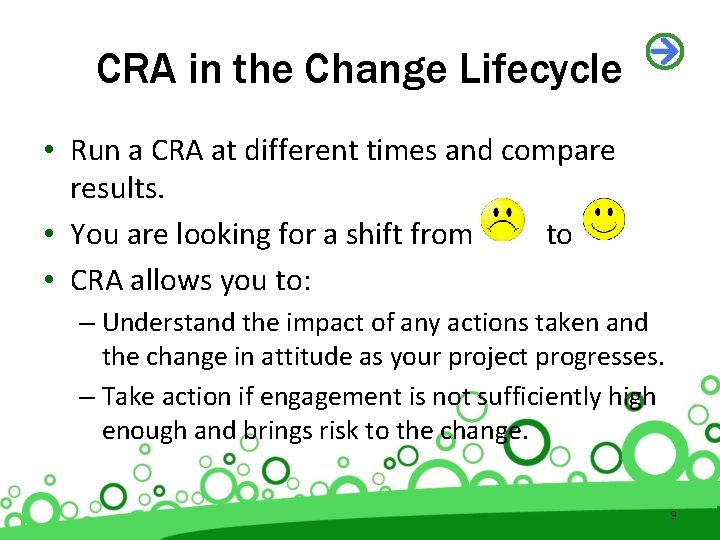
CRA in the Change Lifecycle • Run a CRA at different times and compare results. • You are looking for a shift from to • CRA allows you to: – Understand the impact of any actions taken and the change in attitude as your project progresses. – Take action if engagement is not sufficiently high enough and brings risk to the change. 9
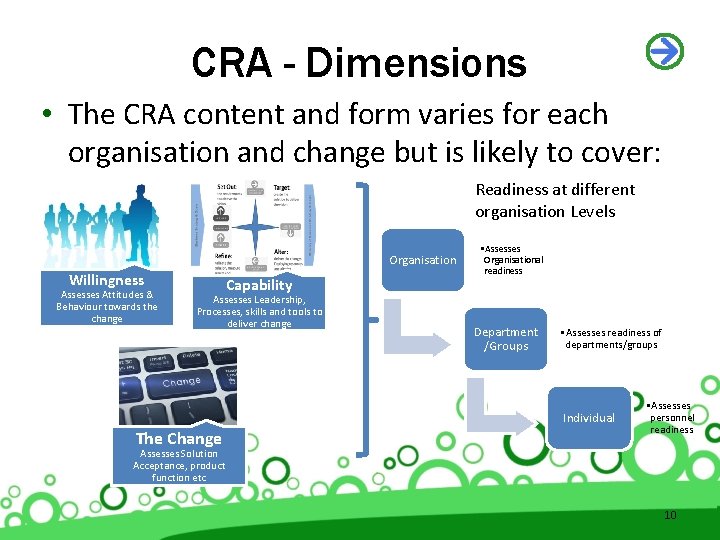
CRA - Dimensions • The CRA content and form varies for each organisation and change but is likely to cover: Readiness at different organisation Levels Organisation Willingness Assesses Attitudes & Behaviour towards the change Capability Assesses Leadership, Processes, skills and tools to deliver change • Assesses Organisational readiness Department /Groups • Assesses readiness of departments/groups Individual The Change • Assesses personnel readiness Assesses Solution Acceptance, product function etc 10
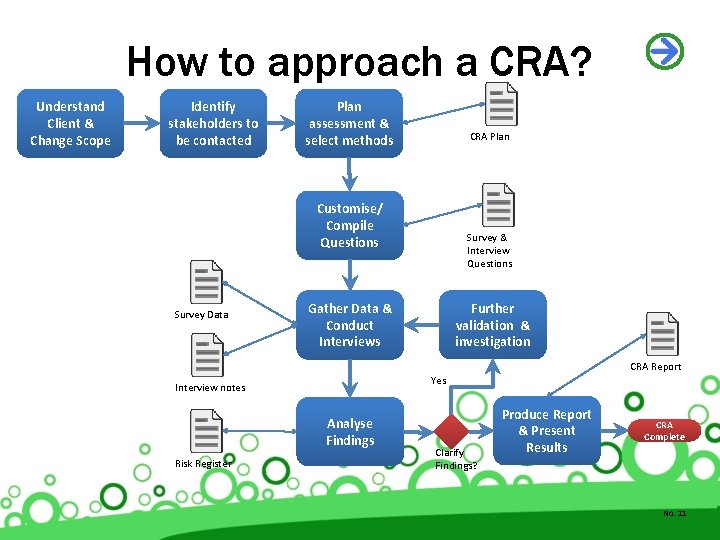
How to approach a CRA? Understand Client & Change Scope Identify stakeholders to be contacted Plan assessment & select methods CRA Plan Customise/ Compile Questions Survey Data Further validation & investigation Gather Data & Conduct Interviews CRA Report Yes Interview notes Analyse Findings Risk Register Survey & Interview Questions Clarify Findings? Produce Report & Present Results CRA Complete No. 11
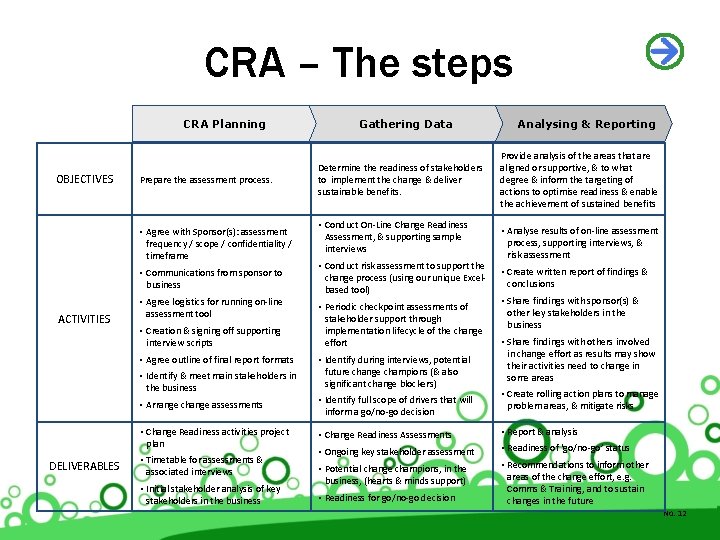
CRA – The steps CRA Planning OBJECTIVES Prepare the assessment process. • Agree with Sponsor(s): assessment frequency / scope / confidentiality / timeframe • Communications from sponsor to business ACTIVITIES • Agree logistics for running on-line assessment tool • Creation & signing off supporting interview scripts • Agree outline of final report formats • Identify & meet main stakeholders in the business DELIVERABLES Gathering Data Determine the readiness of stakeholders to implement the change & deliver sustainable benefits. • Conduct On-Line Change Readiness Assessment, & supporting sample interviews • Conduct risk assessment to support the change process (using our unique Excelbased tool) • Periodic checkpoint assessments of stakeholder support through implementation lifecycle of the change effort • Identify during interviews, potential future change champions (& also significant change blockers) Analysing & Reporting Provide analysis of the areas that are aligned or supportive, & to what degree & inform the targeting of actions to optimise readiness & enable the achievement of sustained benefits • Analyse results of on-line assessment process, supporting interviews, & risk assessment • Create written report of findings & conclusions • Share findings with sponsor(s) & other key stakeholders in the business • Share findings with others involved in change effort as results may show their activities need to change in some areas • Create rolling action plans to manage problem areas, & mitigate risks • Arrange change assessments • Identify full scope of drivers that will inform a go/no-go decision • Change Readiness activities project plan • Change Readiness Assessments • Report & analysis • Ongoing key stakeholder assessment • Readiness of ‘go/no-go’ status • Potential change champions, in the business, (hearts & minds support) • Recommendations to inform other areas of the change effort, e. g. Comms & Training, and to sustain changes in the future • Timetable for assessments & associated interviews • Initial stakeholder analysis of key stakeholders in the business • Readiness for go/no-go decision No. 12
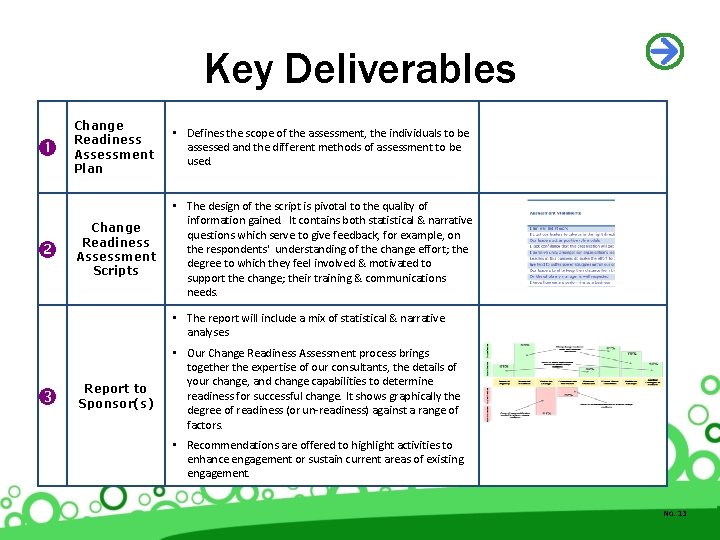
Key Deliverables Change Readiness Assessment Plan • Defines the scope of the assessment, the individuals to be assessed and the different methods of assessment to be used. Change Readiness Assessment Scripts • The design of the script is pivotal to the quality of information gained. It contains both statistical & narrative questions which serve to give feedback, for example, on the respondents' understanding of the change effort; the degree to which they feel involved & motivated to support the change; their training & communications needs. • The report will include a mix of statistical & narrative analyses Report to Sponsor(s) • Our Change Readiness Assessment process brings together the expertise of our consultants, the details of your change, and change capabilities to determine readiness for successful change. It shows graphically the degree of readiness (or un-readiness) against a range of factors. • Recommendations are offered to highlight activities to enhance engagement or sustain current areas of existing engagement. No. 13
CASE STUDIES
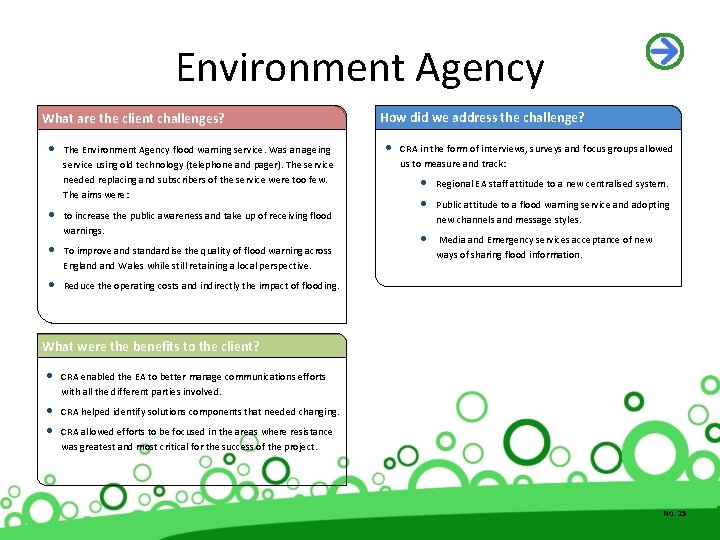
Environment Agency What are the client challenges? • The Environment Agency flood warning service. Was an ageing service using old technology (telephone and pager). The service needed replacing and subscribers of the service were too few. The aims were: • to increase the public awareness and take up of receiving flood warnings. • To improve and standardise the quality of flood warning across England Wales while still retaining a local perspective. How did we address the challenge? • CRA in the form of interviews, surveys and focus groups allowed us to measure and track: • Regional EA staff attitude to a new centralised system. • Public attitude to a flood warning service and adopting new channels and message styles. • Media and Emergency services acceptance of new ways of sharing flood information. • Reduce the operating costs and indirectly the impact of flooding. What were the benefits to the client? • CRA enabled the EA to better manage communications efforts with all the different parties involved. • CRA helped identify solutions components that needed changing. • CRA allowed efforts to be focused in the areas where resistance was greatest and most critical for the success of the project. No. 15
“Helping Businesses and People to change. ” For further information contact: Rob Topley https: //uk. linkedin. com/in/rtopley rob. topley@btinternet. com +44 7469 760897