
Change Over Time Essential Question How do species
- Slides: 19
Change Over Time Essential Question: How do species change over time?
Vocabulary Evolution Adaptation Physical Physiological Behavioral Protective Variations Mutations Genetic Diversity Natural Selection Charles Darwin Galapagos finches
Concepts Darwin’s theory
Intro: Why does evolution matter now? http: //www. pbs. org/wgbh/evolution/educators/teachst uds/svideos. html
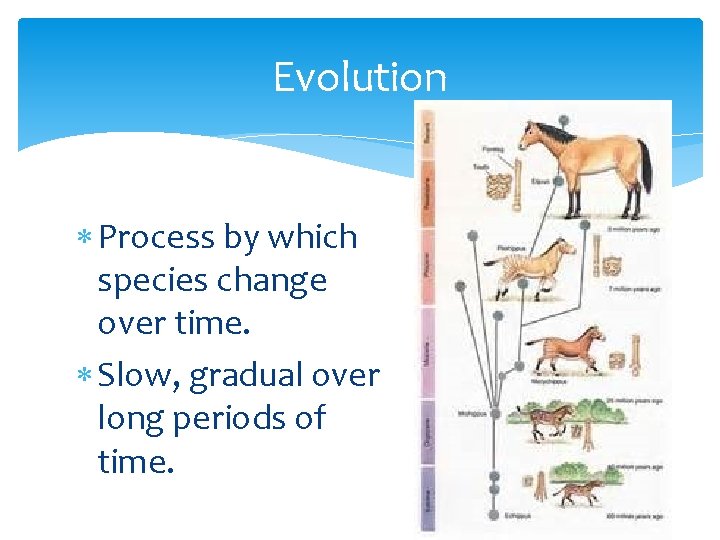
Evolution Process by which species change over time. Slow, gradual over long periods of time.
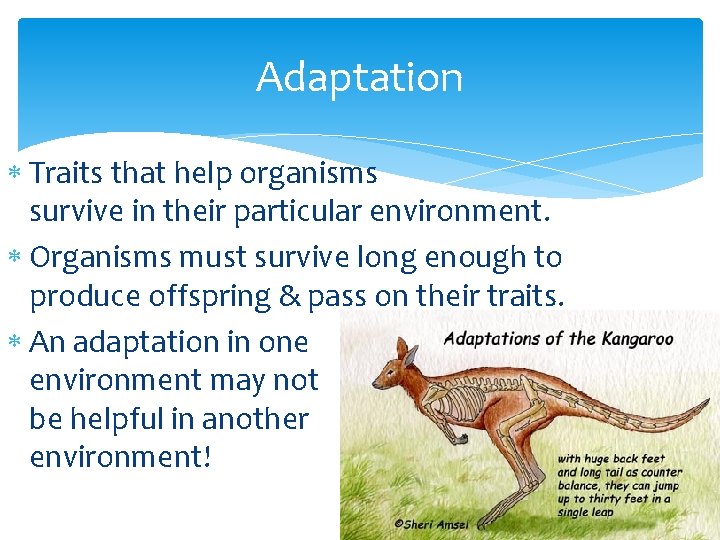
Adaptation Traits that help organisms survive in their particular environment. Organisms must survive long enough to produce offspring & pass on their traits. An adaptation in one environment may not be helpful in another environment!
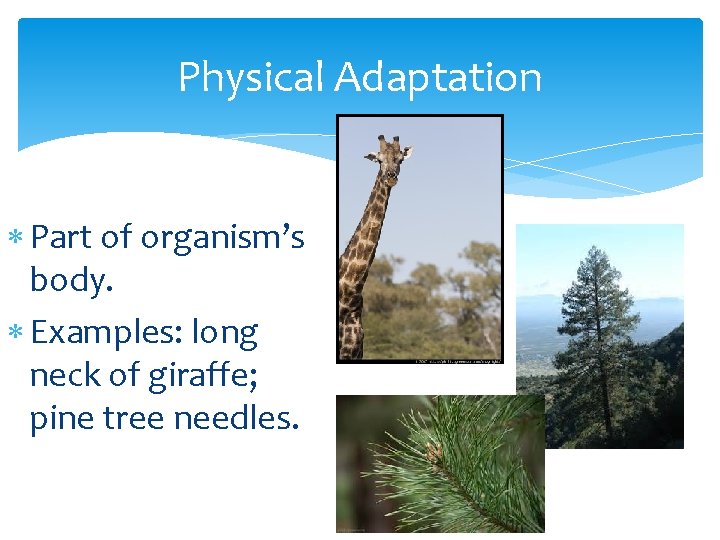
Physical Adaptation Part of organism’s body. Examples: long neck of giraffe; pine tree needles.
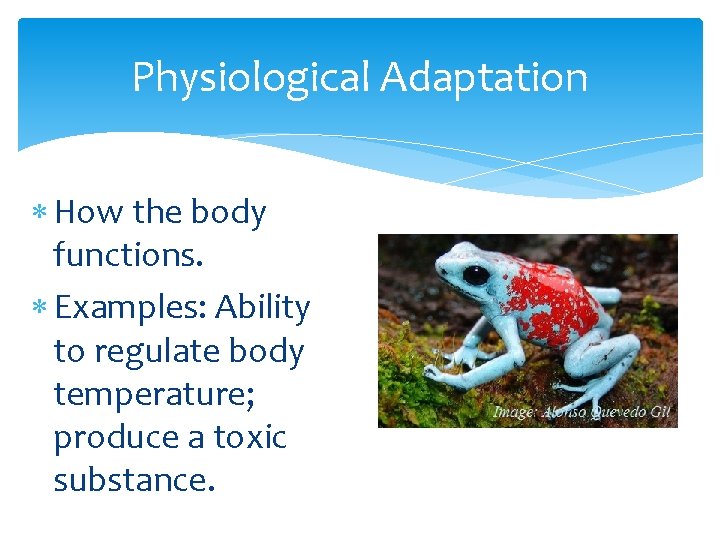
Physiological Adaptation How the body functions. Examples: Ability to regulate body temperature; produce a toxic substance.
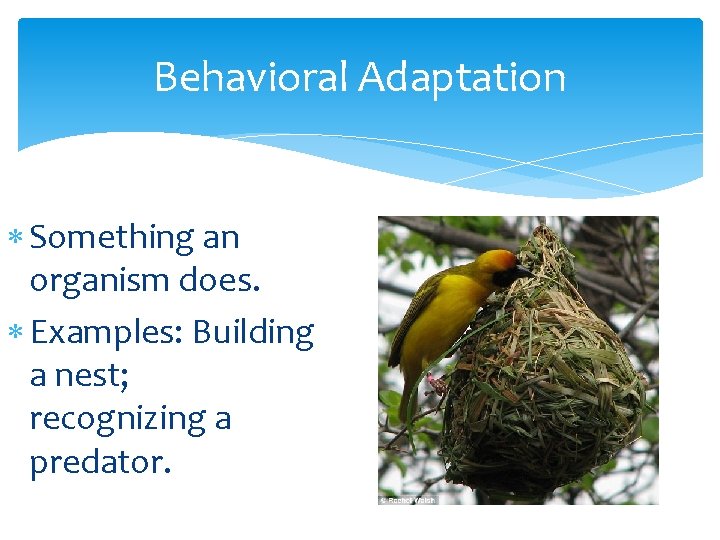
Behavioral Adaptation Something an organism does. Examples: Building a nest; recognizing a predator.
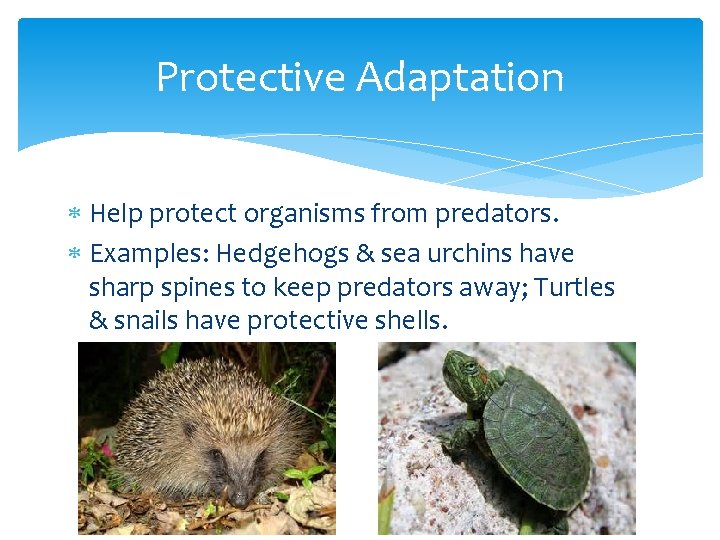
Protective Adaptation Help protect organisms from predators. Examples: Hedgehogs & sea urchins have sharp spines to keep predators away; Turtles & snails have protective shells.
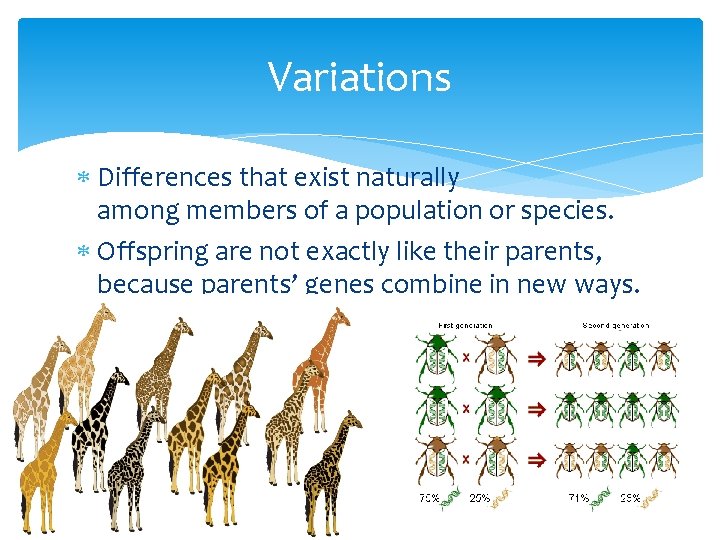
Variations Differences that exist naturally among members of a population or species. Offspring are not exactly like their parents, because parents’ genes combine in new ways.
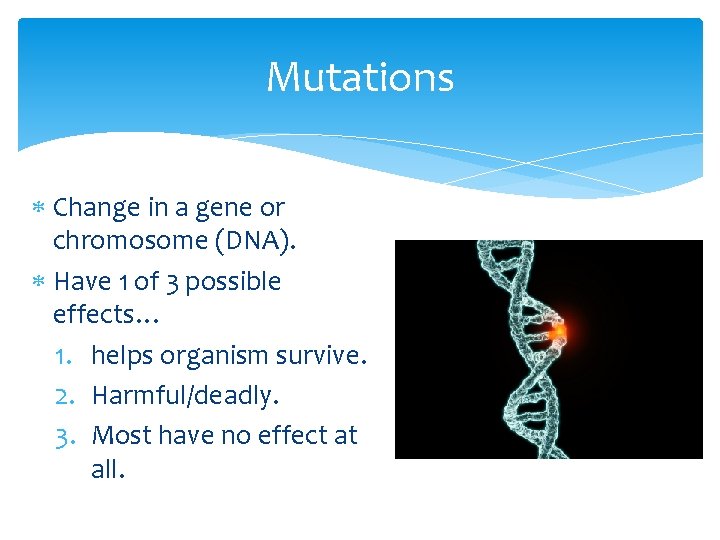
Mutations Change in a gene or chromosome (DNA). Have 1 of 3 possible effects… 1. helps organism survive. 2. Harmful/deadly. 3. Most have no effect at all.
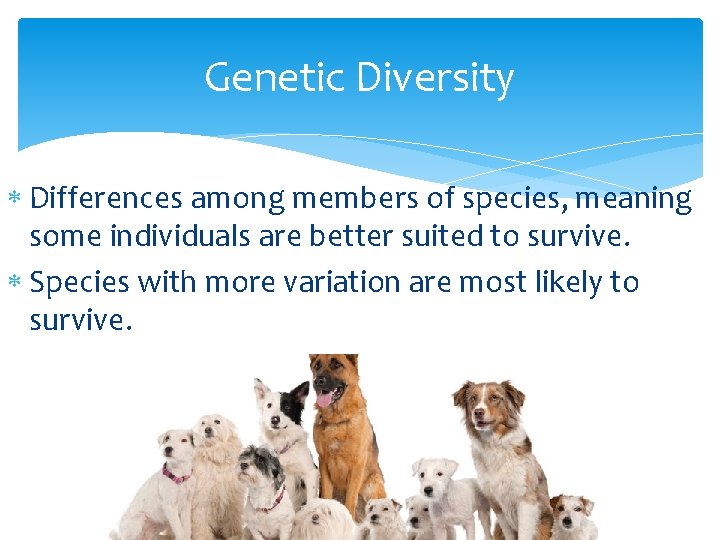
Genetic Diversity Differences among members of species, meaning some individuals are better suited to survive. Species with more variation are most likely to survive.
Jean Baptiste Lamarck
August Weissman Tailless Mice Experiment
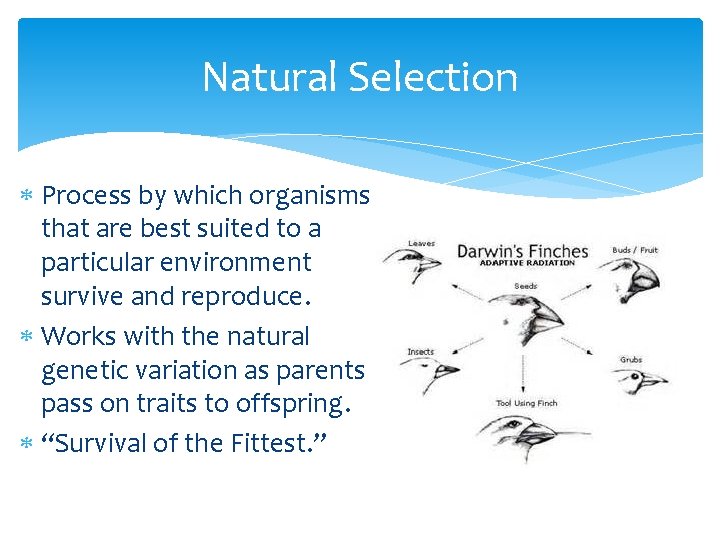
Natural Selection Process by which organisms that are best suited to a particular environment survive and reproduce. Works with the natural genetic variation as parents pass on traits to offspring. “Survival of the Fittest. ”
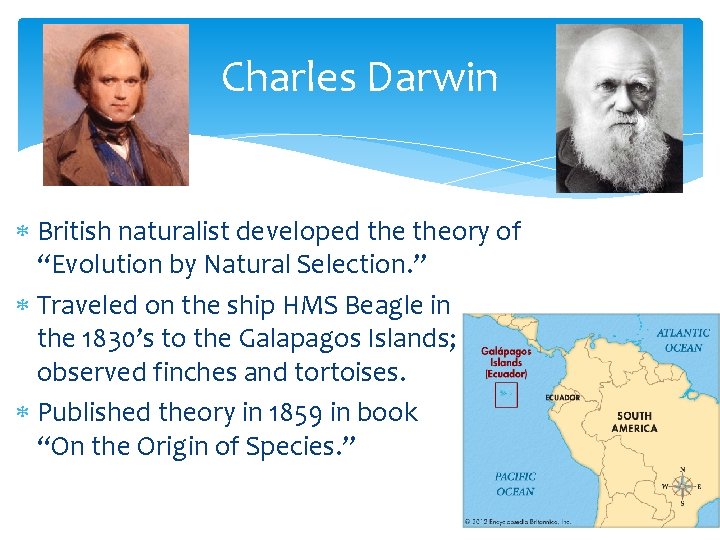
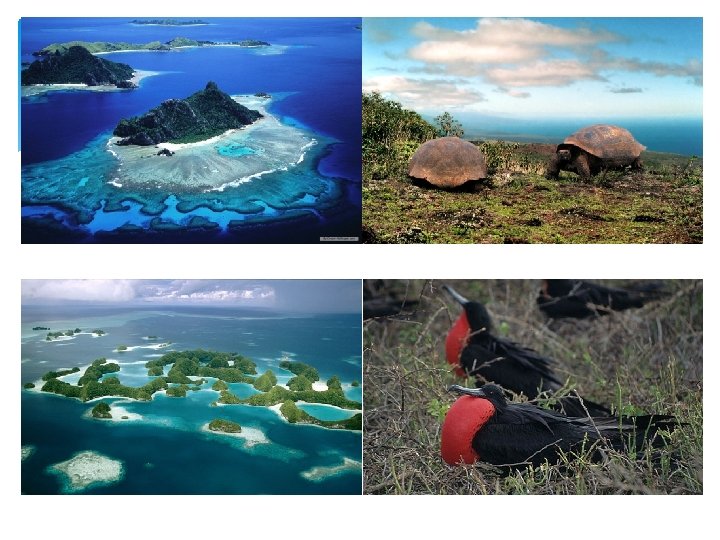
Charles Darwin British naturalist developed theory of “Evolution by Natural Selection. ” Traveled on the ship HMS Beagle in the 1830’s to the Galapagos Islands; observed finches and tortoises. Published theory in 1859 in book “On the Origin of Species. ”
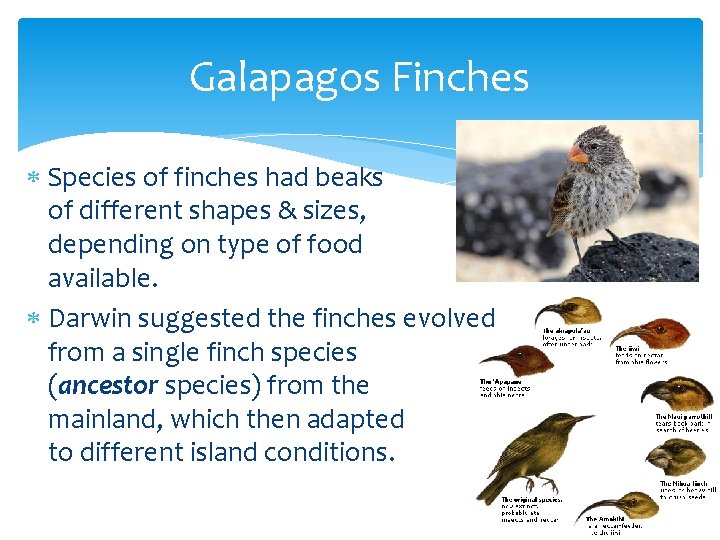
Galapagos Finches Species of finches had beaks of different shapes & sizes, depending on type of food available. Darwin suggested the finches evolved from a single finch species (ancestor species) from the mainland, which then adapted to different island conditions.