
Change Management Objectives of this session To create
Change Management • Objectives of this session • To create awareness of change management.
What does it mean to “manage change”? • At an organisational level – Using a structured change management process – Creating the necessary coalition of sponsors • At an individual level – Building change competency into managers and supervisors – Equipping employees to have the right conversations about change and how the change impacts them The goal is to manage employee and management resistance to change.

Risk assessment Change resistant Medium risk High risk Low risk Medium risk Organisational Attributes Change --able Small Incremental Large Disruptive Change characteristics
Organisational change management • Three phases of change: – Prepare – Implement – Reinforce

Types of changes • • • Business process design Technology/system upgrades Restructuring Expansion or downsizing Business model changes/new ventures New marketing campaigns Job redesign Changes that impact suppliers Changes that impact customers
Greatest contributors to success 1. Effective sponsorship 2. Buy-in from front-line managers and employees 3. Exceptional team 4. Continuous & targeted communication 5. Well planned and organized approach
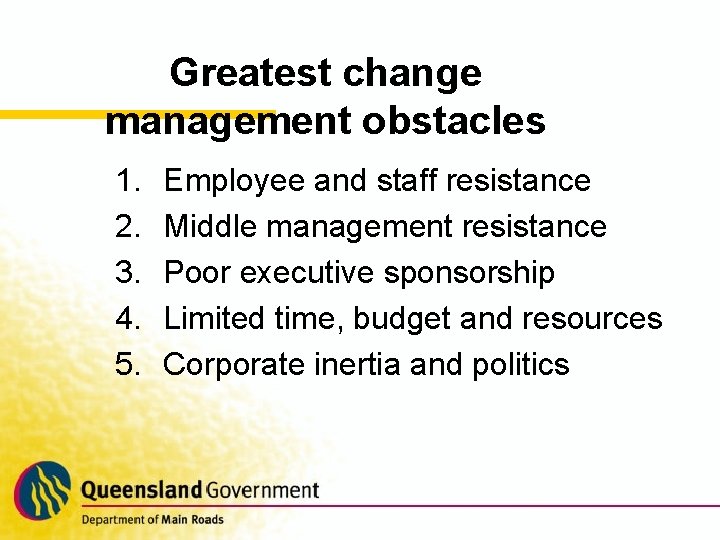
Greatest change management obstacles 1. 2. 3. 4. 5. Employee and staff resistance Middle management resistance Poor executive sponsorship Limited time, budget and resources Corporate inertia and politics
Using the ADKAR Model ADKAR was developed by Prosci Research after studying the change patterns of more than 1000 companies. ADKAR represents the five phases of change that must be achieved for the change to be a success.
ADKAR Model ADKAR is easy to remember and is a foundational tool for understanding “how, why and when” to use different change management tools
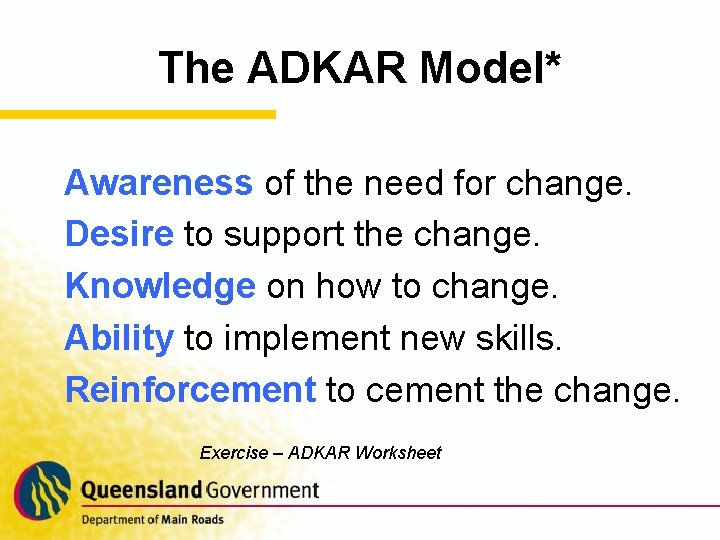
The ADKAR Model* Awareness of the need for change. Desire to support the change. Knowledge on how to change. Ability to implement new skills. Reinforcement to cement the change. Exercise – ADKAR Worksheet
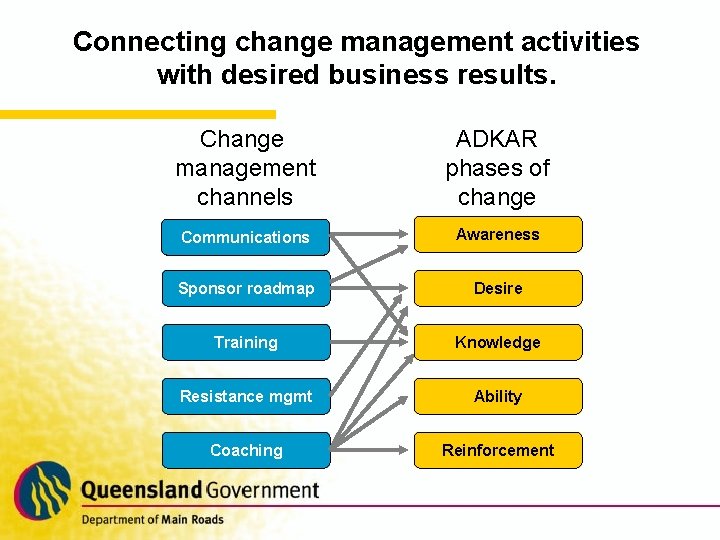
Connecting change management activities with desired business results. Change management channels ADKAR phases of change Communications Awareness Sponsor roadmap Desire Training Knowledge Resistance mgmt Ability Coaching Reinforcement
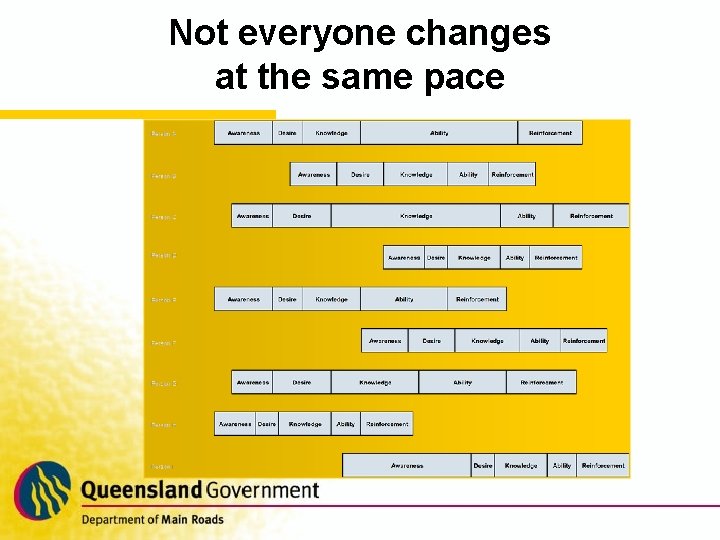
Not everyone changes at the same pace
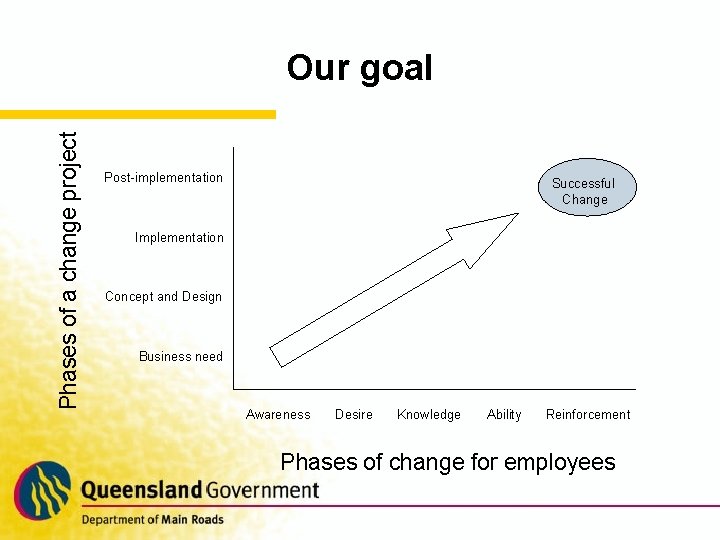
Phases of a change project Our goal Post-implementation Successful Change Implementation Concept and Design Business need Awareness Desire Knowledge Ability Reinforcement Phases of change for employees
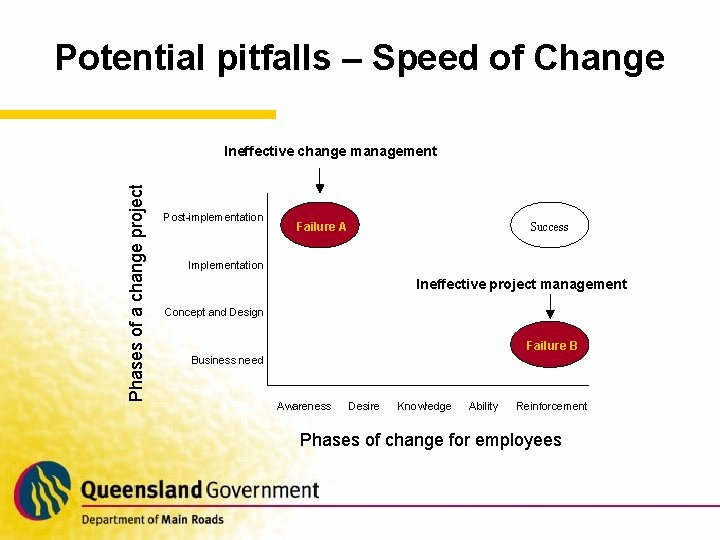
Potential pitfalls – Speed of Change Phases of a change project Ineffective change management Post-implementation Failure A Success Implementation Ineffective project management Concept and Design Failure B Business need Awareness Desire Knowledge Ability Reinforcement Phases of change for employees
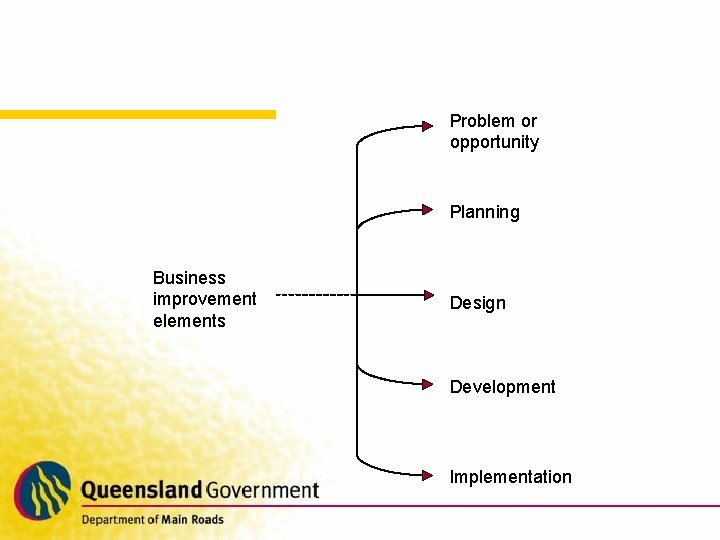
Problem or opportunity Planning Business improvement elements Design Development Implementation
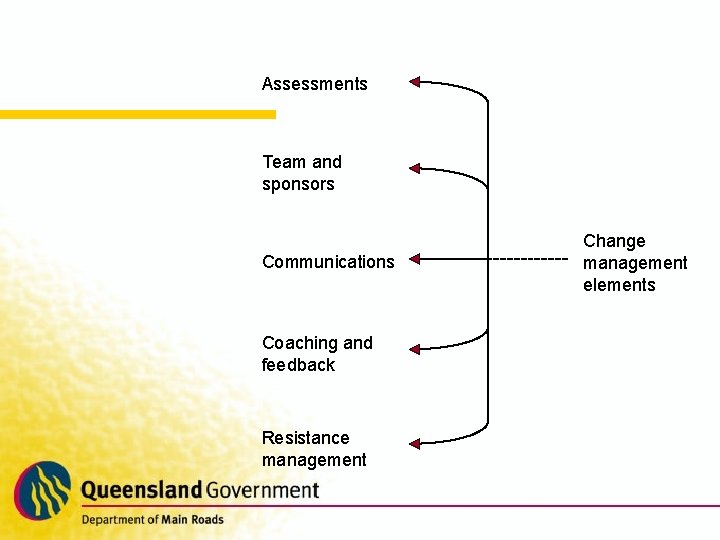
Assessments Team and sponsors Communications Coaching and feedback Resistance management Change management elements
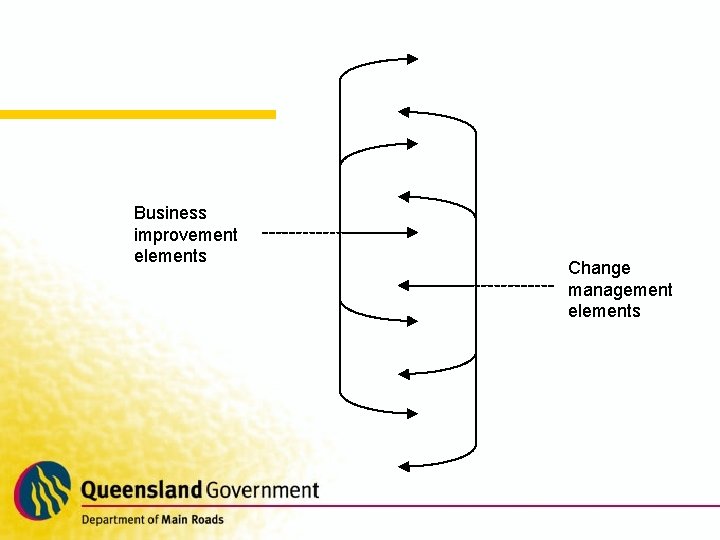
Business improvement elements Change management elements
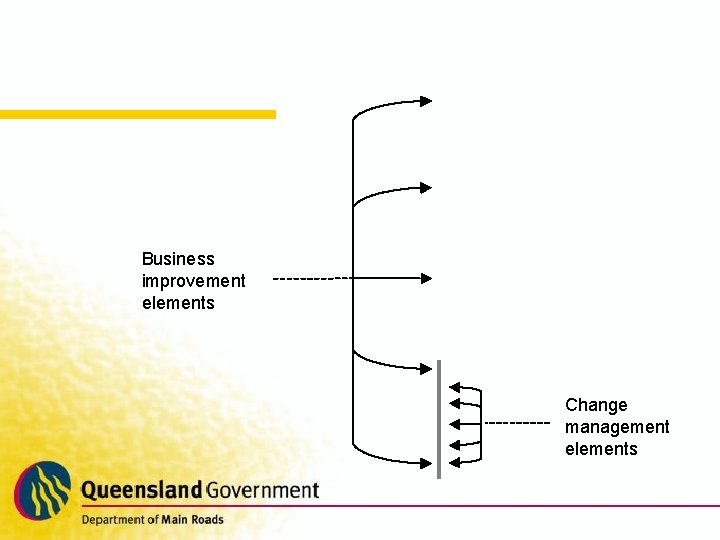
Business improvement elements Change management elements
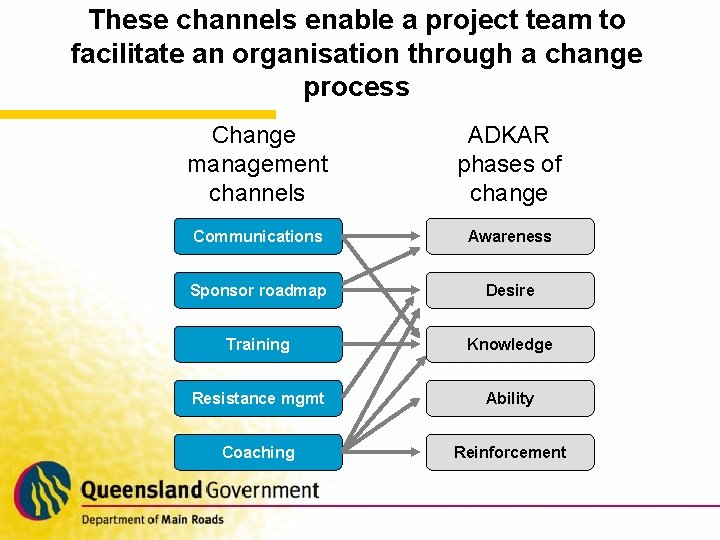
These channels enable a project team to facilitate an organisation through a change process Change management channels ADKAR phases of change Communications Awareness Sponsor roadmap Desire Training Knowledge Resistance mgmt Ability Coaching Reinforcement
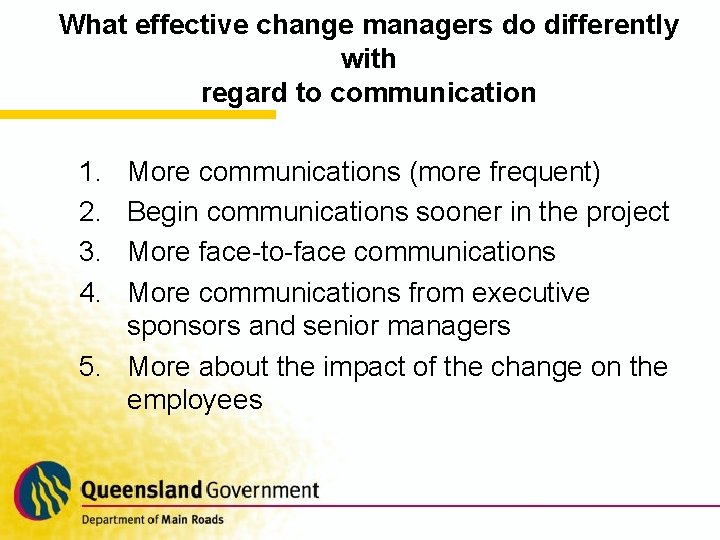
What effective change managers do differently with regard to communication 1. 2. 3. 4. More communications (more frequent) Begin communications sooner in the project More face-to-face communications More communications from executive sponsors and senior managers 5. More about the impact of the change on the employees
Communication Plan - cont Successful communications are: • honest • frequent and constant throughout the entire program • consistent • open, transparent and safe
Communication Plan – cont* • Communicate, Communicate, Communicate: • People need to hear a message between 5 and 7 times before it sticks
Message guidelines for employees • Focus on the impact of the change on the employee. • Be clear about what you know and what you do not know now. • Let employees know when more information will be available. • Be clear how employees can provide feedback about the change.
What do sponsors do? * Role #1 - Participate actively and visibly throughout the project. Role #2 - Build a coalition of sponsorship with peers and managers. Role #3 - Communicate effectively with employees.
Top-three most common executive sponsor mistakes Mistake #1 - Failed to personally engage as the sponsor for the change. Mistake #2 - Changed priorities midstream. Mistake #3 - Did not build a sponsorship coalition.
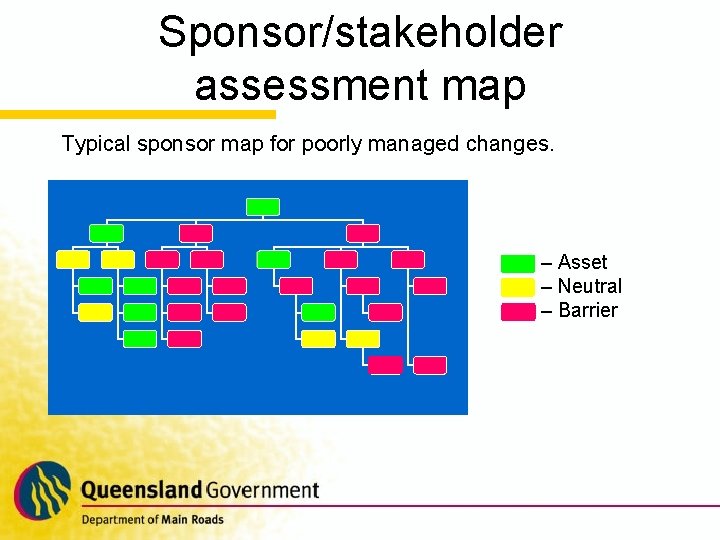
Sponsor/stakeholder assessment map Typical sponsor map for poorly managed changes. – Asset – Neutral – Barrier
Training • Training is a critical tool for building knowledge and ability in your organization during a change. Training should be focused on the specific skills and behaviours that are necessary for the change to be a success. • Training will have two focuses: – Training on how to be successful during the change – Training on how to be successful after the change
Resistance and comfort • Comfort and the status quo – Do not underestimate the power of “comfort” with how things are today – The natural reaction to change is resistance – Your goal is not to eliminate resistance “Many change agents are surprised by resistance to change, when in fact they should expect it and plan for it. ”
Address the root cause of resistance to change proactively Why resistant to change? Executives Mid-level managers Employees Disconnect with their strategy, financial objectives or compensation Loss of power or control, and overload of current responsibilities Lack of awareness of why the change is happening and “WIIFM” Comfort with the status quo and fear of the unknown
Top-ten steps for managing resistance • • Listen and understand objections Remove barriers Provide simple, clear choices and consequences • Create hope
Top-ten steps for managing resistance continued • • • Show the benefits in a real and tangible way Make a personal appeal Convert the strongest dissenters Create a sacrifice Use money or power
Coaching Plan • Your coaching plan defines how you will support managers and supervisors during the change and how they will interact with front-line employees. Your role is to fully enable these managers and supervisors to: – sponsor the change – support their employees during the change – support their employees in the new, changed environment.
Were you paying attention? . . . . • Prosci’s change process can be characterised by which three phases of change? • What does ADKAR stand for? • Who should deliver the change messages? • How many times does a message have to be heard before it’s internalised?
Were you paying attention? . . cont • What are three sponsor roles? • Three common mistakes made by executives are? • What is a key action you can take when coaching managers? • Name 5 ways to manage resistance to change?
- Slides: 34