
Change Management Intro To Business 1 Intro to
Change Management Intro To Business 1
Intro to Business • • • Defining change management Individual change management Organizational change management Who is involved in managing change Change management and project management 22
Change management is: The process, tools and techniques to manage the people side of change to achieve the required business results. 33
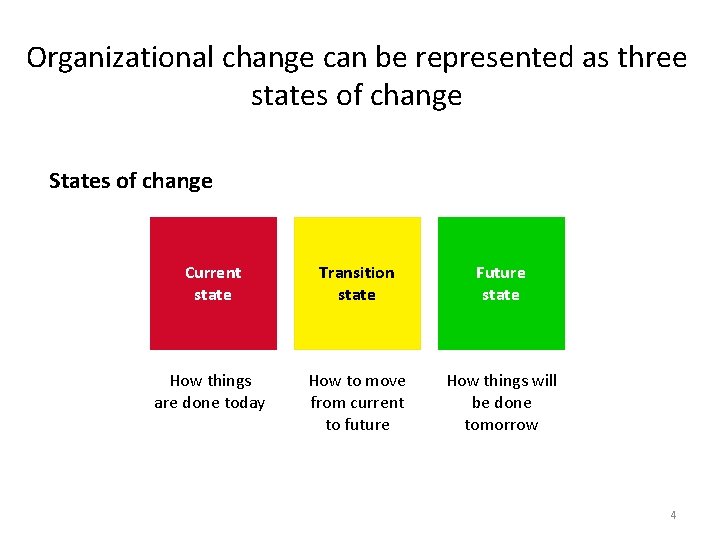
Organizational change can be represented as three states of change States of change Current state Transition state Future state How things are done today How to move from current to future How things will be done tomorrow 4
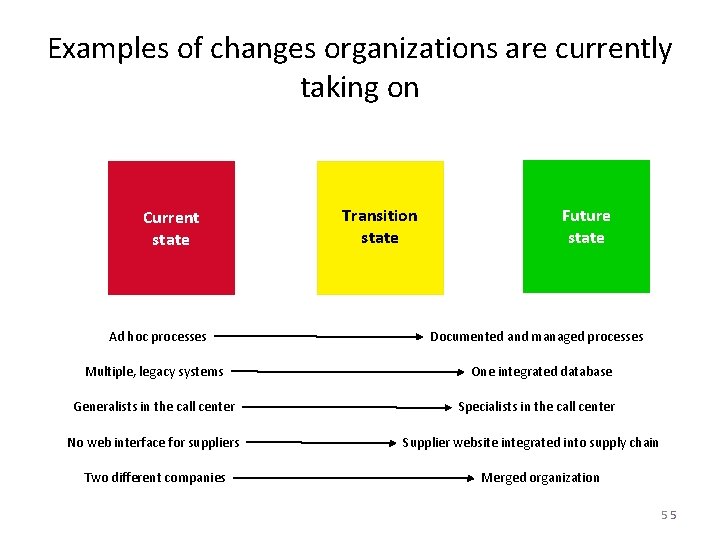
Examples of changes organizations are currently taking on Current state Ad hoc processes Multiple, legacy systems Generalists in the call center No web interface for suppliers Two different companies Transition state Future state Documented and managed processes One integrated database Specialists in the call center Supplier website integrated into supply chain Merged organization 55
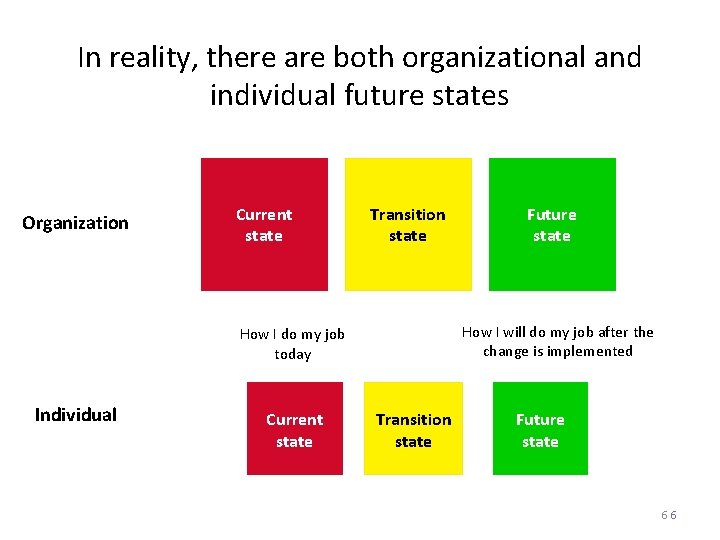
In reality, there are both organizational and individual future states Organization Current state Transition state How I will do my job after the change is implemented How I do my job today Individual Current state Future state Transition state Future state 66
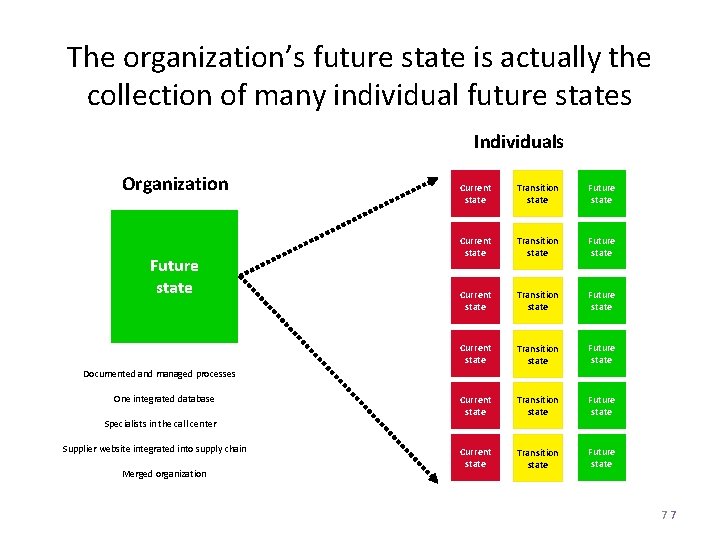
The organization’s future state is actually the collection of many individual future states Individuals Organization Future state Current state Transition state Future state Current state Transition state Future state Documented and managed processes One integrated database Specialists in the call center Supplier website integrated into supply chain Merged organization 77
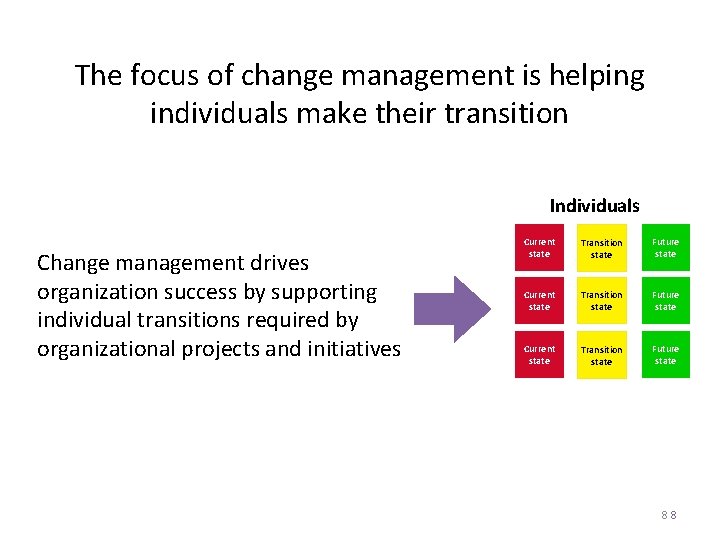
The focus of change management is helping individuals make their transition Individuals Change management drives organization success by supporting individual transitions required by organizational projects and initiatives Current state Transition state Future state 88
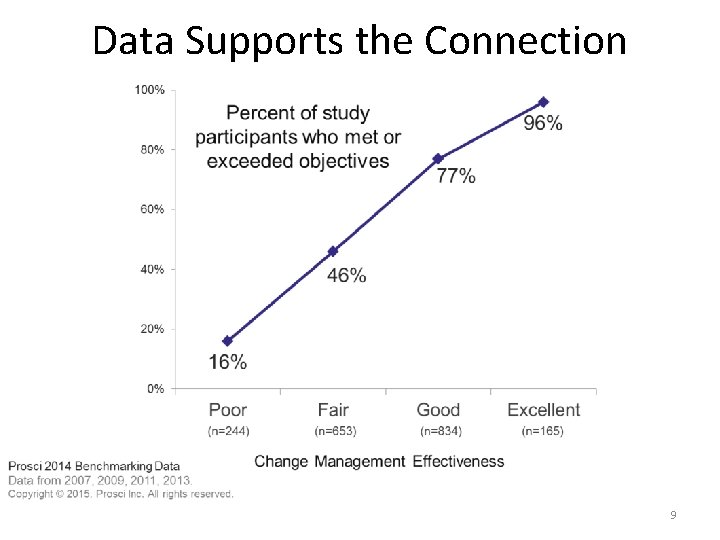
Data Supports the Connection 9
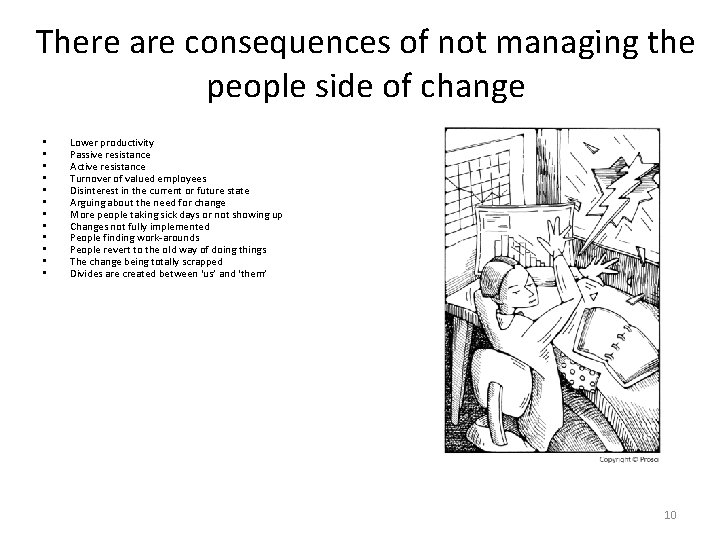
There are consequences of not managing the people side of change • • • Lower productivity Passive resistance Active resistance Turnover of valued employees Disinterest in the current or future state Arguing about the need for change More people taking sick days or not showing up Changes not fully implemented People finding work-arounds People revert to the old way of doing things The change being totally scrapped Divides are created between ‘us’ and ‘them’ 10
Primary reasons for applying change management • Increase probability of Business success • Manage employee resistance to change • Build change competency in the organization 11
Change management perspectives • Individual perspective – Understanding how one person makes a change successfully • Organizational perspective – The tools that project teams and managers have to support the ‘people side’ of change 12
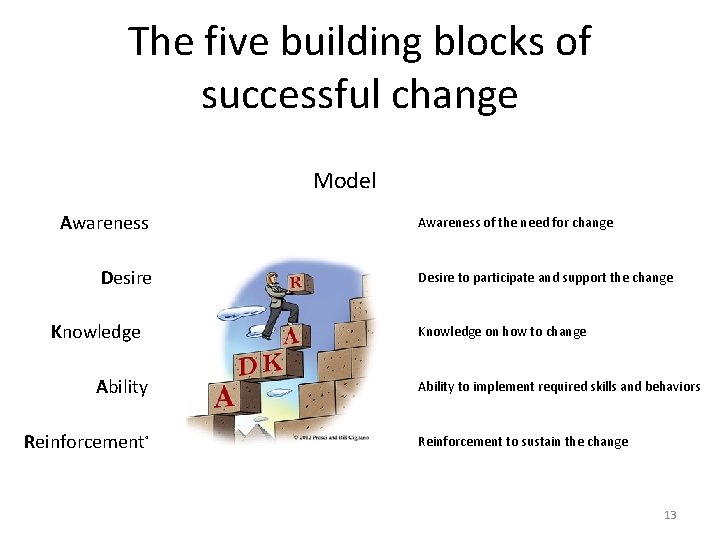
The five building blocks of successful change Model Awareness Desire Knowledge Desire to participate and support the change Knowledge on how to change Ability Reinforcement Awareness of the need for change ® Ability to implement required skills and behaviors Reinforcement to sustain the change 13
Forms of the foundation of successful organizational change • Ultimately, for a project or initiative to be successful, individuals in the organization have to do their jobs differently • provides a framework for understanding how individuals change • Managers and project teams can use to: – Guide organizational change management plans – Diagnose gaps and root causes of resistance – Develop corrective actions 14 14
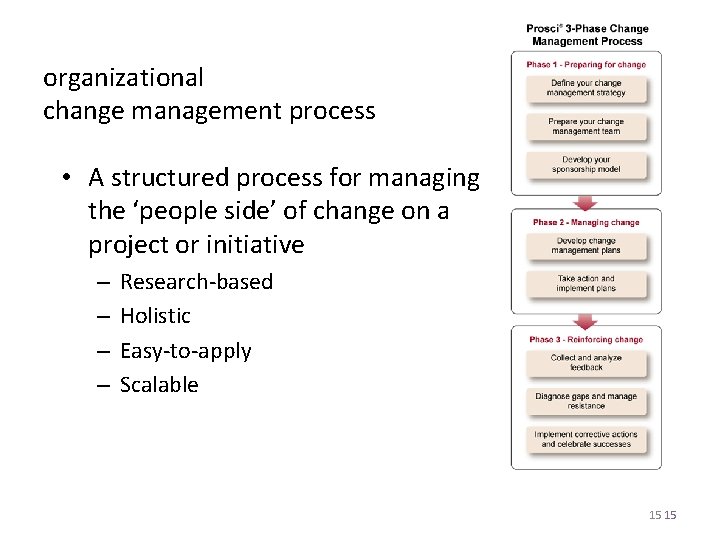
organizational change management process • A structured process for managing the ‘people side’ of change on a project or initiative – – Research-based Holistic Easy-to-apply Scalable 15 15
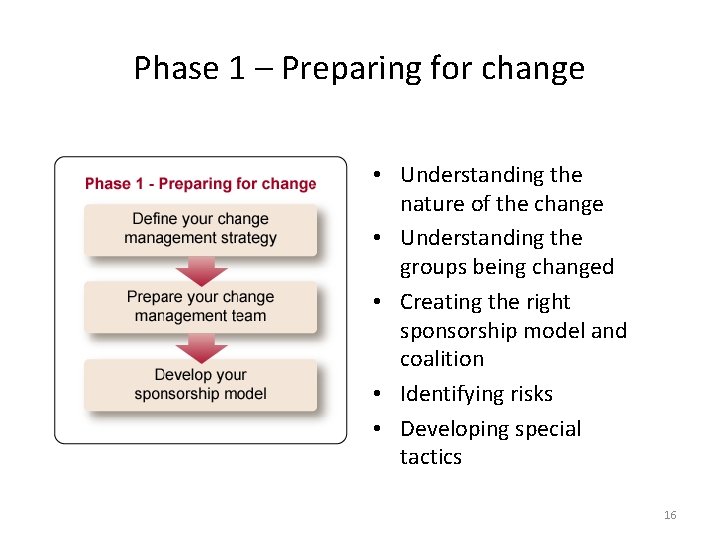
Phase 1 – Preparing for change • Understanding the nature of the change • Understanding the groups being changed • Creating the right sponsorship model and coalition • Identifying risks • Developing special tactics 16
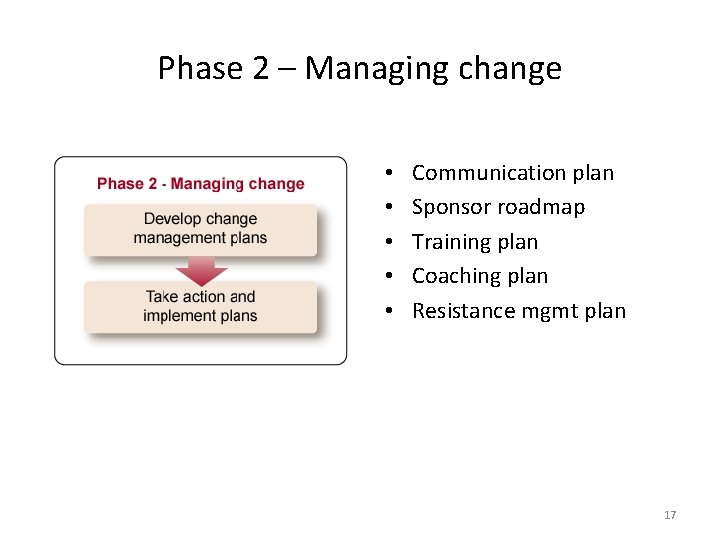
Phase 2 – Managing change • • • Communication plan Sponsor roadmap Training plan Coaching plan Resistance mgmt plan 17

Phase 3 – Reinforcing change • Compliance audit reports and employee feedback • Corrective action plans • After action review • Transition management 18
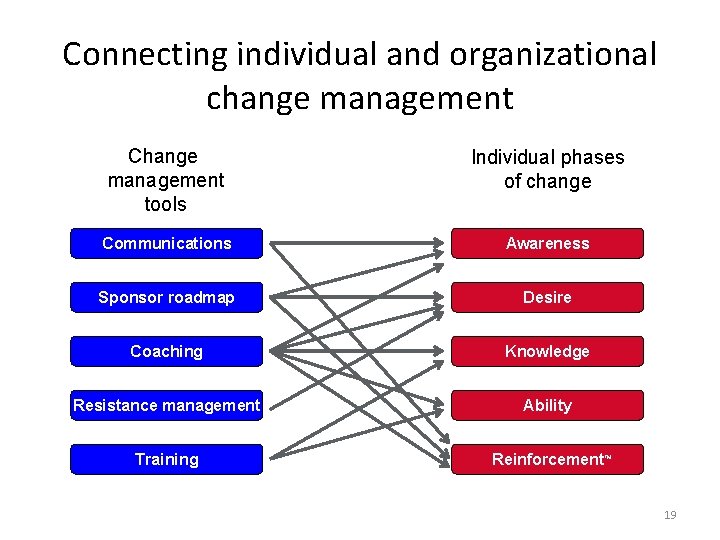
Connecting individual and organizational change management Change management tools Individual phases of change Communications Awareness Sponsor roadmap Desire Coaching Knowledge Resistance management Ability Training Reinforcement™ 19

Who is involved in managing change • The change management resource on a project plays the role of enabler – The conductor of the orchestra – The director of the play • Effective change management requires involvement and action by many in the organization 20 20
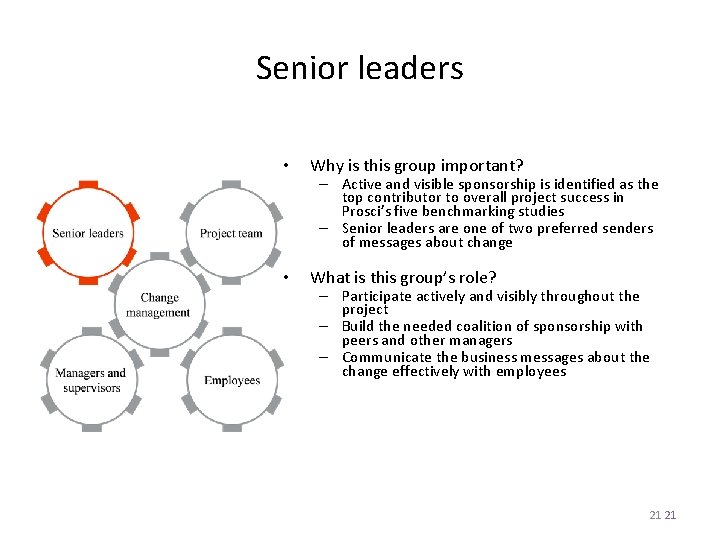
Senior leaders • Why is this group important? • What is this group’s role? – Active and visible sponsorship is identified as the top contributor to overall project success in Prosci’s five benchmarking studies – Senior leaders are one of two preferred senders of messages about change – Participate actively and visibly throughout the project – Build the needed coalition of sponsorship with peers and other managers – Communicate the business messages about the change effectively with employees 21 21
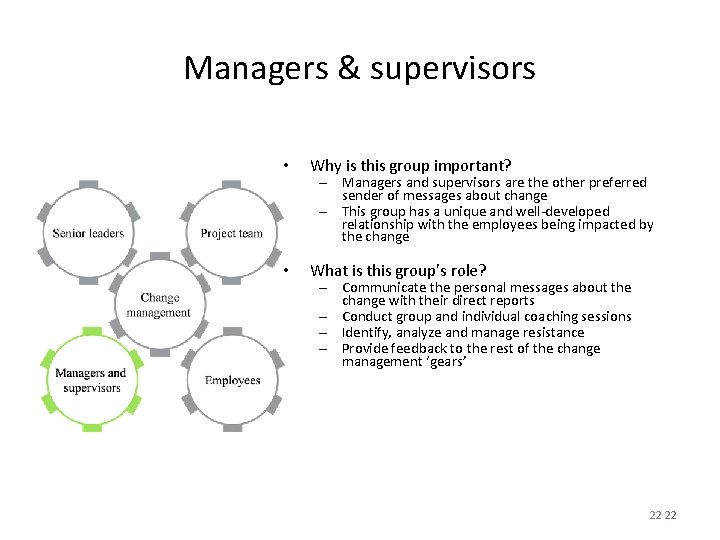
Managers & supervisors • Why is this group important? • What is this group’s role? – Managers and supervisors are the other preferred sender of messages about change – This group has a unique and well-developed relationship with the employees being impacted by the change – Communicate the personal messages about the change with their direct reports – Conduct group and individual coaching sessions – Identify, analyze and manage resistance – Provide feedback to the rest of the change management ‘gears’ 22 22
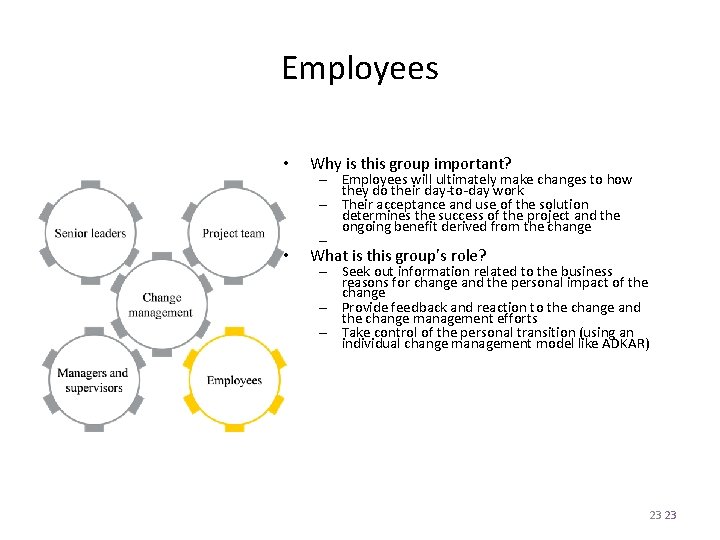
Employees • Why is this group important? • What is this group’s role? – Employees will ultimately make changes to how they do their day-to-day work – Their acceptance and use of the solution determines the success of the project and the ongoing benefit derived from the change – – Seek out information related to the business reasons for change and the personal impact of the change – Provide feedback and reaction to the change and the change management efforts – Take control of the personal transition (using an individual change management model like ADKAR) 23 23
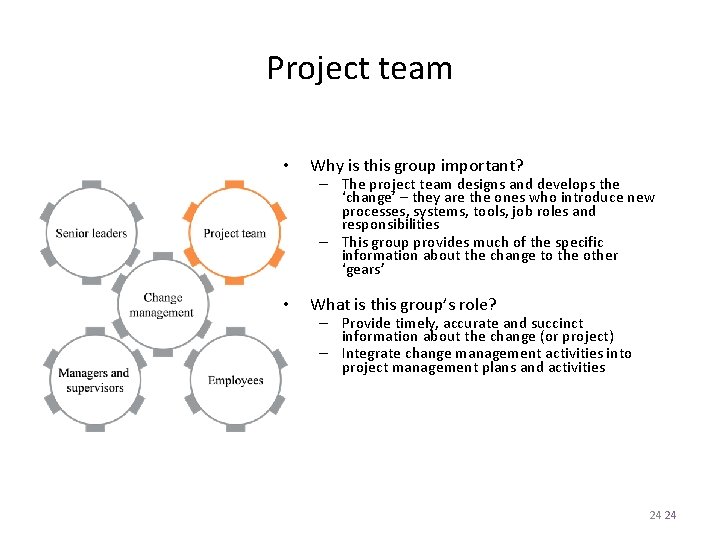
Project team • Why is this group important? • What is this group’s role? – The project team designs and develops the ‘change’ – they are the ones who introduce new processes, systems, tools, job roles and responsibilities – This group provides much of the specific information about the change to the other ‘gears’ – Provide timely, accurate and succinct information about the change (or project) – Integrate change management activities into project management plans and activities 24 24
Change management is like project management • However, it is the ‘people side’ of change • Both aim to deliver value to the business by supporting initiatives and projects 25 25
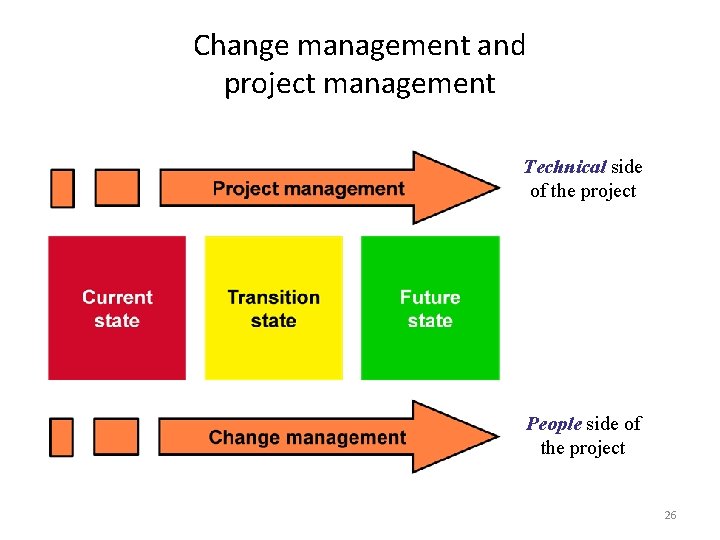
Change management and project management Technical side of the project People side of the project 26
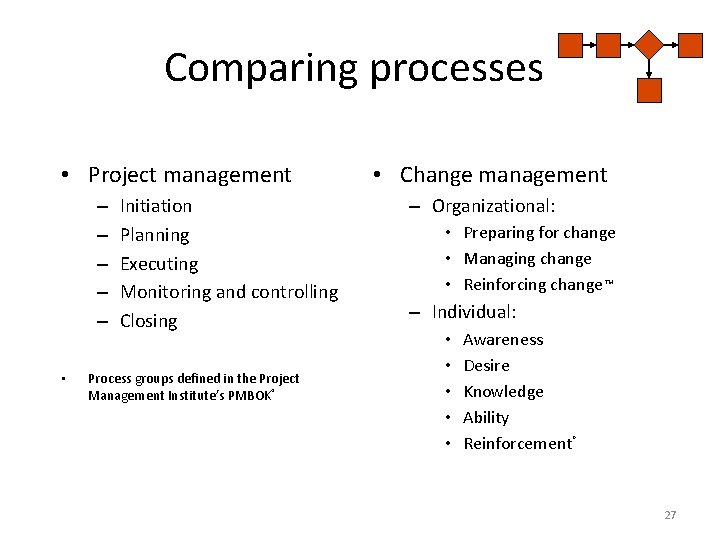
Comparing processes • Project management – – – • Initiation Planning Executing Monitoring and controlling Closing Process groups defined in the Project Management Institute’s PMBOK® • Change management – Organizational: • Preparing for change • Managing change • Reinforcing change TM – Individual: • • • Awareness Desire Knowledge Ability Reinforcement® 27
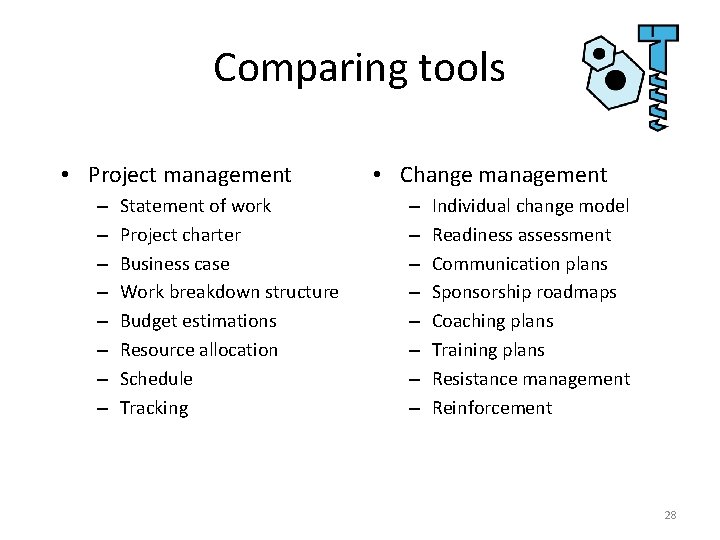
Comparing tools • Project management – – – – Statement of work Project charter Business case Work breakdown structure Budget estimations Resource allocation Schedule Tracking • Change management – – – – Individual change model Readiness assessment Communication plans Sponsorship roadmaps Coaching plans Training plans Resistance management Reinforcement 28
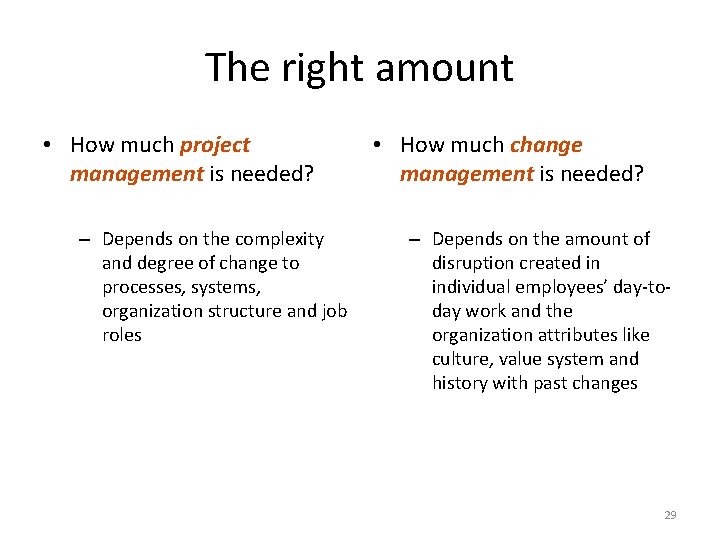
The right amount • How much project management is needed? – Depends on the complexity and degree of change to processes, systems, organization structure and job roles • How much change management is needed? – Depends on the amount of disruption created in individual employees’ day-today work and the organization attributes like culture, value system and history with past changes 29
Integrating change management and project management activities • Project management and change management activities are most effective when they are integrated • Unfortunately, in many instances change management is an add-on after the project has experienced obstacles 30 30
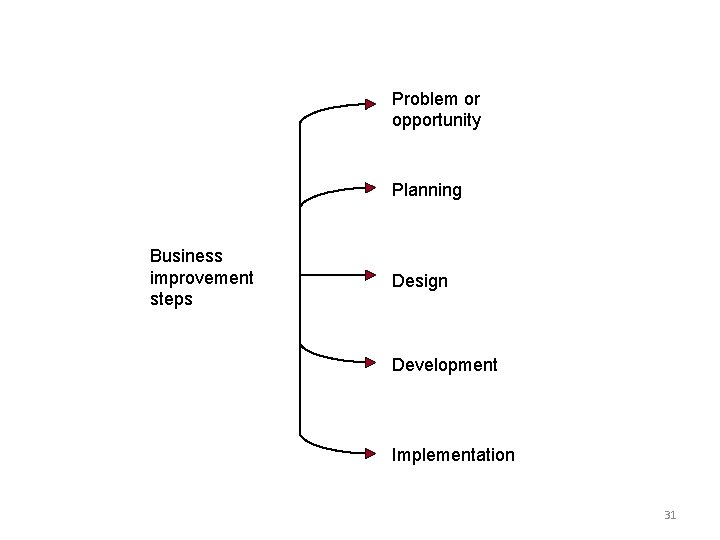
Problem or opportunity Planning Business improvement steps Design Development Implementation 31
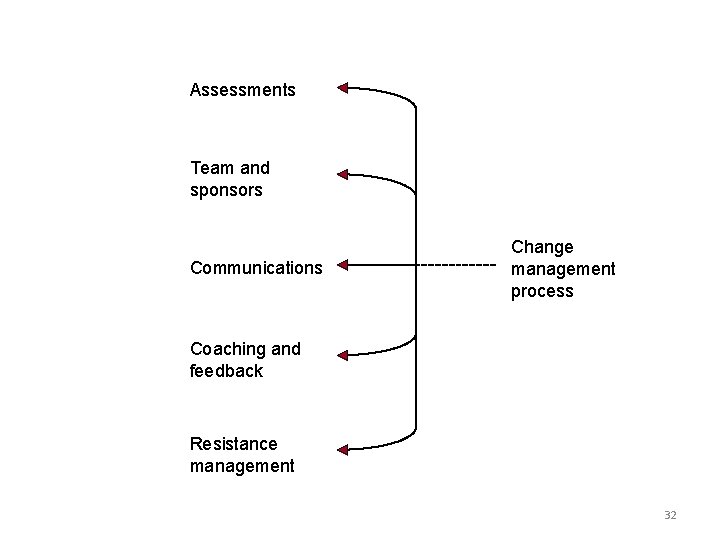
Assessments Team and sponsors Communications Change management process Coaching and feedback Resistance management 32
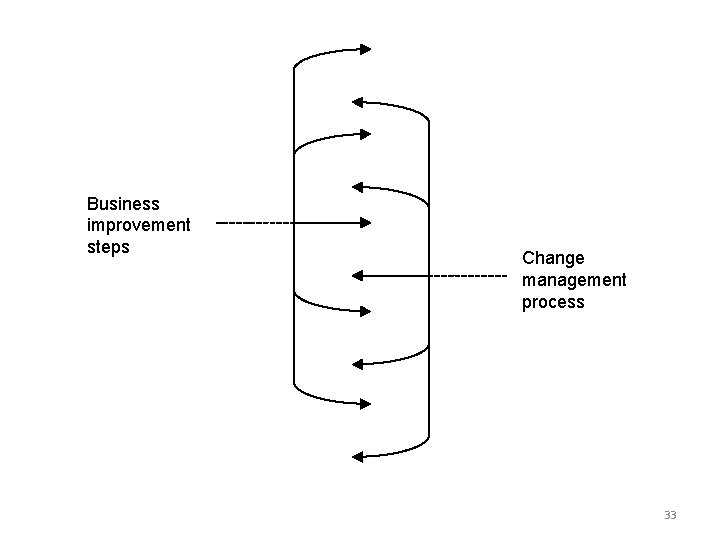
Business improvement steps Change management process 33
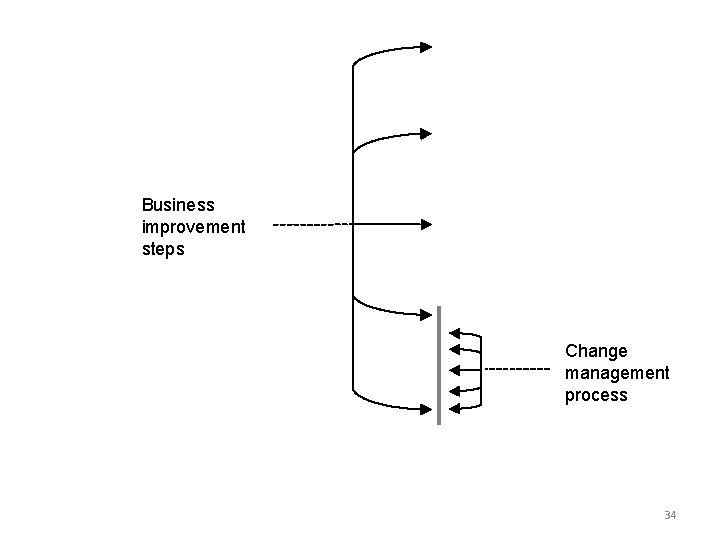
Business improvement steps Change management process 34
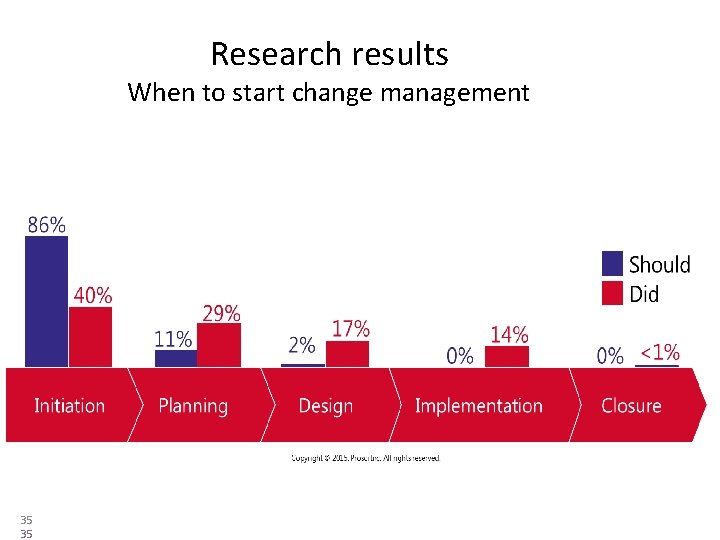
Research results When to start change management 35 35

Conclusion • Change management focuses on the ‘people side’ of organizational change • Change management involves both an individual and an organizational perspective • Change management requires action and involvement by leaders and managers throughout the organization • Change management and project management are both tools that support project benefit realization – project management is the ‘technical’ side and change management is the ‘people’ side • Change management is most effective when it is launched at the beginning of a project and integrated into the project activities 36 36
- Slides: 36