
CHANGE Direct Indirect Cyclic Relationships What is change

- Slides: 9
CHANGE Direct, Indirect, Cyclic Relationships. What is change? How do we measure it?
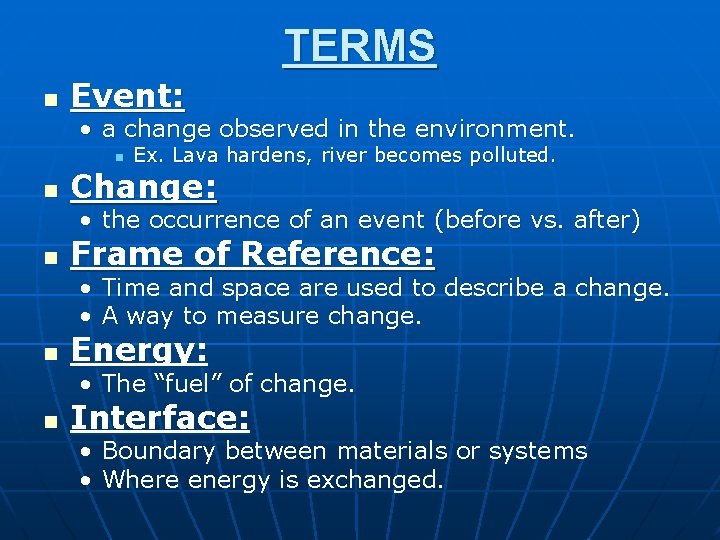
TERMS n Event: • a change observed in the environment. n n Ex. Lava hardens, river becomes polluted. Change: • the occurrence of an event (before vs. after) n Frame of Reference: • Time and space are used to describe a change. • A way to measure change. n Energy: • The “fuel” of change. n Interface: • Boundary between materials or systems • Where energy is exchanged.
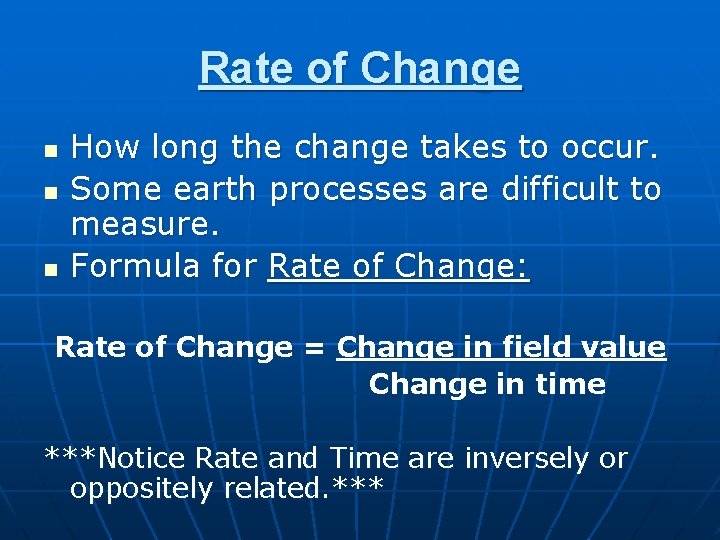
Rate of Change n n n How long the change takes to occur. Some earth processes are difficult to measure. Formula for Rate of Change: Rate of Change = Change in field value Change in time ***Notice Rate and Time are inversely or oppositely related. ***
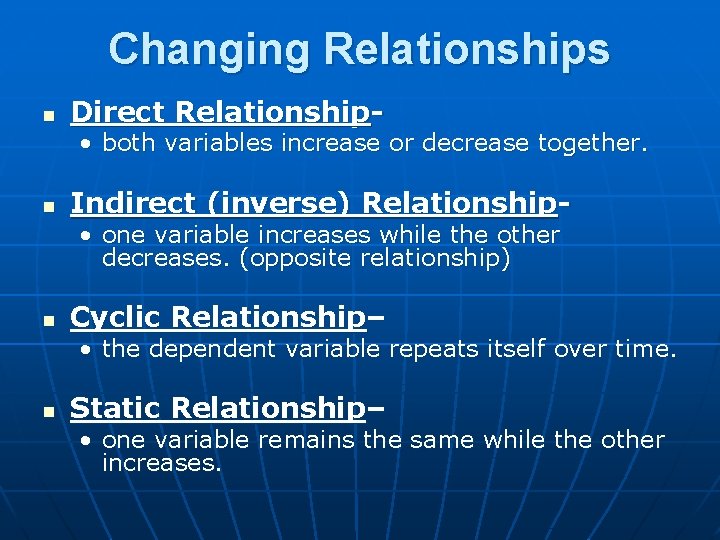
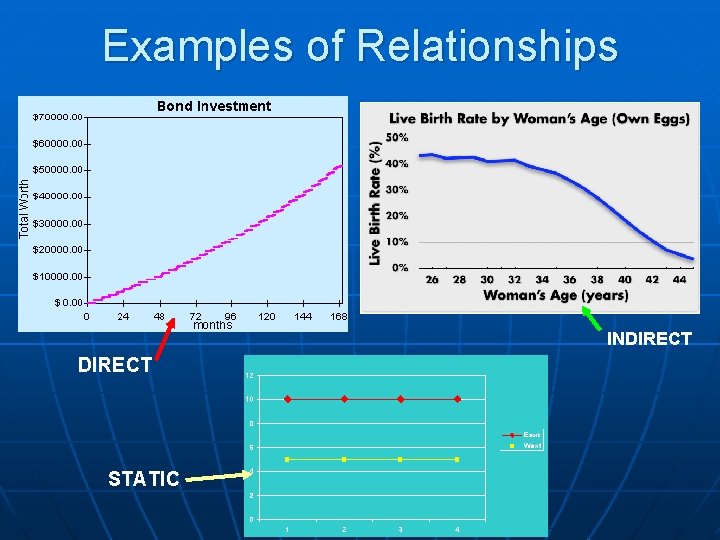
Changing Relationships n Direct Relationship- • both variables increase or decrease together. n Indirect (inverse) Relationship • one variable increases while the other decreases. (opposite relationship) n Cyclic Relationship– • the dependent variable repeats itself over time. n Static Relationship– • one variable remains the same while the other increases.
Examples of Relationships INDIRECT STATIC
Cyclic Change - Events that occur in a set pattern and repeat themselves on a regular basis. - The amount and direction of change are predictable. - Most changes in the environment are cyclic.
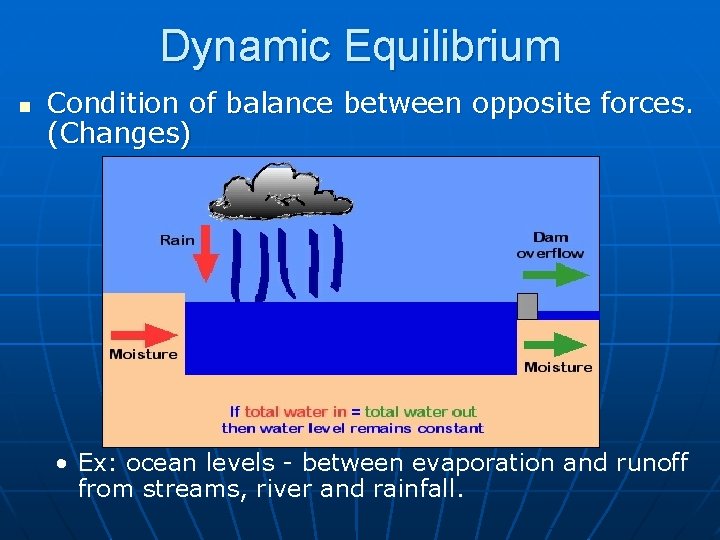
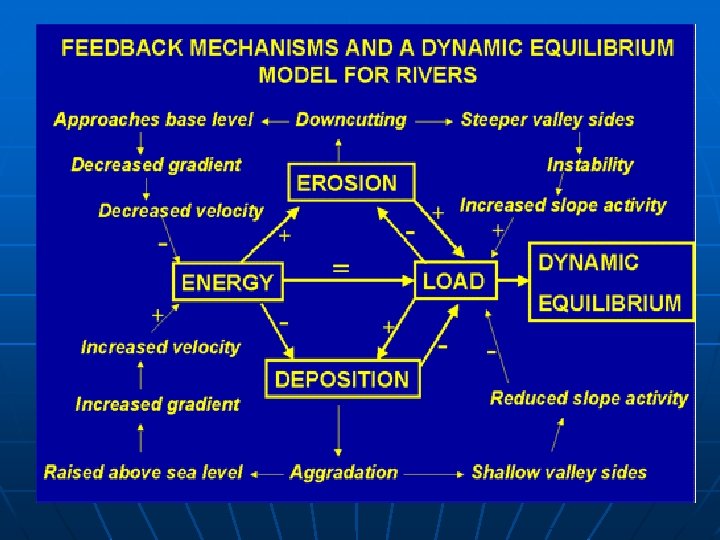
Dynamic Equilibrium n Condition of balance between opposite forces. (Changes) • Ex: ocean levels - between evaporation and runoff from streams, river and rainfall.
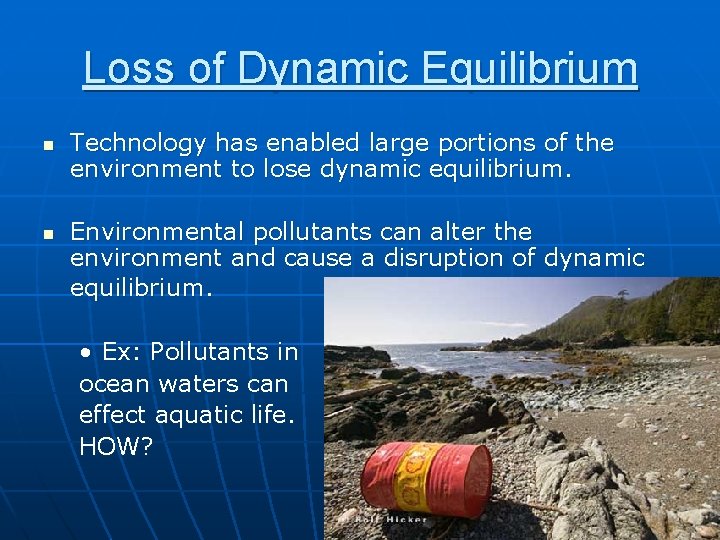
Loss of Dynamic Equilibrium n n Technology has enabled large portions of the environment to lose dynamic equilibrium. Environmental pollutants can alter the environment and cause a disruption of dynamic equilibrium. • Ex: Pollutants in ocean waters can effect aquatic life. HOW?