
CHAMP Flood Study Big T Little T St
CHAMP Flood Study Big T. , Little T. , St. V. Public Open House 4209 CR 24. 5, Longmont, CO Weld County Southwest Service Center Southwest Large Conference Room October 18, 2018, 6: 00 PM
Introduction Communities -CWCB, FEMA and 1. Help protect participating in the Local life, Communities health, and National Flood Partner Identify safety Floodto Hazard is a Insurance Program and Communicate 2. Promote Serious Risk have to keep risk New and Changed resilient information up to Risks communities date
Why is this important? • Updated Risk Information • Flood events can have a devastating effect • Mapped flood risk is not static • Community Participates in National Flood Insurance Program • Building requirements • Insurance requirements
Outline Introduction to NFIP and Flood Hazard Mapping Roles and Methods Results, Timeline and Resources Acknowledgements & Discussion
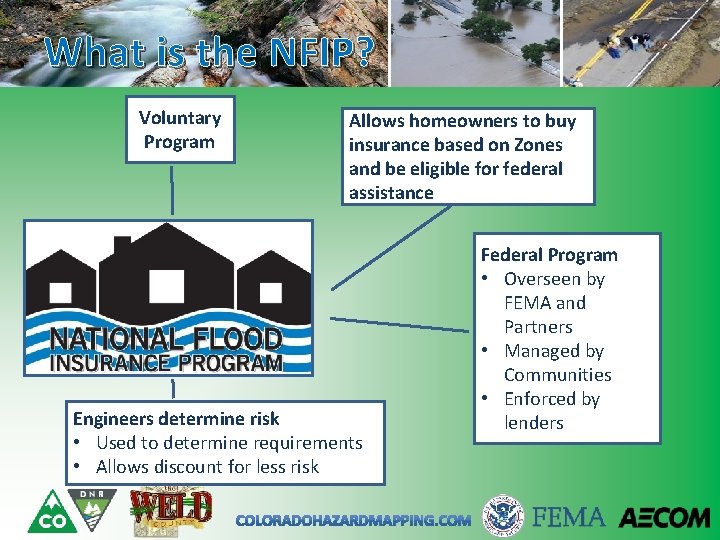
What is the NFIP? Voluntary Program Allows homeowners to buy insurance based on Zones and be eligible for federal assistance Engineers determine risk • Used to determine requirements • Allows discount for less risk Federal Program • Overseen by FEMA and Partners • Managed by Communities • Enforced by lenders
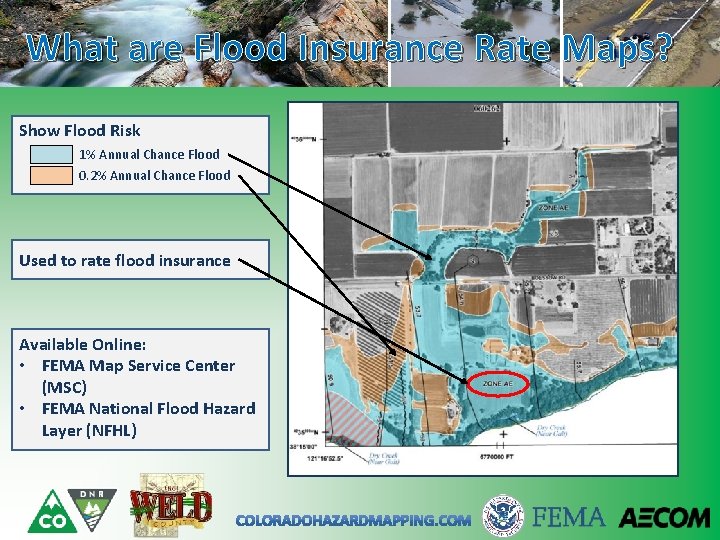
What are Flood Insurance Rate Maps? Show Flood Risk 1% Annual Chance Flood 0. 2% Annual Chance Flood Used to rate flood insurance Available Online: • FEMA Map Service Center (MSC) • FEMA National Flood Hazard Layer (NFHL)
Outline Introduction to CHAMP and Flood Hazard Mapping Roles and Methods Results, Timeline and Resources Acknowledgements & Discussion
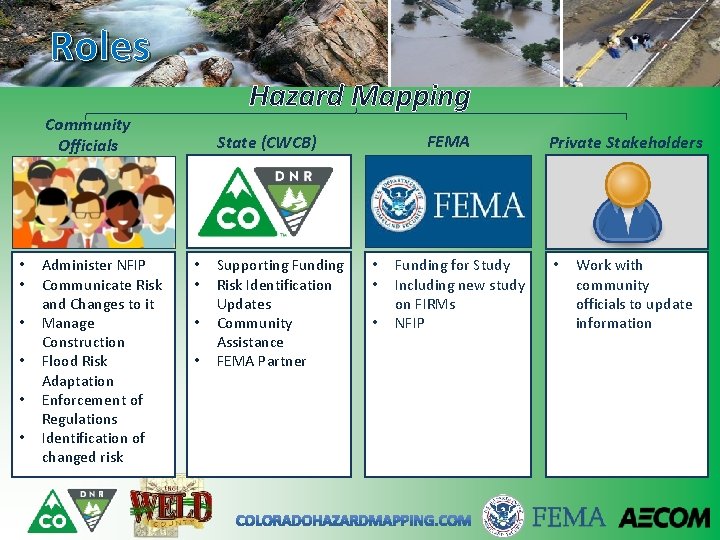
Roles Hazard Mapping Community Officials • • • Administer NFIP Communicate Risk and Changes to it Manage Construction Flood Risk Adaptation Enforcement of Regulations Identification of changed risk FEMA State (CWCB) • • Supporting Funding Risk Identification Updates Community Assistance FEMA Partner • • • Funding for Study Including new study on FIRMs NFIP Private Stakeholders • Work with community officials to update information
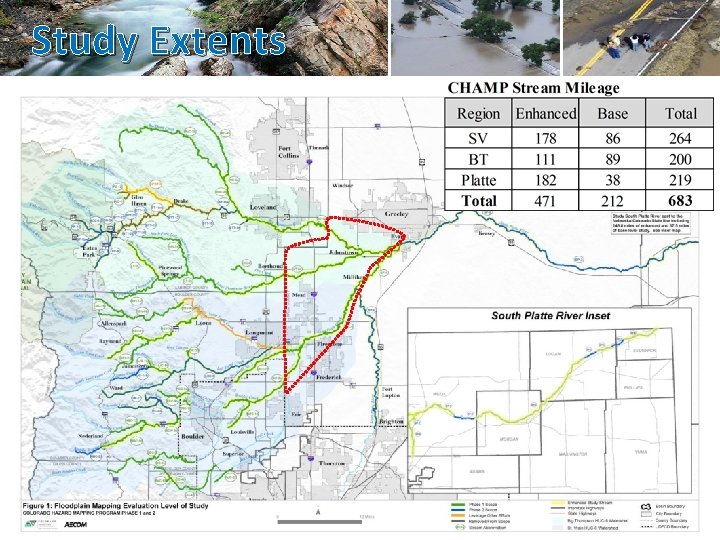
Study Extents
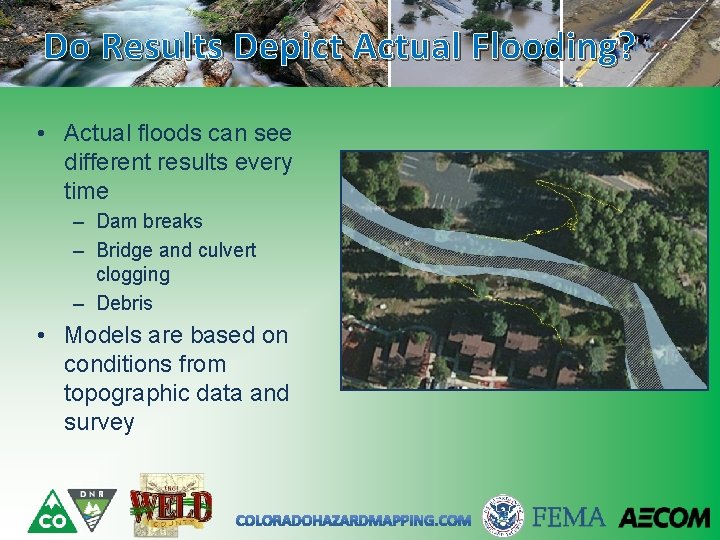
Do Results Depict Actual Flooding? • Actual floods can see different results every time – Dam breaks – Bridge and culvert clogging – Debris • Models are based on conditions from topographic data and survey
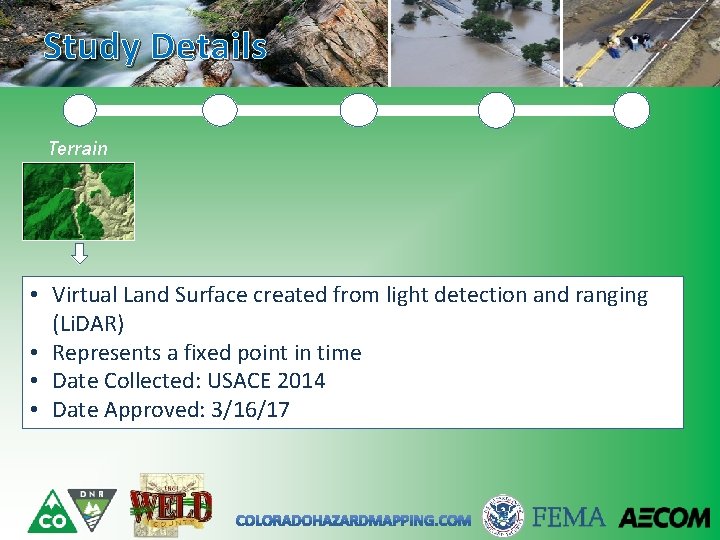
Study Details Terrain • Virtual Land Surface created from light detection and ranging (Li. DAR) • Represents a fixed point in time • Date Collected: USACE 2014 • Date Approved: 3/16/17
Study Details Terrain Survey • Enhanced models (Zone AE) • Surface info not in topo data (i. e. culverts and bridges, submerged channel) • Date Collected: Fall 2015 • Date Approved: Summer 2016 • Survey locations online

Study Details Terrain Survey Hydrology • How much water? Determined from rainfall, infiltration • Not mapping 2013 flood • Info from 2013 flood and others used along with historic rainfall, gage data, and land cover info completed under a separate effort • Some discharges increased, some decreased. • CDOT/CWCB Completed April 2016 • Included in CWCB Hydrology (Approved: Big T 8/6/16, St. V. 9/6/2017) • Flows on CWCB interactive map

Study Details Terrain • • • Survey Hydrology Hydraulics Where water goes Used inputs to calculate water surface elevations (WSEL) 1 D Models: Uses cross sections at specific interval Submitted: Big T. 7/5/17, St. V. 4/26/17 Approved: Big T. 12/13/17, St. V. 1/12/18
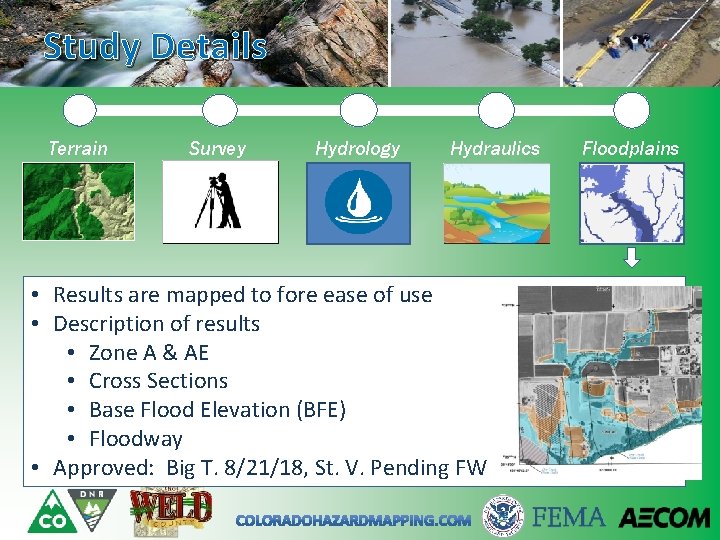
Study Details Terrain Survey Hydrology Hydraulics • Results are mapped to fore ease of use • Description of results • Zone A & AE • Cross Sections • Base Flood Elevation (BFE) • Floodway • Approved: Big T. 8/21/18, St. V. Pending FW Floodplains
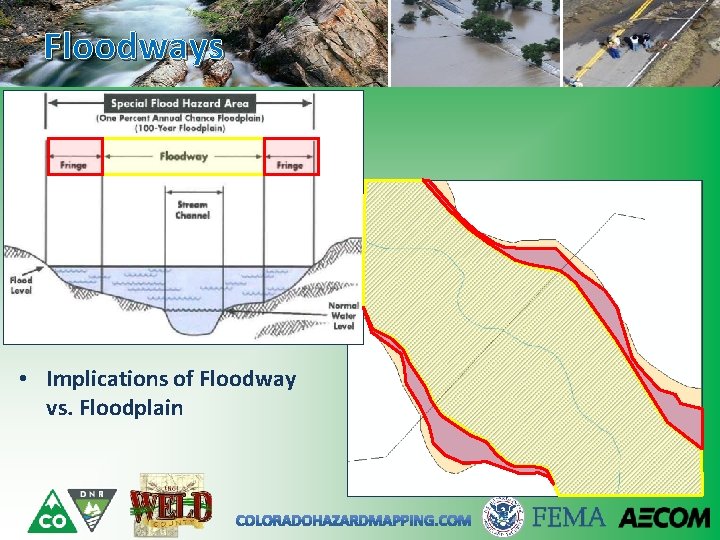
Floodways • Implications of Floodway vs. Floodplain

So… Am I at risk of flooding? • Line on a map • Best engineering data and judgment used • Scientific process allows for changes – New information – Changed information BUT • You may still be at risk of flooding
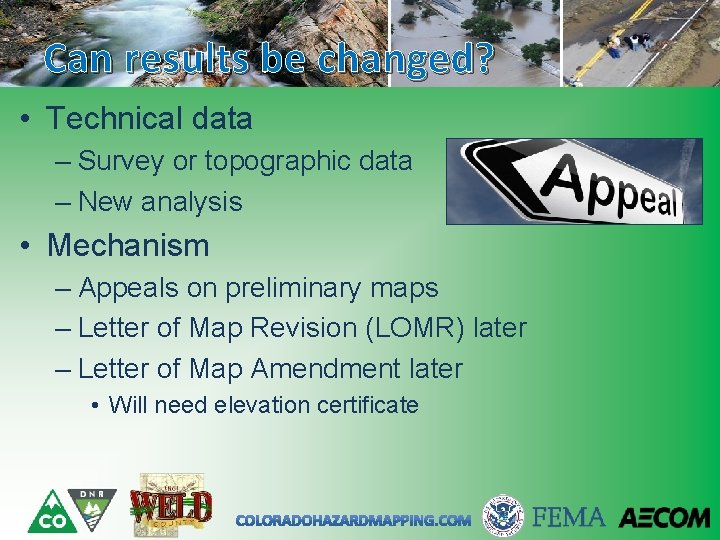
Can results be changed? • Technical data – Survey or topographic data – New analysis • Mechanism – Appeals on preliminary maps – Letter of Map Revision (LOMR) later – Letter of Map Amendment later • Will need elevation certificate
Outline Introduction to CHAMP and Flood Hazard Mapping Roles and Methods Results, Timeline and Resources Acknowledgements & Discussion
What is the Confidence of Results? • Survey accuracy – Within 5 cm @ 95% confidence level. • Topographic data accuracy – Within 0. 88’ @ 95% confidence level • Hydrology accuracy – – Varies based on input data (precipitation, etc. ) and model – 1%+ recurrence interval • Hydraulic accuracy – Product of input data • Reviews – Multiple engineers – Community leaders – FEMA contractors
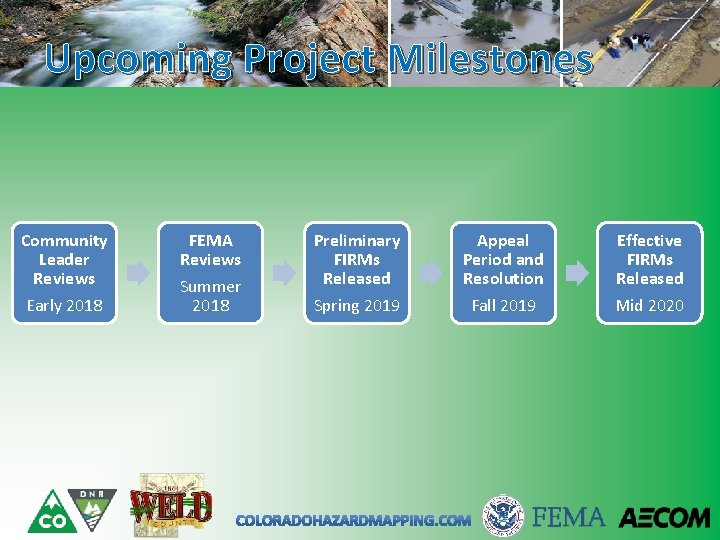
Upcoming Project Milestones Community Leader Reviews Early 2018 FEMA Reviews Summer 2018 Preliminary FIRMs Released Spring 2019 Appeal Period and Resolution Fall 2019 Effective FIRMs Released Mid 2020
Homeowner’s Insurance • Where flood risk changed – Requirements aren’t new – Risk just updated – Increased in some areas, decreased in others • FEMA requires for federally backed mortgages in Special Flood Hazard Areas (SFHAs) – Zone A, AE, AH, AO • Required for federal assistance after floods. • New Zones go into effect with effective FIRMs, not before • Grandfather information • Banks can require anywhere • Contact and main resources later
Development Implications • Changes Since Last FIRM (CSLF) – Requirements aren’t new – Risk just updated – Increased in some areas, decreased in others • Community ordinance specifies what is required. • Different requirement in a floodway and a nonfloodway. • Community may adopt as best available data – Use the most restrictive of old and new until final • Contact floodplain Administrator
Other Resources • Contacts (Shown on last slide) – – Local Floodplain Administrator State Study Leads Flood Insurance Representative FEMA Area Representative • Flood Smart – www. floodsmart. gov – (888) 379 -9531 • CWCB Flood Page - cwcb. state. co. us/watermanagement/flood/Pages/main. asp • Website (next)
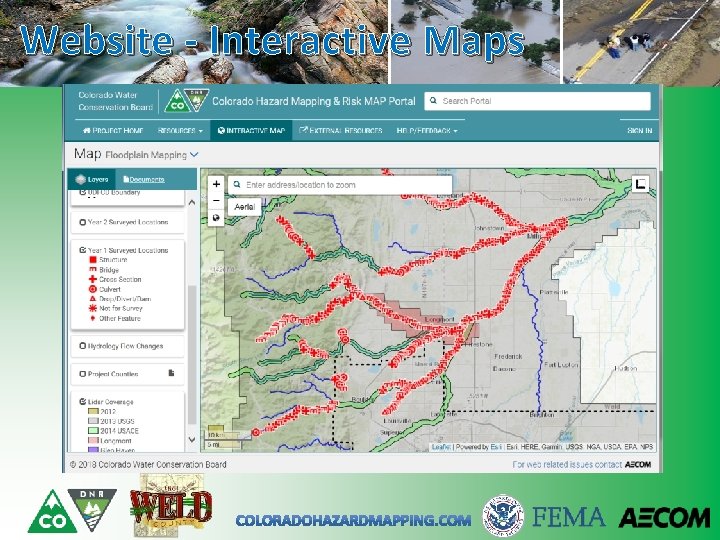
Website - Interactive Maps
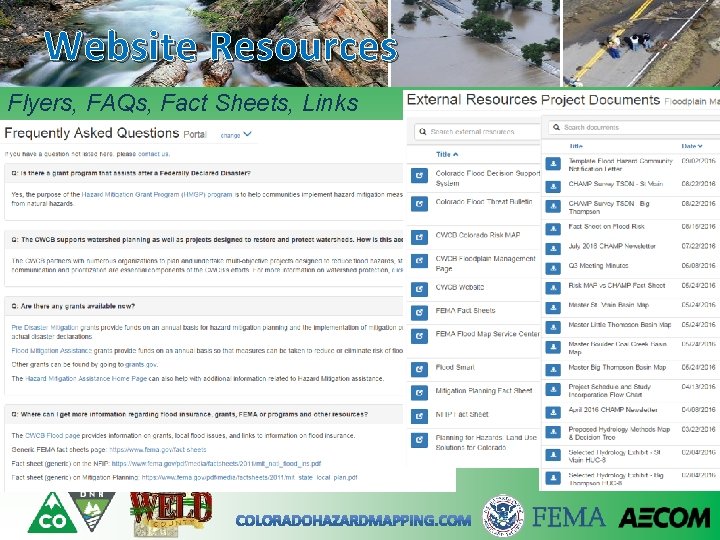
Website Resources Flyers, FAQs, Fact Sheets, Links
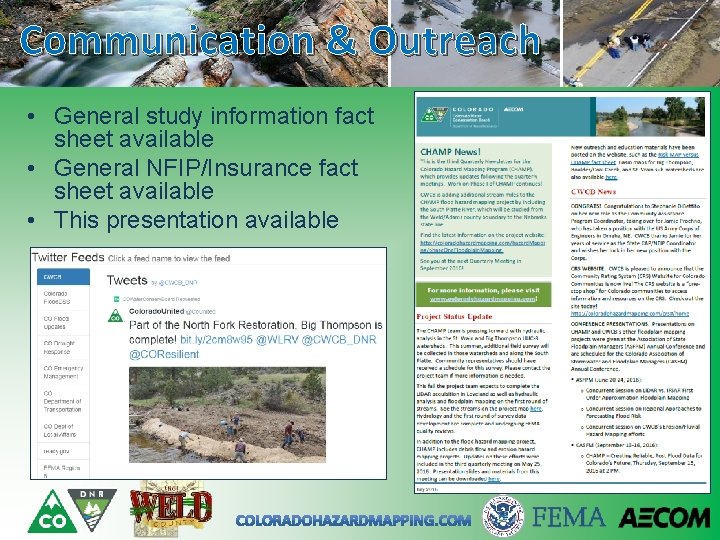
Communication & Outreach • General study information fact sheet available • General NFIP/Insurance fact sheet available • This presentation available
Conclusion • Please Review Information and ask questions • Data will be used for Flood Insurance Rate Maps • Floodplains are not “Effective” until FIRMs are released • Results show risk!
Questions? Thuy Patton CWCB Floodplain Mapping Coordinator thuy. patton@state. co. us Stephanie Di. Betitto CWCB Community Assistance Coordinator Stephanie. dibetitto@state. co. us Diana Aungst Weld County Floodplain Manager daungst@weldgov. com David Sutley FEMA PM David. sutley@fema. dhs. gov Diana B. Herrera Senior Regional Flood Insurance Liaison Diana. herrera@fema. dhs. gov
- Slides: 29