
Challenging gender identity sexual orientation stereotypes when working

- Slides: 23
Challenging gender identity & sexual orientation stereotypes when working with care experienced young people
Introduction • Explore and expand the concept of identity • Understand a range of terminology and inclusive language around gender identity particularly • Building confidence to engage positively with young LGBT care leavers • Discuss and share good practice for those that care and support LGBT care experienced people
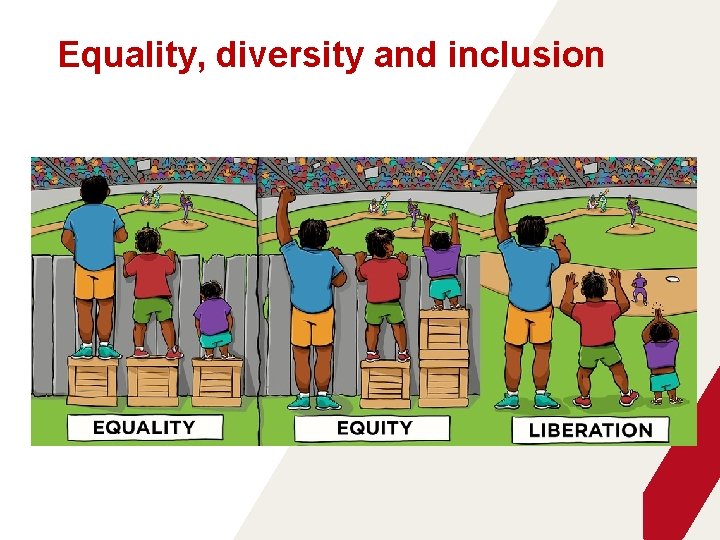
Equality, diversity and inclusion
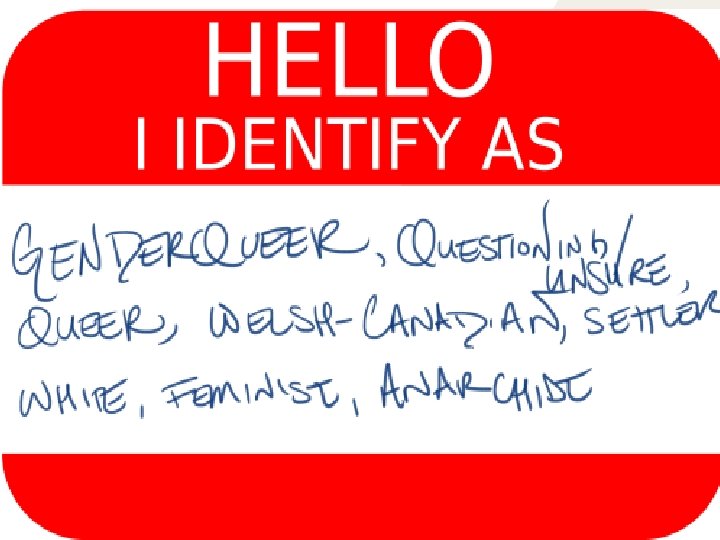
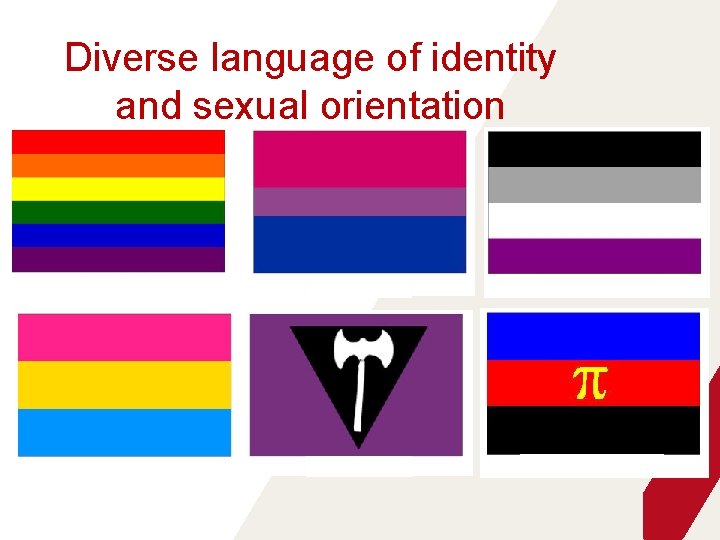
Diverse language of identity and sexual orientation
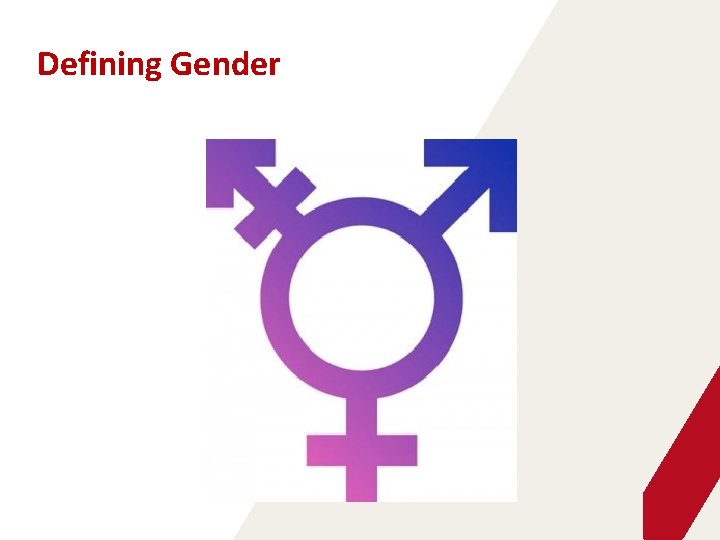
Defining Gender
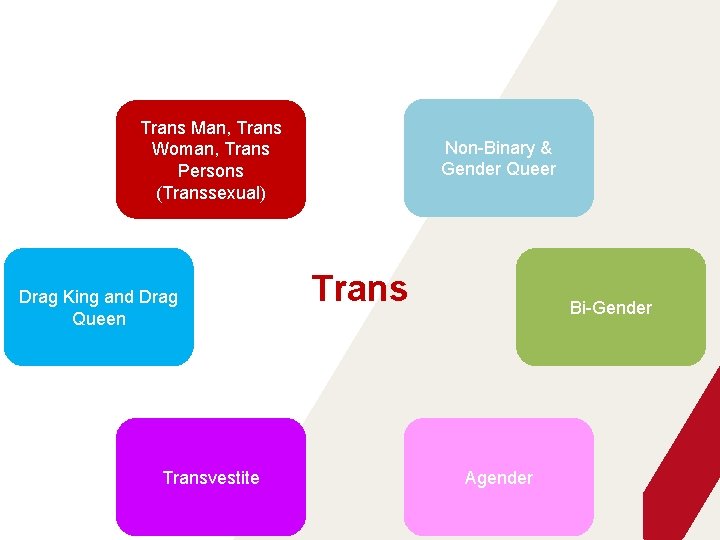
Trans Man, Trans Woman, Trans Persons (Transsexual) Drag King and Drag Queen Transvestite Non-Binary & Gender Queer Trans Bi-Gender Agender
Diversity Quiz
Trans Young People & the Law “Any one who intends to, is transitioning or is living permanently in a gender differently to that assigned to them at birth” - is protected from discrimination
https: //www. youtube. com/watch? v=TFYMaze. Ovgg
Trans Young People’s Rights • …. . to access education and have their gender validated and accepted. • ……to use the name and pronouns that make them feel most comfortable. • ……not to be abused and bullied for being themselves. • ……. to use the bathroom and single sex facilities they feel most comfortable in. • ……. . to feel their voices have been heard and considered as part of any engagement work.
Trans Young People's Voice’s Case Study • Local Authority https: //www. youtube. com/watch? v=o. Mfu 8 Rmvblk#action=sh are • Education
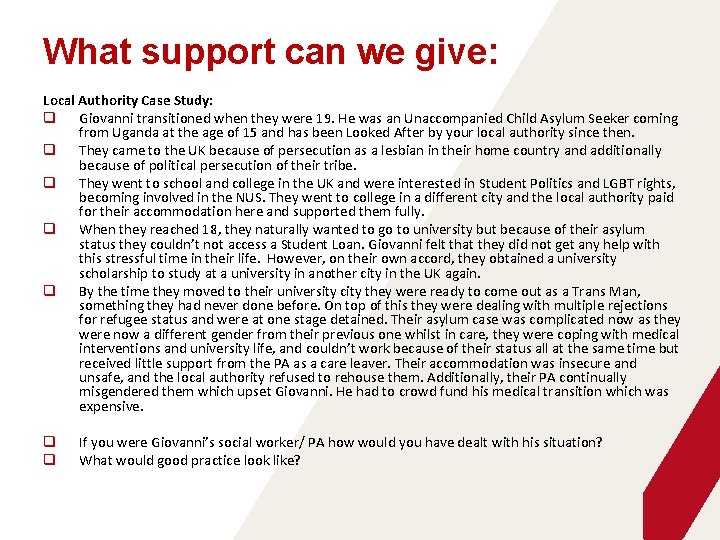
What support can we give: Local Authority Case Study: q Giovanni transitioned when they were 19. He was an Unaccompanied Child Asylum Seeker coming from Uganda at the age of 15 and has been Looked After by your local authority since then. q They came to the UK because of persecution as a lesbian in their home country and additionally because of political persecution of their tribe. q They went to school and college in the UK and were interested in Student Politics and LGBT rights, becoming involved in the NUS. They went to college in a different city and the local authority paid for their accommodation here and supported them fully. q When they reached 18, they naturally wanted to go to university but because of their asylum status they couldn’t not access a Student Loan. Giovanni felt that they did not get any help with this stressful time in their life. However, on their own accord, they obtained a university scholarship to study at a university in another city in the UK again. q By the time they moved to their university city they were ready to come out as a Trans Man, something they had never done before. On top of this they were dealing with multiple rejections for refugee status and were at one stage detained. Their asylum case was complicated now as they were now a different gender from their previous one whilst in care, they were coping with medical interventions and university life, and couldn’t work because of their status all at the same time but received little support from the PA as a care leaver. Their accommodation was insecure and unsafe, and the local authority refused to rehouse them. Additionally, their PA continually misgendered them which upset Giovanni. He had to crowd fund his medical transition which was expensive. q If you were Giovanni’s social worker/ PA how would you have dealt with his situation? q What would good practice look like?
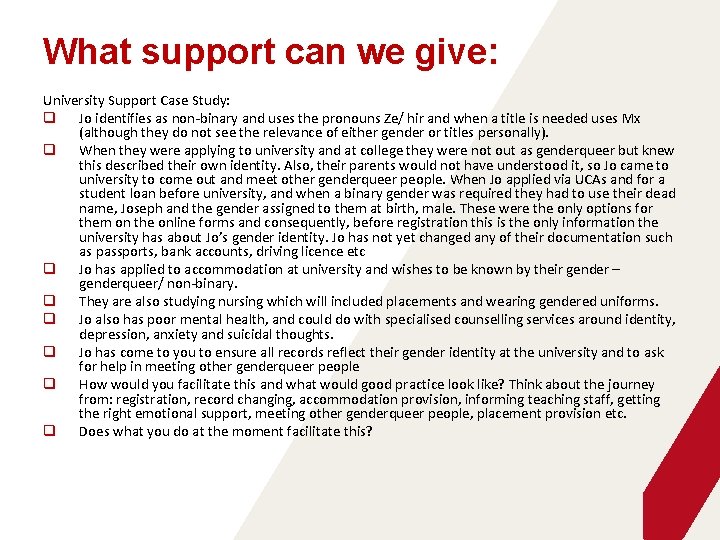
What support can we give: University Support Case Study: q Jo identifies as non-binary and uses the pronouns Ze/ hir and when a title is needed uses Mx (although they do not see the relevance of either gender or titles personally). q When they were applying to university and at college they were not out as genderqueer but knew this described their own identity. Also, their parents would not have understood it, so Jo came to university to come out and meet other genderqueer people. When Jo applied via UCAs and for a student loan before university, and when a binary gender was required they had to use their dead name, Joseph and the gender assigned to them at birth, male. These were the only options for them on the online forms and consequently, before registration this is the only information the university has about Jo’s gender identity. Jo has not yet changed any of their documentation such as passports, bank accounts, driving licence etc q Jo has applied to accommodation at university and wishes to be known by their gender – genderqueer/ non-binary. q They are also studying nursing which will included placements and wearing gendered uniforms. q Jo also has poor mental health, and could do with specialised counselling services around identity, depression, anxiety and suicidal thoughts. q Jo has come to you to ensure all records reflect their gender identity at the university and to ask for help in meeting other genderqueer people q How would you facilitate this and what would good practice look like? Think about the journey from: registration, record changing, accommodation provision, informing teaching staff, getting the right emotional support, meeting other genderqueer people, placement provision etc. q Does what you do at the moment facilitate this?
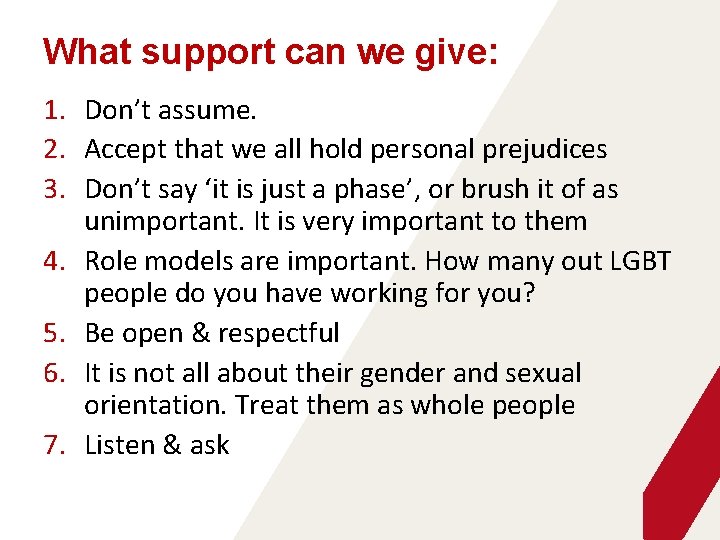
What support can we give: 1. Don’t assume. 2. Accept that we all hold personal prejudices 3. Don’t say ‘it is just a phase’, or brush it of as unimportant. It is very important to them 4. Role models are important. How many out LGBT people do you have working for you? 5. Be open & respectful 6. It is not all about their gender and sexual orientation. Treat them as whole people 7. Listen & ask
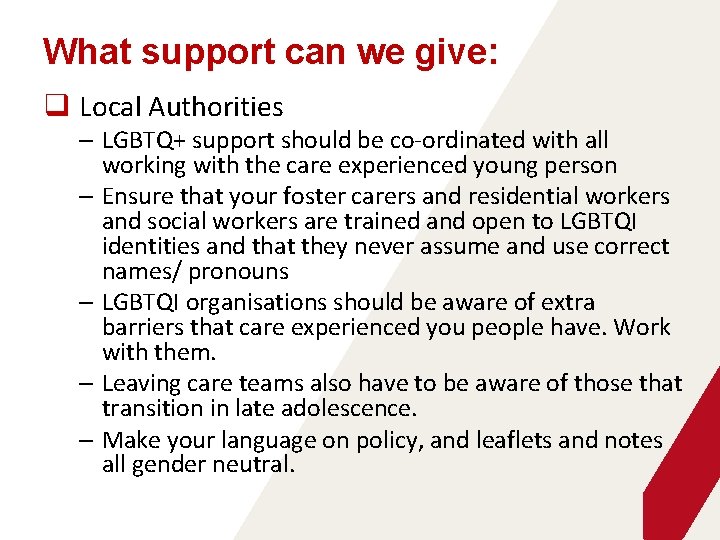
What support can we give: q Local Authorities – LGBTQ+ support should be co-ordinated with all working with the care experienced young person – Ensure that your foster carers and residential workers and social workers are trained and open to LGBTQI identities and that they never assume and use correct names/ pronouns – LGBTQI organisations should be aware of extra barriers that care experienced you people have. Work with them. – Leaving care teams also have to be aware of those that transition in late adolescence. – Make your language on policy, and leaflets and notes all gender neutral.
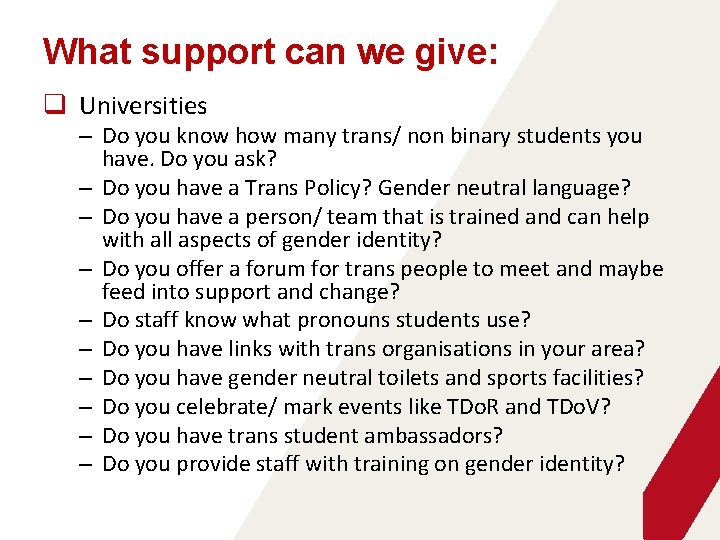
What support can we give: q Universities – Do you know how many trans/ non binary students you have. Do you ask? – Do you have a Trans Policy? Gender neutral language? – Do you have a person/ team that is trained and can help with all aspects of gender identity? – Do you offer a forum for trans people to meet and maybe feed into support and change? – Do staff know what pronouns students use? – Do you have links with trans organisations in your area? – Do you have gender neutral toilets and sports facilities? – Do you celebrate/ mark events like TDo. R and TDo. V? – Do you have trans student ambassadors? – Do you provide staff with training on gender identity?
Three Circles Fostering: Best Practice LGBT Youth in Care Website: https: //www. threecirclesfostering. com/lgb t-youth-in-care/ https: //www. lgbtyouthincare. com/ https: //www. youtube. com/watch? v=o. Mfu 8 Rmvblk#action=share
Further Resources • LGBT Youth in Care & Three Circles Website (see above & https: //www. threecirclesfostering. com/ • Brighton & Cornwall Councils School Guide https: //www. mermaidsuk. org. uk/assets/media/Trans-Inclusion-Schools. Toolkit. pdf • Cornwall Schools Trans Guide https: //www. cornwall. gov. uk/community-andliving/equality-and-diversity/cornwall-schools-transgender-guidance/ • Wirral Safeguarding Board https: //www. wirralsafeguarding. co. uk/genderidentity/ • Barnardos - http: //www. barnardos. org. uk/what_we_do/our_work/lgbtq. htm
Further Resources • Equality Challenge Unit Resources https: //www. ecu. ac. uk/publications/trans -staff-and-students-in-he-and-colleges-improving-experiences/ • Youtube videos: (Buzzfeed, Fox Fisher, Paris Lees, Laverne Cox, TEDX etc) • Gender Intelligence http: //genderedintelligence. co. uk/ • Mermaids Website https: //www. mermaidsuk. org. uk/ • Trans Equality Legal Initiative (TELI) Website https: //www. teli. org. uk/ • Speak. OUT Research: https: //www. uea. ac. uk/speakout
Get Connected Questions? @arronioni @threecircles email: a. pile@salford. ac. uk Celebrate @Salford. UNI or @Care. Leaver. PP #CLPPEngage. LGBT Engage @_NNECL @UKTELI @Act 4 Trans. Health @Beyond. The. Binary @LGBTfdn @Stonewalluk @Wipe. Transphobia @All. About. Trans
Any Questions? Arron Pile Student & Graduate Diversity Manager ask. US University House, Trustee, National Network for the Education of Care Leavers (NNECL) www. nnecl. org Tel: 161 295 2152 a. pile@salford. ac. uk www. students. salford. ac. uk