
Challenges with Sensory Processing in Children with ASD
- Slides: 37
Challenges with Sensory Processing in Children with ASD Julie Schade, MA, OTR/L Colette Silver, MS, OTR/L
Sensory Integration Dysfunction vs Sensory Processing Disorder Sensory There Integration is an evolving theory is ongoing research to guide terminology AOTA recommends that we describe the problem rather than name a disorder “Children with difficulty processing and integrating sensory information”
The Process Reception: dependent on level of Arousal, Orienting response Modulation: balancing excitatory and inhibitory inputs Discrimination: Cognitive process that enables us to distinguish differences Integration of that information with prior experience, attach meaning Adaptive response – response appropriate to stimulus Praxis - Cognitively remembering the adaptive or motor response for future use Organization of behavior
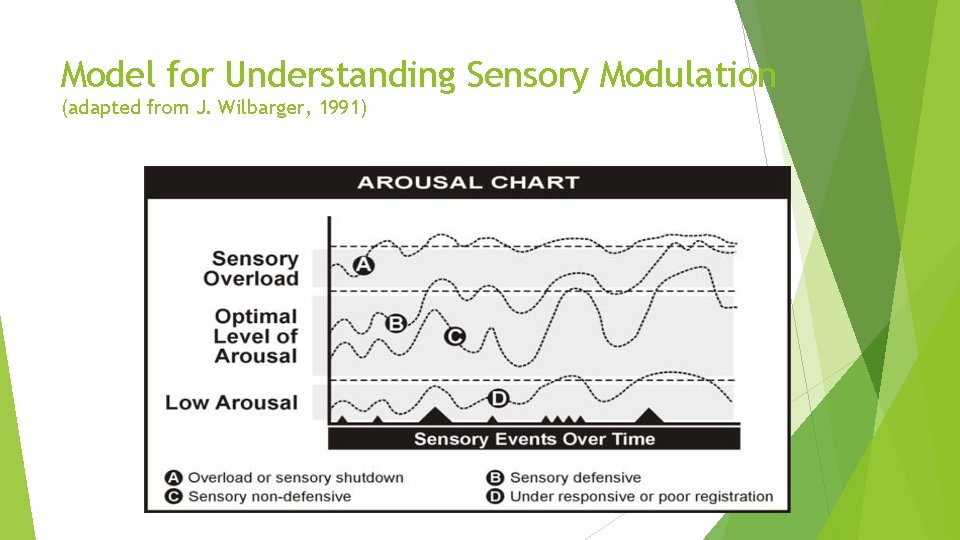
Dysfunction in Sensory Modulation Difficulty achieving and maintaining a developmentally appropriate range of emotional, attentional, and motoric responses to sensory stimuli, resulting in difficulty adapting to challenges encountered in daily life (James, et al. 2011) One or more of the 7 sensory systems may be involved Symptoms: overresponsivity, underresponsivity, sensory seeking or a combination Overresponsive - classical stress response – fight, flight, freeze Severity: mild to severe
Sensory gating A neurological processes of filtering out redundant or unnecessary stimuli in the brain from all possible environmental stimuli Prevents an overload of irrelevant information in the higher cortical centers of the brain. Largely automatic, also occurs within the context of attention processes.
Habituation A form of learning in which an organism decreases or ceases to respond to a stimulus after repeated presentations. Essentially, the organism learns to stop responding to a stimulus which is no longer biologically relevant. For example, may habituate to repeated sudden loud noises when they learn these have no consequences. Desensitization Protocols
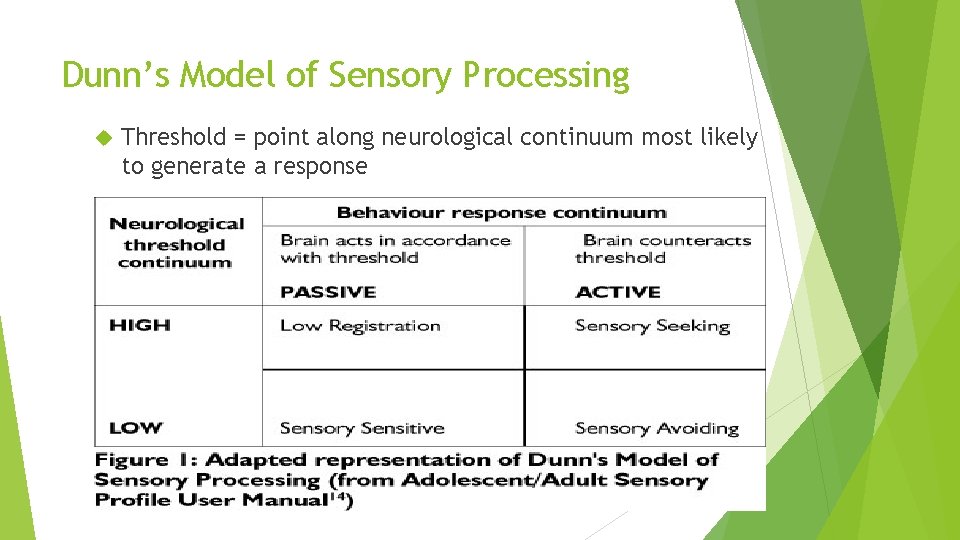
Dunn’s Model of Sensory Processing Threshold = point along neurological continuum most likely to generate a response
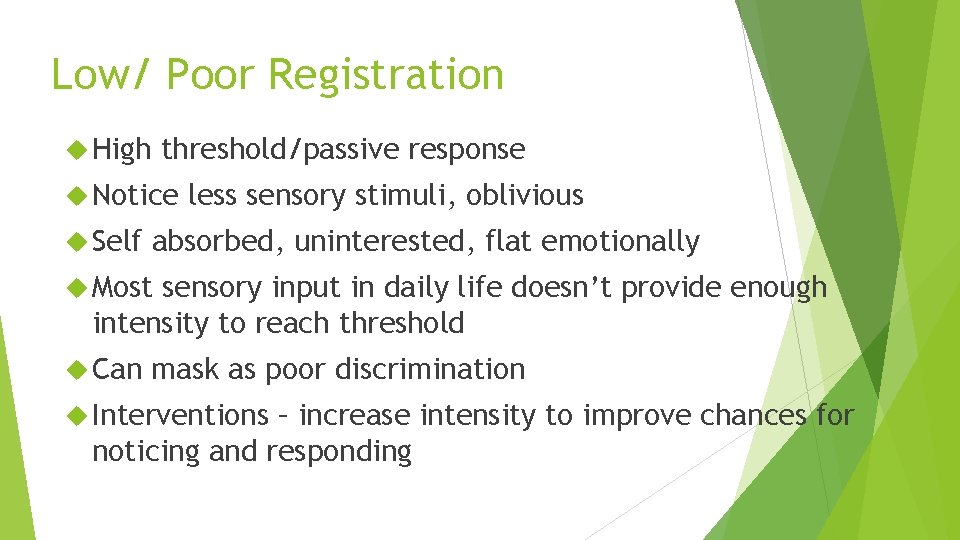
Low/ Poor Registration High threshold/passive response Notice Self less sensory stimuli, oblivious absorbed, uninterested, flat emotionally Most sensory input in daily life doesn’t provide enough intensity to reach threshold Can mask as poor discrimination Interventions – increase intensity to improve chances for noticing and responding
Sensory Seeking High threshold/active response Enjoys, needs and seeks input from environment Active, excitable Problem when seeking behaviors interfere with fully participating or completing an activity. Intervention - Provide appropriate opportunities for input
Sensory Sensitive Low threshold/passive response Detect more input that others Can be highly distractible, hyperactive Auditory, Visual, Tactile, Vestibular Defensive response rather that orienting response Large increase in heart rate, respiration, vasodilation. Increased sensitivity to all other sensory stimuli Interventions – provide more structured input
Sensory Avoiding Low Threshold/active response Can be rule bound, ritual driven, uncooperative Unfamiliar input is difficult to understand organize May tune out to avoid, seem uninterested May be hyper alert but still Interventions – make input less available, graded, organized, predictable exposure
Model for Understanding Sensory Modulation (adapted from J. Wilbarger, 1991)
Context/Environment Behavior is influenced by context Not only sensory processing patterns but also contextual factors Sensory processing: universal and context-specific qualities Universal: sensory avoiding - cover ears at home and Context: sensory seeking – singing at home (ok) vs school (disruptive) Teachers/parents responses differ: unique view Home/school variables differ = need contextually designed assessments, different interventions, and different goals (Brown, N. B. , & Dunn W. 2010)
Sensory Profile & School Companion Sensory profile across a variety of settings Co-regulation = feed off state of regulation of those around Home Community School Classroom Cafeteria Playground Media center/Library Halls Bathroom (Dunn)
Research on Sensory Processing and ASD most common comorbid symptom (Silva & Schalock, 2012) 69% - some type of sensory symptom (Baranek, et al. , 2006) inversely related: mental age increases, sensory symptoms decrease (Baranek, et al. , 2006) low mental age produces hyporesponsivness in social and nonsocial contexts; higher mental age produces more responsiveness (Baranek, et al. , in press) more severe symptoms in social-communication = more likely to be hyporesponsive; higher language abilities = fewer hyporesponsive or seeking behaviors (Watson et al. , 2011) most pronounced for under-responsivity, followed by overresponsivity, and sensory seeking; 6 -9 year-olds: overresponsivity and seeking (Ben-Sasson et al. , 2009) more taste/smell sensitivity and sensory underresponsivity (Schoen et al. , 2009)
Research (continued) abnormal auditory, visual, touch, and oral sensory processing; improved with age except low threshold to touch (Kern et al. , 2006) correlation between sensory processing and repetitive behaviors (stereotypies and compulsions) (Boyd et al. , 2010) tactile sensory impairment - hypersensitivity to noninjurious stimuli and hyposensitivity to injurious stimuli (Silva & Schalock , 2012) emotionally reactive and poor sensory registration on Sensory Profile (Watling, Deitz, & White, 2001) relationship between sensory hypersensitivity (sensory sensitivity and avoiding) and anxiety; hyporesponsiveness and depression (Pfeiffer, Kinnealey, Reed, & Herzberg, 2005) academic underachievement and tactile processing, auditory filtering, and underresponsiveness or sensory seeking (Ashburner, Ziviani, and Rodger, 2008)
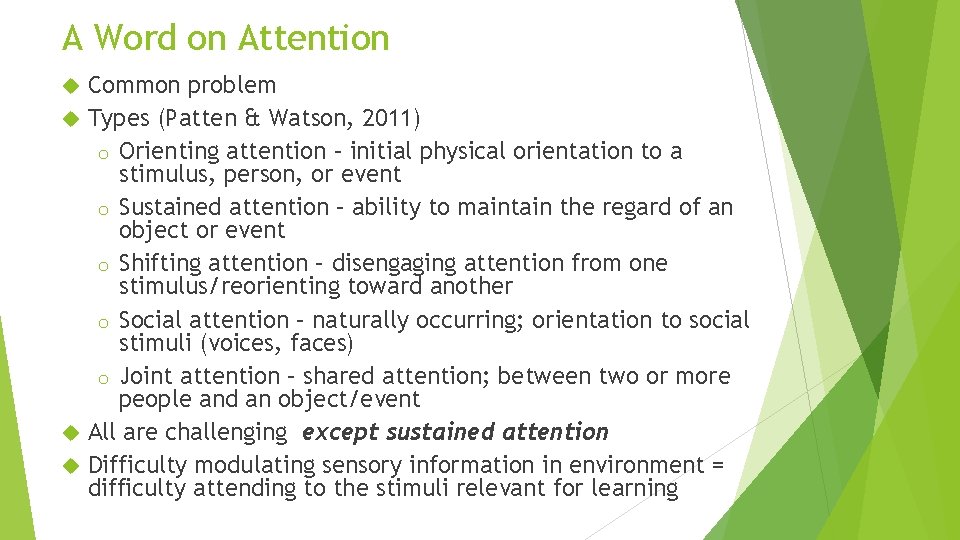
A Word on Attention Common problem Types (Patten & Watson, 2011) o Orienting attention – initial physical orientation to a stimulus, person, or event o Sustained attention – ability to maintain the regard of an object or event o Shifting attention – disengaging attention from one stimulus/reorienting toward another o Social attention – naturally occurring; orientation to social stimuli (voices, faces) o Joint attention – shared attention; between two or more people and an object/event All are challenging except sustained attention Difficulty modulating sensory information in environment = difficulty attending to the stimuli relevant for learning
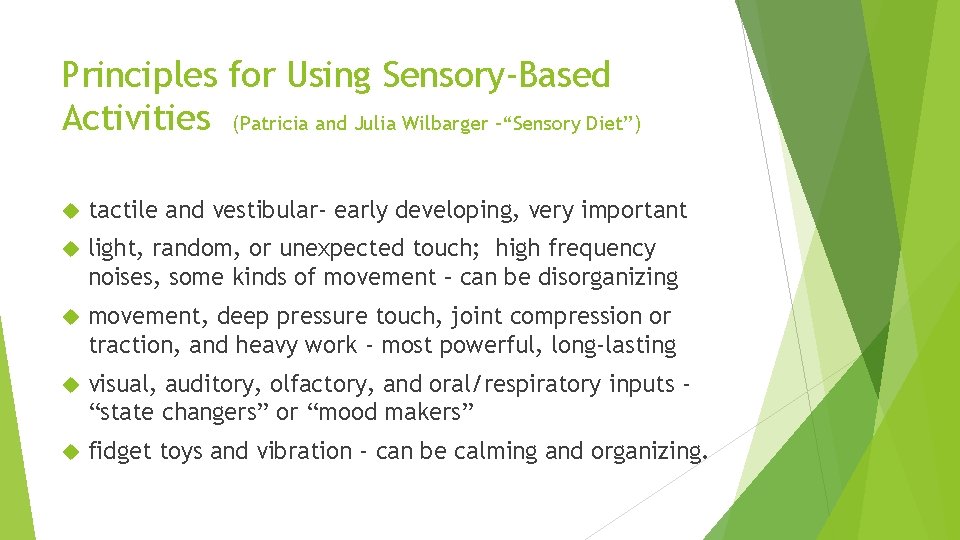
Principles for Using Sensory-Based Activities (Patricia and Julia Wilbarger –“Sensory Diet”) tactile and vestibular- early developing, very important light, random, or unexpected touch; high frequency noises, some kinds of movement – can be disorganizing movement, deep pressure touch, joint compression or traction, and heavy work - most powerful, long-lasting visual, auditory, olfactory, and oral/respiratory inputs “state changers” or “mood makers” fidget toys and vibration - can be calming and organizing.
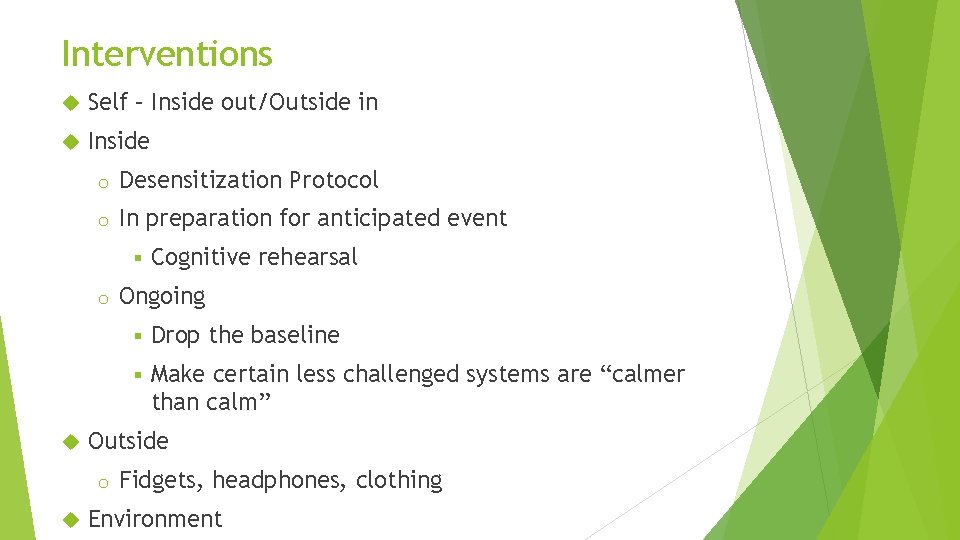
Interventions Self – Inside out/Outside in Inside o Desensitization Protocol o In preparation for anticipated event § o Ongoing § Drop the baseline § Make certain less challenged systems are “calmer than calm” Outside o Cognitive rehearsal Fidgets, headphones, clothing Environment
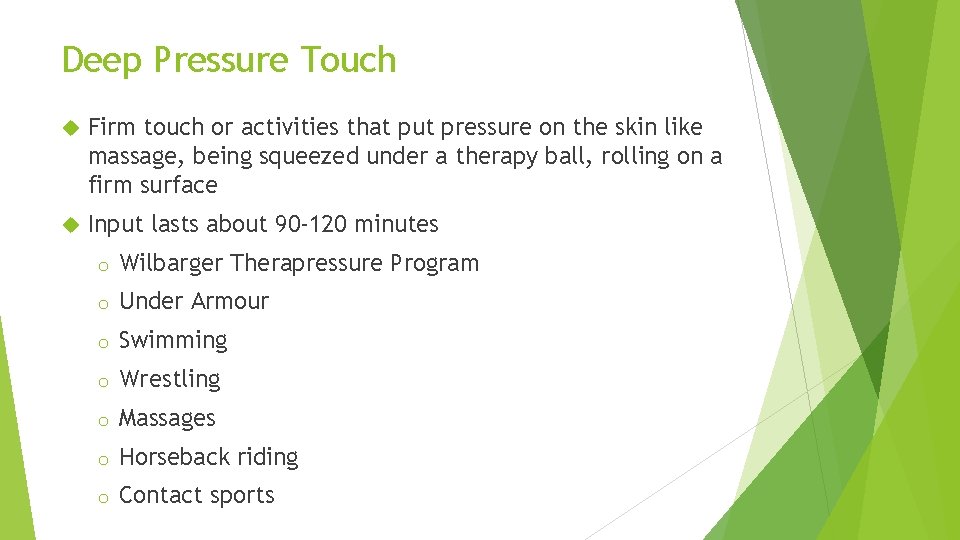
Deep Pressure Touch Firm touch or activities that put pressure on the skin like massage, being squeezed under a therapy ball, rolling on a firm surface Input lasts about 90 -120 minutes o Wilbarger Therapressure Program o Under Armour o Swimming o Wrestling o Massages o Horseback riding o Contact sports
Vestibular Movement such as swinging, rocking, jumping, tumbling, etc. Rhythmic movement can be calming. Has the longest lasting effect (4 -8 hours) Very powerful = requires the most care in applying o Suspension equipment o Astronaut Program o Swimming o Horseback riding o Yoga
Proprioception and Heavy Work Proprioception Compression or traction to the joints and muscle action Lasts about 90 min to 2 hours Heavy Muscle Action Muscles work against resistance Includes both whole body, hands or mouth o run errands for teachers – routine or with a peer o classroom jobs (water plants, feed pets, pass out supplies) o bungee cord strung between legs of chair o standing desk o second desk or work area to allow for movement breaks o clothes, boots, backpacks
Oral Motor Input and Respiration Sucking, blowing, biting, chewing, or breathing activities Considered “sensory snacks” o lunch or snack items that can be sucked through a straw (e. g. pudding, pureed fruit, smoothies, pureed soups, yogurt); crunchy foods o Blowing activities – lightweight objects (cotton balls, toilet tissue tubes, wadded up plastic wrap, Ping-Pong balls, feathers) progressing up to heavier items and more challenging tasks (blowing up balloons, whistles o Chewing gum o Deep Breathing with tongue placement o Singing – join a choral group
Auditory Music or background sounds can be used to influence general arousal or affective states Role of vibration The use of specialized listening or sound programs may reduce defensive behaviors (Therapeutic Listening, The Listening Program, i. Ls, etc. ) Sound therapy also effective to lower overall level of arousal Calming music on a hand-held device with headphones (not ear buds) Advanced warning before fire drills Desensitization program Singing
Olfactory and Gustatory Olfactory scents (e. g. aromatherapy) can influence general arousal and affective states; questionable effectiveness with sensory defensive experiment with smells to determine which are calming (lavender, cinnamon, chamomile, vanilla, and patchouli) and which are alerting (; emon, basil, juniper, grapefruit, ginger, peppermint) kids in overload might use strong tastes to “feel” something Taste Using sweet, sour, bitter, and flavors to influence general arousal and affective states Cooking groups, use of perfumes, hair gels, body powders, scented lip gloss
Neutral Warmth that just maintains body temperature without being too hot or cold; is usually calming Only lasts as long as you keep the individual involved
Supplementary Aids, Services, Program Modifications, and Supports (IEP) Provide frequent changes in activities or opportunities for movement Preferential seating Encourage/reinforce appropriate behaviors in academic and non-academic settings Break down assignments into smaller units Frequent and/or immediate feedback Have student repeat and/or paraphrase directions Strategies to initiate and sustain attention Other: Give directions in short phrases Sensory activities to promote listening and focusing Advanced warning for transitions Frequent eye contact/proximity control
Study on changing the environment Classroom modification - attention and engagement (Kinnealey, et al. , 2012) Universal Design for Learners (UDL) auditory sensitivities; avoidant behaviors high-quality lighting in schools: improved mood, behavior, concentration fluorescent lights: bright, low level buzz, stress, repetitive behaviors (ASD) Methods: Halogen lights and sound-absorbing walls and ceiling Results: • reduction in the frequency of non-attending behaviors (student specific) • increased stability of attending • self-assessment of improved classroom performance • spontaneous, repeated initiation of social interaction
Studies on Exercise Stereotypic behaviors, on-task time, academic performance (Oriel, K. N. et al. 2011) stereotypic behaviors decreased following vigorous jogging for 15 minutes - mildly strenuous, increased breathing rate and/or flushed face (Kern et al. , 1984) similar results; jogging 8 -10 minutes (Watters & Watters, 1980) stereotypic behaviors decreased after 15 minutes of jogging; carryover 90 minutes post intervention (Levinson and Reid, 1993) only exercise programs involving jogging (vs. walking or ball playing) - decrease in stereotypic behaviors (Celiberti et al. , 1997, Kern et al. , 1982, Kern et al. , 1984) Mixed results for on-task time and academic performance: only exercise involving jogging for approximately 15 minutes with enough exertion (Kern, 1982)
Study on Yoga Get Ready to Learn (GRTL) yoga program (Koenig, et al. , 2012) classroom-based; yoga postures, breathing, and relaxing exercises (Buckley-Reen, 2009) Study: 24 students intervention/22 control; ages 5 -12 years Aberrant Behavior Checklist (ABC)- assess challenging behavior 16 weeks, every morning; DVD with OT modeling Results: § significantly less irritable behavior § changes in lethargy/social withdrawal, hyperactivity/noncompliance. § No significant changes in stereotypic behavior and inappropriate speech
Study on Ball Chairs Limited research 6 boys; ball with ring stabilizer; 9 days during circle time; 5 days of free choice (Bagatell, et al. , 2010) Mixed results: • In-seat behavior – unique to child • Engagement – unique to child • Teacher perception – not beneficial • Child preference – variable from 2 -5 days Different sensory processing profiles Impact of poor postural control May be more appropriate for children who seek vestibularproprioceptive input Engagement is difficult to define and quantify
Zones of Regulation Developed by a school-based OT, Leah Kuypers emotional regulation and impulse control impact success recognize emotions while still in control; access tools that don’t disrupt class; think about others/social expectations 3 neurological components for self-regulation: sensory processing, executive functioning, emotional regulation Four colored zones (states of alertness and emotions_: v Blue: low states of alertness v Green: regulated v Yellow: heightened state of alertness v Red: extremely heightened states of alertness or very intense feelings Expected vs. unexpected Use strategies to move into expected
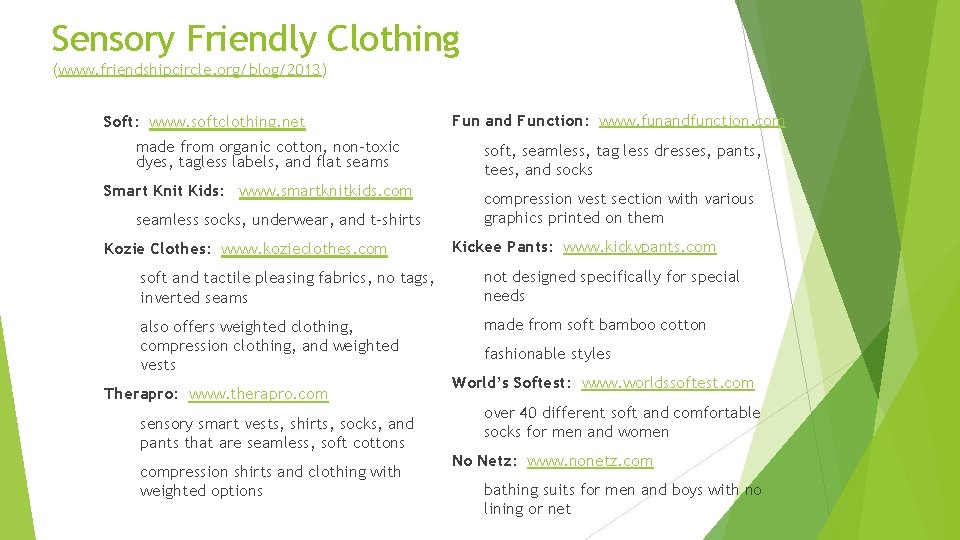
Sensory Friendly Clothing (www. friendshipcircle. org/blog/2013) Soft: www. softclothing. net made from organic cotton, non-toxic dyes, tagless labels, and flat seams Smart Knit Kids: www. smartknitkids. com seamless socks, underwear, and t-shirts Kozie Clothes: www. kozieclothes. com Fun and Function: www. funandfunction. com soft, seamless, tag less dresses, pants, tees, and socks compression vest section with various graphics printed on them Kickee Pants: www. kickypants. com soft and tactile pleasing fabrics, no tags, inverted seams not designed specifically for special needs also offers weighted clothing, compression clothing, and weighted vests made from soft bamboo cotton Therapro: www. therapro. com sensory smart vests, shirts, socks, and pants that are seamless, soft cottons compression shirts and clothing with weighted options fashionable styles World’s Softest: www. worldssoftest. com over 40 different soft and comfortable socks for men and women No Netz: www. nonetz. com bathing suits for men and boys with no lining or net
References Ashburner, J. , Ziviani, J. , & Rodger, S. (2008). Sensory processing and classroom emotional, behavioral, and educational outcomes in children with autism spectrum disorder. American Journal of Occupational Therapy, 62, 564 -573. Bagatell, N. , Mirigliani, G. , Patterson, C. , Reyes, Y. , & Test, L. (2010). Effectiveness of ball chairs on classroom participation in children with autism spectrum disorders. American Journal of Occupational Therapy, 64, 895 -903. Baranek, G. T. , Watson, L. R, Boyd, B. A. , Poe, M. D. , David, F. J. , & Mc. Guire, L. (in press). Hyporesponsiveness to social and nonsocial sensory stimuli in children with autism, children with developmental delays, and typically developing children. Development and Psychopathology Baranek, G. T. , David, F. J. , Poe, M. D. , Stone, W. L. , & Watson, L. R. (2006). Sensory Experiences Questionairre: Discriminating sensory features in young children with autism, developmental delays, and typical development. Journal of Child Psychology and Psychiatry, 47 (6), 591 -601. Ben-Sasson, A. , Hen, L. , Fluss, R. Cermak, S. A. , Engel-Yeger, B. , & Gal, E. (2008). A meta-analysis of sensory modulation symptoms in individuals with autism spectrum disorders. Journal of Autism and Developmental Disorders, 39, 1 -11.
References (pg. 2) Boyd, B. A. , Mc. Bee, M. , Holtzclaw, T. , Baranek, G. T. , & Bodfish, J. W. (2010). Relationships among repetitive behaviors, sensory features, and executive functions in high functioning autism. Research in Autism Spectrum Disorders, 3(4), 959 -966. Brown, N. B. , & Dunn, W. (2010). Relationship between context and sensory processing in children with autism. American Journal of Occupational Therapy, 64, 474 -483. Celiberti, D. A. , Bobo, H. E. , Kelly, K. S. , Harris, S. I. , & Handlemann, J. S. (1997). The differential and temporal effects of antecedent exercise on self-stimulatory behavior of a child with autism. Research in Developmental Disabilities, 18(5), 139 -201. James, K. , Miller, L. J. , Schaaf, R. , Nielsen, D. M. , & Schoen, S. A. (2011). Phenotypes within sensory modulation dysfunction. Comprehensive Pyschiatry, 52, 715 -724. Kern, J. K. , Trivedi, M. H. , Granneman, B. D. , Andrews, A. A. , Savla, J. S. , Johnson, D. G. , Mehta, J. A. , & Schroeder, J. L. (2006). The pattern of sensory processing abnormalities in autism. Autism, 10, 480 -494. Kern, L, Koegel, R. L, Dunlap, G. (1984). The influence of vigorous versus mild exercise on autistic stereotyped behaviors. Journal of Autism and Developmental Disorders, 14(1), 57 -67.
References (pg. 3) Kern, L. Koegel, R. L, Dyer, K. , Blew, P. A. , Fenton, L. R. (1982). The effects of physical exercise on self-stimulation and appropriate responding in autistic children. Journal of Autism and Developmental Disorders, 12(4), 399 -412. Kinnealey, M. , Pfeiffer, B. , Miller, J. , Roan, C. , Shoener, R. , & Ellner, M. (2012). Effect of classroom modification on attention and engagement of students with autism and dyspraxia. American Journal of Occupational Therapy, 66, 511 -519. Koenig, K. P. , Buckey-Reen, A. , & Garg, S. (2012). Efficacy of Get Ready to Learn yoga program among children with autism spectrum disorders. A pretest-posttest control group design. American Journal of Occupational Therapy, 66, 538 -546. Kuypers, L. M. (2011). The zones of regulation: A curriculum designed to foster selfregulation and emotional control. San Jose, CA: Social Thinking Publishing, Inc. Levinson, L. J, & Reid, G. (1993). The effects of exercise intensity on stereotyped behaviors in individuals with autism. Adapted Physical Activity Quarterly, 10, 255 -268. Oriel, K. N. , George, C. L, Peckus, R. , & Semon, A. (2011). The effects of aerobic exercise on academic engagement in young children with autism spectrum disorder. Pediatric Physical Therapy, 23, 187 -193. Patten, E. , & Watson, L. R. (2011). Interventions targeting attention in young children with autism. American Journal of Speech-Language Pathology, 20, 60 -69.
References (pg. 4) Pfeiffer, B. , Kinnealey, M. , Reed, C. , & Herzberg, G. (2005). Sensory modulation and affective disorders in children and adolescents with Asperger’s disorder. American Journal of Occupational Therapy, 59, 335 -345. Schoen, S. A. , Miller, L. J. , Brett-Green, B. A. , & Nielsen, D. M. (2009). Physiological and behavioral differences in sensory processing: A comparison of children with autism spectrum disorder and sensory modulation disorder. Frontiers in Integrative Neuroscience, 29. Silva, L. M. T. , & Schalock, M. (2012). Sense and Self-Regulation Checklist, a measure of comorbid autism symptoms: Initial psychometric evidence. American Journal of Occupational Therapy, 66, 177 -186. Watling, R. L, Deitz, J. , & White, O. (2001). Comparison of the Sensory Profile scores of young children with and without autism spectrum disorders. American Journal of Occupational Therapy, 55, 416 -423. Watson, L. R. , Patten, E. , Baranek, G. T. , Poe, M. , Boyd, B. A. , Freuler, A. , & Lorenzi, J. (2011). Differential associations between sensory response patterns and socialcommunication measures in children with autism and developmental disorders. Journal of Speech, Language, and Hearing Research, 54(6), 1562 -1576. Watters, R. G. & Watters, W. E. (1980). Decreasing self-stimulatory behavior with physical exercise in a group of autistic boys. Journal of Autism and Developmental Disorders, 10(4), 379 -387.