
Challenges to Food Safety A foodborne illness is
Challenges to Food Safety A foodborne illness is a disease transmitted to people through food. An illness is considered an outbreak when: 1 -2 ● Two or more people have the same symptoms after eating the same food ● An investigation is conducted by state and local regulatory authorities ● The outbreak is confirmed by laboratory analysis
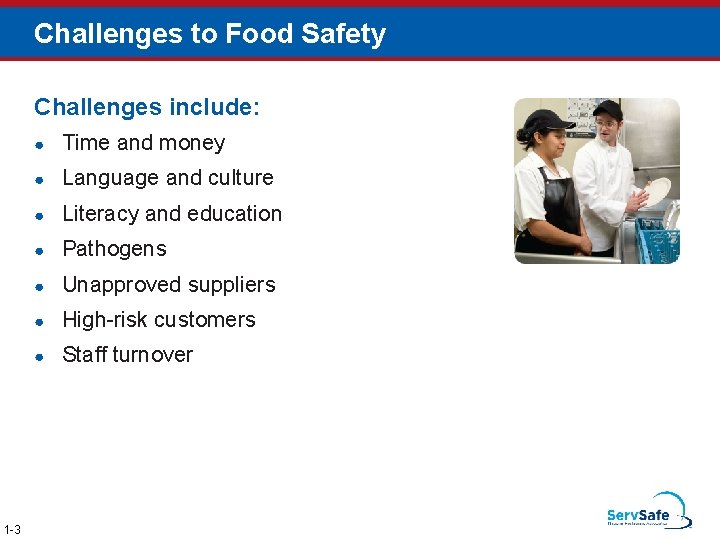
Challenges to Food Safety Challenges include: 1 -3 ● Time and money ● Language and culture ● Literacy and education ● Pathogens ● Unapproved suppliers ● High-risk customers ● Staff turnover
How Food Becomes Unsafe Five risk factors for foodborne illness: 1. Purchasing food from unsafe sources 2. Failing to cook food correctly 3. Holding food at incorrect temperatures 4. Using contaminated equipment 5. Practicing poor personal hygiene 1 -4
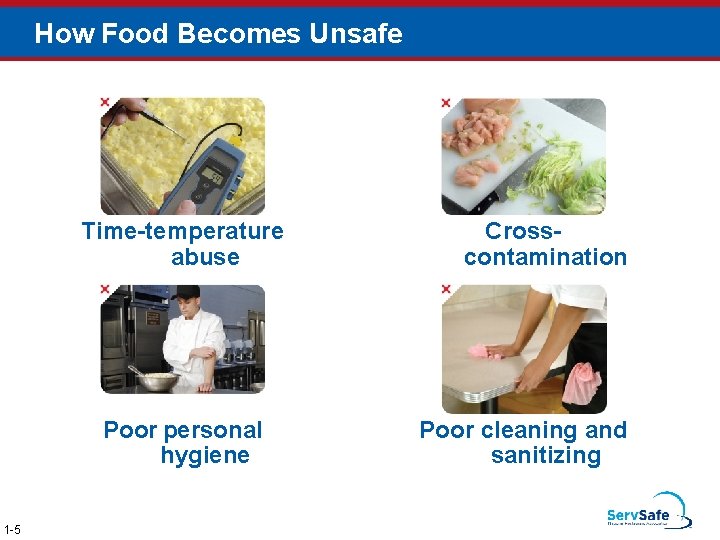
How Food Becomes Unsafe Time-temperature abuse Poor personal hygiene 1 -5 Crosscontamination Poor cleaning and sanitizing

How Food Becomes Unsafe Poor cleaning and sanitizing: 1 -6 ● Equipment and utensils are not washed, rinsed, and sanitized between uses ● Food contact surfaces are wiped clean instead of being washed, rinsed, and sanitized ● Wiping cloths are not stored in a sanitizer solution between uses ● Sanitizer solution was not prepared correctly Pg 1. 5 SSF 6 e
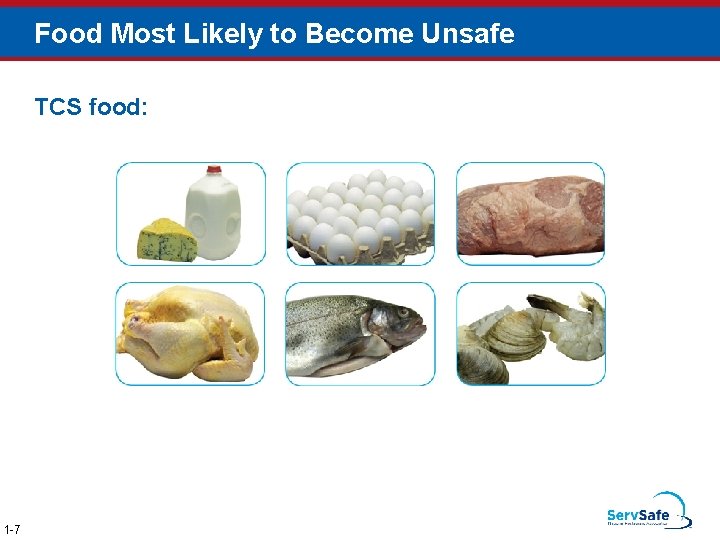
Food Most Likely to Become Unsafe TCS food: 1 -7
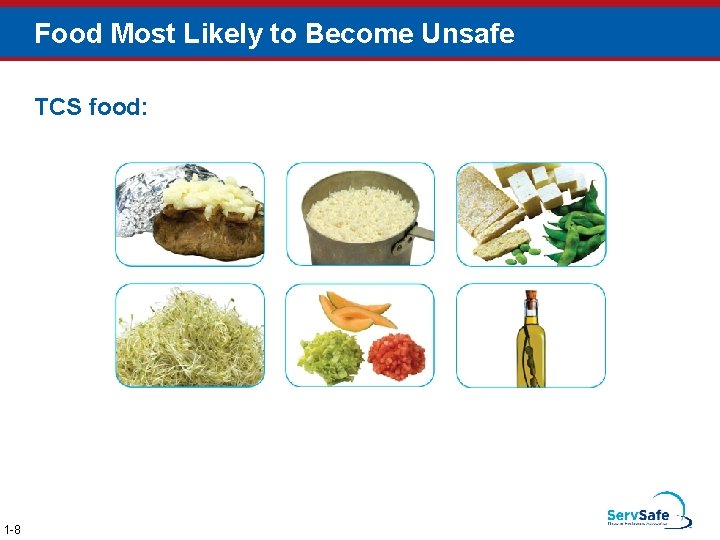
Food Most Likely to Become Unsafe TCS food: 1 -8
Ready-to-Eat Food Ready-to-eat food is food that can be eaten without further: ● Preparation ● Washing ● Cooking Ready-to-eat food includes: 1 -9 ● Cooked food ● Washed fruit and vegetables ● Deli meat ● Bakery items ● Sugar, spices, and seasonings
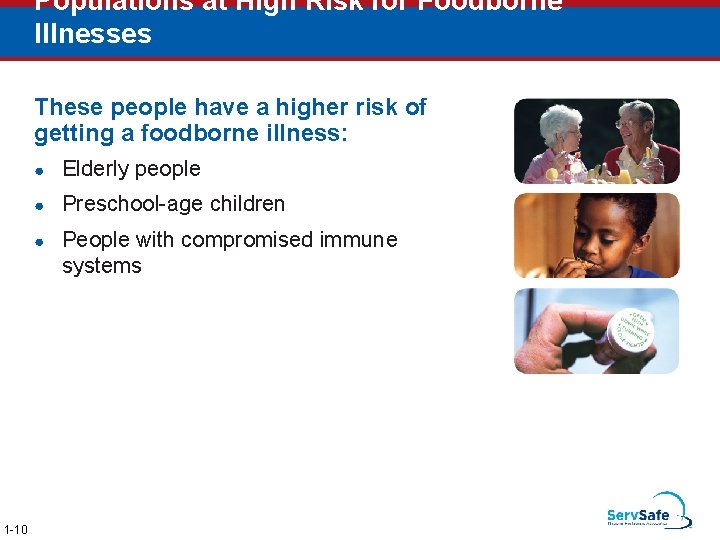
Populations at High Risk for Foodborne Illnesses These people have a higher risk of getting a foodborne illness: 1 -10 ● Elderly people ● Preschool-age children ● People with compromised immune systems
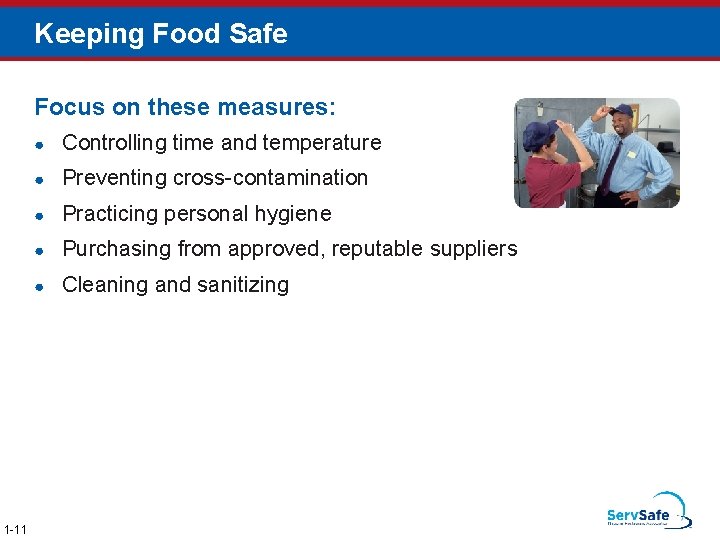
Keeping Food Safe Focus on these measures: 1 -11 ● Controlling time and temperature ● Preventing cross-contamination ● Practicing personal hygiene ● Purchasing from approved, reputable suppliers ● Cleaning and sanitizing
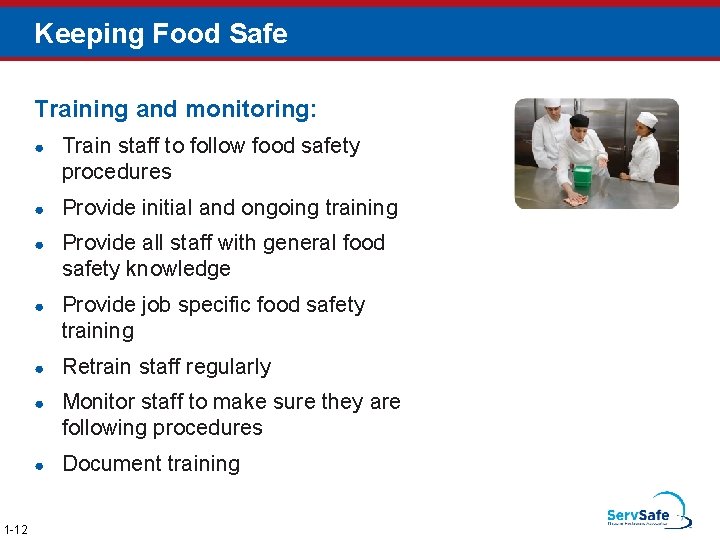
Keeping Food Safe Training and monitoring: 1 -12 ● Train staff to follow food safety procedures ● Provide initial and ongoing training ● Provide all staff with general food safety knowledge ● Provide job specific food safety training ● Retrain staff regularly ● Monitor staff to make sure they are following procedures ● Document training
Keeping Food Safe Government agencies: 1 -13 ● The Food and Drug Administration (FDA) ● U. S. Department of Agriculture (USDA) ● Centers for Disease Control and Prevention (CDC) ● U. S. Public Health Service (PHS) ● State and local regulatory authorities
- Slides: 13