
Challenges to Computer Vision Larry Davis Computer Science
- Slides: 18
Challenges to Computer Vision Larry Davis Computer Science Department Institute for Advanced Computer Studies University of Maryland College Park, MD 20742
Obstacles to human-level machine vision Segmentation – Finding what to see n Object representation – What things look like n Visual learning – Of the What and How n Interface to cognition – Reasoning about what is seen n
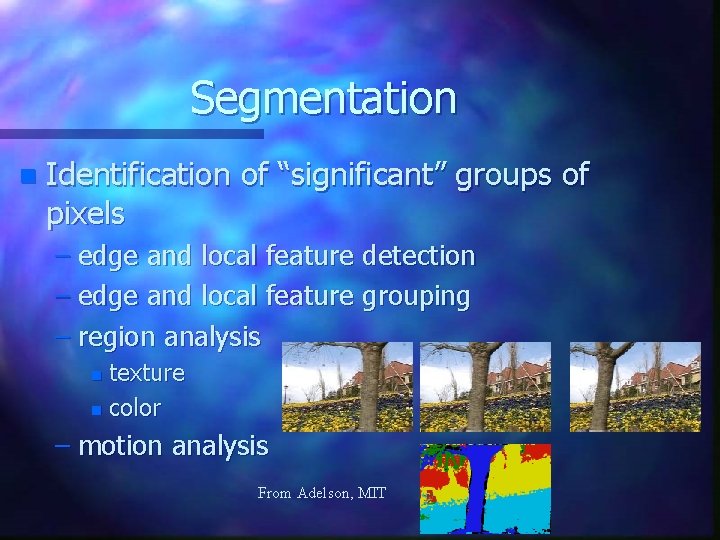
Segmentation n Identification of “significant” groups of pixels – edge and local feature detection – edge and local feature grouping – region analysis texture n color n – motion analysis From Adelson, MIT
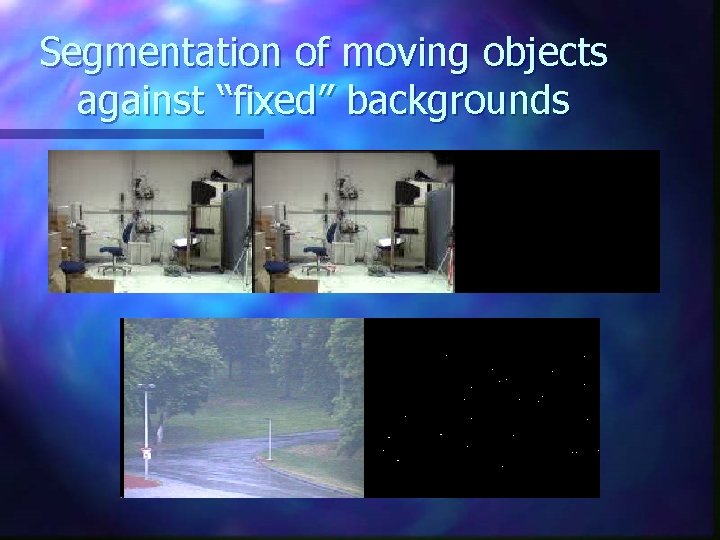
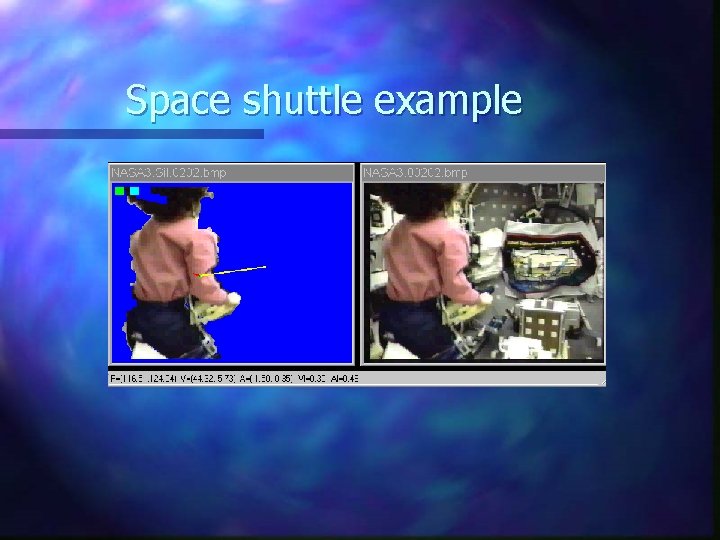
Segmentation of moving objects against “fixed” backgrounds
Space shuttle example
Segmentation challenges n Integration – Scales in space and time – Cues n Attention
Representing 3 -D objects n Object versus viewer centered representations – shape + texture
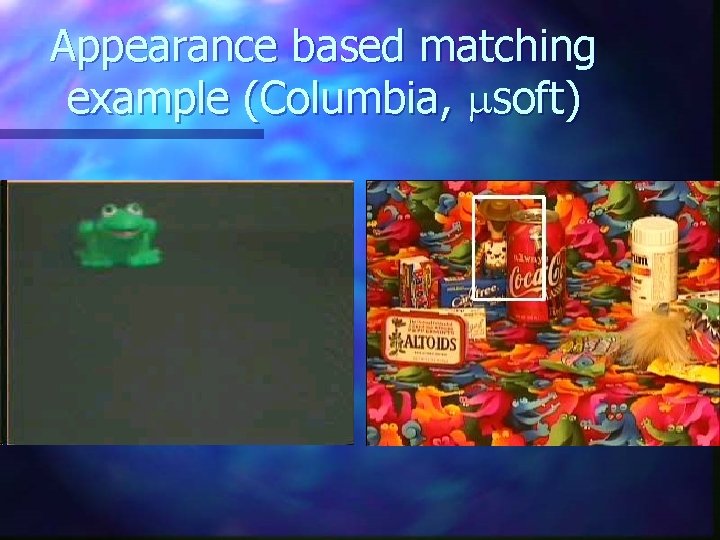
Appearance based matching example (Columbia, msoft)
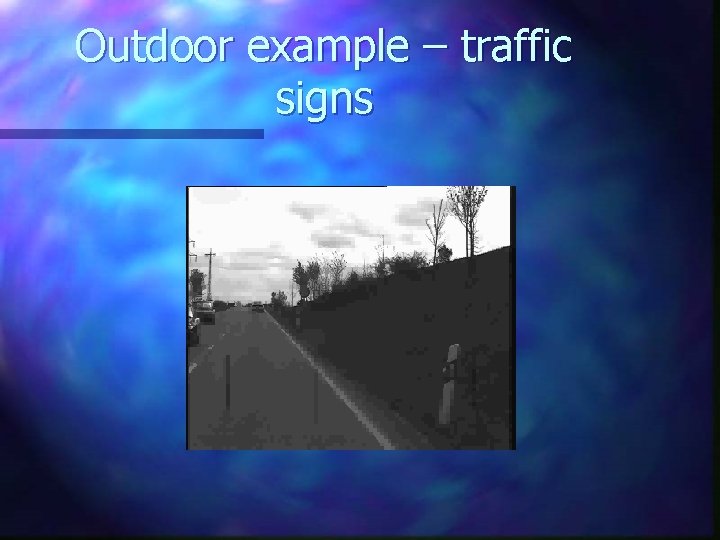
Outdoor example – traffic signs
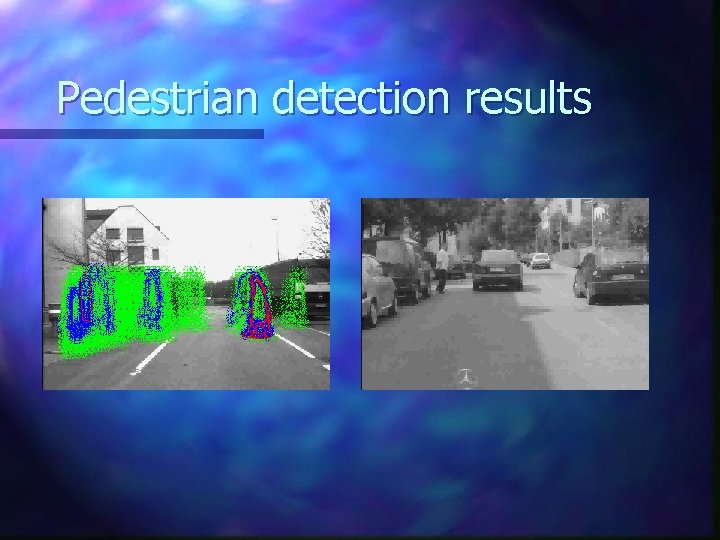
Pedestrian detection results
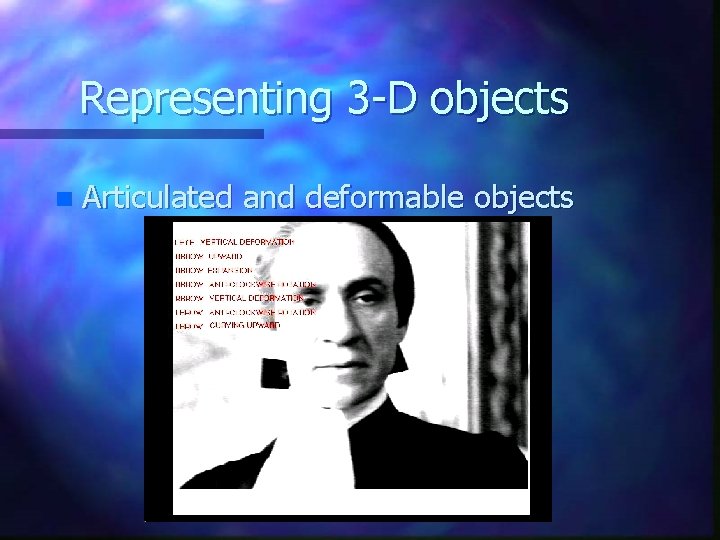
Representing 3 -D objects n Articulated and deformable objects
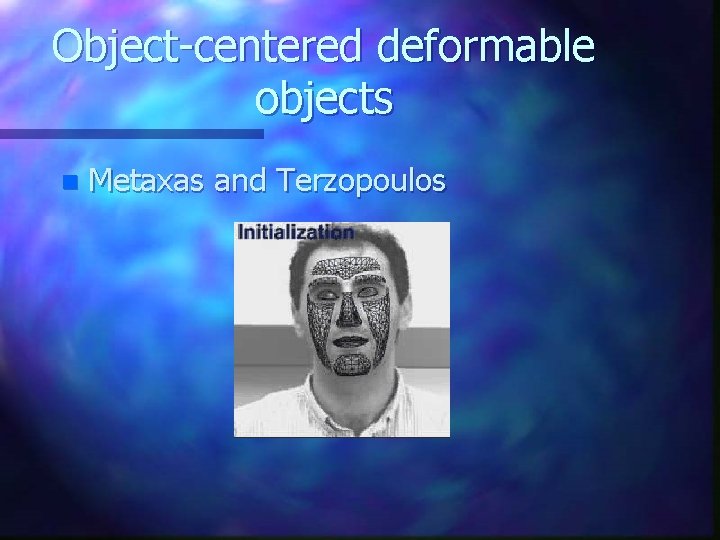
Object-centered deformable objects n Metaxas and Terzopoulos
Representing 3 -D objects n Object versus viewer centered representations – shape + texture Articulated and deformable objects n General object classes n
Representing 3 -D objects n Object versus viewer centered representations – shape + texture Articulated and deformable objects n General object classes n Form and function n
Visual Learning n Learning representations – recovery – coding n Learning control information – process parameters – rules of engagement
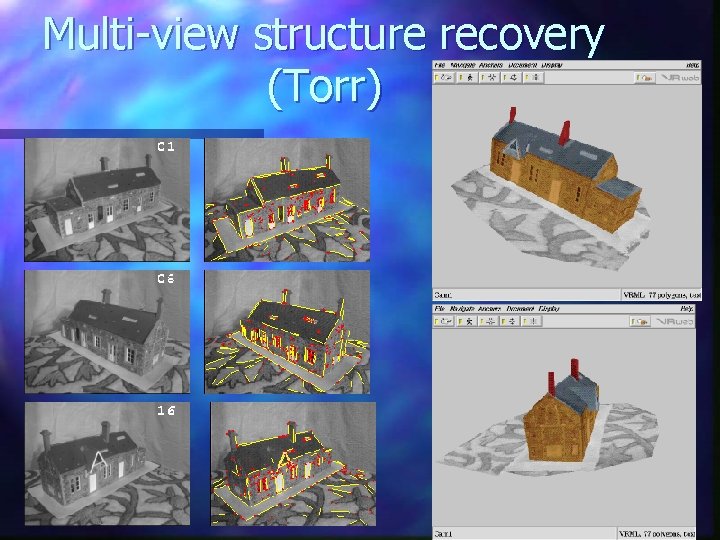
Recovery of 3 -D models Stereo n Structure from Motion n Prior shape models as constraints on recovery n
Multi-view structure recovery (Torr)
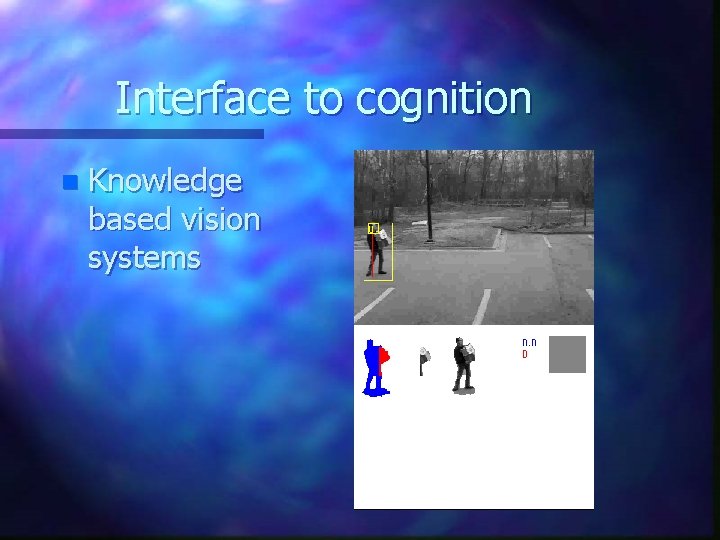
Interface to cognition n Knowledge based vision systems