
Challenges of Producing More Crop and Livestock o
- Slides: 23
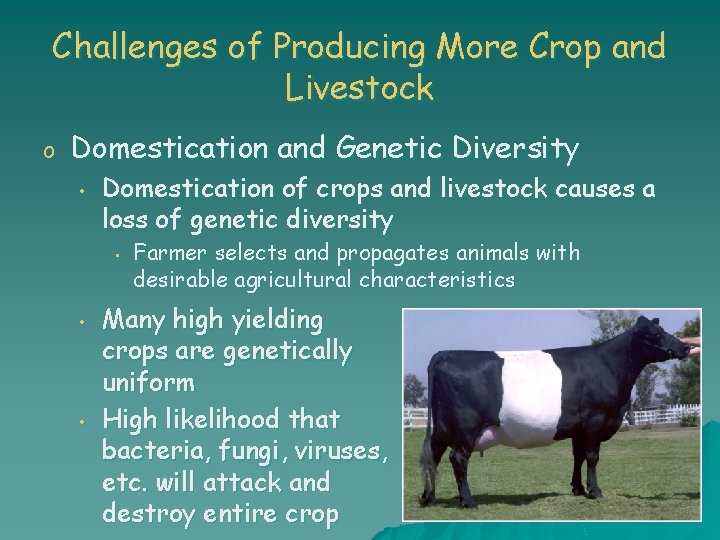
Challenges of Producing More Crop and Livestock o Domestication and Genetic Diversity • Domestication of crops and livestock causes a loss of genetic diversity • • • Farmer selects and propagates animals with desirable agricultural characteristics Many high yielding crops are genetically uniform High likelihood that bacteria, fungi, viruses, etc. will attack and destroy entire crop
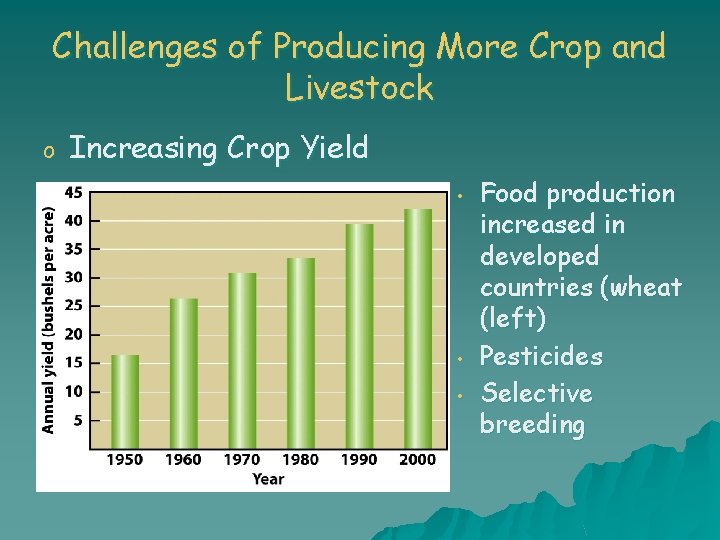
Challenges of Producing More Crop and Livestock o Increasing Crop Yield • • • Food production increased in developed countries (wheat (left) Pesticides Selective breeding
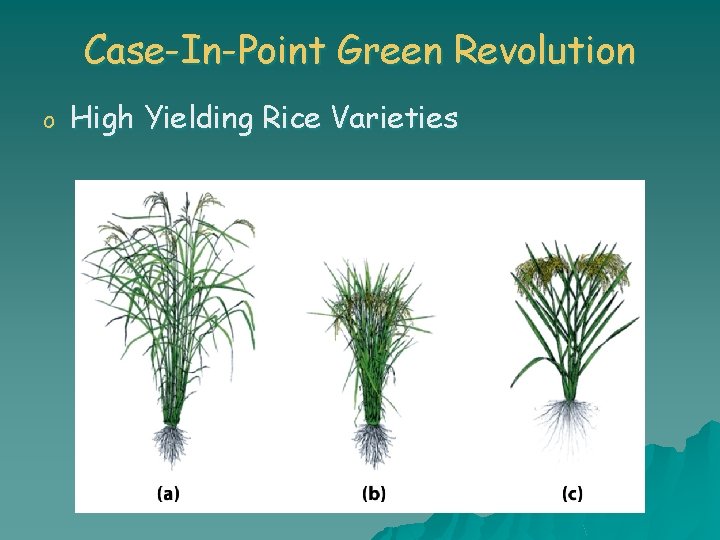
Case-In-Point Green Revolution o High Yielding Rice Varieties
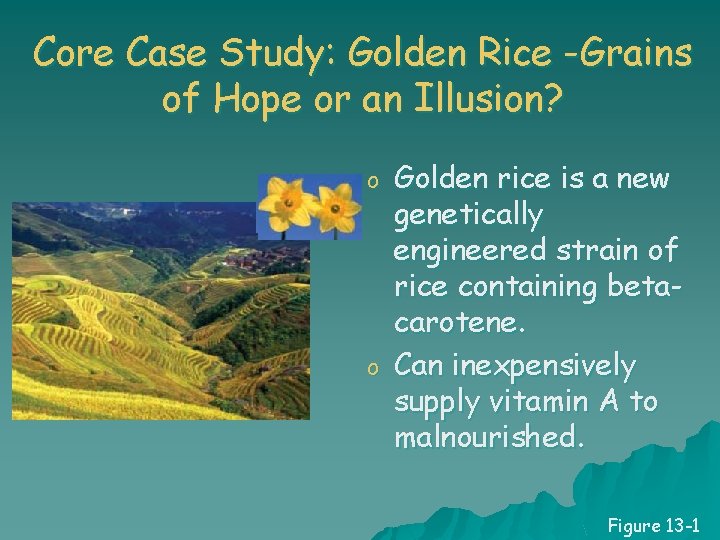
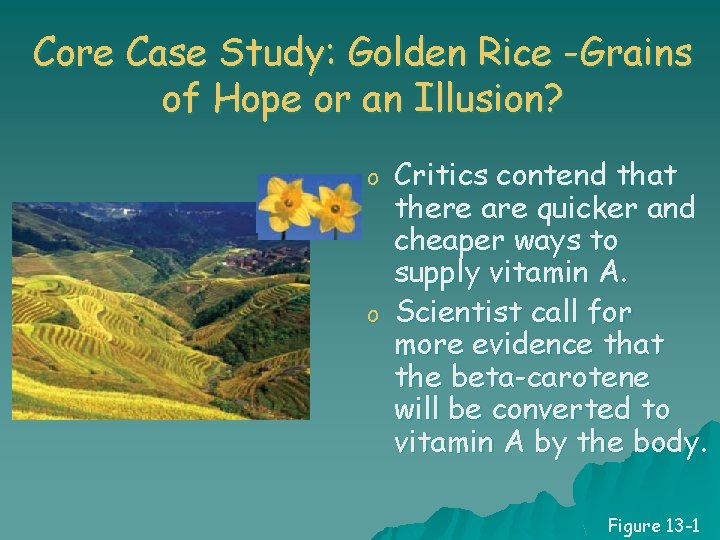
Core Case Study: Golden Rice -Grains of Hope or an Illusion? o o Golden rice is a new genetically engineered strain of rice containing betacarotene. Can inexpensively supply vitamin A to malnourished. Figure 13 -1
Core Case Study: Golden Rice -Grains of Hope or an Illusion? o o Critics contend that there are quicker and cheaper ways to supply vitamin A. Scientist call for more evidence that the beta-carotene will be converted to vitamin A by the body. Figure 13 -1
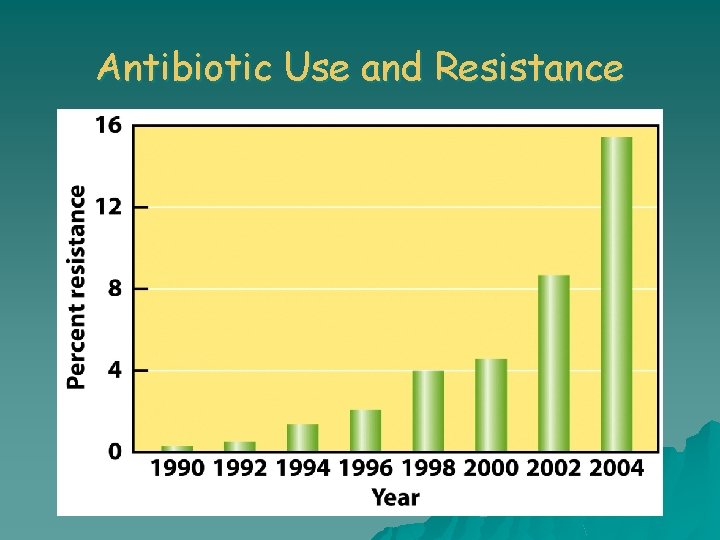
Challenges of Producing More Crop and Livestock o Increasing Livestock Yields • Hormone supplements • • • US and Canada do this Europe does not citing human health concerns Antibiotics • • 40% of antibiotics produced in US are used in livestock operations Problems with increased bacteria resistance
Antibiotic Use and Resistance
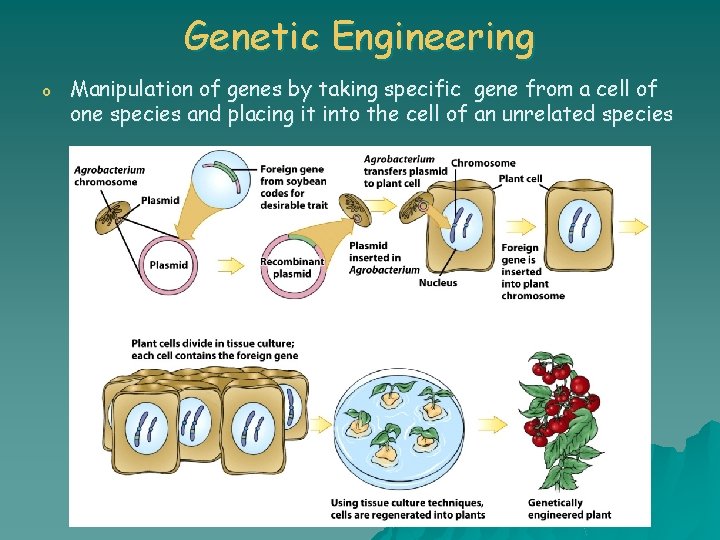
Genetic Engineering o Manipulation of genes by taking specific gene from a cell of one species and placing it into the cell of an unrelated species
Issue with Genetically Modified Organisms (GMOs) o o Determined to be safe for human consumption Concerns about GMO seed or pollen spreading in wild Backlash against GMOs are not currently labeled • FDA finds it would be counterproductive and expensive to label
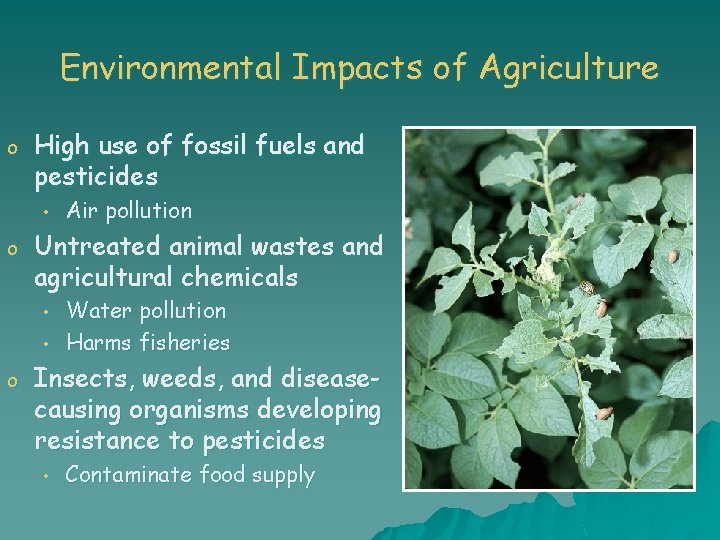
Environmental Impacts of Agriculture o High use of fossil fuels and pesticides • o Untreated animal wastes and agricultural chemicals • • o Air pollution Water pollution Harms fisheries Insects, weeds, and diseasecausing organisms developing resistance to pesticides • Contaminate food supply
Environmental Impact of Agriculture o Land degradation • o Habitat fragmentation • o Decreases future ability of land to support crops or livestock Breakup of large areas of habitat into small, isolated patches Cultivating marginal lands • • Irrigating dry land Cultivating land prone to erosion
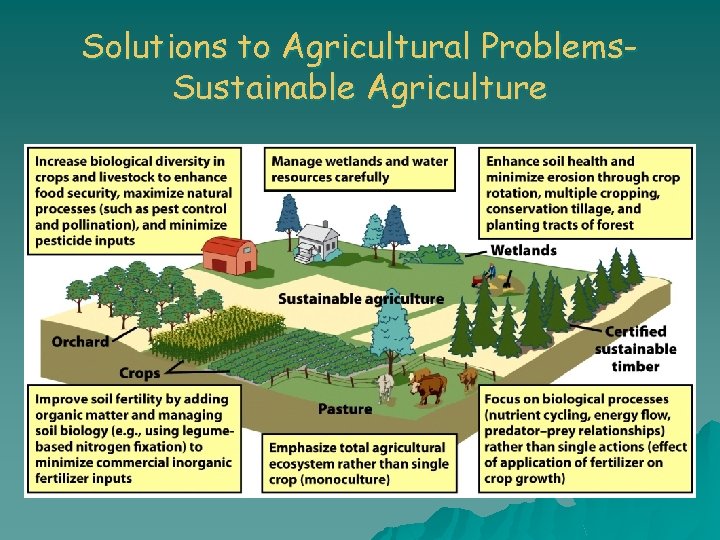
Solutions to Agricultural Problems. Sustainable Agriculture
Sustainable Agriculture o Examples: • • • o Natural Predator-prey relationships instead of pesticides Crop selection Crop rotation and conservation tillage Supplying nitrogen with legumes Organic agriculture Integrated Pest Management (IPM) • Limited use of pesticides with sustainable agriculture practices
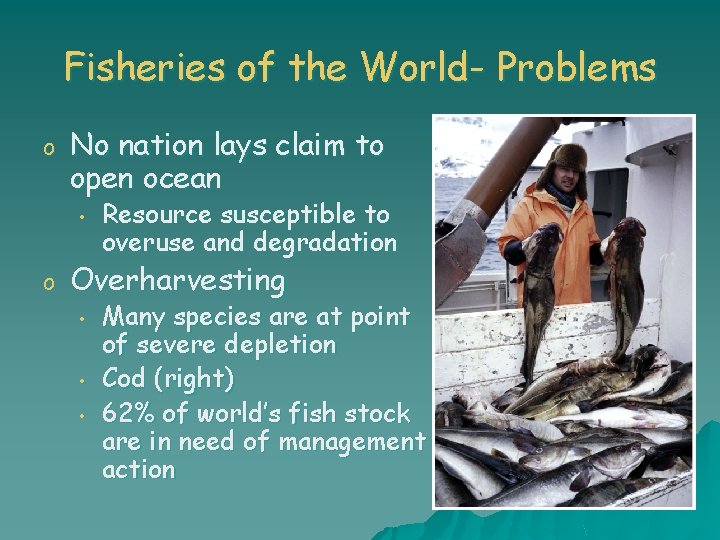
Fisheries of the World- Problems o No nation lays claim to open ocean • o Resource susceptible to overuse and degradation Overharvesting • • • Many species are at point of severe depletion Cod (right) 62% of world’s fish stock are in need of management action
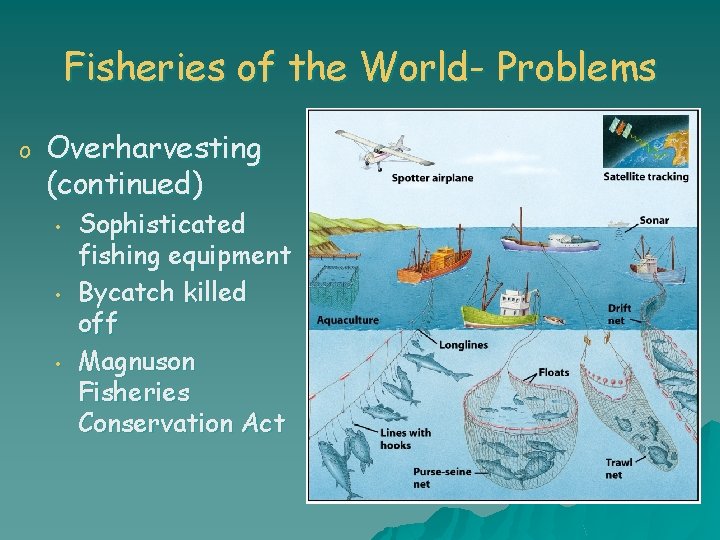
Fisheries of the World- Problems o Overharvesting (continued) • • • Sophisticated fishing equipment Bycatch killed off Magnuson Fisheries Conservation Act
Fisheries of the World- Problems o Ocean Pollution - dumping ground • • o Oil Heavy metals Deliberate litter dumping Stormwater runoff from cities and agricultural areas Aquaculture • • Growing of aquatic organisms for human consumption Great potential to supply food
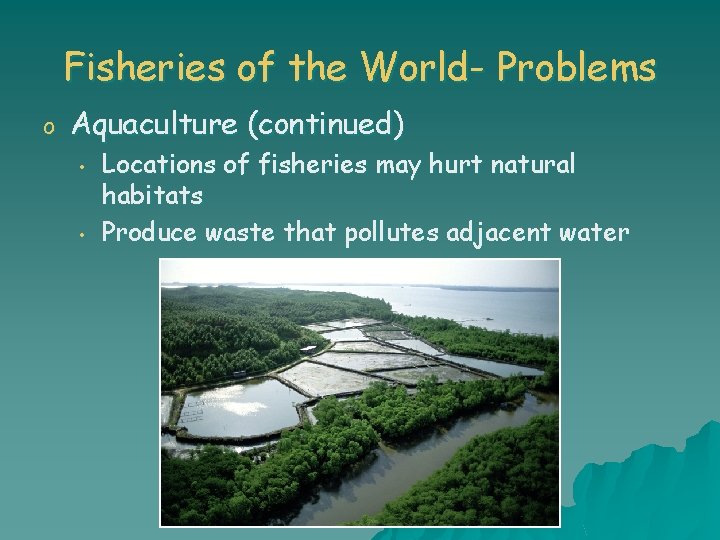
Fisheries of the World- Problems o Aquaculture (continued) • • Locations of fisheries may hurt natural habitats Produce waste that pollutes adjacent water
Aquaculture: Aquatic Feedlots o o o Raising large numbers of fish and shellfish in ponds and cages is world’s fastest growing type of food production. Fish farming involves cultivating fish in a controlled environment and harvesting them in captivity. Fish ranching involves holding anadromous species that live part of their lives in freshwater and part in saltwater. • Fish are held for the first few years, released, and then harvested when they return to spawn.
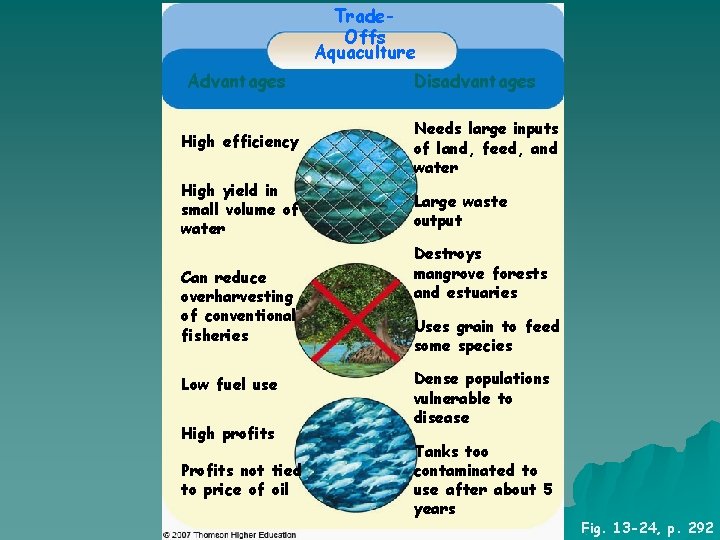
Trade. Offs Aquaculture Advantages Disadvantages High efficiency Needs large inputs of land, feed, and water High yield in small volume of water Large waste output Can reduce overharvesting of conventional fisheries Low fuel use High profits Profits not tied to price of oil Destroys mangrove forests and estuaries Uses grain to feed some species Dense populations vulnerable to disease Tanks too contaminated to use after about 5 years Fig. 13 -24, p. 292
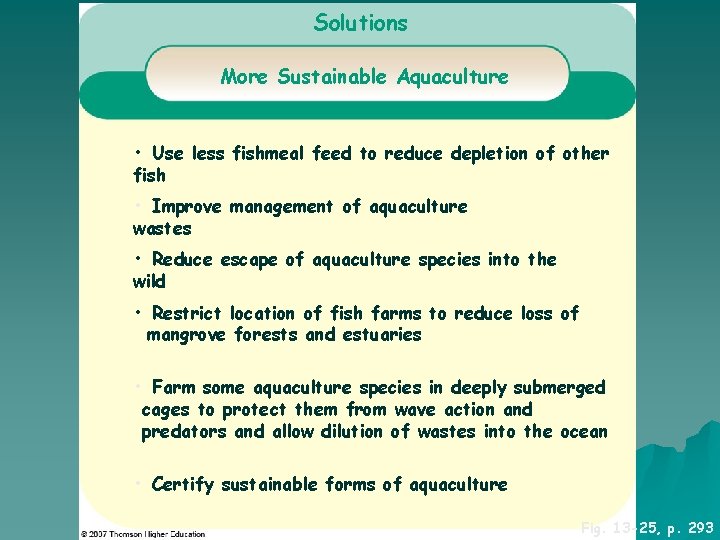
Solutions More Sustainable Aquaculture • Use less fishmeal feed to reduce depletion of other fish • Improve management of aquaculture wastes • Reduce escape of aquaculture species into the wild • Restrict location of fish farms to reduce loss of mangrove forests and estuaries • Farm some aquaculture species in deeply submerged cages to protect them from wave action and predators and allow dilution of wastes into the ocean • Certify sustainable forms of aquaculture Fig. 13 -25, p. 293
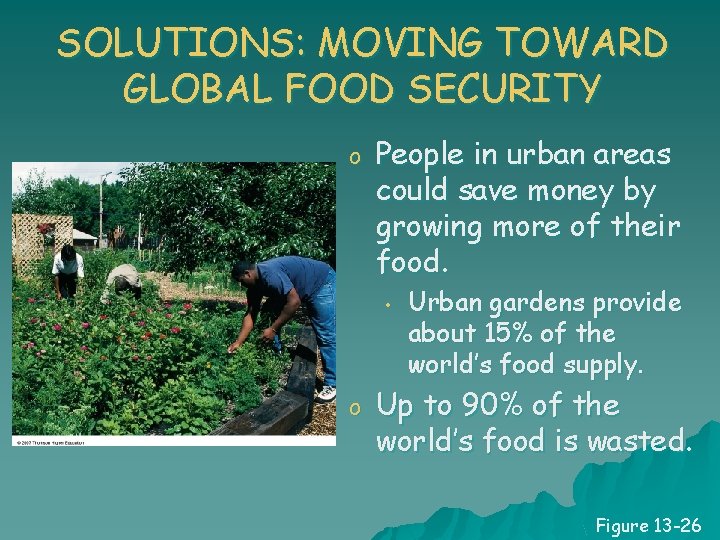
SOLUTIONS: MOVING TOWARD GLOBAL FOOD SECURITY o People in urban areas could save money by growing more of their food. • o Urban gardens provide about 15% of the world’s food supply. Up to 90% of the world’s food is wasted. Figure 13 -26
Government Policies and Food Production o Governments use three main approaches to influence food production: • • • Control prices to keep prices artificially low. Provide subsidies to keep farmers in business. Let the marketplace decide rather that implementing price controls.
Solutions: Steps Toward More Sustainable Food Production o We can increase food security by • • • slowing populations growth sharply reducing poverty slowing environmental degradation of the world’s soils and croplands.