
CHALLENGES OF PRECISION AGRICULTURE IN THE PHILIPPINES Brenda
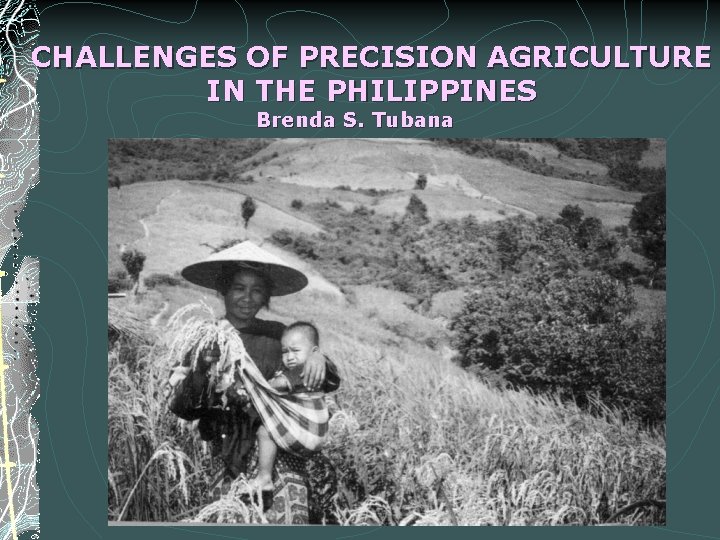
CHALLENGES OF PRECISION AGRICULTURE IN THE PHILIPPINES Brenda S. Tubana
OVERVIEW Ø Products of precision agriculture Ø Philippines: Information and basic statistics Ø Agriculture in the Philippines Ø Problems in Philippine Agriculture Ø Challenges and Strategies Ø Conclusion
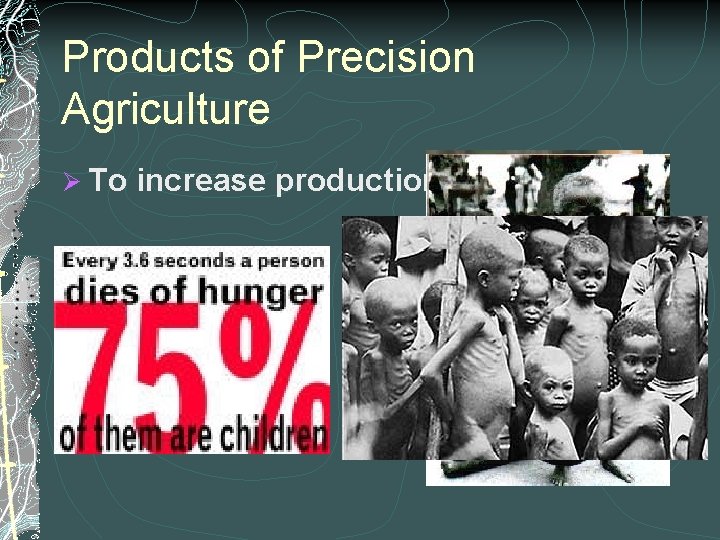
Products of Precision Agriculture Ø To increase production

Products of Precision Agriculture Ø To decrease environmental and human life risk
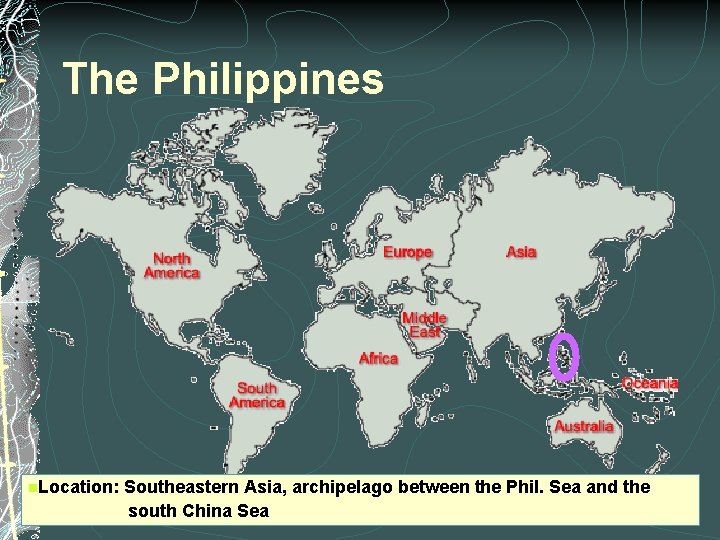
The Philippines n. Location: Southeastern Asia, archipelago between the Phil. Sea and the south China Sea
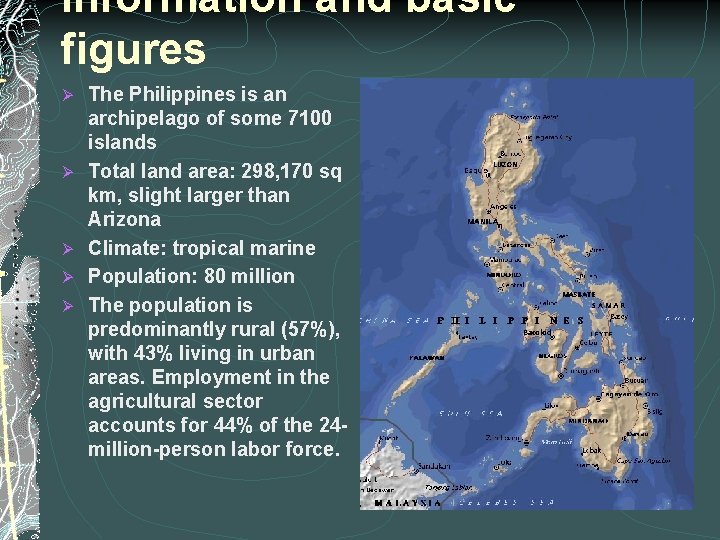
Information and basic figures Ø Ø Ø The Philippines is an archipelago of some 7100 islands Total land area: 298, 170 sq km, slight larger than Arizona Climate: tropical marine Population: 80 million The population is predominantly rural (57%), with 43% living in urban areas. Employment in the agricultural sector accounts for 44% of the 24 million-person labor force.
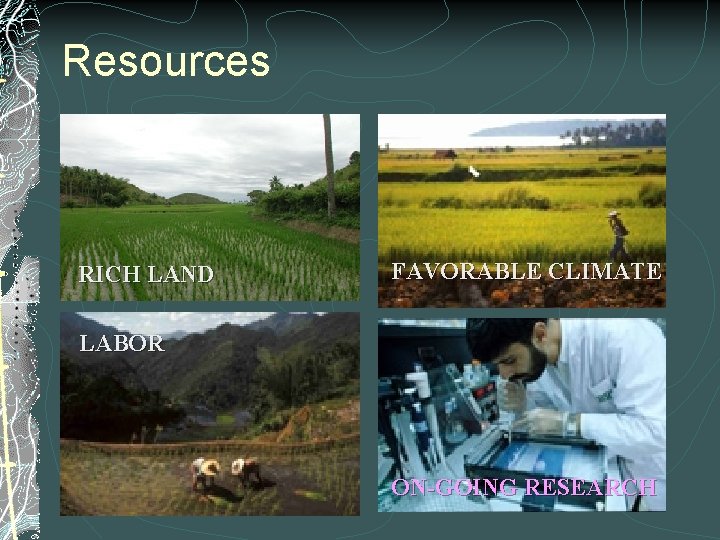
Resources RICH LAND FAVORABLE CLIMATE LABOR ON-GOING RESEARCH
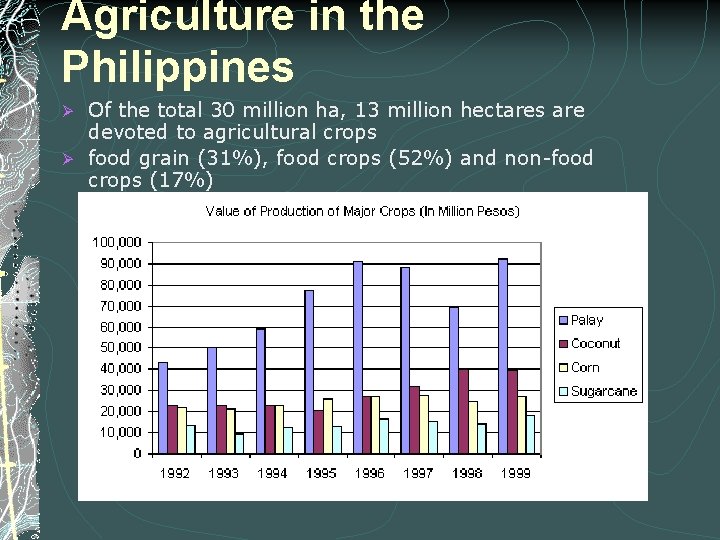
Agriculture in the Philippines Of the total 30 million ha, 13 million hectares are devoted to agricultural crops Ø food grain (31%), food crops (52%) and non-food crops (17%) Ø
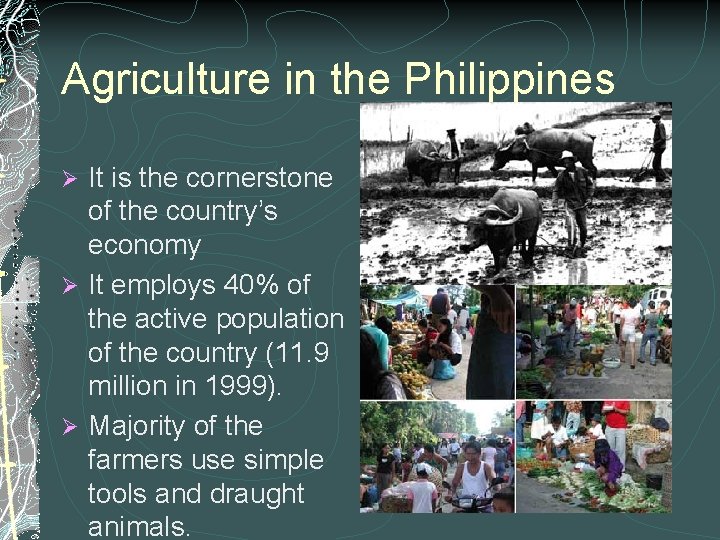
Agriculture in the Philippines It is the cornerstone of the country’s economy Ø It employs 40% of the active population of the country (11. 9 million in 1999). Ø Majority of the farmers use simple tools and draught animals. Ø
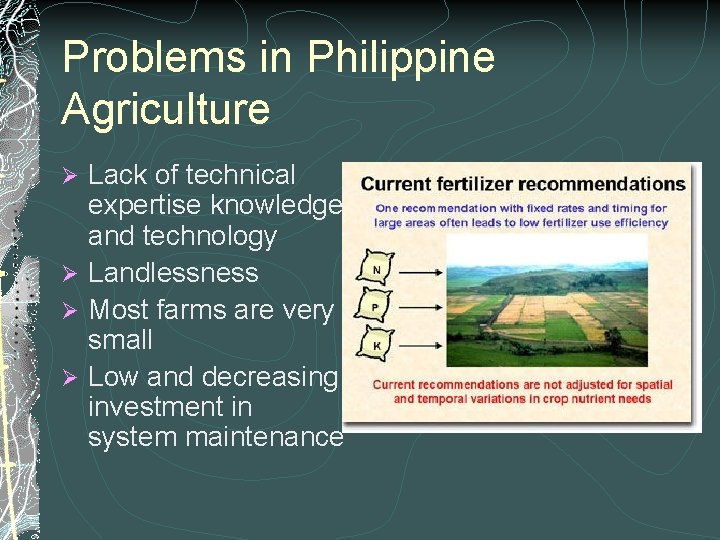
Problems in Philippine Agriculture Lack of technical expertise knowledge and technology Ø Landlessness Ø Most farms are very small Ø Low and decreasing investment in system maintenance Ø
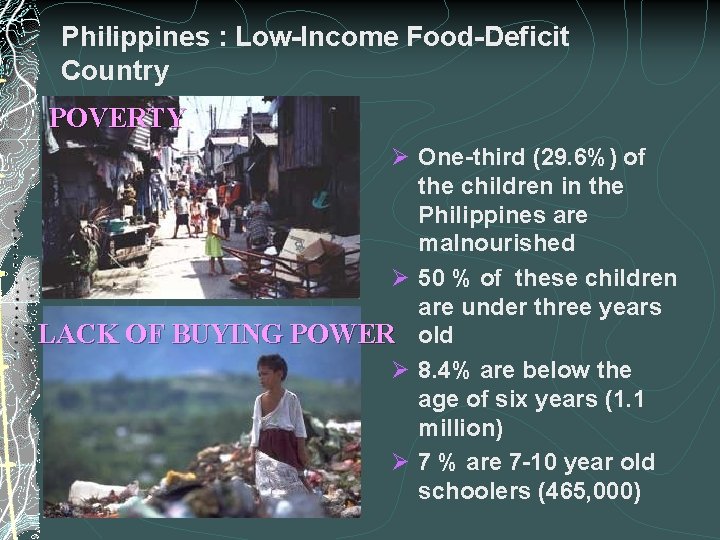
Philippines : Low-Income Food-Deficit Country POVERTY Ø One-third (29. 6%) of the children in the Philippines are malnourished Ø 50 % of these children are under three years LACK OF BUYING POWER old Ø 8. 4% are below the age of six years (1. 1 million) Ø 7 % are 7 -10 year old schoolers (465, 000)

Challenges and Strategies: 1. Reduce yield gaps and increase profit Factor Strategies Implication Crop Establishment Manual to machine transplanting; direct seeding Reduced labor, improved timeliness Water Management Less-available water. Better maintenance of irrigation & drainage structure; shifts to low water levels Less water use, more area irrigated, higher water use efficiency Nutrient management From blanket to sitespecific, need-based nutrient management Less fertilizer cost, same or higher yield, better quality water and soil Grain quality Manual to mechanical Timeliness, better
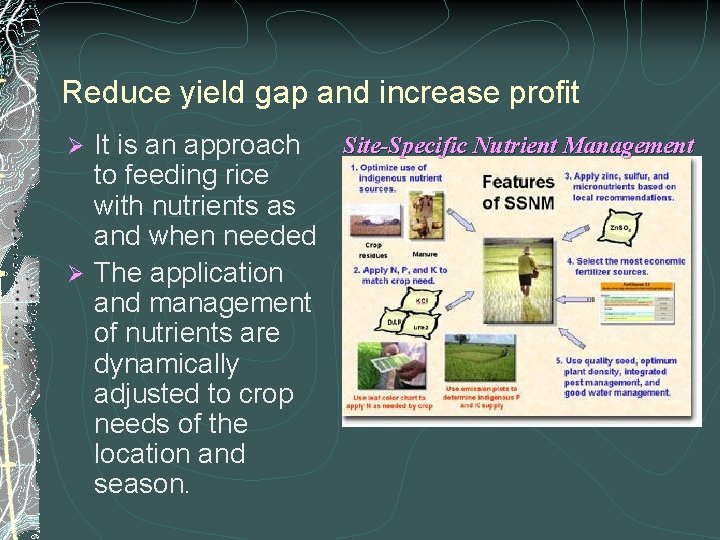
Reduce yield gap and increase profit It is an approach Site-Specific Nutrient Management to feeding rice with nutrients as and when needed Ø The application and management of nutrients are dynamically adjusted to crop needs of the location and season. Ø
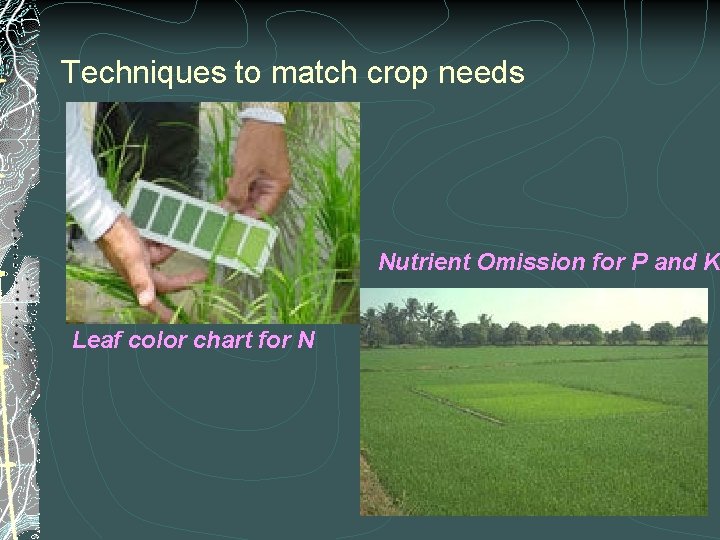
Techniques to match crop needs Nutrient Omission for P and K Leaf color chart for N
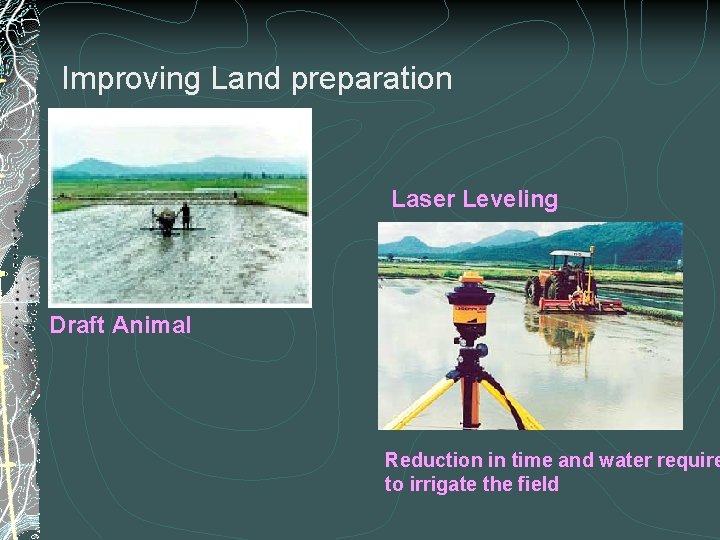
Improving Land preparation Draft Animal Laser Leveling Reduction in time and water require to irrigate the field
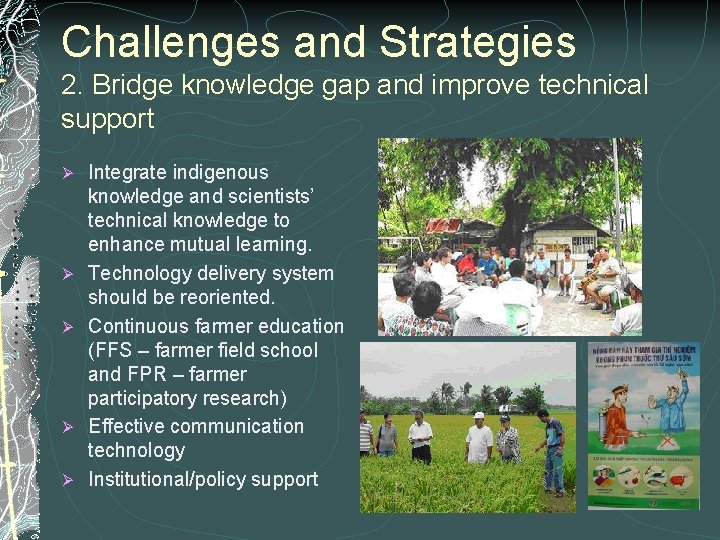
Challenges and Strategies 2. Bridge knowledge gap and improve technical support Ø Ø Ø Integrate indigenous knowledge and scientists’ technical knowledge to enhance mutual learning. Technology delivery system should be reoriented. Continuous farmer education (FFS – farmer field school and FPR – farmer participatory research) Effective communication technology Institutional/policy support
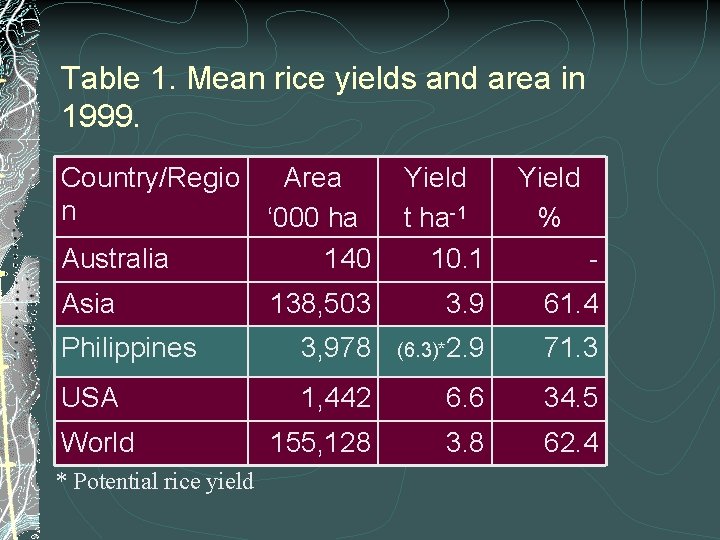
Table 1. Mean rice yields and area in 1999. Country/Regio Area n ‘ 000 ha Australia 140 Asia Yield t ha-1 10. 1 Yield % - 138, 503 3. 9 61. 4 Philippines 3, 978 (6. 3)*2. 9 71. 3 USA 1, 442 6. 6 34. 5 155, 128 3. 8 62. 4 World * Potential rice yield
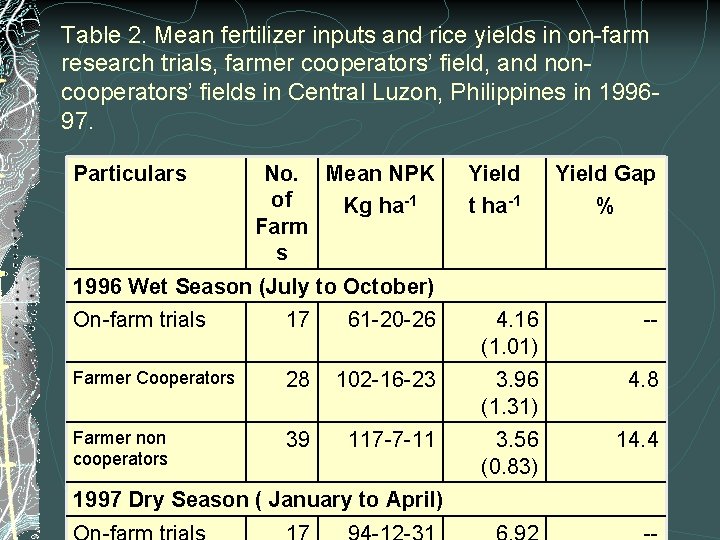
Table 2. Mean fertilizer inputs and rice yields in on-farm research trials, farmer cooperators’ field, and noncooperators’ fields in Central Luzon, Philippines in 199697. Particulars No. Mean NPK of Kg ha-1 Farm s Yield t ha-1 Yield Gap % 1996 Wet Season (July to October) On-farm trials 17 61 -20 -26 4. 16 (1. 01) -- Farmer Cooperators 28 102 -16 -23 3. 96 (1. 31) 4. 8 Farmer non cooperators 39 117 -7 -11 3. 56 (0. 83) 14. 4 1997 Dry Season ( January to April)
Conclusion Ø Economic and environmental benefit of precision agriculture should be brought into the knowledge of the farmers to achieve impact on productivity and profitability.
References Ø Ø Ø Ø Ø http: //www. public. iastate. edu/ ~cfford/342 Myth 5. htm http: //www. unesco. org/courier/2001_01/uk/doss 24. htm http: //countrystudies. us/philippines/62. htm http: //www. gisdevelopment. net/application/agriculture/overview/mi 0 3127 pf. htm http: //www. photius. com/wfb 1999/philippines_econo my. html http: //www. hindu. com/thehindu/seta/2002/02/21/stories/200202210 0280400. htm http: //www. robot. cs. kobe-u. ac. jp/~botond/ pictures/philip. . http: //www. neptunediving. com/. . . / about/philippines. php. http: //www. knowledgebank. irri. org/ssnm/default. htm http: //www. tropentag. de/2002/proceedings/node 102. html

THANK YOU! QUESTIONS?
- Slides: 21