
Challenges of mapping current CKAN metadata to DCAT
- Slides: 9
Challenges of mapping current CKAN metadata to DCAT Sebastian Neumaier, Jürgen Umbrich, Axel Polleres Vienna University of Economics and Business, Vienna, Austria
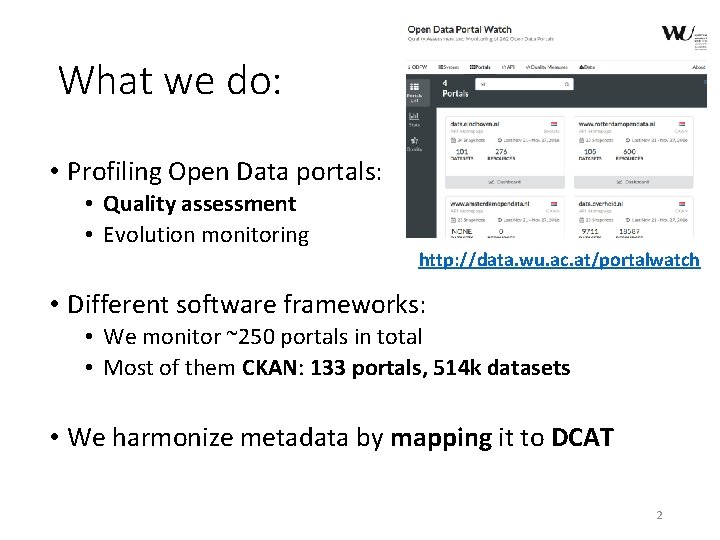
What we do: • Profiling Open Data portals: • Quality assessment • Evolution monitoring http: //data. wu. ac. at/portalwatch • Different software frameworks: • We monitor ~250 portals in total • Most of them CKAN: 133 portals, 514 k datasets • We harmonize metadata by mapping it to DCAT 2
CKAN (mostly) exports DCAT • CKAN provides extension to export DCAT • Mapping of datasets and resources to dcat: Dataset and dcat: Distribution • Recent version of extension supports DCAT-AP • 93 of 133 CKAN portals provide DCAT export 3
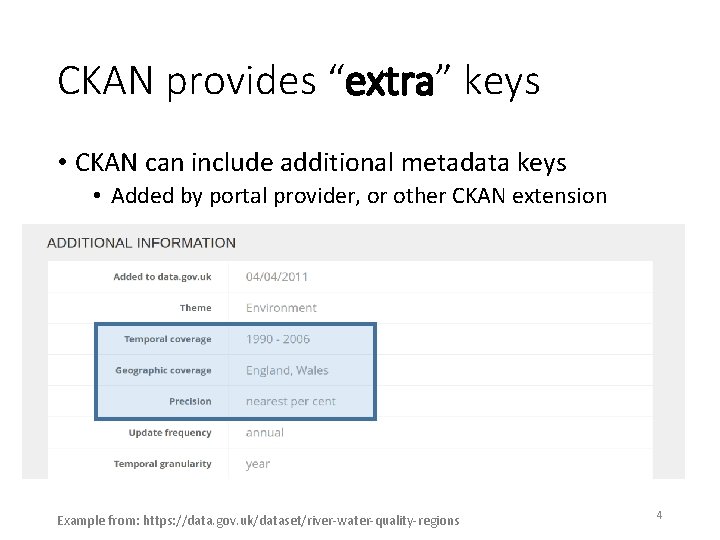
CKAN provides “extra” keys • CKAN can include additional metadata keys • Added by portal provider, or other CKAN extension Example from: https: //data. gov. uk/dataset/river-water-quality-regions 4
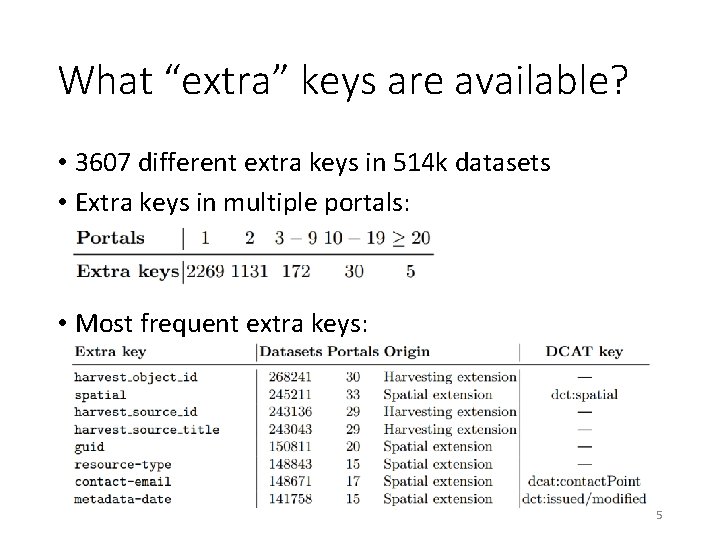
What “extra” keys are available? • 3607 different extra keys in 514 k datasets • Extra keys in multiple portals: • Most frequent extra keys: 5
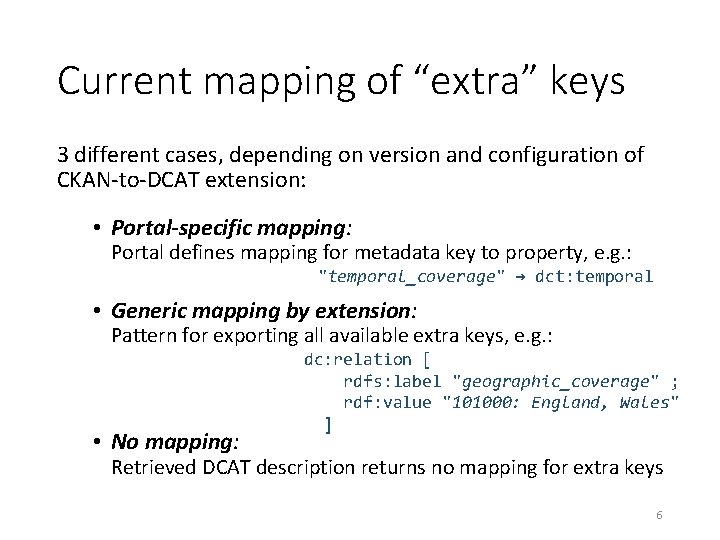
Current mapping of “extra” keys 3 different cases, depending on version and configuration of CKAN-to-DCAT extension: • Portal-specific mapping: Portal defines mapping for metadata key to property, e. g. : "temporal_coverage" → dct: temporal • Generic mapping by extension: Pattern for exporting all available extra keys, e. g. : • No mapping: dc: relation [ rdfs: label "geographic_coverage" ; rdf: value "101000: England, Wales" ] Retrieved DCAT description returns no mapping for extra keys 6
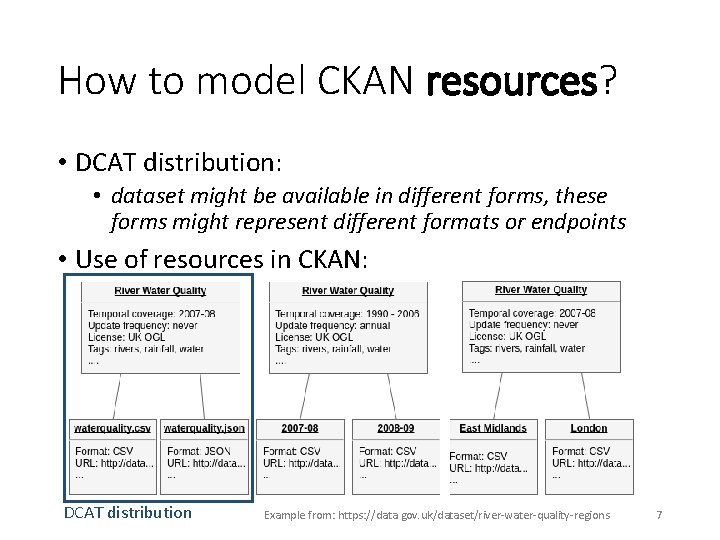
How to model CKAN resources? • DCAT distribution: • dataset might be available in different forms, these forms might represent different formats or endpoints • Use of resources in CKAN: DCAT distribution Example from: https: //data. gov. uk/dataset/river-water-quality-regions 7
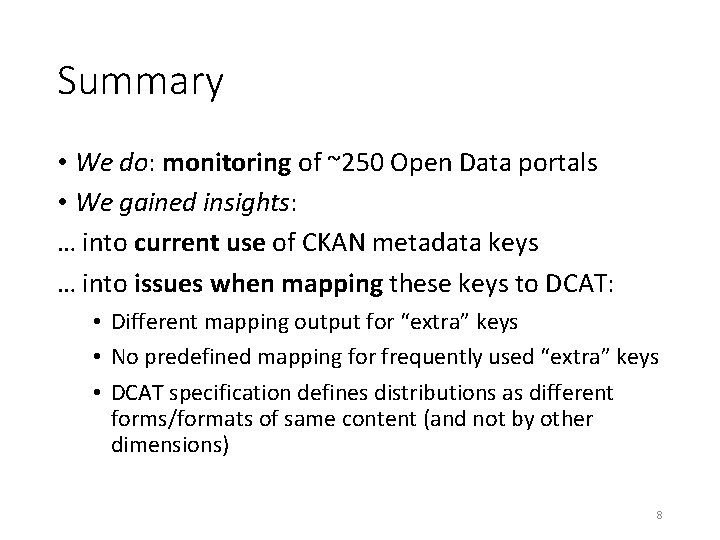
Summary • We do: monitoring of ~250 Open Data portals • We gained insights: … into current use of CKAN metadata keys … into issues when mapping these keys to DCAT: • Different mapping output for “extra” keys • No predefined mapping for frequently used “extra” keys • DCAT specification defines distributions as different forms/formats of same content (and not by other dimensions) 8
Conclusions & Suggestions • Different output: install/activate/update DCAT extension • The widely used CKAN extension lacks mappings for popular extra keys (e. g. spatial) • DCAT recommendation could provide properties for frequent extra keys, e. g. , harvested datasets (owl: same. As? ) • Distribution level should recommend(/allow) other dimension descriptions (e. g. , dct: temporal, dct: spatial) Sebastian Neumaier WU Vienna, Institute for Information Business email: sebastian. neumaier@wu. ac. at url: https: //sebneumaier. wordpress. com/ twitter: @sebneum