
Challenges of implementing an incentive based compensation system
Challenges of implementing an incentive based compensation system in a charitable organization Donald E. Lighter, MD, Director of Healthcare Quality, Shriners Hospitals for Children Ron Vance, Principal, Ethos Partners
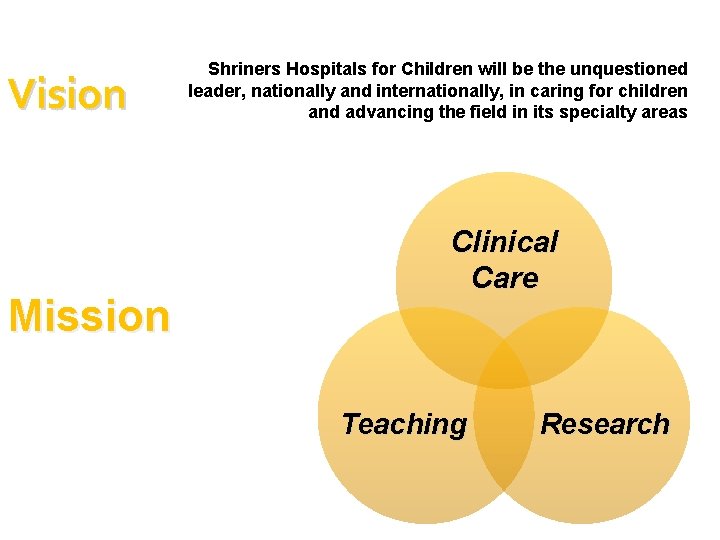
Vision Mission Shriners Hospitals for Children will be the unquestioned leader, nationally and internationally, in caring for children and advancing the field in its specialty areas Clinical Care Teaching Research
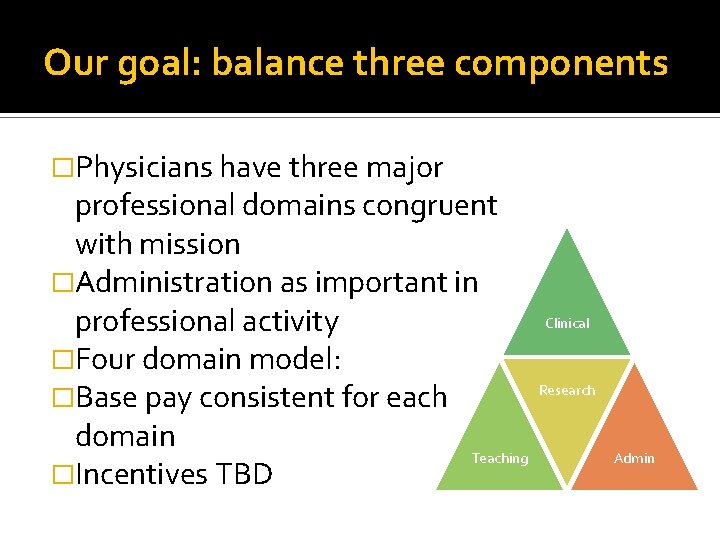
Our goal: balance three components �Physicians have three major professional domains congruent with mission �Administration as important in professional activity �Four domain model: �Base pay consistent for each domain Teaching �Incentives TBD Clinical Research Admin
Background – SHC � 22 pediatric subspecialty hospitals Orthopedics Burns Spinal cord injury Cleft lip and palate �Primarily pediatric subspecialists �Care provided at no cost to families
SHC Governance �Governance – board of trustees All Nobles in the SHC fraternity Elected to board, not appointed No outside advisory board Mixture of experience in health care �Imperial Session 1500 Nobles, meet once per year in convention atmosphere Many key decisions must pass through Imperial Session
SHC Physicians �Pediatrics – general (few), subspecialists (many) About 175 employed Remainder contracted or volunteer Academic orientation – research and teaching Many with little experience outside SHC – preconceived notions about “real world” Salaries generally somewhat lower than rest of industry – no ED call, nearly all care is elective
SHC Operations �Headquarters functions Oversight of hospital operations Data collection and reporting Legal oversight (including donations) Corporate development Public relations Research oversight Corporate accounting Capital resource allocation
SHC Operations (cont. ) � Hospital operations “Trinity” – administrator, chief of staff, director of patient care services Local board of governors – Nobles elected to positions ▪ Relationship with national board sometimes strained ▪ Involvement in local operations varies Local management of facilities, materials, medical management, admissions, discharges, IS Centralized clinical information system (Cerner)
SHC Financial �Operations funded from return on endowment �Contributions largely come to HQ for deposit into endowment and investment management �Budgets from hospitals vetted by HQ, funds distributed throughout the year
SHC Corporate Challenges �Demand for services Longstanding “care is free, they will come” philosophy Effect of payment programs (SCHIP, other insurance, Medicaid) Shrinking pool of pediatric subspecialists, aging of medical staff Changing patterns of care – inpatient to outpatient High transportation costs
SHC Corporate Challenges �Financial Variable return on investment portfolio Rising costs of healthcare Growth in use of technology Research costs Competition for contributions Shrinking membership in the fraternity Wills and estates
SHC Corporate Challenges �Data availability We don’t bill (no coding) No costing system Cost tracking has been largely manual to date No data warehouse Data collection by hospitals variable No motivation to submit data Limited analytic capability (one statistician)
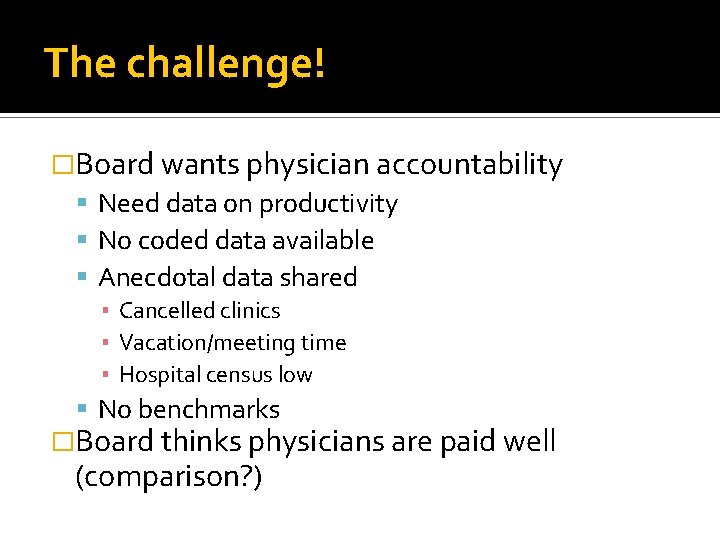
The challenge! �Board wants physician accountability Need data on productivity No coded data available Anecdotal data shared ▪ Cancelled clinics ▪ Vacation/meeting time ▪ Hospital census low No benchmarks �Board thinks physicians are paid well (comparison? )
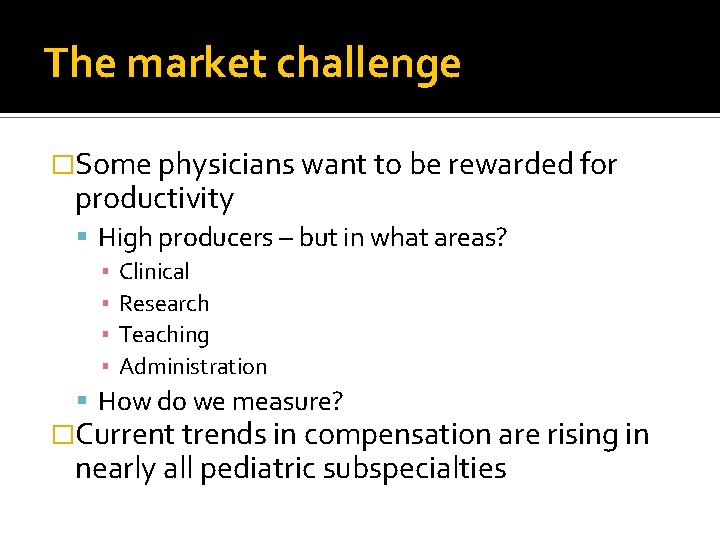
The market challenge �Some physicians want to be rewarded for productivity High producers – but in what areas? ▪ Clinical ▪ Research ▪ Teaching ▪ Administration How do we measure? �Current trends in compensation are rising in nearly all pediatric subspecialties
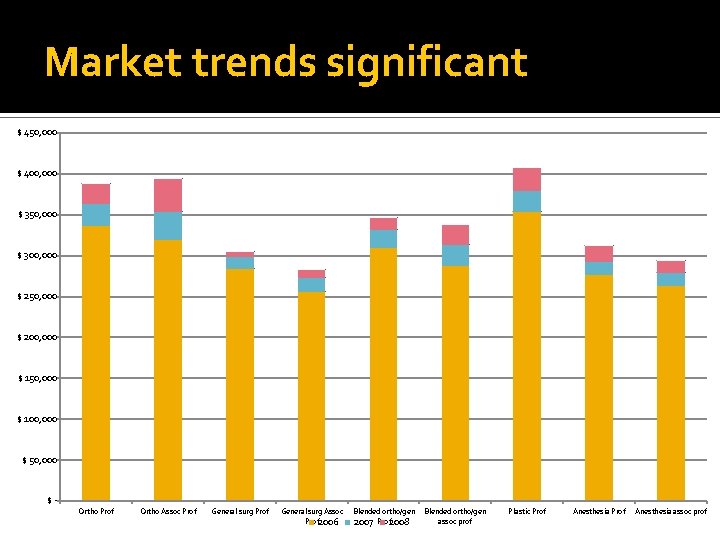
Market trends significant $ 450, 000 $ 400, 000 $ 350, 000 $ 300, 000 $ 250, 000 $ 200, 000 $ 150, 000 $ 100, 000 $ 50, 000 $Ortho Prof Ortho Assoc Prof General surg Assoc Prof 2006 Blended ortho/gen 2007 Prof 2008 Blended ortho/gen assoc prof Plastic Prof Anesthesia assoc prof
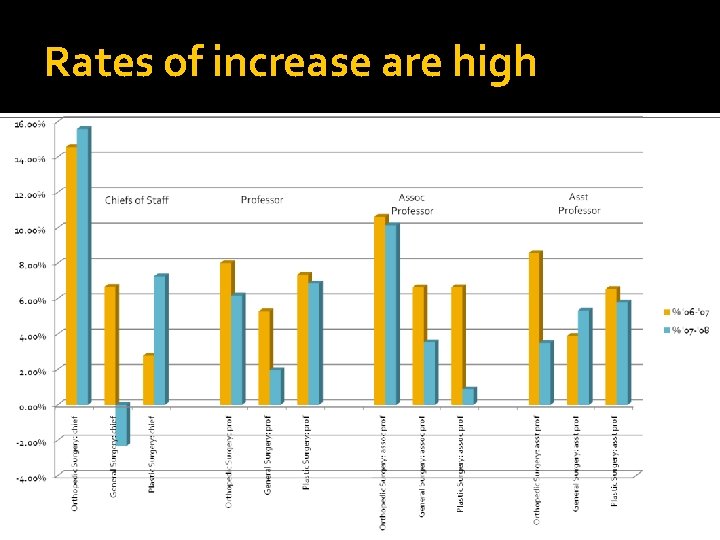
Rates of increase are high
Board – Physician Disconnection �Physicians – reward for a balance of four areas Reputation is important Specialties tend to be more academic Research, teaching are highly regarded and gain peer recognition �Board – reward for clinical activity Clinical activity gains public attention, increases contributions Tangible results for Nobles
Efforts to reconcile �Multiple presentations to Salary/Personnel committee of the board on concepts �Development of measurement system to define accountability for governance �Gain buy in from medical staff throughout the system Assistance in data collection and reporting Physician philosophy – we’re all the same (sort of)
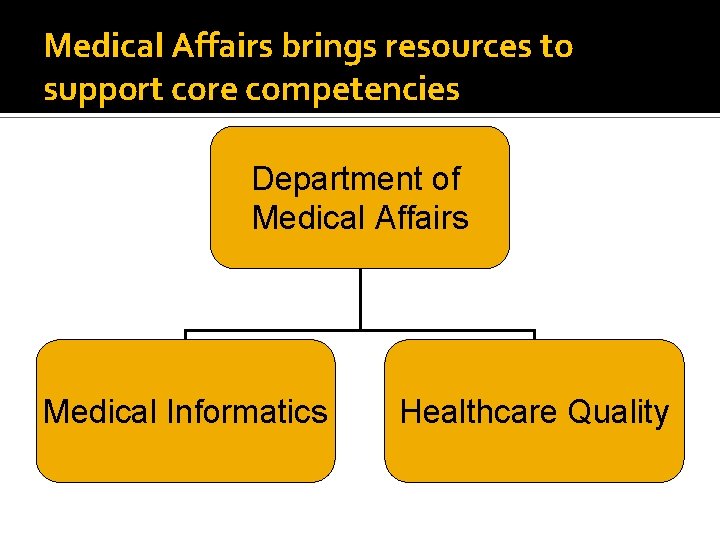
Medical Affairs brings resources to support core competencies Department of Medical Affairs Medical Informatics Healthcare Quality
Medical Affairs leads efforts for physician accountability �Physician evaluation system (PPAS) Core value review and analysis Metrics – credentialing program requirements ▪ Six competencies ▪ ▪ ▪ Medical knowledge Patient care Practice based learning Systems based learning Professionalism Communication
Integrating systems to achieve the vision �Evidence based medicine Clinical data as the source of healthcare improvement Issues ▪ Access ▪ Accuracy ▪ Analysis �Evidence based management Business data for decision support Same issues
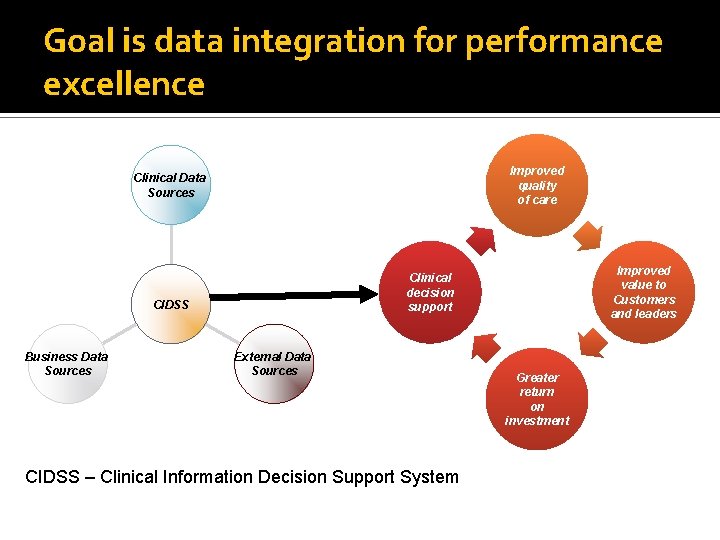
Goal is data integration for performance excellence Improved quality of care Clinical Data Sources CIDSS Business Data Sources Improved value to Customers and leaders Clinical decision support External Data Sources CIDSS – Clinical Information Decision Support System Greater return on investment
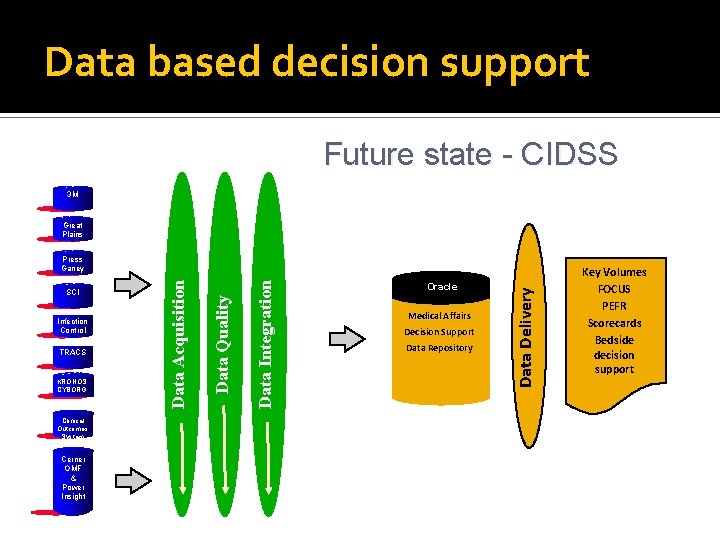
Data based decision support Future state - CIDSS 3 M Great Plains KRONOS CYBORG Clinical Outcomes System Cerner OMF & Power Insight Oracle Medical Affairs Decision Support Data Repository Data Delivery TRACS Data Integration Infection Control Data Quality SCI Data Acquisition Press Ganey Key Volumes FOCUS PEFR Scorecards Bedside decision support
Design of compensation packages �Clear recognition of need for data �Gaining physician buy in for clinical data collection Educational efforts Developing incentives (if you measure it, they will comply) Clear goals and objectives for PPAS – improvement, not punishment �Development of compensation packages that fit within the budget
First goal – standardize pay �Bringing all physicians to 85%-ile of median for specialty (AAMC) �Narrowing the band of compensation Lower band = 42. 5%-ile Upper band = 75%-ile �What to do for high paid physicians (>75%-ile) �Market adjustments have been substantial
Second goal – design incentives �Balance of four areas Getting appropriate data Creating incentives for high performance, rather than just performance ▪ “Performance bands”, i. e. use our internal distribution for determining incentive limits? ▪ Benchmarks? – working with other similar institutions ▪ Our physicians do not generate revenue – only cost!
Third goal – balancing board and docs �Developing incentive system that satisfies board members who feel that physicians are paid well Commoditization of physicians Comparisons with their own reality Economic pinch(es) �Developing incentive system that satisfies physicians who see high salaries in other organizations The greener grass

Welcome to my world! Thanks!
- Slides: 28