
Challenges in the Contemporary Peacekeeping Environment A Personal
- Slides: 11
Challenges in the Contemporary Peacekeeping Environment A Personal Perspective 21 September 2011 Presented by Lieutenant Colonel Paul Armitage MBE Development, Concepts and Doctrine Centre
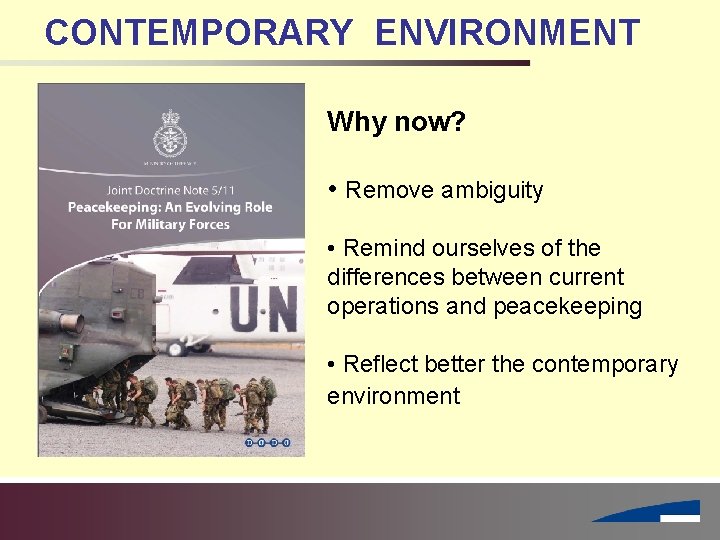
CONTEMPORARY ENVIRONMENT Why now? • Remove ambiguity • Remind ourselves of the differences between current operations and peacekeeping • Reflect better the contemporary environment
PEACEKEEPING Is the technique designed to support the implementation of a ceasefire or peace agreement, however fragmented, where major hostility has halted, and to assist in implementing agreements achieved by the peacemakers.
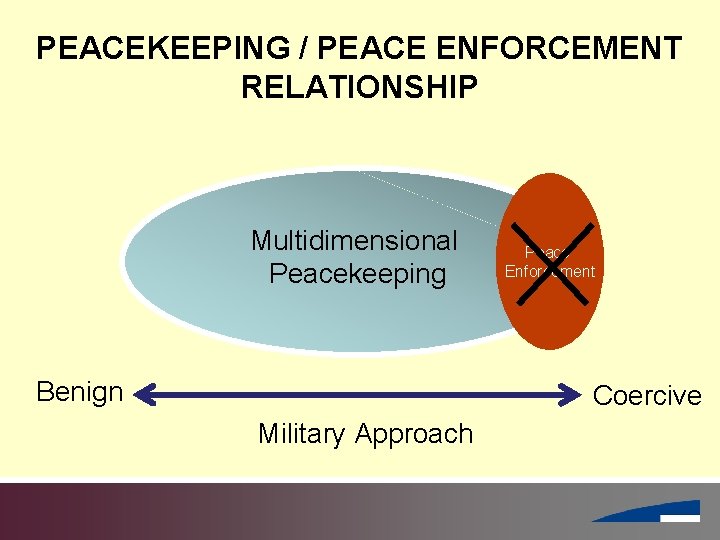
PEACEKEEPING / PEACE ENFORCEMENT RELATIONSHIP Multidimensional Peacekeeping Benign Peace Enforcement Coercive Military Approach
PEACE ENFORCEMENT. . involves the application of a range of coercive measures, including the use of military force. Such actions are authorised to restore international peace and security in situations where the Security Council has determined the existence of a threat to the peace. . UN Peacekeeping Guidelines: 2008
ROBUST PEACEKEEPING (the requirements) • • • Domestic political will to implement the mandate Understanding of why you’re there Understanding the environment Resourced and trained appropriately An agile and effective chain of command The ability and willingness to act
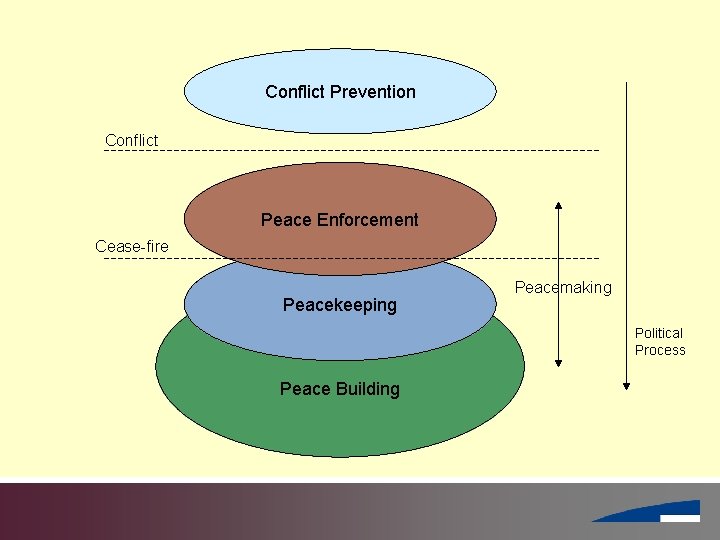
Conflict Prevention Conflict Peace Enforcement Cease-fire Peacekeeping Peacemaking Political Process Peace Building
PEACEKEEPING PRINCIPLES • Consent • Impartiality • Minimum Force for Self Defence and Implementation of the Mandate • Political Primacy • Legitimacy • Cause no Harm – Conflict-Sensitive Activity • An Integrated Approach
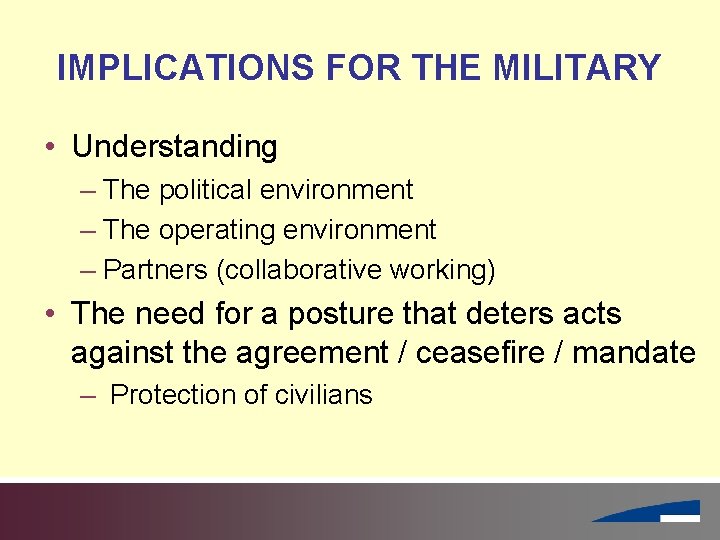
IMPLICATIONS FOR THE MILITARY • Understanding – The political environment – The operating environment – Partners (collaborative working) • The need for a posture that deters acts against the agreement / ceasefire / mandate – Protection of civilians
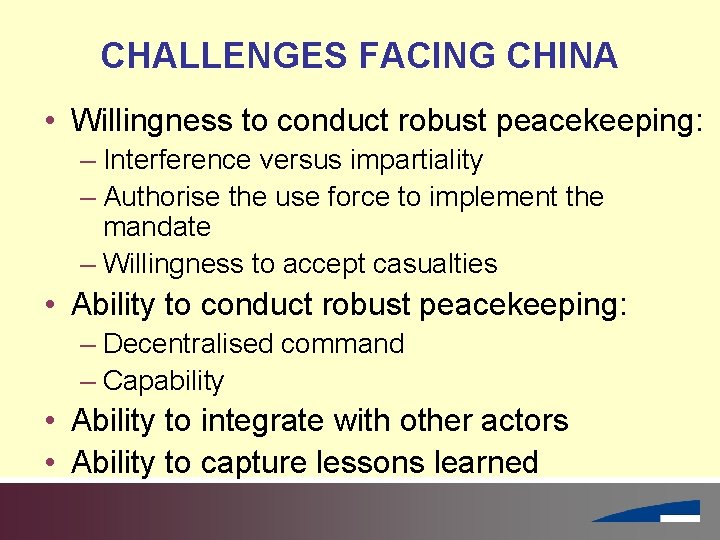
CHALLENGES FACING CHINA • Willingness to conduct robust peacekeeping: – Interference versus impartiality – Authorise the use force to implement the mandate – Willingness to accept casualties • Ability to conduct robust peacekeeping: – Decentralised command – Capability • Ability to integrate with other actors • Ability to capture lessons learned
www. mod. uk/dcdc paul. armitage 457@mod. uk