
Challenges in Haptic Communications Over the Tactile Internet

- Slides: 20
Challenges in Haptic Communications Over the Tactile Internet IEEE Access, 2017 1
What are haptic data? - Touch - Proprioception - Kinaesthesia 2
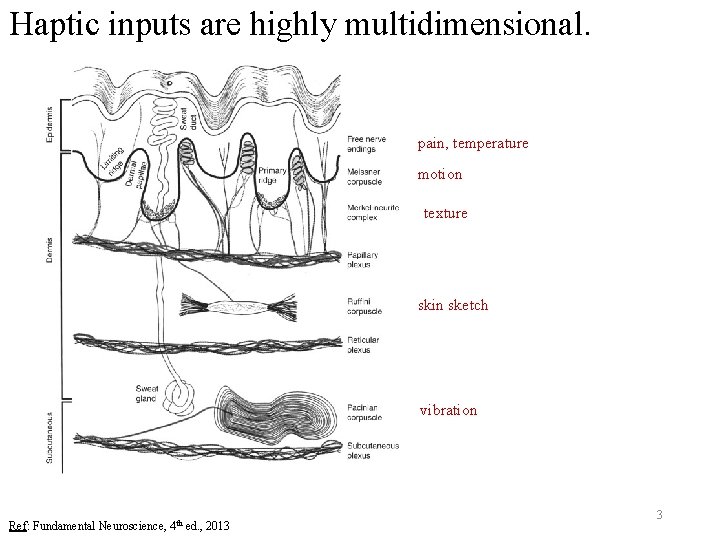
Haptic inputs are highly multidimensional. pain, temperature motion texture skin sketch vibration Ref: Fundamental Neuroscience, 4 th ed. , 2013 3
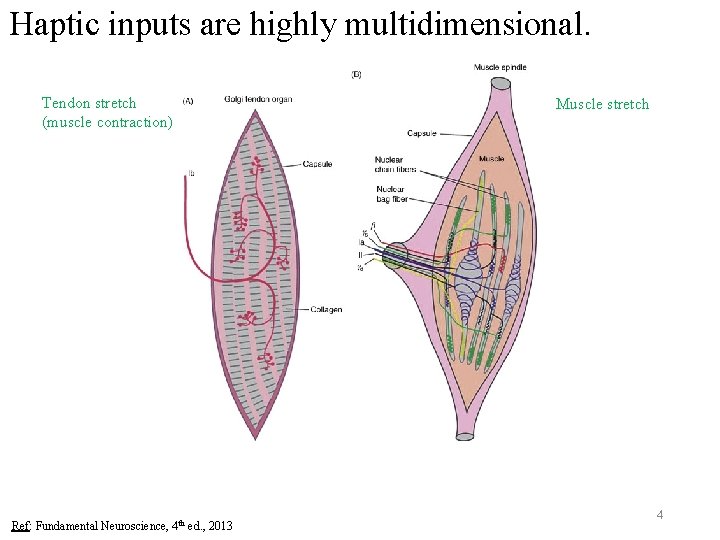
Haptic inputs are highly multidimensional. Tendon stretch (muscle contraction) Ref: Fundamental Neuroscience, 4 th ed. , 2013 Muscle stretch 4
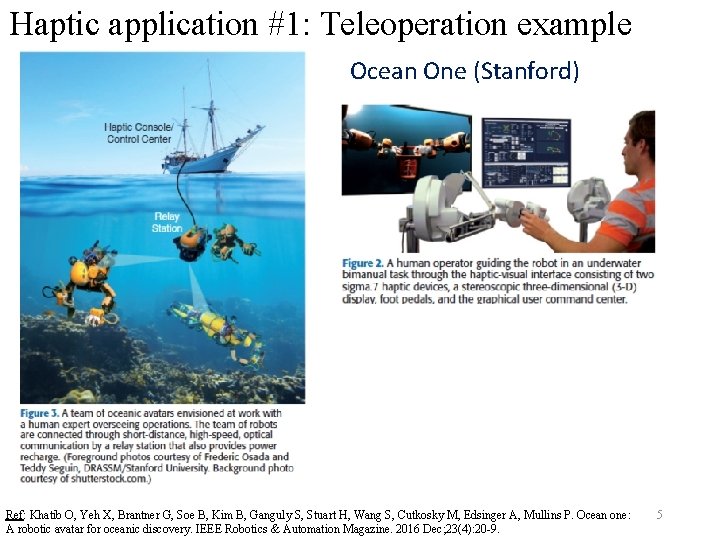
Haptic application #1: Teleoperation example Ocean One (Stanford) Ref: Khatib O, Yeh X, Brantner G, Soe B, Kim B, Ganguly S, Stuart H, Wang S, Cutkosky M, Edsinger A, Mullins P. Ocean one: A robotic avatar for oceanic discovery. IEEE Robotics & Automation Magazine. 2016 Dec; 23(4): 20 -9. 5
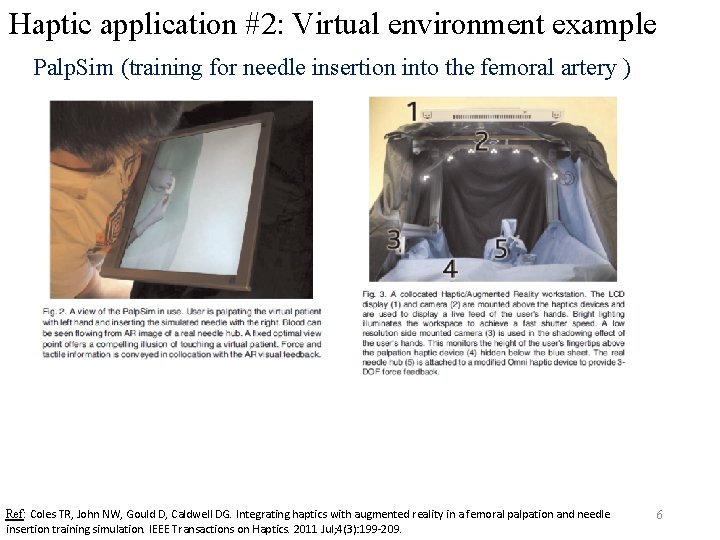
Haptic application #2: Virtual environment example Palp. Sim (training for needle insertion into the femoral artery ) Ref: Coles TR, John NW, Gould D, Caldwell DG. Integrating haptics with augmented reality in a femoral palpation and needle insertion training simulation. IEEE Transactions on Haptics. 2011 Jul; 4(3): 199 -209. 6
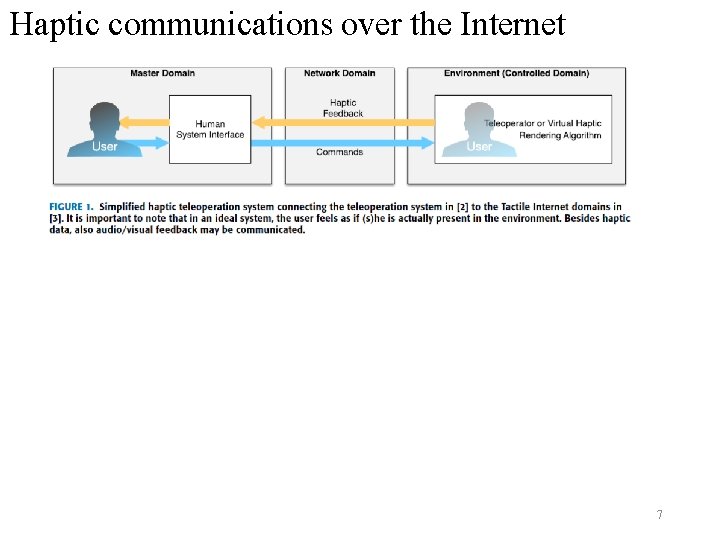
Haptic communications over the Internet 7
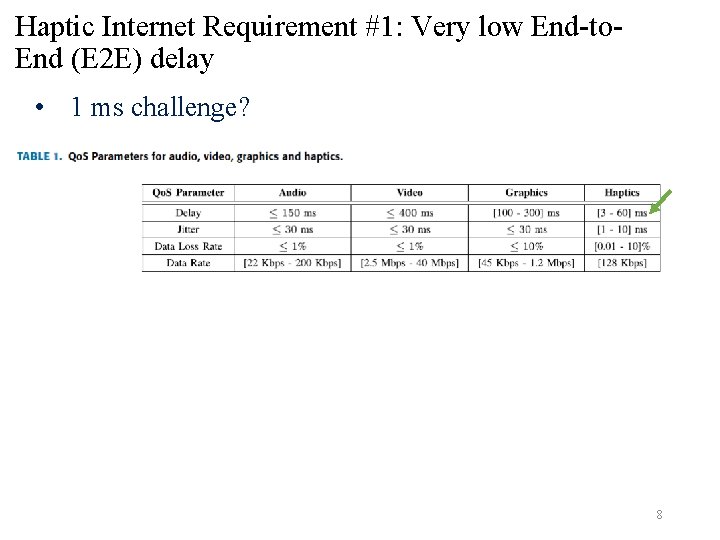
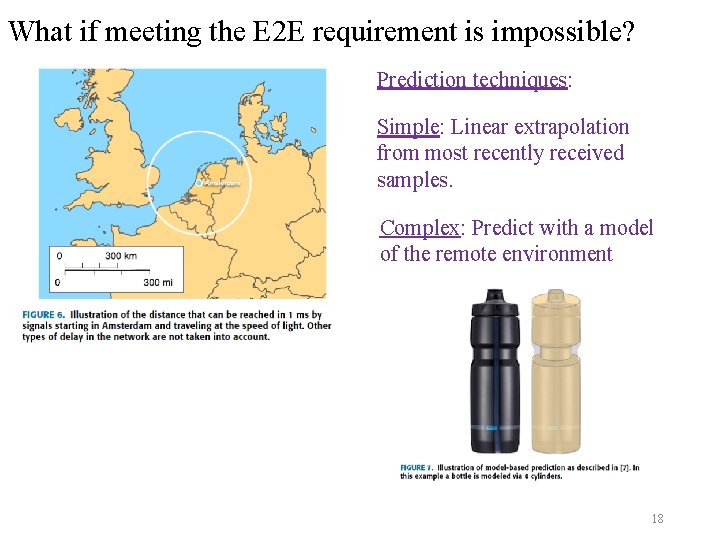
Haptic Internet Requirement #1: Very low End-to. End (E 2 E) delay • 1 ms challenge? 8
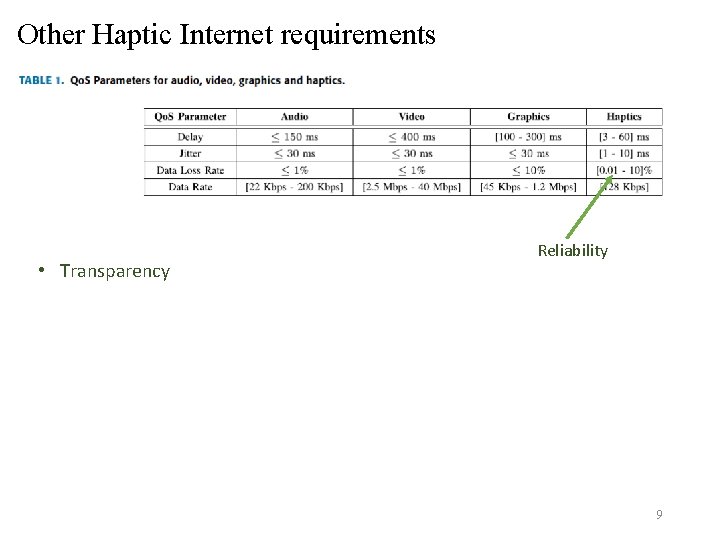
Other Haptic Internet requirements • Transparency Reliability 9
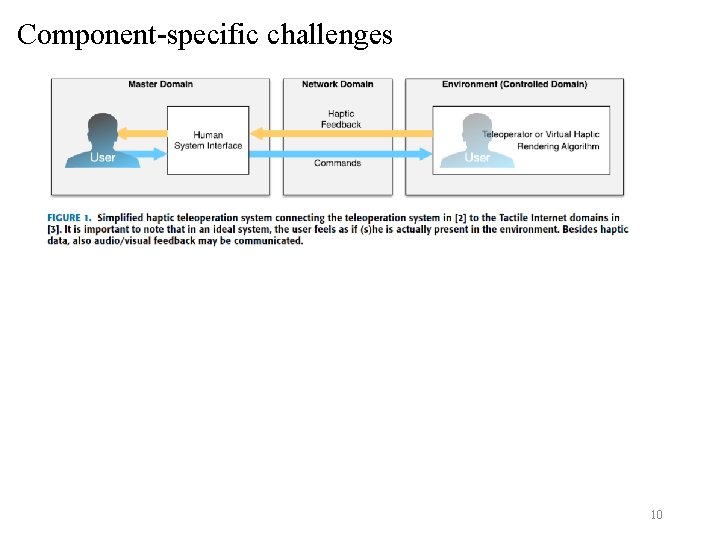
Component-specific challenges 10
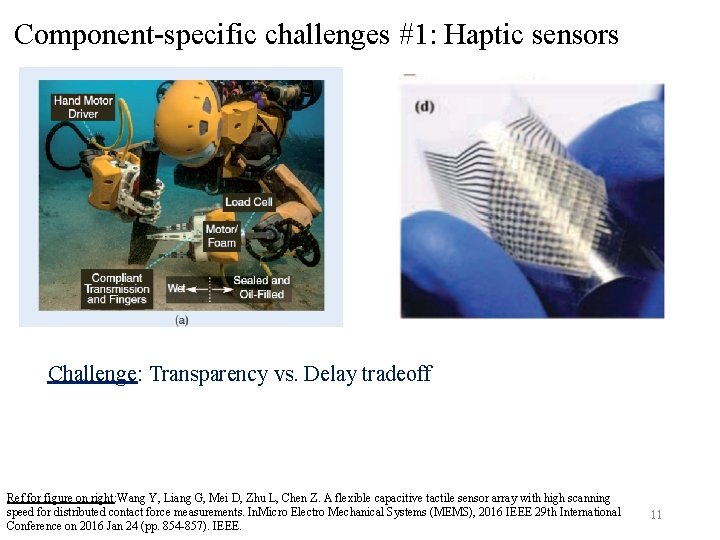
Component-specific challenges #1: Haptic sensors Challenge: Transparency vs. Delay tradeoff Ref for figure on right: Wang Y, Liang G, Mei D, Zhu L, Chen Z. A flexible capacitive tactile sensor array with high scanning speed for distributed contact force measurements. In. Micro Electro Mechanical Systems (MEMS), 2016 IEEE 29 th International Conference on 2016 Jan 24 (pp. 854 -857). IEEE. 11
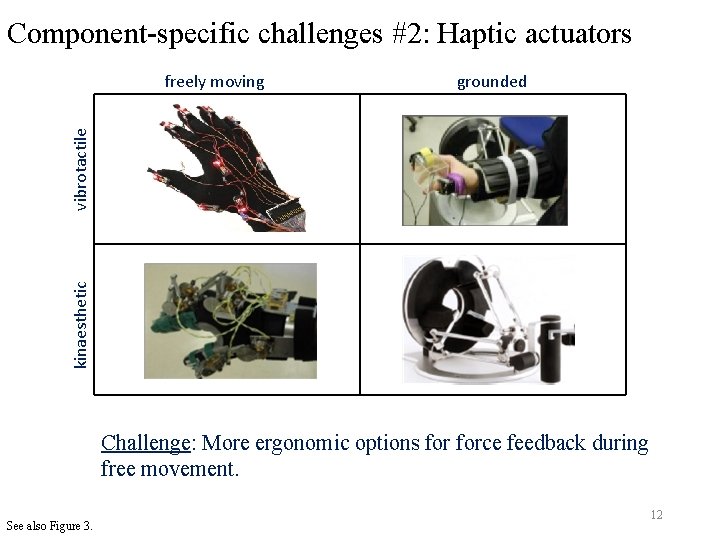
Component-specific challenges #2: Haptic actuators grounded kinaesthetic vibrotactile freely moving Challenge: More ergonomic options force feedback during free movement. See also Figure 3. 12
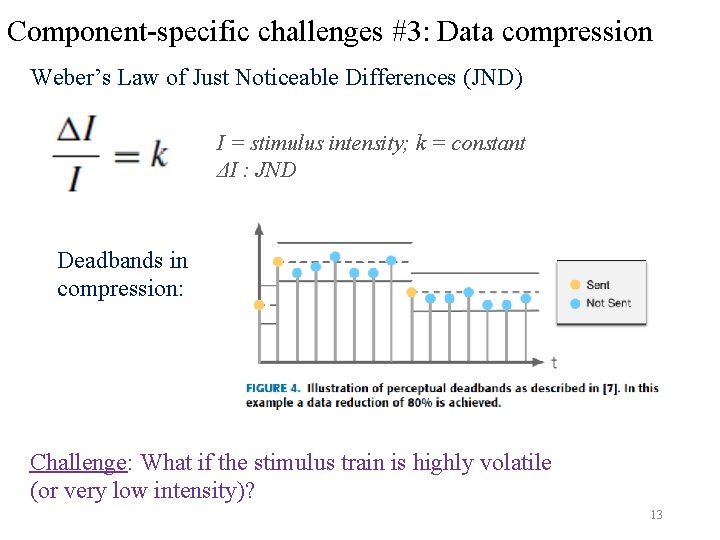
Component-specific challenges #3: Data compression Weber’s Law of Just Noticeable Differences (JND) I = stimulus intensity; k = constant ΔI : JND Deadbands in compression: Challenge: What if the stimulus train is highly volatile (or very low intensity)? 13
Qo. S and Software-Defined Networking (SDN) Challenges to meeting hard Qo. S requirements: • Current network algorithms adapt to changing network conditions slowly. • Current Qo. S architectures (Int. Serv) are rarely used on the Internet, and not scalable. 14
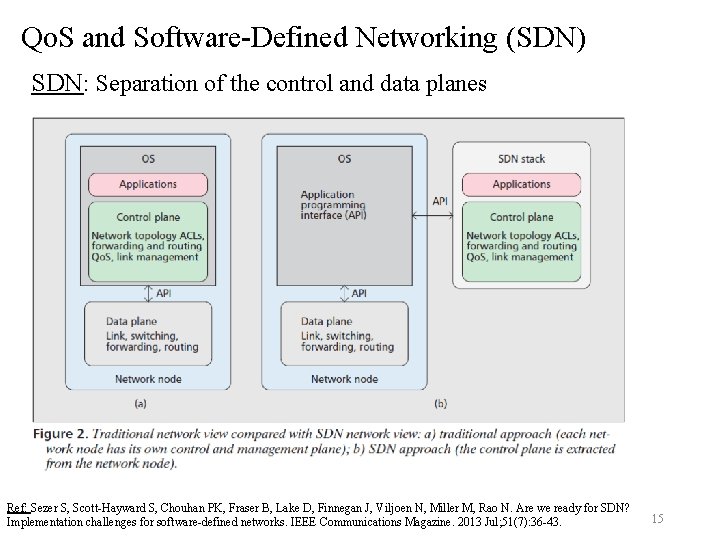
Qo. S and Software-Defined Networking (SDN) SDN: Separation of the control and data planes Ref: Sezer S, Scott-Hayward S, Chouhan PK, Fraser B, Lake D, Finnegan J, Viljoen N, Miller M, Rao N. Are we ready for SDN? Implementation challenges for software-defined networks. IEEE Communications Magazine. 2013 Jul; 51(7): 36 -43. 15
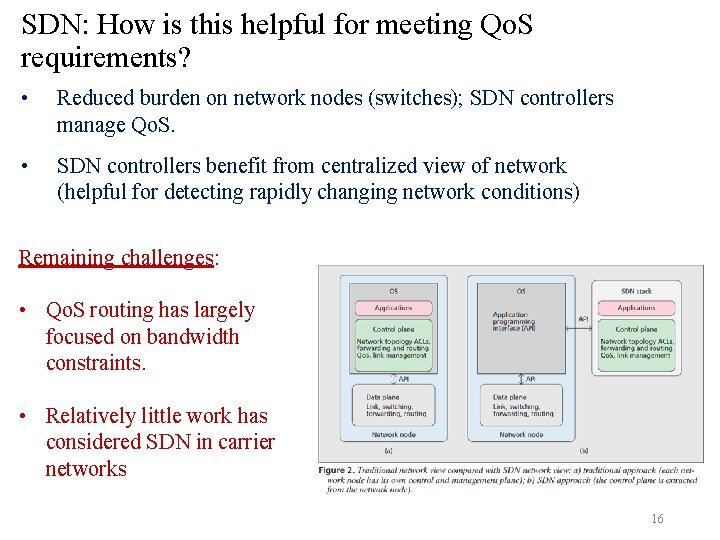
SDN: How is this helpful for meeting Qo. S requirements? • Reduced burden on network nodes (switches); SDN controllers manage Qo. S. • SDN controllers benefit from centralized view of network (helpful for detecting rapidly changing network conditions) Remaining challenges: • Qo. S routing has largely focused on bandwidth constraints. • Relatively little work has considered SDN in carrier networks 16
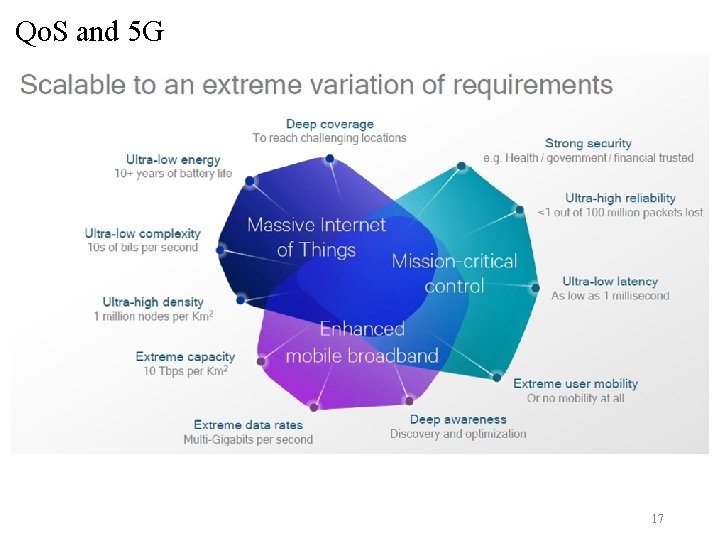
Qo. S and 5 G 17
What if meeting the E 2 E requirement is impossible? Prediction techniques: Simple: Linear extrapolation from most recently received samples. Complex: Predict with a model of the remote environment 18
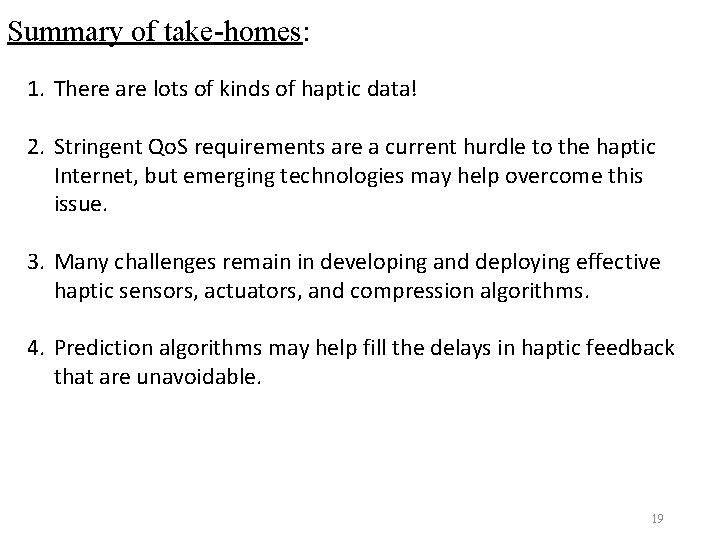
Summary of take-homes: 1. There are lots of kinds of haptic data! 2. Stringent Qo. S requirements are a current hurdle to the haptic Internet, but emerging technologies may help overcome this issue. 3. Many challenges remain in developing and deploying effective haptic sensors, actuators, and compression algorithms. 4. Prediction algorithms may help fill the delays in haptic feedback that are unavoidable. 19
Comments? Questions? 20