
Challenges and Considerations of Field Sampling for Pesticide

- Slides: 22
Challenges and Considerations of Field Sampling for Pesticide Residue Analyses Tim Creger, NDA Pesticide Program Manager Eric Fuentes-Ruiz, NDA Pesticide Inspector II
Topics Covered: • Reasons for collecting samples • Types of samples typically collected • Sampling Decision-Making (the ‘why’ behind the type of sample collected) • Sampling Protocols and Dicamba • Critical Support by Lab • Perspective of Inspector
Reasons for collecting samples • Complaint Investigations (frequent) – Establish a line of forensic evidence to support or refute the allegation/s • Product Quality Assurance (infrequent) – Verify integrity of pesticide formulations in the channels of trade
Types of samples typically collected • Formulation samples at production or repackaging facilities – Liquids, dry, granules, wettable and insoluble powders, etc. – Aerosols and gases are rare, typically go to EPA lab • Residue samples which are part of an complaint investigation – Plants, soil, water, clothing, swabs, animal material, etc.
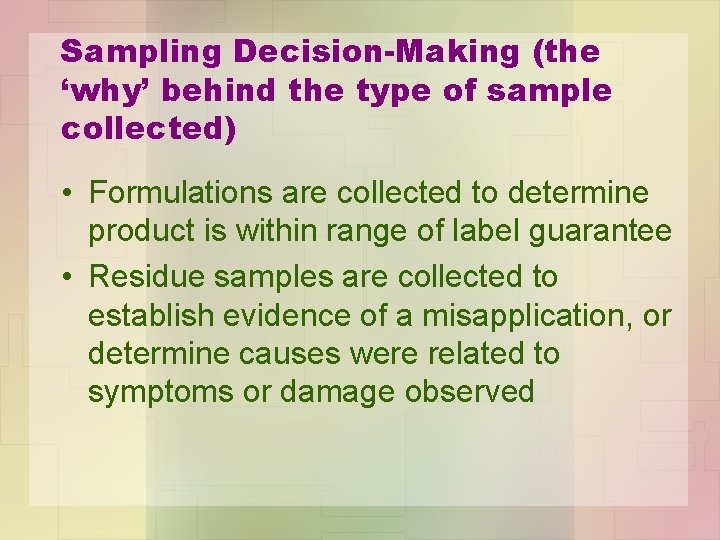
Sampling Decision-Making (the ‘why’ behind the type of sample collected) • Formulations are collected to determine product is within range of label guarantee • Residue samples are collected to establish evidence of a misapplication, or determine causes were related to symptoms or damage observed
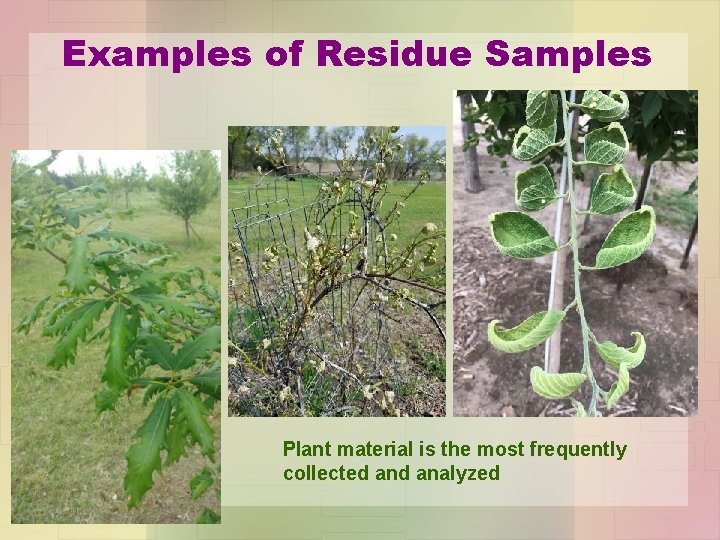
Examples of Residue Samples Plant material is the most frequently collected analyzed
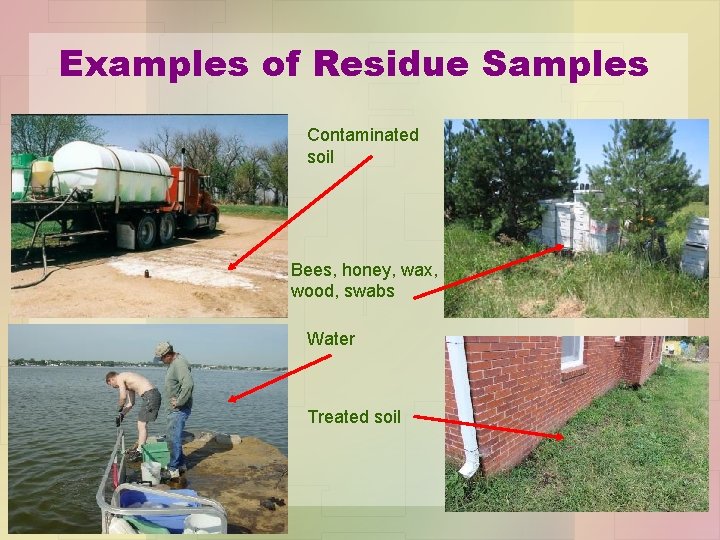
Examples of Residue Samples Contaminated soil Bees, honey, wax, wood, swabs Water Treated soil
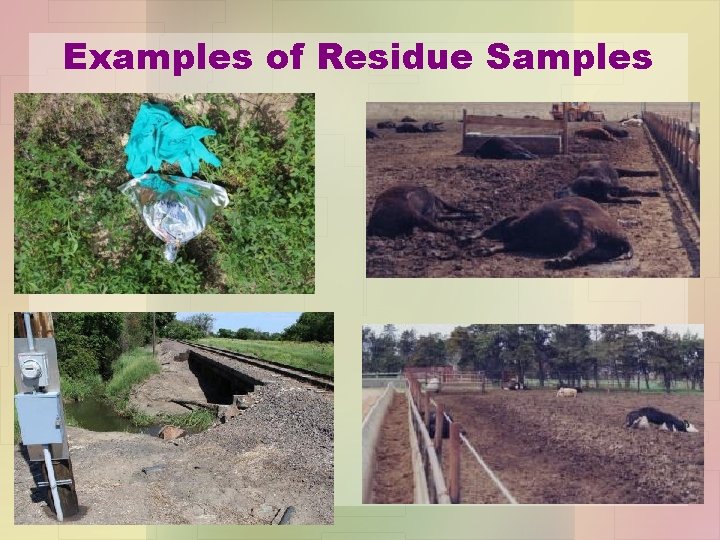
Examples of Residue Samples
Sampling Protocols and Dicamba
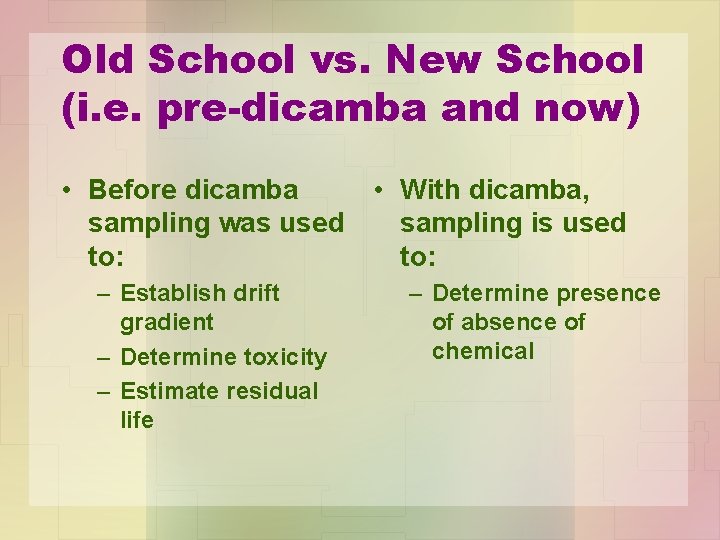
Old School vs. New School (i. e. pre-dicamba and now) • Before dicamba sampling was used to: – Establish drift gradient – Determine toxicity – Estimate residual life • With dicamba, sampling is used to: – Determine presence of absence of chemical
Lab Involvement • It’s a two-way street: Pesticide programs need the lab to provide reliable, defensible sample analyses to prosecute cases and defend allegations. • At the same time the lab needs field inspectors to follow established procedures in order to adhere to QAQC requirements.
Inspector’s Perspective How much material is needed for any particular sample media? Plant = 1 lb? Soil = 1 pt? Water = 1 gal? How are the samples prepared and extracted? Are plants washed, chopped or ground up? It could make a difference in what is sampled and how it is collected
Inspector’s Perspective Does it matter what kind of plants are collected? Evergreens vs. deciduous Does soil need to be dry or can wet/muddy pass? What about freezing vs. ambient temp? Special techniques for swabs? Some say wiping, others say dabbing or blotting
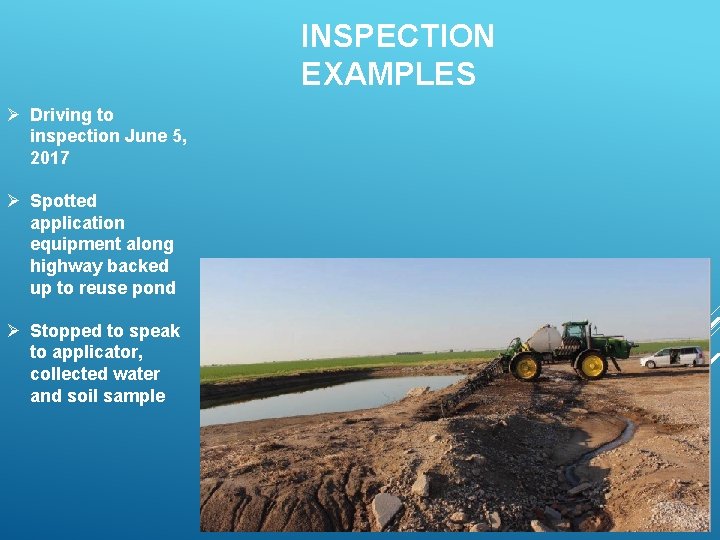
INSPECTION EXAMPLES Ø Driving to inspection June 5, 2017 Ø Spotted application equipment along highway backed up to reuse pond Ø Stopped to speak to applicator, collected water and soil sample
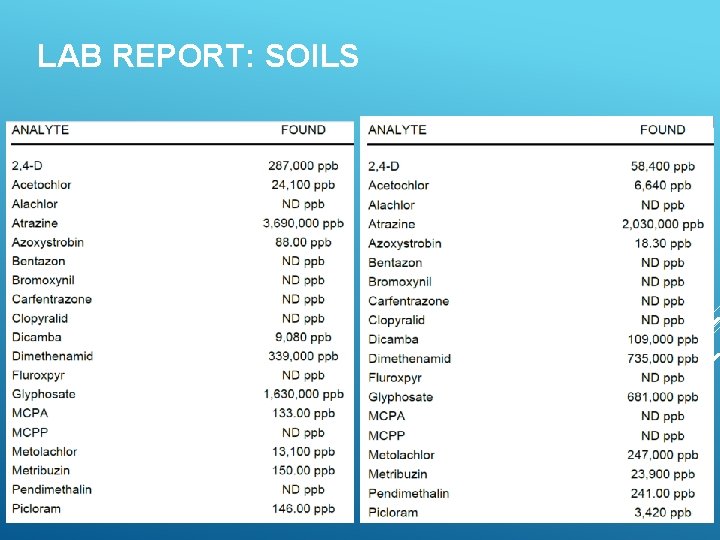
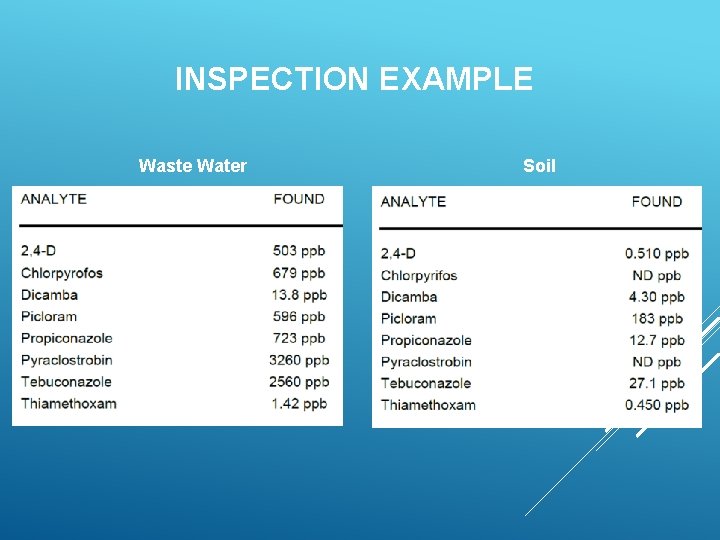
LAB REPORT: SOILS
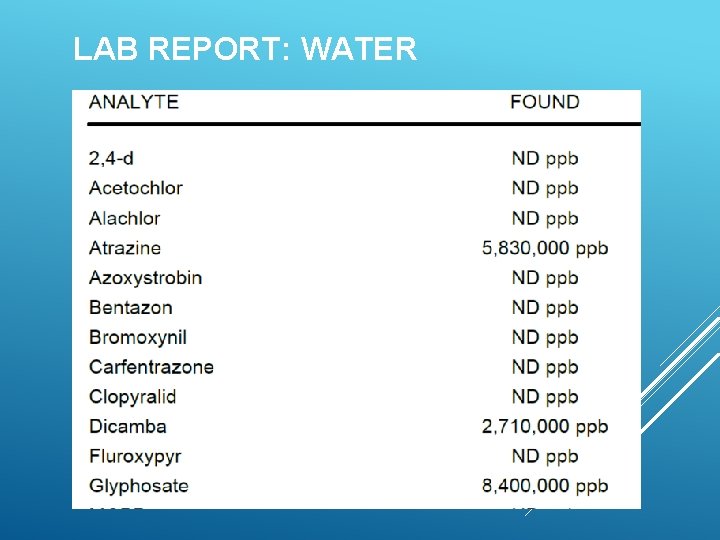
LAB REPORT: WATER
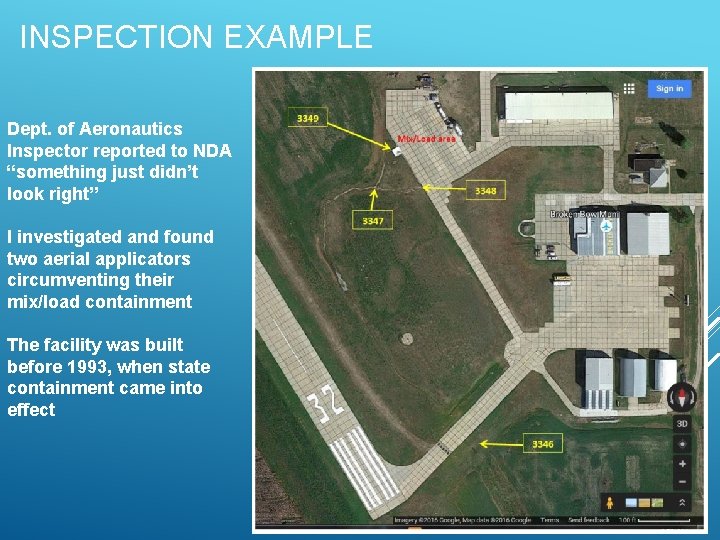
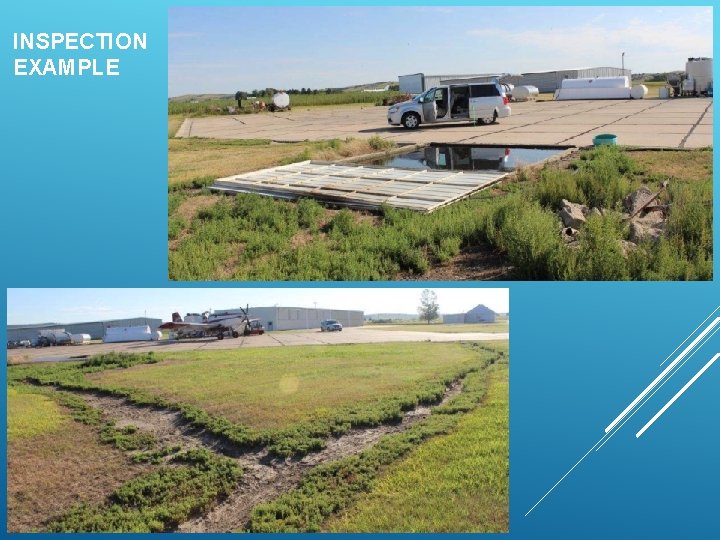
INSPECTION EXAMPLE Dept. of Aeronautics Inspector reported to NDA “something just didn’t look right” I investigated and found two aerial applicators circumventing their mix/load containment The facility was built before 1993, when state containment came into effect
INSPECTION EXAMPLE
INSPECTION EXAMPLE Waste Water Soil
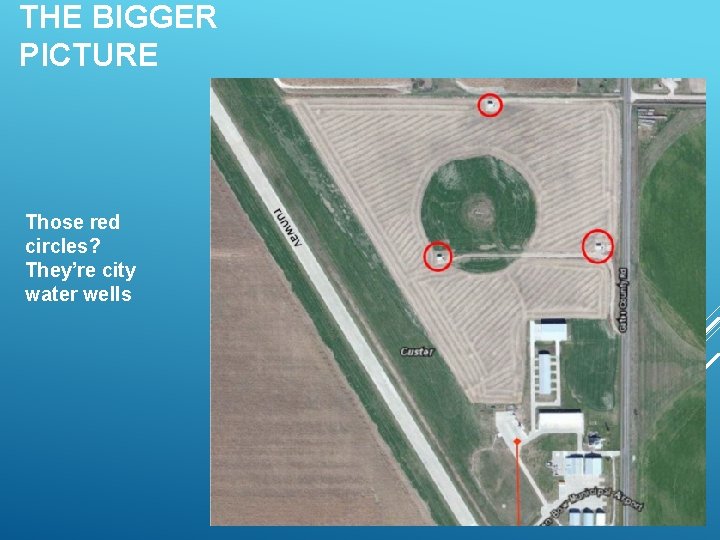
THE BIGGER PICTURE Those red circles? They’re city water wells
Take-Home Message • State Pesticide Programs really need strong lab support • Labs can help advise field staff and managers on type and amount of samples for intended analysis • Don’t be afraid to let managers know if something needs to be changed, their programs rely on QAQC consistency