
Challenge 1 Parts of the Microscope T Trimpe
- Slides: 11
Challenge #1 Parts of the Microscope T. Trimpe 2008 http: //sciencespot. net/
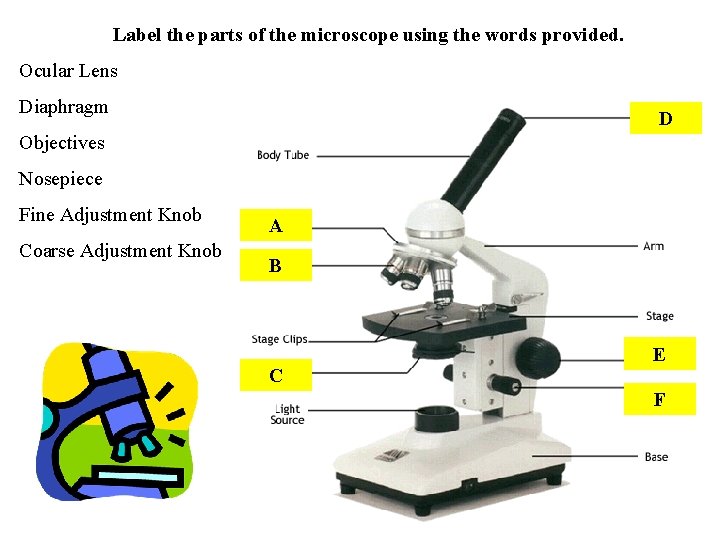
Label the parts of the microscope using the words provided. Ocular Lens Diaphragm D Objectives Nosepiece Fine Adjustment Knob Coarse Adjustment Knob A B C E F
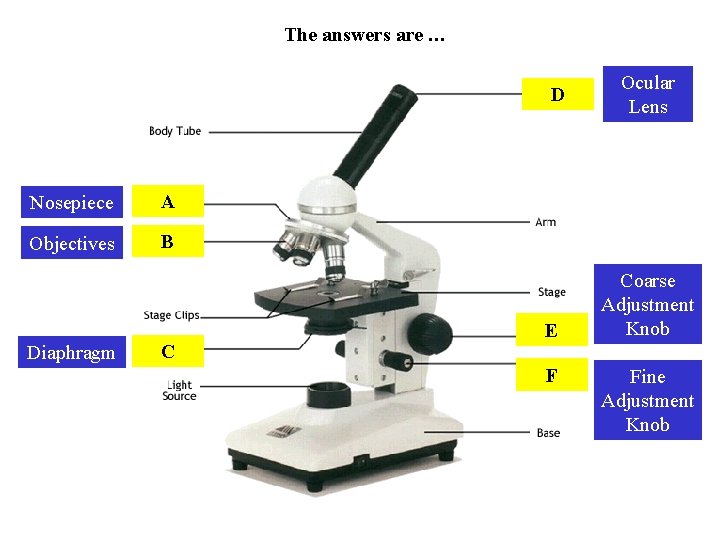
The answers are … D Nosepiece A Objectives B Diaphragm C E F Ocular Lens Coarse Adjustment Knob Fine Adjustment Knob
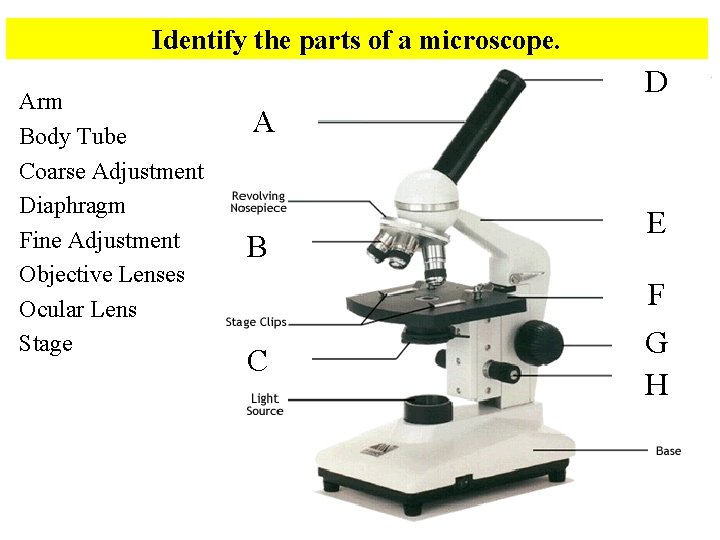
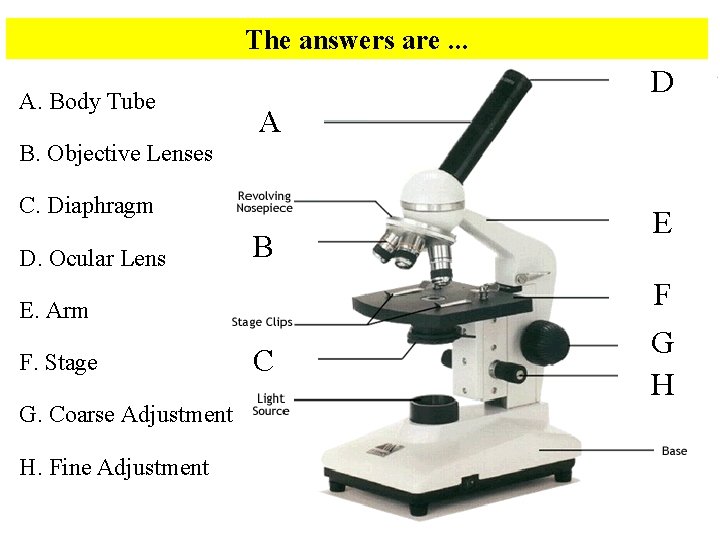
Identify the parts of a microscope. Arm Body Tube Coarse Adjustment Diaphragm Fine Adjustment Objective Lenses Ocular Lens Stage D A B C E F G H
The answers are. . . A. Body Tube D A B. Objective Lenses C. Diaphragm D. Ocular Lens B E. Arm F. Stage G. Coarse Adjustment H. Fine Adjustment C E F G H
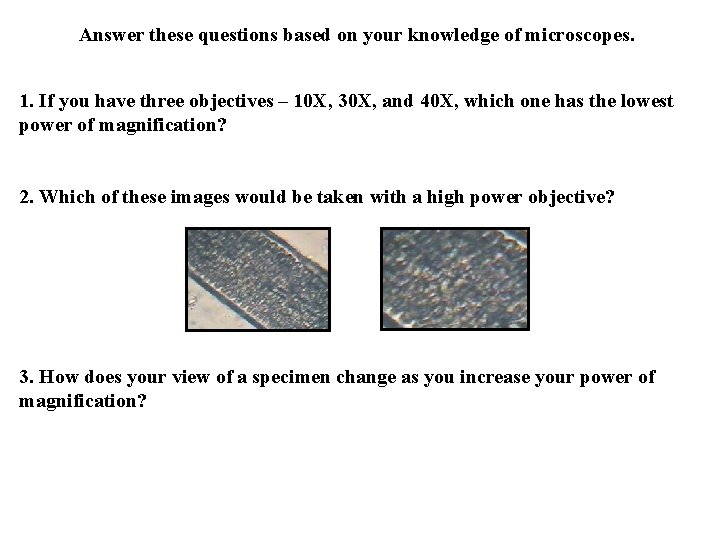
Answer these questions based on your knowledge of microscopes. 1. If you have three objectives – 10 X, 30 X, and 40 X, which one has the lowest power of magnification? 2. Which of these images would be taken with a high power objective? 3. How does your view of a specimen change as you increase your power of magnification?
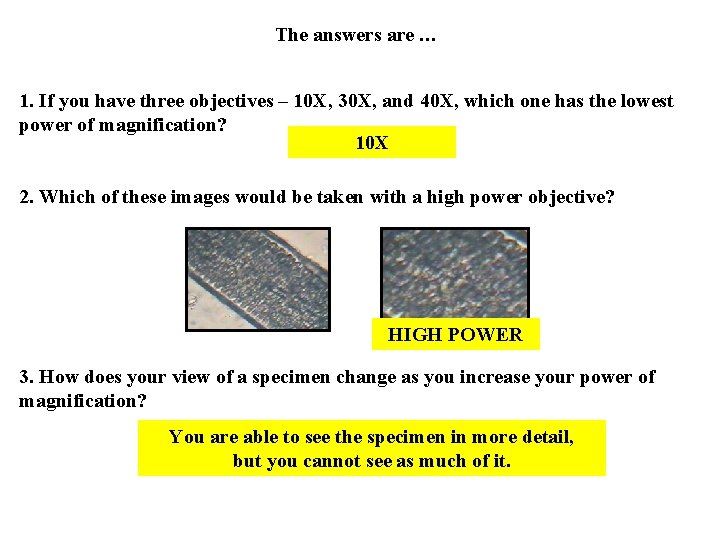
The answers are … 1. If you have three objectives – 10 X, 30 X, and 40 X, which one has the lowest power of magnification? 10 X 2. Which of these images would be taken with a high power objective? HIGH POWER 3. How does your view of a specimen change as you increase your power of magnification? You are able to see the specimen in more detail, but you cannot see as much of it.
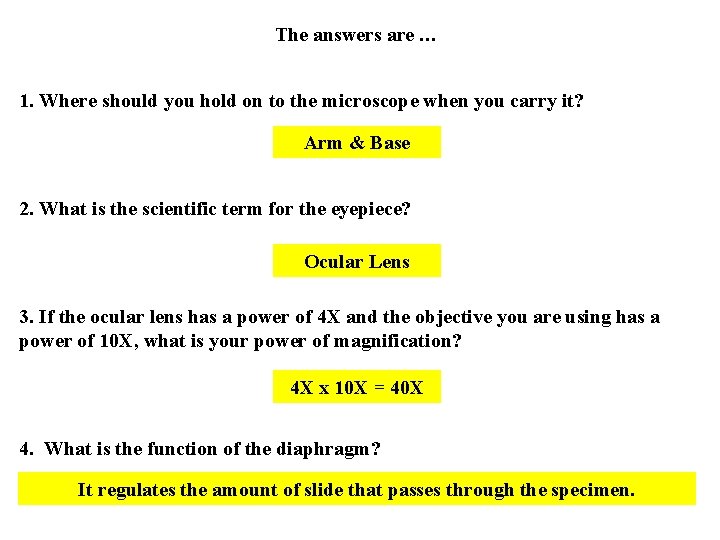
Answer these questions based on your knowledge of microscopes. 1. Where should you hold on to the microscope when you carry it? 2. What is the scientific term for the eyepiece? 3. If the ocular lens has a power of 4 X and the objective you are using has a power of 10 X, what is your power of magnification? 4. What is the function of the diaphragm?
The answers are … 1. Where should you hold on to the microscope when you carry it? Arm & Base 2. What is the scientific term for the eyepiece? Ocular Lens 3. If the ocular lens has a power of 4 X and the objective you are using has a power of 10 X, what is your power of magnification? 4 X x 10 X = 40 X 4. What is the function of the diaphragm? It regulates the amount of slide that passes through the specimen.
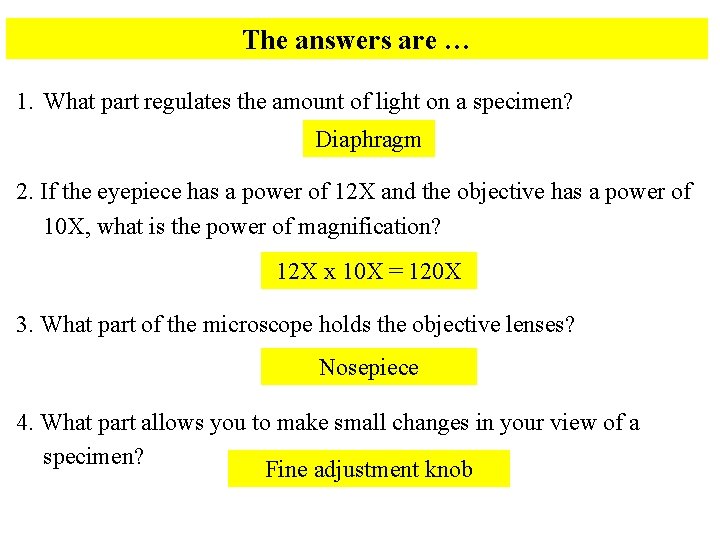
Answer each question about microscopes. 1. What part regulates the amount of light on a specimen? 2. If the eyepiece has a power of 12 X and the objective has a power of 10 X, what is the power of magnification? 3. What part of the microscope holds the objective lenses? 4. What part allows you to make small changes in your view of a specimen?
The answers are … 1. What part regulates the amount of light on a specimen? Diaphragm 2. If the eyepiece has a power of 12 X and the objective has a power of 10 X, what is the power of magnification? 12 X x 10 X = 120 X 3. What part of the microscope holds the objective lenses? Nosepiece 4. What part allows you to make small changes in your view of a specimen? Fine adjustment knob