
CHALLANGES AND RESPONSES FOR WATER EDUCATION IN A
- Slides: 24
CHALLANGES AND RESPONSES FOR WATER EDUCATION IN A CHANGING ENVIRONMENT THE CHALLENGES IN THE NILE BASIN: HOW CAN NETWORKS CONTRIBUTE TO WATER CAPACITY DEVELOPMENT AMEL M. AZAB 29 TH MAY 2013
Contents The Nile Basin Key Issues and Challanges Knowledge Management Challenges Knowledge and Capacity Development Framework • Role of knowledge Networks in CD • Highlights from the Nile Basin Capacity Building Network • •
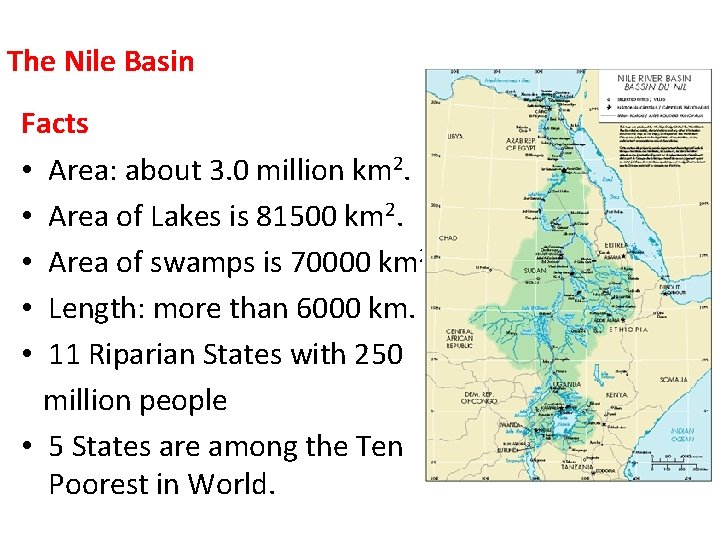
The Nile Basin Facts • Area: about 3. 0 million km 2. • Area of Lakes is 81500 km 2. • Area of swamps is 70000 km 2 • Length: more than 6000 km. • 11 Riparian States with 250 million people • 5 States are among the Ten Poorest in World.
The Nile Basin Challenges • Rapid population growth, • Instability, • Environmental degradation, • Poverty, • Complicated hydrology • Low specific yield • The transboundary nature of the river • Increasing concern about the impacts of climate change • Capacity Building and Knowledge Management
The Main Issue Lack of technology or funding are no longer the main obstacles for development. The real bottleneck lies in the availability of needed capacities to address the problems in an effective and sustainable manner.
Key Questions • What capacities do we need, and for what? • Do we know what capacities we have and where are they located? • Are we making effective use of our existing capabilities and if not, why not? • How can we pool and build upon existing capacities at regional and national levels? • What are our real capacity challenges and how do we address them in a comprehensive and integrated fashion?
Capacity & Knowledge Management Challenges for the Nile • The structural lack of research-capacity in the water sector • Limited trust and partnership • Little or no R&D by local experts • The absence of an effective operational co-operative framework • No contextual on-the-job training • The need for practical and creative solutions • No regional water knowledge base in the Basin
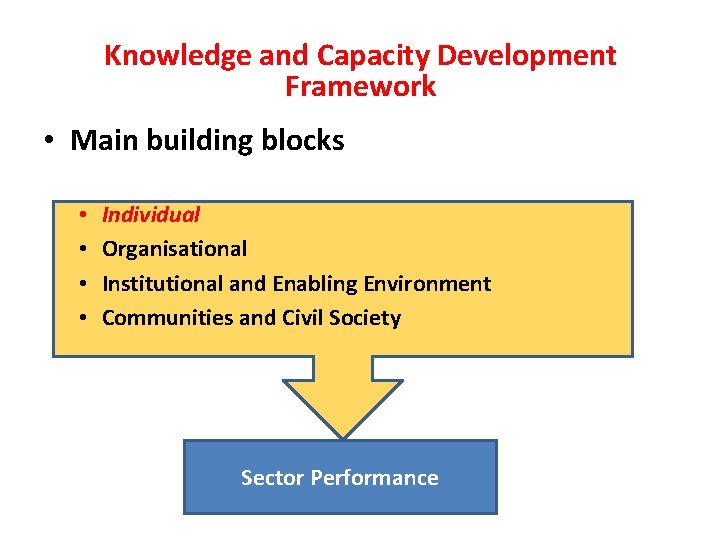
Knowledge and Capacity Development Framework • Main building blocks • • Individual Organisational Institutional and Enabling Environment Communities and Civil Society Sector Performance
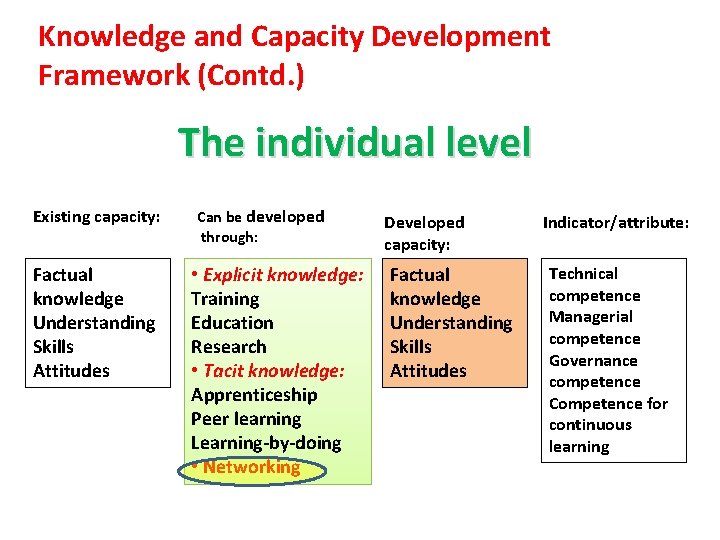
Knowledge and Capacity Development Framework (Contd. ) The individual level Existing capacity: Factual knowledge Understanding Skills Attitudes Can be developed through: • Explicit knowledge: Training Education Research • Tacit knowledge: Apprenticeship Peer learning Learning-by-doing • Networking Developed capacity: Factual knowledge Understanding Skills Attitudes Indicator/attribute: Technical competence Managerial competence Governance competence Competence for continuous learning
The Example: Nile Basin Capacity Building Network NBCBN
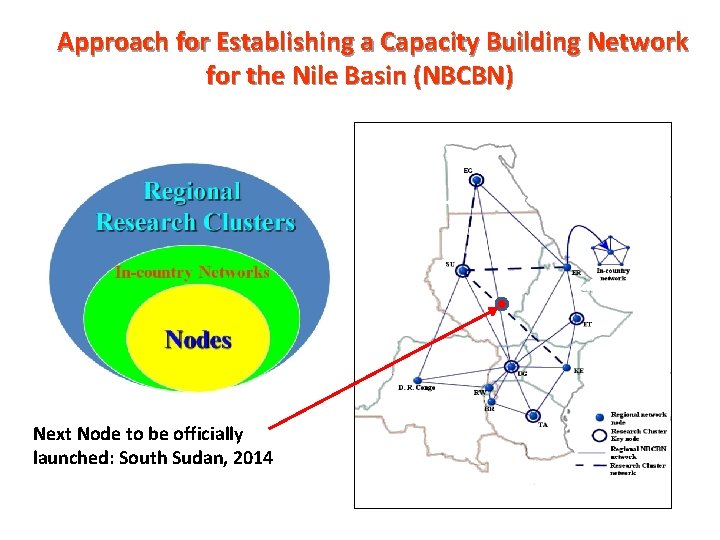
Approach for Establishing a Capacity Building Network for the Nile Basin (NBCBN) Next Node to be officially launched: South Sudan, 2014
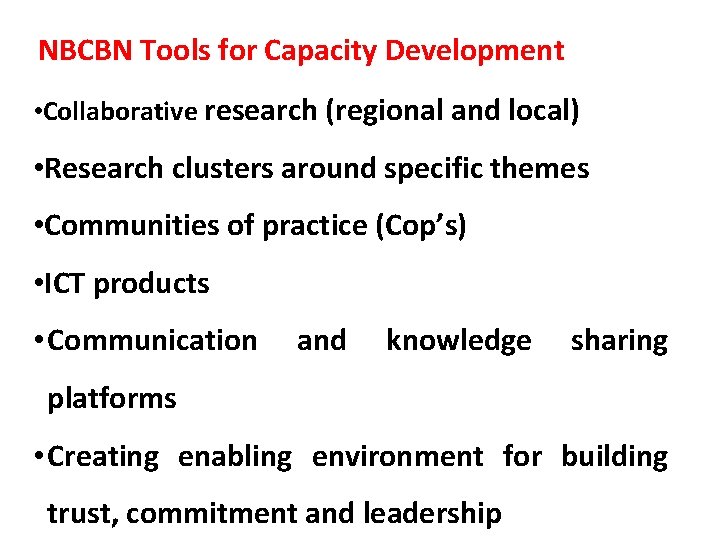
NBCBN Tools for Capacity Development • Collaborative research (regional and local) • Research clusters around specific themes • Communities of practice (Cop’s) • ICT products • Communication and knowledge sharing platforms • Creating enabling environment for building trust, commitment and leadership
Evolving of NBCBN to cope with CD needs in the Nile Basin
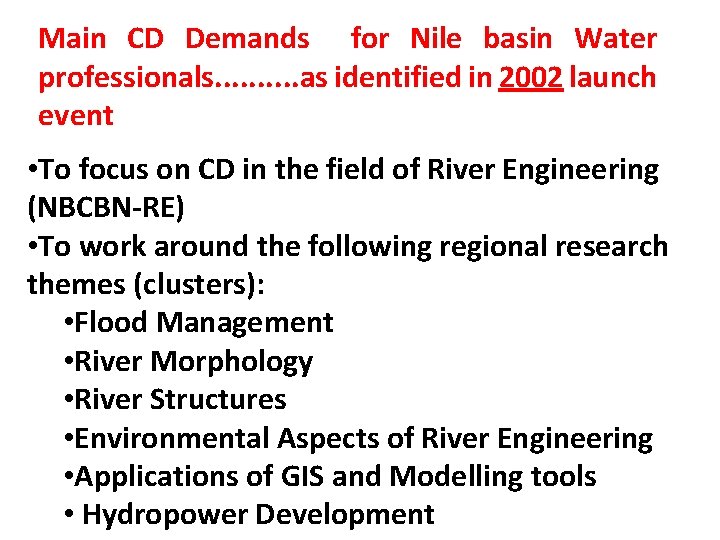
Main CD Demands for Nile basin Water professionals. . as identified in 2002 launch event • To focus on CD in the field of River Engineering (NBCBN-RE) • To work around the following regional research themes (clusters): • Flood Management • River Morphology • River Structures • Environmental Aspects of River Engineering • Applications of GIS and Modelling tools • Hydropower Development
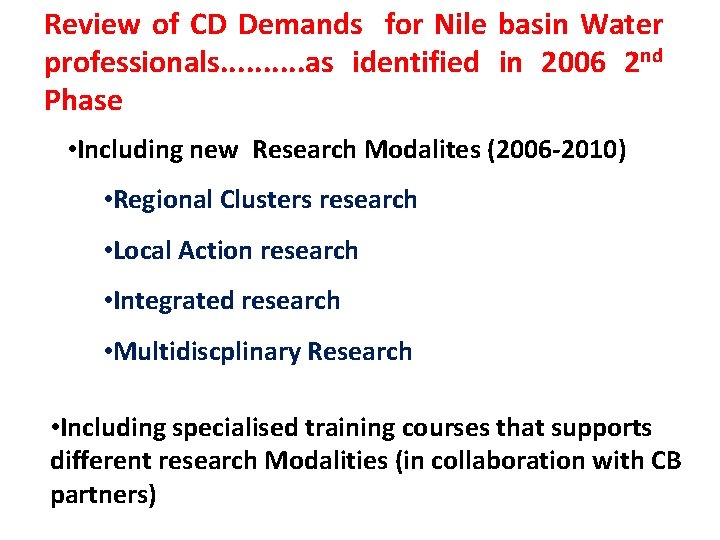
Review of CD Demands for Nile basin Water professionals. . as identified in 2006 2 nd Phase • Including new Research Modalites (2006 -2010) • Regional Clusters research • Local Action research • Integrated research • Multidiscplinary Research • Including specialised training courses that supports different research Modalities (in collaboration with CB partners)
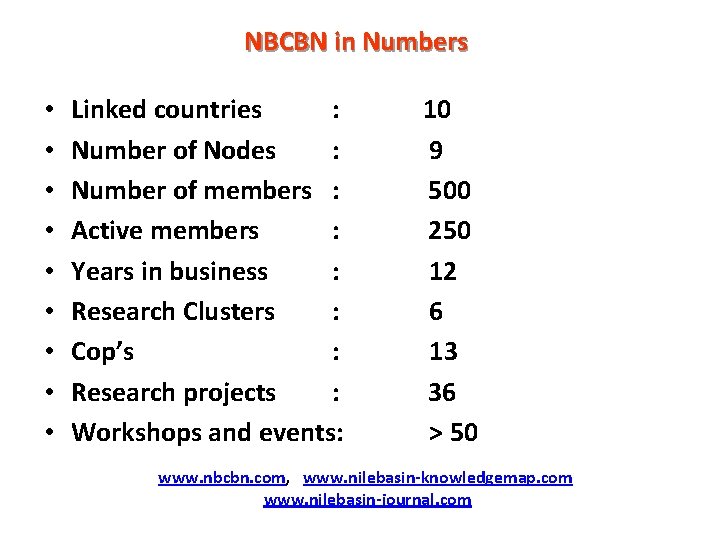
NBCBN in Numbers • • • Linked countries : Number of Nodes : Number of members : Active members : Years in business : Research Clusters : Cop’s : Research projects : Workshops and events: 10 9 500 250 12 6 13 36 > 50 www. nbcbn. com, www. nilebasin-knowledgemap. com www. nilebasin-journal. com
Review of CD Demands for Nile Basin Water professionals. . as identified in 2010 Developing a Future Strategy for a Sustainable Knowledge Network for the Nile Basin
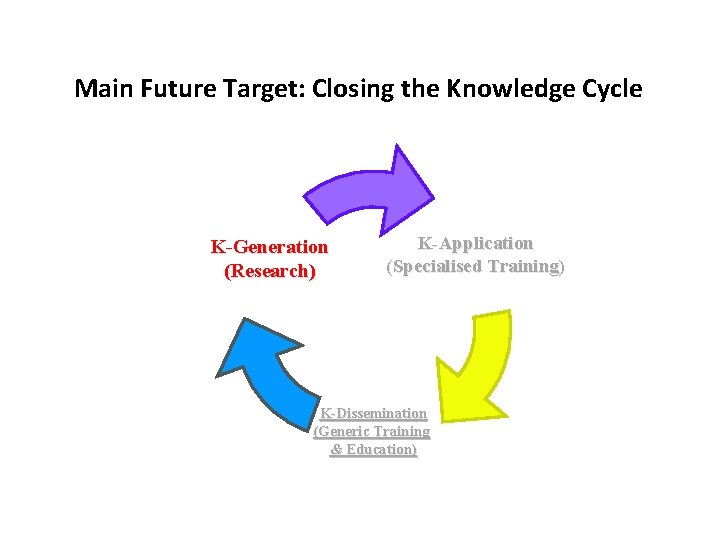
Main Future Target: Closing the Knowledge Cycle K-Generation (Research) K-Application (Specialised Training) K-Dissemination (Generic Training & Education)
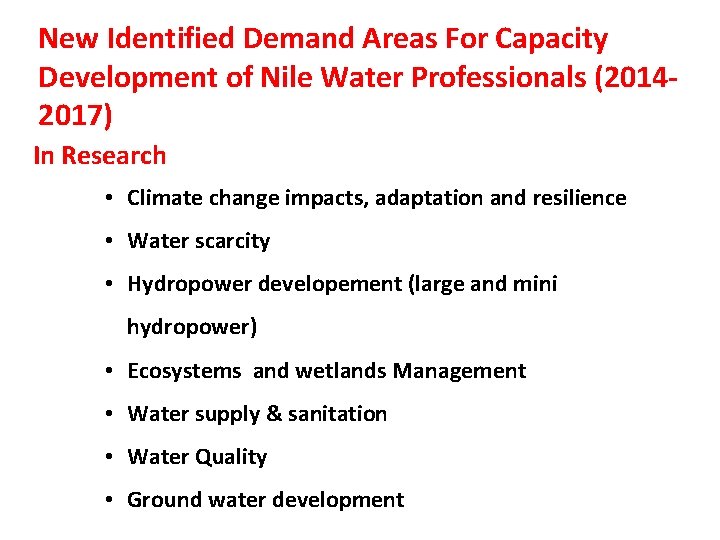
New Identified Demand Areas For Capacity Development of Nile Water Professionals (20142017) In Research • Climate change impacts, adaptation and resilience • Water scarcity • Hydropower developement (large and mini hydropower) • Ecosystems and wetlands Management • Water supply & sanitation • Water Quality • Ground water development
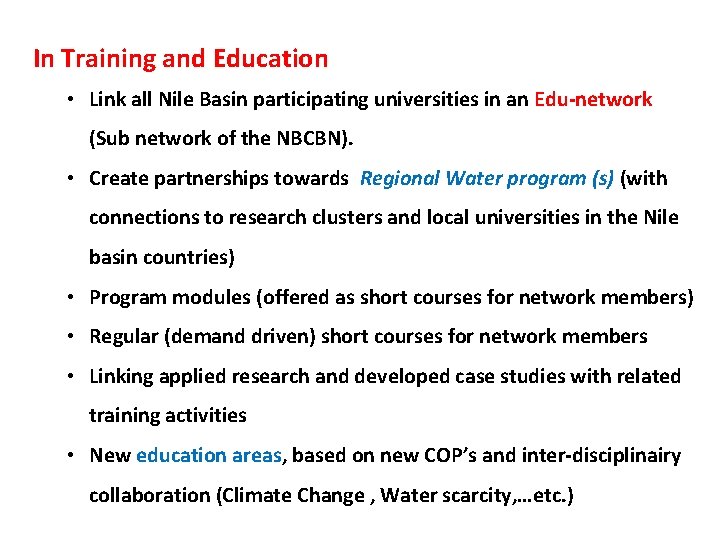
In Training and Education • Link all Nile Basin participating universities in an Edu-network (Sub network of the NBCBN). • Create partnerships towards Regional Water program (s) (with connections to research clusters and local universities in the Nile basin countries) • Program modules (offered as short courses for network members) • Regular (demand driven) short courses for network members • Linking applied research and developed case studies with related training activities • New education areas, based on new COP’s and inter-disciplinairy collaboration (Climate Change , Water scarcity, …etc. )
More Challanges for the Nile Basin. . . . • The need for professional capacities in different fields to support developmental projects • Limited group of local expertise (climate change, Hydropower, water scarcity, . . ) • Very limited effective young leadership • Fragmented capacity building activities on local and regional levels • Lack of regional and national strategies for water CD in most of the countries • Need for effective and innovative tools to measure CD • Political Instability • Diminishing funds and donors support
Conclusions • Cooperation and partnerships are the key to sustainable development of shared water resources. • Capacity building is a natural and continous process that should be linked to demands and real needs on different levels. • Soft Capacity Development should be measured according to real impacts and better performance of the water sector? • Equal attention to hard and soft capacites development is important to create young effective leadership. • Developing and evalauting national and regional CD strategies • Engage the private sector to support and invest in water CD
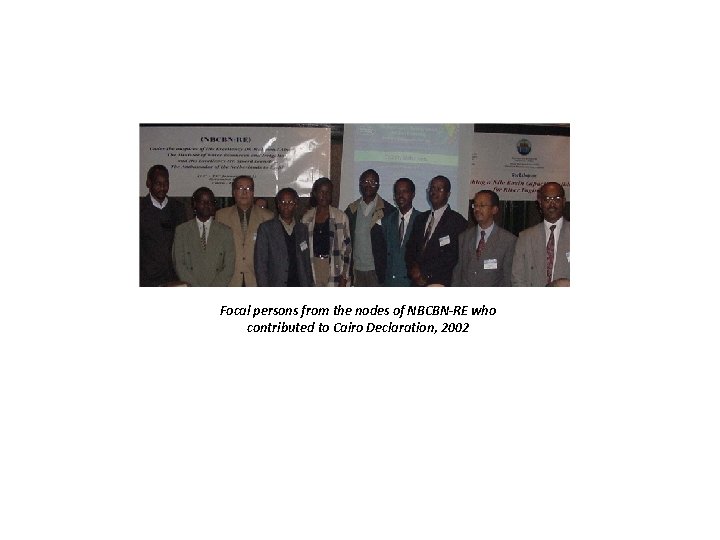
Focal persons from the nodes of NBCBN-RE who contributed to Cairo Declaration, 2002
Purpose of 5 th Symposium Thanks for your attention Amel M. Azab Nile Basin Capacity Building Network a_azab@nbcbn. net