
Chain of Infection Isolation precautions August 24 2017


- Slides: 29
Chain of Infection Isolation precautions August 24, 2017
Bell Ringer In your own words, define normal flora In your own words, define pathogen List the pathogens we discussed in class yesterday and give me one fact about each one.
Agenda 8 -23 -17 Bell Ringer Review and Most Wanted Posters Lecture on Transmission-Based Precautions and Chain of Infection Activity
Standard 15) Correlate the function of normal flora with homeostasis and relate deviation to disease states. Evaluate specific measures to prevent deviation that are aligned with accepted standards of care. 16) Assess the differences between healthcareassociated infections and non-healthcareassociated infections using examples drawn from mock patient documents or case studies. Support explanations with relevant surveillance statistics, preventive measures, and methodologies concerning outbreak detection, management, and education.
Objective By the end of class, students will be able to: Apply and Identify Transmission-Based Precautions Apply and Identify the steps in the Chain of Infection
Infectious and Communicable Diseases An infectious disease results from an invasion of microorganisms. A communicable disease is a type of infectious disease that can be transmitted from one person to another person. Not all infectious diseases are communicable cardiovascular diseases, cancers, chronic respiratory diseases and diabetes
Classification of Infections and Diseases Endogenous – begins inside the body Exogenous – caused by something outside the body Nosocomial – acquired by an individual within a health care facility AKA Health care associated infection Opportunistic – occur when the body’s defenses are weak
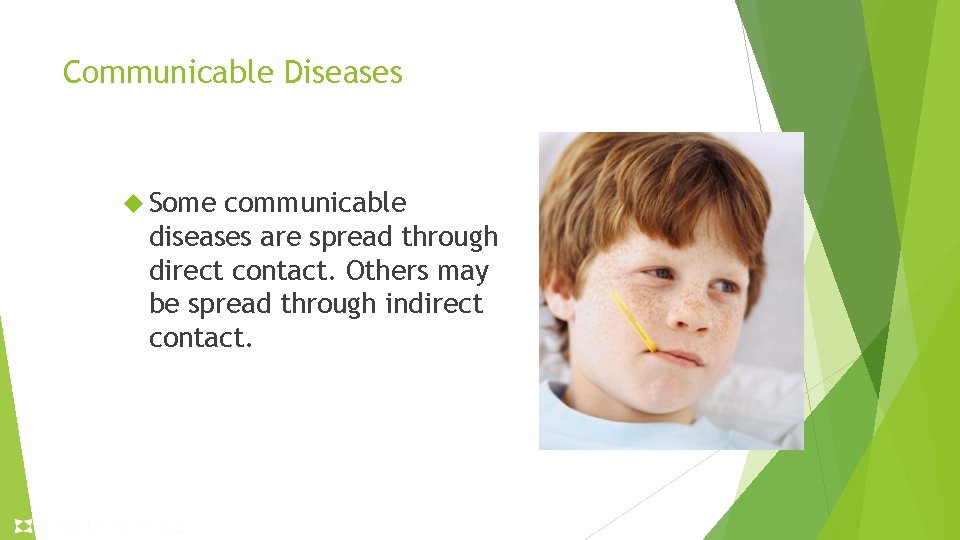
Communicable Diseases Some communicable diseases are spread through direct contact. Others may be spread through indirect contact.
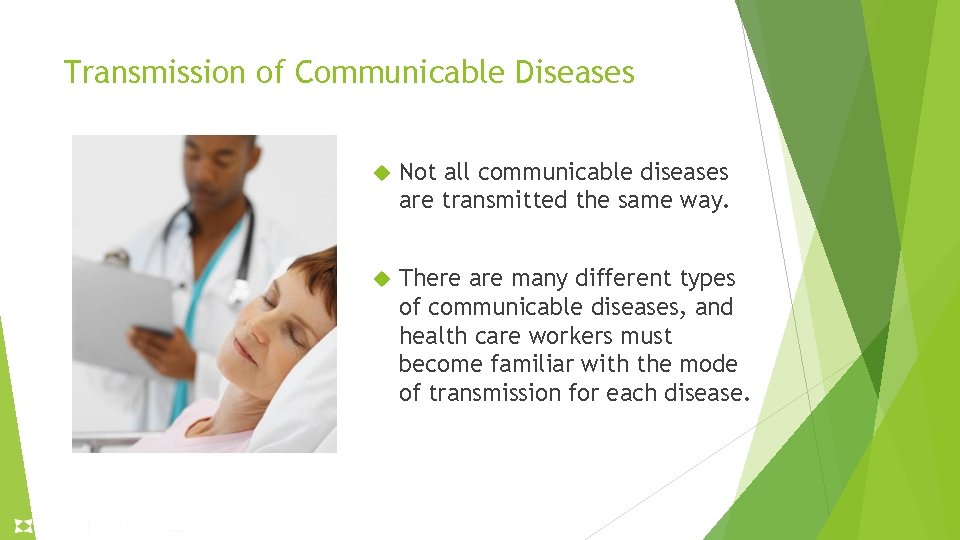
Transmission of Communicable Diseases Not all communicable diseases are transmitted the same way. There are many different types of communicable diseases, and health care workers must become familiar with the mode of transmission for each disease.
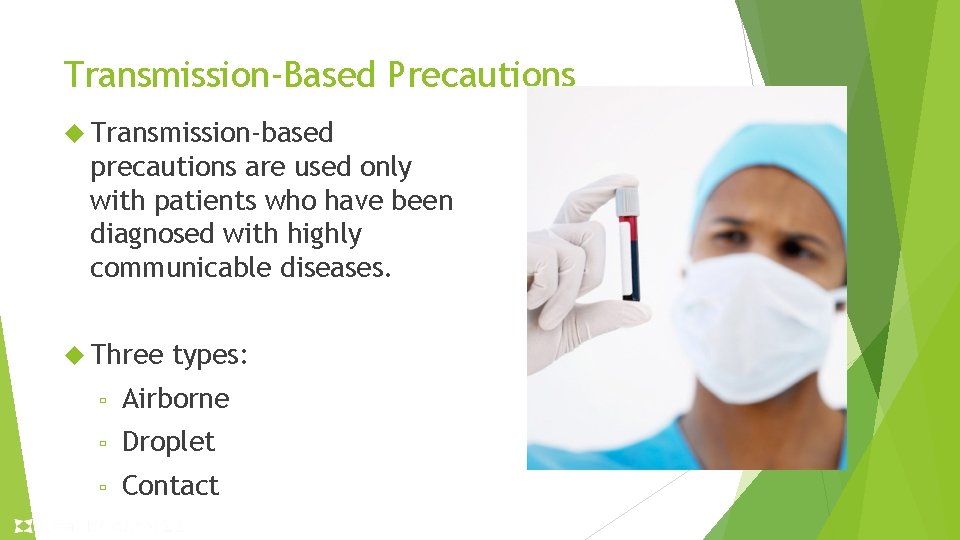
Transmission-Based Precautions Transmission-based precautions are used only with patients who have been diagnosed with highly communicable diseases. Three types: ▫ Airborne ▫ Droplet ▫ Contact
Introduction to Transmission-Based Precautions: https: //www. youtube. com/watch? v=b. BLx. J-V 8_Ds
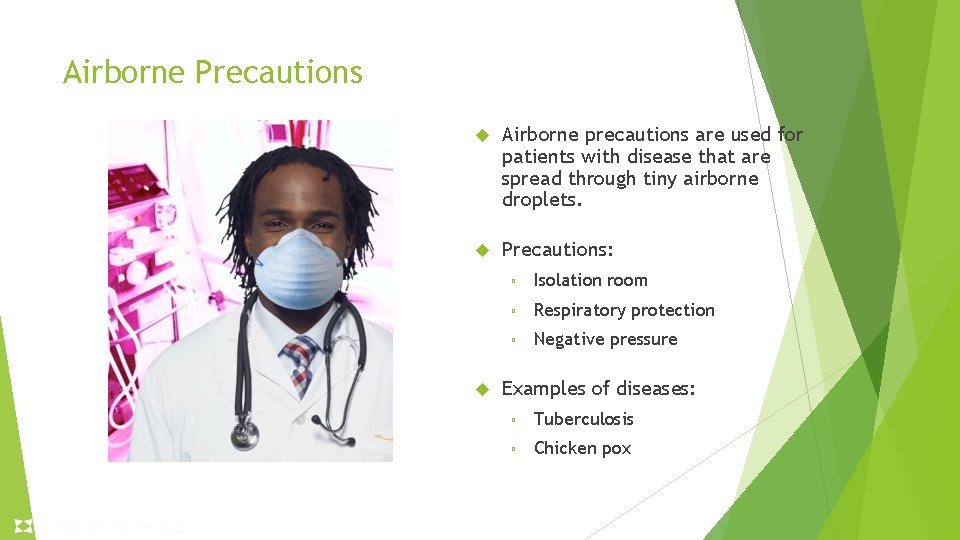
Airborne Precautions Airborne precautions are used for patients with disease that are spread through tiny airborne droplets. Precautions: ▫ Isolation room ▫ Respiratory protection ▫ Negative pressure Examples of diseases: ▫ Tuberculosis ▫ Chicken pox
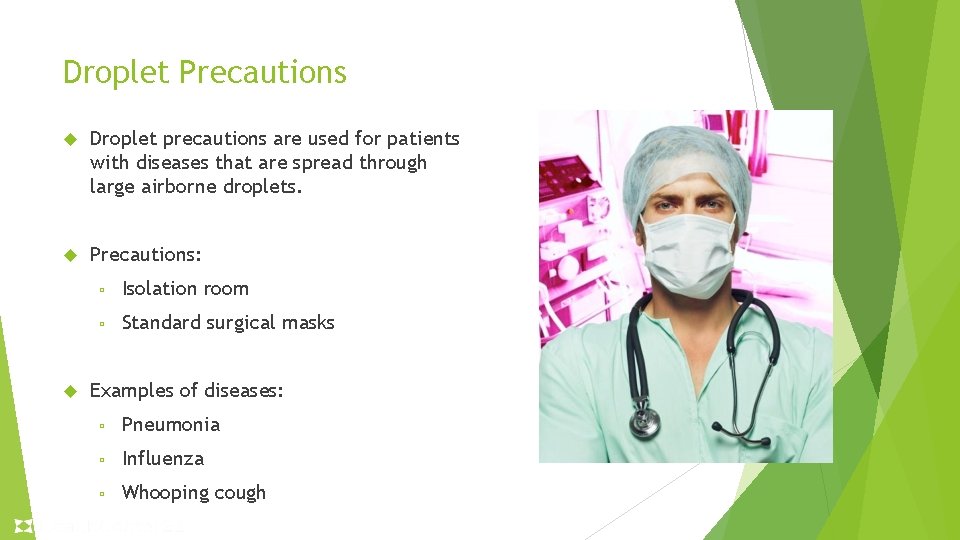
Droplet Precautions Droplet precautions are used for patients with diseases that are spread through large airborne droplets. Precautions: ▫ Isolation room ▫ Standard surgical masks Examples of diseases: ▫ Pneumonia ▫ Influenza ▫ Whooping cough
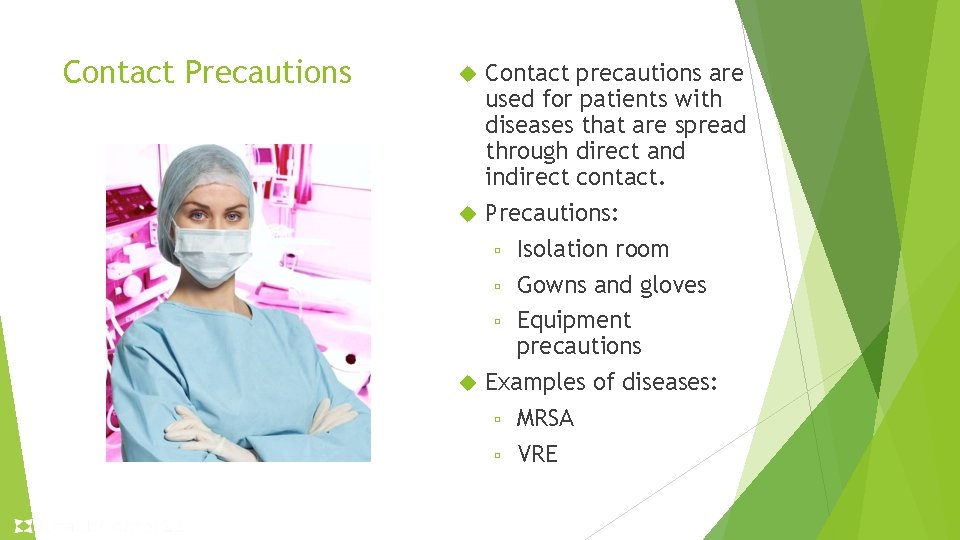
Contact Precautions Contact precautions are used for patients with diseases that are spread through direct and indirect contact. Precautions: ▫ Isolation room ▫ Gowns and gloves ▫ Equipment precautions Examples of diseases: ▫ MRSA ▫ VRE
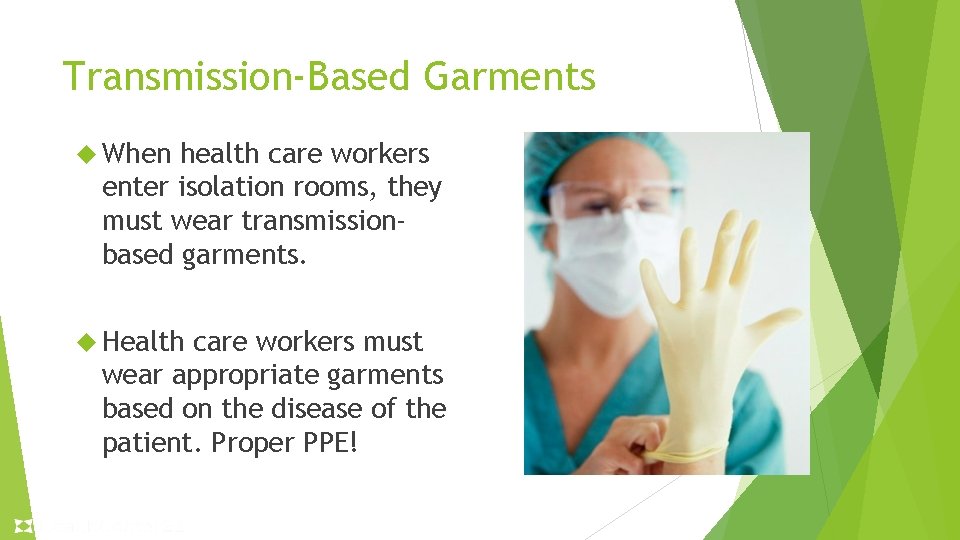
Transmission-Based Garments When health care workers enter isolation rooms, they must wear transmissionbased garments. Health care workers must wear appropriate garments based on the disease of the patient. Proper PPE!
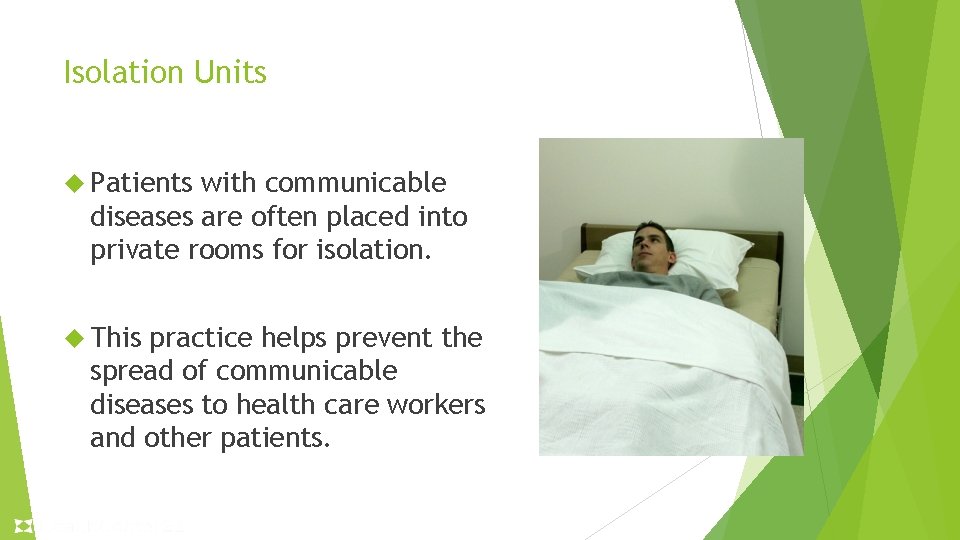
Isolation Units Patients with communicable diseases are often placed into private rooms for isolation. This practice helps prevent the spread of communicable diseases to health care workers and other patients.
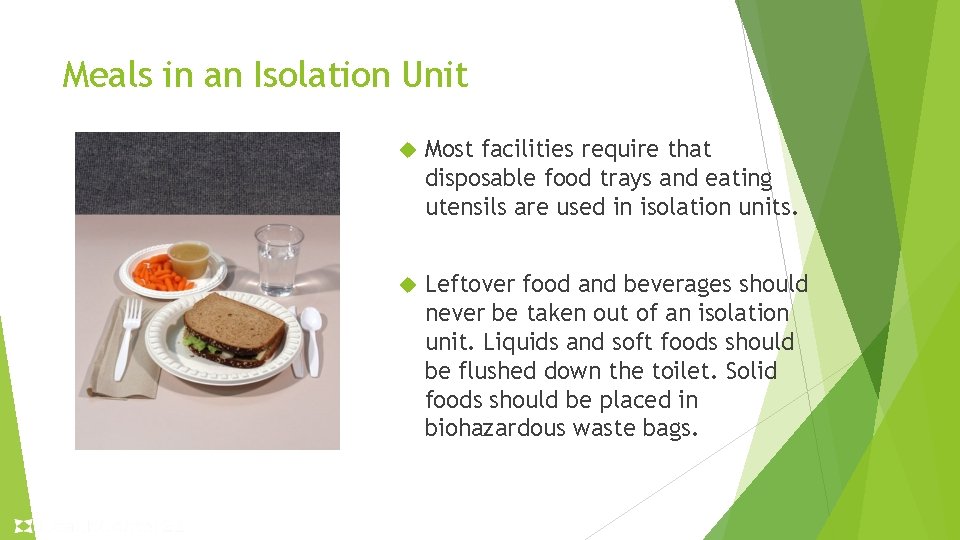
Meals in an Isolation Unit Most facilities require that disposable food trays and eating utensils are used in isolation units. Leftover food and beverages should never be taken out of an isolation unit. Liquids and soft foods should be flushed down the toilet. Solid foods should be placed in biohazardous waste bags.
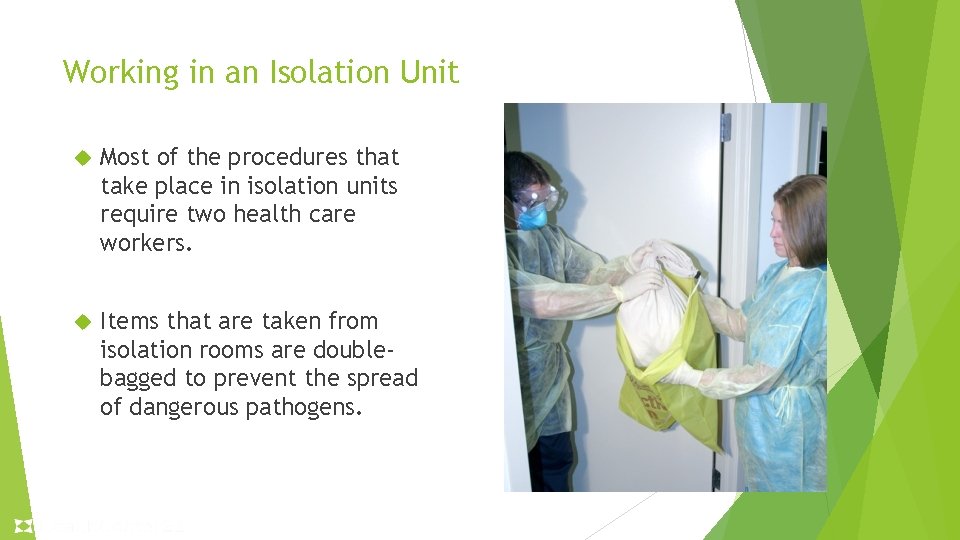
Working in an Isolation Unit Most of the procedures that take place in isolation units require two health care workers. Items that are taken from isolation rooms are doublebagged to prevent the spread of dangerous pathogens.
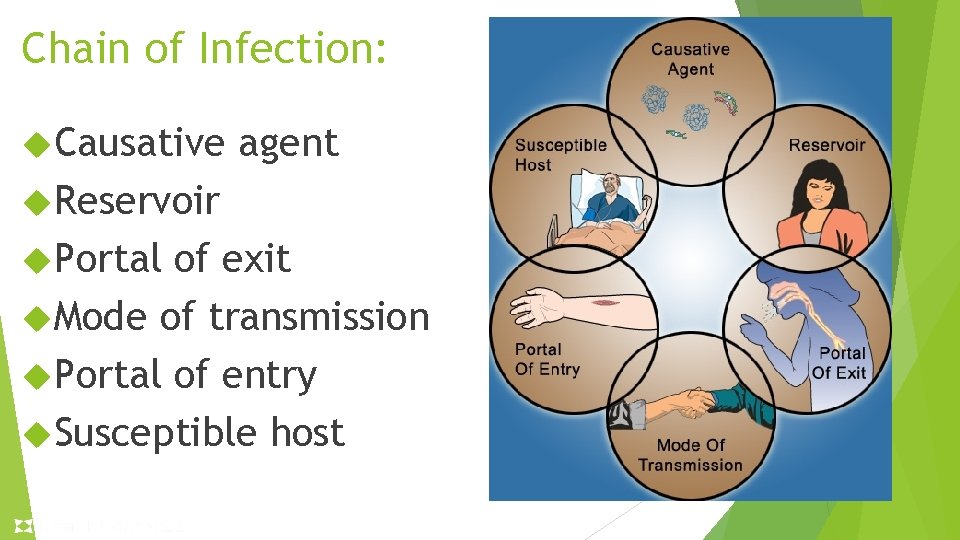
Chain of Infection: Causative agent Reservoir Portal of exit Mode of transmission Portal of entry Susceptible host
Causative Agent = Pathogen Disease-producing microorganism; bacteria, virus, fungus, protozoa, and rickettsia Present in blood or body fluids, called “bloodborne pathogens” Pathogens need an environment that enables them to survive, grow, and multiply The human body is a perfect environment
Reservoir Human, animal, or insect that is infected with disease Other reservoirs may be water, food, and contaminated objects Host may be symptomatic or asymptomatic Reservoir host is contagious even though he or she may not appear ill
Portal of Exit Pathogen must be able to exit reservoir host Any body opening lined with mucous membranes: eyes, nose, throat, vagina, rectum, penis Injury Blood, or surgery body fluids: vaginal secretions, semen, urine, feces
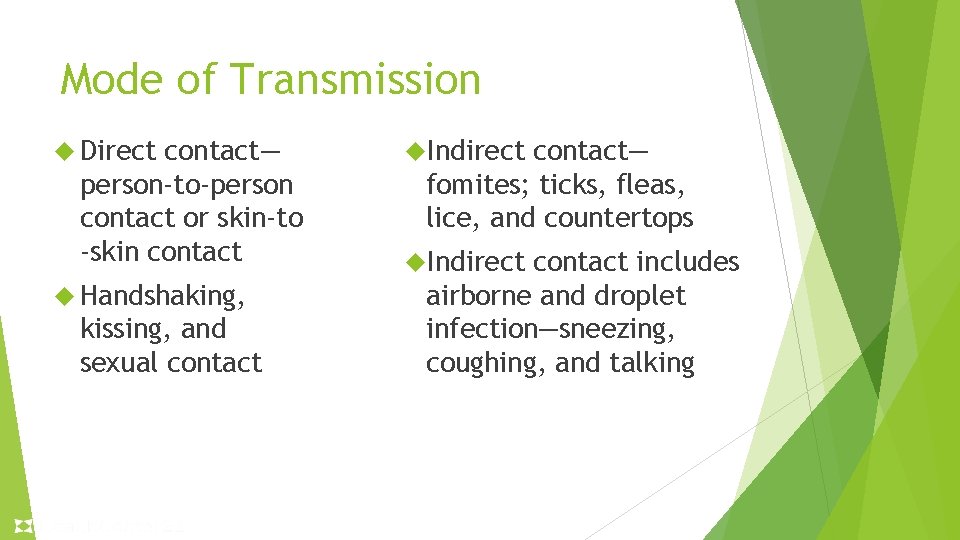
Mode of Transmission Direct contact— person-to-person contact or skin-to -skin contact Handshaking, kissing, and sexual contact Indirect contact— fomites; ticks, fleas, lice, and countertops Indirect contact includes airborne and droplet infection—sneezing, coughing, and talking
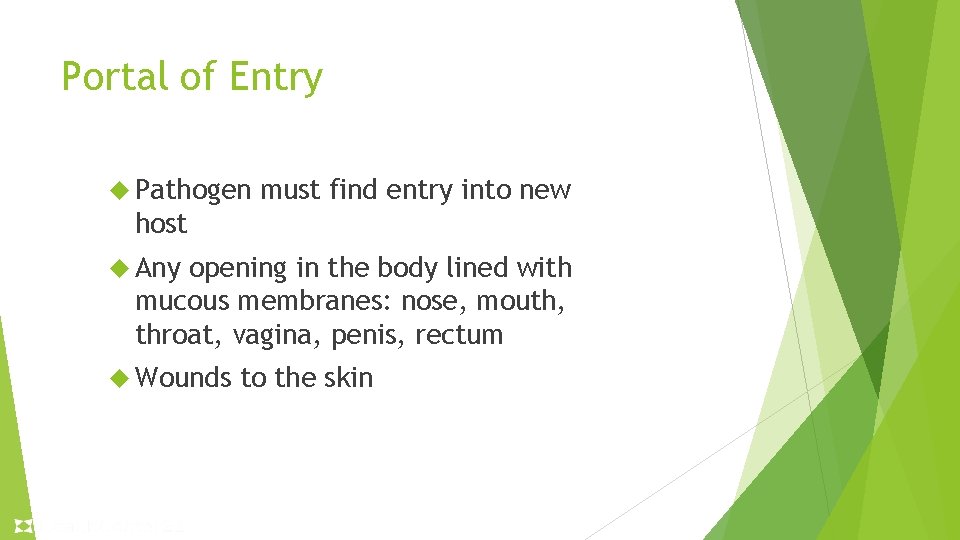
Portal of Entry Pathogen must find entry into new host Any opening in the body lined with mucous membranes: nose, mouth, throat, vagina, penis, rectum Wounds to the skin
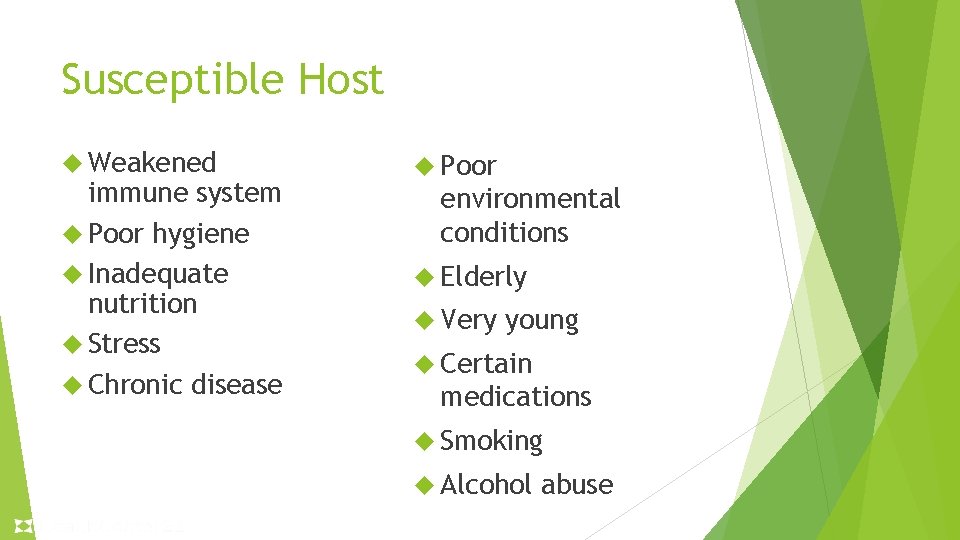
Susceptible Host Weakened immune system Poor hygiene Inadequate nutrition Stress Chronic disease Poor environmental conditions Elderly Very young Certain medications Smoking Alcohol abuse
Chain of Infection Video https: //www. youtube. com/watch? v=_o 9 Sx. DFPUi. A Write down all the ways you see the chain of infection spread.
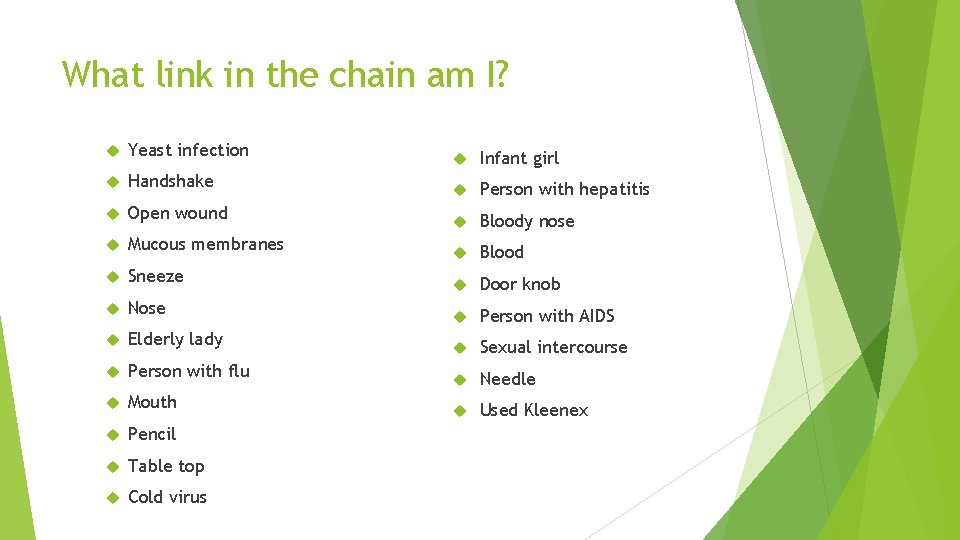
What link in the chain am I? Yeast infection Infant girl Handshake Person with hepatitis Open wound Bloody nose Mucous membranes Blood Sneeze Door knob Nose Person with AIDS Elderly lady Sexual intercourse Person with flu Needle Mouth Used Kleenex Pencil Table top Cold virus
Chain of Infection http: //www. vdh. virginia. gov/content/uploads/sites/13/2016/03/Chain-of. Infection-Fact-Sheet. pdf
Objective By the end of class, students will be able to: Apply and Identify Transmission-Based Precautions Apply and Identify the steps in the Chain of Infection