
Ch E 402 Chemical Reaction Engineering Multiple Reactions




- Slides: 81
Ch. E 402: Chemical Reaction Engineering Multiple Reactions (Chapter 6) ØYield and selectivity ØParallel, series and complex reactions ØConditions for maximizing the desired product in multiple reactions ØMole balances for multiple reactions ØTemperature effects
Multiple Reactions-Chapter 6 Seldom is the reaction of interest the only one that occurs in a reactor Typically, multiple reactions will occur, some desired and some undesired One of the key factors in the economic success of a chemical plant is the minimization of undesired side reactions that occur along with the desired reaction
Multiple Reactions-Chapter 6 In this chapter, we discuss reactor selection and general mole balances for multiple reactions First, we describe the four basic types of multiple reactions: series, parallel, independent, and complex Next, we define the selectivity parameter and discuss how it can be used to minimize unwanted side reactions by proper choice of operating conditions and reactor selection We then develop the algorithm that can be used to solve reaction engineering problems when multiple reactions are involved Finally, a number of examples are given that show the algorithm is applied to a number of series reactions
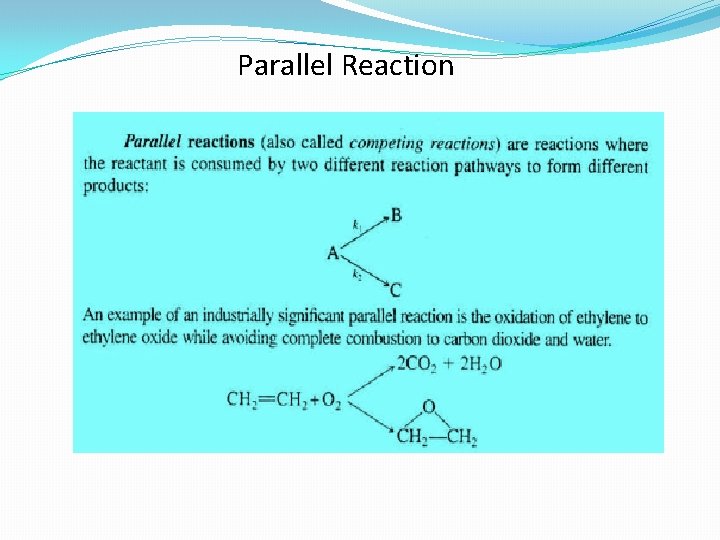
Parallel Reaction
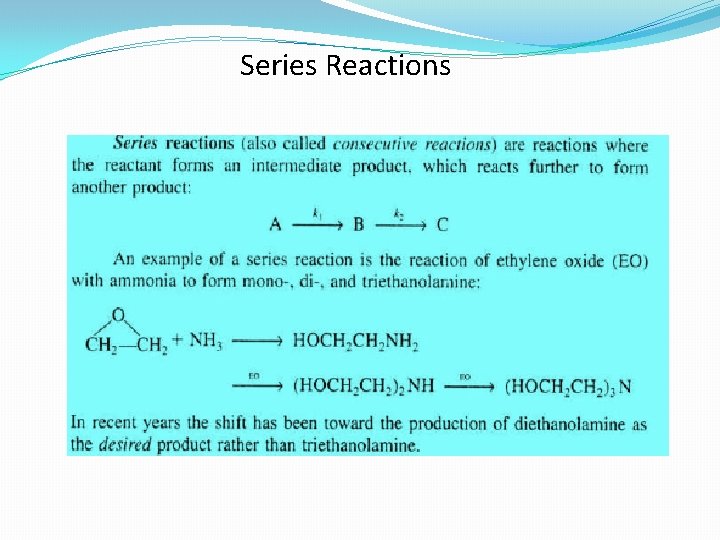
Series Reactions
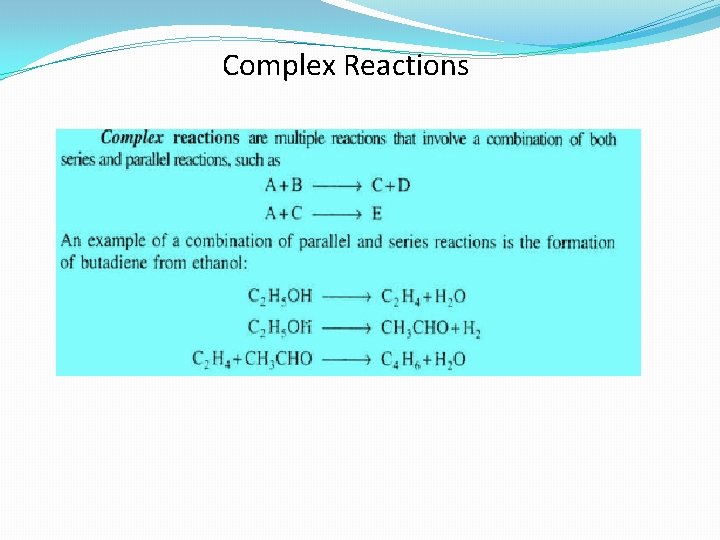
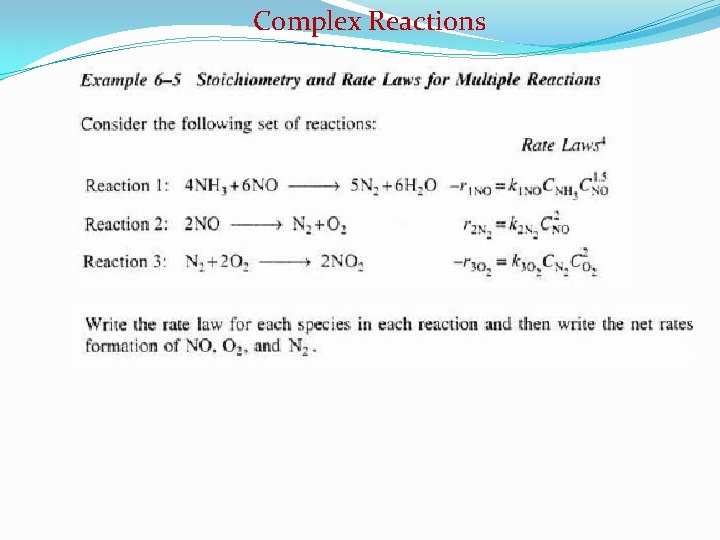
Complex Reactions
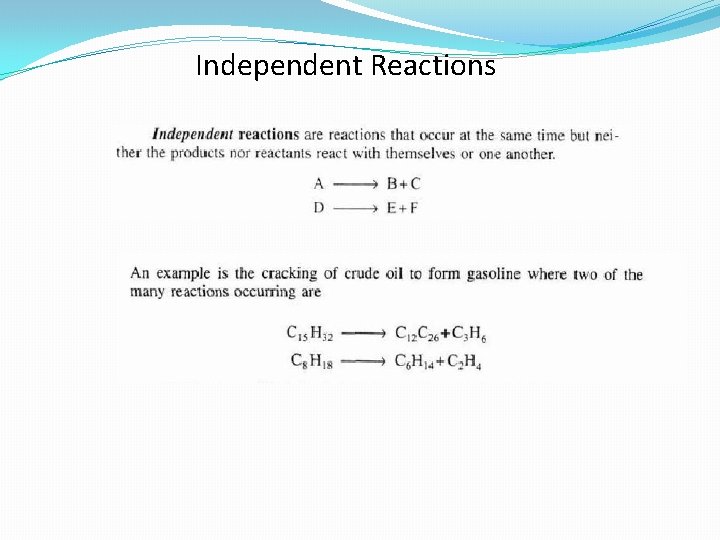
Independent Reactions
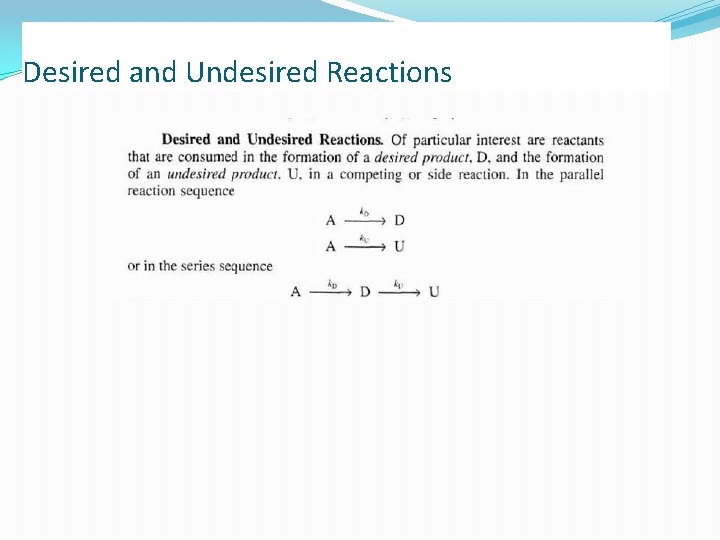
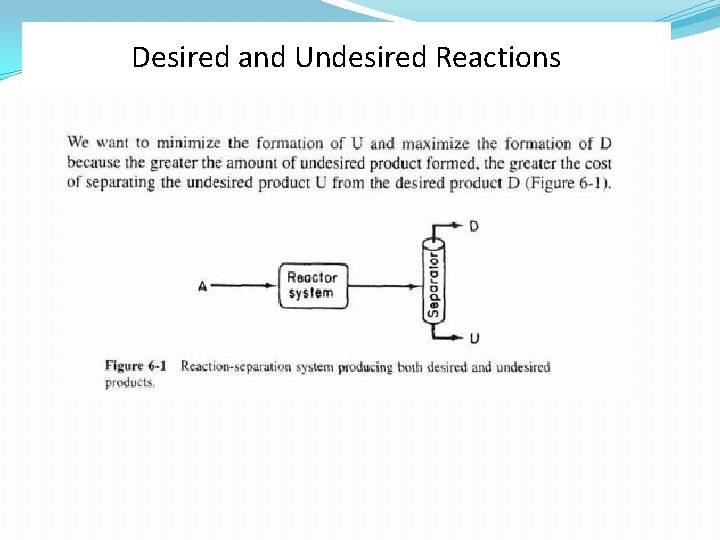
Desired and Undesired Reactions
Desired and Undesired Reactions
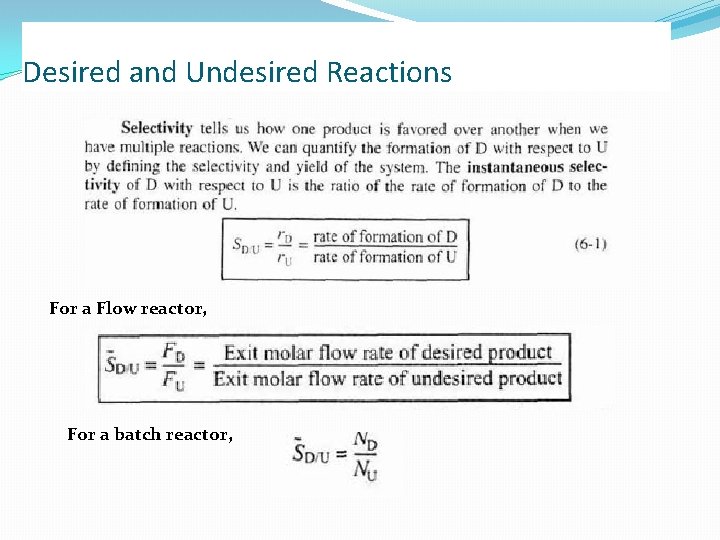
Desired and Undesired Reactions For a Flow reactor, For a batch reactor,
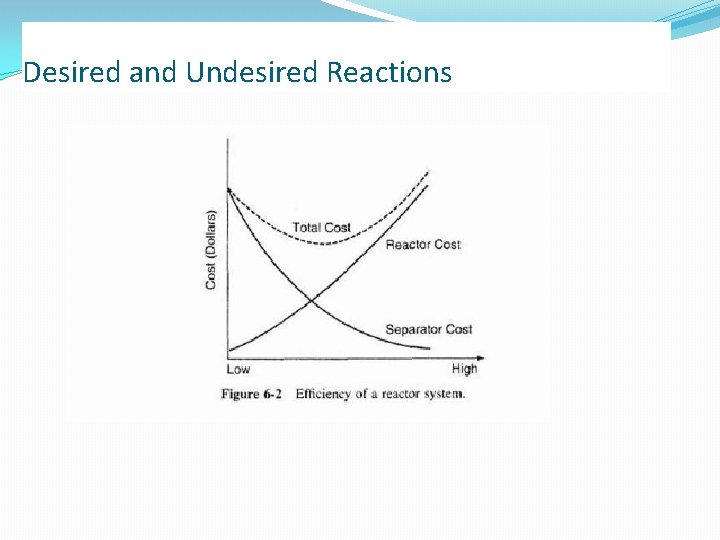
Desired and Undesired Reactions
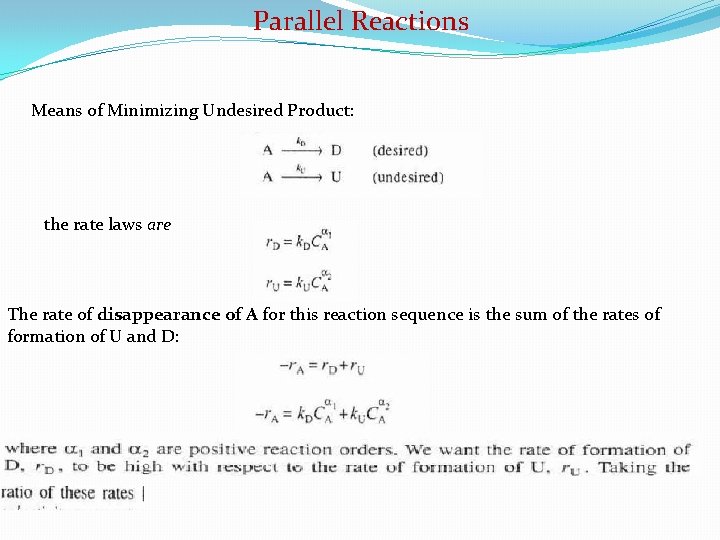
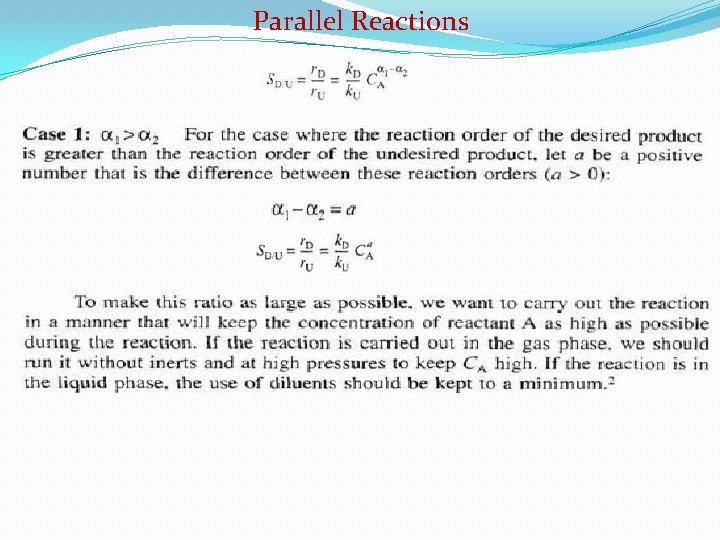
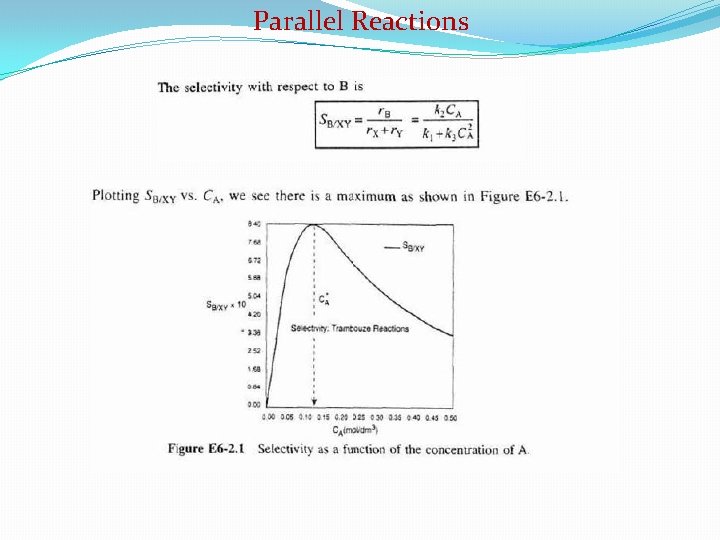
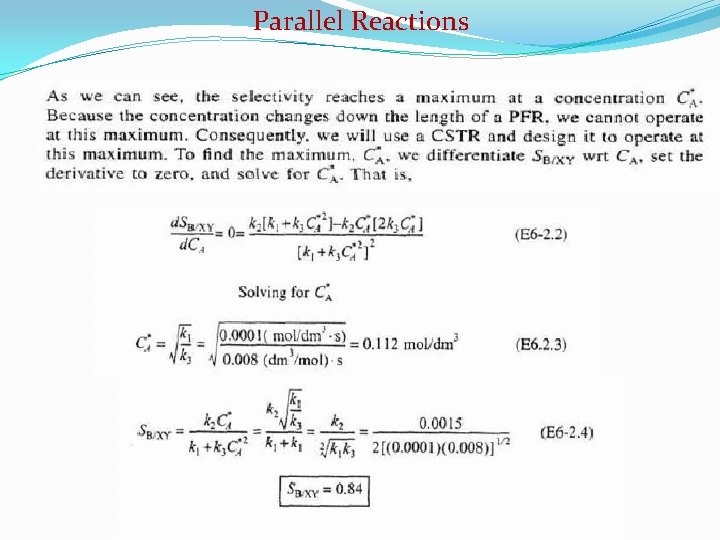
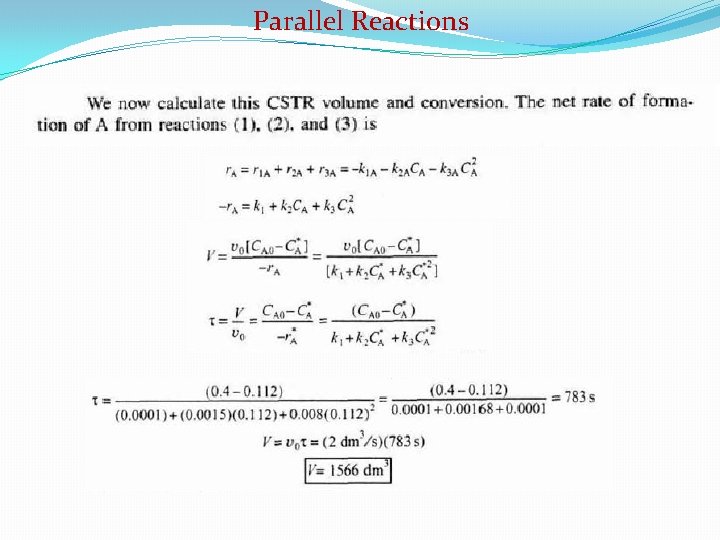
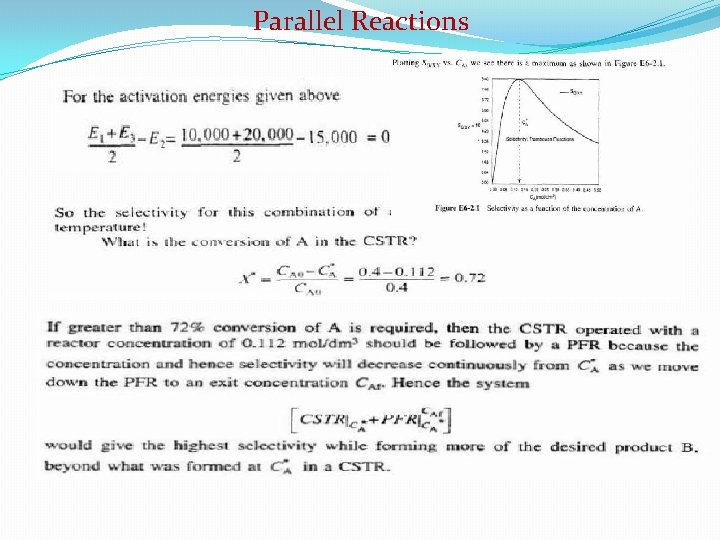
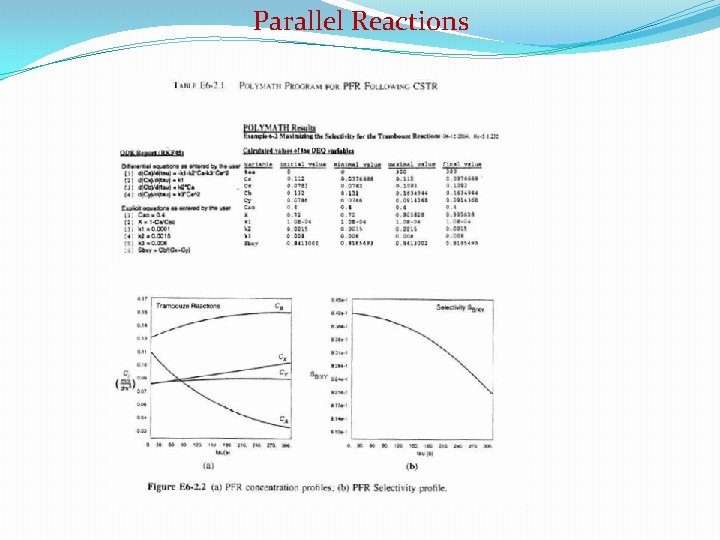
Parallel Reactions Means of Minimizing Undesired Product: the rate laws are The rate of disappearance of A for this reaction sequence is the sum of the rates of formation of U and D:
Parallel Reactions
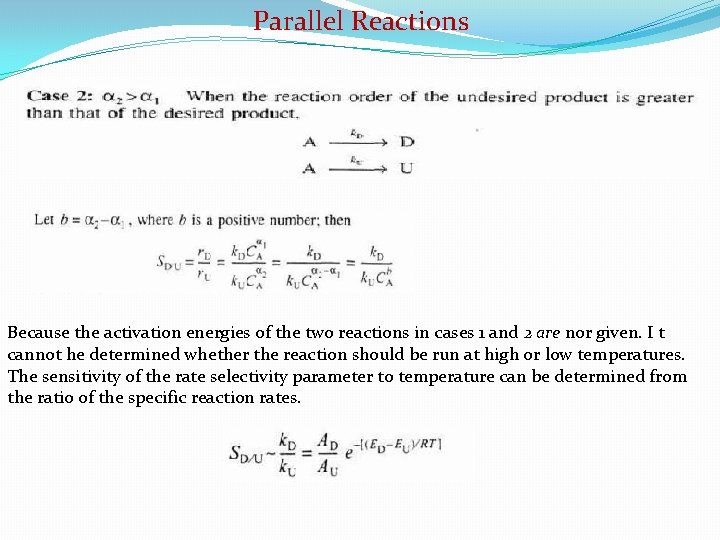
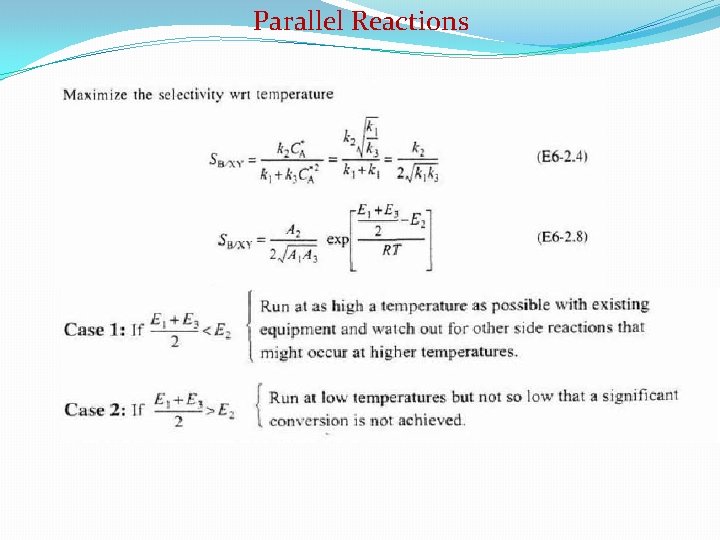
Parallel Reactions Because the activation energies of the two reactions in cases 1 and 2 are nor given. I t cannot he determined whether the reaction should be run at high or low temperatures. The sensitivity of the rate selectivity parameter to temperature can be determined from the ratio of the specific reaction rates.
Parallel Reactions
Parallel Reactions
Parallel Reactions
Parallel Reactions
Parallel Reactions
Parallel Reactions
Parallel Reactions
Parallel Reactions
Parallel Reactions
Parallel Reactions
Parallel Reactions
Ch. E 402: Chemical Reaction Engineering Multiple Reactions (Chapter 6) ØYield and selectivity ØParallel, series and complex reactions ØConditions for maximizing the desired product in multiple reactions ØMole balances for multiple reactions ØTemperature effects
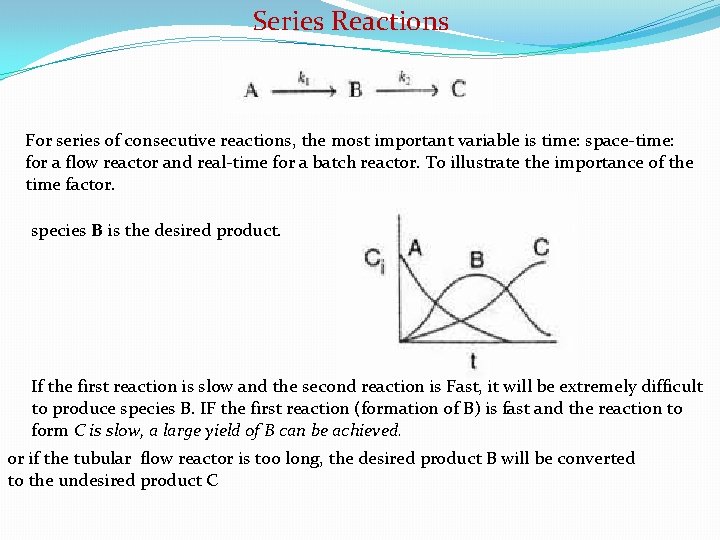
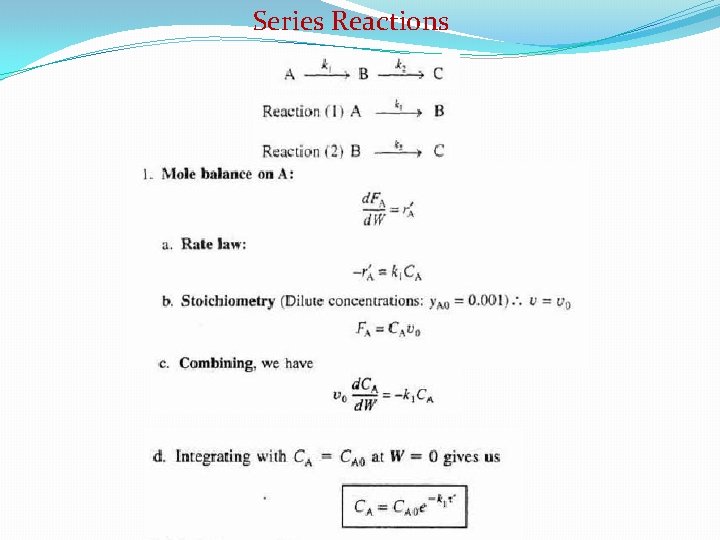
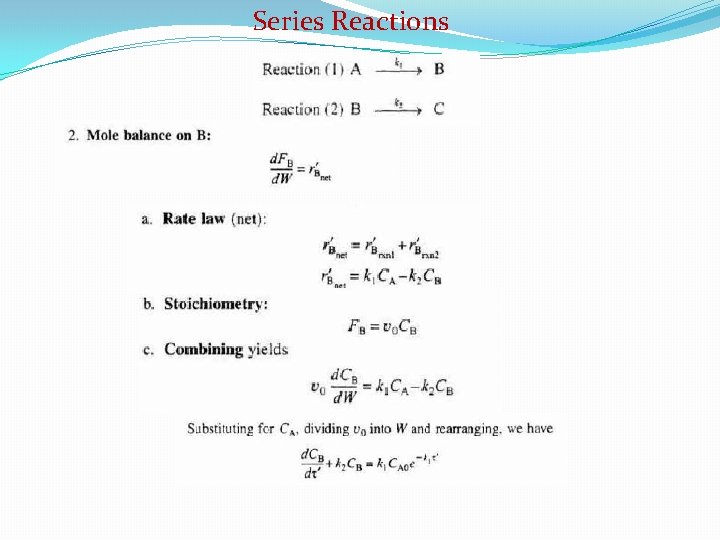
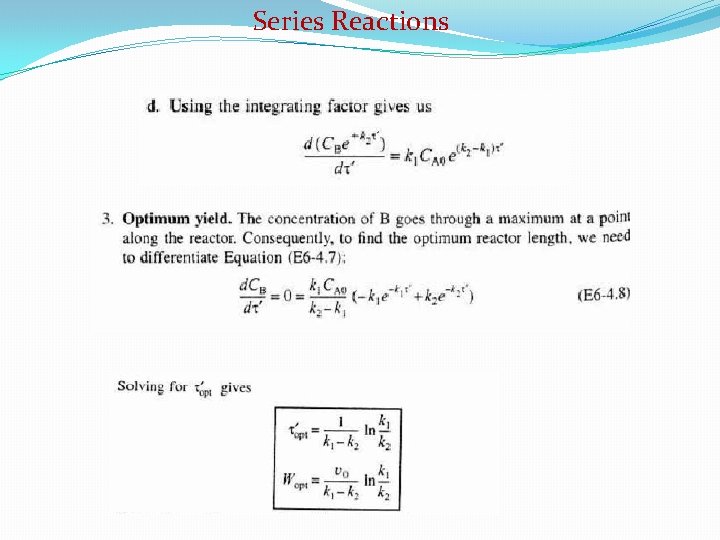
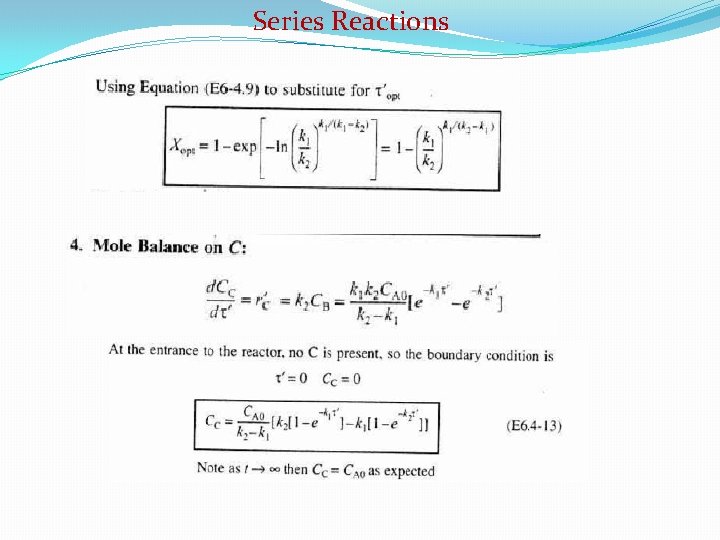
Series Reactions For series of consecutive reactions, the most important variable is time: space-time: for a flow reactor and real-time for a batch reactor. To illustrate the importance of the time factor. species B is the desired product. If the first reaction is slow and the second reaction is Fast, it will be extremely difficult to produce species B. IF the first reaction (formation of B) is fast and the reaction to form C is slow, a large yield of B can be achieved. or if the tubular flow reactor is too long, the desired product B will be converted to the undesired product C
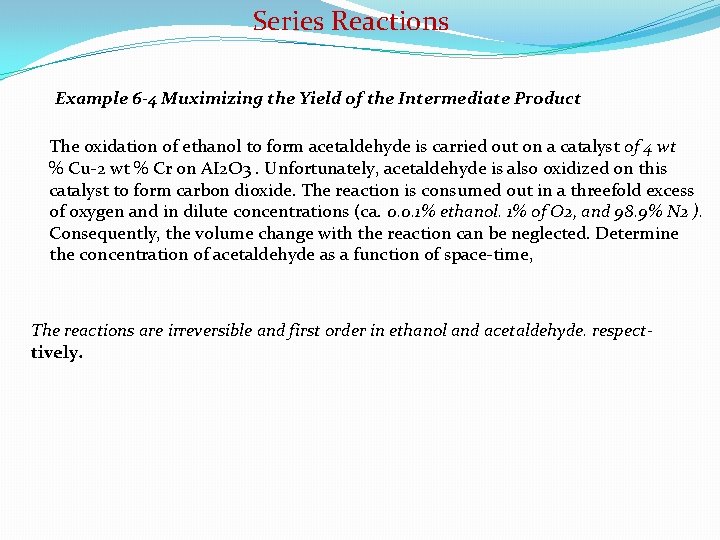
Series Reactions Example 6 -4 Muximizing the Yield of the Intermediate Product The oxidation of ethanol to form acetaldehyde is carried out on a catalyst of 4 wt % Cu-2 wt % Cr on AI 2 O 3. Unfortunately, acetaldehyde is also oxidized on this catalyst to form carbon dioxide. The reaction is consumed out in a threefold excess of oxygen and in dilute concentrations (ca. 0. 0. 1% ethanol. 1% of O 2, and 98. 9% N 2 ). Consequently, the volume change with the reaction can be neglected. Determine the concentration of acetaldehyde as a function of space-time, The reactions are irreversible and first order in ethanol and acetaldehyde. respecttively.
Series Reactions
Series Reactions
Series Reactions
Series Reactions
Series Reactions
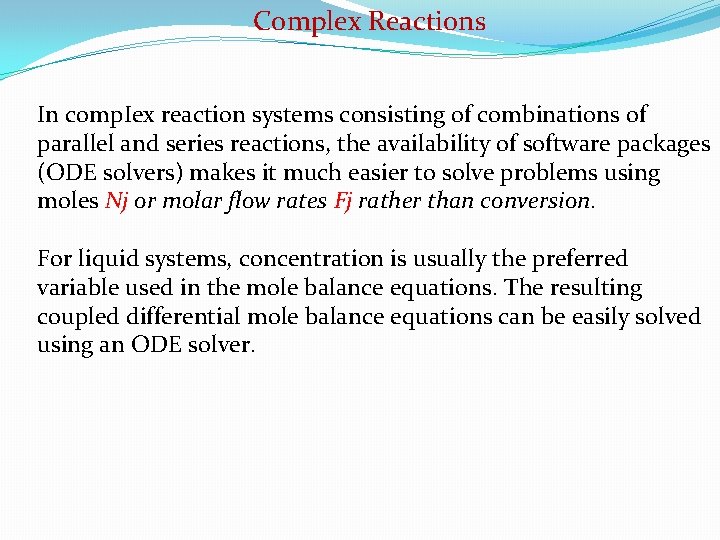
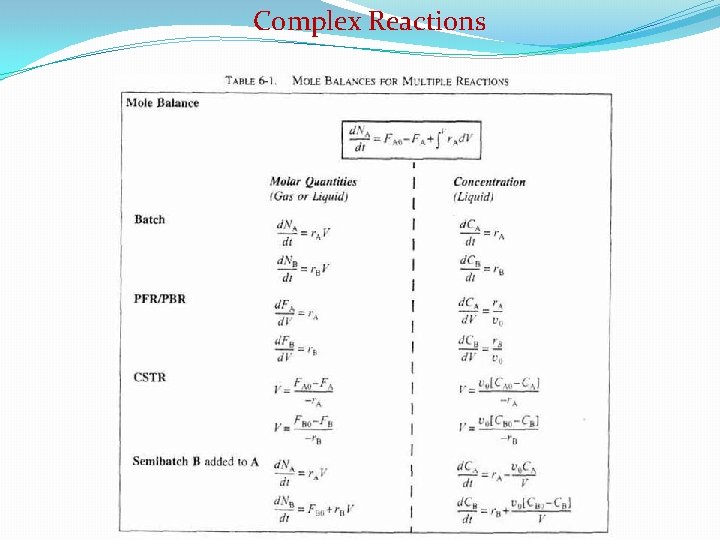
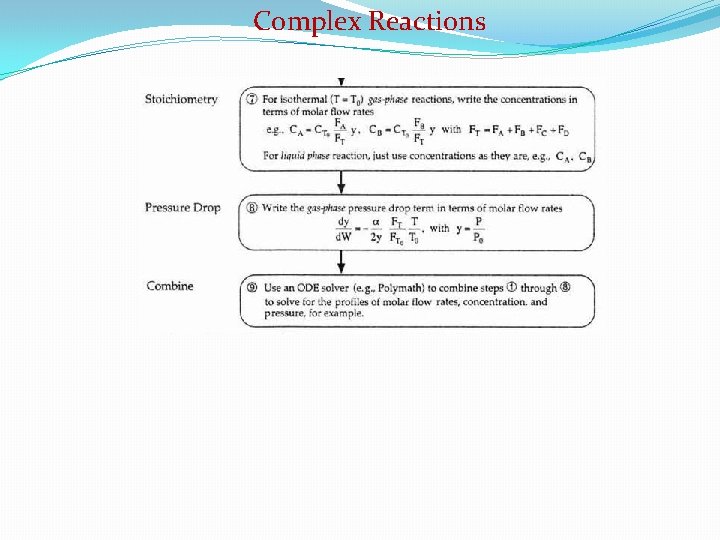
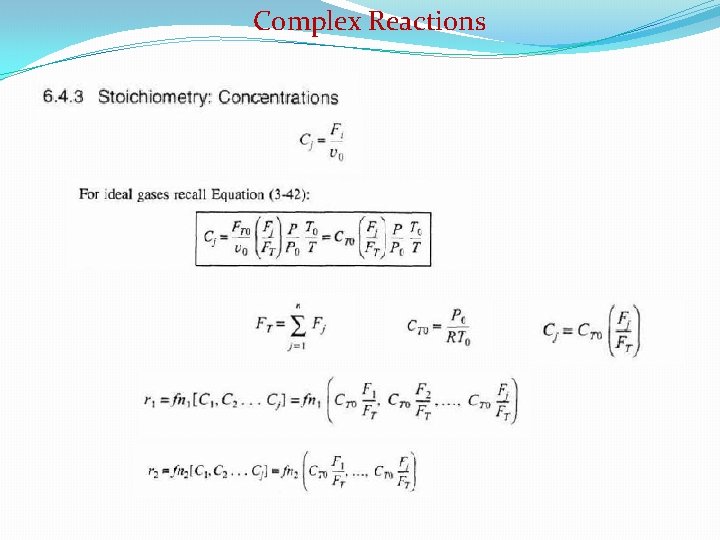
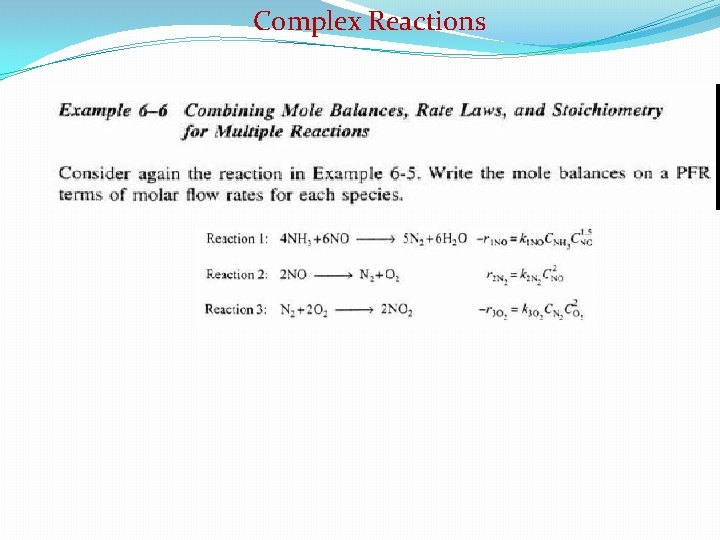
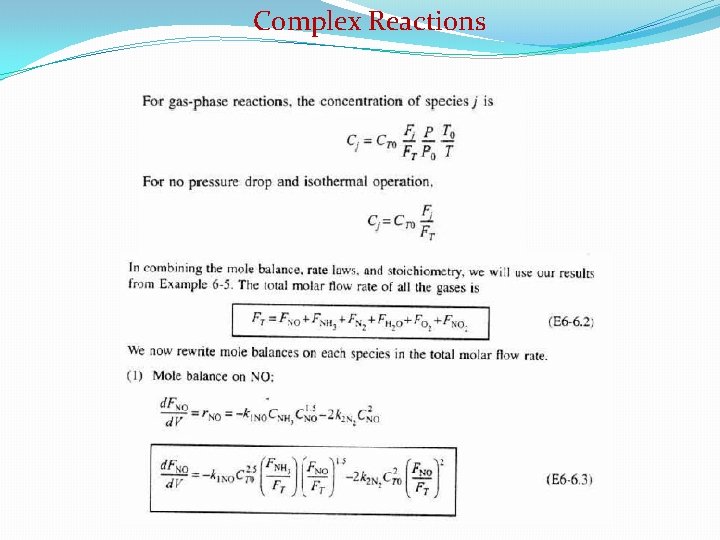
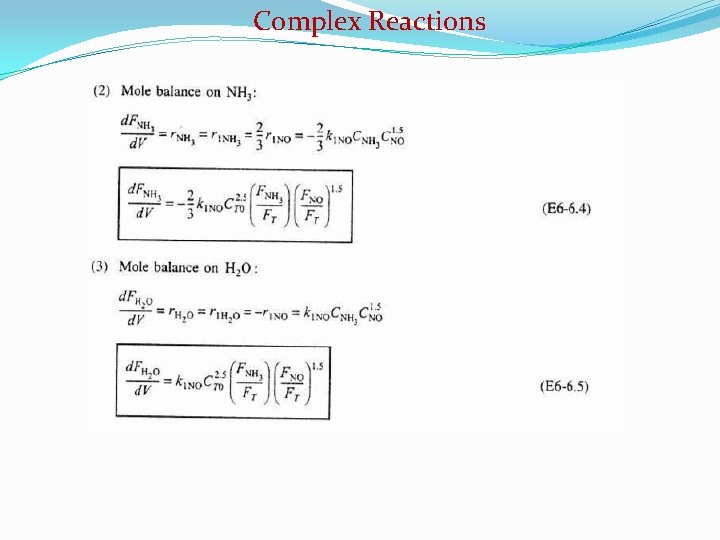
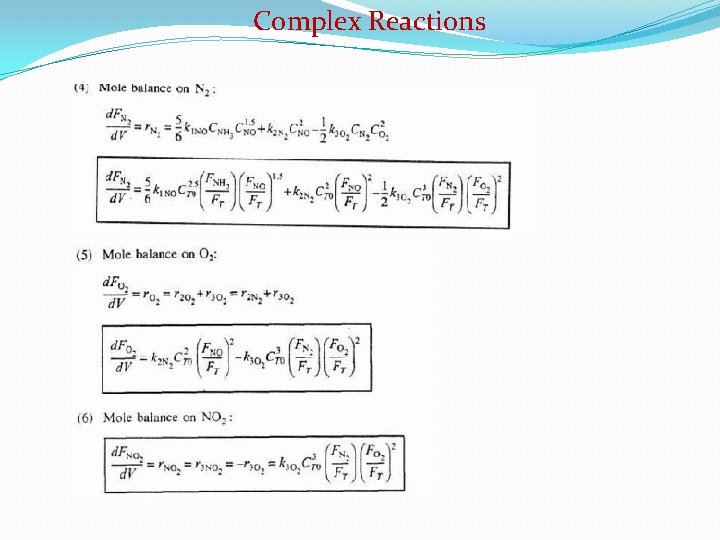
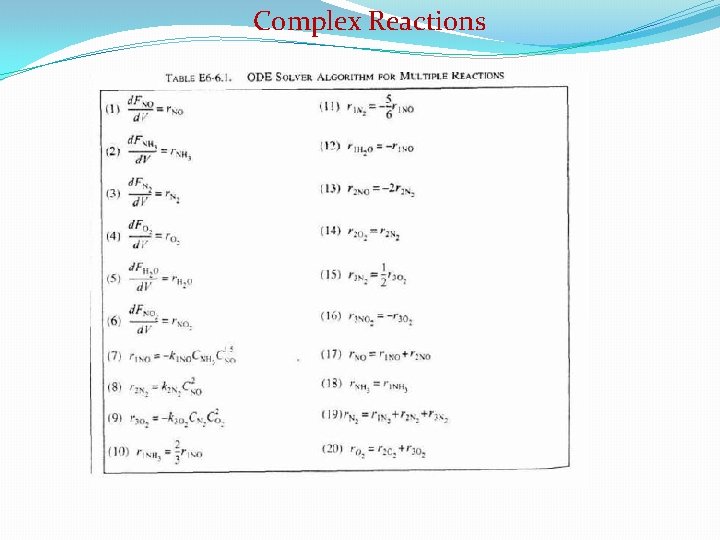
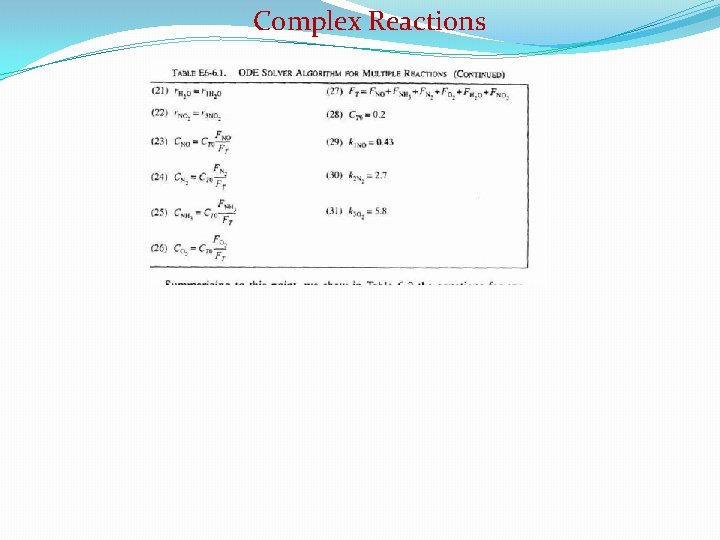
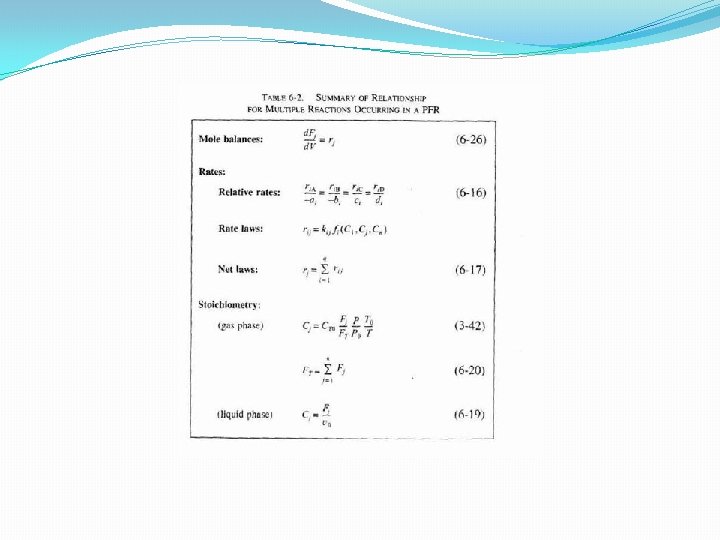
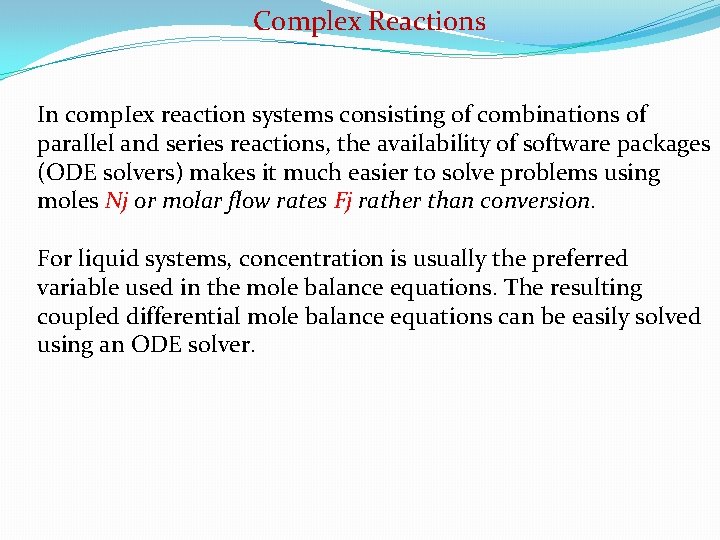
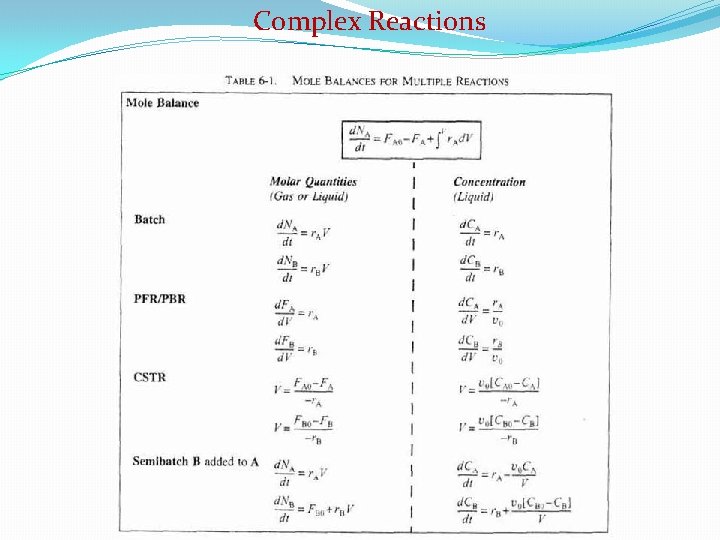
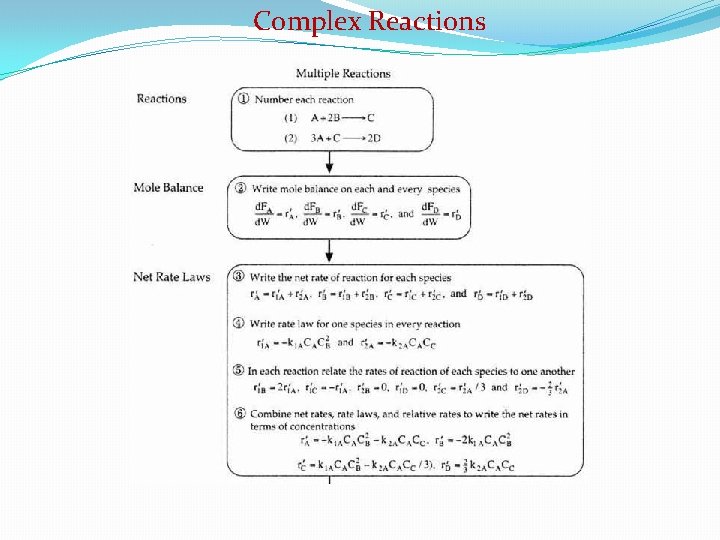
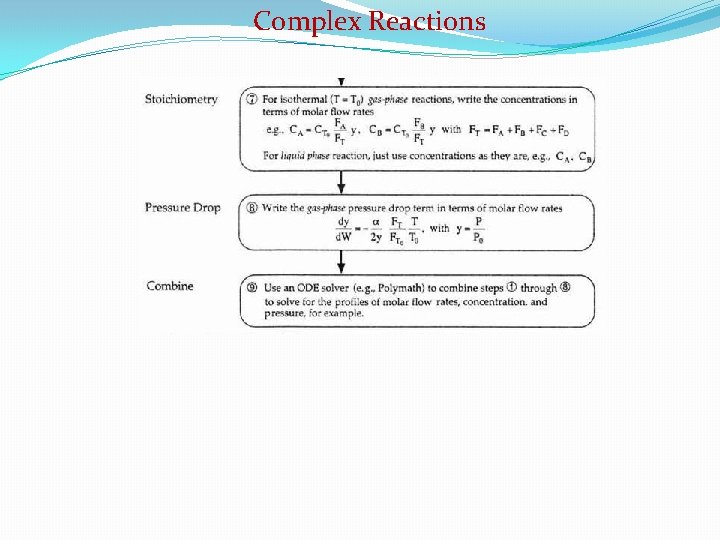
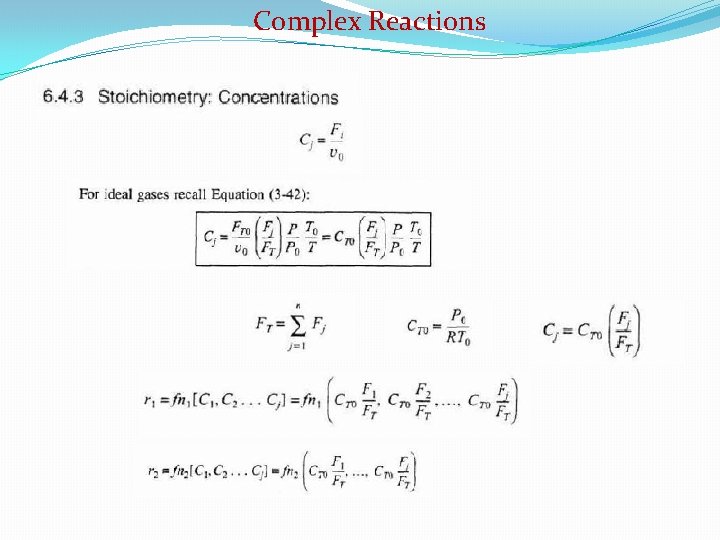
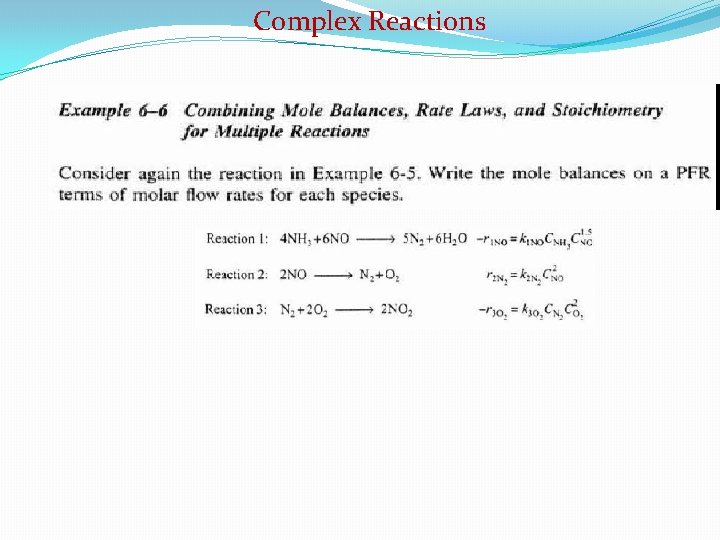
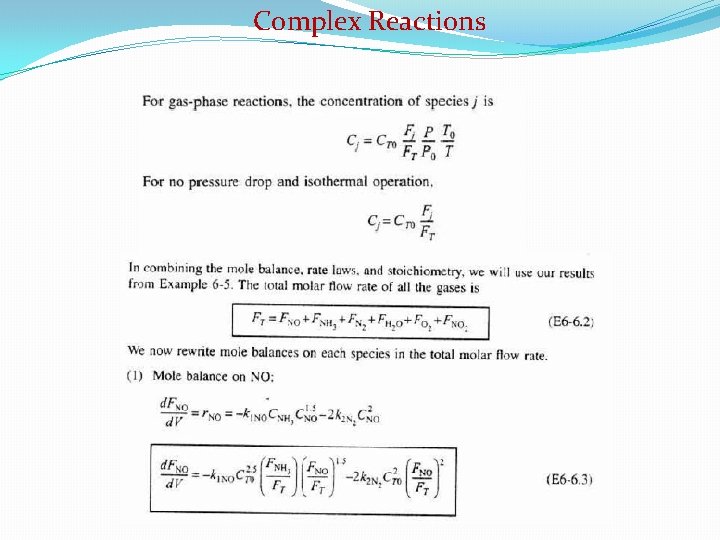
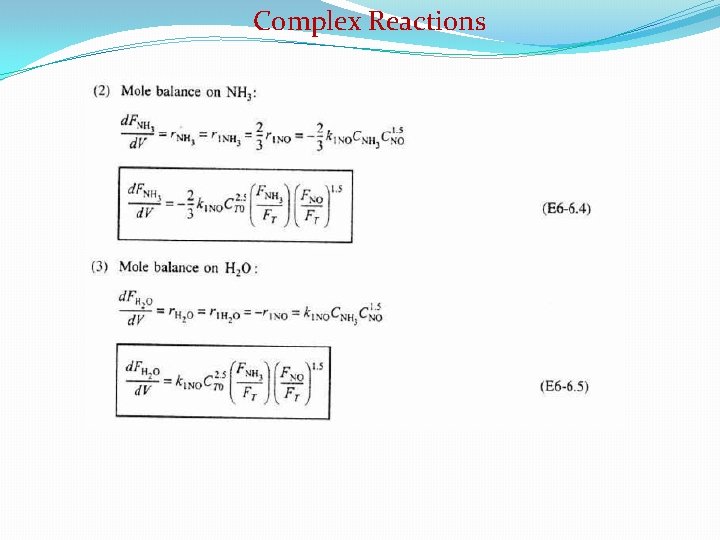
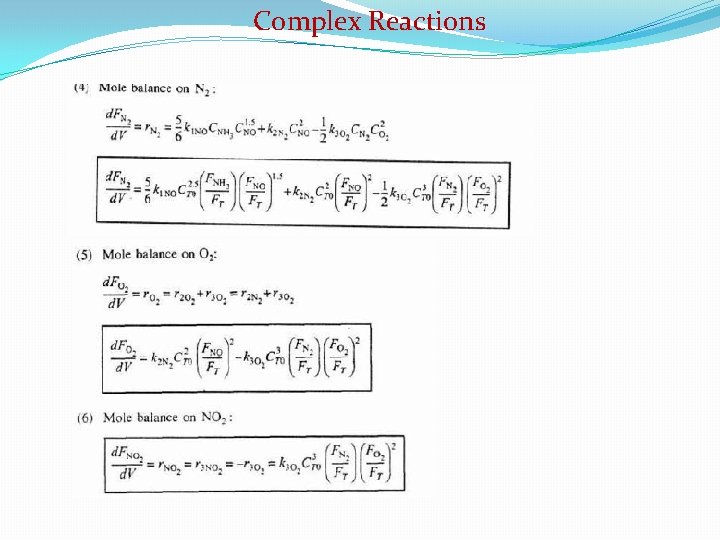
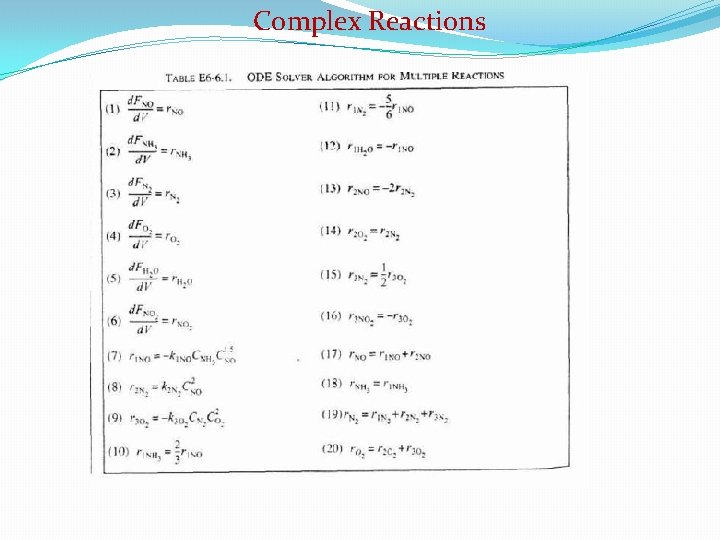
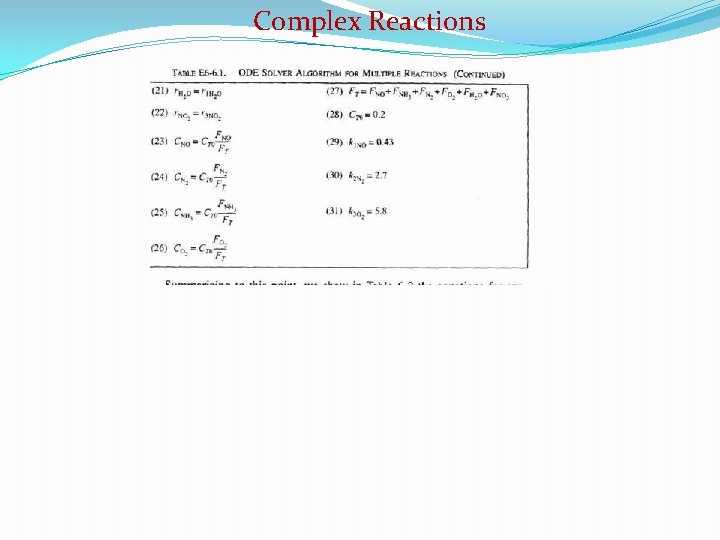
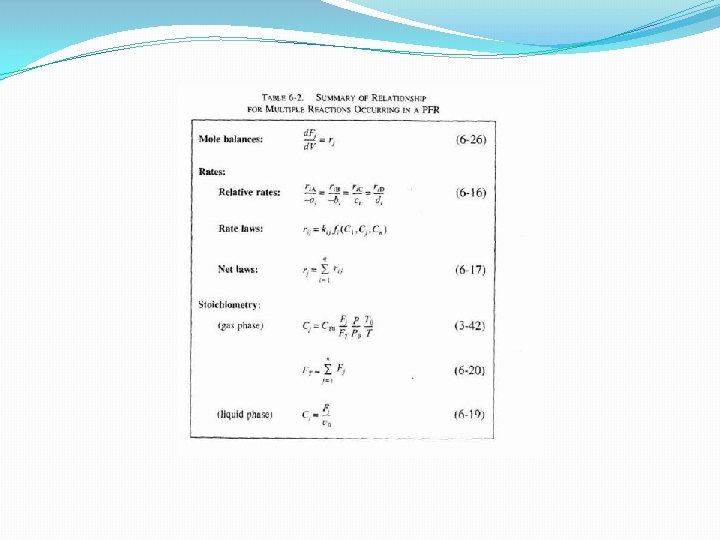
Complex Reactions In comp. Iex reaction systems consisting of combinations of parallel and series reactions, the availability of software packages (ODE solvers) makes it much easier to solve problems using moles Nj or molar flow rates Fj rather than conversion. For liquid systems, concentration is usually the preferred variable used in the mole balance equations. The resulting coupled differential mole balance equations can be easily solved using an ODE solver.
Complex Reactions
Complex Reactions
Complex Reactions
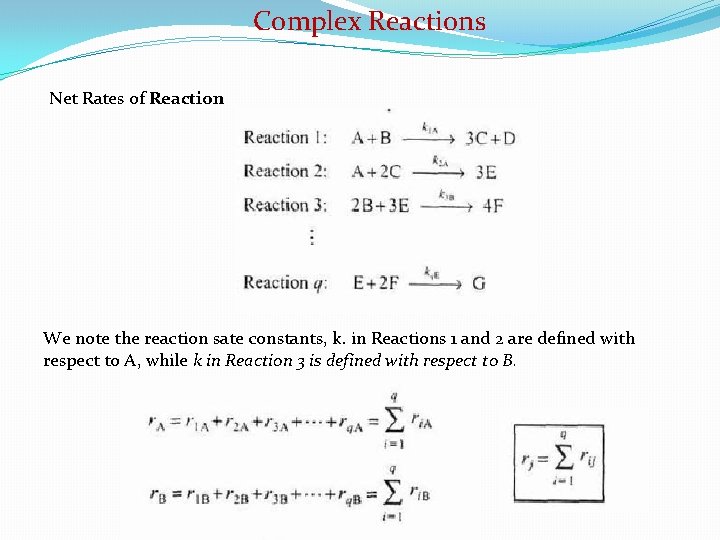
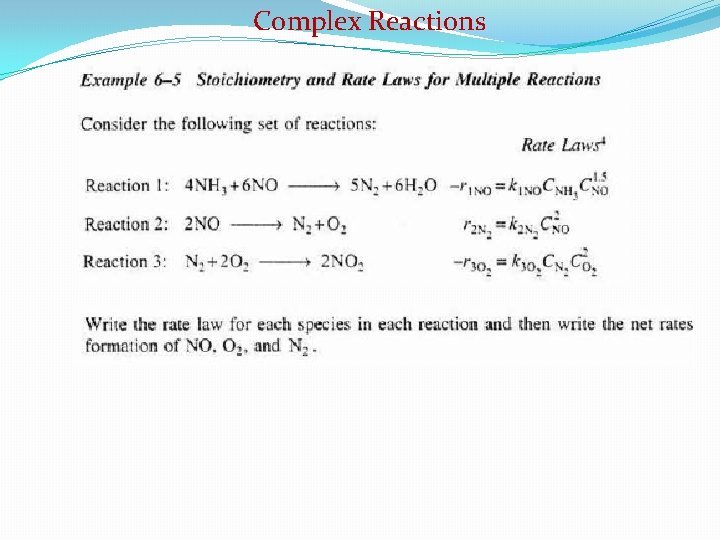
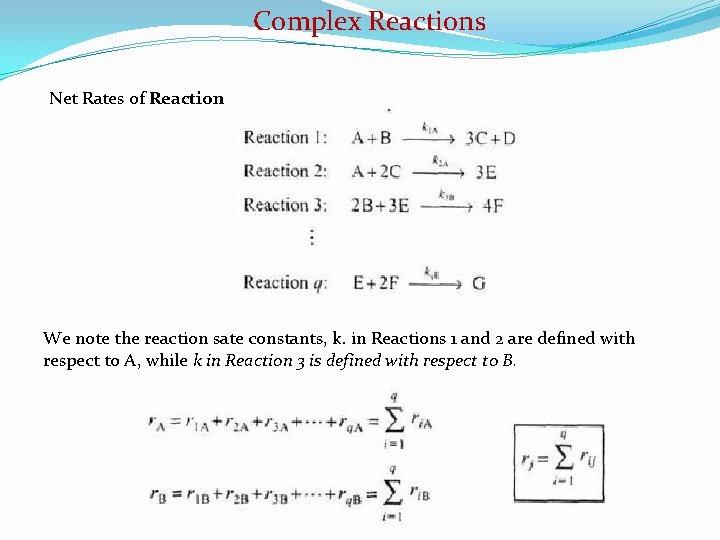
Complex Reactions Net Rates of Reaction We note the reaction sate constants, k. in Reactions 1 and 2 are defined with respect to A, while k in Reaction 3 is defined with respect to B.
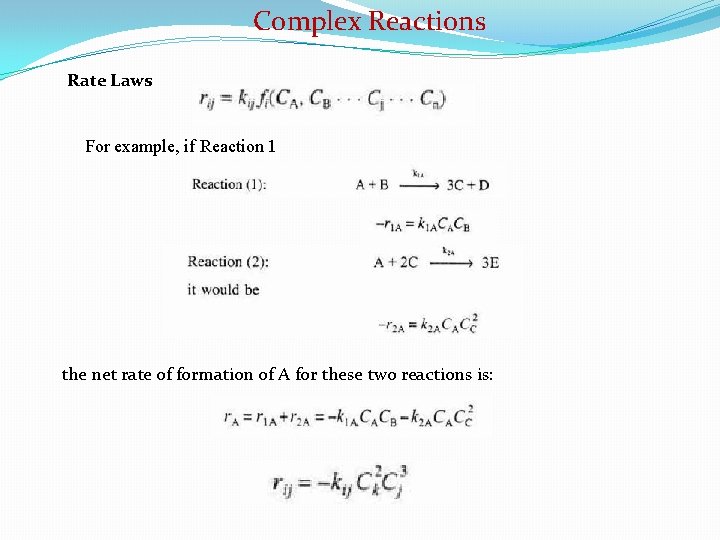
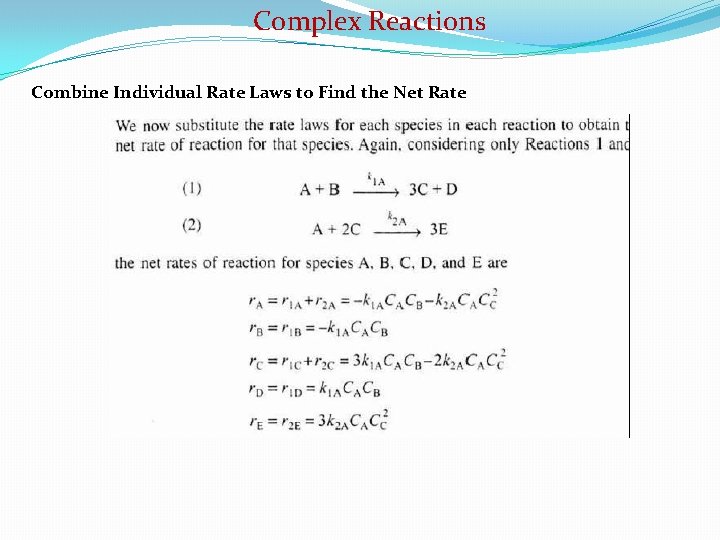
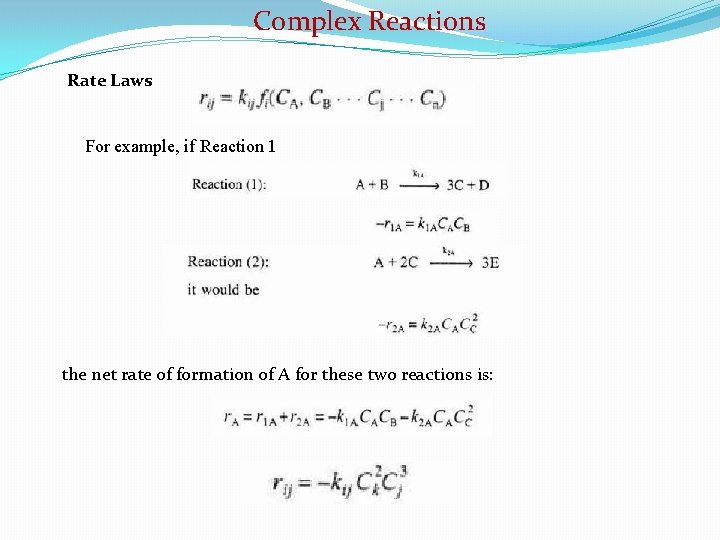
Complex Reactions Rate Laws For example, if Reaction 1 the net rate of formation of A for these two reactions is:
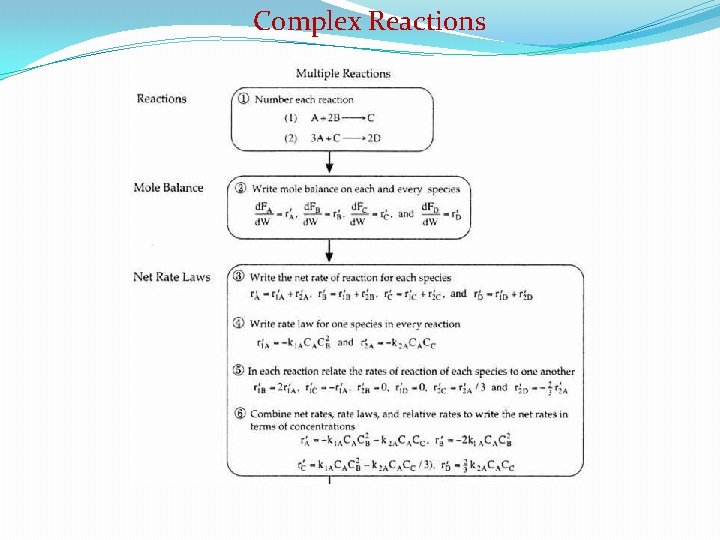
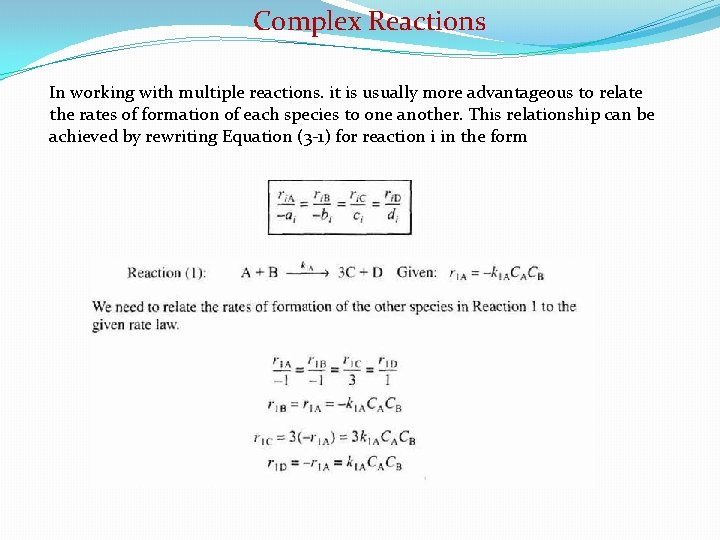
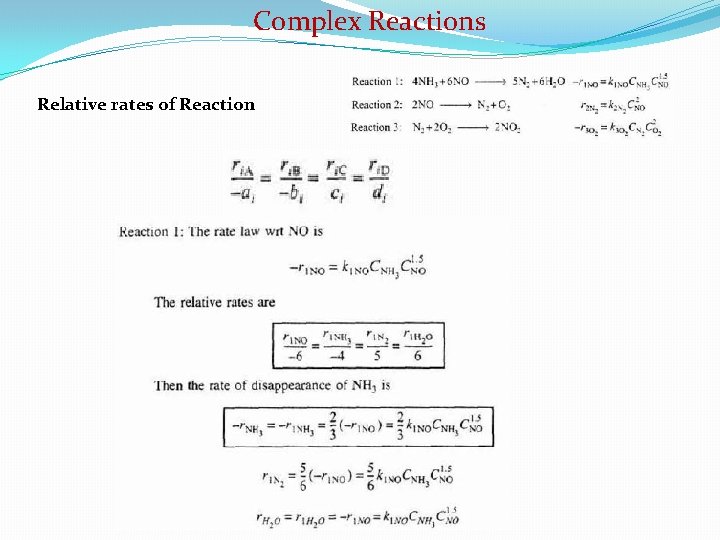
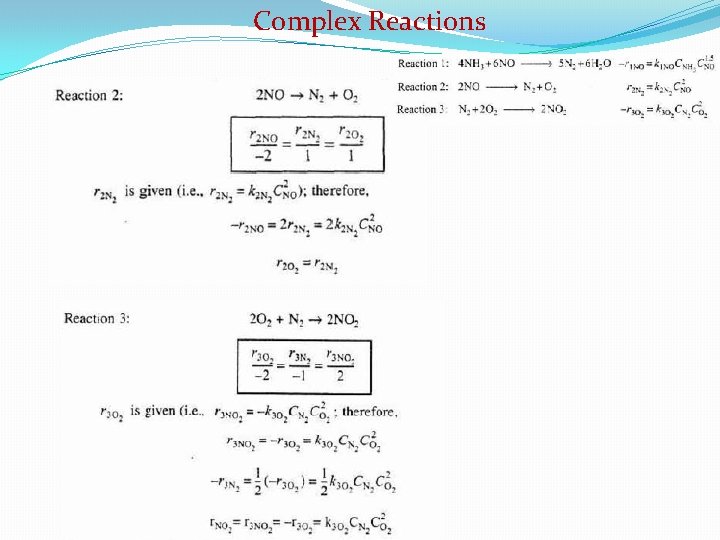
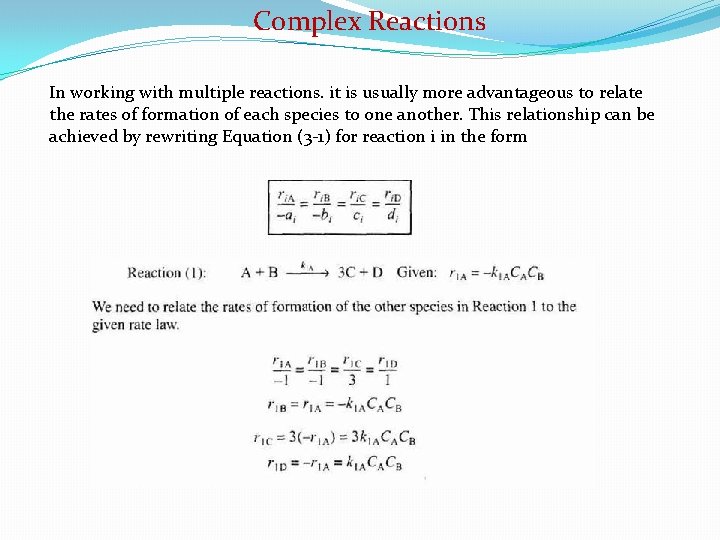
Complex Reactions In working with multiple reactions. it is usually more advantageous to relate the rates of formation of each species to one another. This relationship can be achieved by rewriting Equation (3 -1) for reaction i in the form
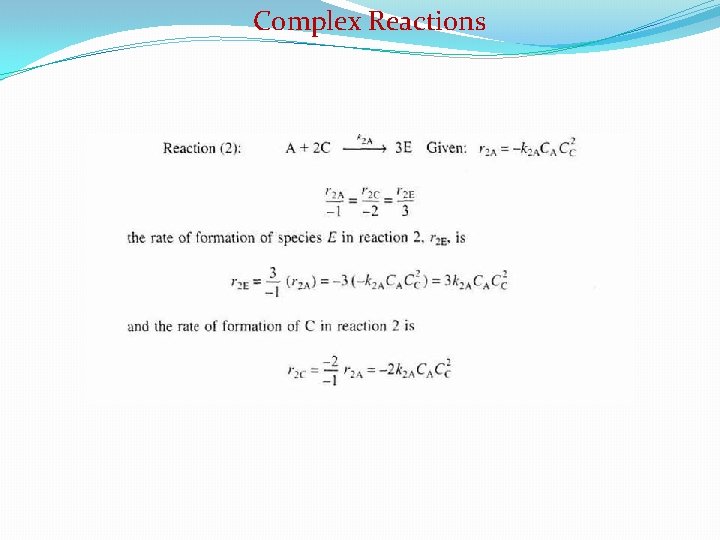
Complex Reactions
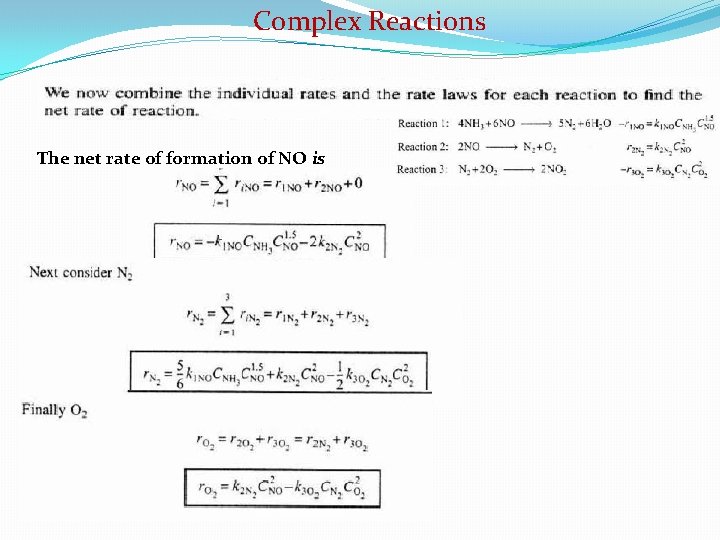
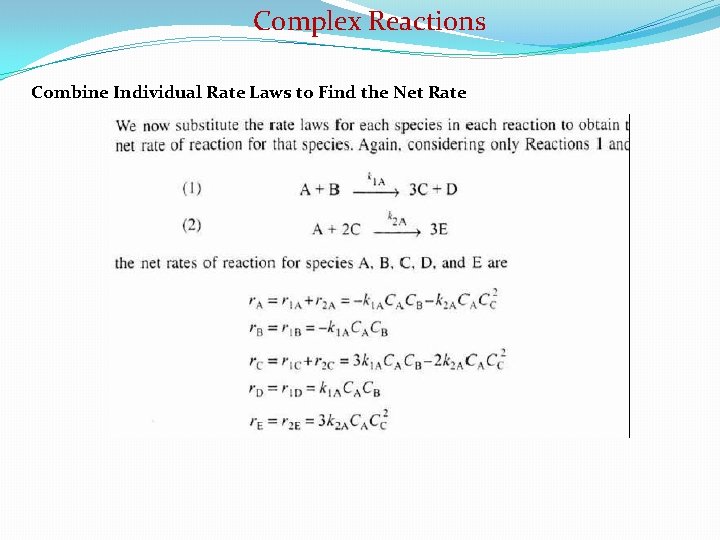
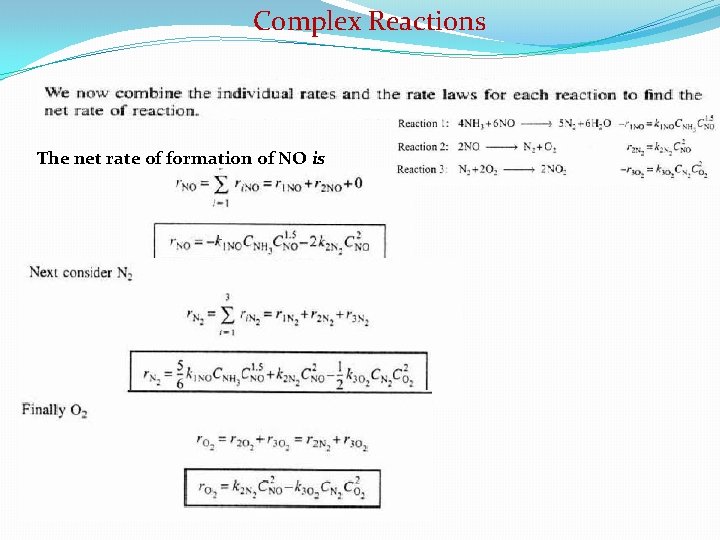
Complex Reactions Combine Individual Rate Laws to Find the Net Rate
Complex Reactions
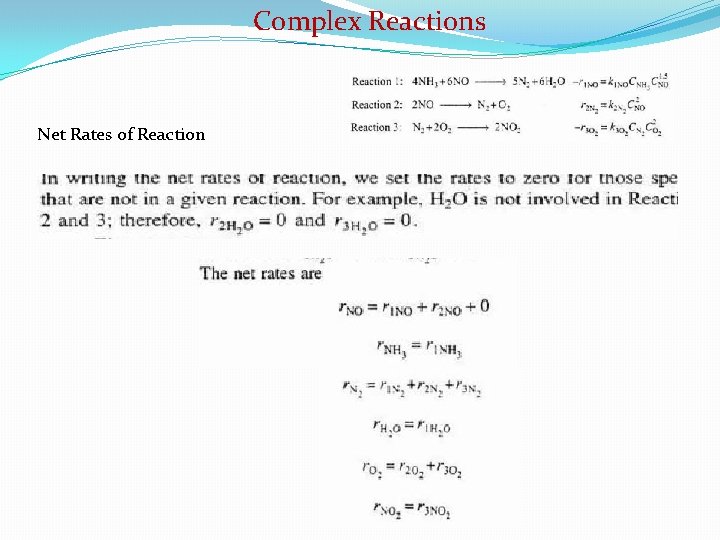
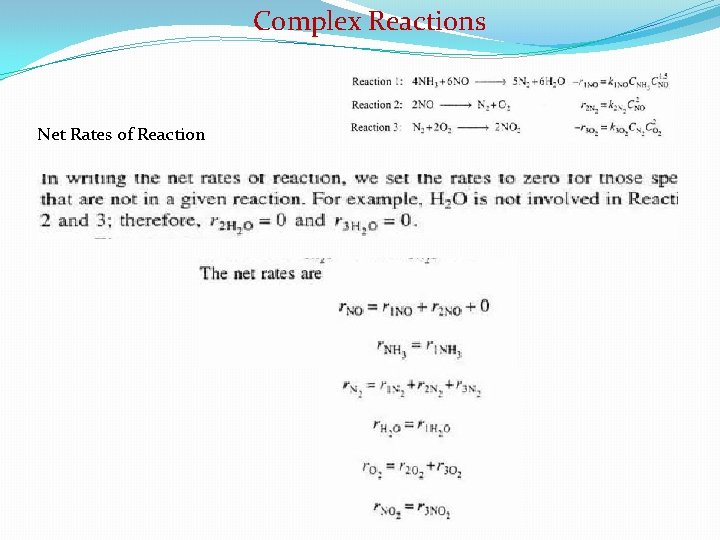
Complex Reactions Net Rates of Reaction
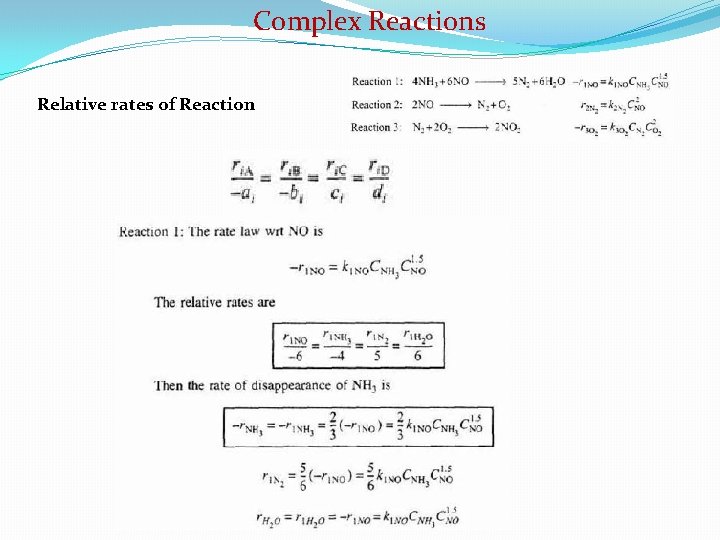
Complex Reactions Relative rates of Reaction
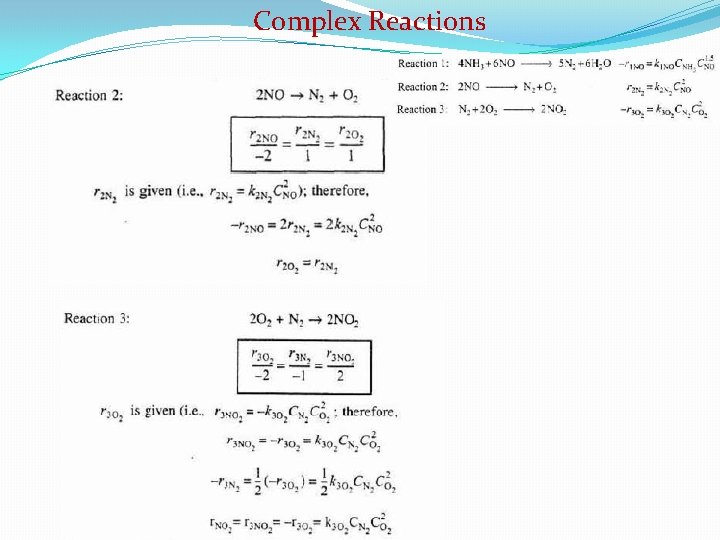
Complex Reactions
Complex Reactions The net rate of formation of NO is
Complex Reactions
Complex Reactions
Complex Reactions
Complex Reactions
Complex Reactions
Complex Reactions
Complex Reactions
Ch. E 402: Chemical Reaction Engineering Multiple Reactions (Chapter 6) ØYield and selectivity ØParallel, series and complex reactions ØConditions for maximizing the desired product in multiple reactions ØMole balances for multiple reactions ØTemperature effects
Complex Reactions In comp. Iex reaction systems consisting of combinations of parallel and series reactions, the availability of software packages (ODE solvers) makes it much easier to solve problems using moles Nj or molar flow rates Fj rather than conversion. For liquid systems, concentration is usually the preferred variable used in the mole balance equations. The resulting coupled differential mole balance equations can be easily solved using an ODE solver.
Complex Reactions
Complex Reactions
Complex Reactions
Complex Reactions Net Rates of Reaction We note the reaction sate constants, k. in Reactions 1 and 2 are defined with respect to A, while k in Reaction 3 is defined with respect to B.
Complex Reactions Rate Laws For example, if Reaction 1 the net rate of formation of A for these two reactions is:
Complex Reactions In working with multiple reactions. it is usually more advantageous to relate the rates of formation of each species to one another. This relationship can be achieved by rewriting Equation (3 -1) for reaction i in the form
Complex Reactions
Complex Reactions Combine Individual Rate Laws to Find the Net Rate
Complex Reactions
Complex Reactions Net Rates of Reaction
Complex Reactions Relative rates of Reaction
Complex Reactions
Complex Reactions The net rate of formation of NO is
Complex Reactions
Complex Reactions
Complex Reactions
Complex Reactions
Complex Reactions
Complex Reactions
Complex Reactions