
CH 9 Section 3 Teddy Roosevelts Square Deal


- Slides: 35
CH 9 Section 3 Teddy Roosevelt’s Square Deal
• https: //www. youtube. com/watch? v=s. Bpfih 7 w 4 B 8
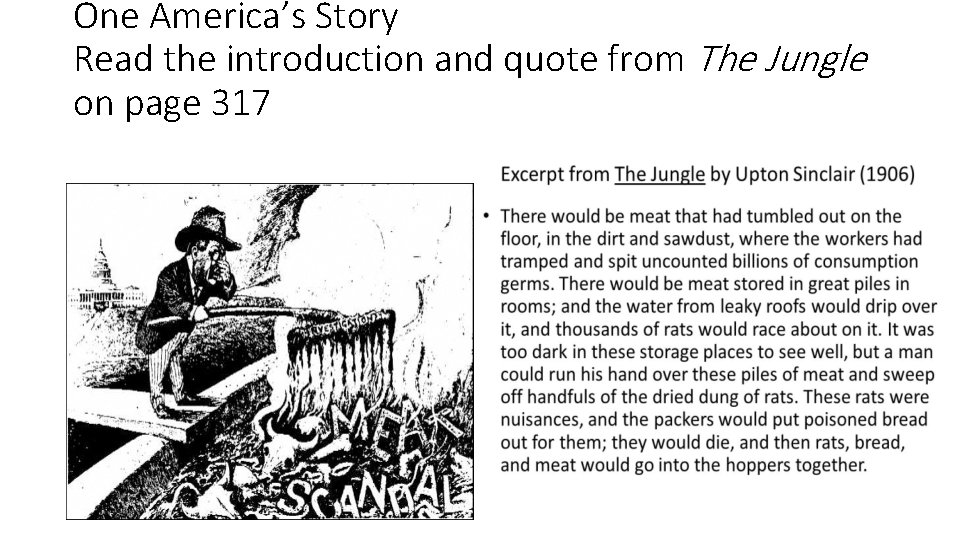
One America’s Story Read the introduction and quote from The Jungle on page 317
A Rough Riding President • How did Roosevelt become president? • What did Roosevelt do that brought him to national prominence? • How did Roosevelt create the modern presidency?
A Rough Riding President • Teddy Roosevelt was a young governor from NY • He was urged to run as Mc. Kinley’s VP, this could take him out of state office which is what the political bosses wanted since he was “impossible to control” • Mc. Kinley only served as president for six months of his second term before he was assassinated • Teddy Roosevelt was not the most powerful person in the government
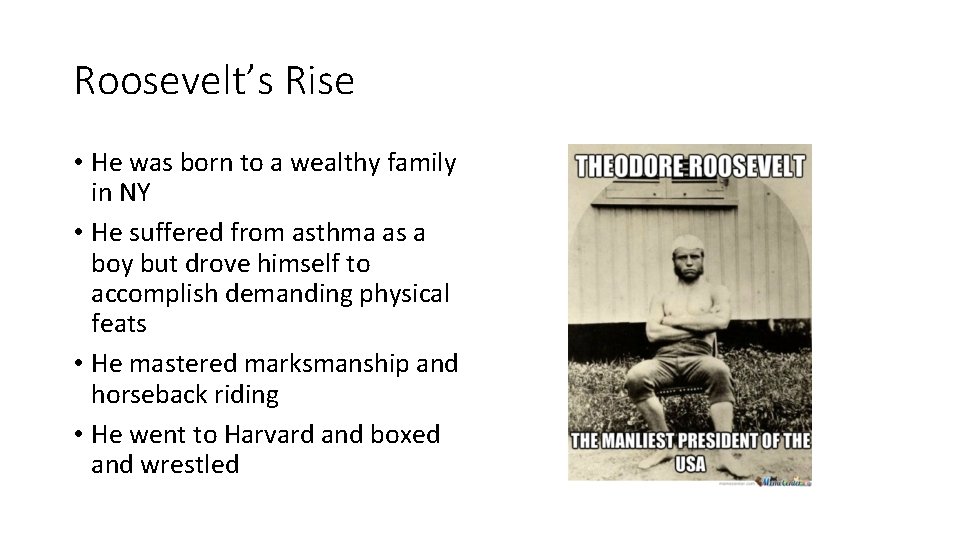
Roosevelt’s Rise • He was born to a wealthy family in NY • He suffered from asthma as a boy but drove himself to accomplish demanding physical feats • He mastered marksmanship and horseback riding • He went to Harvard and boxed and wrestled
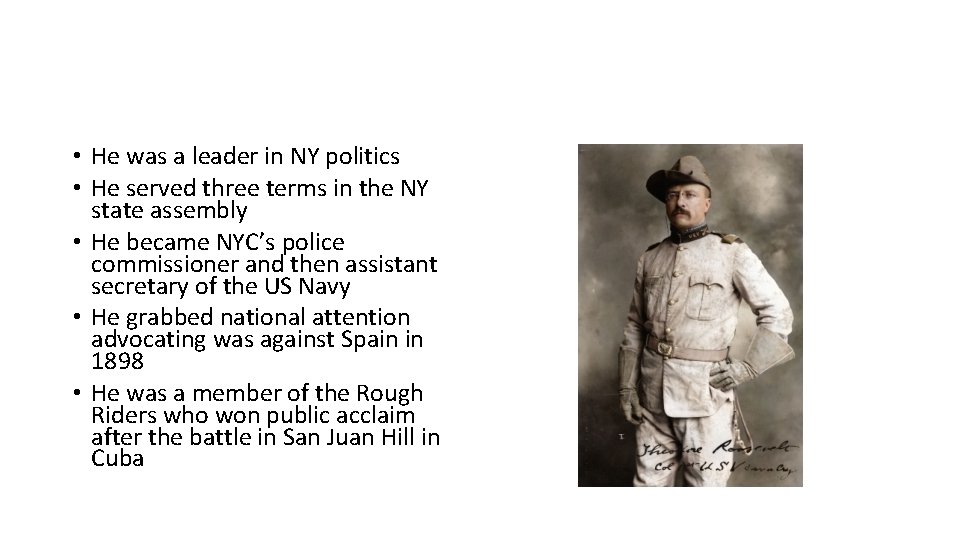
• He was a leader in NY politics • He served three terms in the NY state assembly • He became NYC’s police commissioner and then assistant secretary of the US Navy • He grabbed national attention advocating was against Spain in 1898 • He was a member of the Rough Riders who won public acclaim after the battle in San Juan Hill in Cuba
The Modern Presidency • 1901, Roosevelt became the youngest president ever at 42 • He soon dominated the news • He acted boldly in politics, using his personality and popularity to advance his programs • His leadership and publicity helped to create the modern presidency • He thought the gov’t should assume control whenever states proved incapable of dealing with problems • Saw the presidency as the “bully pulpit” • Square Deal, progressive reforms received by the public and sponsored by the Roosevelt administration
• What actions and characteristics of Teddy Roosevelt contributed to his reputation as the first modern president?
Using Federal Power • How did Roosevelt’s intervention in a coal strike set a precedent for federal arbitration? • What did Roosevelt do to the trusts and railroads?
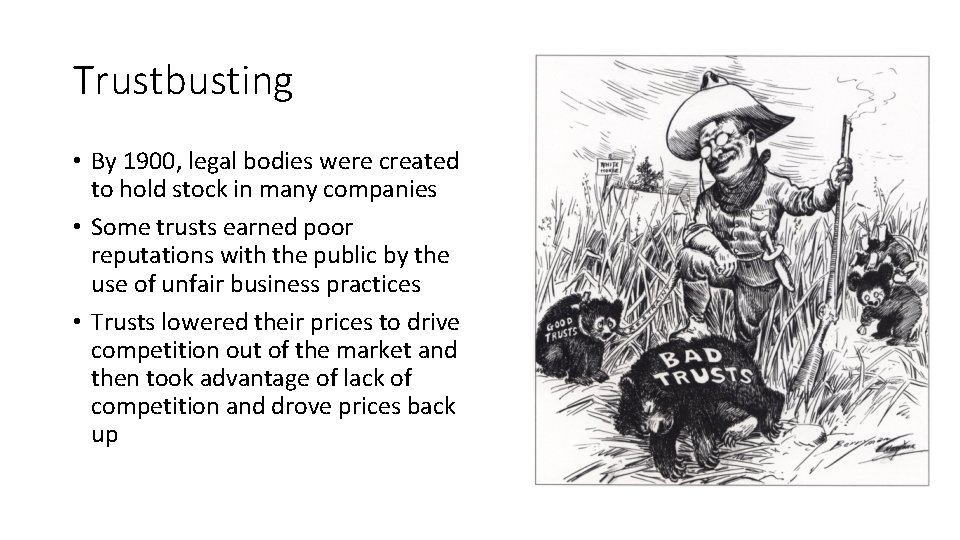
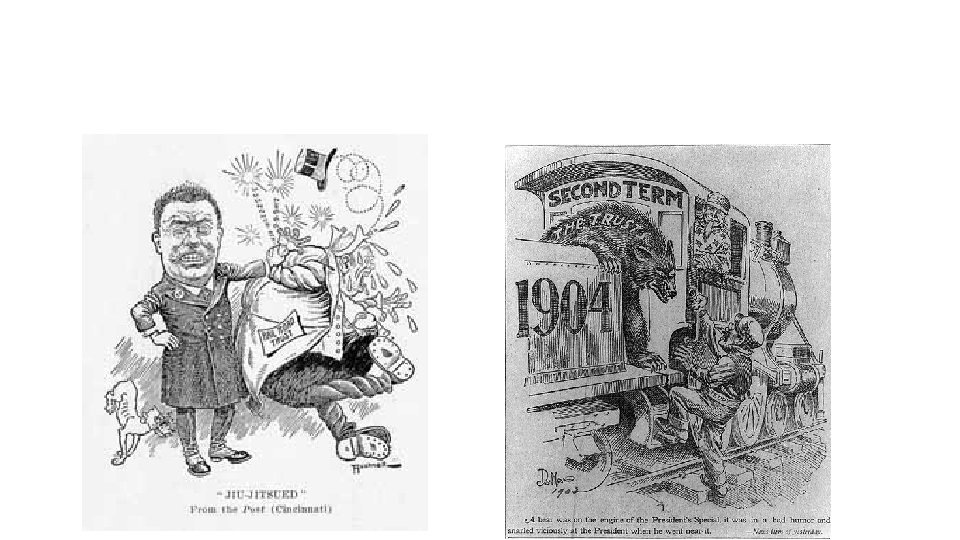
Trustbusting • By 1900, legal bodies were created to hold stock in many companies • Some trusts earned poor reputations with the public by the use of unfair business practices • Trusts lowered their prices to drive competition out of the market and then took advantage of lack of competition and drove prices back up
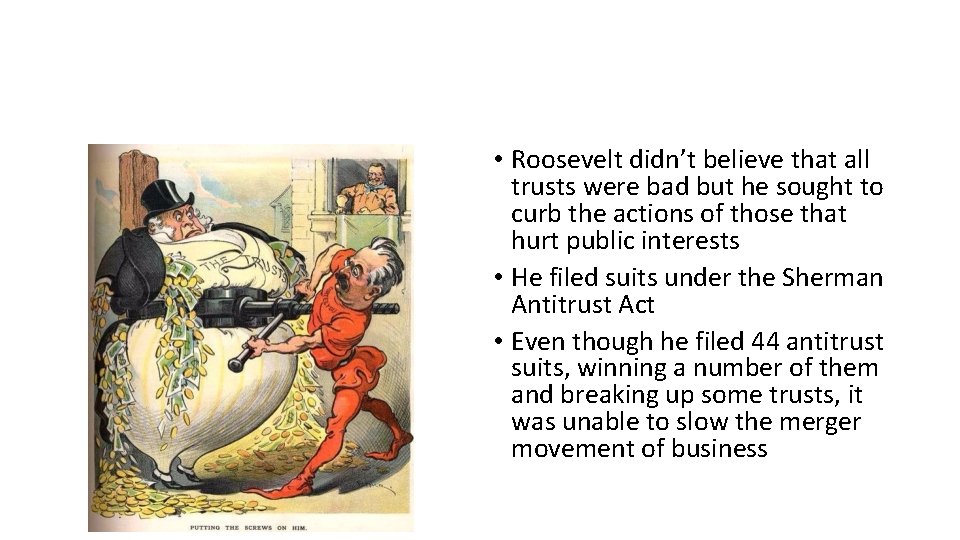
• Roosevelt didn’t believe that all trusts were bad but he sought to curb the actions of those that hurt public interests • He filed suits under the Sherman Antitrust Act • Even though he filed 44 antitrust suits, winning a number of them and breaking up some trusts, it was unable to slow the merger movement of business
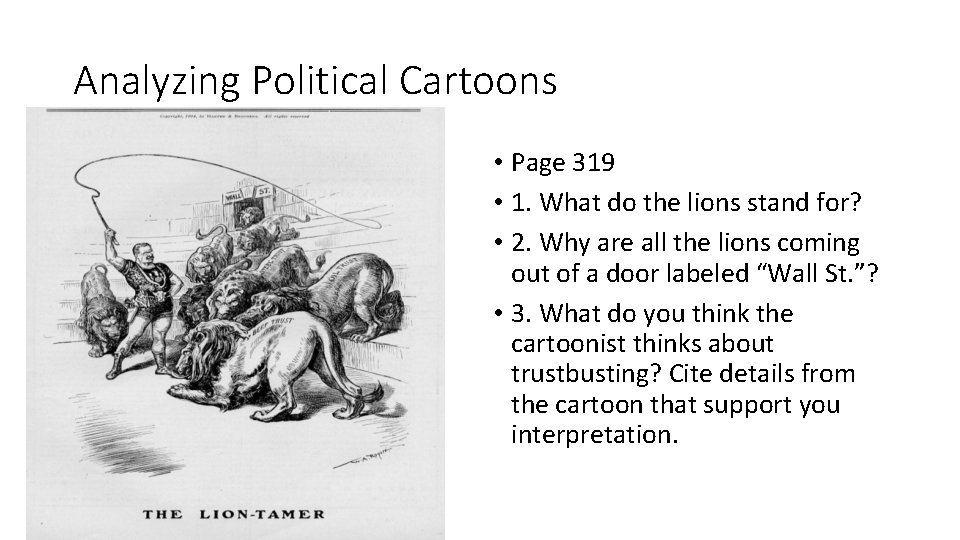
Analyzing Political Cartoons • Page 319 • 1. What do the lions stand for? • 2. Why are all the lions coming out of a door labeled “Wall St. ”? • 3. What do you think the cartoonist thinks about trustbusting? Cite details from the cartoon that support you interpretation.
Creating Political Cartoons • Create a page that contains a political cartoon on a single subject • Students in groups of two or three • Select a national political or cultural issue, has to be teacher approved • Use online resources to find political cartoons • Draw your own political cartoon • Explain the idea your political cartoon is expressing
1902 Coal Strike • 140, 000 workers in PA went on strike and demanded 20% raise, 9 hour workday and the right to organize a union, the mine operators refused to bargain • Roosevelt called both parties to the White House to intervene, he eventually settled the strike • Both sides faced Roosevelt taking over the mines so they agreed to submit to arbitration • Miners won 10% pay hike and a 9 hour workday in exchange for their demand that all workers must belong to a union and give up their right to strike for three years
Why is this important? • Roosevelt demonstrated a new principle • From now on, when a strike threatened public welfare, the federal government was expected to intervene • His actions reflected a progressive belief that disputes should be settled in an orderly way with the help of experts
1902 Coal Strike • What was significant about the way the 1902 coal strike was settled? • From that point on, the federal government was expected to play a more active role in settling labor disputes
History From Visuals • Coal Mining in the Early 1900 s • Page 321
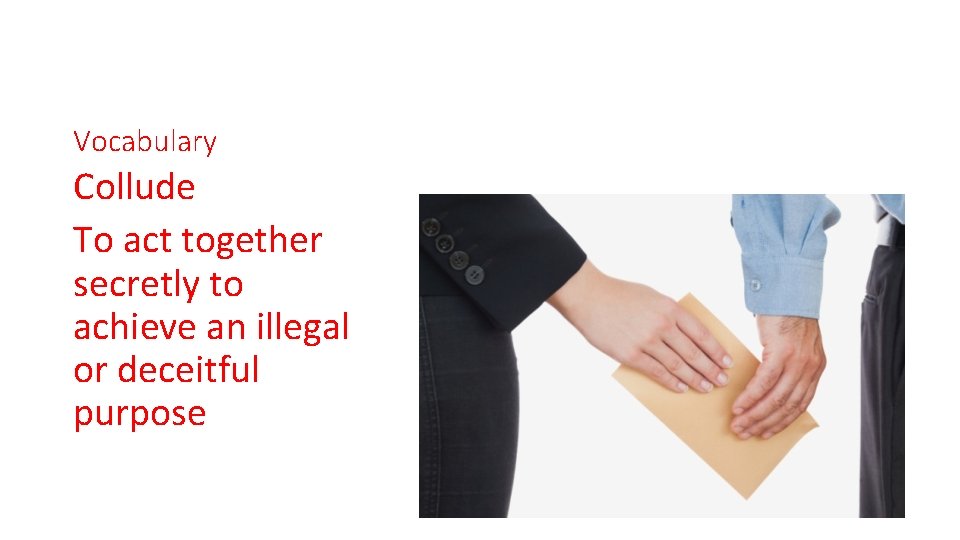
Vocabulary Collude To act together secretly to achieve an illegal or deceitful purpose
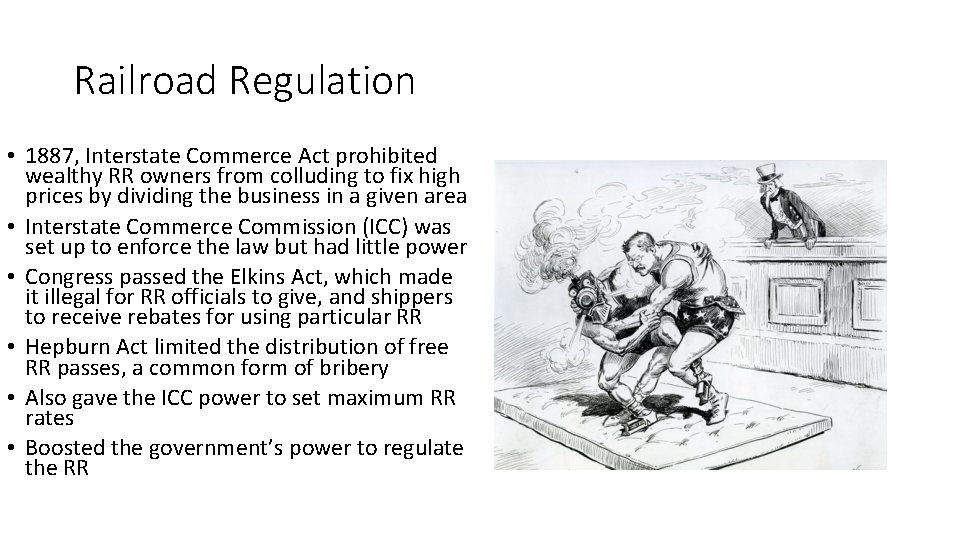
Railroad Regulation • 1887, Interstate Commerce Act prohibited wealthy RR owners from colluding to fix high prices by dividing the business in a given area • Interstate Commerce Commission (ICC) was set up to enforce the law but had little power • Congress passed the Elkins Act, which made it illegal for RR officials to give, and shippers to receive rebates for using particular RR • Hepburn Act limited the distribution of free RR passes, a common form of bribery • Also gave the ICC power to set maximum RR rates • Boosted the government’s power to regulate the RR
Health and the Environment • What legislation passed during Roosevelt’s presidency protected citizens? • What did Roosevelt do to protect the environment?
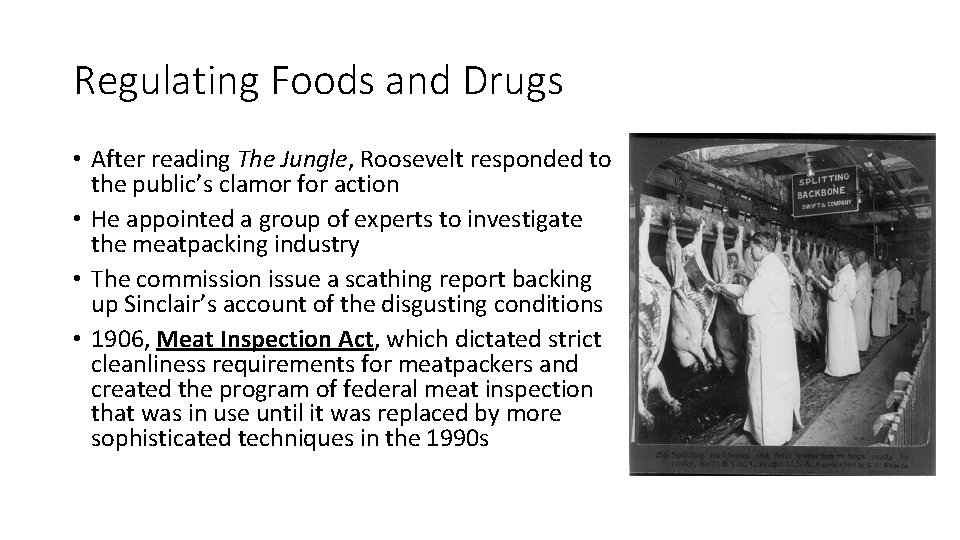
Regulating Foods and Drugs • After reading The Jungle, Roosevelt responded to the public’s clamor for action • He appointed a group of experts to investigate the meatpacking industry • The commission issue a scathing report backing up Sinclair’s account of the disgusting conditions • 1906, Meat Inspection Act, which dictated strict cleanliness requirements for meatpackers and created the program of federal meat inspection that was in use until it was replaced by more sophisticated techniques in the 1990 s
• The compromise that got this passed was… • The government was left paying for the inspections, which didn’t require companies to label their canned goods with date-ofprocessing information • It also granted meatpackers the right to appeal negative decisions in court
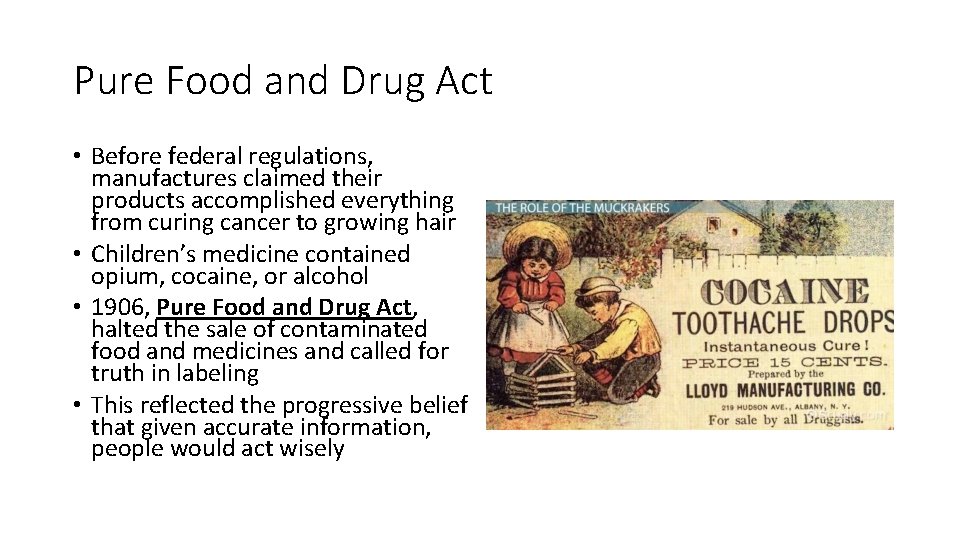
Pure Food and Drug Act • Before federal regulations, manufactures claimed their products accomplished everything from curing cancer to growing hair • Children’s medicine contained opium, cocaine, or alcohol • 1906, Pure Food and Drug Act, halted the sale of contaminated food and medicines and called for truth in labeling • This reflected the progressive belief that given accurate information, people would act wisely
Pure Food and Drug Act • What similarities did the Meat Inspection Act and Pure Food and Drug Act share? • Answer: • Both acts created regulations that protected consumers’ health
Conservation and Natural Resources • Before Roosevelt, the federal gov’t paid little attention to the nation’s natural resources • Americans exploited their natural environment • Farmers leveled forests and plowed up prairies • Ranchers let cattle overgraze • Loggers didn’t replant trees • Cities dumped sewage and industrial waste in rivers
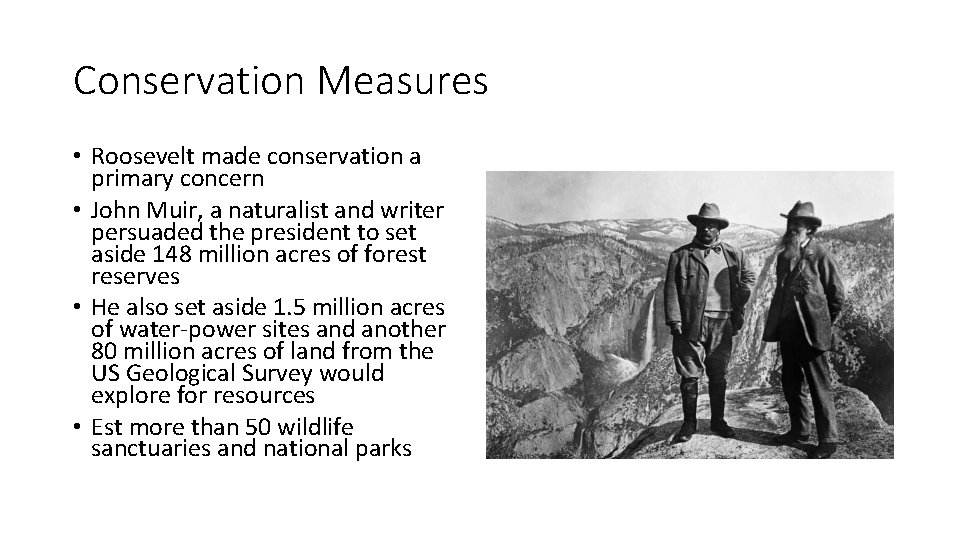
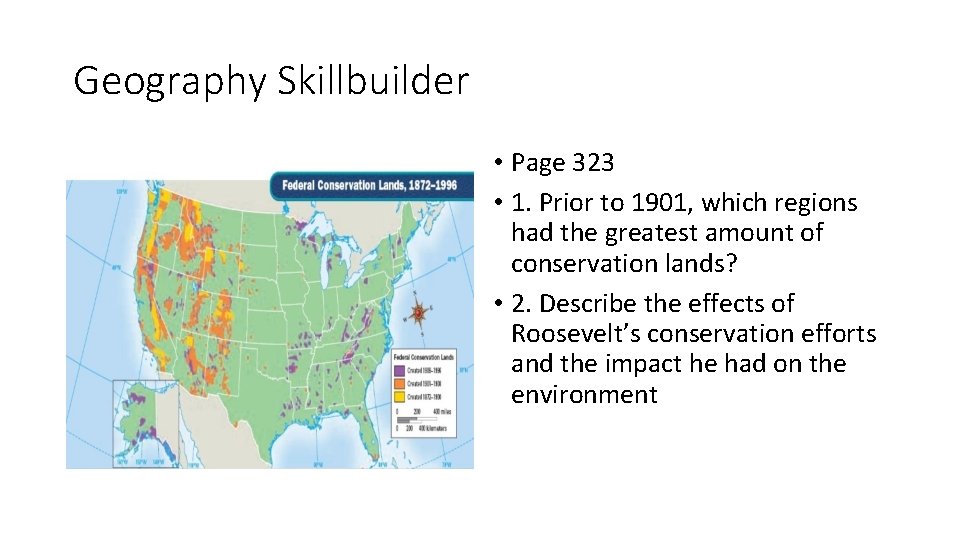
Conservation Measures • Roosevelt made conservation a primary concern • John Muir, a naturalist and writer persuaded the president to set aside 148 million acres of forest reserves • He also set aside 1. 5 million acres of water-power sites and another 80 million acres of land from the US Geological Survey would explore for resources • Est more than 50 wildlife sanctuaries and national parks
• Roosevelt named Gifford Pinchot as head of US Forest Service • He had administrative skill as well as scientific and technical information • He advised Roosevelt to conserve forest and grazing lands by keeping large tracts of federal land exempt from private sale • Muir advocated complete preservation of the wilderness • Roosevelt and Pinchot advocated conservation which meant some wilderness would be preserved while others would be developed for the common good
Conservation Measure • Summarize Roosevelt’s approach to environmental problems • Answer: • Roosevelt worked for conservation, preserving some resources but allowing some to be used too
Geography Skillbuilder • Page 323 • 1. Prior to 1901, which regions had the greatest amount of conservation lands? • 2. Describe the effects of Roosevelt’s conservation efforts and the impact he had on the environment
Roosevelt and Civil Rights • Who was Booker T. Washington? • What was W. E. B. Du Bois, and what famous civil rights organization did he help found?
Roosevelt and Civil Rights • Roosevelt failed to support civil rights for AA • He did support a few individual AA • He appointed an AA head of the Charleston customhouse • When whites in MS refused to accept a black postmaster he appointed he chose to close the station rather than give in • Roosevelt angered AA when he dismissed an entire regiment of AA soldiers accused of conspiracy in protecting others charged with murder
• Roosevelt invited Booker T. Washington to dinner at the White House • Washington was head of Tuskegee and was the AA leader respected by powerful whites • Washington faced opposition by W. E. B. Du Bois for his accommodation of segregationists and for blaming black poverty on blacks and urging them to accept discrimination • Du Bois wrote about his opposition in The Souls of Black Folk
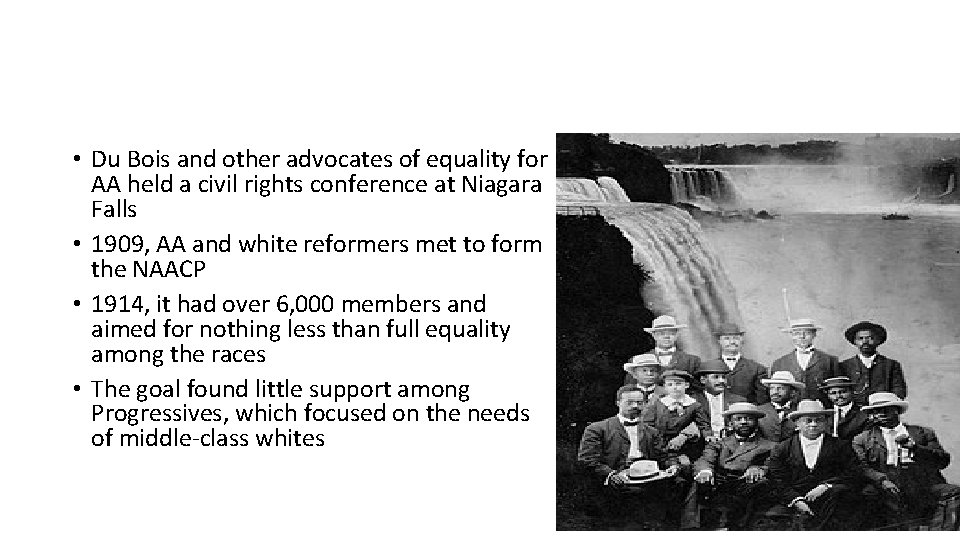
• Du Bois and other advocates of equality for AA held a civil rights conference at Niagara Falls • 1909, AA and white reformers met to form the NAACP • 1914, it had over 6, 000 members and aimed for nothing less than full equality among the races • The goal found little support among Progressives, which focused on the needs of middle-class whites