
Ch 9 Heat Sec 9 1 9 6
- Slides: 26
Ch. 9 Heat Sec. 9. 1 -9. 6 Pg. 168
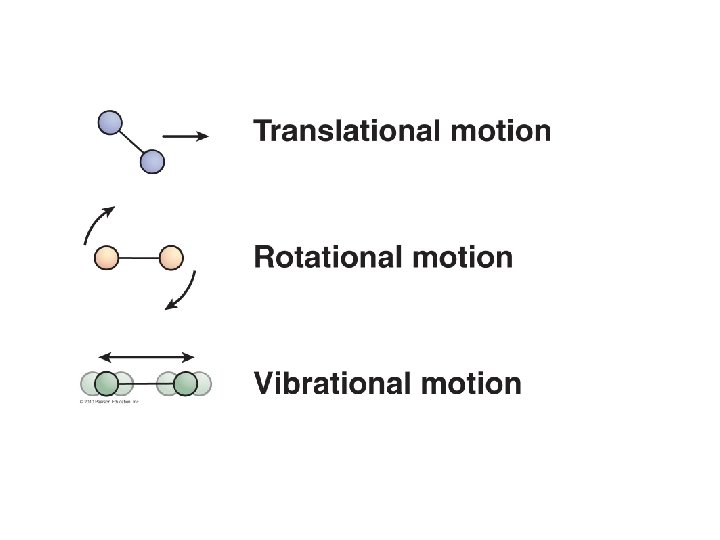
9. 1 Thermal Energy • The total energy in a substance – All of the KE and PE of the particles in a substance. • Motion produces heat – Kinetic energy in the molecules or atoms. – Atoms joined together form molecules.
Examples • Striking a penny with a hammer • Put a flame to a liquid • Compressing air in a tire pump
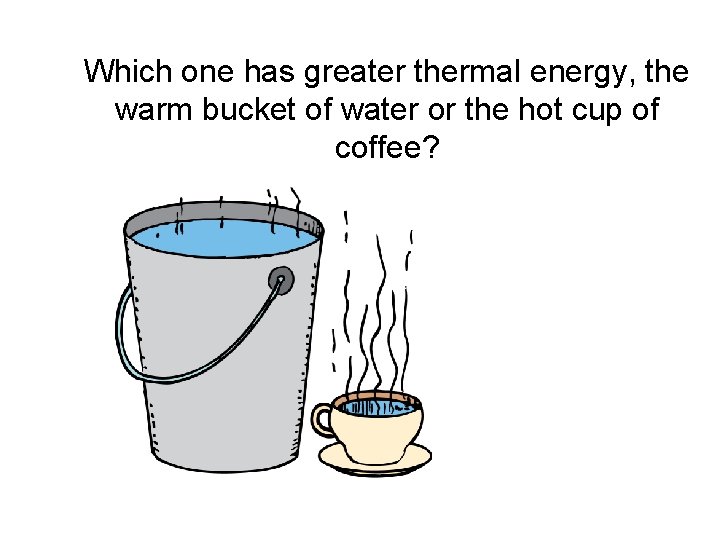
Which one has greater thermal energy, the warm bucket of water or the hot cup of coffee?
9. 2 Temperature • Average KE per Molecule in a substance • It tells us how hot or warm something is. – Measured with a thermometer
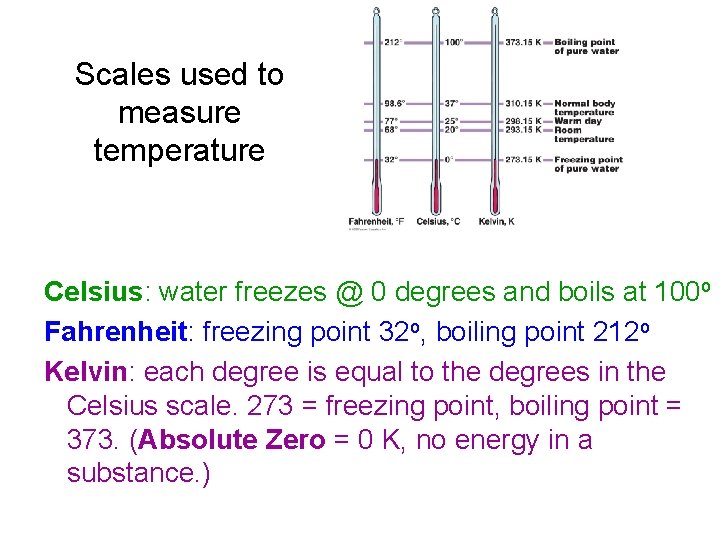
Scales used to measure temperature Celsius: water freezes @ 0 degrees and boils at 100 o Fahrenheit: freezing point 32 o, boiling point 212 o Kelvin: each degree is equal to the degrees in the Celsius scale. 273 = freezing point, boiling point = 373. (Absolute Zero = 0 K, no energy in a substance. )
What is Heat?
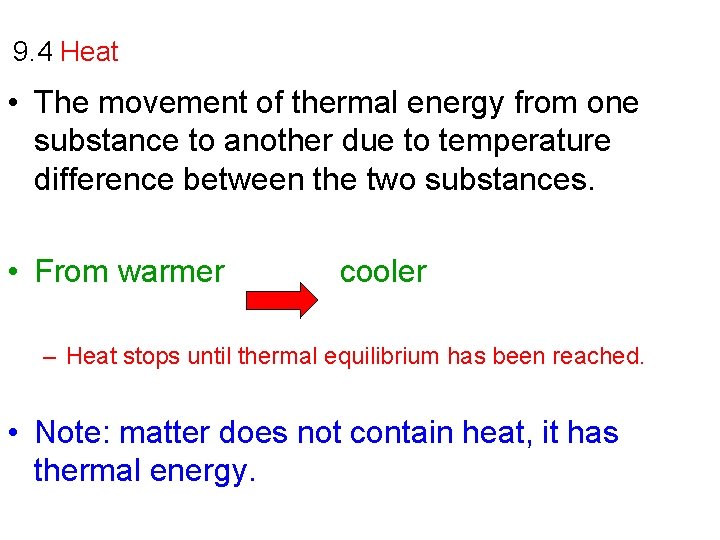
9. 4 Heat • The movement of thermal energy from one substance to another due to temperature difference between the two substances. • From warmer cooler – Heat stops until thermal equilibrium has been reached. • Note: matter does not contain heat, it has thermal energy.
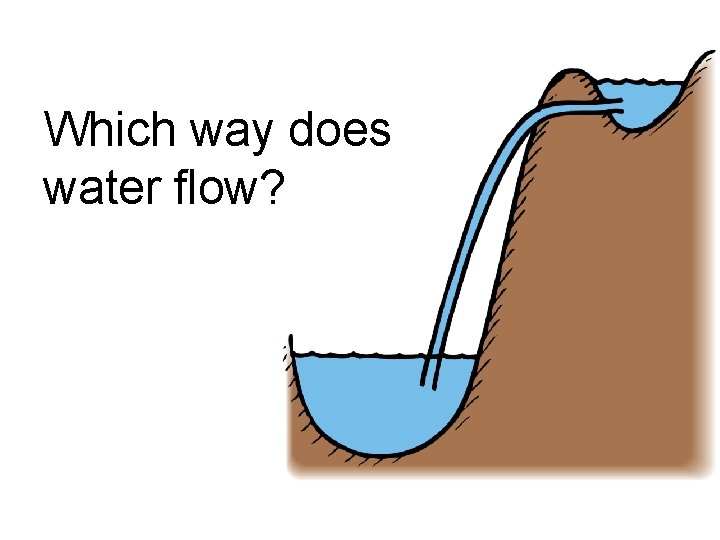
Which way does water flow?
What is cold?
A. The absence of heat.
Units • Heat and Thermal Energy unit is the Joule. • It takes 4. 18 J of heat to change 1 gram of water by 1 o C. • The calorie is also a unit of heat. – It is equal to the amount of heat needed to change the temperature of 1 g of water by 1 o C. 1 calorie = 4. 18 joules
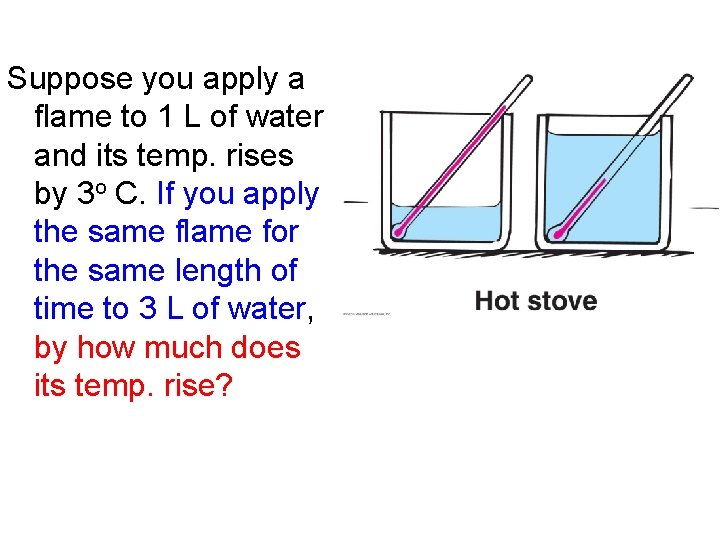
Suppose you apply a flame to 1 L of water and its temp. rises by 3 o C. If you apply the same flame for the same length of time to 3 L of water, by how much does its temp. rise?
When you touch a cold surface • does cold travel from the surface to your hand or does energy travel from your hand to the cold surface?
9. 5 Specific Heat Capacity The capacity of a substance to store heat depends on its chemical composition.
Specific Heat Capacity Different substances have different capacities for storing internal energy, or heat. • A pot of water on a stove might require 15 minutes to be heated from room temperature to its boiling temperature. • An equal mass of iron on the same flame would rise through the same temperature range in only about 2 minutes. • For silver, the time would be less than a minute.
Specific Heat Capacity Recall that inertia is a term used in mechanics to signify the resistance of an object to change in its state of motion. Specific heat capacity is like a thermal inertia since it signifies the resistance of a substance to change in its temperature.
Specific Heat Capacity A gram of water requires 1 calorie of energy to raise the temperature 1°C. It takes only about 1/8 as much energy to raise the temperature of a gram of iron by the same amount.
Specific Heat Capacity think! Which has a higher specific heat capacity—water or sand? Explain.
Specific Heat Capacity think! Which has a higher specific heat capacity—water or sand? Explain. Answer: Water has a greater heat capacity than sand. Water is much slower to warm in the hot sun and slower to cool at night. Sand’s low heat capacity, shown by how quickly it warms in the morning and how quickly it cools at night, affects local climates.
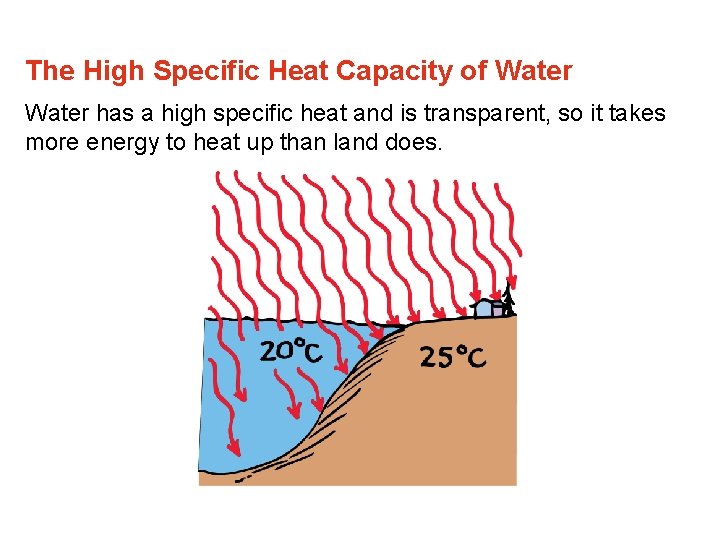
The High Specific Heat Capacity of Water has a high specific heat and is transparent, so it takes more energy to heat up than land does.
9. 6 Thermal Expansion Most forms of matter—solids, liquids, and gases— expand when they are heated and contract when they are cooled.
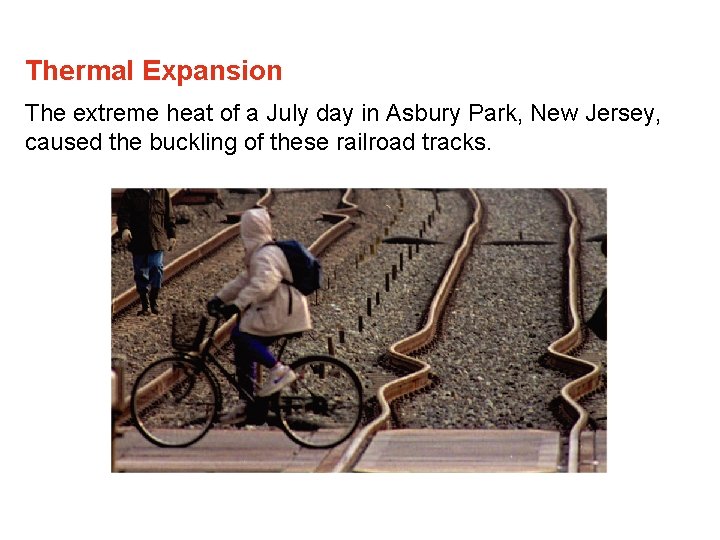
Thermal Expansion The extreme heat of a July day in Asbury Park, New Jersey, caused the buckling of these railroad tracks.
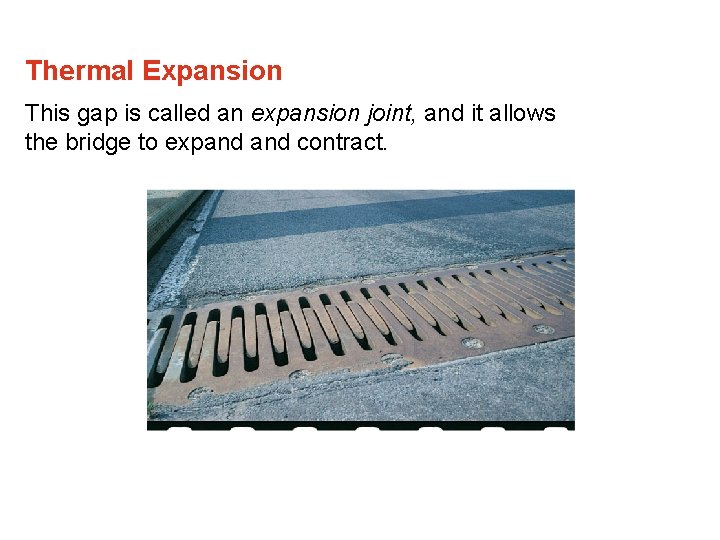
Thermal Expansion This gap is called an expansion joint, and it allows the bridge to expand contract.
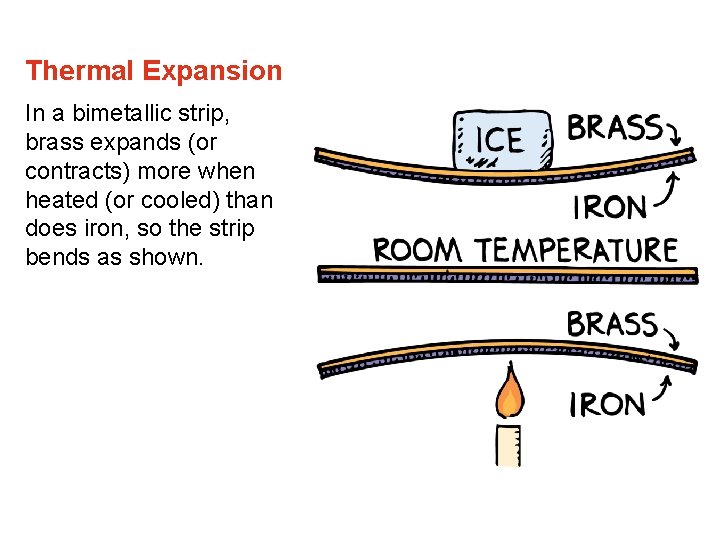
Thermal Expansion In a bimetallic strip, brass expands (or contracts) more when heated (or cooled) than does iron, so the strip bends as shown.