
Ch 9 Cellular Respiration Food and drink provide





- Slides: 18
Ch. 9 Cellular Respiration • Food and drink provide a source of energy for your cells that is used to make ATP • calorie – the amount of energy needed to raise one gram of water one °C • Kilocalorie (on labels) – 1000 calories • Food provides the building blocks for your cellular products (proteins, hormones, etc. )
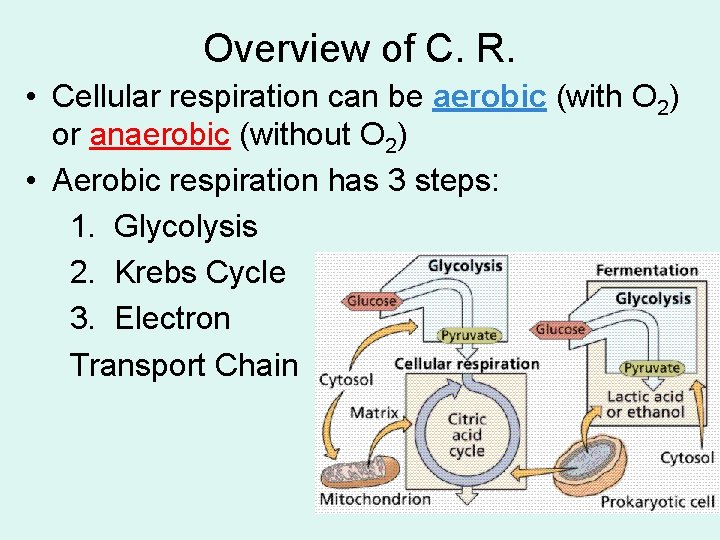
Overview of C. R. • Cellular respiration can be aerobic (with O 2) or anaerobic (without O 2) • Aerobic respiration has 3 steps: 1. Glycolysis 2. Krebs Cycle 3. Electron Transport Chain
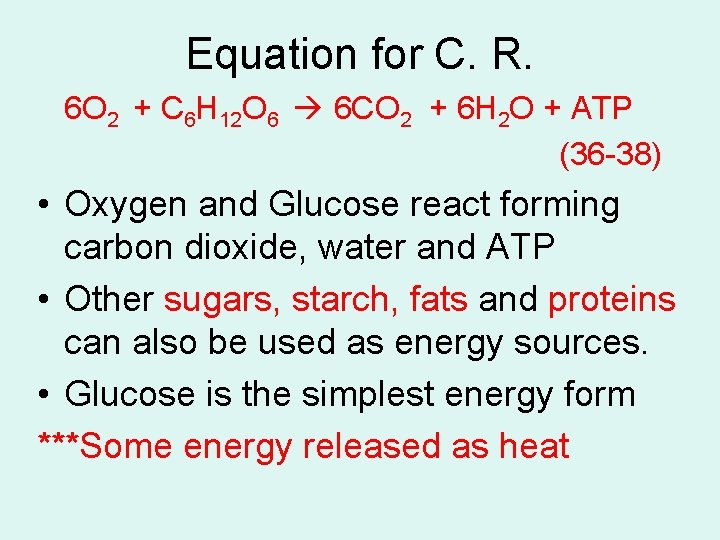
Equation for C. R. 6 O 2 + C 6 H 12 O 6 6 CO 2 + 6 H 2 O + ATP (36 -38) • Oxygen and Glucose react forming carbon dioxide, water and ATP • Other sugars, starch, fats and proteins can also be used as energy sources. • Glucose is the simplest energy form ***Some energy released as heat
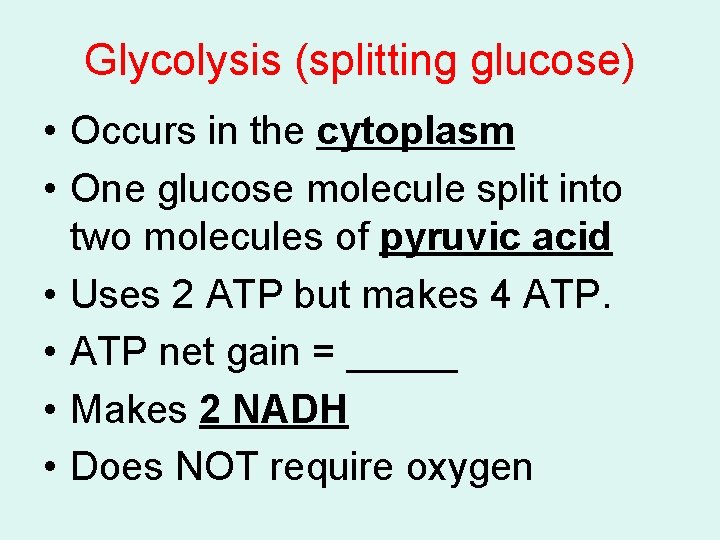
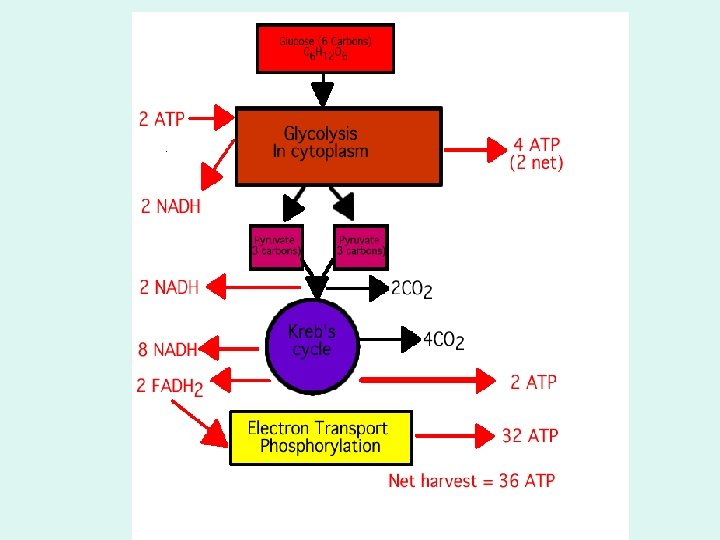
Glycolysis (splitting glucose) • Occurs in the cytoplasm • One glucose molecule split into two molecules of pyruvic acid • Uses 2 ATP but makes 4 ATP. • ATP net gain = _____ • Makes 2 NADH • Does NOT require oxygen
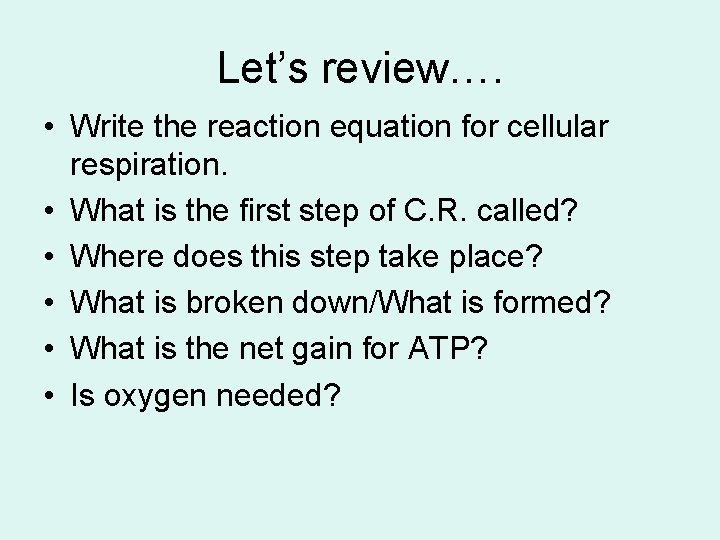
Let’s review…. • Write the reaction equation for cellular respiration. • What is the first step of C. R. called? • Where does this step take place? • What is broken down/What is formed? • What is the net gain for ATP? • Is oxygen needed?
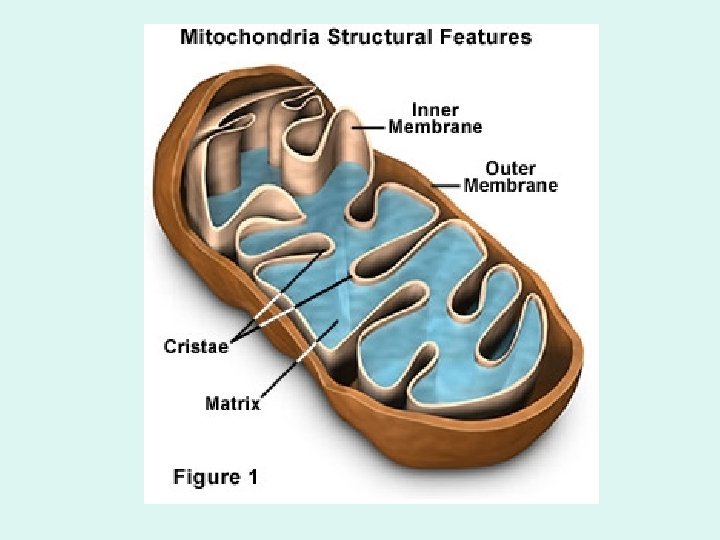
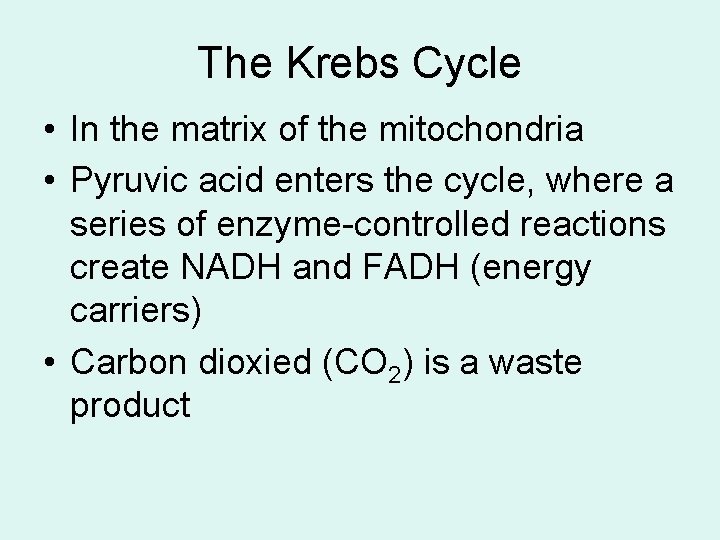
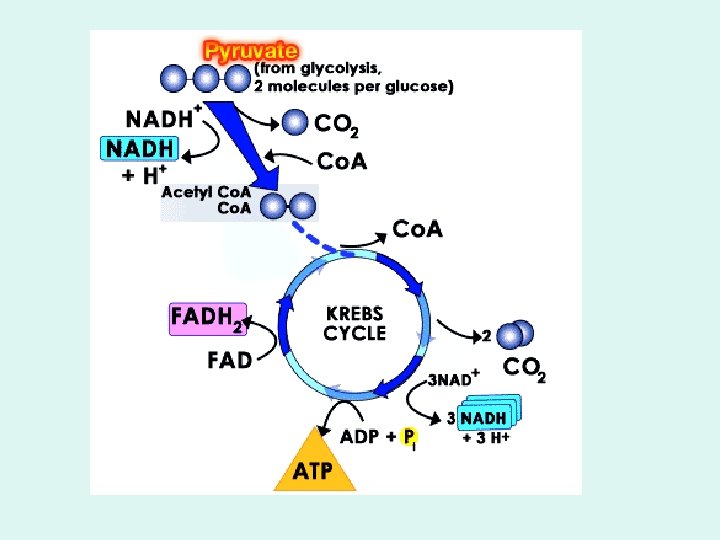
The Krebs Cycle • In the matrix of the mitochondria • Pyruvic acid enters the cycle, where a series of enzyme-controlled reactions create NADH and FADH (energy carriers) • Carbon dioxied (CO 2) is a waste product
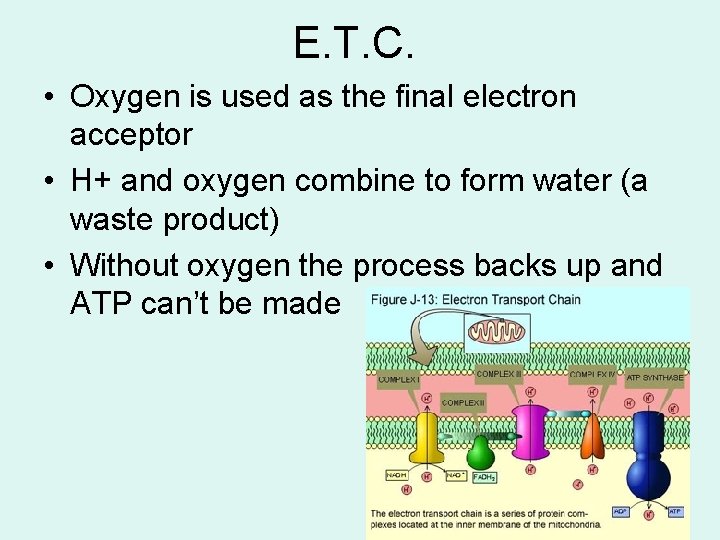
The Electron Transport Chain • H+ ions made in Krebs cycle build up outside the inner mitochondrial membrane • The H+ ions are forced through ATP synthase making 3 ATPs for each turn
E. T. C. • Oxygen is used as the final electron acceptor • H+ and oxygen combine to form water (a waste product) • Without oxygen the process backs up and ATP can’t be made
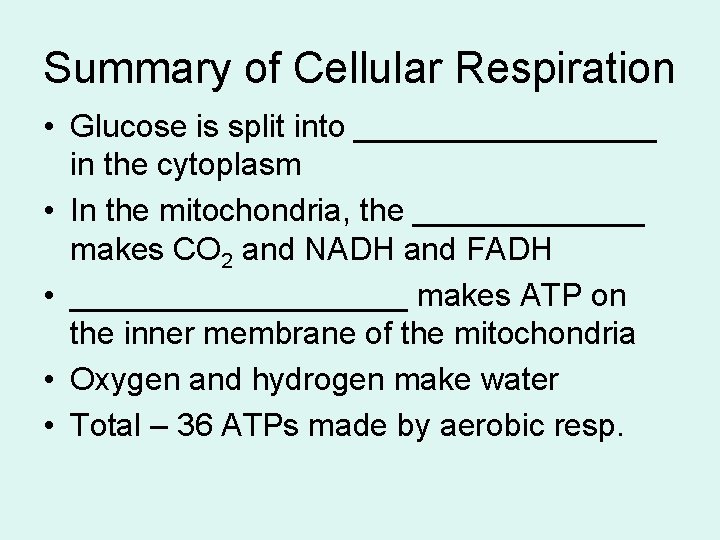
Summary of Cellular Respiration • Glucose is split into _________ in the cytoplasm • In the mitochondria, the _______ makes CO 2 and NADH and FADH • __________ makes ATP on the inner membrane of the mitochondria • Oxygen and hydrogen make water • Total – 36 ATPs made by aerobic resp.
Anaerobic Respiration • If your body uses energy very quickly, pyruvic acid can build up • ATP is produced anaerobically by turning the pyruvic acid into lactic acid • Lactic acid builds up in muscles and hurts! • Intake of oxygen (heavy breathing) removes lactic acid from your muscles
Lactic Acid Fermentation Pyruvic acid + NADH lactic acid + NAD+
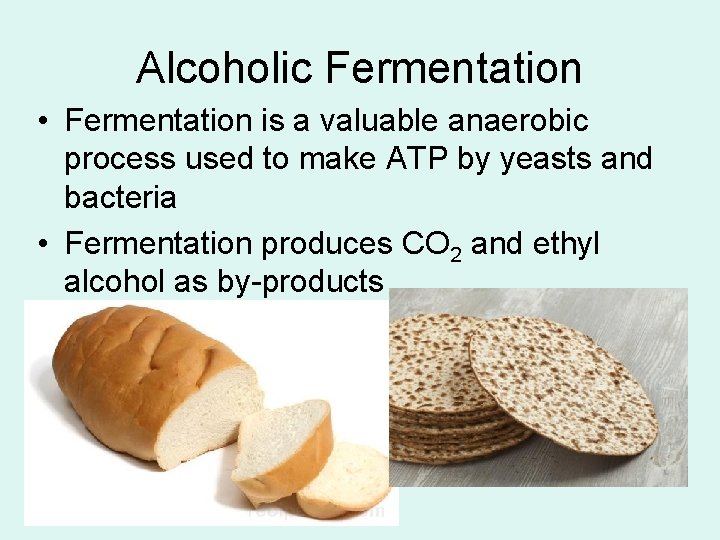
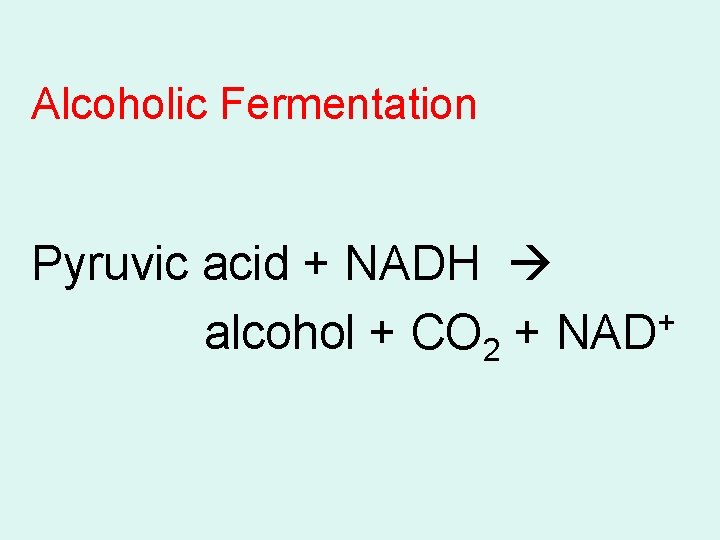
Alcoholic Fermentation • Fermentation is a valuable anaerobic process used to make ATP by yeasts and bacteria • Fermentation produces CO 2 and ethyl alcohol as by-products
Alcoholic Fermentation Pyruvic acid + NADH + alcohol + CO 2 + NAD
• *Fermentation releases energy from food molecules by making ATP w/o oxygen • Unicellular organisms produce L. A. • Valuable in food/drink industry: yogurt, cheese, sauerkraut, pickles