
Ch 9 2 Domains and Kingdoms KEY CONCEPT
- Slides: 15
Ch 9. 2 Domains and Kingdoms KEY CONCEPT The current tree of life has three domains.
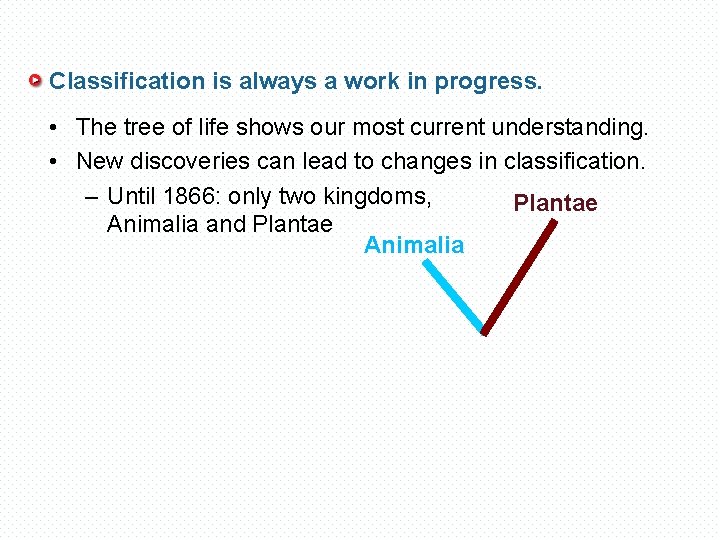
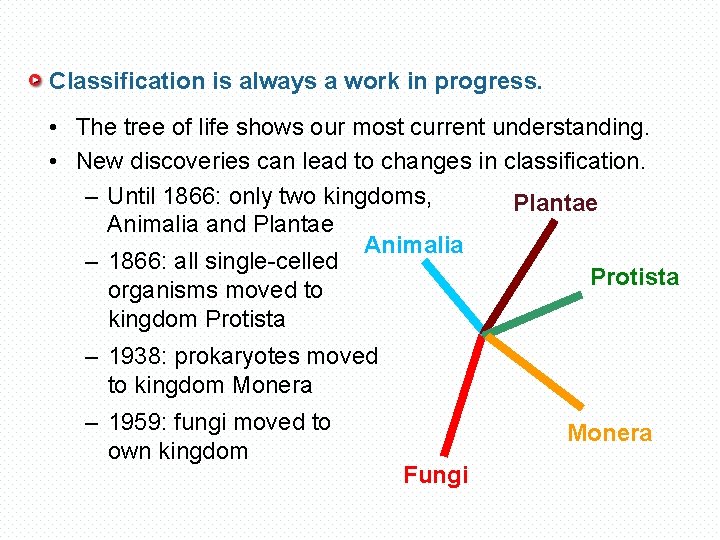
Classification is always a work in progress. • The tree of life shows our most current understanding. • New discoveries can lead to changes in classification. – Until 1866: only two kingdoms, Plantae Animalia and Plantae Animalia
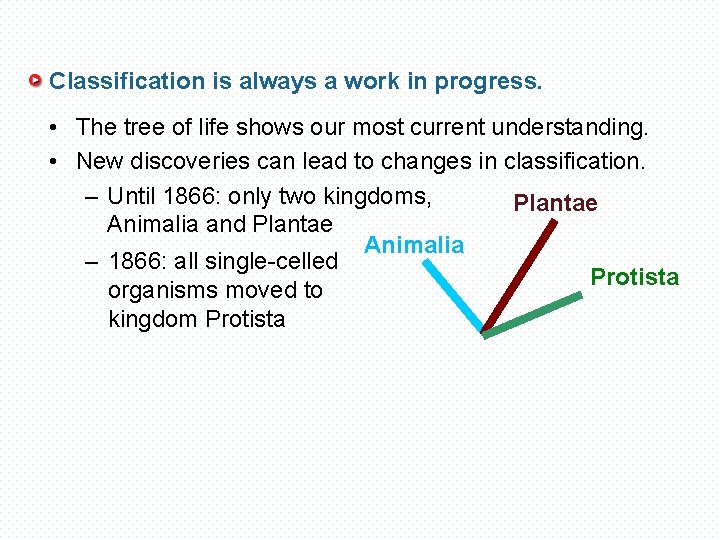
Classification is always a work in progress. • The tree of life shows our most current understanding. • New discoveries can lead to changes in classification. – Until 1866: only two kingdoms, Plantae Animalia and Plantae Animalia – 1866: all single-celled Protista organisms moved to kingdom Protista
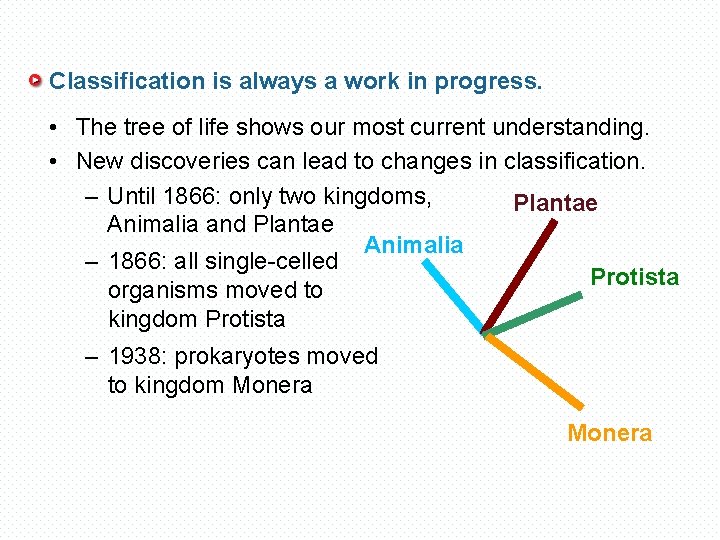
Classification is always a work in progress. • The tree of life shows our most current understanding. • New discoveries can lead to changes in classification. – Until 1866: only two kingdoms, Plantae Animalia and Plantae Animalia – 1866: all single-celled Protista organisms moved to kingdom Protista – 1938: prokaryotes moved to kingdom Monera
Classification is always a work in progress. • The tree of life shows our most current understanding. • New discoveries can lead to changes in classification. – Until 1866: only two kingdoms, Plantae Animalia and Plantae Animalia – 1866: all single-celled Protista organisms moved to kingdom Protista – 1938: prokaryotes moved to kingdom Monera – 1959: fungi moved to own kingdom Monera Fungi
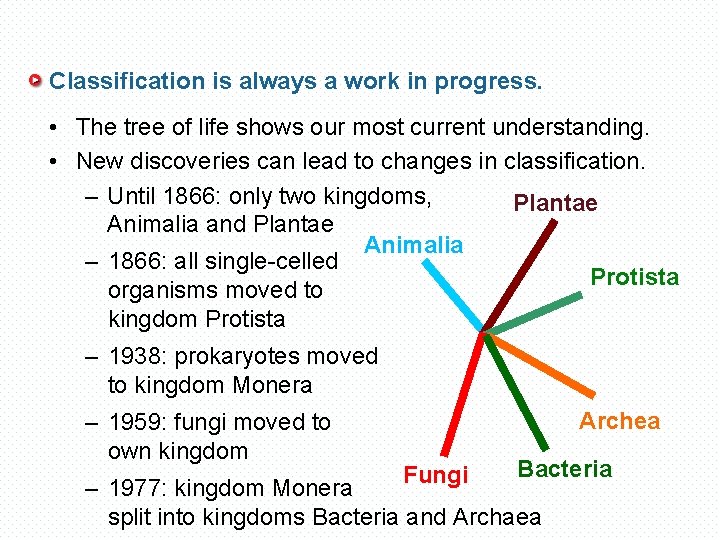
Classification is always a work in progress. • The tree of life shows our most current understanding. • New discoveries can lead to changes in classification. – Until 1866: only two kingdoms, Plantae Animalia and Plantae Animalia – 1866: all single-celled Protista organisms moved to kingdom Protista – 1938: prokaryotes moved to kingdom Monera – 1959: fungi moved to own kingdom Archea Fungi Bacteria – 1977: kingdom Monera split into kingdoms Bacteria and Archaea
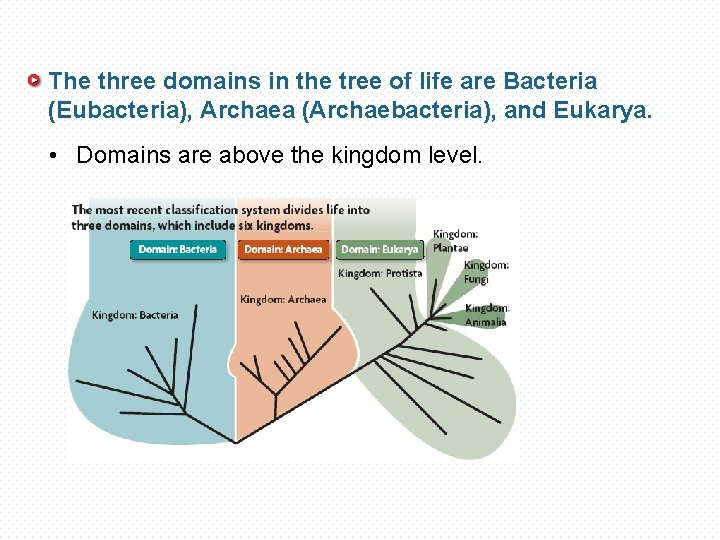
The three domains in the tree of life are Bacteria (Eubacteria), Archaea (Archaebacteria), and Eukarya. • Domains are above the kingdom level.
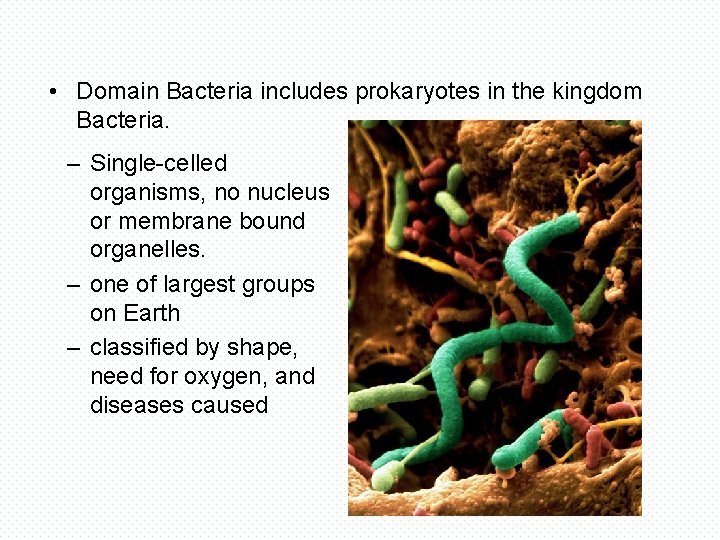
• Domain Bacteria includes prokaryotes in the kingdom Bacteria. – Single-celled organisms, no nucleus or membrane bound organelles. – one of largest groups on Earth – classified by shape, need for oxygen, and diseases caused
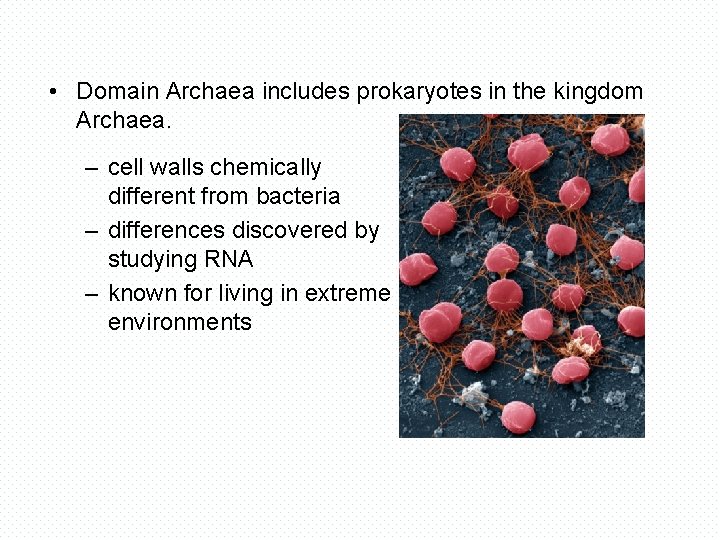
• Domain Archaea includes prokaryotes in the kingdom Archaea. – cell walls chemically different from bacteria – differences discovered by studying RNA – known for living in extreme environments
Eukaryotes – multi cellular, larger than single cell organisms, nucleus enclosed in a membrane. Most organisms you see with your naked eye.
• Domain Eukarya includes all eukaryotes. – kingdom Protista Kingdom Batista
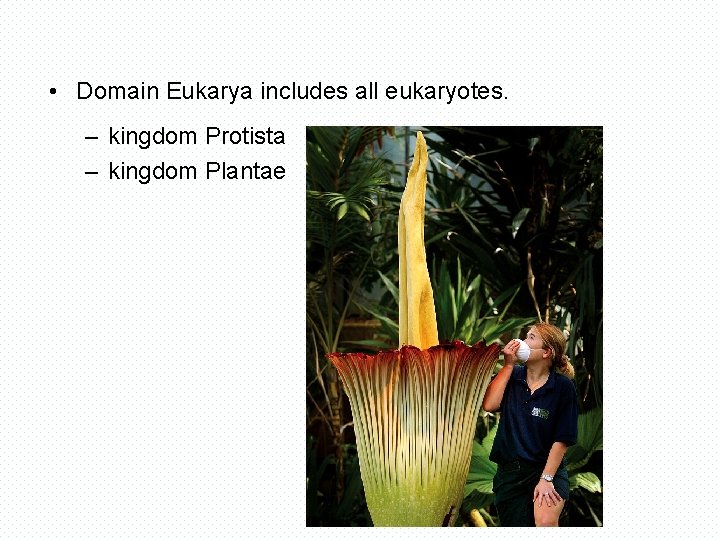
• Domain Eukarya includes all eukaryotes. – kingdom Protista – kingdom Plantae
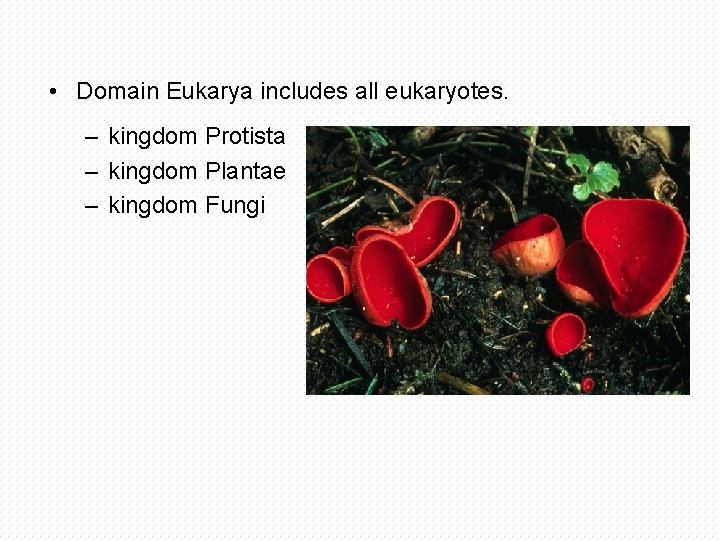
• Domain Eukarya includes all eukaryotes. – kingdom Protista – kingdom Plantae – kingdom Fungi
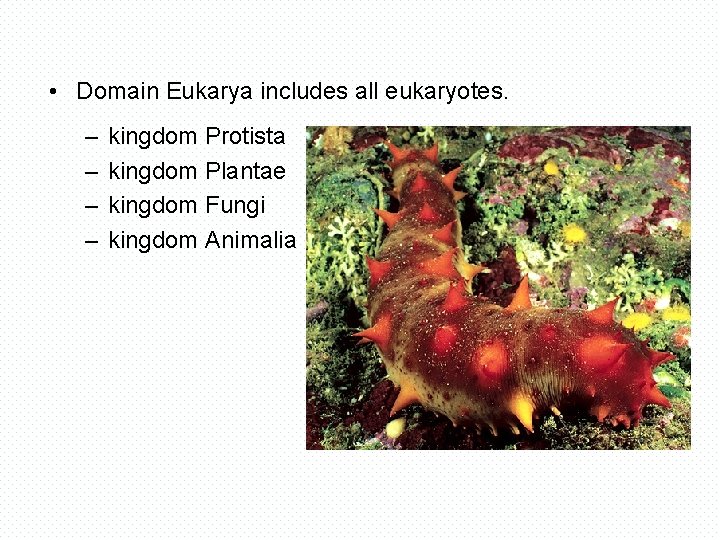
• Domain Eukarya includes all eukaryotes. – – kingdom Protista kingdom Plantae kingdom Fungi kingdom Animalia
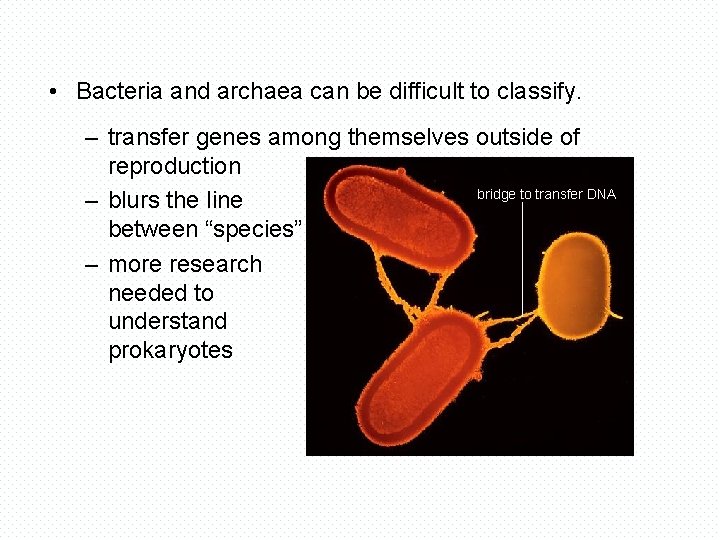
• Bacteria and archaea can be difficult to classify. – transfer genes among themselves outside of reproduction bridge to transfer DNA – blurs the line between “species” – more research needed to understand prokaryotes