
Ch 8 Sec 2 The Roman Republic Social
Ch 8, Sec 2: The Roman Republic
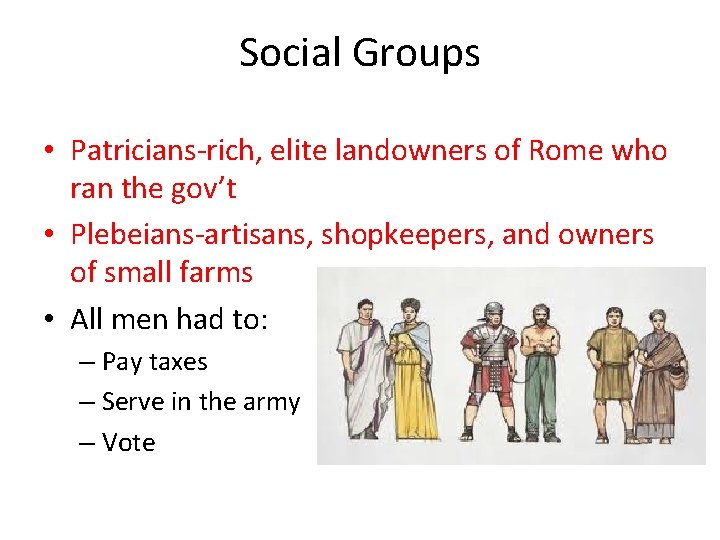
Social Groups • Patricians-rich, elite landowners of Rome who ran the gov’t • Plebeians-artisans, shopkeepers, and owners of small farms • All men had to: – Pay taxes – Serve in the army – Vote
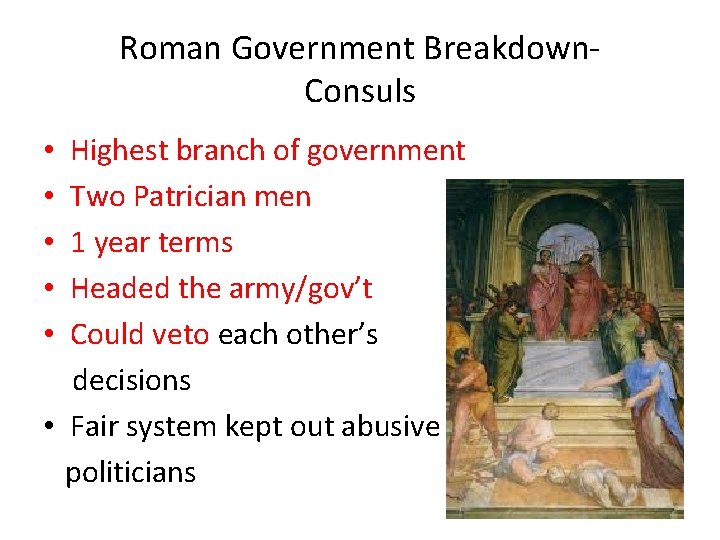
Roman Government Breakdown. Consuls Highest branch of government Two Patrician men 1 year terms Headed the army/gov’t Could veto each other’s decisions • Fair system kept out abusive politicians • • •
Roman Government Breakdown-Praetors Interpreted the law Acted as judges Kept tax records Handled money for Rome • Controlled public festivals • •
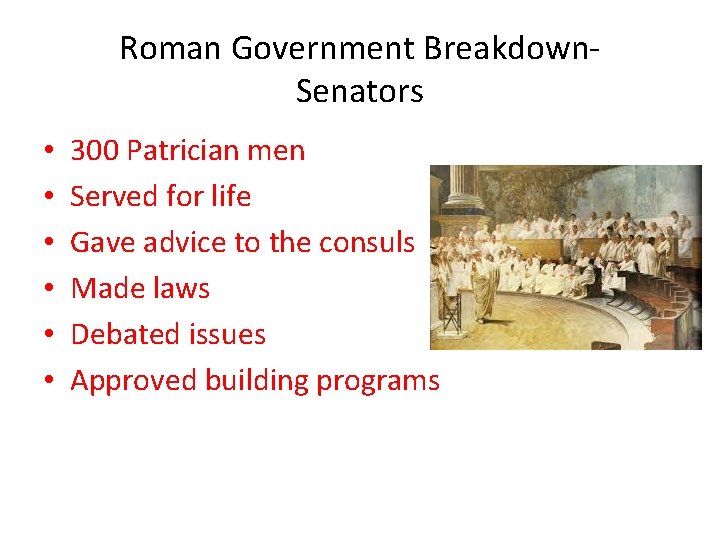
Roman Government Breakdown. Senators • • • 300 Patrician men Served for life Gave advice to the consuls Made laws Debated issues Approved building programs

Roman Government Breakdown. Assembly of Centuries • • Elected officials Picked the consuls and praetors (pre-tor) Passed laws Made up of Patricians
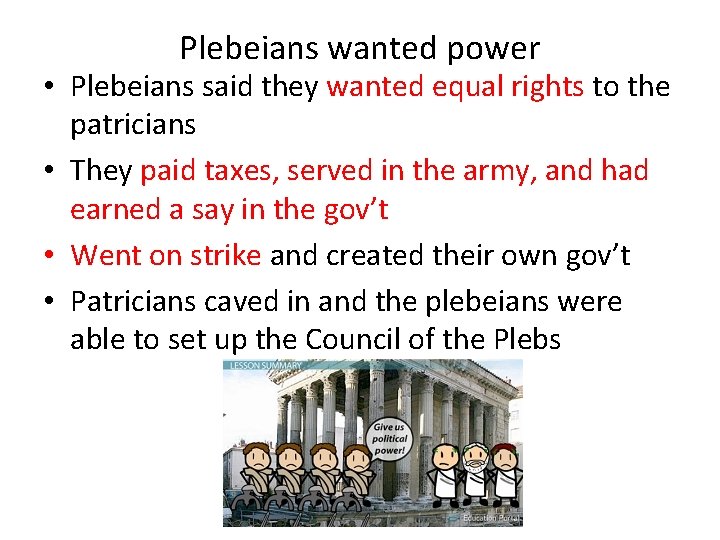
Plebeians wanted power • Plebeians said they wanted equal rights to the patricians • They paid taxes, served in the army, and had earned a say in the gov’t • Went on strike and created their own gov’t • Patricians caved in and the plebeians were able to set up the Council of the Plebs
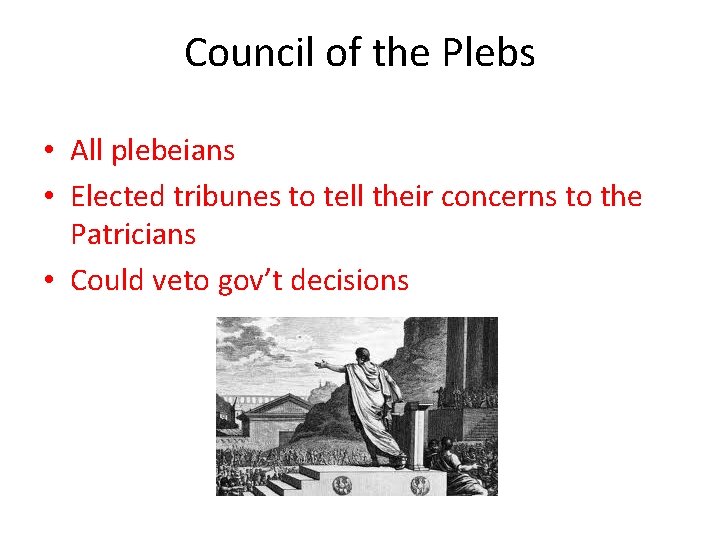
Council of the Plebs • All plebeians • Elected tribunes to tell their concerns to the Patricians • Could veto gov’t decisions
Changes to Politics • Laws allowed plebeians and patricians to marry • Laws allowed plebeians to be consuls • Patricians and Plebeians had “equal” rights – Patricians still had most of the power
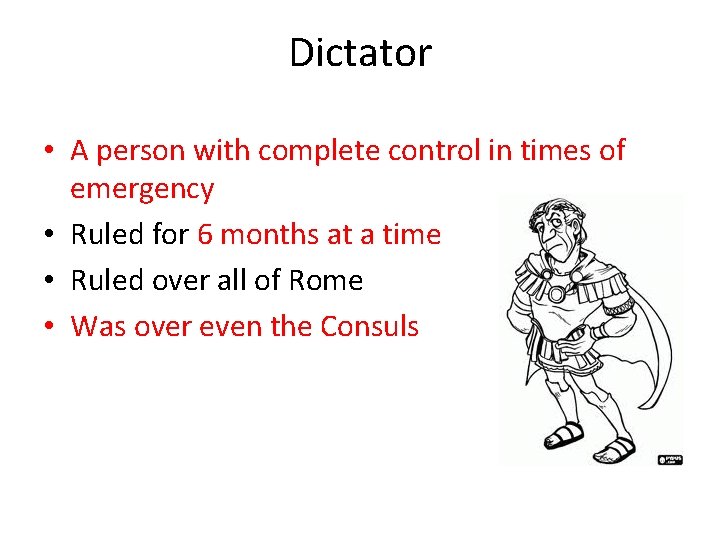
Dictator • A person with complete control in times of emergency • Ruled for 6 months at a time • Ruled over all of Rome • Was over even the Consuls
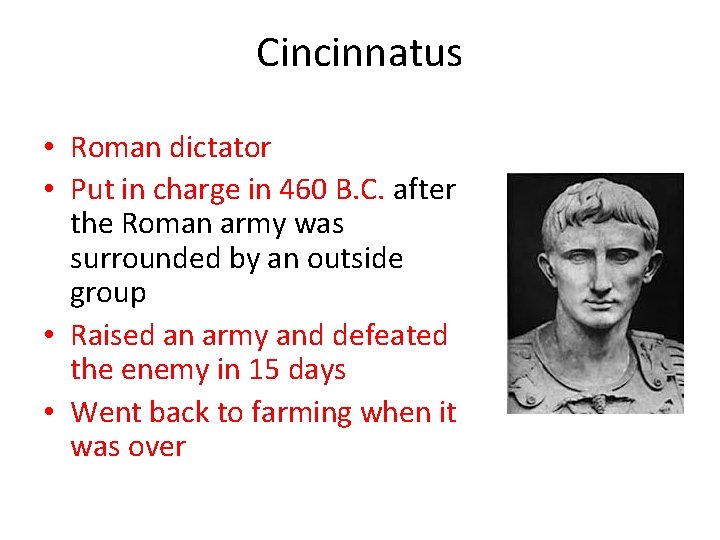
Cincinnatus • Roman dictator • Put in charge in 460 B. C. after the Roman army was surrounded by an outside group • Raised an army and defeated the enemy in 15 days • Went back to farming when it was over
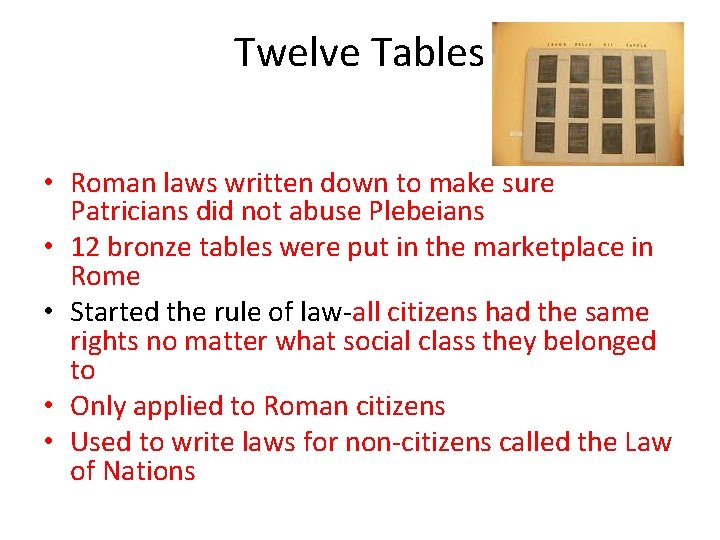
Twelve Tables • Roman laws written down to make sure Patricians did not abuse Plebeians • 12 bronze tables were put in the marketplace in Rome • Started the rule of law-all citizens had the same rights no matter what social class they belonged to • Only applied to Roman citizens • Used to write laws for non-citizens called the Law of Nations
Roman Government (6 min)
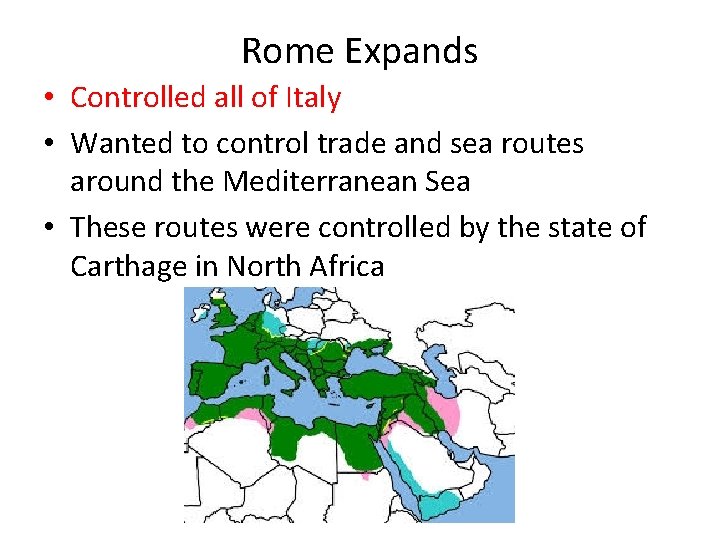
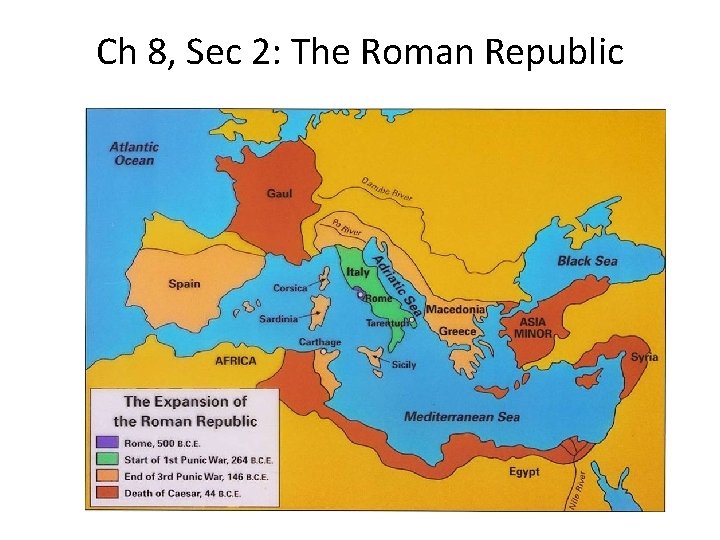
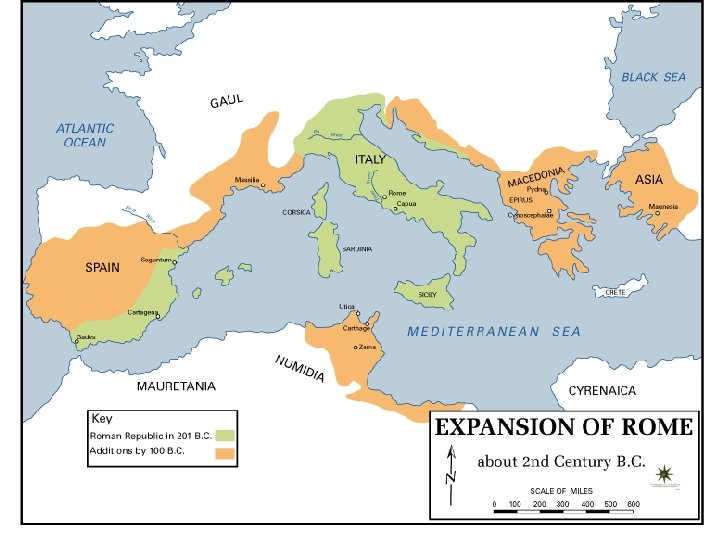
Rome Expands • Controlled all of Italy • Wanted to control trade and sea routes around the Mediterranean Sea • These routes were controlled by the state of Carthage in North Africa
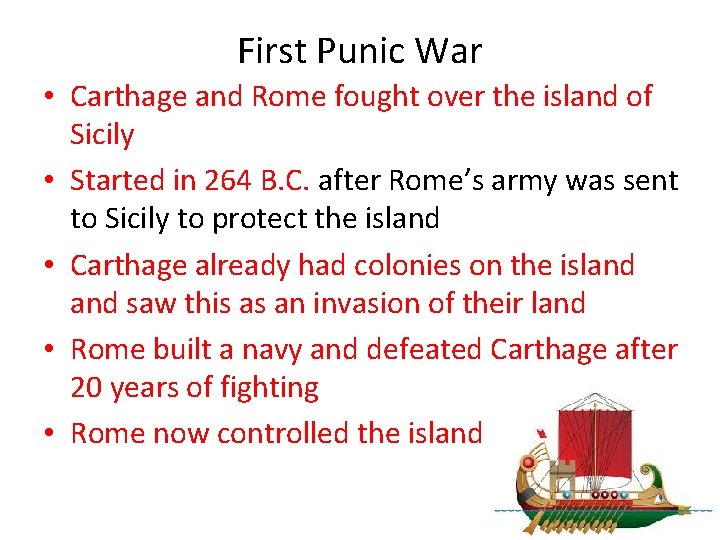
First Punic War • Carthage and Rome fought over the island of Sicily • Started in 264 B. C. after Rome’s army was sent to Sicily to protect the island • Carthage already had colonies on the island saw this as an invasion of their land • Rome built a navy and defeated Carthage after 20 years of fighting • Rome now controlled the island
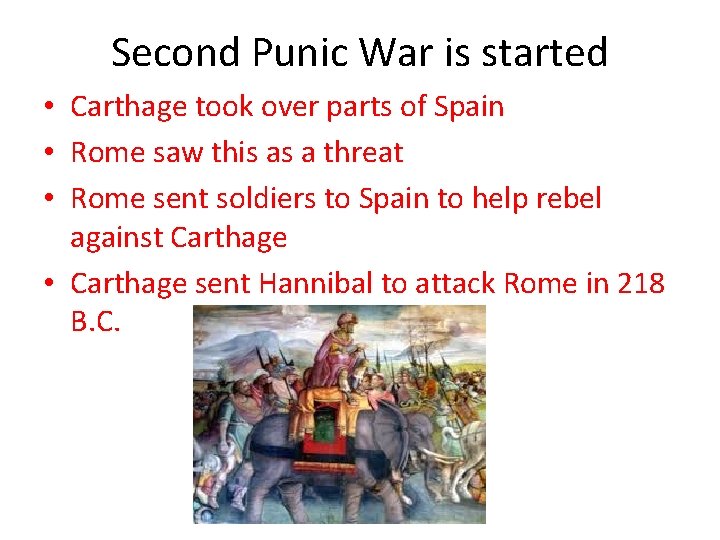
Second Punic War is started • Carthage took over parts of Spain • Rome saw this as a threat • Rome sent soldiers to Spain to help rebel against Carthage • Carthage sent Hannibal to attack Rome in 218 B. C.
Second Punic War-Battle Plan • Hannibal took 46, 000 men, horses, and elephants to Spain to get to Italy • Problem for Hannibal-Alps proved to difficult to cross killing ½ of his troops • Hannibal took over southern part of Italy during the Battle of Cannae (Kan- ee)
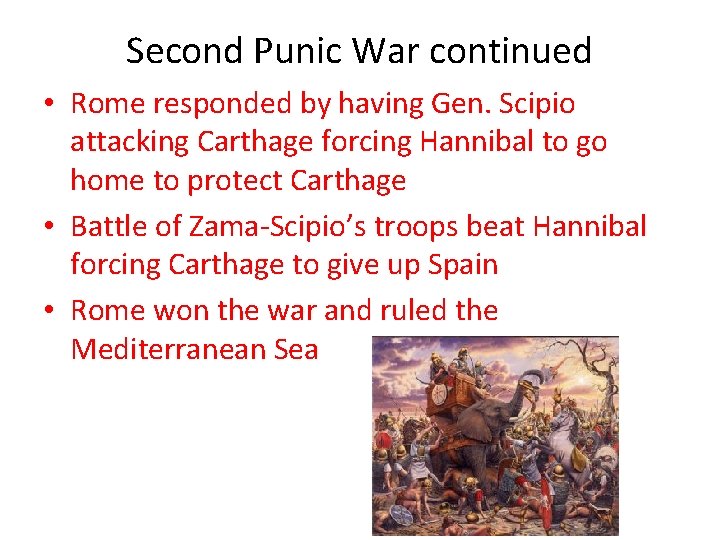
Second Punic War continued • Rome responded by having Gen. Scipio attacking Carthage forcing Hannibal to go home to protect Carthage • Battle of Zama-Scipio’s troops beat Hannibal forcing Carthage to give up Spain • Rome won the war and ruled the Mediterranean Sea
Third Punic War • Carthage was burned down • 50, 000 people were enslaved • Roman soldiers spread salt on the ground to prevent crops from growing in Carthage • Resulted in Rome controlling all of Carthage, Macedonia, Greece, and part of Asia within 20 years of the end of the Punic Wars
Make a Venn diagram on your paper with Carthage and Rome at the top. Write Down 5 differences and 1 similarity while watching the video. (10 minutes)
- Slides: 21