
Ch 8 Cell Diversity cell tissue organ system
- Slides: 33
Ch. 8 Cell Diversity
cell – tissue – organ - system Defn: A cell is the smallest basic unit of living things Defn: A tissue is a group of similar cells that are modified (or adapted) to carry out the same functions Simple Tissue = 1 cell type Complex Tissue = > 1 cell type
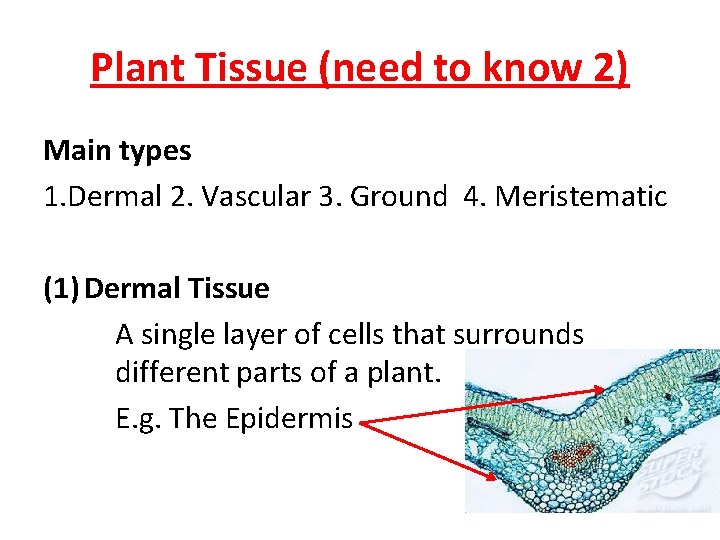
Plant Tissue (need to know 2) Main types 1. Dermal 2. Vascular 3. Ground 4. Meristematic (1) Dermal Tissue A single layer of cells that surrounds different parts of a plant. E. g. The Epidermis
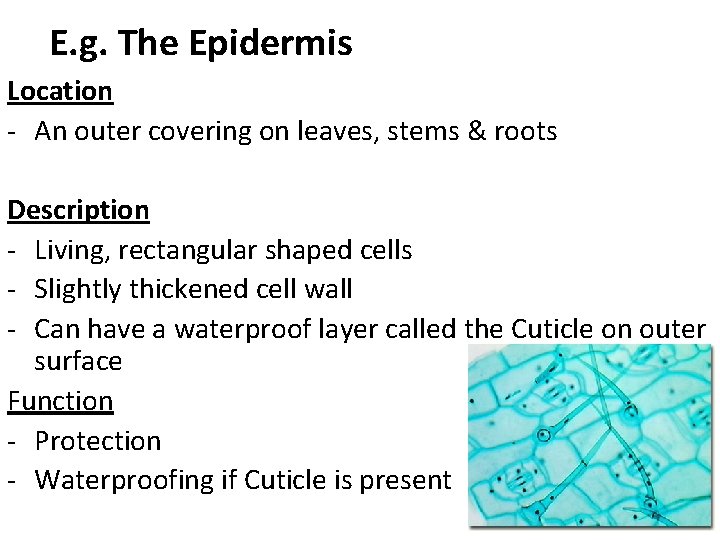
E. g. The Epidermis Location - An outer covering on leaves, stems & roots Description - Living, rectangular shaped cells - Slightly thickened cell wall - Can have a waterproof layer called the Cuticle on outer surface Function - Protection - Waterproofing if Cuticle is present
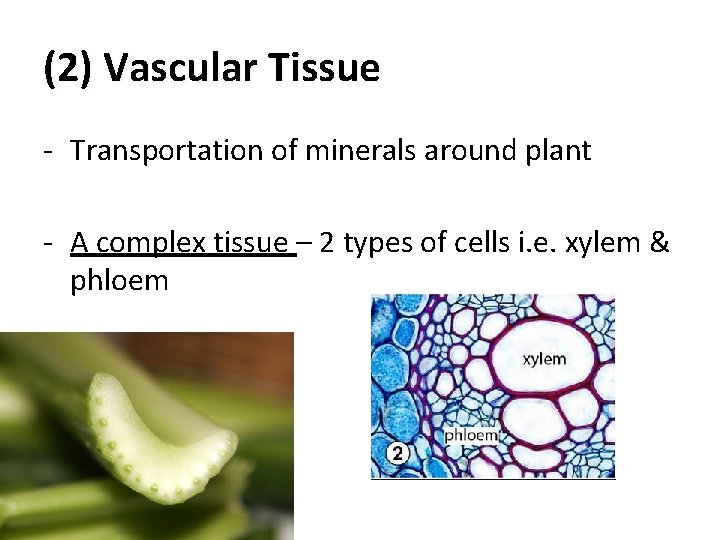
(2) Vascular Tissue - Transportation of minerals around plant - A complex tissue – 2 types of cells i. e. xylem & phloem
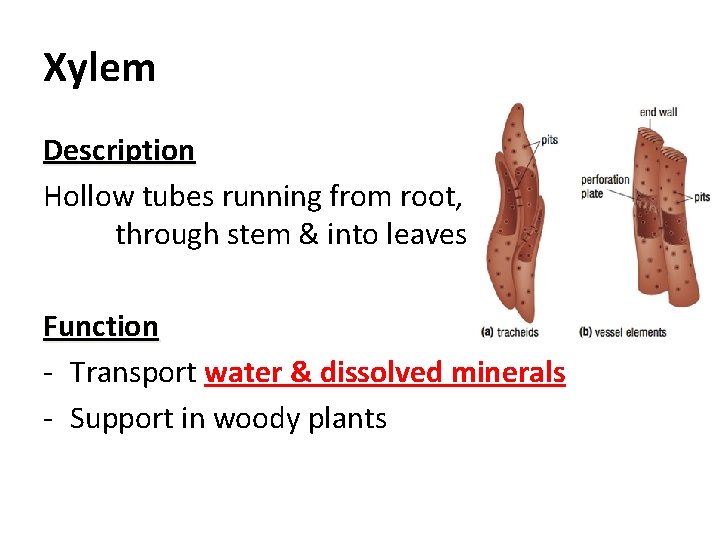
Xylem Description Hollow tubes running from root, through stem & into leaves Function - Transport water & dissolved minerals - Support in woody plants
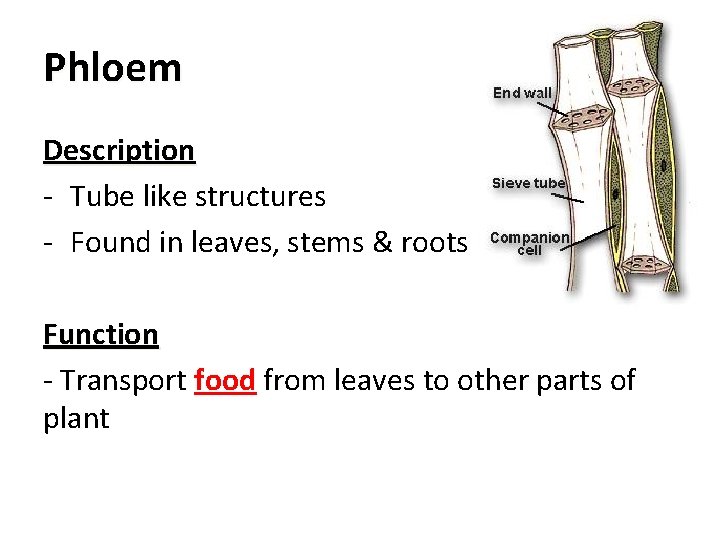
Phloem Description - Tube like structures - Found in leaves, stems & roots Function - Transport food from leaves to other parts of plant
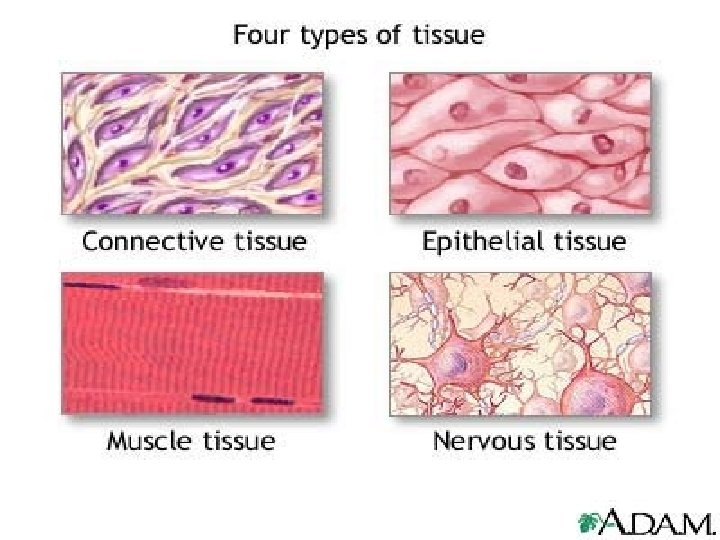
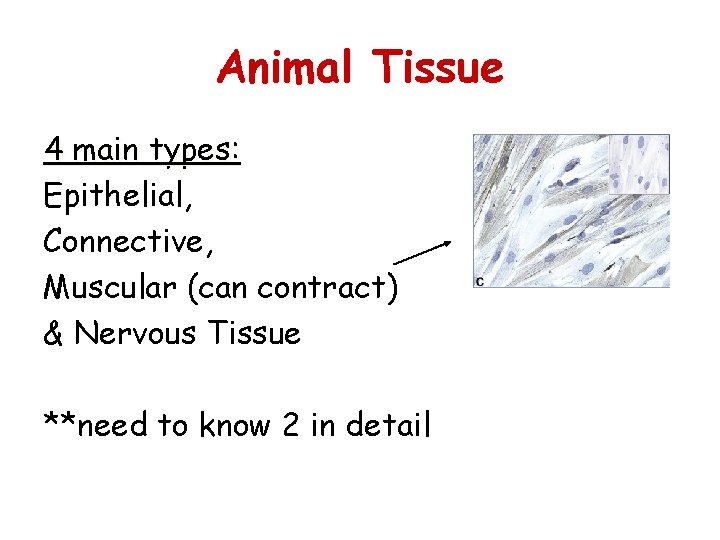
Animal Tissue 4 main types: Epithelial, Connective, Muscular (can contract) & Nervous Tissue **need to know 2 in detail
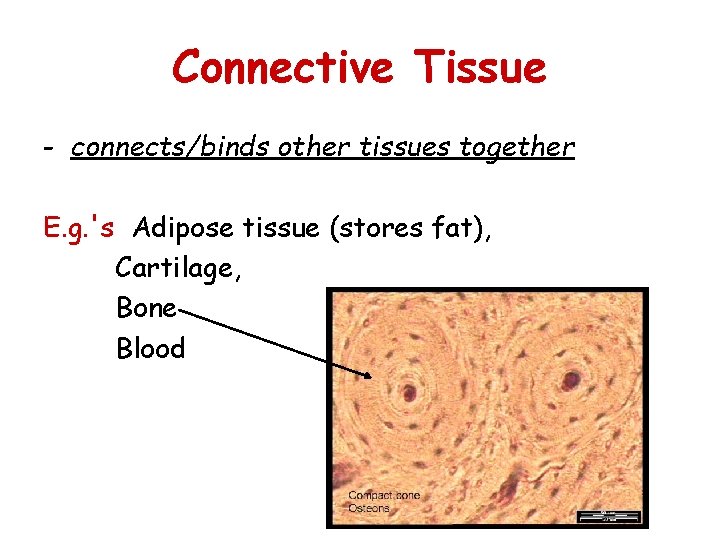
Connective Tissue - connects/binds other tissues together E. g. 's Adipose tissue (stores fat), Cartilage, Bone Blood
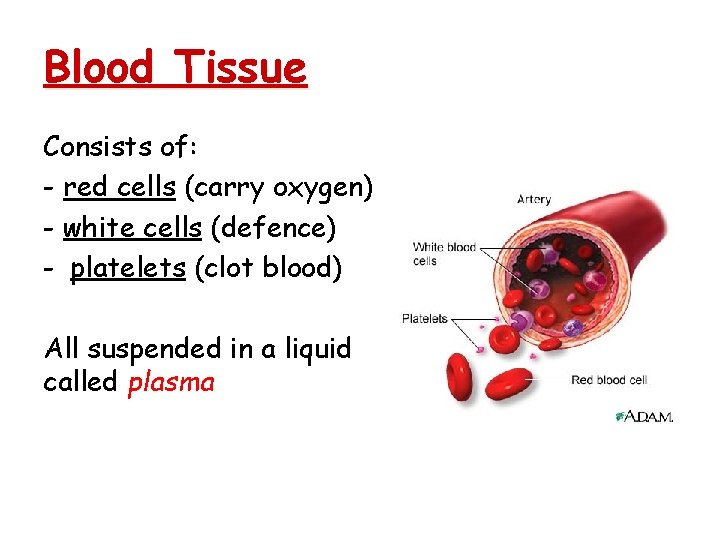
Blood Tissue Consists of: - red cells (carry oxygen), - white cells (defence) - platelets (clot blood) All suspended in a liquid called plasma
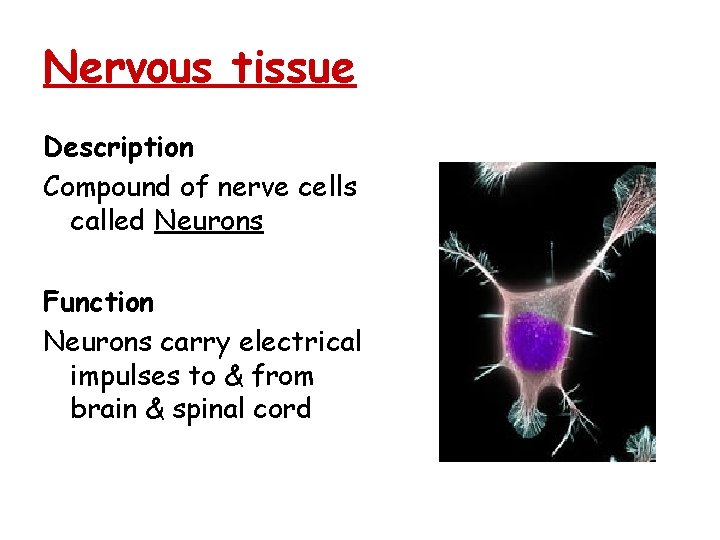
Nervous tissue Description Compound of nerve cells called Neurons Function Neurons carry electrical impulses to & from brain & spinal cord
Learning Check • • Can you name 3 types of cell? What is a tissue? Can you recall 2 types of animal tissue? Can you recall 2 types of plant tissue?
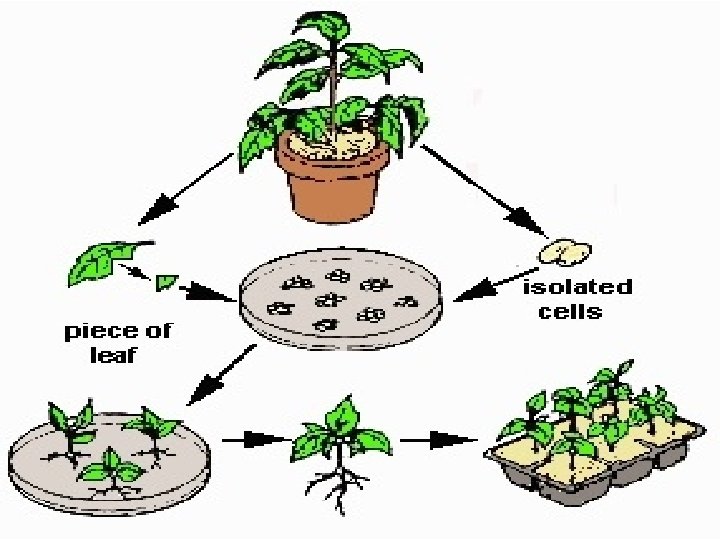
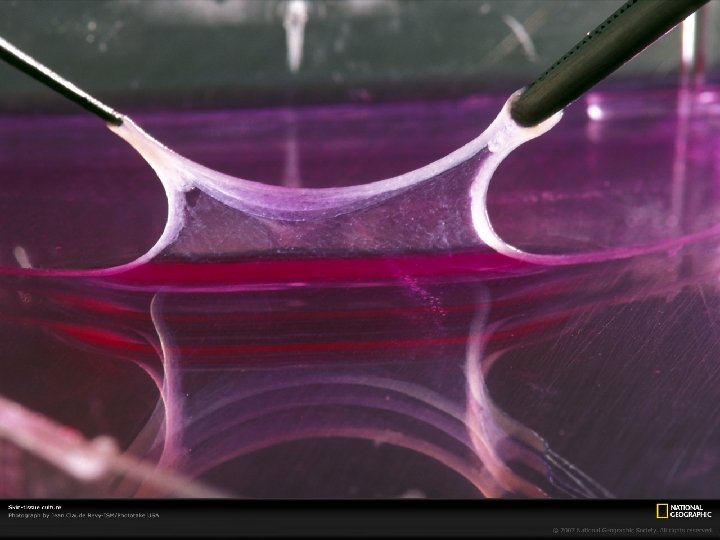
Tissue culture Defn: Tissue culture is the growth of cells in or on a sterile nutrient medium outside an organism How it works? A tissue sample is removed from a plant or animal & grown in glassware (in vitro – outside the body) in a bath of sterile nutritive fluid which often contains hormones and growth substances
- Growth is by mitosis and produces a cluster of identical offspring - a clone Main conditions necessary for Tissue culture - Absence of contaminating microorganisms - Food, vitamins & minerals - Substances to stimulate growth (e. g hormones) - Oxygen - Correct p. H
Q. Suggest a reason why sterile conditions are needed in tissue culture? A. to prevent bacterial growth or contamination
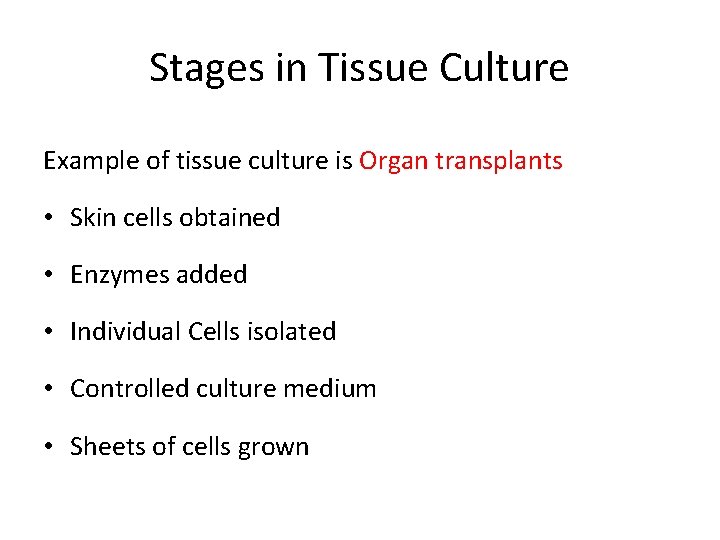
Stages in Tissue Culture Example of tissue culture is Organ transplants • Skin cells obtained • Enzymes added • Individual Cells isolated • Controlled culture medium • Sheets of cells grown
Applications of Tissue Culture 1. Plant breeding = Micropropagation 2. Cancer research 3. Skin grafts **need to know 2
Applications of tissue cultures • Virus reproduction • Hela cells used to grow and investigate viruses • **Micropropagation of plants • Produces exact copies • Quickly produces mature plants • Doesn’t need pollinators or seeds • Producing plants that are disease resistant and virus free
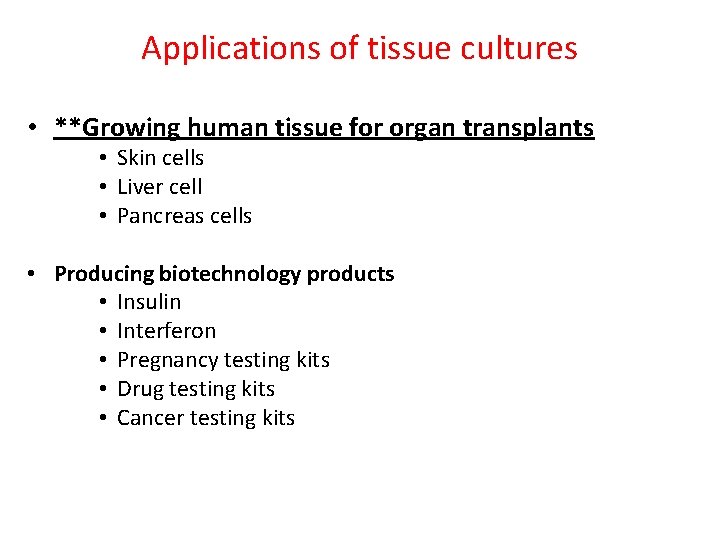
Applications of tissue cultures • **Growing human tissue for organ transplants • Skin cells • Liver cell • Pancreas cells • Producing biotechnology products • Insulin • Interferon • Pregnancy testing kits • Drug testing kits • Cancer testing kits
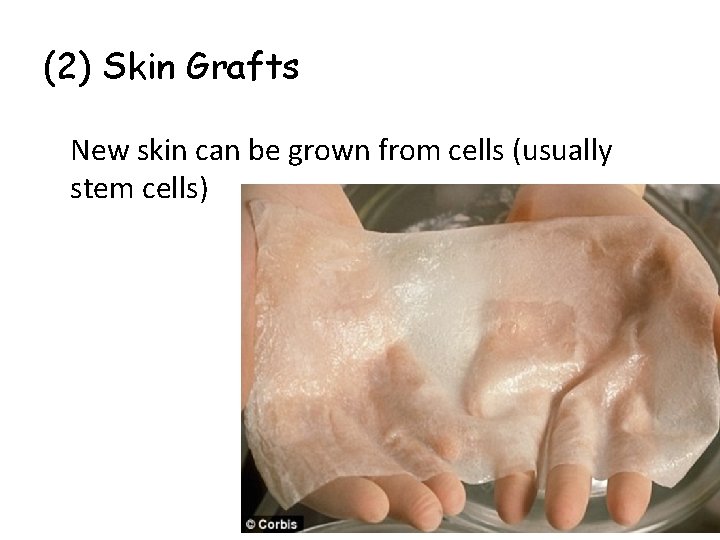
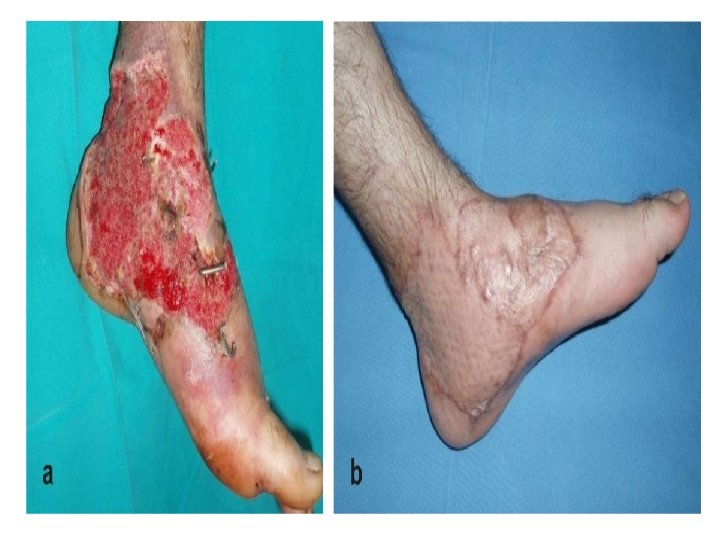
(2) Skin Grafts New skin can be grown from cells (usually stem cells)
Learning Check • What is Tissue Culture? • What kind of conditions do cells in tissue culture need? • What are the stages of tissue culture? • Can you name two uses for tissue culture?
Organs Defn: An organ is a structure composed of a number of tissues that work together to carry out one or more functions Examples of Plant Organs: root, stem, leaves, flowers, stems & fruit Examples of Animal Organs: stomach, brain, liver, kidney & heart
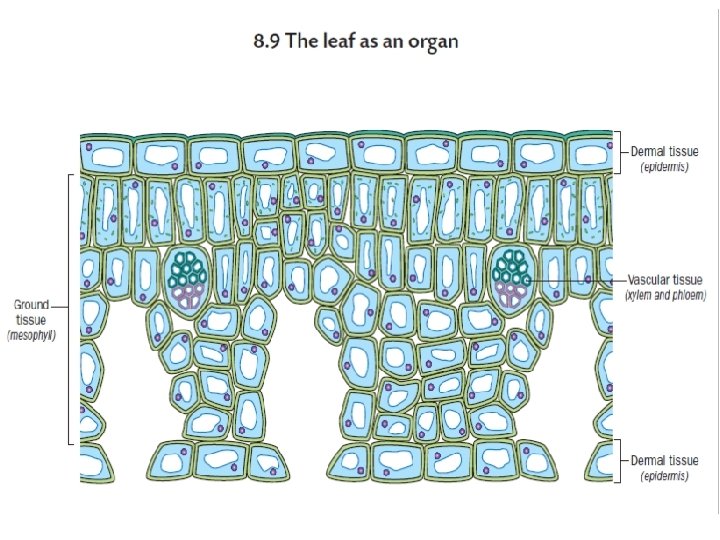
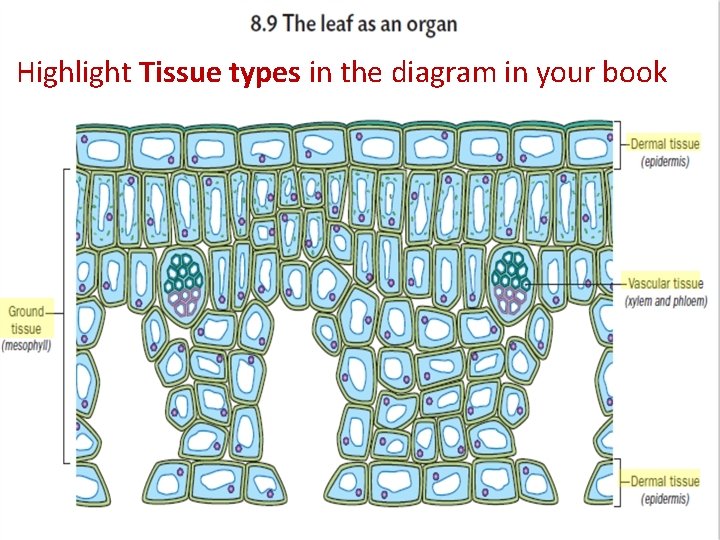
Need to know 1 E. g. of a Plant Organ: Leaf Tissues it contains: - Dermal (found in Epidermis) - Vascular ( found in Vascular bundle as Xylem & Phloem tissue) - Ground ( found as Palisade & Mesophyll Cells)
Highlight Tissue types in the diagram in your book
E. g. of An Animal Organ: Heart Tissues it Contains: - Muscle tissue called Cardiac Muscle - Enclosed in Pericardium (a membrane contains epithelial tissue) - Connective Tissue ( blood & vessels) - Controlled by Nervous Tissue
An Organ System: consists of a number of organs working together to carry out one or more functions All organ systems combine to make the organism
Numerous organ systems in human The Circulatory System: heart, blood vessels, blood & lymph Function: transport materials & fight infection The Digestive System: mouth, oesophagus, stomach, small intestine, large intestine & Anus Function: Take in food, break it down, & transfer it to the circulatory system.
Learning Check • • • What is an organ? Can you name 2 plant organs? Can you name 2 animal organs? What is an organ system? Can you recall 2 animal organ systems?