
Ch 8 9 Photosynthesis Cellular Respiration Food and
- Slides: 39
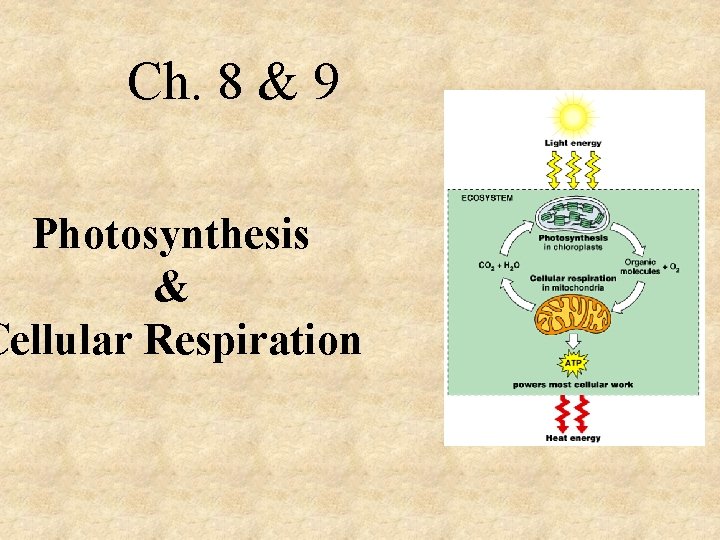
Ch. 8 & 9 Photosynthesis & Cellular Respiration
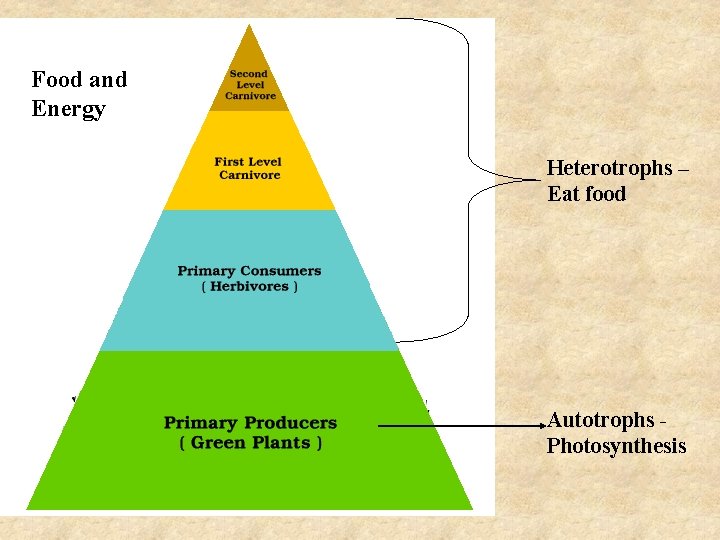
Food and Energy Heterotrophs – Eat food Autotrophs Photosynthesis
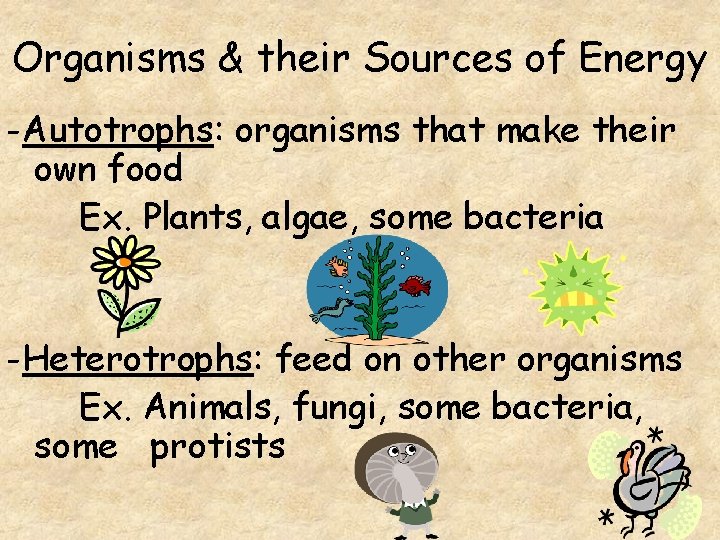
Organisms & their Sources of Energy -Autotrophs: organisms that make their own food Ex. Plants, algae, some bacteria -Heterotrophs: feed on other organisms Ex. Animals, fungi, some bacteria, some protists
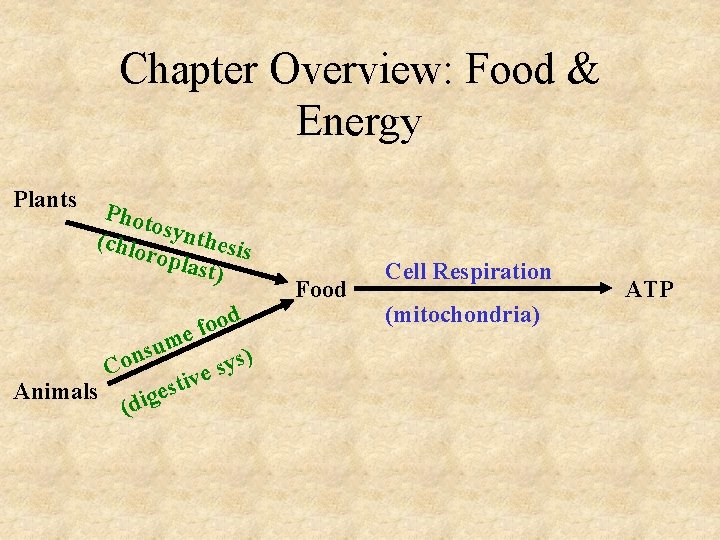
Chapter Overview: Food & Energy Plants Phot o (chlo synthesis ropla st) d o o ef m u s n s) y s Co ve i t s Animals e (dig Food Cell Respiration (mitochondria) ATP
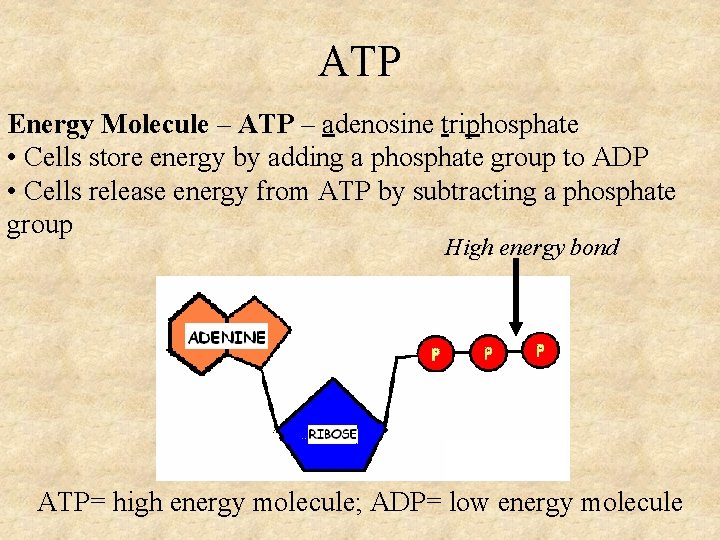
ATP Energy Molecule – ATP – adenosine triphosphate • Cells store energy by adding a phosphate group to ADP • Cells release energy from ATP by subtracting a phosphate group High energy bond ATP= high energy molecule; ADP= low energy molecule
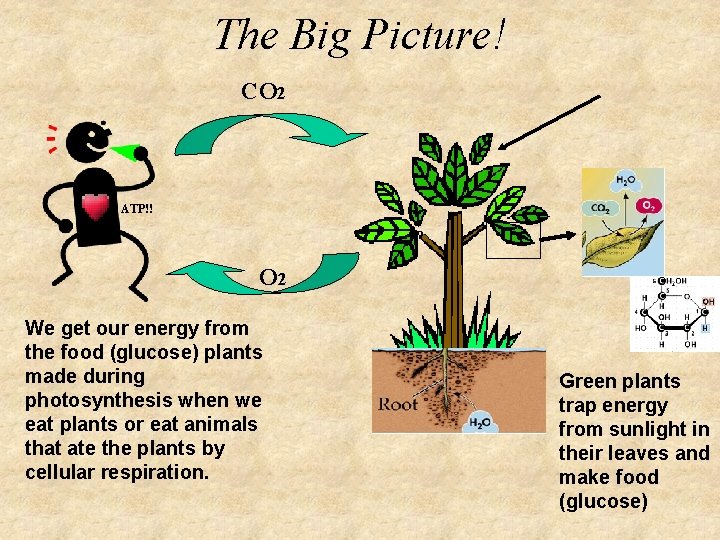
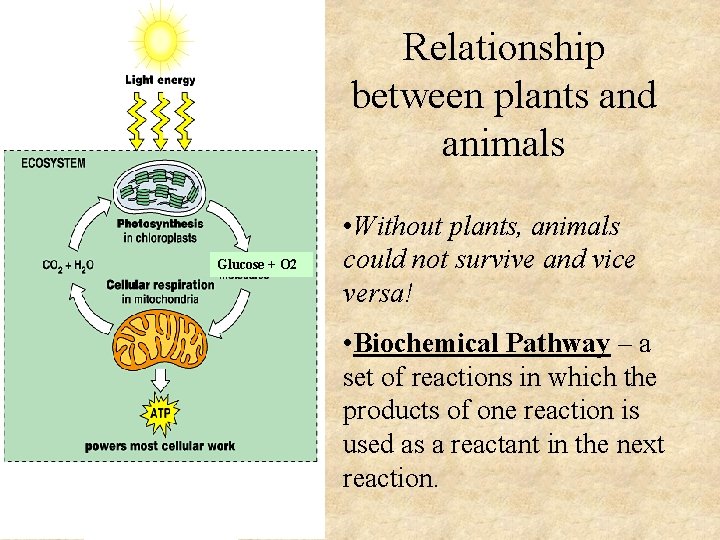
The Big Picture! CO 2 ATP!! O 2 We get our energy from the food (glucose) plants made during photosynthesis when we eat plants or eat animals that ate the plants by cellular respiration. Green plants trap energy from sunlight in their leaves and make food (glucose)
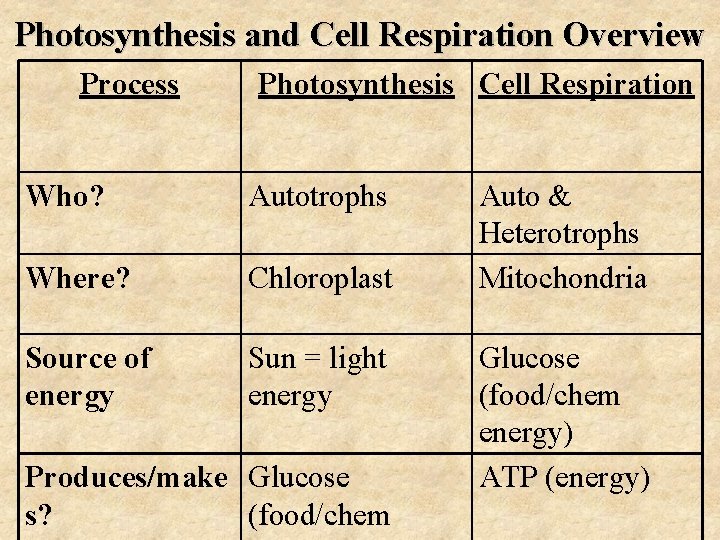
Photosynthesis and Cell Respiration Overview Process Photosynthesis Cell Respiration Who? Autotrophs Where? Chloroplast Source of energy Sun = light energy Produces/make Glucose s? (food/chem Auto & Heterotrophs Mitochondria Glucose (food/chem energy) ATP (energy)
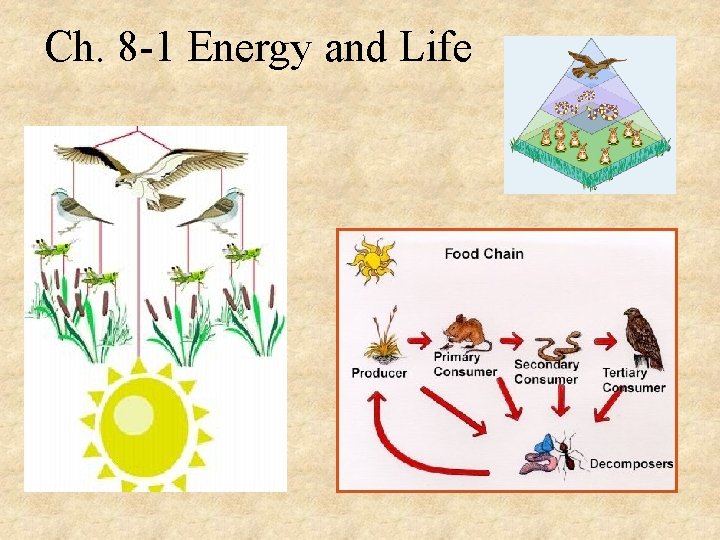
Ch. 8 -1 Energy and Life
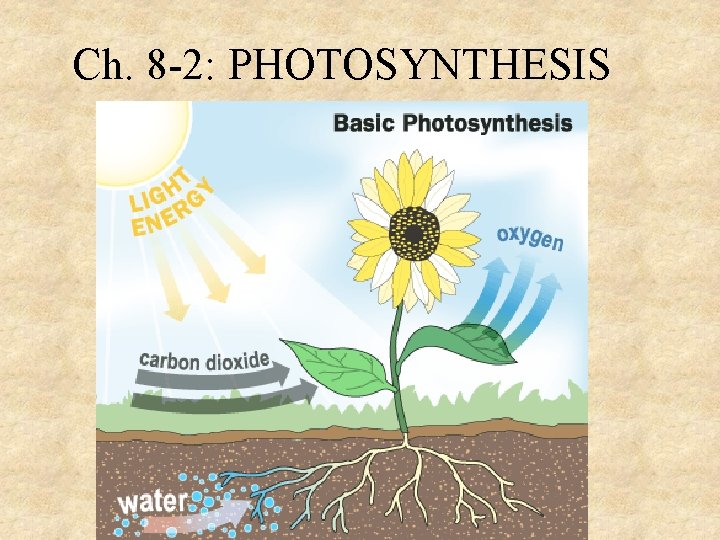
Ch. 8 -2: PHOTOSYNTHESIS
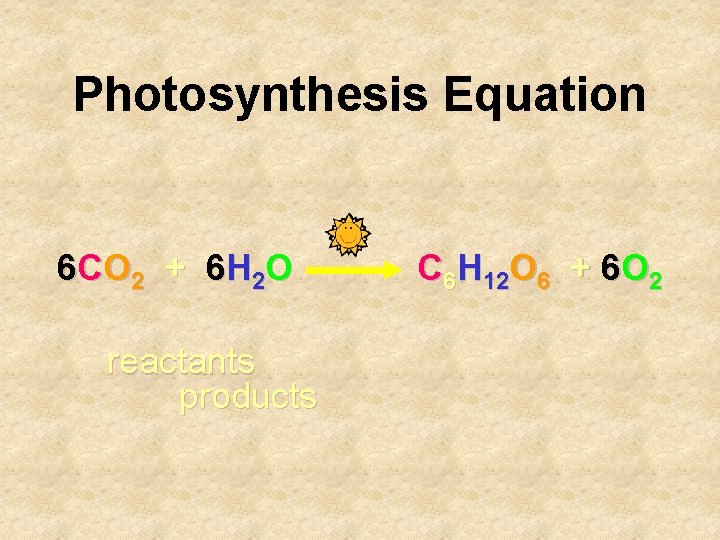
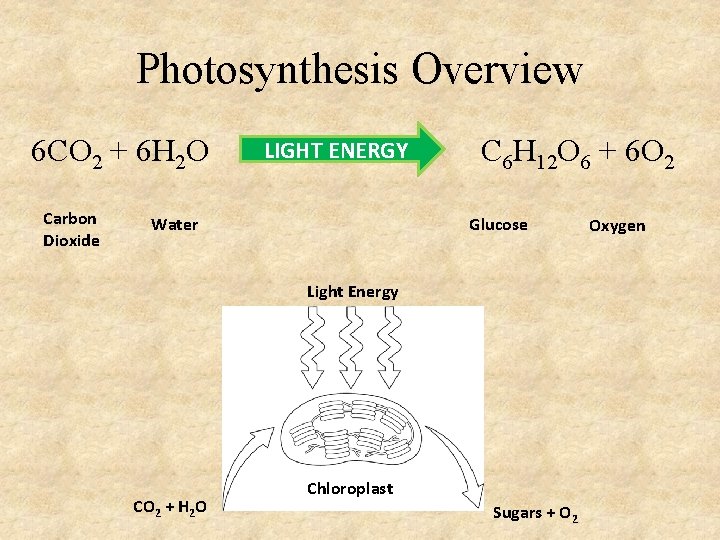
Photosynthesis Equation 6 C O 2 + 6 H 2 O reactants products C 6 H 12 O 6 + 6 O 2
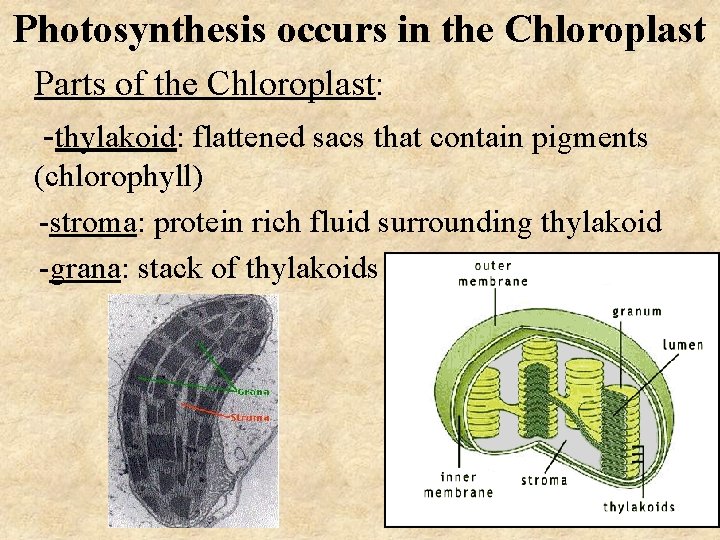
Photosynthesis occurs in the Chloroplast Parts of the Chloroplast: -thylakoid: flattened sacs that contain pigments (chlorophyll) -stroma: protein rich fluid surrounding thylakoid -grana: stack of thylakoids
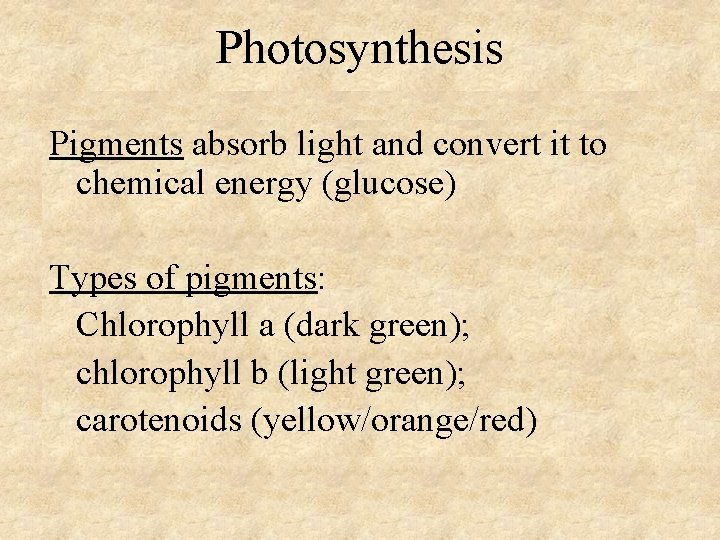
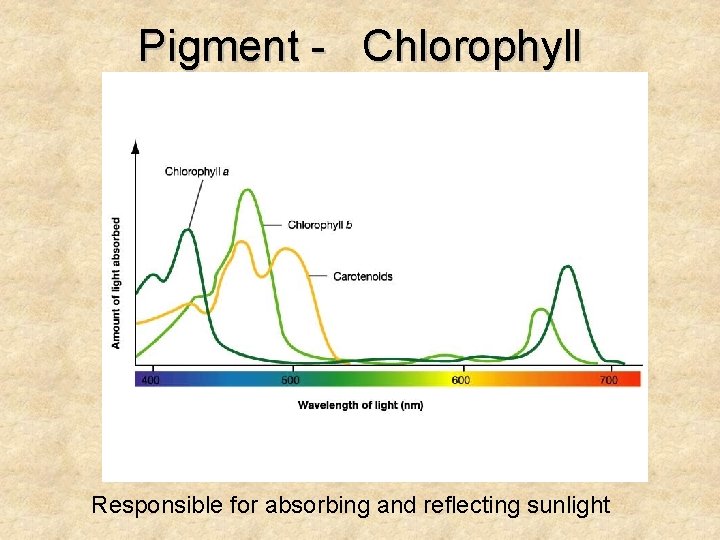
Photosynthesis Pigments absorb light and convert it to chemical energy (glucose) Types of pigments: Chlorophyll a (dark green); chlorophyll b (light green); carotenoids (yellow/orange/red)
Pigment - Chlorophyll Responsible for absorbing and reflecting sunlight
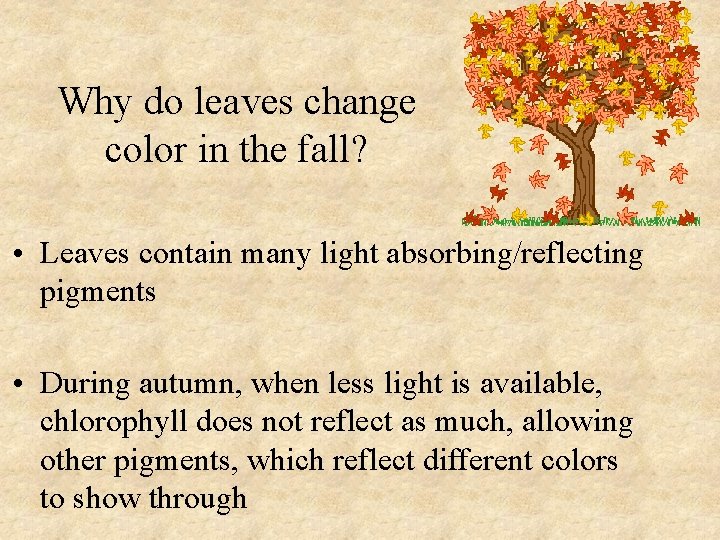
Why do leaves change color in the fall? • Leaves contain many light absorbing/reflecting pigments • During autumn, when less light is available, chlorophyll does not reflect as much, allowing other pigments, which reflect different colors to show through
Photosynthesis Overview 6 CO 2 + 6 H 2 O Carbon Dioxide LIGHT ENERGY Water C 6 H 12 O 6 + 6 O 2 Glucose Light Energy CO 2 + H 2 O Chloroplast Sugars + O 2 Oxygen
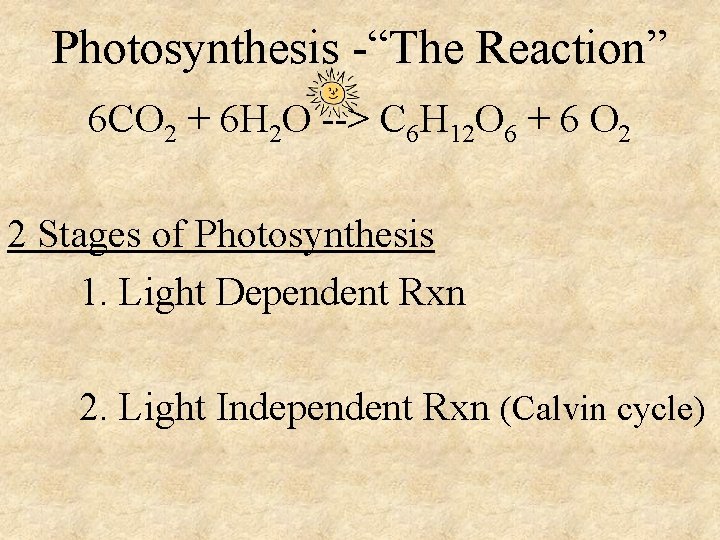
Photosynthesis -“The Reaction” 6 CO 2 + 6 H 2 O --> C 6 H 12 O 6 + 6 O 2 2 Stages of Photosynthesis 1. Light Dependent Rxn 2. Light Independent Rxn (Calvin cycle)
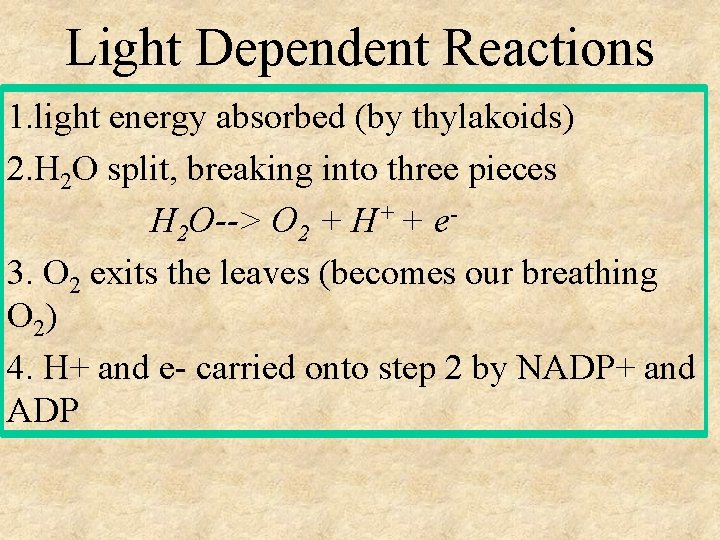
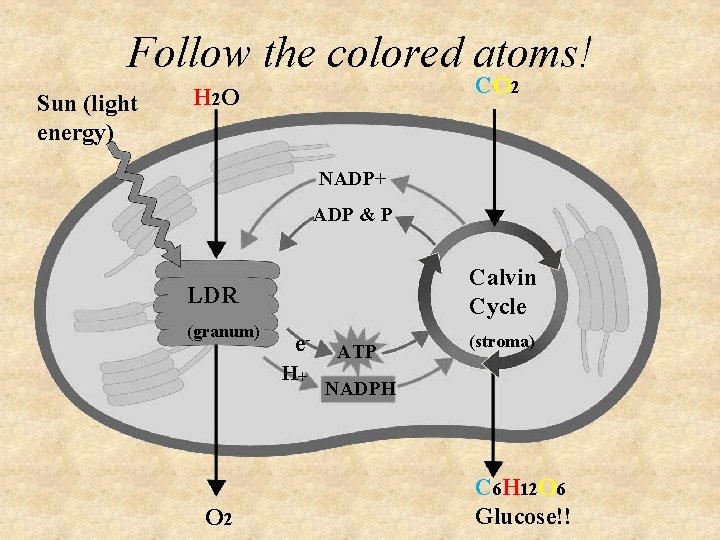
Light Dependent Reactions 1. light energy absorbed (by thylakoids) 2. H 2 O split, breaking into three pieces H 2 O--> O 2 + H+ + e 3. O 2 exits the leaves (becomes our breathing O 2) 4. H+ and e- carried onto step 2 by NADP+ and ADP
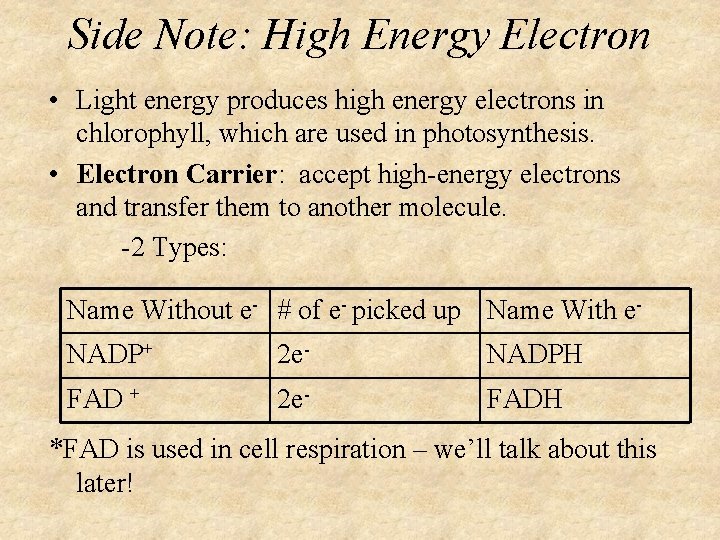
Side Note: High Energy Electron • Light energy produces high energy electrons in chlorophyll, which are used in photosynthesis. • Electron Carrier: accept high-energy electrons and transfer them to another molecule. -2 Types: Name Without e- # of e- picked up Name With e. NADP+ 2 e- NADPH FAD + 2 e- FADH *FAD is used in cell respiration – we’ll talk about this later!
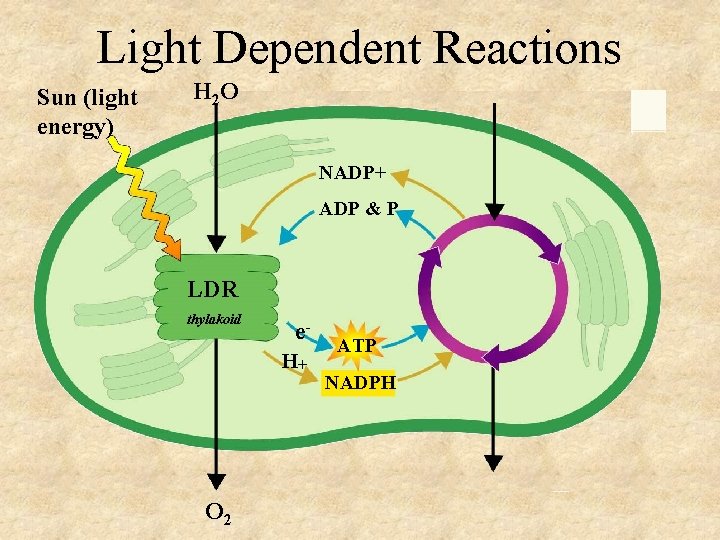
Light Dependent Reactions Sun (light energy) H 2 O NADP+ ADP & P LDR thylakoid e. H+ O 2 ATP NADPH
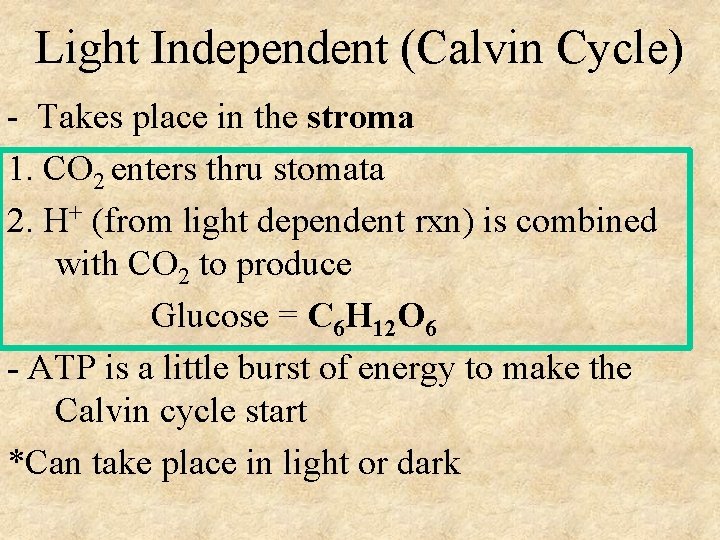
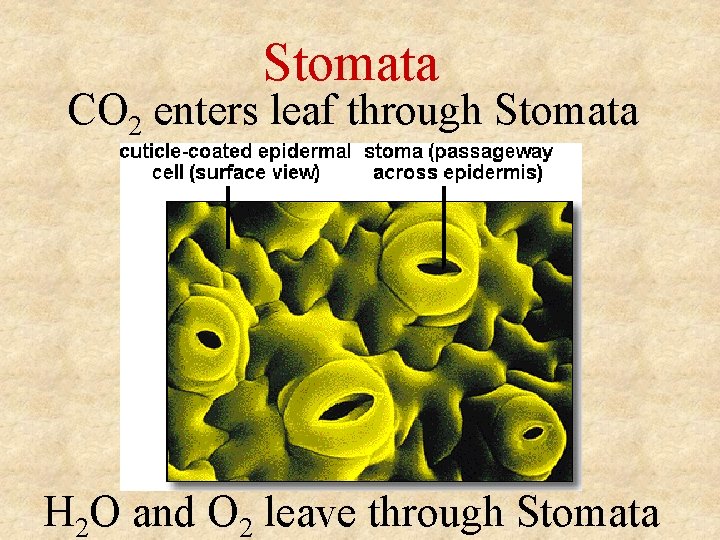
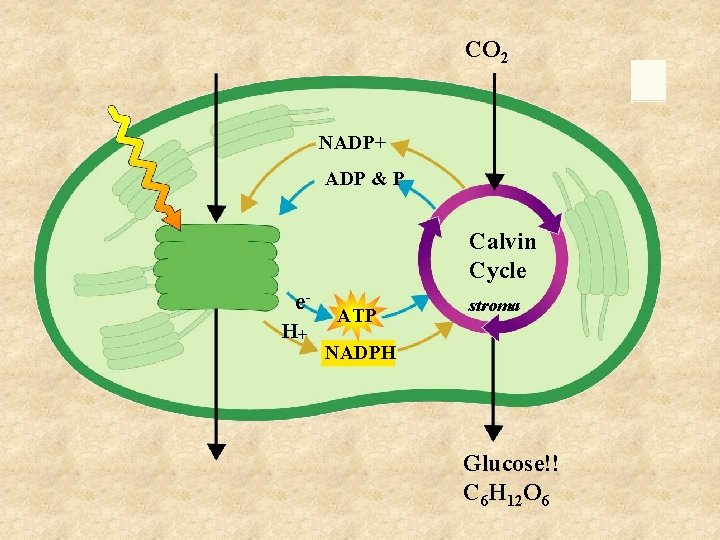
Light Independent (Calvin Cycle) - Takes place in the stroma 1. CO 2 enters thru stomata 2. H+ (from light dependent rxn) is combined with CO 2 to produce Glucose = C 6 H 12 O 6 - ATP is a little burst of energy to make the Calvin cycle start *Can take place in light or dark
Stomata CO 2 enters leaf through Stomata H 2 O and O 2 leave through Stomata
CO 2 NADP+ ADP & P Calvin Cycle e. H+ ATP stroma NADPH Glucose!! C 6 H 12 O 6
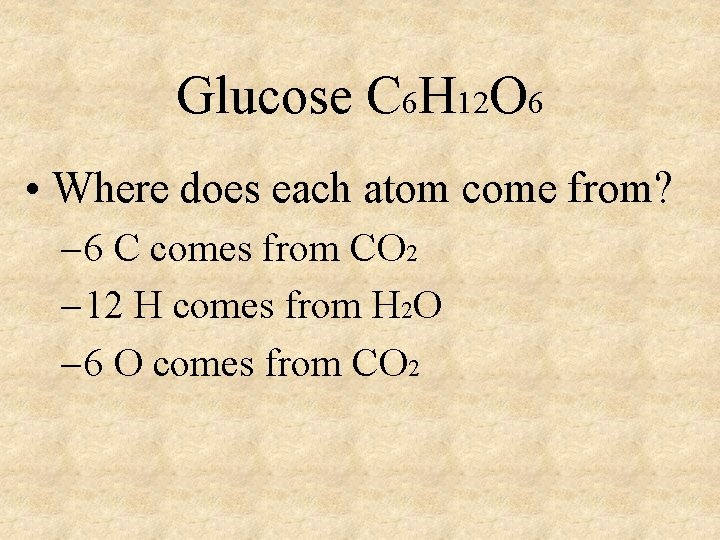
Glucose C 6 H 12 O 6 • Where does each atom come from? – 6 C comes from CO 2 – 12 H comes from H 2 O – 6 O comes from CO 2
Follow the colored atoms! Sun (light energy) CO 2 H 2 O NADP+ ADP & P Calvin Cycle LDR (granum) e. H+ O 2 ATP (stroma) NADPH C 6 H 12 O 6 Glucose!!
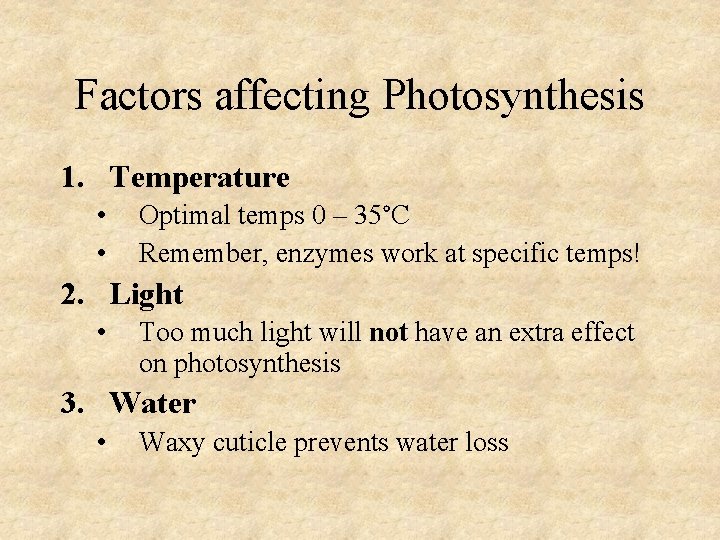
Factors affecting Photosynthesis 1. Temperature • • Optimal temps 0 – 35°C Remember, enzymes work at specific temps! 2. Light • Too much light will not have an extra effect on photosynthesis 3. Water • Waxy cuticle prevents water loss
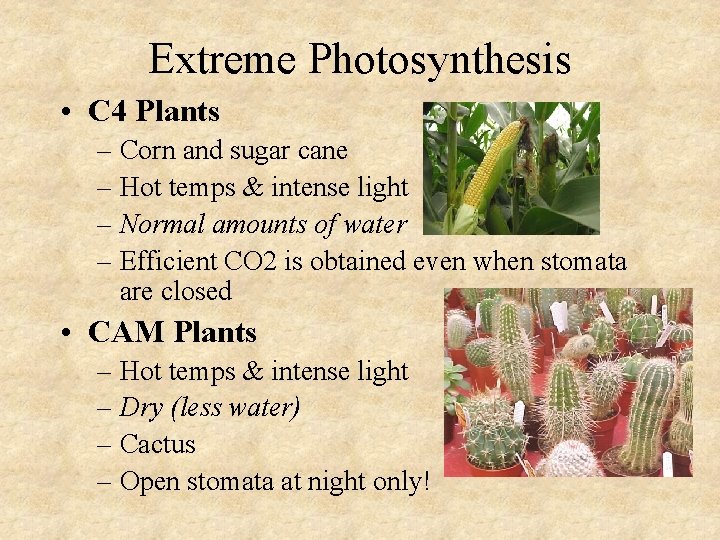
Extreme Photosynthesis • C 4 Plants – Corn and sugar cane – Hot temps & intense light – Normal amounts of water – Efficient CO 2 is obtained even when stomata are closed • CAM Plants – Hot temps & intense light – Dry (less water) – Cactus – Open stomata at night only!
Ch. 9 Cell Respiration
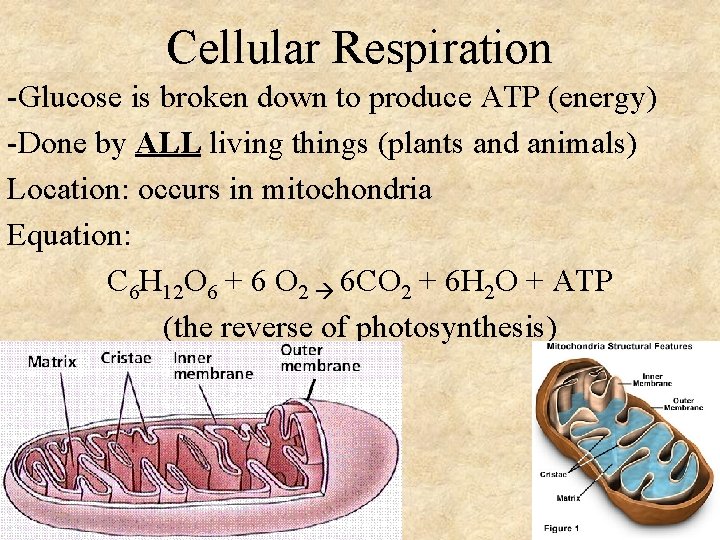
Cellular Respiration -Glucose is broken down to produce ATP (energy) -Done by ALL living things (plants and animals) Location: occurs in mitochondria Equation: C 6 H 12 O 6 + 6 O 2 6 CO 2 + 6 H 2 O + ATP (the reverse of photosynthesis)
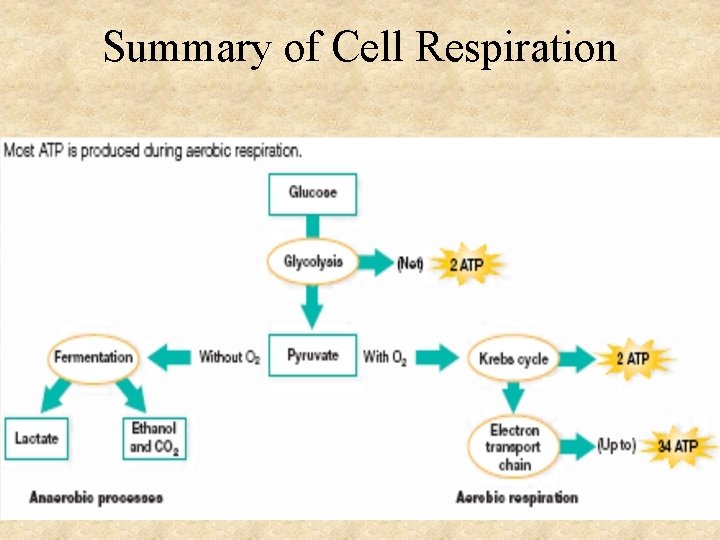
2 Types of Cellular Respiration 1. Aerobic Respiration: O 2 required -produces net total of 38 ATP per glucose 2. Anaerobic Respiration: occurs when there is no O 2 -produces 2 ATP per glucose
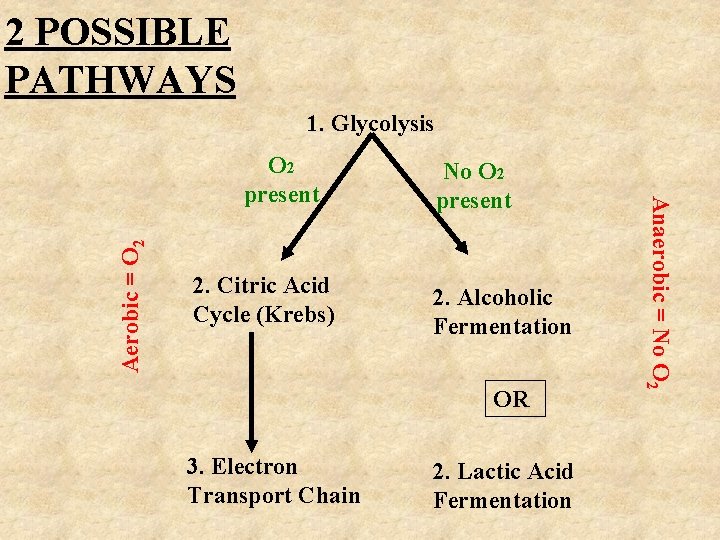
2 POSSIBLE PATHWAYS 1. Glycolysis Aerobic = O 2 2. Citric Acid Cycle (Krebs) No O 2 present 2. Alcoholic Fermentation OR 3. Electron Transport Chain 2. Lactic Acid Fermentation Anaerobic = No O 2 present
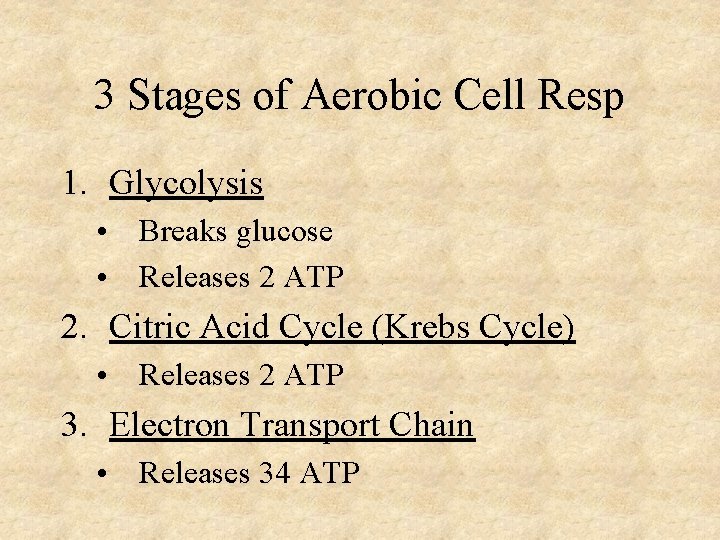
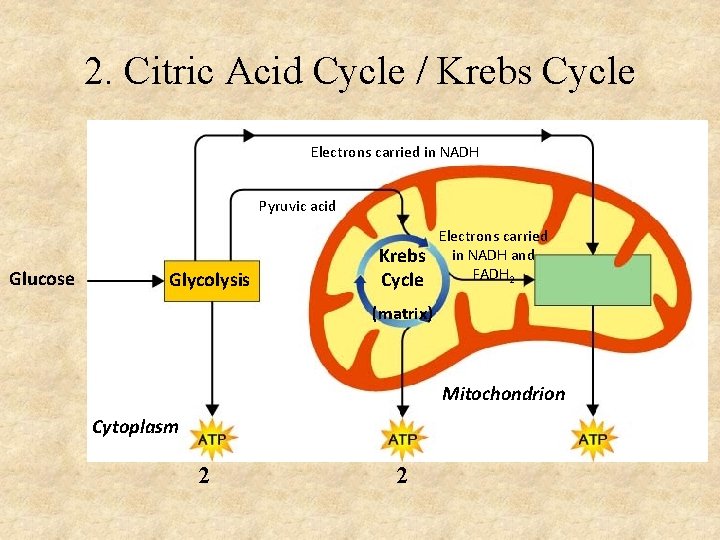
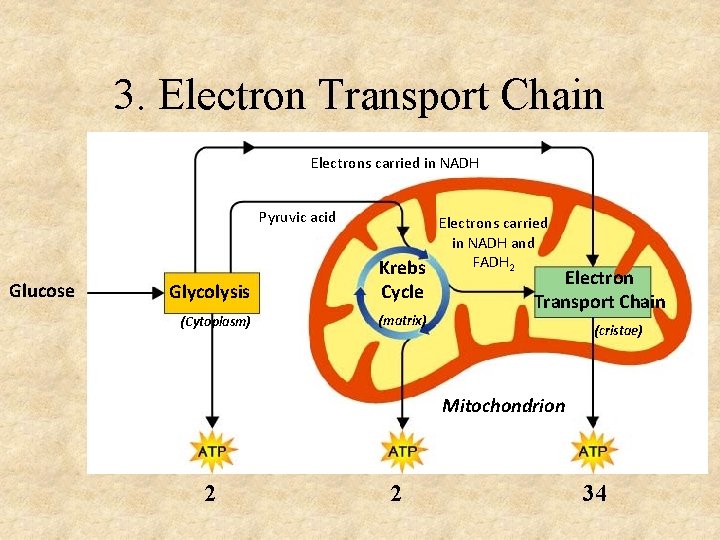
3 Stages of Aerobic Cell Resp 1. Glycolysis • Breaks glucose • Releases 2 ATP 2. Citric Acid Cycle (Krebs Cycle) • Releases 2 ATP 3. Electron Transport Chain • Releases 34 ATP
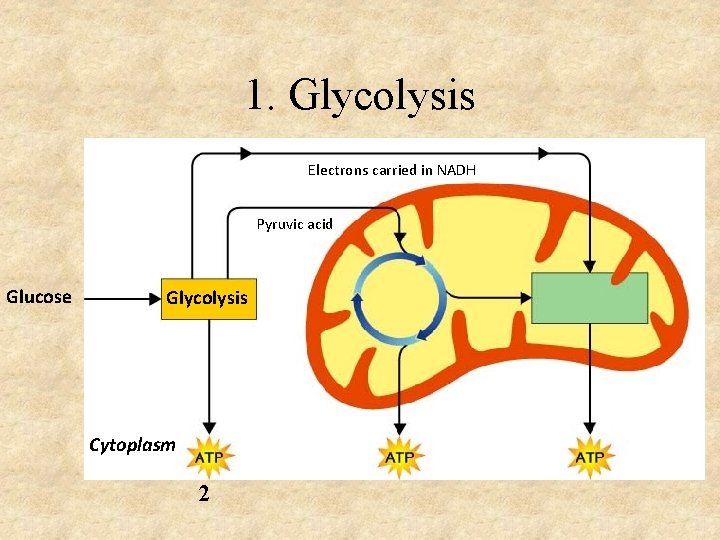
1. Glycolysis Electrons carried in NADH Pyruvic acid Glucose Glycolysis Cytoplasm 2
2. Citric Acid Cycle / Krebs Cycle Electrons carried in NADH Pyruvic acid Glucose Glycolysis Krebs Cycle Electrons carried in NADH and FADH 2 (matrix) Mitochondrion Cytoplasm 2 2
3. Electron Transport Chain Electrons carried in NADH Pyruvic acid Glucose Glycolysis Krebs Cycle (Cytoplasm) (matrix) Electrons carried in NADH and FADH 2 Electron Transport Chain (cristae) Mitochondrion 2 2 34
Anaerobic Cell Respiration • • If no oxygen is present… Fermentation aka Anaerobic Cell Resp occurs 2 types: – – • Alcoholic Fermentation Lactic Acid Fermentation ONLY 2 ATP MADE TOTAL! ** Not efficient! **
Alcohol Fermentation -done by bacteria and yeast, NOT animals 1. Glycolysis 2. Product changed into ethanol (alcohol) + CO 2 Example: Yeast in bread; alcohol in wine/beer
Lactic Acid Fermentation -done by animal cells (humans) 1. Glycolysis 2. Product changed into lactic acid + CO 2 Example: Muscle cramps/fatigue & bacteria in cheese/yogurt
Summary of Cell Respiration
Relationship between plants and animals Glucose + O 2 • Without plants, animals could not survive and vice versa! • Biochemical Pathway – a set of reactions in which the products of one reaction is used as a reactant in the next reaction.