
Ch 8 2 Section Objectives Relate the structure
Ch. 8. 2 • Section Objectives • Relate the structure of chloroplasts to the events in photosynthesis • Describe light-dependent reactions. • Explain the reactions and products of the lightindependent Calvin cycle.
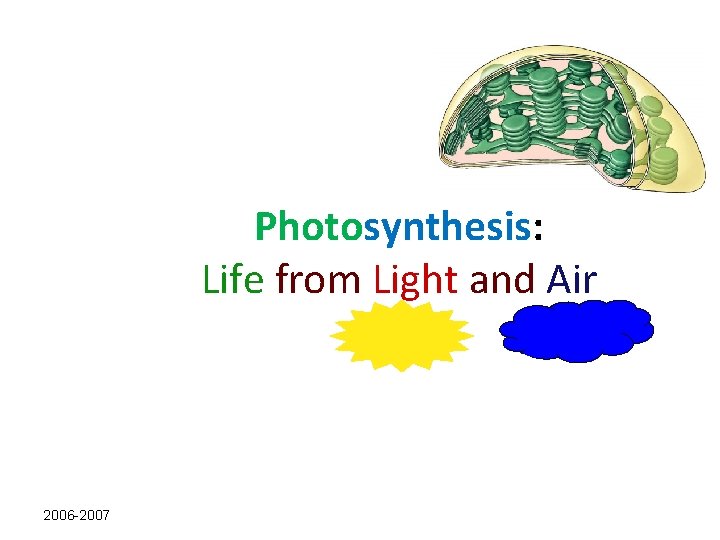
Photosynthesis: Life from Light and Air 2006 -2007
Trapping Energy from Sunlight • The process that uses the sun’s energy to make simple sugars is called photosynthesis.
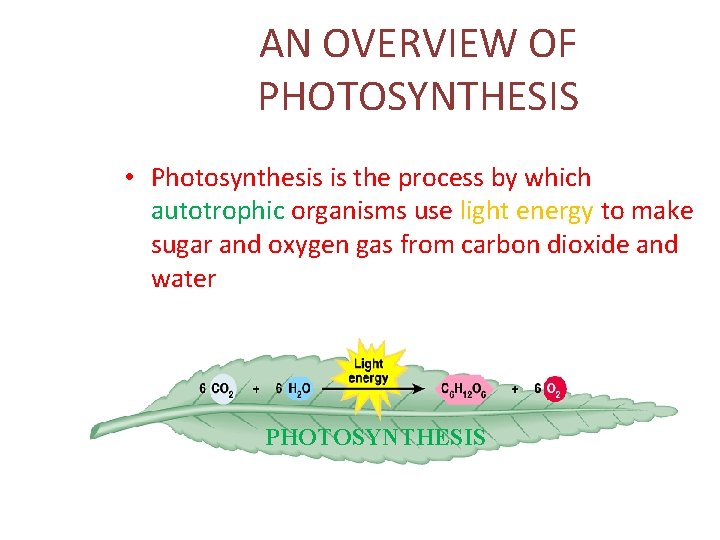
AN OVERVIEW OF PHOTOSYNTHESIS • Photosynthesis is the process by which autotrophic organisms use light energy to make sugar and oxygen gas from carbon dioxide and water PHOTOSYNTHESIS
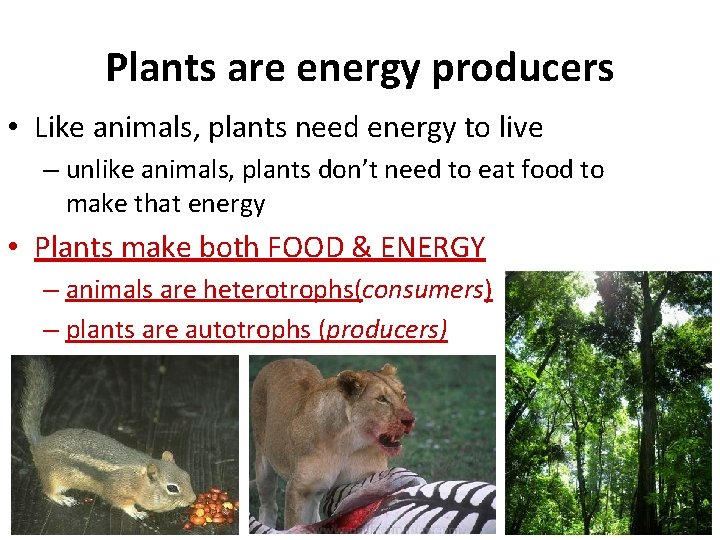
Plants are energy producers • Like animals, plants need energy to live – unlike animals, plants don’t need to eat food to make that energy • Plants make both FOOD & ENERGY – animals are heterotrophs(consumers) – plants are autotrophs (producers)
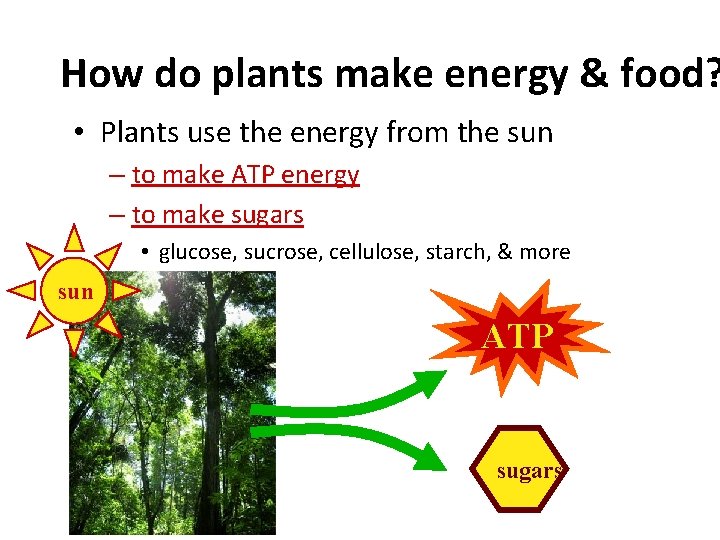
How do plants make energy & food? • Plants use the energy from the sun – to make ATP energy – to make sugars • glucose, sucrose, cellulose, starch, & more sun ATP sugars
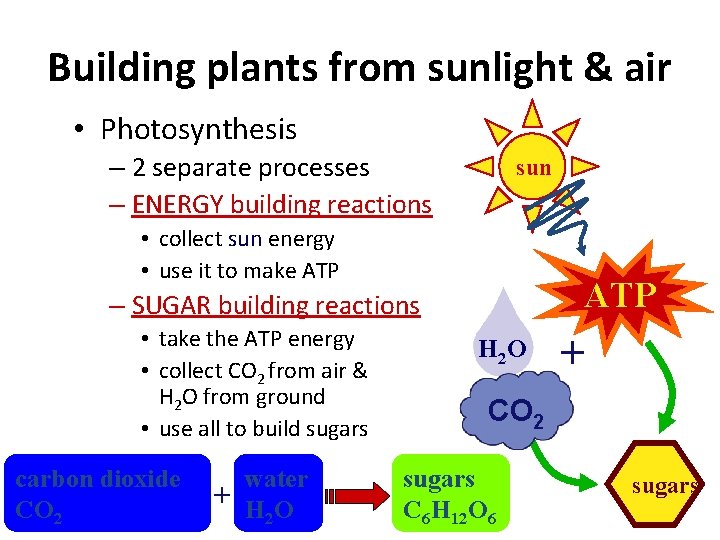
Building plants from sunlight & air • Photosynthesis – 2 separate processes – ENERGY building reactions sun • collect sun energy • use it to make ATP – SUGAR building reactions • take the ATP energy • collect CO 2 from air & H 2 O from ground • use all to build sugars carbon dioxide CO 2 water + HO 2 H 2 O + CO 2 sugars C 6 H 12 O 6 sugars
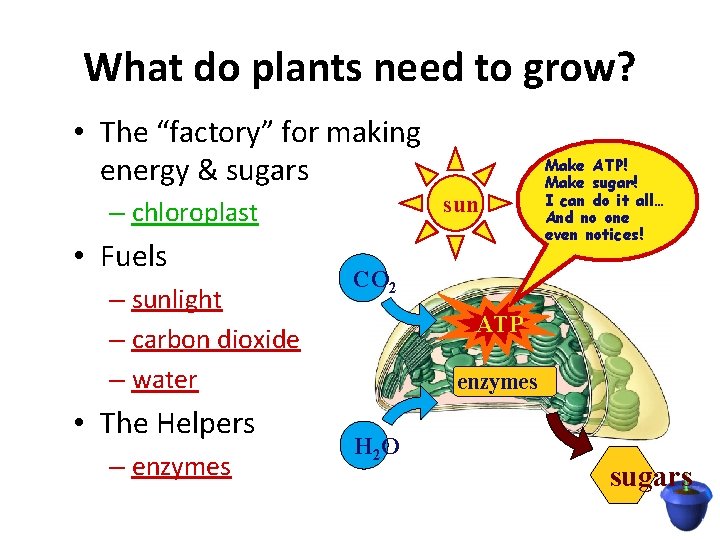
What do plants need to grow? • The “factory” for making energy & sugars sun – chloroplast • Fuels – sunlight – carbon dioxide – water • The Helpers – enzymes Make ATP! Make sugar! I can do it all… And no one even notices! CO 2 ATP enzymes H 2 O sugars
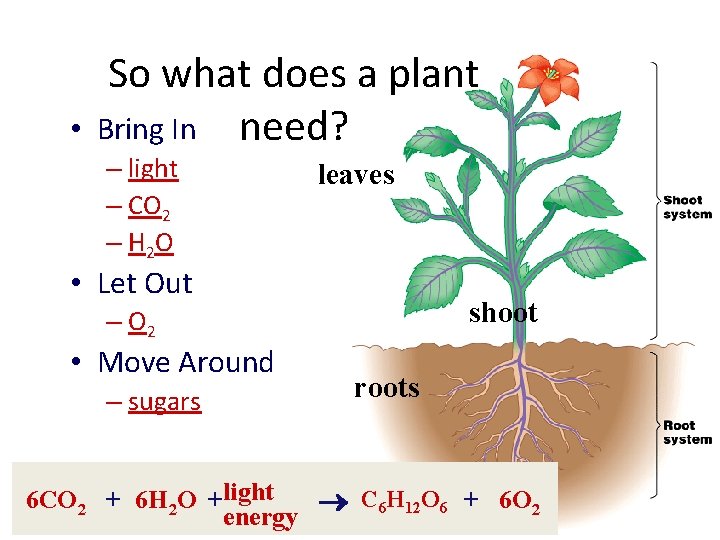
• So what does a plant Bring In need? – light – CO 2 – H 2 O leaves • Let Out shoot – O 2 • Move Around – sugars roots 6 CO 2 + 6 H 2 O + light C 6 H 12 O 6 + 6 O 2 energy
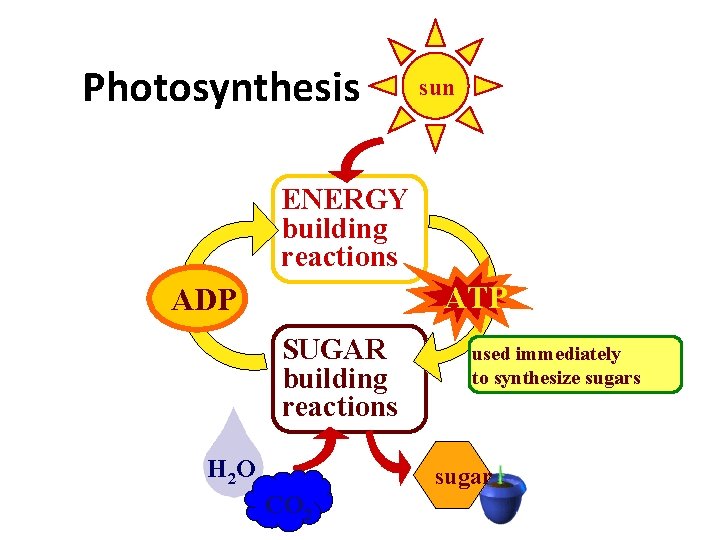
Photosynthesis sun ENERGY building reactions ATP ADP SUGAR building reactions H 2 O used immediately to synthesize sugars sugar CO 2
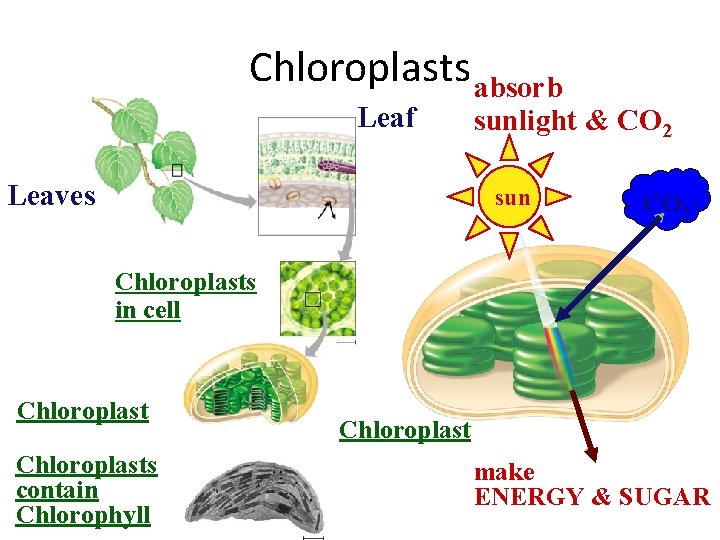
Chloroplasts absorb Leaf Leaves sunlight & CO 2 sun CO 2 Chloroplasts in cell Chloroplasts contain Chlorophyll Chloroplast make ENERGY & SUGAR
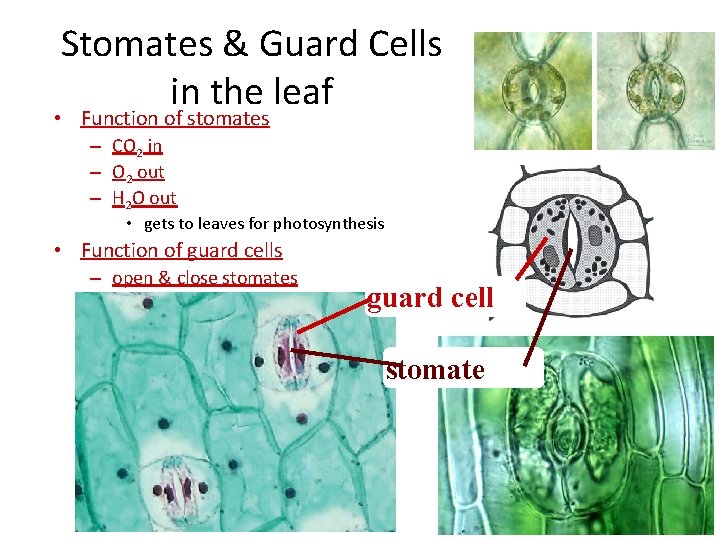
Stomates & Guard Cells in the leaf • Function of stomates – CO 2 in – O 2 out – H 2 O out • gets to leaves for photosynthesis • Function of guard cells – open & close stomates guard cell stomate
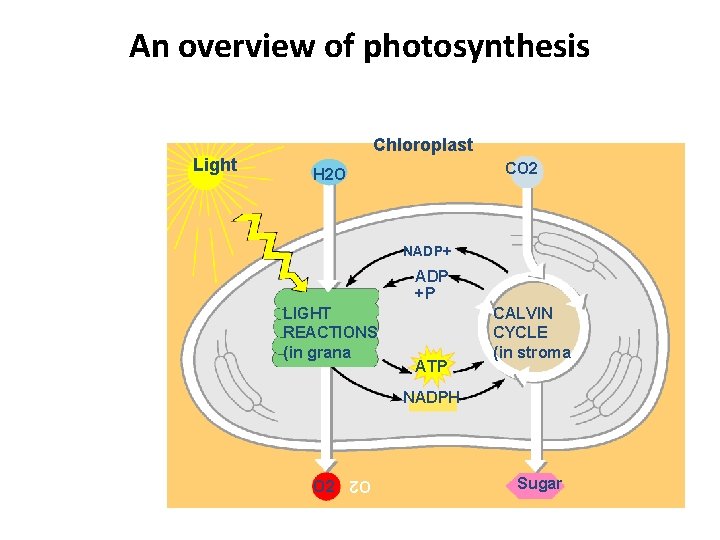
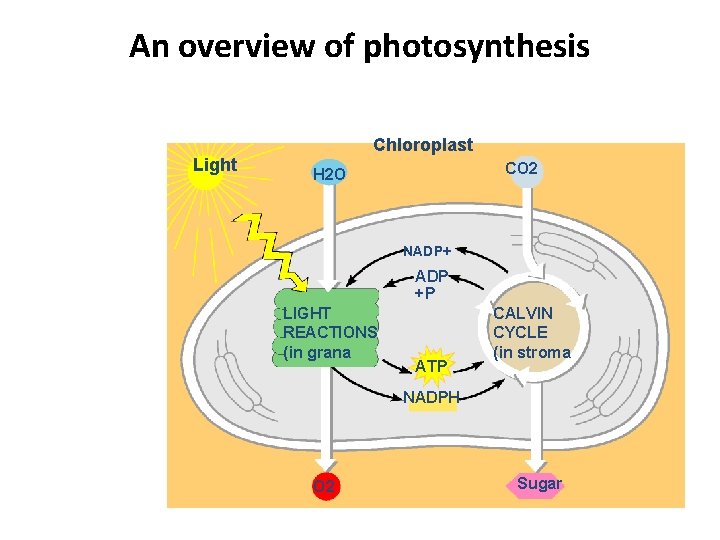
An overview of photosynthesis CO 2 H 2 O NADP+ ADP +P LIGHT REACTIONS (in grana ATP CALVIN CYCLE (in stroma NADPH O 2 Light Chloroplast Sugar
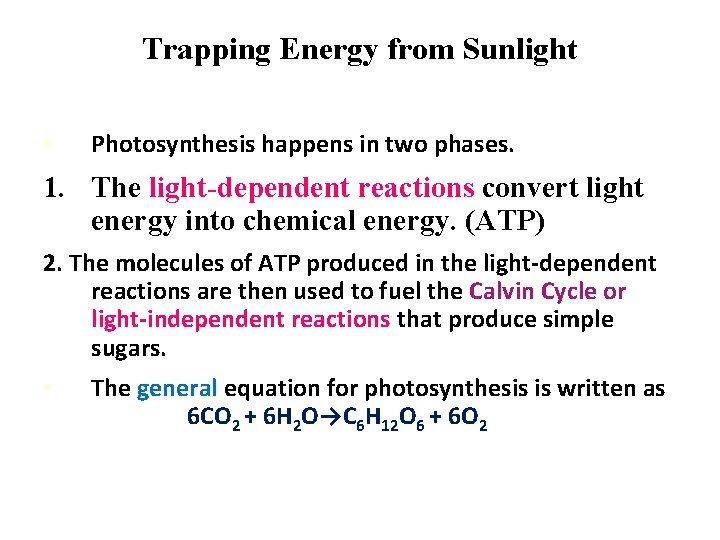
Trapping Energy from Sunlight • Photosynthesis happens in two phases. 1. The light-dependent reactions convert light energy into chemical energy. (ATP) 2. The molecules of ATP produced in the light-dependent reactions are then used to fuel the Calvin Cycle or light-independent reactions that produce simple sugars. • The general equation for photosynthesis is written as 6 CO 2 + 6 H 2 O→C 6 H 12 O 6 + 6 O 2
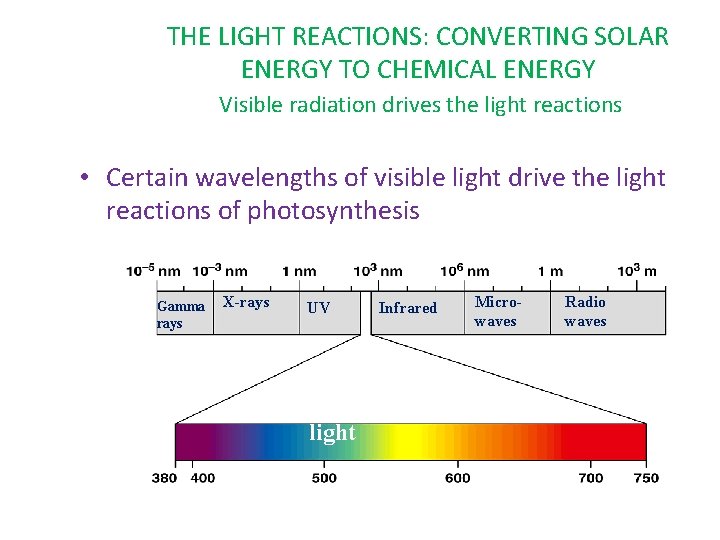
THE LIGHT REACTIONS: CONVERTING SOLAR ENERGY TO CHEMICAL ENERGY Visible radiation drives the light reactions • Certain wavelengths of visible light drive the light reactions of photosynthesis Gamma rays X-rays UV Infrared Visible light Wavelength (nm) Microwaves Radio waves
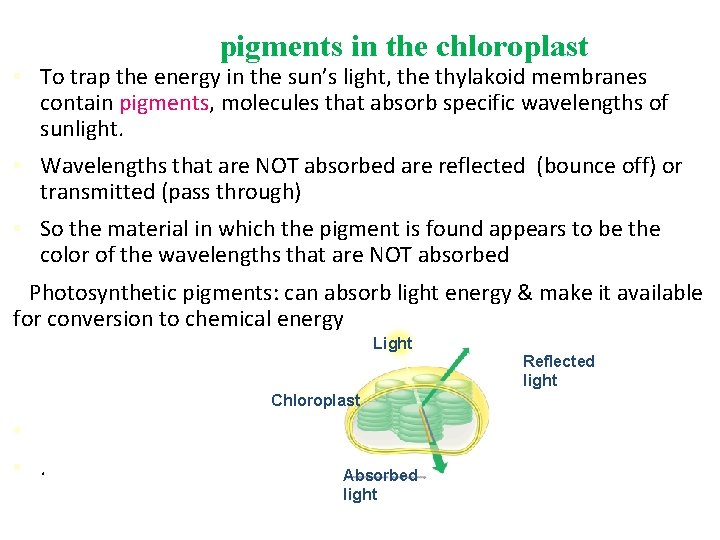
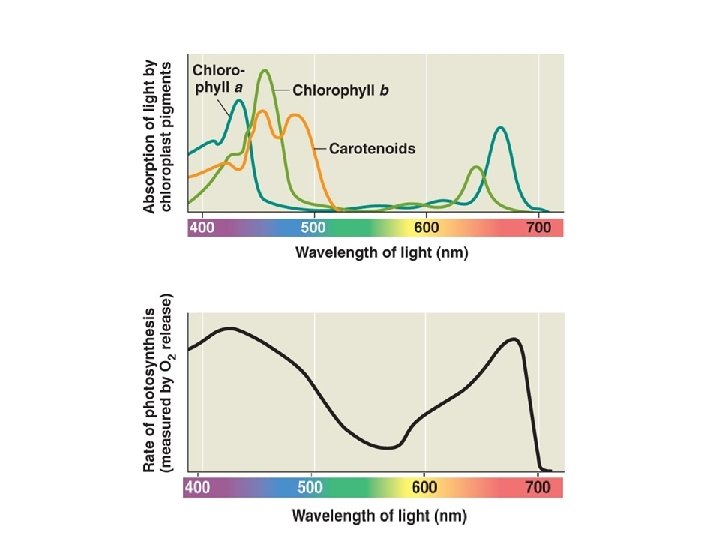
pigments in the chloroplast • To trap the energy in the sun’s light, the thylakoid membranes contain pigments, molecules that absorb specific wavelengths of sunlight. • Wavelengths that are NOT absorbed are reflected (bounce off) or transmitted (pass through) • So the material in which the pigment is found appears to be the color of the wavelengths that are NOT absorbed Photosynthetic pigments: can absorb light energy & make it available for conversion to chemical energy Light Reflected light Chloroplast • • . Absorbed light
pigments in the chloroplast • Chlorophyll a: most common pigment in chloroplast (absorbs blue &red light and reflects green light thus giving the chloroplast a green color)(chloro = green phylla + leaf) • Accessory pigments: additional pigments that absorb different wavelengths (carotene, chlorophyll b, & xanthophyll)
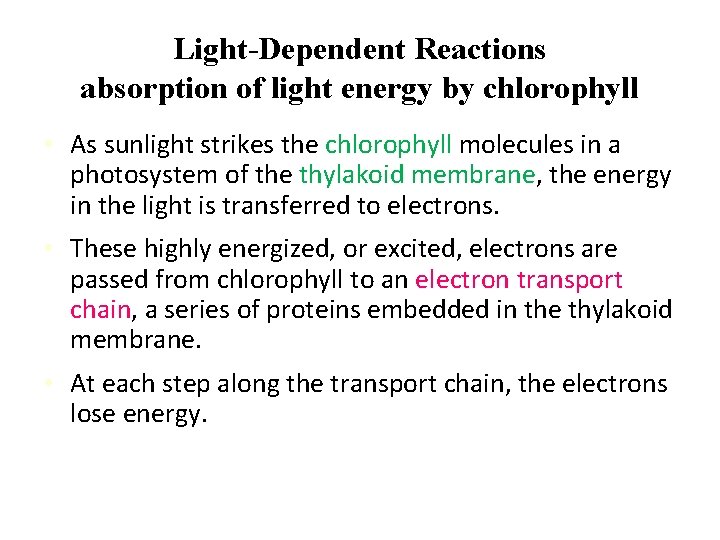
Light-Dependent Reactions absorption of light energy by chlorophyll • As sunlight strikes the chlorophyll molecules in a photosystem of the thylakoid membrane, the energy in the light is transferred to electrons. • These highly energized, or excited, electrons are passed from chlorophyll to an electron transport chain, a series of proteins embedded in the thylakoid membrane. • At each step along the transport chain, the electrons lose energy.
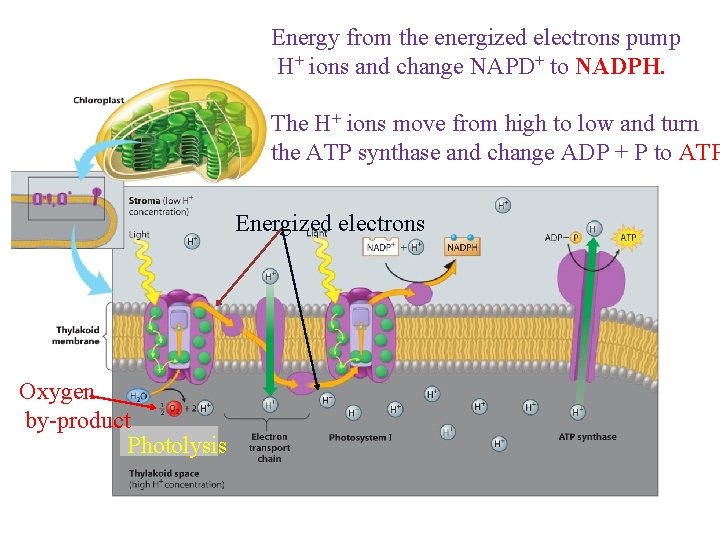
Energy from the energized electrons pump H+ ions and change NAPD+ to NADPH. The H+ ions move from high to low and turn the ATP synthase and change ADP + P to ATP Energized electrons Oxygen by-product Photolysis
Light-Dependent Reactions • Chemiosmosis: This “lost” energy can be used to form ATP from ADP, or to pump hydrogen ions into the center of the thylakoid disc. • .
Light-Dependent Reactions • The electrons are transferred to the stroma of the chloroplast. To do this, an electron carrier molecule called NADP is used. • NADP can combine with two excited electrons and a hydrogen ion (H+) to become NADPH. • NADPH will play an important role in the lightindependent reactions.
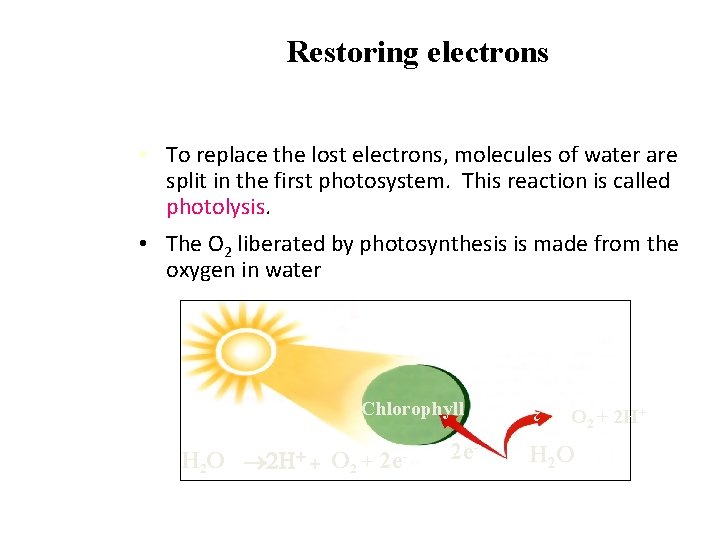
Restoring electrons • To replace the lost electrons, molecules of water are split in the first photosystem. This reaction is called photolysis. • The O 2 liberated by photosynthesis is made from the oxygen in water H 2 O 2 H+ + O 2 + 2 e- 2 Chlorophyll O 2 + 2 H+ H 2 O
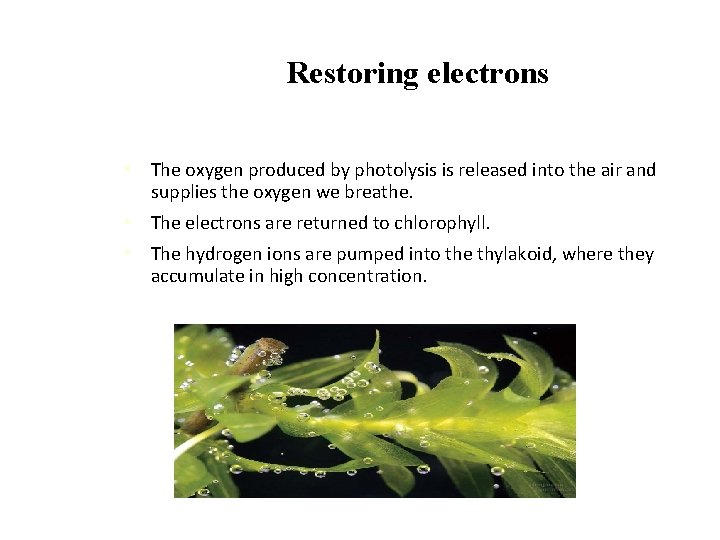
Restoring electrons • The oxygen produced by photolysis is released into the air and supplies the oxygen we breathe. • The electrons are returned to chlorophyll. • The hydrogen ions are pumped into the thylakoid, where they accumulate in high concentration.
Light Dependent Reactions: Summary • Absorptions of light energy by chlorophyll-takes place in thylakoid 1. Split water molecule (PHOTOLYSIS) Oxygen combines with other oxygen to produce O 2 which is given off as a by-product 2. Hydrogen produced by splitting of water is attached to hydrogen carrier NADP -> NADPH (energy in this molecule) 3. Then energy from “excited electrons”is used to take ADP + P ->ATP
Light Independent Reactions or The Calvin Cycle • CO 2 put into organic molecules called Carbon fixation • Does not require light but must have ATP and NADPH which are produced by light dependent reactions • Called Calvin Cycle (Melvin Calvin won Nobel prize in chemistry) • Takes place in stroma of chloroplast
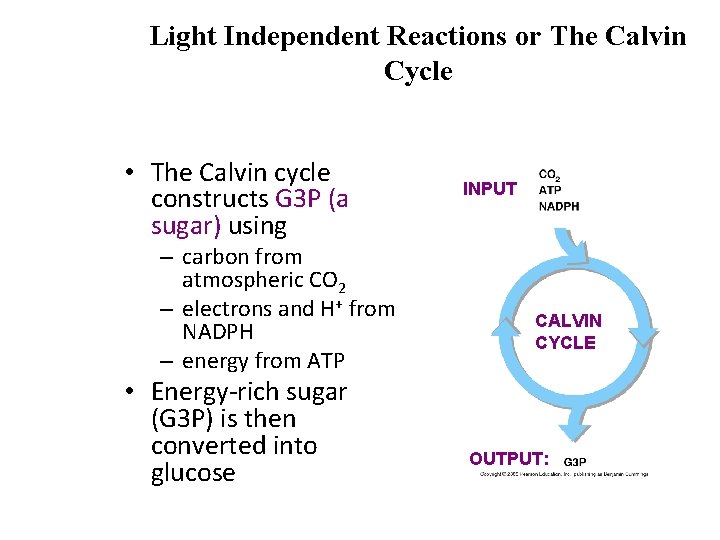
Light Independent Reactions or The Calvin Cycle • The Calvin cycle constructs G 3 P (a sugar) using – carbon from atmospheric CO 2 – electrons and H+ from NADPH – energy from ATP • Energy-rich sugar (G 3 P) is then converted into glucose INPUT CALVIN CYCLE OUTPUT:
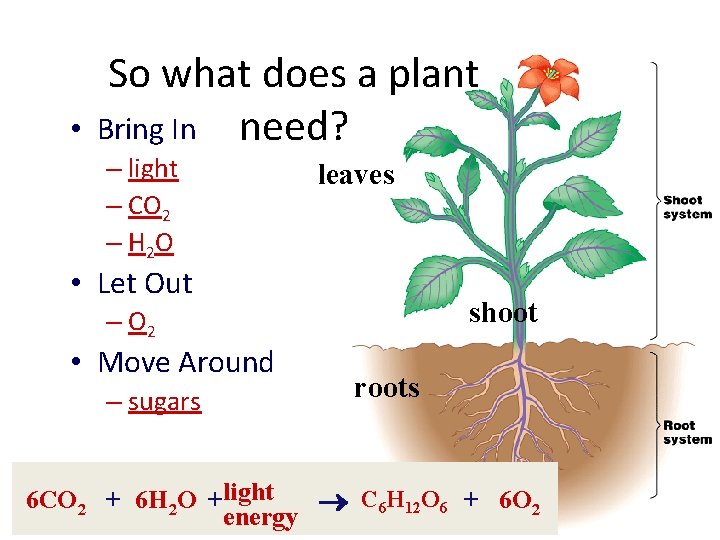
• So what does a plant Bring In need? – light – CO 2 – H 2 O leaves • Let Out shoot – O 2 • Move Around – sugars roots 6 CO 2 + 6 H 2 O + light C 6 H 12 O 6 + 6 O 2 energy
An overview of photosynthesis Light Chloroplast CO 2 H 2 O NADP+ ADP +P LIGHT REACTIONS (in grana ATP CALVIN CYCLE (in stroma NADPH O 2 Sugar
Factors Affecting Rate of Photosynthesis 1. Temperature: increases rate up to a certain point 2. Light Intensity: increases rate up to a certain point 3. CO 2 level: Increases rate up to a certain point 4. Water: decrease water, decrease photosynthesis 5. Minerals; Ex. Magnesium, Nitrogen
- Slides: 30