
Ch 7 Plant Growth and Reproduction Pollination Why
- Slides: 36
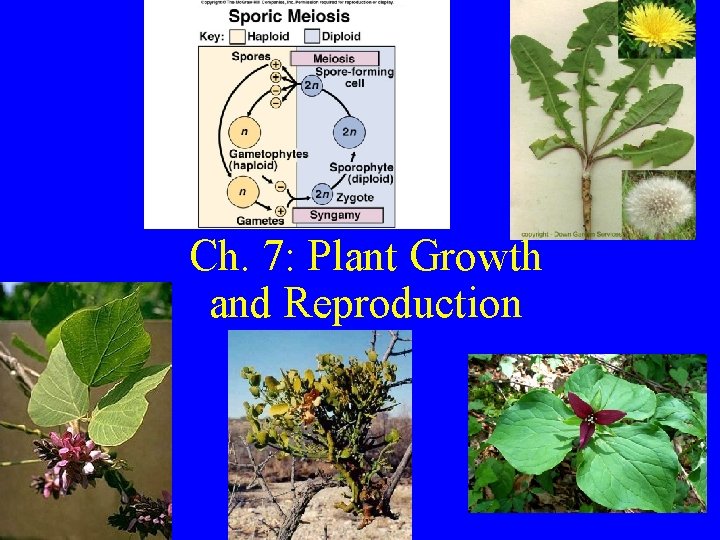
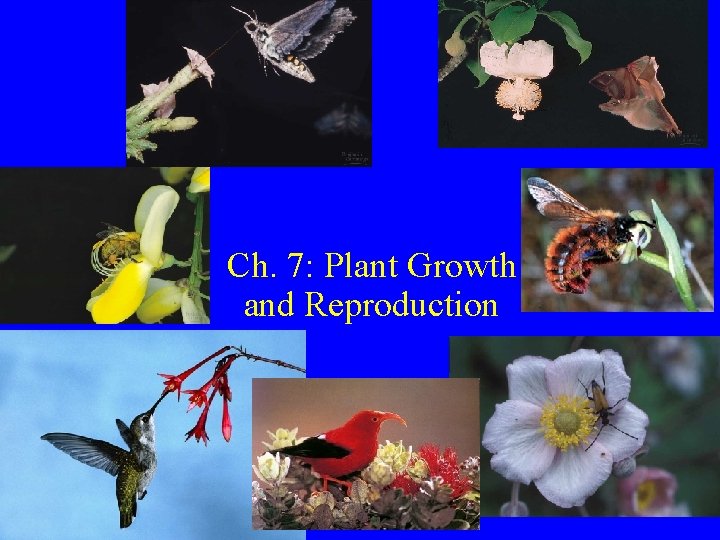
Ch. 7: Plant Growth and Reproduction
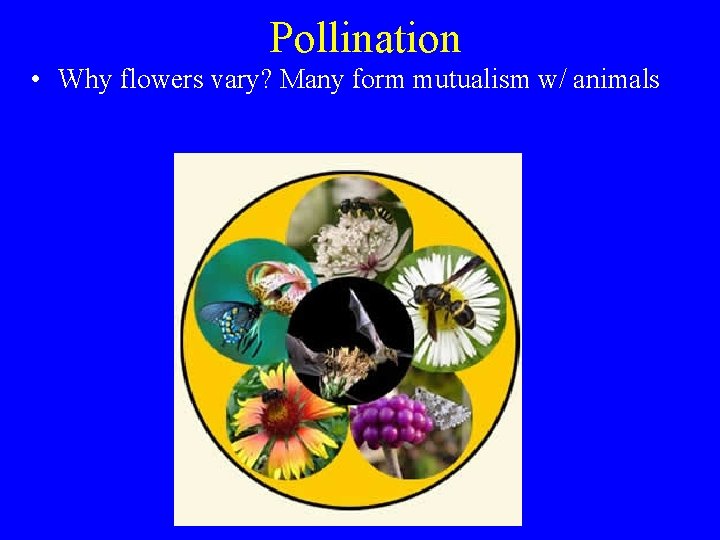
Pollination • Why flowers vary? Many form mutualism w/ animals
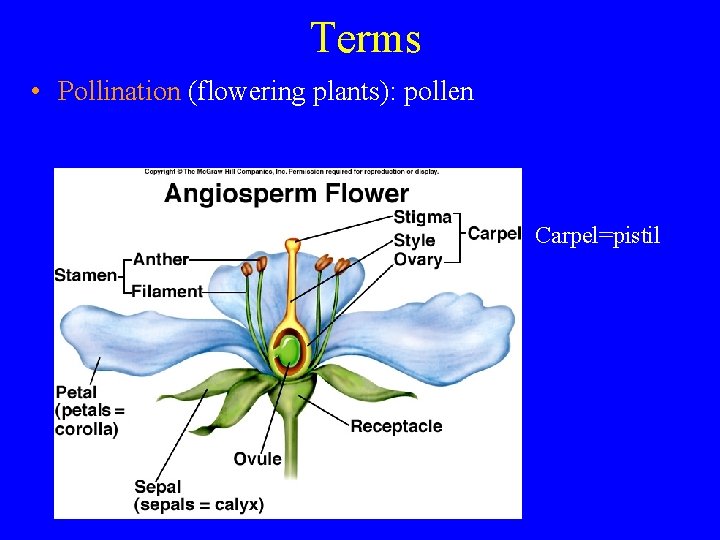
Terms • Pollination (flowering plants): pollen Carpel=pistil
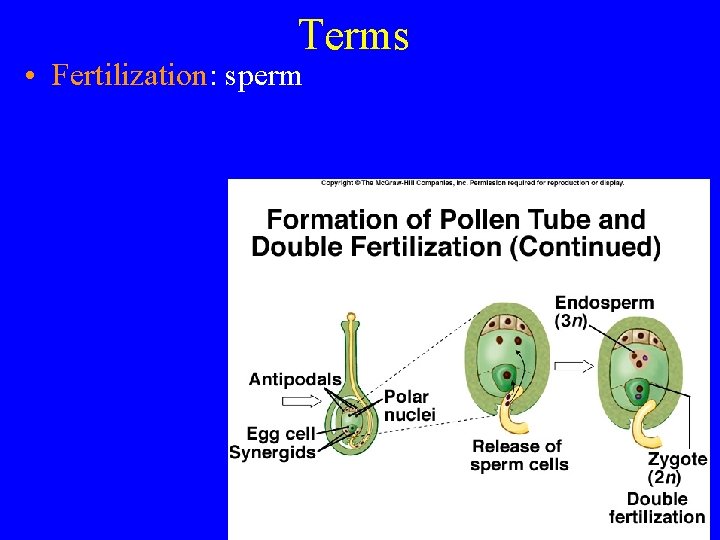
Terms • Fertilization: sperm
Pollination • Abiotic: pollen carried
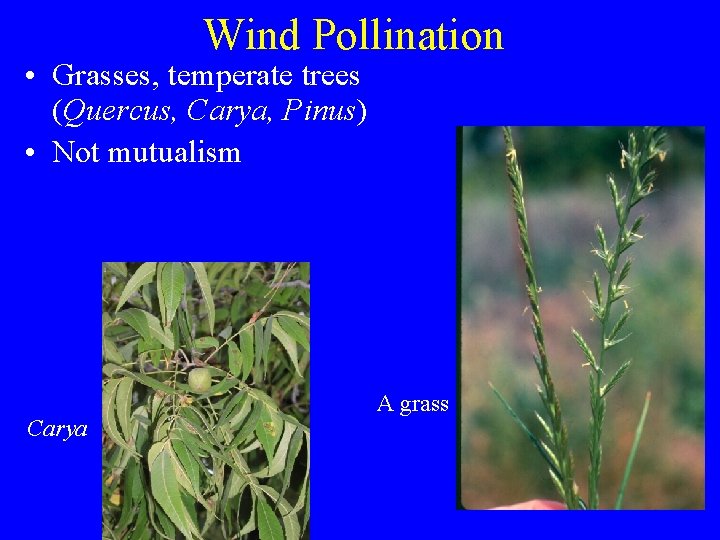
Wind Pollination • Grasses, temperate trees (Quercus, Carya, Pinus) • Not mutualism Carya A grass
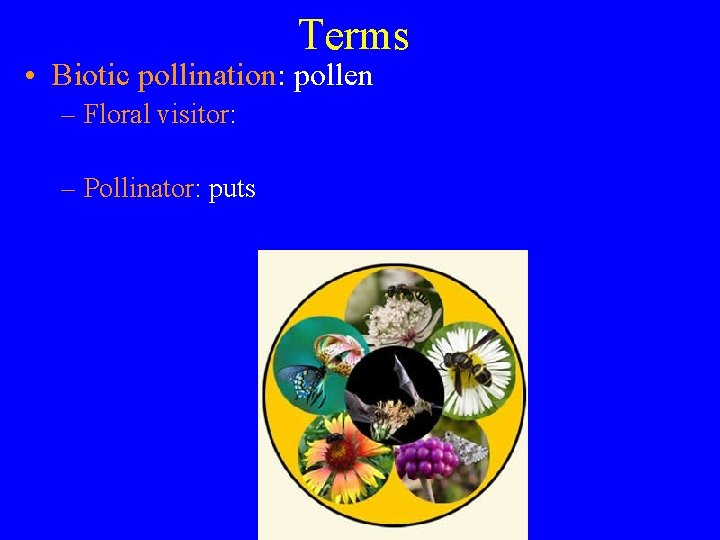
Terms • Biotic pollination: pollen – Floral visitor: – Pollinator: puts
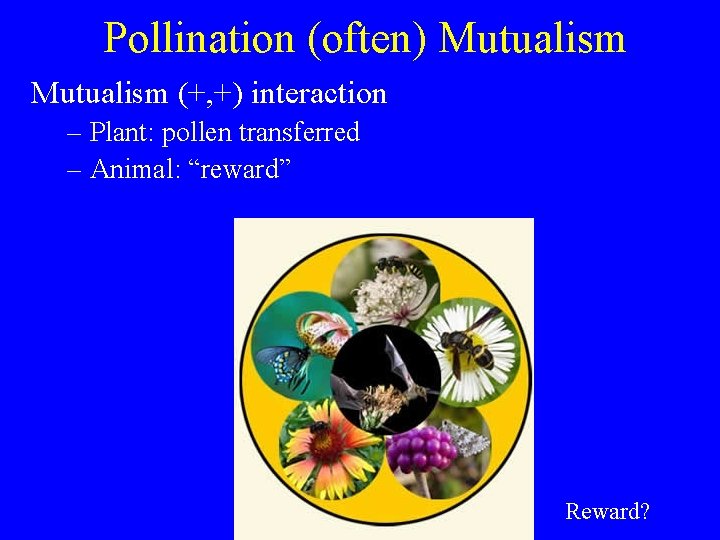
Pollination (often) Mutualism (+, +) interaction – Plant: pollen transferred – Animal: “reward” Reward?
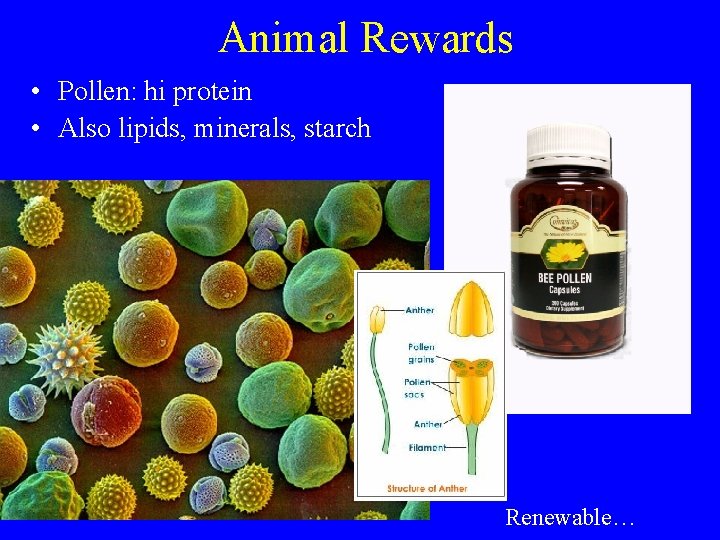
Animal Rewards • Pollen: hi protein • Also lipids, minerals, starch Renewable…
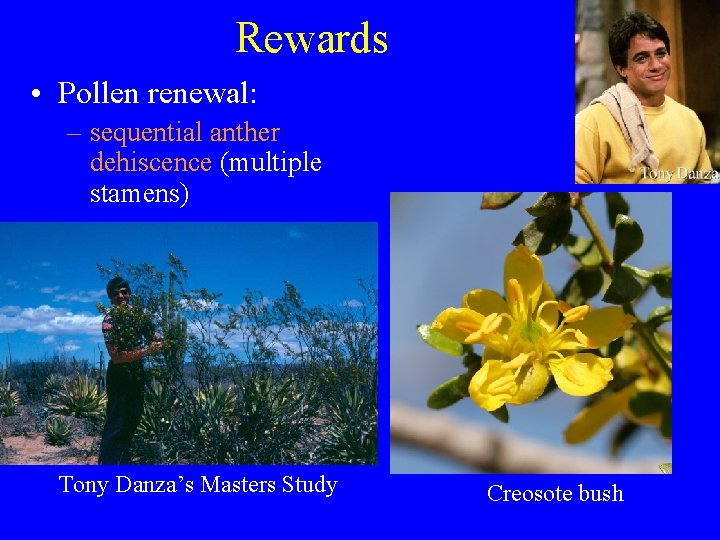
Rewards • Pollen renewal: – sequential anther dehiscence (multiple stamens) Tony Danza’s Masters Study Creosote bush
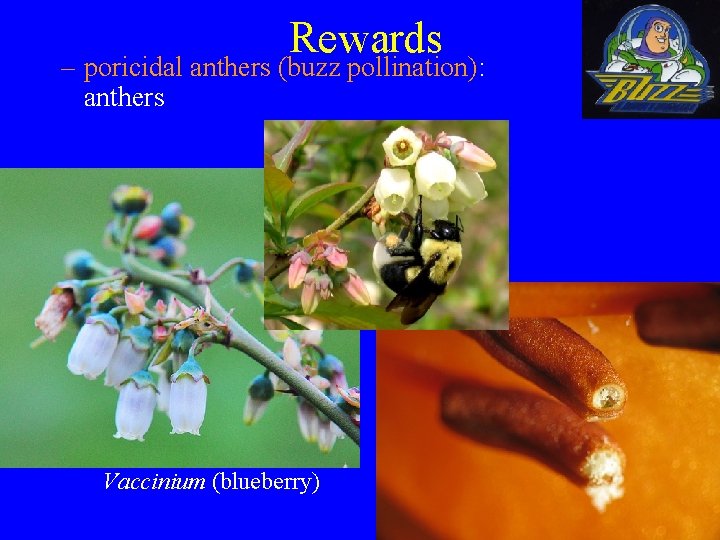
Rewards – poricidal anthers (buzz pollination): anthers Vaccinium (blueberry)
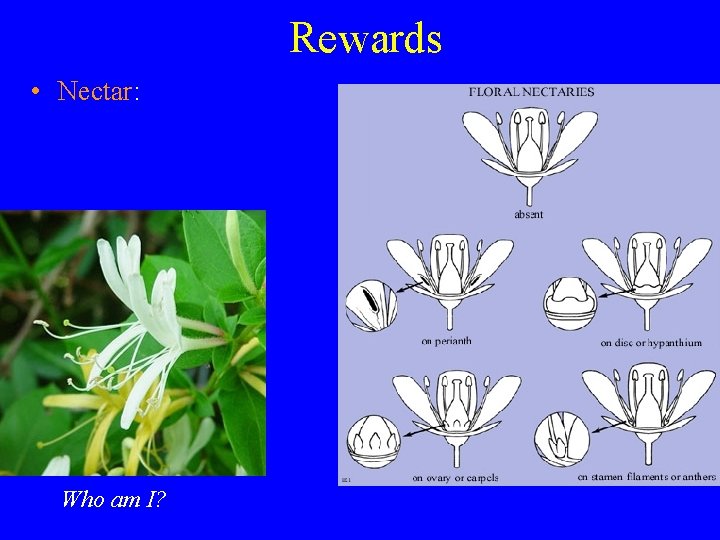
Rewards • Nectar: Who am I?
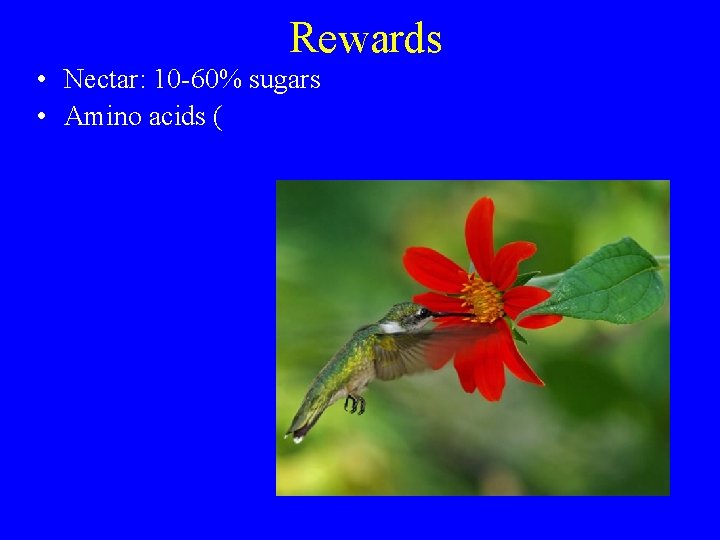
Rewards • Nectar: 10 -60% sugars • Amino acids (
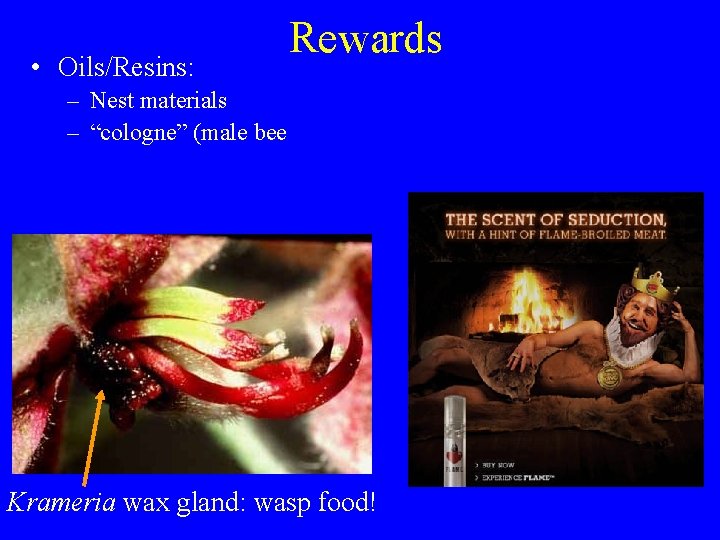
• Oils/Resins: Rewards – Nest materials – “cologne” (male bee Krameria wax gland: wasp food!
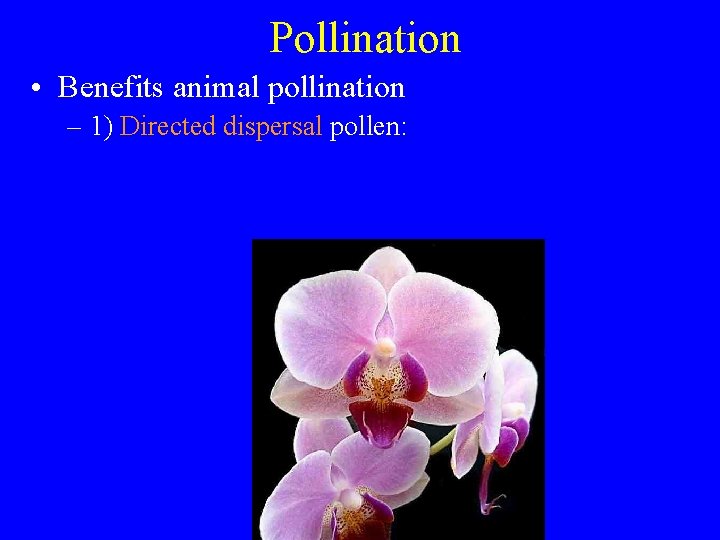
Pollination • Benefits animal pollination – 1) Directed dispersal pollen:
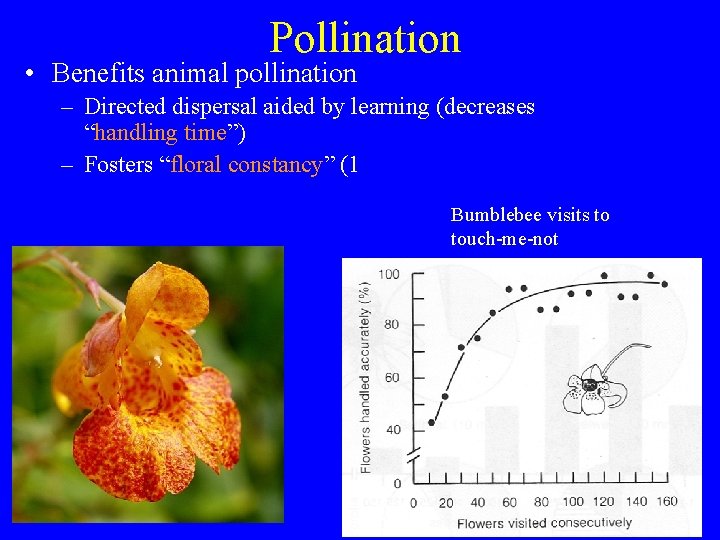
Pollination • Benefits animal pollination – Directed dispersal aided by learning (decreases “handling time”) – Fosters “floral constancy” (1 Bumblebee visits to touch-me-not
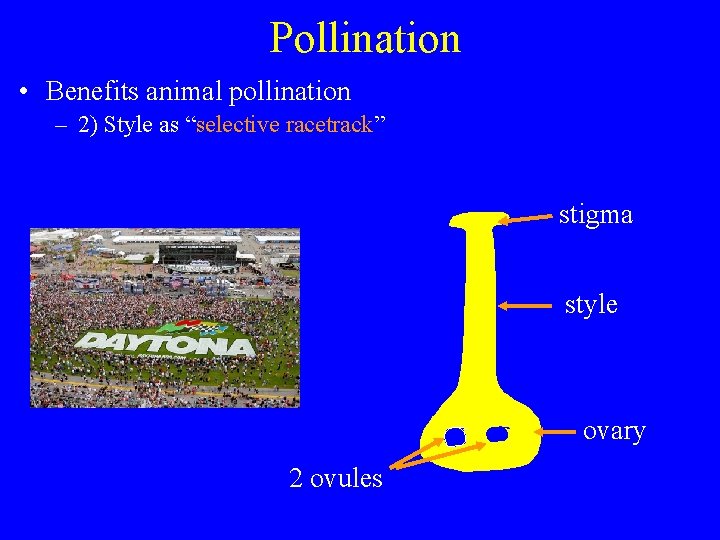
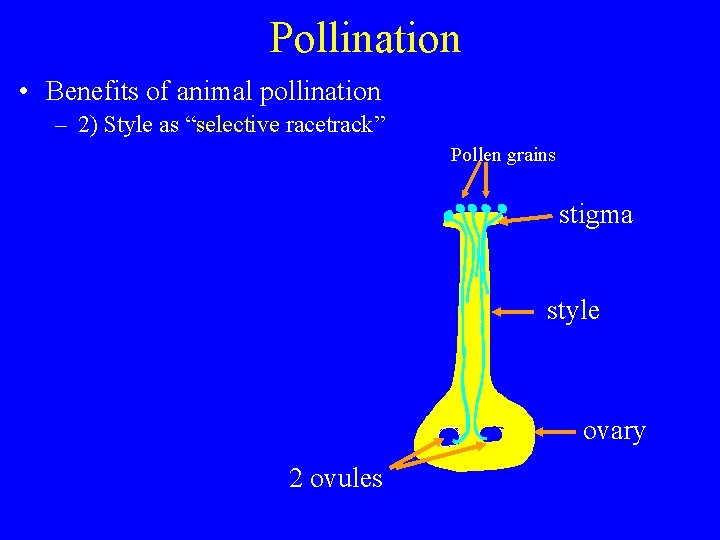
Pollination • Benefits animal pollination – 2) Style as “selective racetrack” stigma style ovary 2 ovules
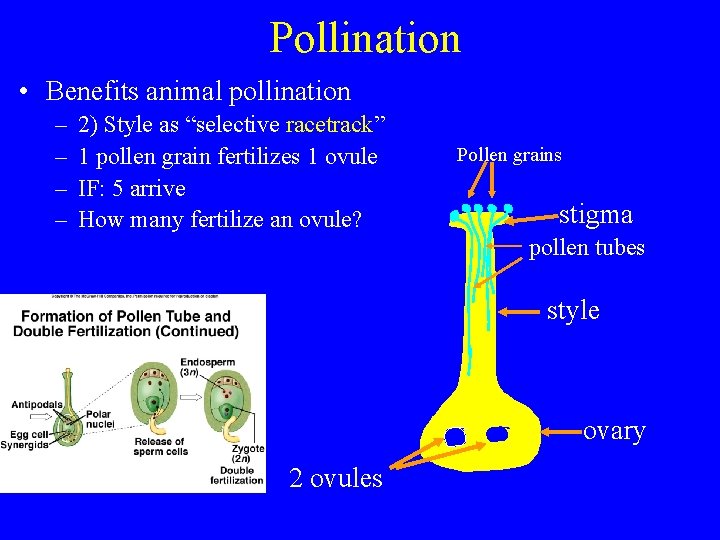
Pollination • Benefits animal pollination – – 2) Style as “selective racetrack” 1 pollen grain fertilizes 1 ovule IF: 5 arrive How many fertilize an ovule? Pollen grains stigma pollen tubes style ovary 2 ovules
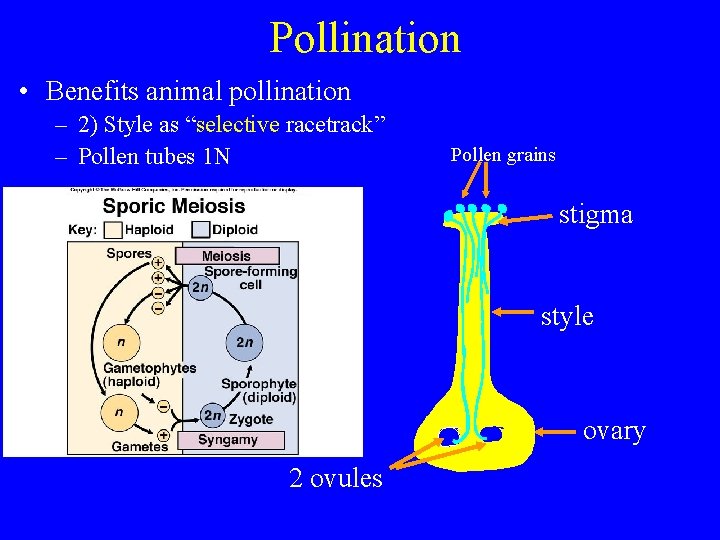
Pollination • Benefits animal pollination – 2) Style as “selective racetrack” – Pollen tubes 1 N Pollen grains stigma style ovary 2 ovules
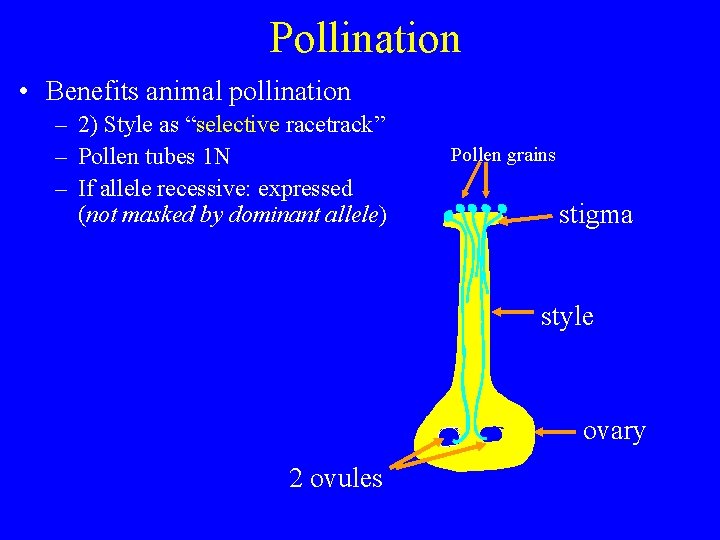
Pollination • Benefits animal pollination – 2) Style as “selective racetrack” – Pollen tubes 1 N – If allele recessive: expressed (not masked by dominant allele) Pollen grains stigma style ovary 2 ovules
Pollination • Benefits of animal pollination – 2) Style as “selective racetrack” Pollen grains stigma style ovary 2 ovules
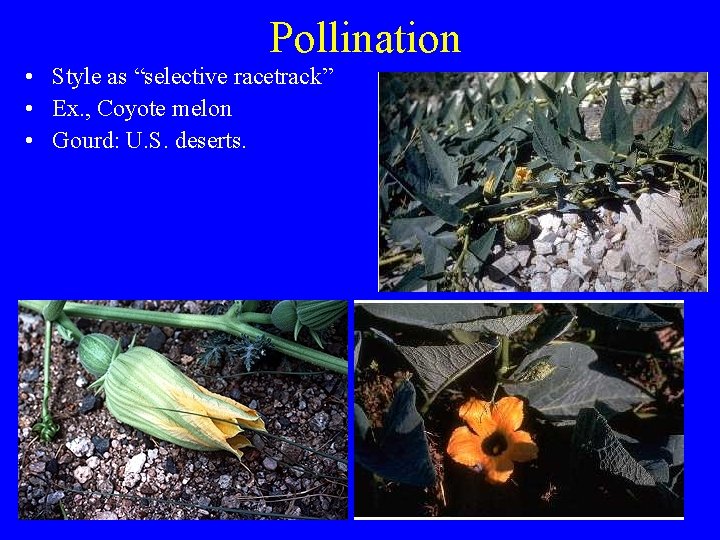
Pollination • Style as “selective racetrack” • Ex. , Coyote melon • Gourd: U. S. deserts.
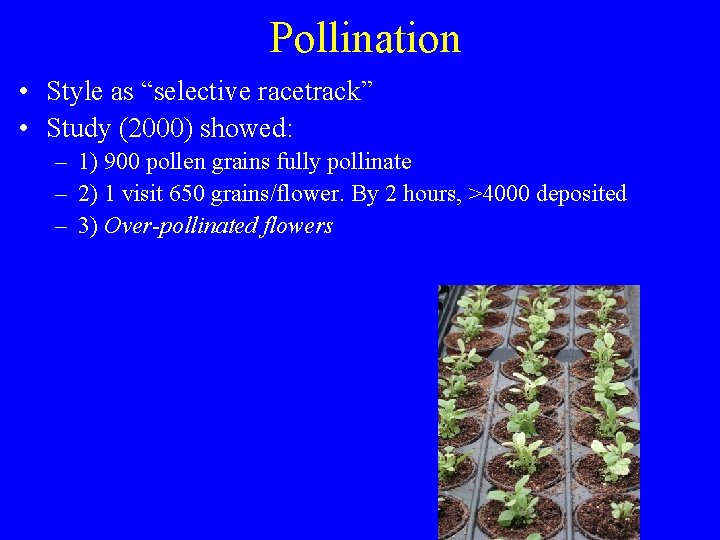
Pollination • Style as “selective racetrack” • Study (2000) showed: – 1) 900 pollen grains fully pollinate – 2) 1 visit 650 grains/flower. By 2 hours, >4000 deposited – 3) Over-pollinated flowers
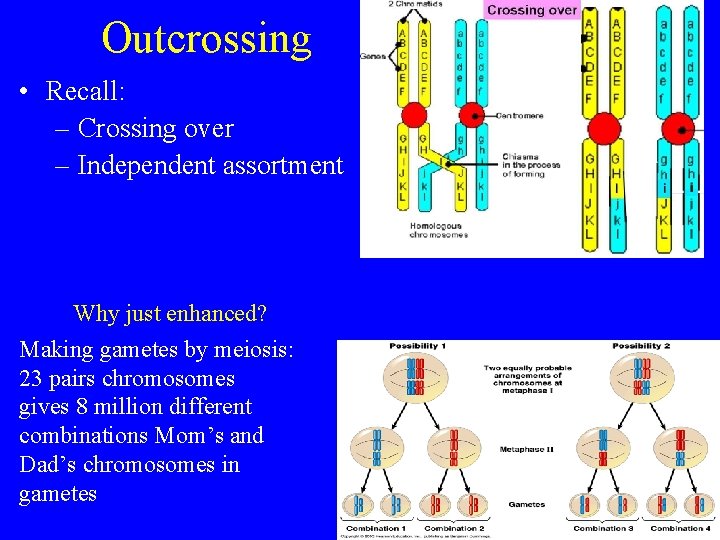
Outcrossing • Major benefit sexual reproduction: generate genetic variation • Enhanced by mating w/ others (outcrossing) Why just enhanced?
Outcrossing • Recall: – Crossing over – Independent assortment Why just enhanced? Making gametes by meiosis: 23 pairs chromosomes gives 8 million different combinations Mom’s and Dad’s chromosomes in gametes
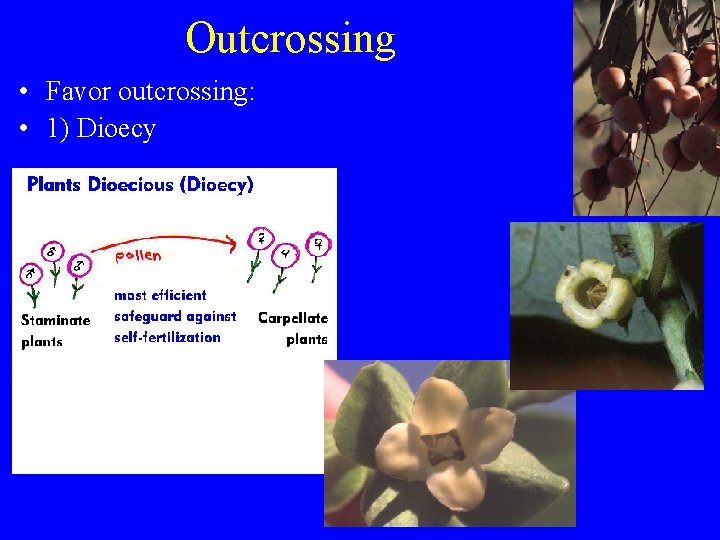
Outcrossing • Favor outcrossing: • 1) Dioecy
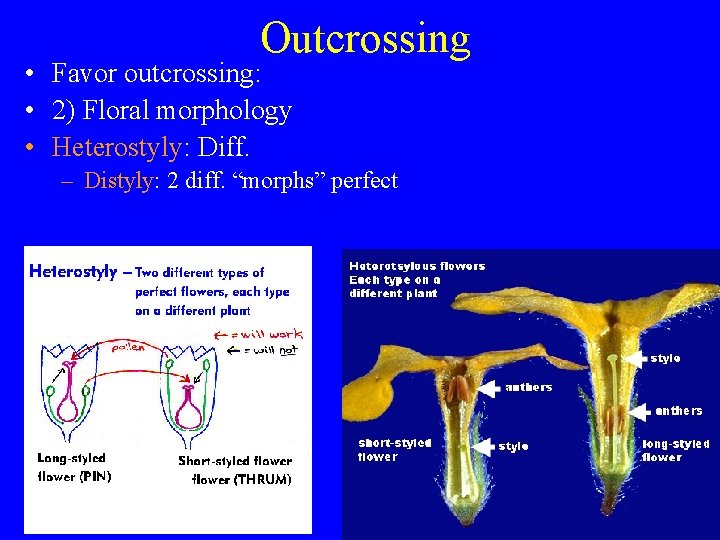
Outcrossing • Favor outcrossing: • 2) Floral morphology • Heterostyly: Diff. – Distyly: 2 diff. “morphs” perfect
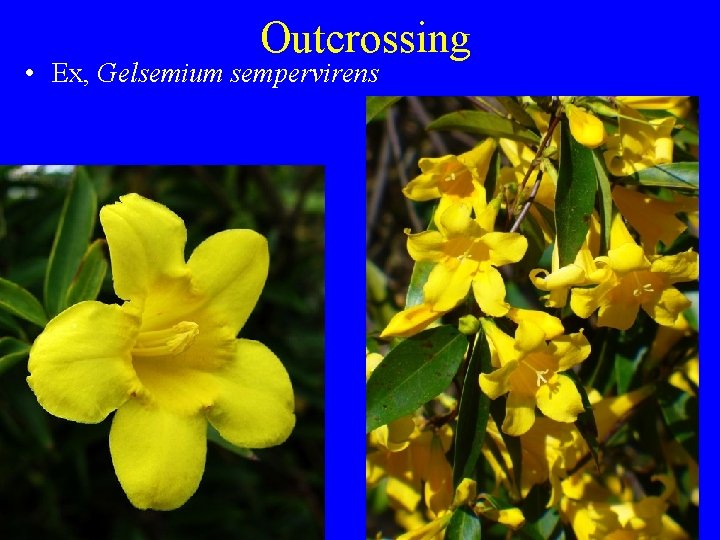
Outcrossing • Ex, Gelsemium sempervirens
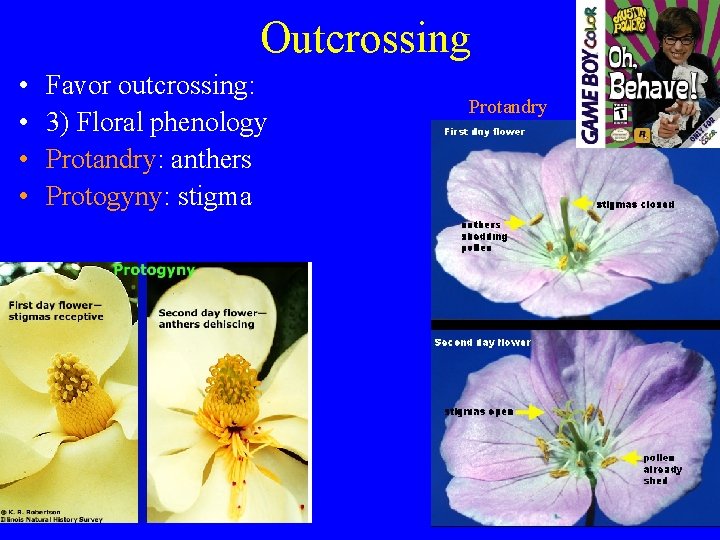
Outcrossing • • Favor outcrossing: 3) Floral phenology Protandry: anthers Protogyny: stigma Protandry
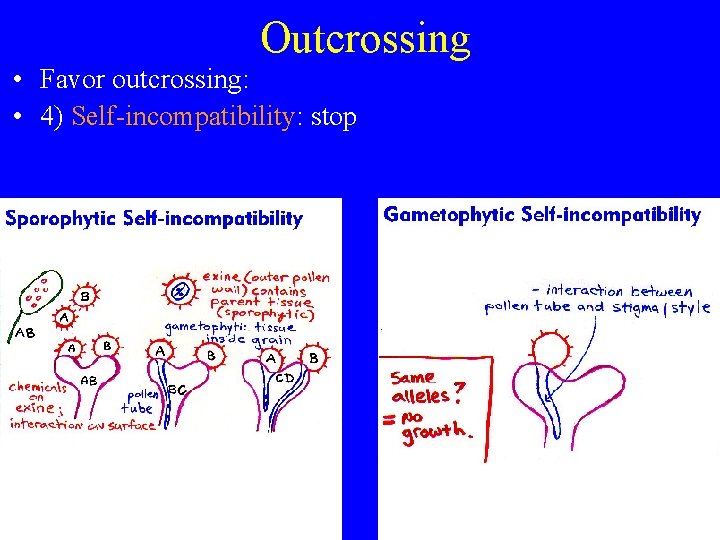
Outcrossing • Favor outcrossing: • 4) Self-incompatibility: stop
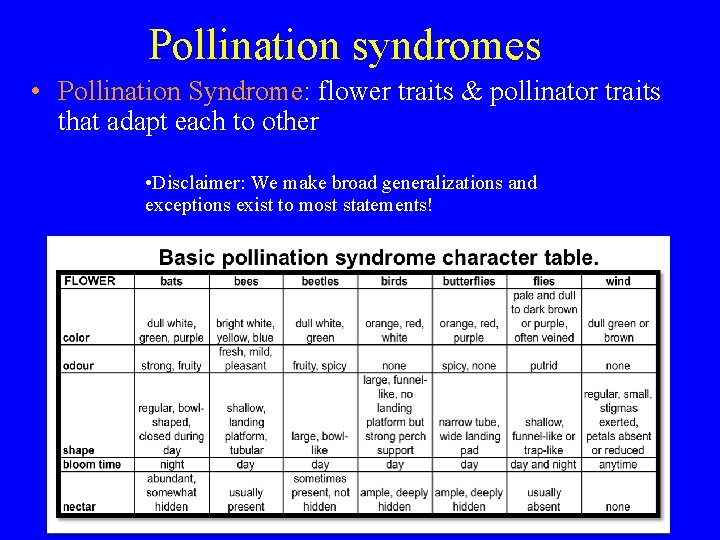
Pollination syndromes • Pollination Syndrome: flower traits & pollinator traits that adapt each to other • Disclaimer: We make broad generalizations and exceptions exist to most statements!
Ch. 7: Plant Growth and Reproduction
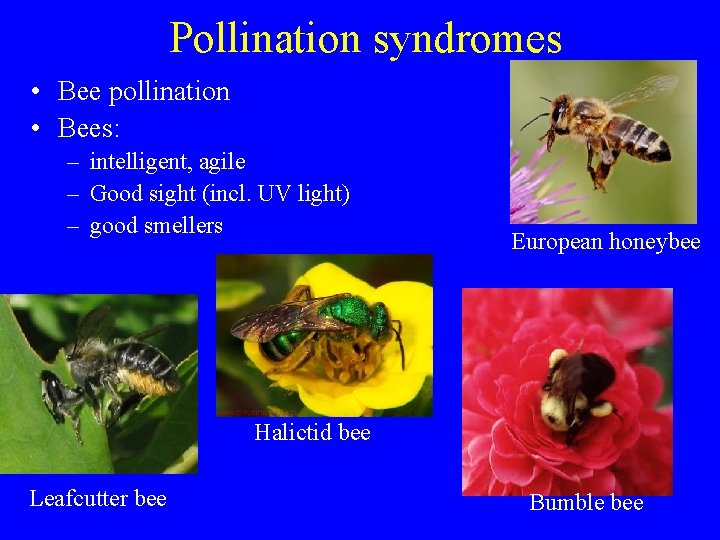
Pollination syndromes • Bee pollination • Bees: – intelligent, agile – Good sight (incl. UV light) – good smellers European honeybee Halictid bee Leafcutter bee Bumble bee
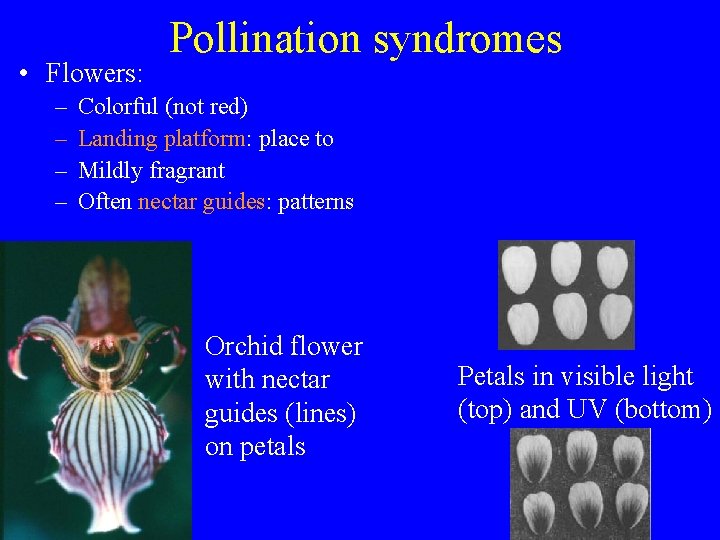
• Flowers: – – Pollination syndromes Colorful (not red) Landing platform: place to Mildly fragrant Often nectar guides: patterns Orchid flower with nectar guides (lines) on petals Petals in visible light (top) and UV (bottom)
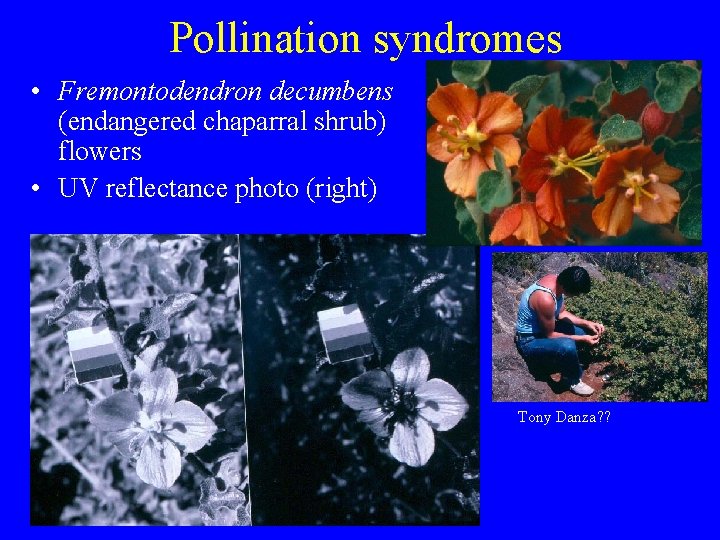
Pollination syndromes • Fremontodendron decumbens (endangered chaparral shrub) flowers • UV reflectance photo (right) Tony Danza? ?
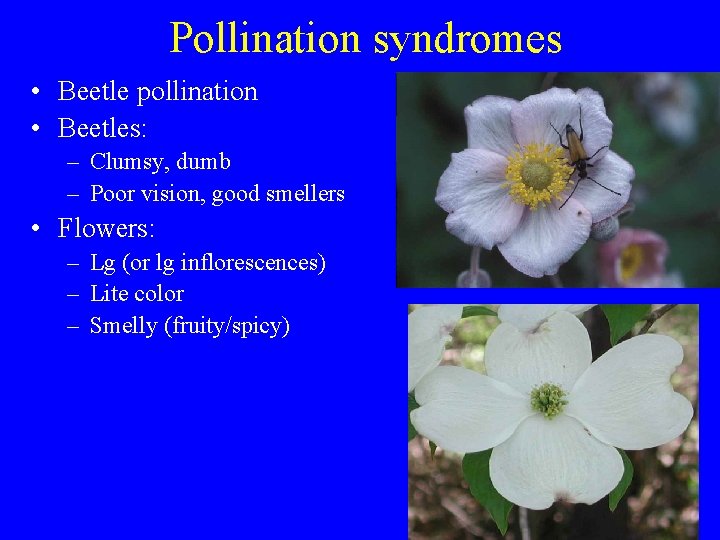
Pollination syndromes • Beetle pollination • Beetles: – Clumsy, dumb – Poor vision, good smellers • Flowers: – Lg (or lg inflorescences) – Lite color – Smelly (fruity/spicy)