
Ch 7 Photosynthesis 2012 Pearson Education Inc Feeding
- Slides: 40
Ch. 7 Photosynthesis
© 2012 Pearson Education, Inc.
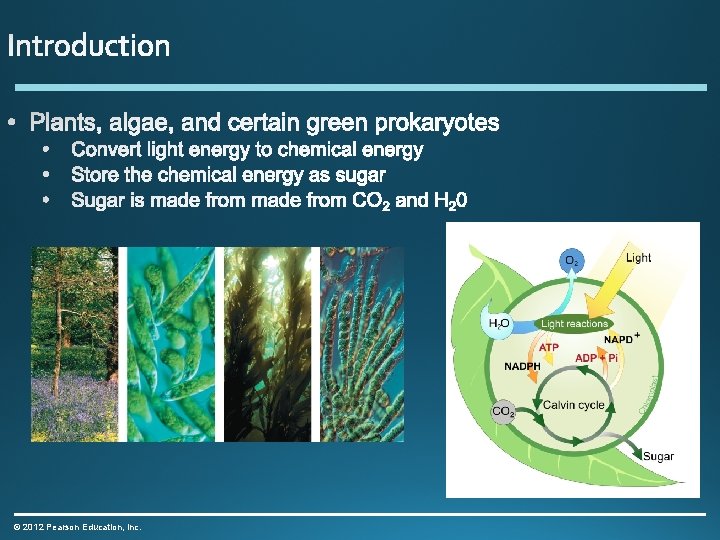
“Feeding” strategies Autotrophs make their own food • Photoautotrophs use the energy of light to produce organic molecules • Chemoautotrophs are prokaryotes that use inorganic chemicals as their energy source Heterotrophs are consumers that feed on other organisms © 2012 Pearson Education, Inc.
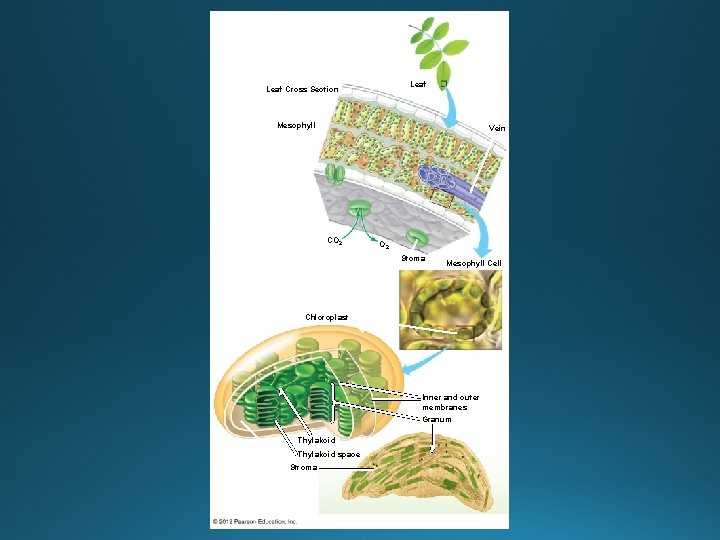
• Photosynthesis takes place in chloroplasts • Photosynthesis converts carbon dioxide and water into organic molecules • Photosynthesis releases oxygen • Chlorophyll is the light-absorbing pigment in chloroplasts • Chlorophyll is responsible for the green color of plants • Chlorophyll plays a central role in converting solar energy to chemical energy • Chloroplasts are concentrated in the cells of the mesophyll • Stomata are tiny pores in the leaf that allow carbon dioxide to enter and oxygen to exit © 2012 Pearson Education, Inc.
Leaf Cross Section Mesophyll Vein CO 2 Stoma Mesophyll Cell Chloroplast Inner and outer membranes Granum Thylakoid space Stroma
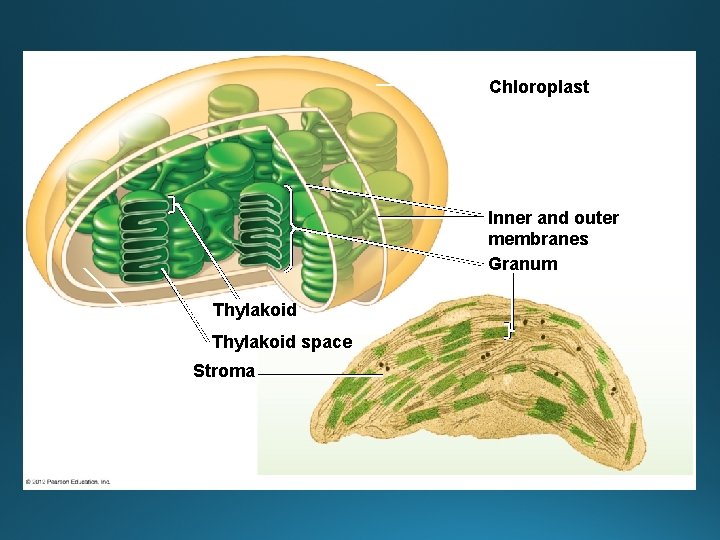
• Chloroplasts consist of an envelope of two membranes, which • enclose an inner compartment filled with a thick fluid called stroma • contain a system of interconnected membranous sacs called thylakoids • Thylakoids • • • concentrated in stacks called grana have an internal compartment called the thylakoid space, which has functions analogous to the intermembranous space of a mitochondrion Thylakoid membranes also house much of the machinery that converts light energy to chemical energy • Chlorophyll molecules • are built into the thylakoid membrane © 2012 Pearson Education, Inc.
Chloroplast Inner and outer membranes Granum Thylakoid space Stroma
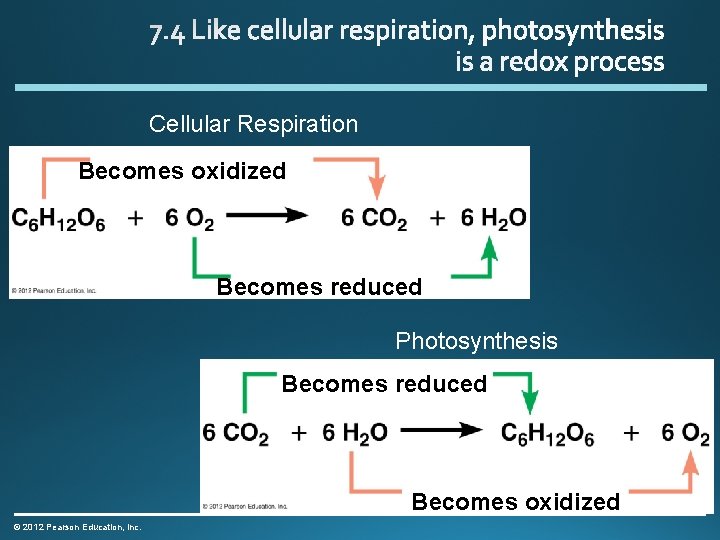
Cellular Respiration Becomes oxidized Becomes reduced Photosynthesis Becomes reduced Becomes oxidized © 2012 Pearson Education, Inc.
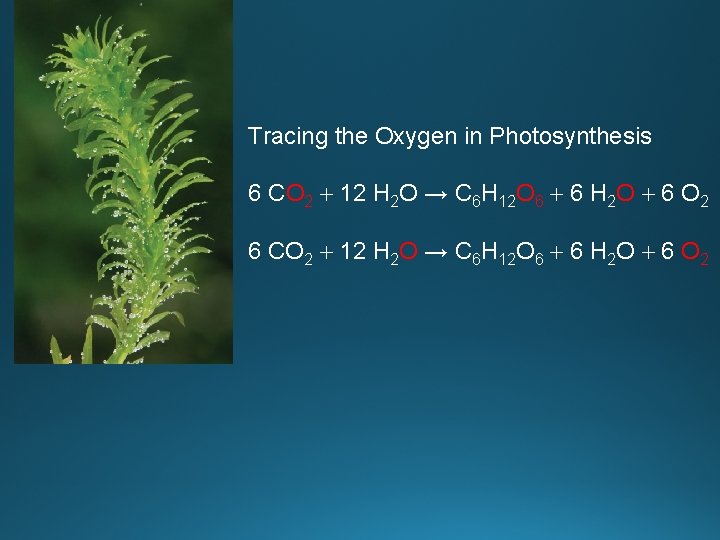
Tracing the Oxygen in Photosynthesis 6 CO 2 12 H 2 O → C 6 H 12 O 6 6 H 2 O 6 O 2
© 2012 Pearson Education, Inc.
© 2012 Pearson Education, Inc.
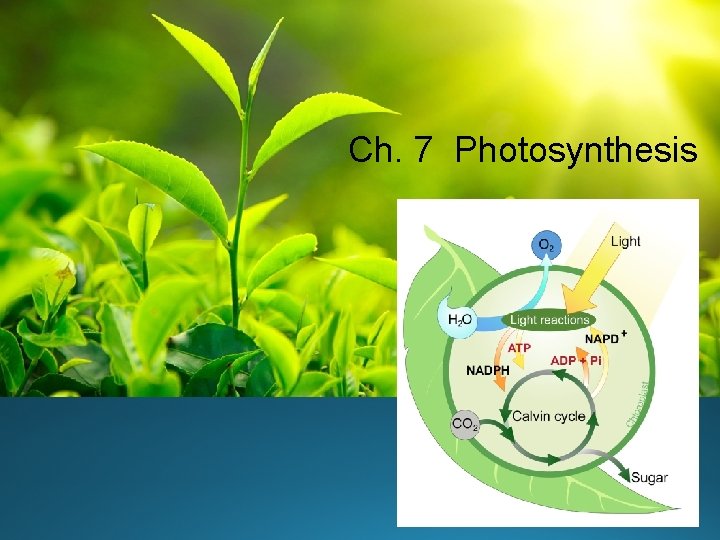
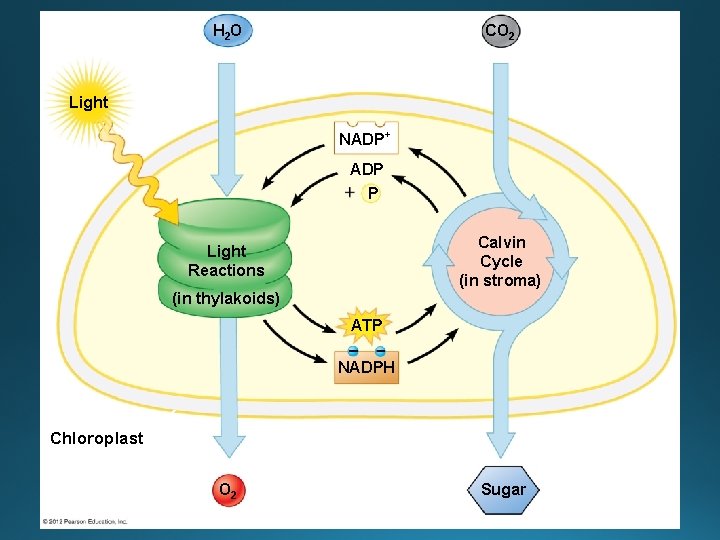
H 2 O CO 2 Light NADP+ ADP P Calvin Cycle (in stroma) Light Reactions (in thylakoids) ATP NADPH Chloroplast O 2 Sugar
© 2012 Pearson Education, Inc.
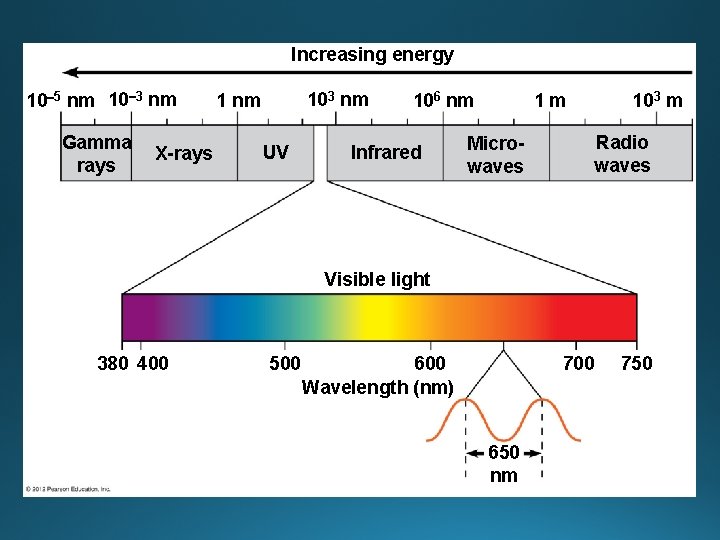
• Sunlight supplies electromagnetic energy or electromagnetic radiation • • • Visible light is only a small part of the electromagnetic spectrum, Electromagnetic energy travels in waves, and the wavelength is the distance between the crests of two adjacent waves The shorter the wavelength, the greater the energy • Light also behaves as discrete packets of energy called photons. • A photon is a fixed quantity of light energy © 2012 Pearson Education, Inc.
Increasing energy 10 5 nm 10 3 nm Gamma rays X-rays 103 nm 1 nm UV 106 nm Infrared 103 m 1 m Microwaves Radio waves Visible light 380 400 500 600 Wavelength (nm) 700 650 nm 750
© 2012 Pearson Education, Inc.
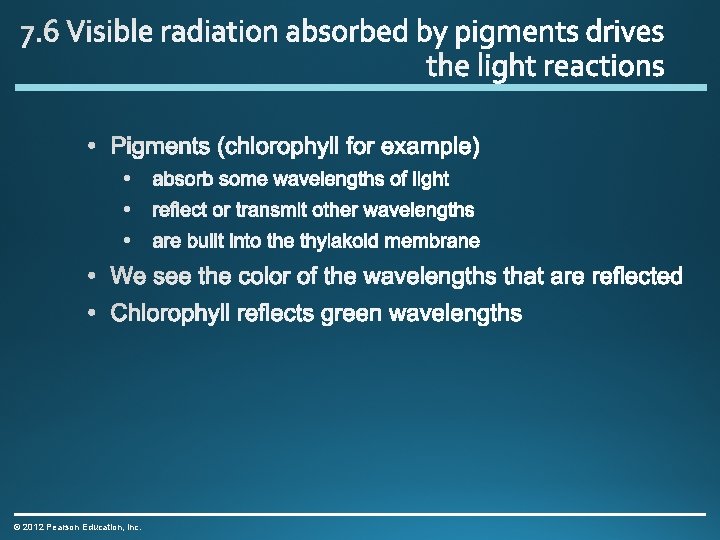
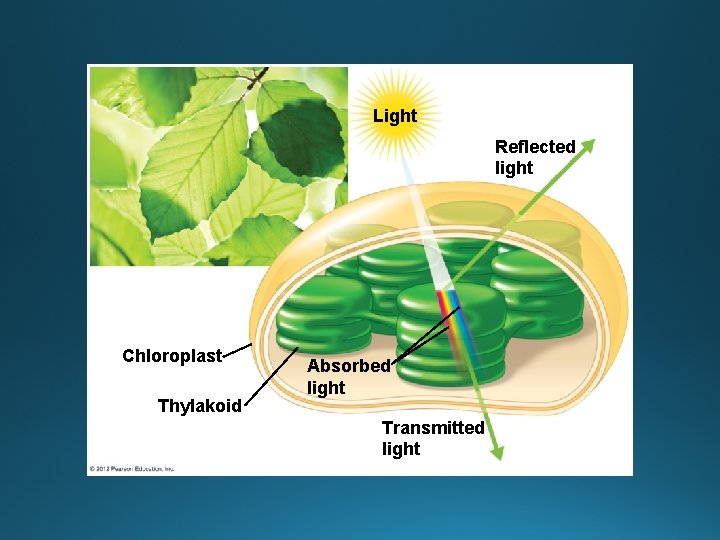
Light Reflected light Chloroplast Thylakoid Absorbed light Transmitted light
© 2012 Pearson Education, Inc.
© 2012 Pearson Education, Inc.
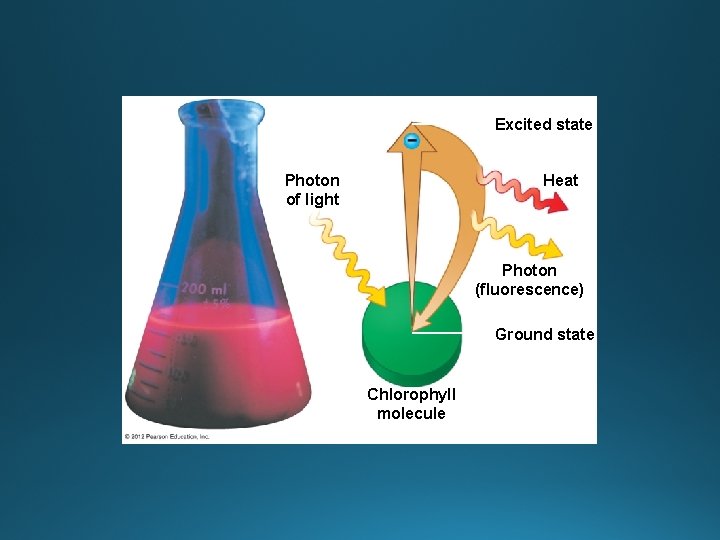
Excited state Photon of light Heat Photon (fluorescence) Ground state Chlorophyll molecule
© 2012 Pearson Education, Inc.
© 2012 Pearson Education, Inc.
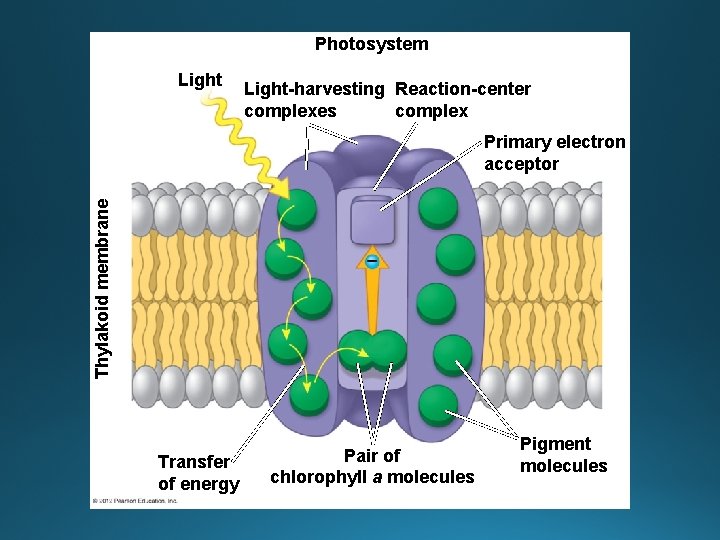
Photosystem Light-harvesting Reaction-center complexes complex Thylakoid membrane Primary electron acceptor Transfer of energy Pair of chlorophyll a molecules Pigment molecules
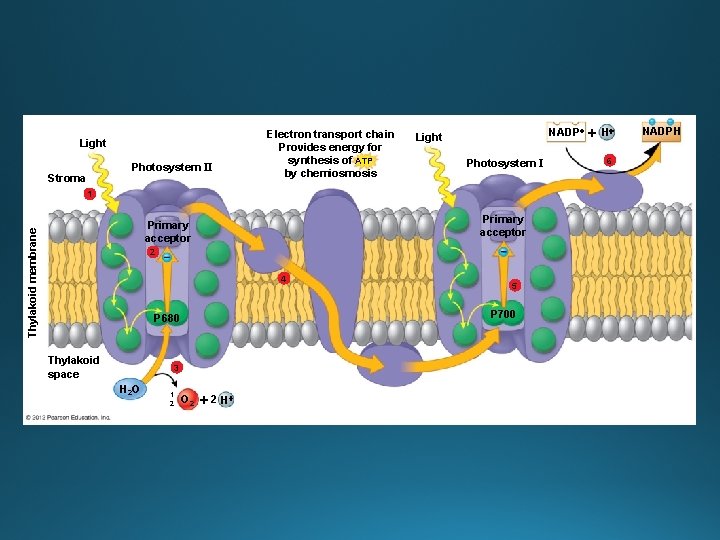
Light Photosystem II Stroma Electron transport chain Provides energy for synthesis of ATP by chemiosmosis NADP H Light Photosystem I 1 Primary acceptor Thylakoid membrane Primary acceptor 2 4 P 700 P 680 Thylakoid space 3 H 2 O 1 2 5 O 2 2 H 6 NADPH
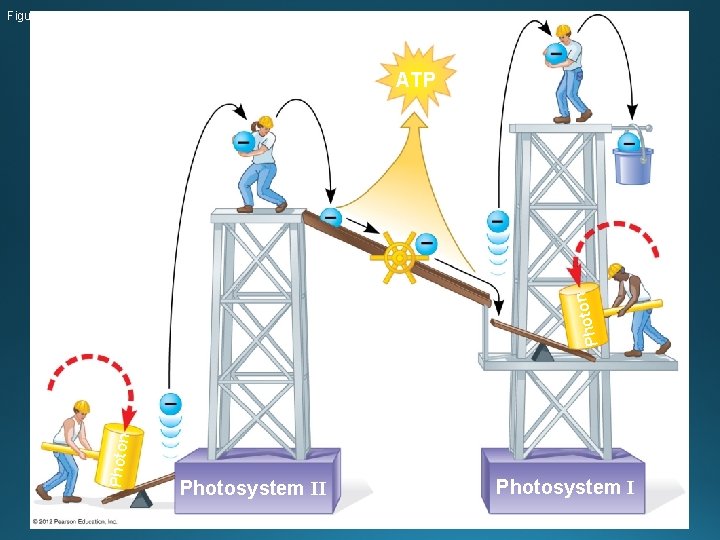
Figure 7. 8 B ATP Photon Photosystem II Phot Mill makes ATP on NADPH Photosystem I
© 2012 Pearson Education, Inc.
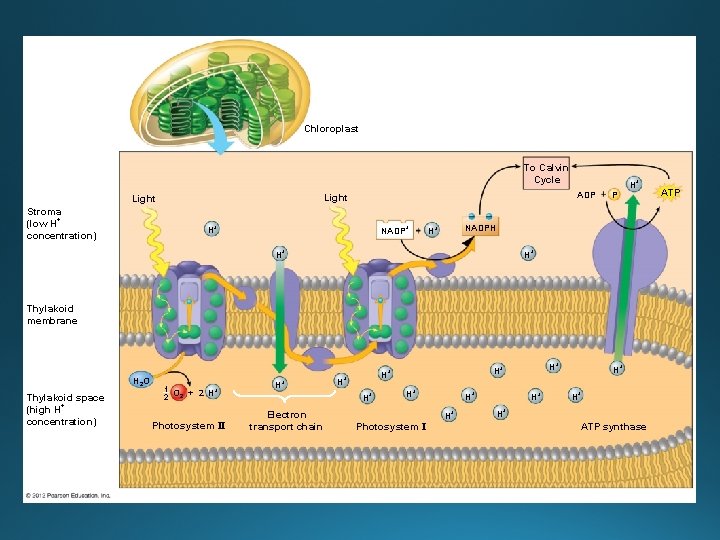
Chloroplast To Calvin Cycle Light Stroma (low H+ concentration) ADP H+ NADP+ H+ P NADPH H+ H+ H+ Thylakoid membrane H 2 O Thylakoid space (high H+ concentration) 1 O + 2 + H 2 2 Photosystem II H+ H + H+ Electron transport chain H+ H+ Photosystem I H+ H+ H+ ATP synthase ATP
© 2012 Pearson Education, Inc.
© 2012 Pearson Education, Inc.
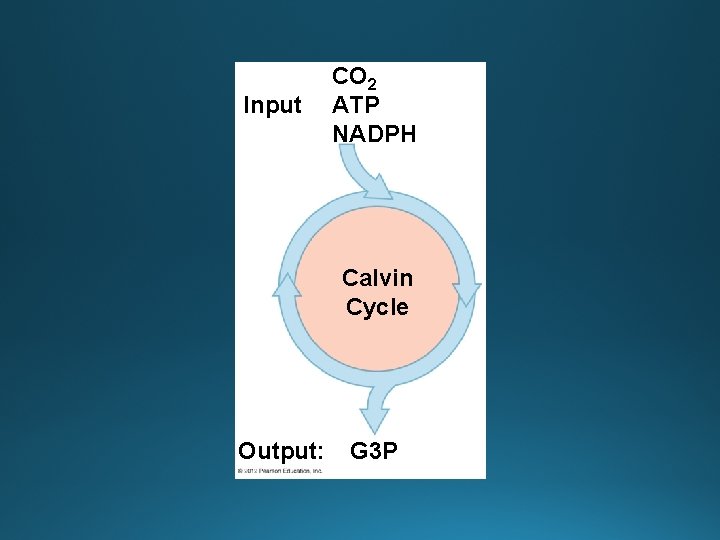
Input CO 2 ATP NADPH Calvin Cycle Output: G 3 P
© 2012 Pearson Education, Inc.
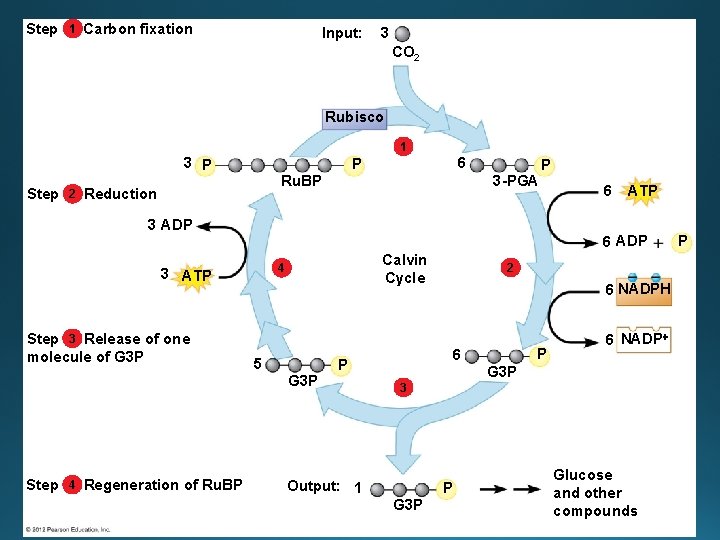
Step 1 Carbon fixation Input: 3 CO 2 Rubisco 1 3 P Step 2 6 P Ru. BP Reduction 3 -PGA P 3 ADP Calvin Cycle 4 5 G 3 P Step 4 Regeneration of Ru. BP ATP 6 ADP 3 ATP Step 3 Release of one molecule of G 3 P 6 2 6 NADPH 6 P P 6 NADP G 3 P 3 Output: 1 P G 3 P Glucose and other compounds P
© 2012 Pearson Education, Inc.
© 2012 Pearson Education, Inc.
© 2012 Pearson Education, Inc.
© 2012 Pearson Education, Inc.
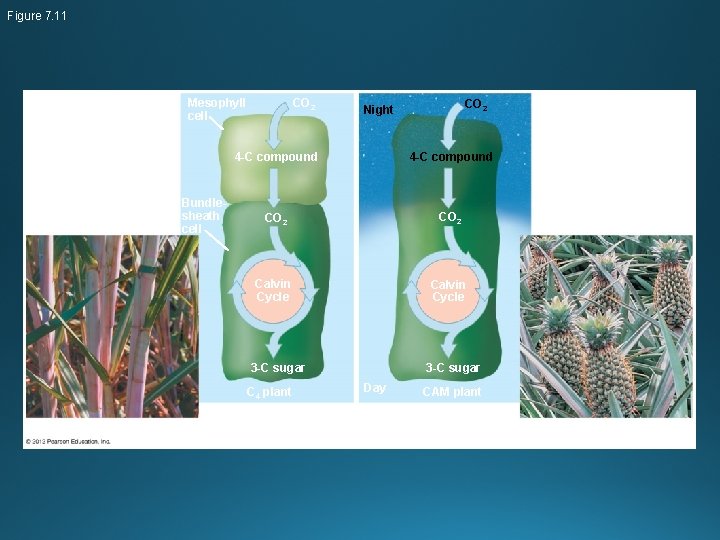
Figure 7. 11 Mesophyll cell Bundlesheath cell CO 2 4 -C compound CO 2 Calvin Cycle 3 -C sugar C 4 plant Sugarcane CO 2 Night 3 -C sugar Day CAM plant Pineapple
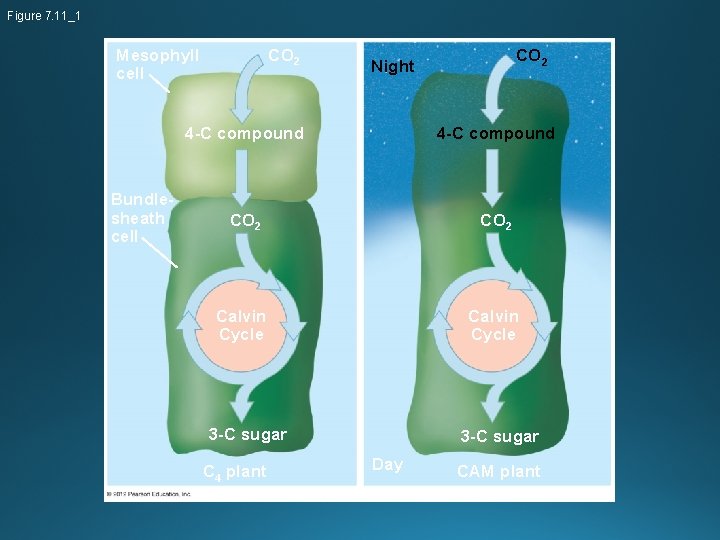
Figure 7. 11_1 Mesophyll cell Bundlesheath cell CO 2 Night 4 -C compound CO 2 Calvin Cycle 3 -C sugar C 4 plant 3 -C sugar Day CAM plant
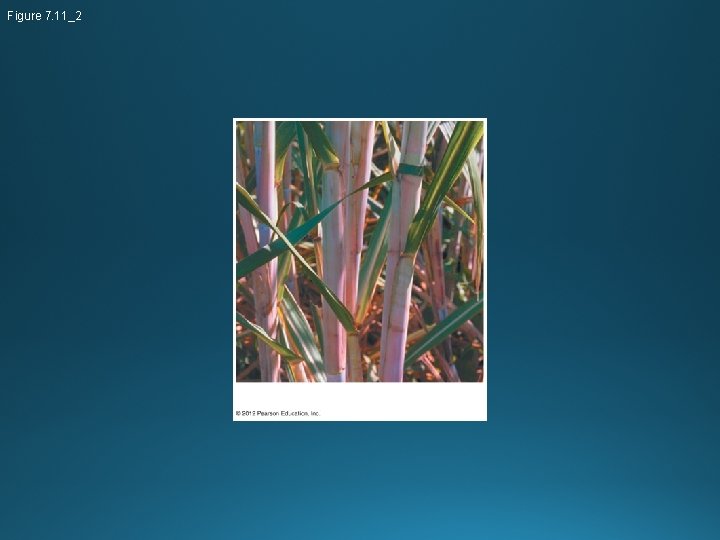
Figure 7. 11_2 Sugarcane
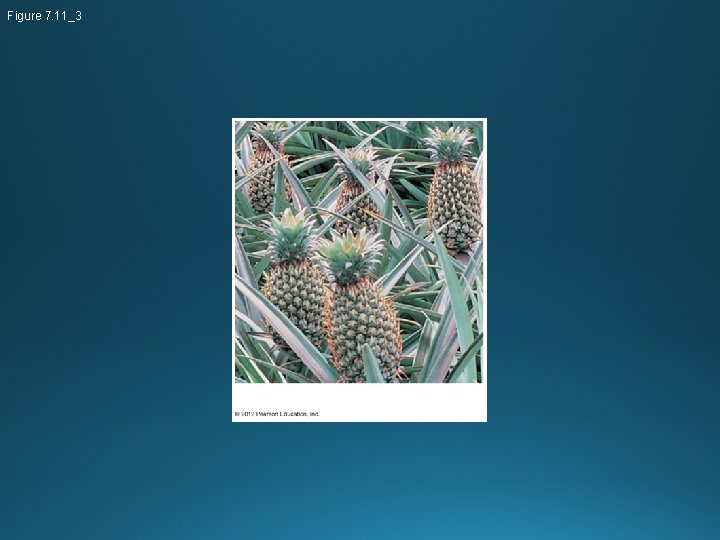
Figure 7. 11_3 Pineapple