
Ch 7 A Tour of the Cell Nucleus
- Slides: 16
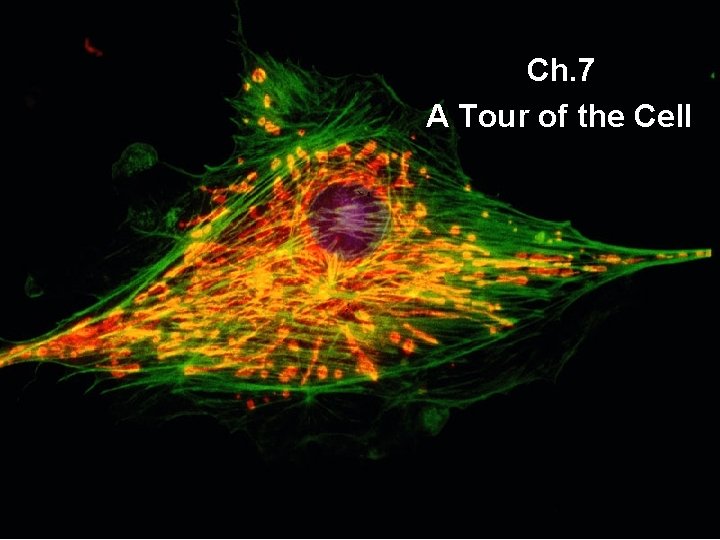
Ch. 7 A Tour of the Cell
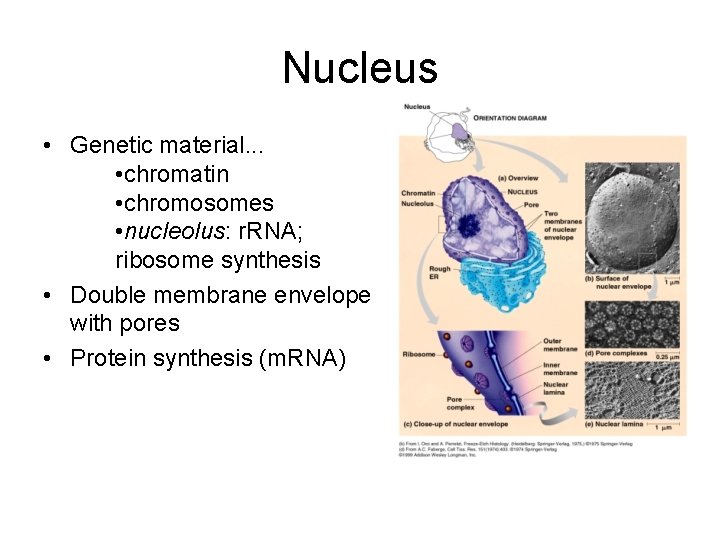
Nucleus • Genetic material. . . • chromatin • chromosomes • nucleolus: r. RNA; ribosome synthesis • Double membrane envelope with pores • Protein synthesis (m. RNA)
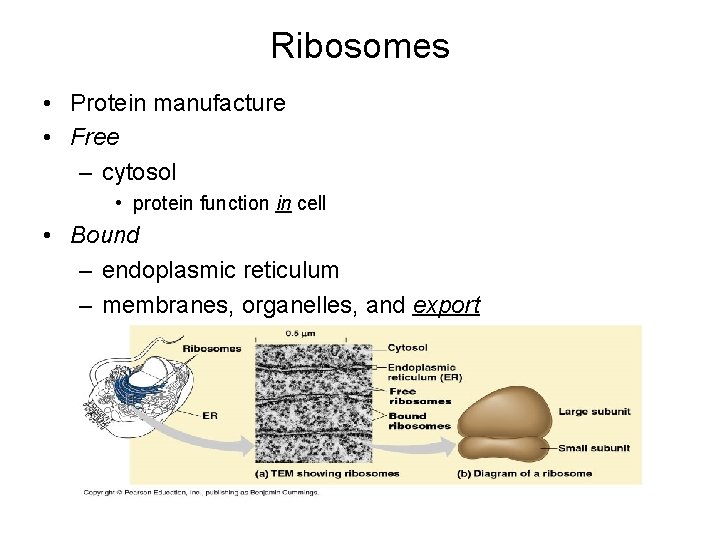
Ribosomes • Protein manufacture • Free – cytosol • protein function in cell • Bound – endoplasmic reticulum – membranes, organelles, and export
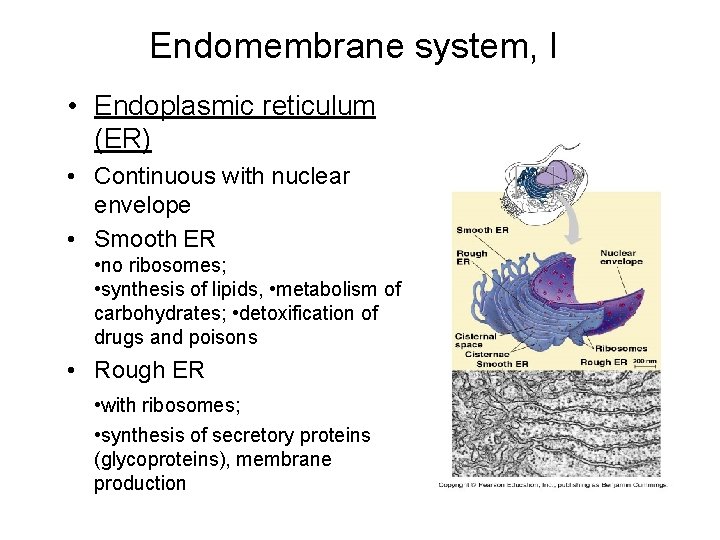
Endomembrane system, I • Endoplasmic reticulum (ER) • Continuous with nuclear envelope • Smooth ER • no ribosomes; • synthesis of lipids, • metabolism of carbohydrates; • detoxification of drugs and poisons • Rough ER • with ribosomes; • synthesis of secretory proteins (glycoproteins), membrane production
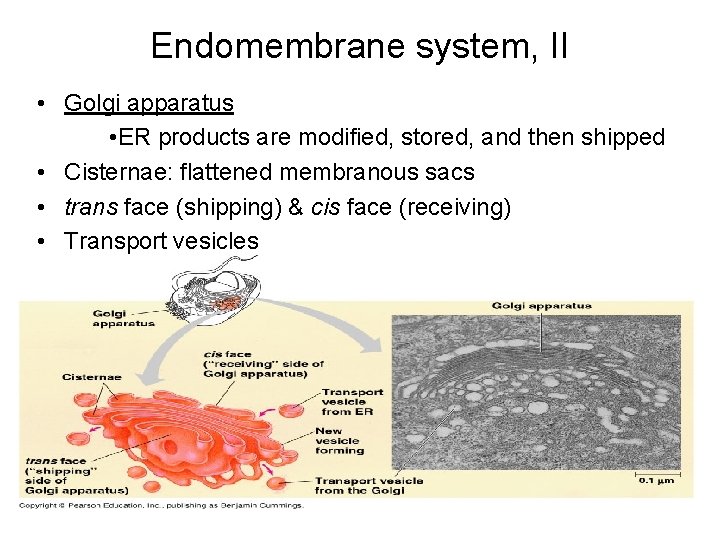
Endomembrane system, II • Golgi apparatus • ER products are modified, stored, and then shipped • Cisternae: flattened membranous sacs • trans face (shipping) & cis face (receiving) • Transport vesicles
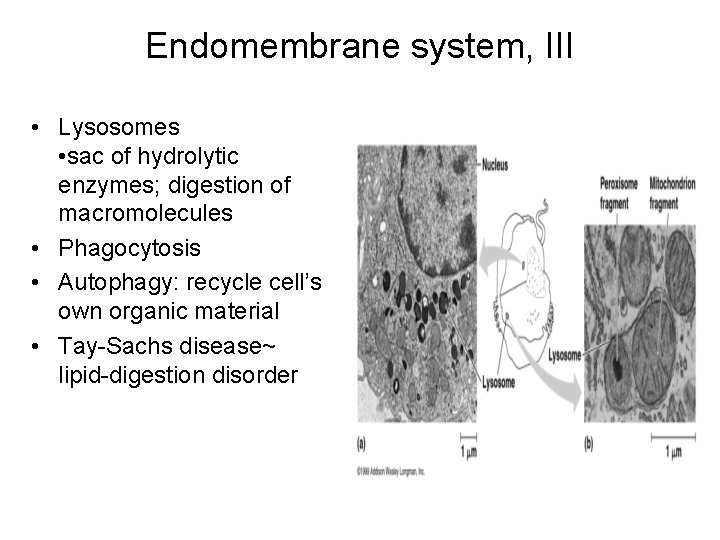
Endomembrane system, III • Lysosomes • sac of hydrolytic enzymes; digestion of macromolecules • Phagocytosis • Autophagy: recycle cell’s own organic material • Tay-Sachs disease~ lipid-digestion disorder
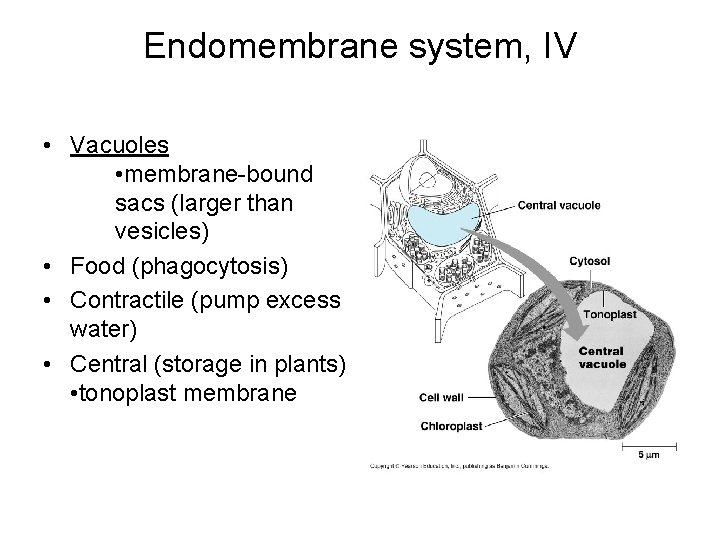
Endomembrane system, IV • Vacuoles • membrane-bound sacs (larger than vesicles) • Food (phagocytosis) • Contractile (pump excess water) • Central (storage in plants) • tonoplast membrane
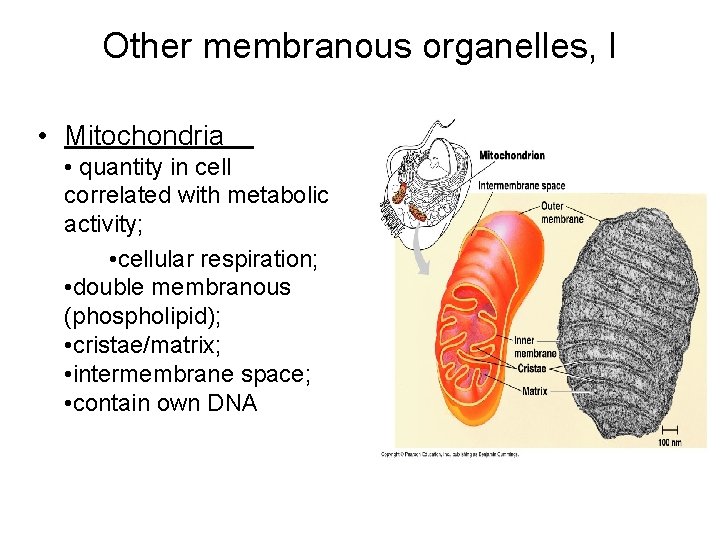
Other membranous organelles, I • Mitochondria • quantity in cell correlated with metabolic activity; • cellular respiration; • double membranous (phospholipid); • cristae/matrix; • intermembrane space; • contain own DNA
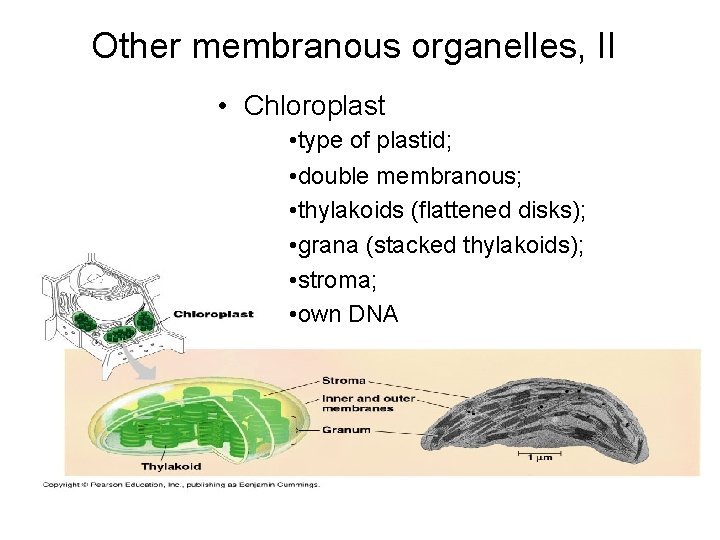
Other membranous organelles, II • Chloroplast • type of plastid; • double membranous; • thylakoids (flattened disks); • grana (stacked thylakoids); • stroma; • own DNA
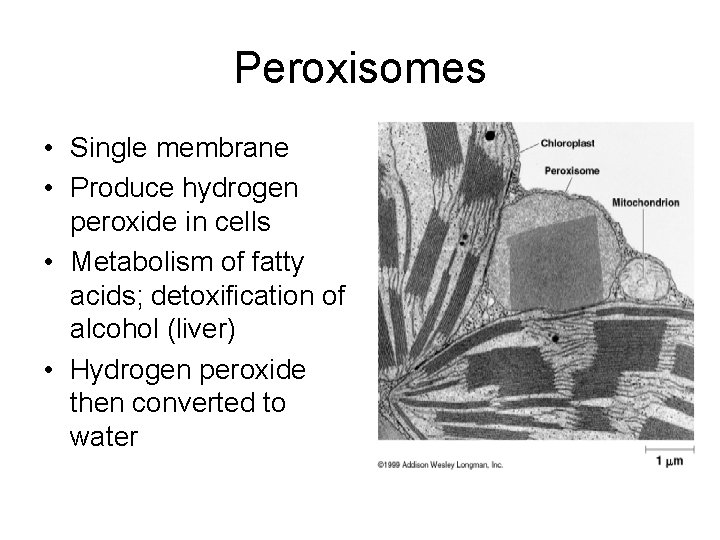
Peroxisomes • Single membrane • Produce hydrogen peroxide in cells • Metabolism of fatty acids; detoxification of alcohol (liver) • Hydrogen peroxide then converted to water
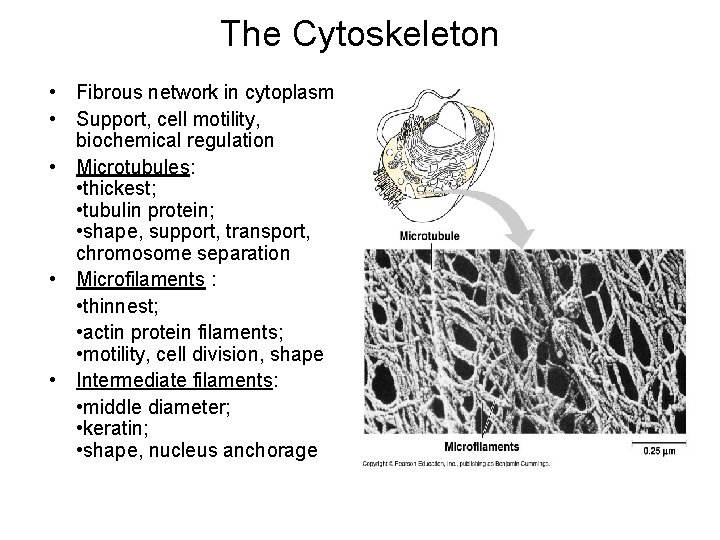
The Cytoskeleton • Fibrous network in cytoplasm • Support, cell motility, biochemical regulation • Microtubules: • thickest; • tubulin protein; • shape, support, transport, chromosome separation • Microfilaments : • thinnest; • actin protein filaments; • motility, cell division, shape • Intermediate filaments: • middle diameter; • keratin; • shape, nucleus anchorage
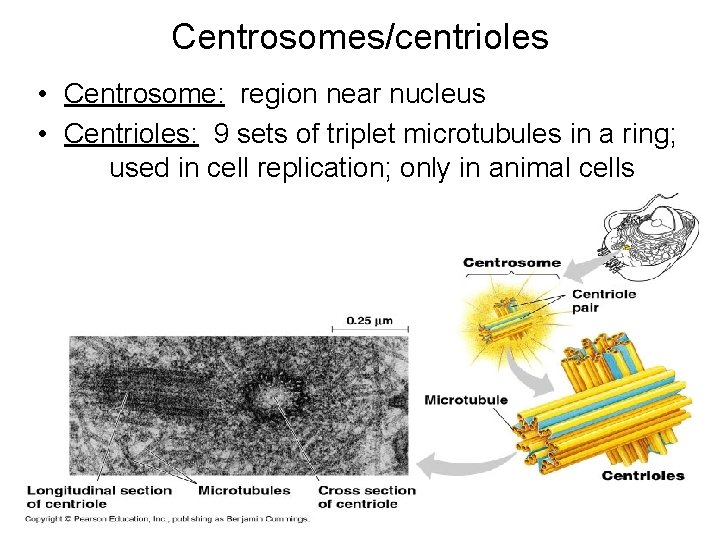
Centrosomes/centrioles • Centrosome: region near nucleus • Centrioles: 9 sets of triplet microtubules in a ring; used in cell replication; only in animal cells
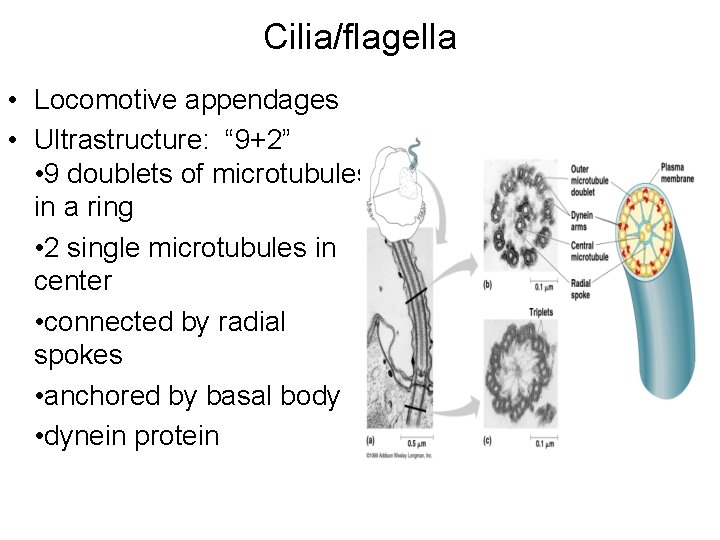
Cilia/flagella • Locomotive appendages • Ultrastructure: “ 9+2” • 9 doublets of microtubules in a ring • 2 single microtubules in center • connected by radial spokes • anchored by basal body • dynein protein
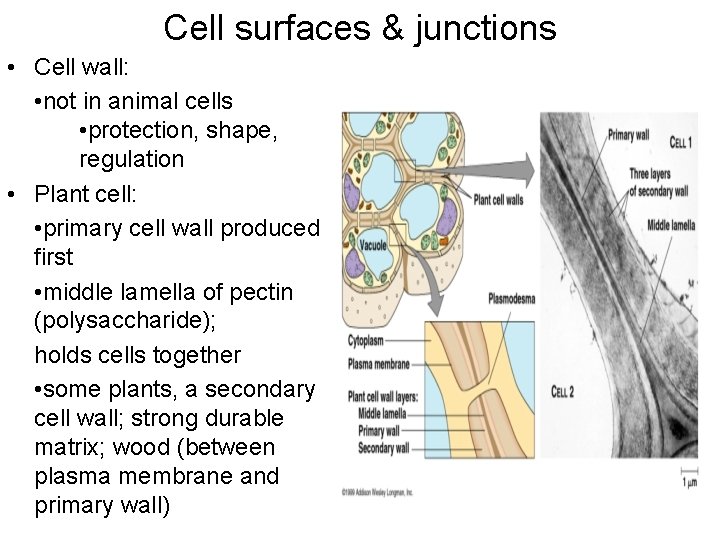
Cell surfaces & junctions • Cell wall: • not in animal cells • protection, shape, regulation • Plant cell: • primary cell wall produced first • middle lamella of pectin (polysaccharide); holds cells together • some plants, a secondary cell wall; strong durable matrix; wood (between plasma membrane and primary wall)
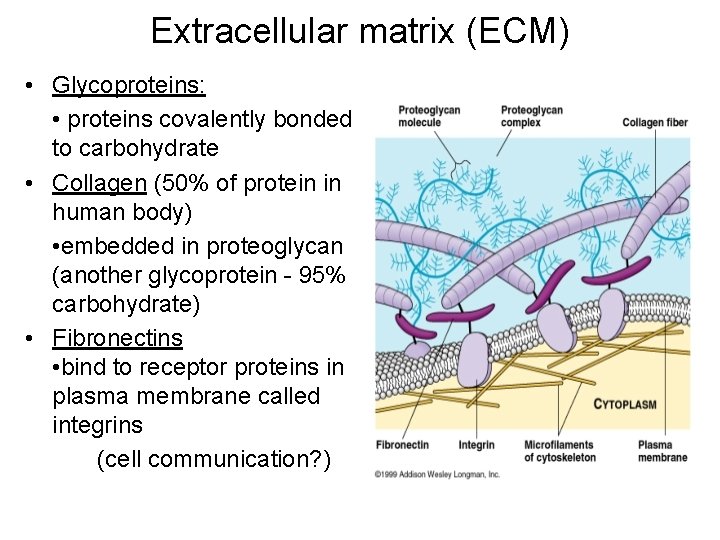
Extracellular matrix (ECM) • Glycoproteins: • proteins covalently bonded to carbohydrate • Collagen (50% of protein in human body) • embedded in proteoglycan (another glycoprotein - 95% carbohydrate) • Fibronectins • bind to receptor proteins in plasma membrane called integrins (cell communication? )
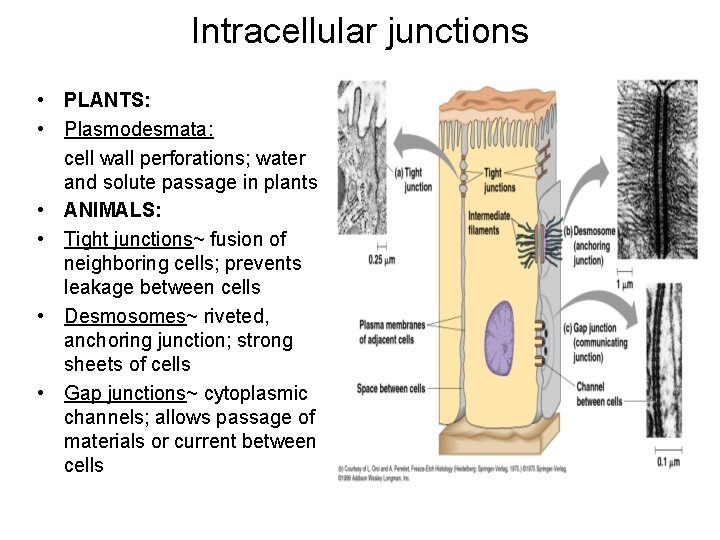
Intracellular junctions • PLANTS: • Plasmodesmata: cell wall perforations; water and solute passage in plants • ANIMALS: • Tight junctions~ fusion of neighboring cells; prevents leakage between cells • Desmosomes~ riveted, anchoring junction; strong sheets of cells • Gap junctions~ cytoplasmic channels; allows passage of materials or current between cells