
Ch 7 1 Objectives Discover why it is
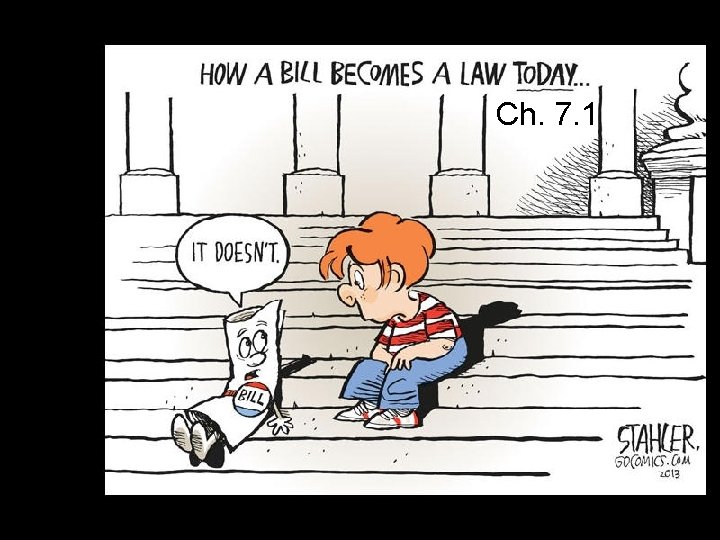
Ch. 7. 1
Objectives � Discover why it is easier to defeat legislation than to pass it. � Explore the positive and negative implications of the lengthy process through which all bills must go before becoming laws.
Types of Bills and Resolutions I. Types of Bills and Resolutions A. 2 Types of Bills: 1. Private Bills – deal with individual people or places ex. ) H. R. 1519 - For the relief of Alemseghed Mussie Tesfamical. 2. Public Bills – deal with general matters that apply to the entire country ex. ) taxes, “obamacare”, gun control B. Resolutions: (deal with unusual or temporary matters) 1. Simple Resolution – 1 House issue being dealt with
Affects only one house of Congress A. B. C. D. Public bills Private Bills Riders Resolutions
Bills dealing with individual people and places A. B. C. D. Resolutions Public bills Private bills Riders
This mechanism is used to propose constitutional amendments A. B. C. D. Concurrent resolution Resolution Joint resolution Private bill
Resolutions 3. Concurrent Resolution – both houses / no law ex. ) setting adjournment date for Congress In-Class Activity: Utilize the website below to complete the following in your notes: 1. Describe two current bills of the 114 th Congress and your thoughts on each 2. Describe 1 Senate and 1 House Simple Resolution thoughts and your 3. Describe 1 (H)Joint Resolution and 1 (S) Joint Resolution 4. Describe 1 (S) Concurrent Resolution and 1 (H) Concurrent Resolution https: //www. opencongress. org/bill/all
![Initiating Legislation � Group Activity: (3 -4 per group)[10 minutes] � Brainstorm different laws](http://slidetodoc.com/presentation_image_h2/4bcc5bb3e45d3b2fc92735e03ea1a45f/image-8.jpg "Initiating Legislation � Group Activity: (3 -4 per group)[10 minutes] � Brainstorm different laws")
Initiating Legislation � Group Activity: (3 -4 per group)[10 minutes] � Brainstorm different laws that you feel are necessary to correct some type of perceived problem in your local community (Be serious! Act like an adult!) � Produce a write-up for your proposed bill that you plan to introduce to your district representative. Be prepared to offer a testimonial presentation during a committee hearing.
Riders C. Riders – provision/attachments to a bill on a subject other than the one being covered in the bill. 1. “Christmas Tree” bills - a bill with many riders attached in order to aid constituents. D. Why so few Bills become Laws: (less than 10%) 1. Law making Process is complicated: Over 100 Steps a. First – Opponents have opportunity to kill bills b. Second – forces compromise on a bill to favor a majority c. Third – Congressmen propose laws they know will fail.
Introducing a Bill II. Introducing a Bill A. Step 1: Proposing and Introducing a Bill 1. first reading – order that a bill is read in House or Senate B. Committee Action 1. “pigeonholing” – rejecting a bill by allowing it to be ignored. 2. hearings – committee listens to testimony from experts 3. markup – making changes to the bill (improves bill) a. Reporting a Bill occurs after the steps above
These meetings are where committees listen to testimony A. B. C. D. Hearings First readings Pigeonholing Public bill
Floor Action III. Floor Action A. Debating and Amending Bills 1. “Second Reading” (action required) a. Amendments can be added b. debate can occur B. Voting on Bills (requires quorum) 1. Three Ways: a. voice vote b. standing/division vote c. roll-call vote
Which is NOT a method of senatorial voting? A. B. C. D. Voice vote Roll call Standing vote ballot
Final Steps in Passing Bills IV. Final Steps in Passing Bills A. Conference Committee Action -work out differences in the bills and compromise a. conference report B. Presidential Action (10 Days) 1. Options: a. Sign into law b. Don’t sign + 10 days + sitting Congress = law c. Formal Veto d. Pocket Veto – no sign + Congress goes on
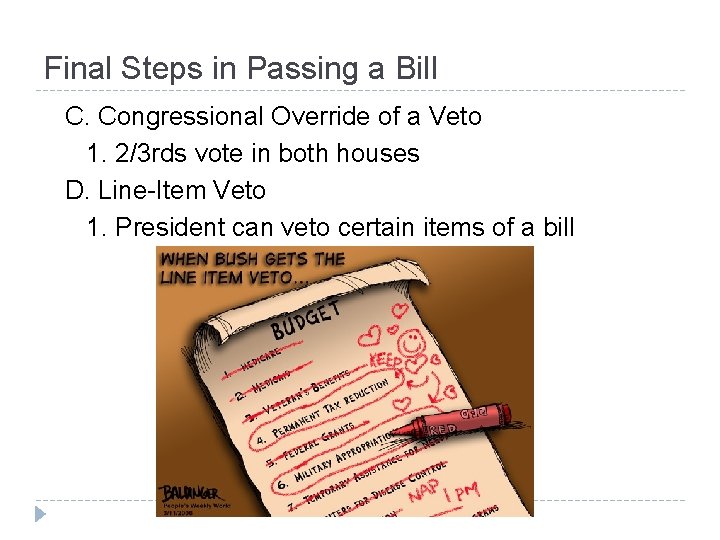
Final Steps in Passing a Bill C. Congressional Override of a Veto 1. 2/3 rds vote in both houses D. Line-Item Veto 1. President can veto certain items of a bill
This action allows a President to remove specific items of a bill A. B. C. D. Private bill Line-item veto Rider Pocket veto
- Slides: 16